Tulips the Calvinist Flower
Posted: June 30, 2008 Filed under: You Might be a Calvinist if... Leave a comment You might be a Calvinist if… you buy your girlfriend/wife TULIPS for Valentines Day.
WHY ARE WE SAVED BY FAITH?
Posted: June 29, 2008 Filed under: Sundays with Spurgeon Leave a comment TO MAKE THE MATTER Of faith clearer still, I will give you a few illustrations. Though the Holy Spirit alone can make my reader see, it is my duty and my joy to furnish all the light I can, and to pray the divine Lord to open blind eyes. Oh that my reader would pray the same prayer for himself!
The faith which saves has its analogies in the human frame.
It is the eye which looks. By the eye we bring into the mind that which is far away; we can bring the sun and the far-off stars into the mind by a glance of the eye. So by trust we bring the Lord Jesus near to us; and though He be far away in Heaven, He enters into our heart. Only look to Jesus; for the hymn is strictly true-
There is life in a look at the Crucified One,
There is life at this moment for thee.
Faith is the hand which grasps. When our hand takes hold of anything for itself, it does precisely what faith does when it appropriates Christ and the blessings of His redemption. Faith says, “Jesus is mine.” Faith hears of the pardoning blood, and cries, “I accept it to pardon me.” Faith calls the legacies of the dying Jesus her own; and they are her own, for faith is Christ’s heir; He has given Himself and all that He has to faith. Take, O friend, that which grace has provided for thee. You will not be a thief, for you have a divine permit: “Whosoever will, let him take the water of life freely.” He who may have a treasure simply by his grasping it will be foolish indeed if he remains poor.
Faith is the mouth which feeds upon Christ. Before food can nourish us, it must be received into us. This is a simple matter-this eating and drinking. We willingly receive into the mouth that which is our food, and then we consent that it should pass down into our inward parts, wherein it is taken up and absorbed into our bodily frame. Paul says, in his Epistle to the Romans, in the tenth chapter, “The word is nigh thee, even in thy mouth.” Now then, all that is to be done is to swallow it, to suffer it to go down into the soul. Oh that men had an appetite! For he who is hungry and sees meat before him does not need to be taught how to eat. “Give me,” said one, “a knife and a fork and a chance.” He was fully prepared to do the rest. Truly, a heart which hungers and thirsts after Christ has but to know that He is freely given, and at once it will receive Him. If my reader is in such a case, let him not hesitate to receive Jesus; for he may be sure that he will never be blamed for doing so: for unto “as many as received him, to them gave he power to become the sons of God.” He never repulses one, but He authorizes all who come to remain sons for ever.
The pursuits of life illustrate faith in many ways. The farmer buries good seed in the earth, and expects it not only to live but to be multiplied. He has faith in the covenant arrangement, that “seed-time and harvest shall not cease,” and he is rewarded for his faith.
The merchant places his money in the care of a banker, and trusts altogether to the honesty and soundness of the bank. He entrusts his capital to another’s hands, and feels far more at ease than if he had the solid gold locked up in an iron safe.
The sailor trusts himself to the sea. When he swims he takes his foot from the bottom and rests upon the buoyant ocean. He could not swim if he did not wholly cast himself upon the water.
The goldsmith puts precious metal into the fire which seems eager to consume it, but he receives it back again from the furnace purified by the heat.
You cannot turn anywhere in life without seeing faith in operation between man and man, or between man and natural law. Now, just as we trust in daily life, even so are we to trust in God as He is revealed in Christ Jesus.
Faith exists in different persons in various degrees, according to the amount of their knowledge or growth in grace. Sometimes faith is little more than a simple clinging to Christ; a sense of dependence and a willingness so to depend. When you are down at the seaside you will see limpets sticking to the rock. You walk with a soft tread up to the rock; you strike the mollusk a rapid blow with your walking-stick and off he comes. Try the next limpet in that way. You have given him warning; he heard the blow with which you struck his neighbor, and he clings with all his might. You will never get him off; not you! Strike, and strike again, but you may as soon break the rock. Our little friend, the limpet, does not know much, but he clings. He is not acquainted with the geological formation of the rock, but he clings. He can cling, and he has found something to cling to: this is all his stock of knowledge, and he uses it for his security and salvation. It is the limpet’s life to cling to the rock, and it is the sinner’s life to cling to Jesus. Thousands of God’s people have no more faith than this; they know enough to cling to Jesus with all their heart and soul, and this suffices for present peace and eternal safety. Jesus Christ is to them a Saviour strong and mighty, a Rock immovable and immutable; they cling to him for dear life, and this clinging saves them. Reader, cannot you cling? Do so at once.
Faith is seen when one man relies upon another from a knowledge of the superiority of the other. This is a higher faith; the faith which knows the reason for its dependence, and acts upon it. I do not think the limpet knows much about the rock: but as faith grows it becomes more and more intelligent. A blind man trusts himself with his guide because he knows that his friend can see, and, trusting, he walks where his guide conducts him. If the poor man is born blind he does not know what sight is; but he knows that there is such a thing as sight, and that it is possessed by his friend and therefore he freely puts his hand into the hand of the seeing one, and follows his leadership. “We walk by faith, not by sight.” ” Blessed are they which have not seen, and yet have believed.” This is as good an image of faith as well can be; we know that Jesus has about Him merit, and power, and blessing, which we do not possess, and therefore we gladly trust ourselves to Him to be to us what we cannot be to ourselves. We trust Him as the blind man trusts his guide. He never betrays our confidence ; but He “is made of God unto us wisdom, and righteousness, and sanctification, and redemption.”
Every boy that goes to school has to exert faith while learning. His schoolmaster teaches him geography, and instructs him as to the form of the earth, and the existence of certain great cities and empires. The boy does not himself know that these things are true, except that he believes his teacher, and the books put into his hands. That is what you will have to do with Christ, if you are to be saved; you must simply know because He tells you, believe because He assures you it is even so, and trust yourself with Him because He promises you that salvation will be the result. Almost all that you and I know has come to us by faith. A scientific discovery has been made, and we are sure of it. On what grounds do we believe it? On the authority of certain well-known men of learning, whose reputations are established. We have never made or seen their experiments, but we believe their witness. You must do the like with regard to Jesus: because He teaches you certain truths you are to be His disciple, and believe His words; because He has performed certain acts you are to be His client, and trust yourself with Him. He is infinitely superior to you, and presents himself to your confidence as your Master and Lord. If you will receive Him and His words you shall be saved.
Another and a higher form of faith is that faith which grows out of love. Why does a boy trust his father? The reason why the child trusts his father is because he loves him. Blessed and happy are they who have a sweet faith in Jesus, intertwined with deep affection for Him, for this is a restful confidence. These lovers of Jesus are charmed with His character, and delighted with His mission, they are carried away by the lovingkindness that He has manifested, and therefore they cannot help trusting Him, because they so much admire, revere, and love Him.
The way of loving trust in the Saviour may thus be illustrated. A lady is the wife of the most eminent physician of the day. She is seized with a dangerous illness, and is smitten down by its power; yet she is wonderfully calm and quiet, for her husband has made this disease his special study, and has healed thousands who were similarly afflicted. She is not in the least troubled, for she feels perfectly safe in the hands of one so dear to her, and in whom skill and love are blended in their highest forms. Her faith is reasonable and natural; her husband, from every point of view, deserves it of her. This is the kind of faith which the happiest of believers exercise toward Christ. There is no physician like Him, none can save as He can; we love Him, and He loves us, and therefore we put ourselves into His hands, accept whatever He prescribes, and do whatever He bids. We feel that nothing can be wrongly ordered while He is the director of our affairs; for He loves us too well to let us perish, or suffer a single needless pang.
Faith is the root of obedience, and this may be clearly seen in the affairs of life. When a captain trusts a pilot to steer his vessel into port he manages the vessel according to his direction. When a traveler trusts a guide to conduct him over a difficult pass, he follows the track which his guide points out. When a patient believes in a physician, he carefully follows his prescriptions and directions. Faith which refuses to obey the commands of the Saviour is a mere pretence, and will never save the soul. We trust Jesus to save us; He gives us directions as to the way of salvation; we follow those directions and are saved. Let not my reader forget this. Trust Jesus, and prove your trust by doing whatever He bids you.
A notable form of faith arises out of assured knowledge; this comes of growth in grace, and is the faith which believes Christ because it knows Him, and trusts Him because it has proved Him to be infallibly faithful. An old Christian was in the habit of writing T and P in the margin of her Bible whenever she had tried and proved a promise. How easy it is to trust a tried and proved Saviour! You cannot do this as yet, but you will do so. Everything must have a beginning. You will rise to strong faith in due time. This matured faith asks not for signs and tokens, but bravely believes. Look at the faith of the master mariner-I have often wondered at it. He looses his cable, he steams away from the land. For days, weeks, or even months, he never sees sail or shore; yet on he goes day and night without fear, till one morning he finds himself exactly opposite to the desired haven toward which he has been steering. How has he found his way over the trackless deep ? He has trusted in his compass, his nautical almanac, his glass, and the heavenly bodies; and obeying their guidance, without sighting land, he has steered so accurately that he has not to change a point to enter into port. It is a wonderful thing-that sailing or steaming without sight. Spiritually it is a blessed thing to leave altogether the shores of sight and feeling, and to say, “Good-by” to inward feelings, cheering providences, signs, tokens, and so forth. It is glorious to be far out on the ocean of divine love, believing in God, and steering for Heaven straight away by the direction of the Word of God. “Blessed are they that have not seen, and yet have believed”; to them shall be administered an abundant entrance at the last, and a safe voyage on the way. Will not my reader put his trust in God in Christ Jesus. There I rest with joyous confidence. Brother, come with me, and believe our Father and our Saviour. Come at once.
Free Will Song
Posted: June 28, 2008 Filed under: Video of the Week Leave a commentThis is quite the song. The song simply sadden my heart when watching such views of God. What is even more saddening is Jim Schettler at the end that gets up and says, “That it is not only one of the greatest themes but truths of the entire Bible.”
Christ is All
Posted: June 27, 2008 Filed under: Book of the Week, Book Review, Reformation Heritage Books Leave a commentThis weeks Book of the Week is Christ is All by, Michael Haykin, and Darrin R. Brooker. 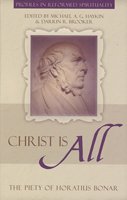
Summary of the Piety of Horatius Bonar:
Volume 4 in the Profiles in Reformed Spirituality series was written and edited by Dr. Michael Haykin and Darrin R. Brooker (the latter being the editor and publisher of the Life and Works of Horatius Bonar CD-Rom).
This volume – entitled Christ is All – gives a biography of Horatius Bonar and picks many glorious writings that help reveal his piety. Bonar is greatly known for his preaching of the gospel, which in turn saved many souls. Throughout his biography, it is shown how many great theologians influenced his life. Dr. Haykin also provides a brief summary of some of Bonar’s early pastorates in Leith and Kelso, and tells about the many writings that created revivals in Scotland. This book summarizes what was clearly seen in Bonar’s life, pastorate, and writings: that Christ is all. Bonar’s whole life centered around Christ, in Whom he served.
Summary of the selected works of Horatius Bonar:
The second section of Christ is All includes 65 selected writings from Horatius Bonar. These writings clearly reveal Bonar’s love for Christ. It seems that on every page Bonar points to Christ… whether it is the way we read, the way we grow, the way we do our work, or the way we pray – every aspect points to Him. Bonar saw that Christians were to be above reproach, were to be a strong and bold witness, and were to stay true to their Christian walk until the end of their ministry. He placed emphasis on the way that Christians use their time – not in things of the world, but spending time in the Scriptures, which led to a life of piety. Bonar knew the trouble of sin, and that is why his writings made it clear that believers are to aim to glorify God and focus their faith on Christ. He believed that all of Christianity was to be summed up in the lives of believers in how they lived out their doctrines. One of my favorite sections of Bonar’s writings is found in section 41, entitled Christianity: Doctrine in Life, where he says, “Christianity is both a life and a dogma; quite as much the one as the other.”
Recommendation: 8 out 10
Christ is All is lengthier than the first 3 volumes in The Profiles of Reformed Spirituality. Where the others had 28-30 sections, Bonar’s selected writings include 65. For the sincere Christian that wants to see and know how to live a life in tune with Christ, Bonar is a great example. His spirituality is clearly shown throughout his life and throughout these particular sections of writings. No matter if you are young or old in age, or young or old in the faith, like Dr. David Murray says, “As Bonar would wish, every word points us to the Christ of all ages for all ages.” And the same goes for us in the 21st Century, as Christians need to be reading substantial theology and substantial writings that point us to Whom saved us. When we read such writings as this, the believer will truly see that Christ is all.
Pour Out Your Indignation Upon Them
Posted: June 26, 2008 Filed under: Sermon of the Week Leave a comment This weeks sermon of the week is by John Piper. It is often at times hard to understand how to see the Psalms which are spewing cruses upon mankind. However Piper brings good insight to just that. You may enjoy listening. You can see, watch and listen to it all here.
The Gospel is a Treasure
Posted: June 25, 2008 Filed under: Gospel Quote of the Week Leave a commentGospel Quote of the Week

“Christ’s riches are unsearchable, and this doctrine of the gospel is the field this treasure is hidden in.” – Thomas Goodwin.
My Thoughts: It is often great to dwell upon the gospel at least a few times a day. When seeing the gospel rooted in and through Christ is when the believer can enjoy the true treasures that are in it. Make sure you, yourself at least take a few times out of the day thanking Christ for the gospel.
Passion of the Christ 2
Posted: June 24, 2008 Filed under: Where is Christ in the Culture Today? Leave a commentWhere is Christ in the Culture Today? On YouTube, that’s where!
My Thoughts: This seems to maybe one of my favorite post that I am going to be able to do on Tuesdays. However, it is the most heart broken at times as well. Christ seems to be a hot issue these days in these postmodern times. For fellow believers but even more for those who may not know Christ in a personal and loving, honoring, and respectful kind of way. In all, it seems that the respect of Christ is often forgotten about in the 21st century, or even more belittled to just annoy Christians like us. So, when seeing a video such as this, you want to get mad, almost wish you could meet the guy that made it, and tell him all about the wrath of God coming for his head. Maybe some of us make a “youtube” account and leave some filthy, slanderous remark in trying to rebuke the unregenerate, as if he knows better. Maybe, just maybe you could tell him how you really feel inside and basically react the same way he did in offending you, ungospel-centered. yes, I made up that word (maybe) ungospel-centered.
Christ-centered Thoughts: Although many Christians may get offended when watching such a video (which I do to), or simply set back in their seats in front of their computer, not one time may the thought cross their mind to pray for the maker of this video or pray for the lost souls that belittle Christ in our culture, the ones that use Jesus Christ as a joke, and take the person of Jesus Christ as if he is only but yet another human who lived on earth. As living gospel-centered lives we as believers need to react as what the gospel did for us. Grace filled and tons of mercy, passing judgement every breath we took as unregenrate souls before the rightousness of Christ clothed us. May you think, “It could have been you making such blaspmy” but only by the grace of God, you know Jesus Christ as a brother. Living gospel-centered lives as believers is seeing what the gospel has done for you, and only hoping that it does it for the maker of this clip.
Do Calvinist always dress their family the same?
Posted: June 23, 2008 Filed under: You Might be a Calvinist if... Leave a comment
You might be a Calvinist if… you make your children dress alike to be consistent.
This post was written by my 13 year old cousin, who came and visited me in MI for the last 2 weeks. After visiting a few churches, He thought Calvinist had to all dress the same. Maybe it is a Dutch Reform thing in Grand Rapids culture.
FAITH, WHAT IS IT?
Posted: June 22, 2008 Filed under: Sundays with Spurgeon Leave a commentTHAT IS THIS FAITH concerning which it is said, “By grace are ye saved, through faith?” There are many descriptions of faith; but almost all the definitions I have met with have made me understand it less than I did before I saw them. The Negro said, when he read the chapter, that he would confound it; and it is very likely that he did so, though he meant to expound it. We may explain faith till nobody understands it. I hope I shall not be guilty of that fault. Faith is the simplest of all things, and perhaps because of its simplicity it is the more difficult to explain.
What is faith? It is made up of three things-knowledge, belief, and trust. Knowledge comes first. “How shall they believe in him of whom they have not heard?” I want to be informed of a fact before I can possibly believe it. “Faith cometh by hearing”; we must first hear, in order that we may know what is to be believed. “They that know thy name shall put their trust in thee.” A measure of knowledge is essential to faith; hence the importance of getting knowledge. “Incline your ear, and come unto me; hear, and your soul shall live.” Such was the word of the ancient prophet, and it is the word of the gospel still. Search the Scriptures and learn what the Holy Spirit teacheth concerning Christ and His salvation. Seek to know God: “For he that cometh to God must believe that he is, and that he is a rewarder of them that diligently seek him.” May the Holy Spirit give you the spirit of knowledge, and of the fear of the Lord! Know the gospel: know what the good news is, how it talks of free forgiveness, and of change of heart, of adoption into the family of God, and of countless other blessings. Know especially Christ Jesus the Son of God, the Saviour of men, united to us by His human nature, and yet one with God; and thus able to act as Mediator between God and man, able to lay His hand upon both, and to be the connecting link between the sinner and the Judge of all the earth. Endeavour to know more and more of Christ Jesus. Endeavour especially to know the doctrine of the sacrifice of Christ; for the point upon which saving faith mainly fixes itself is this- “God was in Christ, reconciling the world unto himself, not imputing their trespasses unto them.” Know that Jesus was “made a curse for us, as it is written, Cursed is every one that hangeth on a tree.” Drink deep of the doctrine of the substitutionary work of Christ; for therein lies the sweetest possible comfort to the guilty sons of men, since the Lord “made him to be sin for us, that we might be made the righteousness of God in him.” Faith begins with knowledge.
The mind goes on to believe that these things are true. The soul believes that God is, and that He hears the cries of sincere hearts; that the gospel is from God; that justification by faith is the grand truth which God hath revealed in these last days by His Spirit more clearly than before. Then the heart believes that Jesus is verily and in truth our God and Saviour, the Redeemer of men, the Prophet, Priest, and King of His people. All this is accepted as sure truth, not to be called in question. I pray that you may at once come to this. Get firmly to believe that “the blood of Jesus Christ, God’s dear Son, cleanseth us from all sin”; that His sacrifice is complete and fully accepted of God on man’s behalf, so that he that believeth on Jesus is not condemned. Believe these truths as you believe any other statements; for the difference between common faith and saving faith lies mainly in the subjects upon which it is exercised. Believe the witness of God just as you believe the testimony of your own father or friend. “If we receive the witness of men, the witness of God is greater.”
So far you have made an advance toward faith; only one more ingredient is needed to complete it, which is trust. Commit yourself to the merciful God; rest your hope on the gracious gospel; trust your soul on the dying and living Saviour; wash away your sins in the atoning blood; accept His perfect righteousness, and all is well. Trust is the lifeblood of faith; there is no saving faith without it. The Puritans were accustomed to explain faith by the word “recumbency.” It meant leaning upon a thing. Lean with all your weight upon Christ. It would be a better illustration still if I said, fall at full length, and lie on the Rock of Ages. Cast yourself upon Jesus; rest in Him; commit yourself to Him. That done, you have exercised saving faith. Faith is not a blind thing; for faith begins with knowledge. It is not a speculative thing; for faith believes facts of which it is sure. It is not an unpractical, dreamy thing; for faith trusts, and stakes its destiny upon the truth of revelation. That is one way of describing what faith is.
Let me try again. Faith is believing that Christ is what He is said to be, and that He will do what He has promised to do, and then to expect this of Him. The Scriptures speak of Jesus Christ as being God, God is human flesh; as being perfect in His character; as being made of a sin-offering on our behalf; as bearing our sins in His own body on the tree. The Scripture speaks of Him as having finished transgression, made an end of sin, and brought in everlasting righteousness. The sacred records further tell us that He “rose again from the dead,” that He “ever liveth to make intercession for us,” that He has gone up into the glory, and has taken possession of Heaven on the behalf of His people, and that He will shortly come again “to judge the world in righteousness, and his people with equity.” We are most firmly to believe that it is even so; for this is the testimony of God the Father when He said, “This is my beloved Son; hear ye him.” This also is testified by God the Holy Spirit; for the Spirit has borne witness to Christ, both in the inspired Word and by divers miracles, and by His working in the hearts of men. We are to believe this testimony to be true.
Faith also believes that Christ will do what He has promised; that since He has promised to cast out none that come to Him, it is certain that He will not cast us out if we come to Him. Faith believes that since Jesus said, “The water that I shall give him shall be in him a well of water springing up into everasting life, it must be true; and if we get this living Water from Christ it will abide in us, and will well up within us in streams of holy life. Whatever Christ has promised to do He will do, and we must believe this, so as to look for pardon, justification, preservation, and eternal glory from His hands, according as He has promised them to believers in Him.
Then comes the next necessary step. Jesus is what He is said to be, Jesus will do what He says He will do; therefore we must each one trust Him, saying, “He will be to me what He says He is, and He will do to me what He has promised to do; I leave myself in the hands of Him who is appointed to save, that He may save me. I rest upon His promise that He will do even as He has said.” This is a saving faith, and he that hath it hath everlasting life. Whatever his dangers and difficulties, whatever his darkness and depression, whatever his infirmities and sins, he that believeth thus on Christ Jesus is not condemned, and shall never come into condemnation.
May that explanation be of some service! I trust it may be used by the Spirit of God to direct my reader into immediate peace. “Be not afraid; only believe.” Trust, and be at rest.
My fear is lest the reader should rest content with understanding what is to be done, and yet never do it. Better the poorest real faith actually at work, than the best ideal of it left in the region of speculation. The great matter is to believe on the Lord Jesus at once. Never mind distinctions and definitions. A hungry man eats though he does not understand the composition of his food, the anatomy of his mouth, or the process of digestion: he lives because he eats. Another far more clever person understands thoroughly the science of nutrition; but if he does not eat he will die, with all his knowledge. There are, no doubt, many at this hour in Hell who understood the doctrine of faith, but did not believe. On the other hand, not one who has trusted in the Lord Jesus has ever been cast out, though he may never have been able intelligently to define his faith. Oh dear reader, receive the Lord Jesus into your soul, and you shall live forever! “He that believeth in Him hath everlasting life.”
What do you tell pastors about their families?
Posted: June 21, 2008 Filed under: Video of the Week Leave a commentThe Video of the Week is done as a reminder by Tim Keller about pastoring and the family. Make sure you who are pastors, teachers, professors or any type of ministry are spending enough time with the ones you promised!
What Is a Healthy Church Member?
Posted: June 20, 2008 Filed under: Book of the Week Leave a commentThis weeks, Book of the Week is of a book that is to be released June 30th by Crossway. Below is a review done by one of my co-workers, the Director of Publications at Reformation Heritage Books, Jay T. Collier.
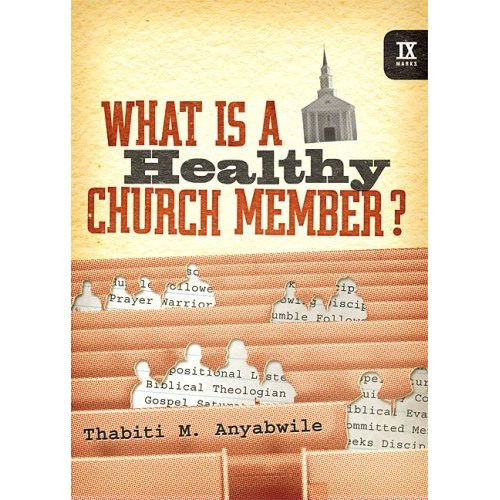 Although not out, Thabiti M. Anyabwile’s new book is set for release of June 30th. Jay T. Collier of Reformation Heritage Books has done a wonderful review of the book. You can pre-order a copy of this at Reformation Heritage Books for their low price of $9.00. Below is the review.
Books on church vitality and health have largely been directed toward pastors. I suppose this is wise, for a church with ill-informed leadership is bound to be riddled with problems. Yet the church is more than just its pastors. The whole congregation makes up the body of Christ, and every member carries a certain responsibility in that body. Thabiti M. Anyabwile’s What Is a Healthy Church Member? is a welcome addition to books addressing the health of the church.
Anyabwile’s book is part of Crossway’s 9Marks series, and as such, seeks to address the concerns of Mark Dever’s Nine Marks of a Healthy Church from yet another angle. In fact, Anyabwile’s chapters mirror those nine characteristics that Dever discusses, focusing them on the common member, and adding one. Here is a summary of Anyabwile’s 10 marks of a healthy Christian.
Mark 1: Where Dever’s first mark of a healthy church is expositional preaching, Anyabwile encourages Christians to perform expositional listening. That is, it is not good enough to attend a church with solid preaching. Believers should be active in listening to the sermon to discern the meaning of the Scripture, accept it, and apply it to their lives. Anyabwile goes on to discuss the benefits of such listening skills and gives practical suggestions for cultivating this mark.
Mark 2: Since a healthy church adheres to biblical theology, healthy church members should be biblical theologians. They should desire to know God more and know the overarching themes of the Bible. Here, Anyabwile shows why biblical theology promotes vitality in Christians and how to become theologically informed members.
Mark 3: If a healthy church is committed to a proper understanding of the gospel, healthy church members are gospel saturated. They will think about the good news of Jesus Christ, strive to understand it more, continually draw comfort and strength from it, and boast in it. In an age where the gospel is treated as if it were only good for addressing the unconverted, it is comforting to read that the gospel is good news for the Christian, too!
Mark 4: Because a healthy church has a biblical understanding of conversion, the healthy members will be genuinely converted. They will dig past the presumptive, easy-believism that inundates the evangelical scene, and exercise self-examination. Anyabwile encourages a better understanding of conversion and gives valuable directions for knowing better the state of one’s own soul.
Mark 5: A church having a biblical understanding of evangelism will have members that are biblical evangelists. They take delight in the gospel and share it with others.
Mark 6: While churches should seek to implement a biblical understanding of church membership, healthy Christians will likewise seek to be committed members of a local congregation. They will dedicate themselves to loving the brethren and building them up in the Lord. Here we see a thoughtful description of what committed church members look like.
Mark 7: If practicing biblical church discipline faithfully is a mark of a healthy church, healthy church members will seek discipline. They will be open to biblical guidance and correction from others, and lovingly seek to provide them to others. Anyabwile helpfully describes what discipline looks like among members and shows how they can joyfully seek it.
Mark 8: A healthy church has a concern for discipleship and growth, so healthy church members must be growing disciples. Rather than being satisfied with nominal Christianity, they progressively increase in spiritual maturity. Here Anyabwile discusses problems in our thinking that hinder our growth, and the means God has given us to cultivate godliness.
Mark 9: Dever stresses the need for churches to implement biblical church leadership, so Anyabwile calls church members to be humble followers. This section addresses how members are to honor and love their leaders with a teachable spirit, and proposes actions they should take in order to follow the leadership of their local church.
Mark 10: Dever never stated prayer as a mark of a healthy church, since he did not see it as something that was being challenged. However, Anyabwile sees this as a point worth making, describing healthy Christians as prayer warriors. He talks about how and when church members should pray, and addresses things for which they should pray.
Throughout the book, Anyabwile presents a picture of the church as a gathering of those glorying in the gospel to represent “the body of Christ” to this world. By addressing the relationship of the individual believer to the congregation, he enables us to see that the health of the church is stunted if reform is confined to the level of leadership. Christ is interested in the whole body being built up.
I heartily recommend this book. Its greatness lies not in novelty of insight. Rather, it is found in its ability to address the everyday basics in a clear, concise, and compelling way. The sad fact is that we easily overlook simple responsibilities, and someone has to recall them to our attention. Anyabwile does this in a winsome fashion.
Furthermore, this is not simply a book to be read by individuals. Its short, well-organized chapters with questions “for further reflection” make it helpful for study groups. This is a book for Sunday Schools, Bible studies, and other church groups to discuss together. I, for one, look forward to reading this book again, but next time reflecting upon it with my fellow church members.
—Jay T. Collier
Dwelling in the Kingdom
Posted: June 19, 2008 Filed under: Sermon of the Week Leave a comment
The sermon of the week comes from Ed Stetzer at the Dwell conference in later April. The message was entitled Dwelling in the Kingdom. I had never even heard of him until listening to the messages in mid May. I was quite intrigued with his way of teaching and thought provoking-ness on the gospel being lived out among christians today. For missiology… this is a must listen to. Here is the link.
NetNewsWire
Posted: June 18, 2008 Filed under: Web Material 3 CommentsFor those of you who may read an extremely amount of RSS feeds, news articles like CNN and BBC, sports like ESPN, and tons of blog like Gospel-Centered Musings I found last night a program that is amazing! There are many programs I found that are great and tons for you PC users, but if you are a Mac user life myself, check this out from News Gator.
Bishop Desmond Tutu on the Preaching of the Gospel
Posted: June 18, 2008 Filed under: Gospel Quote of the Week Leave a commentGospel Quote of the Week
 “I don’t preach a social gospel; I preach the Gospel, period. The gospel of our Lord Jesus Christ is concerned for the whole person. When people were hungry, Jesus didn’t say, “Now is that political or social?” He said, “I feed you.” Because the good news to a hungry person is bread.” – Bishop Desmond Tutu
My Thoughts: It is always great to dwell upon, no matter who the person is, saved, unsaved, old, young, rich or poor, the gospel is enough for him. For there is truly no greater food then for the believer and unbeliever to come and feast upon the gospel for the glory of God. Mention about feeding on the gospel reminds me of a friend I meet this past spring that is doing a blog full of gospel-centered resources for the believer to be “Feeding on Christ.”
Hamlet 2
Posted: June 17, 2008 Filed under: Where is Christ in the Culture Today? Leave a commentWhere is Christ in the Culture Today? From now on Tuesday’s post will be dealing with the Culture and Christ. I happen to take my younger cousin to a movie the other night (Leatherbacks) when seeing the previews for quite the disturbing movie coming out August 22nd called, Hamlet 2. Take a look for yourself.
I am remembered of the following… Thou shalt not make unto thee any graven image, or any likeness of any thing that is in heaven above, or that is in the earth beneath, or that is in the water under the earth: Thou shalt not bow down thyself to them, nor serve them: for I the LORD thy God am a jealous God, visiting the iniquity of the fathers upon the children unto the third and fourth generation of them that hate me; And shewing mercy unto thousands of them that love me, and keep my commandments.
The movie is be a comedy, a kind of “turn for the worse” high-school thing, where a teacher can help rally his Tucson, AZ students as he conceives and stages a politically incorrect musical sequel to Shakespeare’s Hamlet. But in doing so, adds Jesus Christ to the play, to add character, flavor and spunk. In doing so, the results are quite offensive. Not only does it distort Christ and who He is, but directly attacks His character in EVERY way. If you have any thoughts, please do leave them.

Books or Food?
Posted: June 16, 2008 Filed under: You Might be a Calvinist if... Leave a comment You might be a Calvinist if… You buy Books before you buy your groceries.
Sunday’s with Spurgeon
Posted: June 15, 2008 Filed under: Sundays with Spurgeon Leave a commentBY GRACE THROUGH FAITH
“By grace are ye saved, through faith” (Ephesians 2:8 ).
THINK IT WELL to turn a little to one side that I may ask my reader to observe adoringly the fountain-head of our salvation, which is the grace of God. “By grace are ye saved.” Because God is gracious, therefore sinful men are forgiven, converted, purified, and saved. It is not because of anything in them, or that ever can be in them, that they are saved; but because of the boundless love, goodness, pity, compassion, mercy, and grace of God. Tarry a moment, then, at the well-head. Behold the pure river of water of life, as it proceeds out of the throne of God and of the Lamb!
What an abyss is the grace of God! Who can measure its breadth? Who can fathom its depth? Like all the rest of the divine attributes, it is infinite. God is full of love, for “God is love.” God is full of goodness; the very name “God” is short for “good.” Unbounded goodness and love enter into the very essence of the Godhead. It is because “his mercy endureth for ever” that men are not destroyed; because “his compassions fail not” that sinners are brought to Him and forgiven.
Remember this; or you may fall into error by fixing your minds so much upon the faith which is the channel of salvation as to forget the grace which is the fountain and source even of faith itself. Faith is the work of God’s grace in us. No man can say that Jesus is the Christ but by the Holy Ghost. “No man cometh unto me,” saith Jesus, “except the Father which hath sent me draw him.” So that faith, which is coming to Christ, is the result of divine drawing. Grace is the first and last moving cause of salvation; and faith, essential as it is, is only an important part of the machinery which grace employs. We are saved “through faith,” but salvation is “by grace.” Sound forth those words as with the archangel’s trumpet: “By grace are ye saved.” What glad tidings for the undeserving!
Faith occupies the position of a channel or conduit pipe. Grace is the fountain and the stream; faith is the aqueduct along which the flood of mercy flows down to refresh the thirsty sons of men. It is a great pity when the aqueduct is broken. It is a sad sight to see around Rome the many noble aqueducts which no longer convey water into the city, because the arches are broken and the marvelous structures are in ruins. The aqueduct must be kept entire to convey the current; and, even so, faith must be true and sound, leading right up to God and coming right down to ourselves, that it may become a serviceable channel of mercy to our souls.
Still, I again remind you that faith is only the channel or aqueduct, and not the fountainhead, and we must not look so much to it as to exalt it above the divine source of all blessing which lies in the grace of God. Never make a Christ out of your faith, nor think of as if it were the independent source of your salvation. Our life is found in “looking unto Jesus,” not in looking to our own faith. By faith all things become possible to us; yet the power is not in the faith, but in the God upon whom faith relies. Grace is the powerful engine, and faith is the chain by which the carriage of the soul is attached to the great motive power. The righteousness of faith is not the moral excellence of faith, but the righteousness of Jesus Christ which faith grasps and appropriates. The peace within the soul is not derived from the contemplation of our own faith; but it comes to us from Him who is our peace, the hem of whose garment faith touches, and virtue comes out of Him into the soul.
See then, dear friend, that the weakness of your faith will not destroy you. A trembling hand may receive a golden gift. The Lord’s salvation can come to us though we have only faith as a grain of mustard seed. The power lies in the grace of God, and not in our faith. Great messages can be sent along slender wires, and the peace-giving witness of the Holy Spirit can reach the heart by means of a thread-like faith which seems almost unable to sustain its own weight. Think more of Him to whom you look than of the look itself. You must look away even from your own looking, and see nothing but Jesus, and the grace of God revealed in Him.
Funny Christians
Posted: June 14, 2008 Filed under: Video of the Week Leave a commentMy Thought: This weeks VIDEO OF THE WEEK seems to remind me sometimes of my fellow brothers that start talking about theology, philosophy, greek, or anything else I tend to struggle with following along.
My Application: Don’t become one of those “types” of people that seem to talk as if an average man cannot understand you.
New Ideas for the Blog
Posted: June 13, 2008 Filed under: Uncategorized Leave a commentI have been wondering what to do for the summer on my blog. I usually write papers, articles about what I read, etc. because I am in seminary, but this summer I am only taking Greek I & II, and I am sure that no one is that interested or wants to see my homework. So, I have started a schedule of daily post that will be done for certain days of the week. I will continue in the future to write articles dealing with the Gospel, The Reformation, and plan to do several articles in dealing with Old Testament Theology and Hermeneutics next fall. But for now here is a list of the days and what post will be given for each day of the week. If you happen to have any ideas, please be sure to share them and let me know. Thanks!
Sunday– Sunday’s with Spurgeon– This posting will be an article, journaling writing, or section, or sometimes just a quote from the late Charles H. Spurgeon.
Monday– You might be a Calvinist if…– This will be a way for those of you die-hard Calvinist to see if you are truly a Calvinist at heart. The idea came from, Jeff Foxworthy who is well known for his TV show Are you smarter then a 5th grader and his classic jokes, “You might be redneck if…”
Tuesday– Where is Christ in the Culture Today?– This post will be a post of dealing with how Christians and the secular world as most call them, refers, sees, knows, talks about, watches, and deals with Christ today in the 21st century. Should be a fun post, I’m sure.
Wednesday– Gospel quote of the Week– This post will be a simply one sentence to one paragraph from anyone who knows the Gospel well. Sometimes I may include my thoughts if i have time, over the quote.
Thursday– Sermon of the Week– This post will be my favorite sermon that I have/had listen to in the past week of posting. Thoughts once again may be included at times.
Friday– Book of the Week– A post of a Book that I had read and enjoyed doing so during that week. I would also like to begin doing book reviews of the book I post on, but we will see and time will tell to what I will be able to do.
Saturday–Video of the Week– A YouTube video that caught my eye during the week as I was surfing the web.
Book of the Week
Posted: June 13, 2008 Filed under: Book of the Week Leave a comment Although short and for kids, this book once picked up, will not be set down. Caleb (the boy in the book) never really wanted to be a shepherd. But when he rescued a newborn lamb from a tangle of thorns and was given it as his own, he feelings began to change. As the lamb grew, Caleb came to feel a special affection for it. In the end, he owed his life to the lamb. “Caleb’s Lamb” is a gripping, humbling read, with suprising twists, all designed to promote a deep sense of appreciation for the principle of substitution. Read this book with your children, and use it to teach them the gospel.
Title: Caleb’s Lamb
Author: Santos, Helen
Publisher: Reformation Heritage Books
Publish Date: 2005
Cover Type: Paperback
Pages: 95
Price: $7.50
The Gospel on Wikipedia VII
Posted: June 12, 2008 Filed under: The Gospel Leave a comment
 Gospel Music
Gospel music is music that is written to express either personal or a communal belief regarding Christianlife, as well as (in terms of the varying music styles) to give a Christian alternative to mainstream secular music.
Like other forms of Christian music the creation, performance, significance, and even the definition of Gospel music varies according to culture and social context. Gospel music is composed and performed for many purposes, ranging from aesthetic pleasure, religious or ceremonial purposes, or as an entertainment product for the marketplace. However, a common theme of most Gospel music is praise, worship or thanks to God, Christ, or the Holy Spirit.
The Gospel on Wikipedia VI
Posted: June 11, 2008 Filed under: The Gospel Leave a comment List of Gospels
Gospels are a genre of Early Christian literature claiming to recount the life of Jesus, to preserve his teachings, or to reveal aspects of God‘s nature. The Development of the New Testament canon has left four canonical Gospels which are accepted as the only authentic ones by the great majority of Christians, but many others exist, or used to exist, and are called Apocryphal. Some of these have left considerable traces on Christian traditions, including iconography.
The Gospel on Wikipedia V
Posted: June 10, 2008 Filed under: The Gospel Leave a comment
 Matins Gospel
The Matins Gospel is the solemn chanting of a lection from one of the Four Gospels during Matins in the Orthodox Church and those Eastern Catholicchurches which follow the Byzantine Rite.
The reading of the Gospel is the highpoint of the service, and takes place near the end of the festive portion of the service known as the Polyeleos. During the Divine Liturgy the Gospel is usually read by the deacon, but the Matins Gospel is read by the priest.
The Gospel on Wikipedia IV
Posted: June 9, 2008 Filed under: The Gospel Leave a comment Gospel (liturgy), readings from the Gospels in liturgical use
The Gospel in Christian liturgy refers to a reading from the Gospels used during various religious services and Mass orDivine Liturgy. In many Christian churches, all present stand when a passage from one of the Gospels is read publicly, and sit when a passage from a different part of the Bible is read. The reading of the Gospels, often contained in a liturgical edition containing only the four Gospels, is traditionally done by a minister, priest or deacon, and in many traditions the Gospel Book is brought into the midst of the congregation to be read.
Oprah Exposed
Posted: June 8, 2008 Filed under: Uncategorized Leave a commentThis is nuts! I was going through videos on youtube.com and came across these two. videos. I never had any idea of this, check it out!

 Gospel-Centered Musings