Calvin 500 is now taking registrations for those who wish to make their own arrangements but still attend Calvin500 in Geneva in July 2009. To register, go here.
ANNOUNCING “Conference Only” registration for Calvin500
Posted: December 31, 2008 Filed under: Calvin 500 Leave a commentpre-diluvian & post-diluvian??
Posted: December 31, 2008 Filed under: Questions & Answers Leave a commentQuestion: Dewalt can you compare and contrast the pre-diluvian and post-diluvian periods from a biblical theological perspective?
Answer:
pre-diluvian – My terms and the way I may use are different accordingly to my theology then which you may be used to. However this time period before the flood, theology was like that of what was given to Adam, and the Lord’s people. However the traditional reformist believe that it was here in this period that worship, laws, sacrifices and redemption ordinances were brought about and carried out during this time. Also, church/The Lord’s people here held to the promise of God given to Adam amongst their believes and looked forward for who would save them. However whatever time frame that it may have been, it is easily seen by the fourth chapter of Gen. that sin and the fall had corrupted the world to the effects of killing and a numerous amount of sin in which sicken the Lord so much, that he then would destroy what he had made. This is the beginning process of the reveling of the grace in which is given to man after the fall and sin of Adam.
post-diluvian – This here is the time after the flood and how redemption is played out after Noah beginnings the process of carrying out that plan of redemption throughout time. Here is where the reformed place a large emphasis upon covenant in showing the progression on it and how God’s promises are held and kept throughout not only here but only a beginning of it for the next 38 books in the Old Testament. By this time the covenant is seen in how it is made with man, who God is, how it works, his promises made to man. Also, the covenant is showing fully (not like before) how man is viewed from creation and in government among living. Also, this then is showing man, how Sabbath worship, sacrifices, and family etc. all played out.
My Top 10 Books of 2008
Posted: December 30, 2008 Filed under: My Top 10 Titles of 2008 Leave a comment#1 Total Church: A Radical Reshaping around Gospel and Community
As two pastors outline the biblical calling to make both the gospel and community central in the Christian life, they apply this dual focus to evangelism, social involvement, church planting, discipleship, youth ministry, and more, urging the body of Christ to rethink its perspective and way of life.
#2 Why We’re Not Emergent (By Two Guys Who Should Be)
Kevin and Ted are two guys who, demographically, should be all over this movement. But they’re not. And Why We’re Not Emergent gives you the solid reasons why. From both a theological and an on-the-street perspective, Kevin and Ted diagnose the emerging church. They pull apart interviews, articles, books, and blogs, helping you see for yourself what it’s all about.
#3 Worldliness: Resisting the Seduction of a Fallen World
Life in this fallen world can draw our hearts far from God and from growth in godliness. Worldlinessequips you to search your heart for the presence of worldliness and gives practical help for resisting the world’s influence in the areas of media, modesty, music, and material possessions.
#4 Death by Love: Letters from the Cross
Real people. Real sin. Transformed lives. Deep theology meets gritty pastoral experiences as Death by Love explains the practical implications of what Jesus accomplished on the cross. This compilation of heartfelt letters written from a pastor to his people is for all those who have sinned and have been sinned against.
#5 Living For God’s Glory: An Introduction to Calvinism
In this introduction to the doctrinal system known as Calvinism, Joel Beeke—with contributions from Sinclair Ferguson, Michael Haykin, Derek Thomas, Ray Pennings, and others—displays the biblical, God-centered, winsome, comprehensive, and practical nature of Calvinism. In this comprehensive survey of Reformed Christianity, Dr. Beeke and eight fellow contributors offer twenty–eight chapters that trace the history of Calvinism; explore its key doctrinal tenets, such as the so-called five points of Calvinisms and the solas of the Protestant Reformation; reveal how Calvinists have sought to live in devotion to God; and survey Calvinism’s influence in the church and in the world at large. In the end, the book asserts that the overriding goal of Calvinism is the glory of God. Saturated with Scripture citations and sprinkled with quotations from wise giants of church history, this book presents Calvinism in a winsome and wondrous fashion.
#6 John Calvin: A Heart for Devotion, Doctrine, and Doxology
John Calvin is often reviled as a humorless doctrinarian who preached an austere theology that twisted Scripture. In John Calvin: A Heart for Devotion, Doctrine, and Doxology, Burk Parsons and a cadre of godly pastors and scholars seek to set the record straight in honor of the 500th observance of John Calvin’s birth in 1509. The book’s nineteen succinct chapters explore aspects of Calvin’s life, ministry, and teachings, and establish his importance even for the twenty-first-century church. Contributors, in addition to Parsons, include some of the most gifted and godly Reformed leaders alive today: Derek W. H. Thomas, Sinclair B. Ferguson, D. G. Hart, Harry L. Reeder, Steven J. Lawson, W. Robert Godfrey, Phillip R. Johnson, Eric J. Alexander, Thabiti Anyabwile, John MacArthur, Richard D. Phillips, Thomas K. Ascol, Keith A. Mathison, Jay E. Adams, Philip Graham Ryken, Michael Horton, Jerry Bridges, and Joel R. Beeke. The foreword is by Iain H. Murray.
#7 Reformed Dogmatics, The completion of the 4 volume-set
The Dutch Reformed Translation Society is proud to offer in English for the very first time all four volumes of Herman Bavinck’s complete Reformed Dogmatics. This masterwork will appeal not only to scholars, students, pastors, and laity interested in Reformed theology but also to research and theological libraries.
#8 Theological Guide to Calvin’s Institutes
Capturing both the best of elite scholarship, as well as exhibiting a firm understanding of and passion for Calvin’s own work, these essays by 20 elite Calvin scholars who appreciate the abiding value of Calvin’s Institutes provide definitive and section-by-section commentary on Calvin’s magnum opus.
#9 Vintage Jesus: Timeless Answers to Timely Questions
This popular-level theology book introduces the person and work of Christ to those who are seeking answers to some of their most basic–and pivotal–questions.
#10 Introduction to Systematic Theology, 2nd Ed.
Van Til explores the implications of Christian theology, particularly for philosophy, as he discusses epistemology, general and special revelation, and the knowledge and attributes of God. Cornelius Van Til taught apologetics for more than forty-five years at Westminster Theological Seminary. This newly edited and typeset edition features an introduction and explanatory notes by William Edgar.
Honorable Mention: The New Media Frontier: Blogging, Vlogging, and Podcasting for Christ, Spectacular Sins: And Their Global Purpose in the Glory of Christ, Reforming or Conforming?: Post-Conservative Evangelicals and the Emerging Church, Christ and Culture Revisited, Is Rome the True Church?: A Consideration of the Roman Catholic Claim, Francis Schaeffer: An Authentic Life, A Christian Manifesto, and Truth with Love: The Apologetics of Francis Schaeffer
You can compare them with others here, here and here.
i think my wife’s a calvinist
Posted: December 29, 2008 Filed under: Just for Fun, Video of the Week 6 CommentsFavorite line – “She has a tattoo that says, I heart John Piper in Greek.”
Books
Posted: December 29, 2008 Filed under: You Might be a Calvinist if... Leave a commentYou might be a Calvinist if… you passed out books for Christmas gifts.
Speaking about books and Calvinist, RHB’s deal of the week till 5PM today for 50% off!
Absolute Assurance
Posted: December 28, 2008 Filed under: Sundays with Spurgeon Leave a commentHe hath said, I will never leave thee, nor forsake thee. (Hebrews 13:5)
Several times in the Scriptures the Lord hath said this. He has often repeated it to make our assurance doubly sure. Let us never harbor a doubt about it. In itself the promise is specially emphatic. In the Greek it has five negatives, each one definitely shutting out the possibility of the Lord’s ever leaving one of His people so that he can justly feel forsaken of his God. This priceless Scripture does not promise us exemption from trouble, but it does secure us against desertion. We may be called to traverse strange ways, but we shall always have our Lord’s company, assistance, and provision. We need not covet money, for we shall always have our God, and God is better than gold; His favor is better than fortune.
We ought surely to be content with such things as we have, for he who has God has more than all the world besides. What can we have beyond the Infinite? What more can we desire than almighty Goodness.
Come, my heart; if God says He will never leave thee nor forsake thee, be thou much in prayer for grace that thou mayest never leave thy Lord, nor even for a moment forsake His ways.
10 Must-Haves for a Redneck Weddin
Posted: December 27, 2008 Filed under: Just for Fun Leave a comment1. Spittoon- With all the male bonding there will be a lot of chewing done, spitting too. So to keep the yard half way clean, have those spittoons strategist placed. Make sure you empty into the Hog pen often.
2. Charcoal Grille- What would a wedding be without a fine dinner. Have the grill hot and waiting for the next road kill to appear, or the bear you shot out back yesterday.
3. Pair of Tall Boots- You knows with all those rednecks around there will be a lot of bull to wade through. And they look perfect with the custom made grain sack you choose for your dress.
4. Fanny-pack- A great way to collect all the IOU’s you will receive from the guests. And the special gift for the bride and groom. A universal key to outhouses. You don’t want to leave home without it.
5. Bread Ties- Get the newest one and if you are lucky you might find another one for a matched set of rings.
6. Old Barrel- To keep in the creek with the “champagne “of beer, Budweiser. I’m sure someone will bring some “family recipe” to sample. Make sure you keep it cold in the creek.
7. Old Tires- You might have to borrow a few from the neighbors for the seating you will need. You might even put on the invitations BYOT (bring your own tire).
8. Goldenrod- Scour the fields for the weeds of your choice. Watch out for the cow pies. Tie the flowers together with a piece of horse hair from Mable, the family pet.
9. Chicken Feed- Make sure the wedding procession walks near the chicken pen, so two chores can be done at one time.
10. Shotgun- And finally a good quality shotgun. Loaded of course. This makes the whole ceremony legal and binding
Bad News: Santa Claus Is Coming to Town
Posted: December 27, 2008 Filed under: Video of the Week Leave a commentIf I Wrote a Biblical Theology Book?
Posted: December 26, 2008 Filed under: Questions & Answers Leave a commentQuestion: Dewalt, if I asked you to write a biblical theology (OT section). Give the basic chapter titles and explain how and why your method would be different than if you wrote a systematic theology.
Answer:
Book Title: The Gospel Given in Progession in the Old Testament
1. The Gospel in Creation
2. The Gospel of Redemption Given to Adam (Covenant)
3.The Gospel of Grace Given to Noah
4. The Gospel of Faith & Covenant Gievn to Abraham
5. The Gospel in the Law Given to Moses
6. The Gospel shown in Judgment given to Israel
7. The Gospel in the Kingdom of David
8. The Gospel Preached by the Prophets
Ready for a long sentence…As far as in how this would differ from that which is done in systematic theology, is instead of touching on doctrine(s), then showing the doctrines’ overview throughout all of the Scriptures, this here would be looking the progression of the doctrine (the plan of redemption) given to man in covenant throughout all of time, namely the Old Testament.
What I Got for Christmas
Posted: December 25, 2008 Filed under: Just for Fun Leave a commentSince today is Christmas I figured I’d jot down the number of items I received for gifts and from who. Throughout the rest of the day I’ll up-date them, that is if I receive anything more?
Emily (my girl-friend) – Levis Slim Straight 514 Jeans
My Mom – XBox 360 Live 3 Month Gold Card
Emily’s mom & dad – The Chronicles of Narnia: Prince Caspian
What is New about the New Covenant?
Posted: December 24, 2008 Filed under: New Covenant Leave a commentIn the beginning God created the heavens and the earth. His creative activity climaxed in the creation of man and woman—creatures made in his own image and given dominion over everything that God had made. Nevertheless humanity was beguiled by the serpent and rebelled against its maker. Death was the inevitable result. Yet, God continued to reveal himself to men and women. Rather than immediate and total destruction, human beings found themselves the recipients of grace and peace. As the centuries passed, God chose specific individuals and their offspring to be a blessing to the entire world. Though this chosen people were little more than a band of slaves, God rescued them from their oppressors in a massive exodus from the land of Egypt. They were given a land that had been promised centuries before to their forefathers—the promised land, Canaan. Though they were to be God’s messengers to the world, bringing news of mercy and forgiveness and a coming messiah, these chosen people were largely as rebellious as the original humans. For their continual adultery with other gods, the people were judged and punished by exile to a foreign land. Yet God’s grace was not entirely obscured by his judgments and they were promised a return to the promised land and a faithful, righteous king. In the fullness of time, this king came. He was the Son of God: Jesus, the Christ. Having accomplished all that was necessary for the redemption of his people, this Jesus reconstituted God’s people and sent them into the world to be a witness until he would return to judge the living and the dead.
The great, over-arching plan of redemption stretches across all the centuries of human existence and takes in an amazing array of characters and events. How can it be understood as a cohesive whole? What themes wind their way through its entire plot? What organizing principles help us understand God’s purpose in his interactions with this world? There are many answers that could be given. Themes and motifs abound throughout the Holy Scriptures. One such theme that is widely recognized as central through this history is covenant. Indeed, it is more than just a literary theme. It is the means by which God has chosen to administer nearly all of the epochs of his redemption. It is the unifying principle of God’s revelation and relations to and with mankind.
The exact nature of these covenants has been a matter of intense debate since the post-Reformation period when theologians began to really grapple with the significance of the covenant concept in Scripture. Is there a covenant of works? Is there a covenant of grace? Were the covenants bilateral or unilateral? Were they conditional or unconditional? These are some of the questions that continue to generate much study. In this particular paper, we wish to focus on one of the biblical covenants, the New Covenant. The exact nature of this particular covenant has far-reaching implications for the Church because it is this covenant under which the Church is constituted. It is the covenant that was instituted by Christ and the consummation of all previous covenants.
More specifically, we wish to inquire into what it is that makes this covenant “New.” What is new about the New Covenant? There are several angles from which this discussion can be approached. We are primarily interested in its implications for baptismal practice, however, and that concern will guide our approach to the newness of the New Covenant.
My Definition of Christian Theism
Posted: December 23, 2008 Filed under: Apologetics, Christian Theism, Questions & Answers 2 CommentsQuestion: Dewalt, could you give me your own definition of Christian Theism?
Answer: I’ll try, even though it may be different then that of some, but my Precise Definition of Christian Theism would be this… Christian Theism is the belief of one God, who is the creator of all things, who has existed always before time, who has all things to do with all things that pass throughout all of time, who should receive all glory due him, which intercedes constantly with his creation.
Question: Dewalt, can you give me Scripture References to defend your definition?
Answer: Yes!
One God – John 14:1 & 6 Jesus said to him, “I am the way, and the truth, and the life. No one comes to the Father except through me.
Creator- Gen. 1:1 In the beginning, God created the heavens and the earth.
Existence – Heb. 11:3 By faith we understand that the universe was created by the word of God, so that what is seen was not made out of things that are visible.
Over all things – Rev. 4:11 “Worthy are you, our Lord and God, to receive glory and honor and power, for you created all things, and by your will they existed and were created.”
Receiving Glory – Rev. 5:9-10 9 And they sang a new song, saying, “Worthy are you to take the scroll and to open its seals, for you were slain, and by your blood you ransomed people for God from every tribe and language and people and nation,10 and you have made them a kingdom and priests to our God, and they shall reign on the earth.”
Intercedes with his creation – Isaiah 40:28 Have you not known? Have you not heard? The Lord is the everlasting God, the Creator of the ends of the earth. He does not faint or grow weary; his understanding is unsearchable.
It Came to Pass (from Behold the Lamb of God)
Posted: December 23, 2008 Filed under: Video of the Week 2 CommentsThe Matthew Poole Project
Posted: December 22, 2008 Filed under: Matthew Poole Leave a comment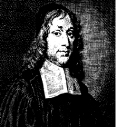
Check it out here.
John Piper on What Christmas Day Looked Like in the Piper Home
Posted: December 22, 2008 Filed under: Christmas, John Piper Leave a commentCatholic Christmas
Posted: December 22, 2008 Filed under: You Might be a Calvinist if... Leave a commentYou might be a Calvinist if… you don’t celebrate Christmas because it is to close to being catholic.
From Anger to Love
Posted: December 21, 2008 Filed under: Sundays with Spurgeon Leave a commentHe will turn again, he will have compassion upon us; he will subdue our iniquities; and thou wilt cast all their sins into the depths of the sea. (Micah 7:19)
God never turns from His love, but He soon turns from His wrath. His love to His chosen is according to His nature; His anger is only according to His office. He loves because He is love; He frowns because it is necessary for our good. He will come back to the place in which His heart rests, namely, His love to His own, and then He will take pity upon our griefs and end them.
What a choice promise is this—”He will subdue our iniquities”! He will conquer them. They cry to enslave us, but the Lord will give us victory over them by His own right hand. Like the Canaanites, they shall be beaten, put under the yoke, and ultimately slain.
As for the guilt of our sins, how gloriously is that removed! “All their sins”—yes, the whole host of them; “thou wilt cast”—only an almighty arm could perform such a wonder; “into the depths of the sea”—where Pharaoh and his chariots went down. Not into the shallows out of which they might be washed up by the tide, but into the “depths” shall our sins be hurled. They are all gone. They sank into the bottom like a stone. Hallelujah! Hallelujah!
Planned Parenthood
Posted: December 20, 2008 Filed under: Abortion 1 CommentSaw this video on a friends blog… I need to say nothing more.
John Owen on Apostasy – Part Four
Posted: December 19, 2008 Filed under: John Owen on Apostasy Leave a commentIII. Apostasy from the Mystery, Truth, or Doctrine of the Gospel- Proneness of persons and churches thereunto- Proved by all sorts of instances
Theses:
“There are three things in the gospel which are as the essentially constitutive parts of it: — 1. The mystery of its doctrine, which is the object of faith; 2. The holiness of its precepts, which are the matter of our obedience; and, 3. The purity of its institutions of worship, which is the trial of our faith and obedience as to their profession.”
Summary:
John Owen begins chapter three with defining the gospel in his thesis, as mentioned above, in three parts:
1. The mystery of its doctrine, which is the object of faith;
2. The holiness of its precepts, which are the matter of our obedience; and,
3.The purity of its institutions of worship, which is the trial of our faith and obedience as to their profession.
Owen uses these three statements to build a foundation for the rest of his chapter on explaining what it exactly means for one to fall away from the truth that lies in the gospel. Making this clear, he states from Titus 1:16, “Men may profess the truth, and yet not yield obedience unto it.” Owen is giving the biblical point that the gospel calls the believer to a life that is sold 100% to the gospel and lives for the sake of God’s name and not merely their own desires. Halfway through this chapter he moves into the reasoning of why people become apostates – leaving the truth of the gospel. He shows in profound depth that in Scripture there are four warnings that are given:
1.“Men from among themselves speaking perverse things.”
2.“Grievous wolves entering in, not sparing the flock.”
3.Weariness, and “not enduring of sound doctrine,” but turning the mind unto fables, and from the truth.
4. A gradual, secret, mysterious work of a general apostasy in the whole visible church.
From here Owen expounds upon each section looking at how the Spirit placed these four truths in the history of the church time and time again. Ending this chapter, he shows how the Reformation had brought about a time of serious measure that gave the Scriptures a renewal in the minds of the church. It brought a great love and cherishing of the gospel and living for it, for a lifetime. However, Owen reminds his readers that there are wolves like those before the Reformation who are still today seeking to take believers away from the gospel and lead many into apostasy.
Outline:
I. Apostasy Leaving the Truth
A. What Makes the Gospel, The Gospel?
B. Four Warnings Given by the Holy Spirit
1. Warning for the Sheep
2. Warning for the Wolves
3. Warning for the One Who is Tired of Hearing Doctrine
4. Warning for the Apostasy in the Church
The most practical doctrine in the Bible
Posted: December 18, 2008 Filed under: Christ, David Murray Leave a commentSee here.
Same-Sex Marriage
Posted: December 18, 2008 Filed under: Apologetics, Questions & Answers, Questions that begged to be asked 2 CommentsQuestion: Dewalt, can you Affirm for me one’s Stance against same-sex marriage?
My Answer: I’ll try… However I am no expert. I would begin by stating that we all agree that man and woman together replenishes the earth? And if all were to be gay, then how would that be done? Passages like in the garden in Gen. 2:18 where God said, “It is not good for man to be alone” are of major importance. If God wanted the culture of the garden to then have a “buddy” or a partner of the same sex, then he would have place along side him one of the same sex. Farther in Gen. 2 after Eve is made God then explains in how marriage and a relationship is to be done, saying “she shall be called woman.” It was women made with man, not picking or choosing what one could have, or want, or think he needs, but God calling a woman to come along side of a man for a relationship. Now father more in doing so, God then in verses 24 & 25 of Gen. 2, God claims that one woman and one man become one in flesh when coming together. Now it one said 1 + 1 = 2 no one would argue that? Man + Woman = One flesh. Meaning Man + anything else, man, men, women, animals, etc. Any other formula = death. How? Easily seen in Romans 1:18-232, namely, verses 26 – 28 when they state:
“For this reason God gave them up to dishonorable passions. For their women exchanged natural relations for those that are contrary to nature; 27 and the men likewise gave up natural relations with women and were consumed with passion for one another, men committing shameless acts with men and receiving in themselves the due penalty for their error. 28 And since they did not see fit to acknowledge God, God gave them up to a debased mind to do what ought not to be done.”
Serious Bible Study
Posted: December 17, 2008 Filed under: Bible Study 3 Comments(Posted by Dr. Jerry Bilkes)
Ps. 1:2. His delight is in the law of the Lord; and in his law doth he meditate day and night.
Adolphe Monod, the godly French preacher (1802-1856), made a very sobering, yet beneficial comment on Bible study. He wrote: “We must acknowledge that in the beginning of the study of Scripture, there are many difficulties, and much obscurity. Some labour is necessary to dissipate them; and the mind of man is naturally slow and idle; and he easily loses courage, and is satisfied with reading over and over again, without penetrating further than the surface; and he learns nothing new; and the constant perusal of the same thing causeth weariness, as if the word of God was not interesting; as if we could not find some new instruction in it; as if it were not inexhaustible as God Himself. Let us ever beware of thinking these difficulties insurmountable. We must give ourselves trouble. For here, as in every part of the Christian life, God will have us to be labourers with Himself; and the knowledge of the Bible, and a relish for the Bible, are the fruit and recompense of this humble, sincere, and persevering study.”
Benefits
Serious Bible study brings many benefits and blessings. The Word of God gives us a perspective that we do not hear around us in today’s world. Through the blessing of the Holy Spirit, the Word of God helps us understand ourselves. It provides security and stability. It enlightens our knowledge of God. It enflames our affections and renews our hope. It gives directions for our walk. It comforts us when afflicted. It goads us out of our complacency. It answers many of our questions. It reminds us that we live in a passing world and unveils to us a coming world. It sheds light upon our path. Many have regretted not spending more time in the Word; I’ve never heard anyone express regret for spending too much time in the Word.
Challenges
Serious Bible study, however, does not come naturally and automatically. There are many hindrances around us. The world calls to our sinful hearts. Our vocations take much time and energy. Young parents are busy and tired. It can often be difficult to find a quiet time or place in our bustling homes and world. There are usually, however, even more hindrances within us. Our minds are easily distracted. Our hearts are hard and cold. The world attracts us. Complacency eats away at us. Even doubts can take hold of us and hinder profitable study. Furthermore, serious Bible study is not easy. The Bible is not easily read, like much of the literature around us. Its subject is loftier. It concerns spiritual realities, which our eyes can’t see, and which we may be unwilling to see. Many concepts are abstract; the language is sometimes difficult. There are verses and sometimes passages for which the meaning is not immediately clear. Serious Bible study is challenging.
The Basic Posture
When studying the Bible, our basic posture should be that of Samuel: “Speak Lord, for thy servant heareth” (1 Sam. 3:9). The Puritans called this the practical reading of Scripture. Wilhelmus à Brakel says a Christian should place himself before the Lord “with a humble, hungry, and submissive spiritual frame … while reading slowly and thoughtfully as if hearing the voice of God, and subjecting himself to the Holy Spirit to operate upon the heart as he reads. … Whenever there is a passage which has a special power upon the heart, such a person pauses in order that this Scripture might have its effect in the heart. Then he prays, gives thanks, rejoices, and is filled with amazement—all of which revive the soul and stimulate it to obedience.”
It seems to me there should be four elements in our basic posture to the Word of God.
1. We should pore over the Word of God in the conviction that this is the Word of the living God, who has made us and everything for Himself.
2. We should pray that the Lord would open our eyes and heart to His Word.
3. We should purpose in our heart to obey through grace all that God commands in His holy Word.
4. We should progress in understanding the meaning and claim of the Word.
Helps
For the Christian, Bible study is not optional. Just as we starve physically, when we don’t eat, we starve spiritually when we live from bread alone. The Christian will want to study God’s Word. Those who have been born again by the Word, will return to the Word for food. They will desire “its sincere milk.” They will find it an instrument for “growth” (1 Pet. 2:2), and who wants to stay small?
1. Plan a manageable routine. This routine will not be the same for everyone. Everyone should devise a routine that puts them in the Word, regularly and effectively. Consistency is key to success. Clearly, it is fruitless to make a plan that is impossible to keep up long-term. If you are single or older, you probably will have more time than a parent of young children would.
2. Have a back-up plan. Perhaps you plan to study the Bible in the morning before others get up. However, something gets in the way, try to make up for it later, for example at night or over lunch. If at the end of a busy week, you have fallen behind, try to use the Sabbath to catch up.
3. Exercise your understanding. Too often we are content to let our eyes glide over the words and if there is something that we recognize, we may pause and take it in, but otherwise we continue on. However, we should aim to understand the meaning of each verse and passage. We need to pay attention to the context. We need to think about the style and purpose of the text. We should stop often and ask the question: What does the gist of this verse or this passage? What are its implications? How can I be obedient to this?
4. Seek out a good Bible study with others. The obvious place to start is with your church. Often there are Bible studies for women, or men, or any an adult Bible class. Study the material beforehand so you can get more out of it. Such Bible studies can help you learn from others and keep you accountable. Sometimes there are also Bible studies in the community. Of course, you need to make sure the Bible study has a sound basis, and a solid leader. Look for a study that is not just feelings-based but where Reformed truth is recognized as truth. As fallen creatures whose understanding is flawed, we need more than just our feelings to guide us.
5. Use sound and faithful helps, when you need guidance. The Ethiopian eunuch needed Philip as a guide into the Scriptures. We live in a day when there are more good Bible study materials and commentaries than ever before in the history of the world. Have a few trusted sources like Matthew Henry, Matthew Poole, John Calvin, J. C. Ryle, and others to help guide you when you have questions.
6. Take notes. Consider keeping a spiritual journal with notes about the passage. Some of the things you could write down are the meaning of the chapter, any questions you may have, any specific verses you wish to memorize, or the lessons you are taking away. The next time you speak with a friend or minister, you could even ask him some of the questions for which you have not been able to find an answer. You can also expand this journal with other things that you wish to remember about your day. You could jot things God has brought you in His providence, the names of people for whom you wish to intercede, etc. The Puritans understood the idea of “counting our days” (Ps. 90:12) to imply that we should take stock of what God has taught us and brought to us each and every day. For that reason, many of them kept a kind of spiritual diary.
7. Continue meditating throughout the day. It is very fruitful to take a thought and verse and meditate on it for the rest of the day while you are driving, walking, or working. When Psalm 1 says that the godly man meditates day and night, it doesn’t mean he is reading the Bible every hour of the day and night. Rather, it means that he reads the Bible regularly, and then ruminates on the truth of it throughout the day and night, as often and as much as it is possible and profitable.
May God grant that our generation would be serious students of the Word of God.
I was asked the Following Question…
Posted: December 16, 2008 Filed under: Puritans Leave a commentQuestion: Can you detail five lessons that you have learn from the Puritans in promoting a more Biblical form of evangelicalism than the easy-believism that presently permeates the Christian world? If so, what areas are those and what was their importance?
1. Puritan Worship – seeing the importance of how scripture deals with how worship is done and the manner in which it is to be done instead of going along always with culture or what feels good.
2. Puritan Marriage – seeing the importance of the covenant of the puritans viewed marriage would then give easy believers and actual respect, and high view of the doctrine that is now today so easily broken by many evangelicals.
3. Puritan Sanctification – The importance of living out the gospel and practicing the truths in obedience to that of which God commands instead of “free ticket” going to heaven junk.
4. Puritan Adoption – Seeing that the doctrine is of extreme importance, being that easily believism tends to and is the most over looked doctrine and highest blessing of the gospel.
5. Puritan Meditations – The puritans view was great! In a world and culture that actually promotes reading the bible in church everyday for whatever and whenever, they need the puritans view. Having rime and reason to studying the Bible for the glory of God and doing it more then once a day, or finding whatever verse(s) best fit the believer at that time is a must need in today evangelicalism.
How to Read Thomas Goodwin
Posted: December 15, 2008 Filed under: Joel Beeke, Thomas Goodwin 1 Comment(Posted by Joel Beeke)
If I could have $5 for every time someone has asked me the question, “Who is your favourite Puritan to read?,” I suppose I’d be a wealthy man by now. Though I would probably answer that question today by saying, “Anthony Burgess—and he’s also one of the most neglected!,” for nearly two decades I would have said, “Thomas Goodwin.” I may be an oddball, but—dare I say it—I’ve usually gotten more out of reading Goodwin than reading John Owen.
The first collection of Goodwin’s works was published in five folio volumes in London from 1681 to 1704, under the editorship of Thankful Owen, Thomas Baron, and Thomas Goodwin Jr. An abridged version of those works was later printed in four volumes (London, 1847–50). This reprinted twelve-volume edition was printed by James Nichol (Edinburgh, 1861–66) in the Nichol’s Series of Standard Divines. It is far superior to the original five folio volumes.
Goodwin’s exegesis is massive; he leaves no stone unturned. His first editors (1681) said of his work: “He had a genius to dive into the bottom of points, to ‘study them down,’ as he used to express it, not contenting himself with superficial knowledge, without wading into the depths of things.” Edmund Calamy put it this way: “It is evident from his writings, he studied not words, but things. His style is plain and familiar; but very diffuse, homely and tedious.” One does need patience to read Goodwin; however, along with depth and prolixity, he offers a wonderful sense of warmth and experience. A reader’s patience will be amply rewarded.
How should a beginner proceed in reading Goodwin’s works? Here is a suggested plan. (Note: Books marked by * have been printed at least once since the 1950s.)
1. Begin by reading some of the shorter, more practical writings of Goodwin, such as Patience and Its Perfect Work,* which includes four sermons on James 1:1–5. This was written after much of Goodwin’s personal library was destroyed by fire (2:429–467). It contains much practical instruction on enhancing a spirit of submission.
2. Read Certain Select Cases Resolved, which offers three experimental treatises. They reveal Goodwin’s pastoral heart for afflicted Christians. Each addresses specific struggles in the believer’s soul: (a) “A Child of Light Walking in Darkness” is a classic work of encouragement for the spiritually depressed based on Isaiah 50:10–11 (3:241–350). The subtitle summarizes its contents: “A Treatise shewing The Causes by which, The Cases wherein, and the Ends for which, God leaves His Children to Distress of Conscience, Together with Directions How to Walk so as to Come Forth of Such a Condition.” (b) “The Return of Prayers,”* based on Psalm 85:8, is a uniquely practical work. It offers help in ascertaining “God’s answers to our prayers” (3:353–429). (c) “The Trial of a Christian’s Growth” (3:433–506), based on John 15:1–2, is a masterpiece on sanctification. It focuses on mortification and vivification. For a mini-classic on spiritual growth, this gem remains unsurpassed.
You might also read The Vanity of Thoughts,* based on Jeremiah 4:14 (3:509–528). This work, often republished in paperback, stresses the need for bringing every thought captive to Christ. It also describes ways to foster that obedience.
3. Read some of Goodwin’s great sermons. Inevitably, they are strong, biblical, Christological, and experimental (2:359–425; 4:151–224; 5:439–548; 7:473–576; 9:499–514; 12:1–127).
4. Delve into Goodwin’s works that explain major doctrines, such as:
· An Unregenerate Man’s Guiltiness Before God in Respect of Sin and Punishment* (10:1–567). This is a weighty treatise on human guilt, corruption, and the imputation and punishment of sin. In exposing the total depravity of the natural man’s heart, this book is unparalleled. Its aim is to produce a heartfelt need for saving faith in Christ rather than offer the quick fix of superficial Christendom.
· The Object and Acts of Justifying Faith (8:1–593).* This is a frequently reprinted classic on faith. Part 1, on the objects of faith, focuses on God’s nature, Christ, and the free grace of God revealed in His absolute promises. Part 2 deals with the acts of faith—what it means to believe in Christ, to obtain assurance, to find joy in the Holy Ghost, and to make use of God’s electing love. One section beautifully explains the “actings of faith in prayer.” Part 3 addresses the properties of faith—its excellence in giving all honor to God and Christ; its difficulty in reaching beyond the natural abilities of man; its necessity in requiring us to believe in the strength of God. The conclusion provides “directions to guide us in our endeavours to believe.”
· Christ the Mediator* (2 Cor. 5:18–19), Christ Set Forth (Rom. 8:34), and The Heart of Christ in Heaven Towards Sinners on Earth are great works on Christology (5:1–438; 4:1–92; 4:93–150). Christ the Mediator sets forth Jesus in His substitutionary work of humiliation. It rightly deserves to be called a classic. Christ Set Forth proclaims Christ in His exaltation, and The Heart of Christ explores the tenderness of Christ’s glorified human nature shown to His people on earth. Goodwin is more mystical in this work than anywhere else in his writings, but as Paul Cook has ably shown, his mysticism is kept within the boundaries of Scripture. Cook says Goodwin is unparalleled “in his combination of intellectual and theological power with evangelical and homiletical comfort.”
· Gospel Holiness in Heart and Life (7:129–336) is a convicting masterpiece, based on Philippians 1:9–11. It explains the doctrine of sanctification in every sphere of life.
· The Knowledge of God the Father, and His Son Jesus Christ (4:347–569), combined with The Work of the Holy Spirit* (6:1–522), explore the profound work in the believer’s soul of each of the three divine persons. The Work of the Spirit is particularly helpful for understanding the doctrines of regeneration and conversion. It carefully distinguishes the work of “the natural conscience” from the Spirit’s saving work.
· The Glory of the Gospel (4:227–346) consists of two sermons and a treatise based on Colossians 1:26–27. It should be read along with The Blessed State of Glory Which the Saints Possess After Death (7:339–472), based on Revelation 14:13.
· A Discourse of Election* (9:1-498) delves deeply into issues such as the supralapsarian-infralapsarian debate, which wrestles with the moral or rational order of God’s decrees. It also deals with the fruits of election (e.g., see Book IV on 1 Peter 5:10 and Book V on how God fulfils His covenant of grace in the generations of believers).
· The Creatures and the Condition of Their State by Creation (7:1–128). Goodwin is more philosophical in this work than in others.
5. Prayerfully and slowly digest Goodwin’s 900-plus page exposition of Ephesians 1:1 to 2:11* (1:1–564; 2:1–355). Alexander Whyte wrote of this work, “Not even Luther on the Galatians is such an expositor of Paul’s mind and heart as is Goodwin on the Ephesians.”
6. Save for last Goodwin’s exposition of Revelation* (3:1–226) and his only polemical work, The Constitution, Right Order, and Government of the Churches of Christ (11:1–546). Independents would highly value this polemic, while Presbyterians probably wouldn’t, saying Goodwin is trustworthy on every subject except church government. Goodwin’s work does not degrade Presbyterians, however. One of his contemporaries who argued against Goodwin’s view on church government confessed that Goodwin conveyed “a truly great and noble spirit” throughout the work.

 Gospel-Centered Musings