John Owen’s Biblical Theology to Be Reprinted
Posted: July 31, 2009 Filed under: John Owen, Reformation Heritage Books Leave a commentIn case you were unaware, RHB is offering 40% OFF on all titles by John Owen this week, and today is the last.
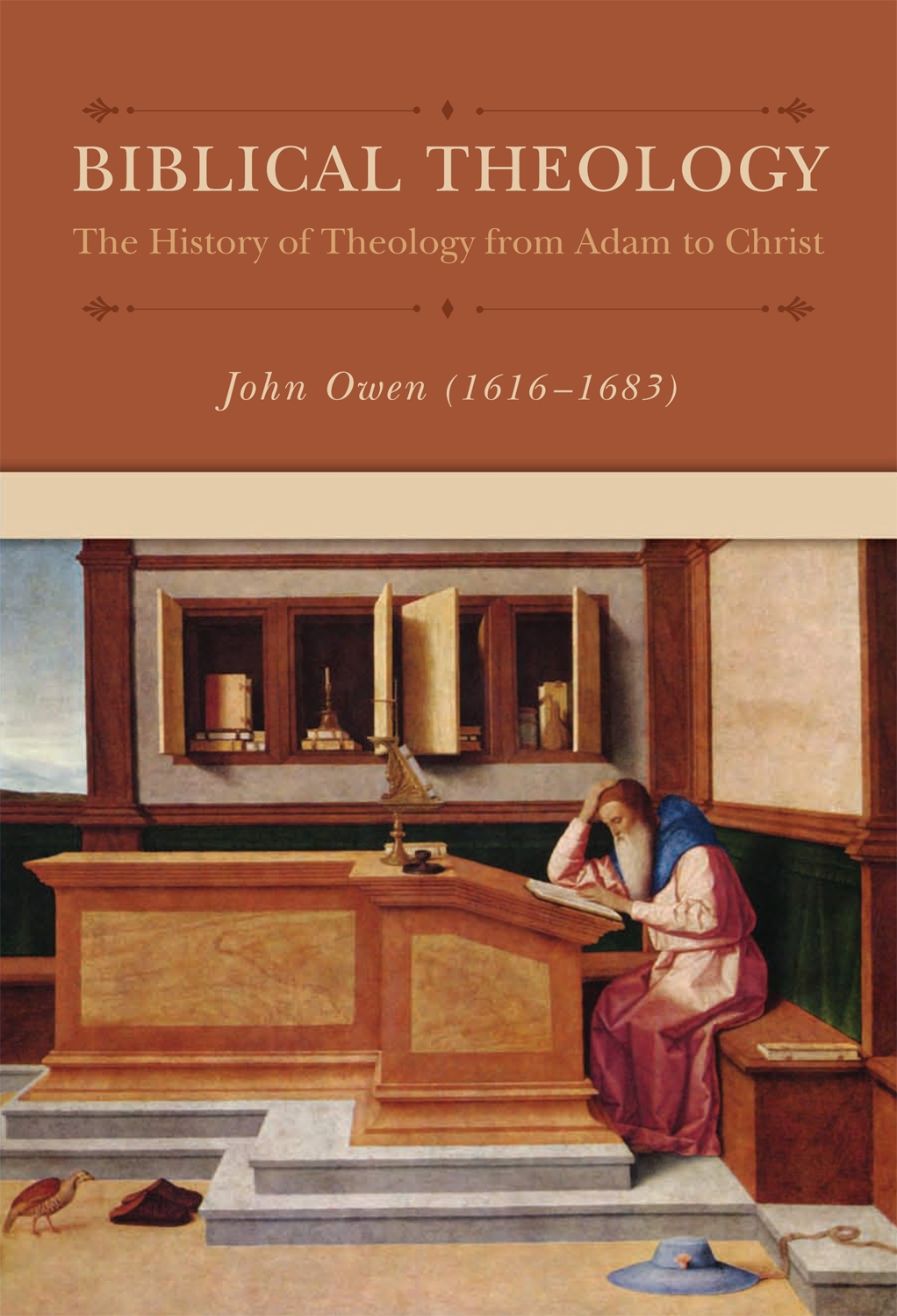
However even better than 40% OFF of John Owen’s titles is that they are reprinting John Owen’s massive volume, Biblical Theology: The History of Theology from Adam to Christ.
 Retail: $45.00
RHB:$33.00
RHB Pre-order Special: $27.00
Lovers of theology, and particularly of the Puritans, will welcome this English translation of John Owen’s Latin writings. In William Goold’s 24-volume edition of Owen’s works, this is the one volume that had been unavailable to English readers for years. Banner of Truth has reprinted the first 16 volumes plus the 7-volume commentary on Hebrews, but this volume has been available only in Latin until this SDG edition was produced.
The major portion of this volume is a history of theology from Adam to Christ. Appended to this important work is Owen’s Defense of Scripture against Modern Fanatacism. The Defense is an affirmation that the Bible is the perfect, authoritative, and complete Word of God. Owen also defends proper interpretation against what was known in his day as “inner light,” and what is so common in our day—subjective, experience-driven interpretation.
“Published in Latin in 1661 as a contribution to international Reformed scholarship, this treatise draws on a very wide range of learning. The final part, in particular, where Owen characterizes evangelical theology as a gift of the Holy Spirit generating faith in Christ, holiness through Christ, and worship of Christ, is pure gold. To have it in English is a great boon. Those with a taste for Owen, or for theology, or (best of all) for both, will read this Puritan proto-Biblical Theology with joy.”—J. I. Packer
Projected Ship Date: September 1, 2009.
The Glory of God
Posted: July 30, 2009 Filed under: Gospel Boasting Leave a commentEphesians 3:20-21 Now to him who is able to do far more abundantly than all that we ask or think, according to the power at work within us, to him be glory in the church and in Christ Jesus throughout all generations, forever and ever. Amen.
Romans 11:32-26 For God has consigned all to disobedience, that he may have mercy on all. 33 Oh, the depth of the riches and wisdom and knowledge of God! How unsearchable are his judgments and how inscrutable his ways! “For who has known the mind of the Lord, or who has been his counselor?” “Or who has given a gift to him that he might be repaid?” “For from him and through him and to him are all things. To him be glory forever. Amen.”
The believer can boast in the gospel through the knowledge that God, though perfect, allows sinful humanity to come to Him and bring Him praise, honor, and glory.
Of all the areas of the gospel, this is one that stands out from the rest with respect to why man was made. Man was made to know God in all of His glory. In addition, man is to make this known to others throughout the nations. He does this by boasting in the wonderful glory of God, when he stands in awe of God in all of His character, His will, His plan, and His work, and says, “That’s my God! That is Him!” Man must direct all his praise, all his honor, and all his thanksgiving to that end – giving God the glory. That is when the believer will – and can – find enjoyment in life. The believer is to find all of his joy in the glory of God. God’s beauty in who He is should stand alone among all the other beauties which He has, and which He freely allows man to partake in. The glory of God is the greatest attribute that the believer can boast in; for the glory of God is not just an area of the gospel, but is the gospel through and through. The glory of God is what gives the gospel its good news. The greatest concept to the heart for the believer is that God allows sinners to come and give glory to Him – the all-glorious God. The fact that God is all-beautiful, more splendid, and greater than everything else, calls the believer to boast, lift high, magnify, and give all gratification to God. Primarily for Him and His glory, and also in gratitude for allowing sinners to partake in proclaiming His glory.
First, the believer should be stunned to even think that he can boast and lift high the name of God. Man must remember Romans 3:23 in the back of his mind every day: “for all have sinned and fall short of the glory of God.” This is where man came from, but God has redeemed and allowed man to boast in His glory. When the believer attends a church service, a prayer service, opens the Word of God, or spends time alone in prayer with God, he is bringing praise and glorification to God. This is why man was bought from his state of sin to God – to make God known! To boast in God’s glory! The believer’s life should show the value of God’s glory in his life. Can others see how valuable the gospel is in your life? Do they see that the glory of God is your number one desire? If not, then you are not boasting fully in the glory of God. The glory of God is the most satisfying thing to the soul. All humans need to enter into knowing, and then boasting in the Glory of the Lord. When man comes to know this, only then is he cleansed from his sin and filth in which he had lived in and been devoured by. And this is why we, as believers, can enjoy this glory and enjoy this boasting. We can boast and bring Him the praise that we have from loving the gospel so greatly that it glorifies Him greater than all praises among this earth.
Secondly, think and dwell upon the fact that your soul was bound to hell and the all- glorious God called you by His sovereign voice to bring Him better glory than you brought before, in your state of deadness. How amazing it is that an all-holy, righteous, perpetually perfect being such as God, would not only allow sinners to give Him glory, but provide a way in doing so! God uses saints of the church, who were once sinners dead in their trespasses, to worship Him. O, how believers can boast in this area of this gospel – that they can bring God praise, they can sing to Him, they can preach about Him, they can teach others about Him, they can do all things to His glory and unto Him. This is one of the greatest areas of the gospel – that mankind gets to bring God praise! To know that man can boast in the gospel by glorifying God will not only make the most out of glorifying God, but soothe the soul of the believer more than anything else. It is like someone who is pouring a cup of coffee: the believer is trying and trying to fill the Lord’s will by glorifying Him and is filling the cup of making God known; the overflowing which the cup cannot hold is the contentment which the believer gets in doing this. The gospel, accordingly, is boasted above all things, and is made known the most throughout the believer’s actions and words.
The Mercy of God
Posted: July 29, 2009 Filed under: Gospel Boasting Leave a commentEphesians 2:4-5 But God, being rich in mercy, because of the great love with which he loved us, even when we were dead in our trespasses, made us alive together with Christ – by grace you have been saved.
Hebrews 4:15-16 For we do not have a high priest who is unable to sympathize with our weaknesses, but one who in every respect has been tempted as we are, yet without sin. Let us then with confidence draw near to the throne of grace, that we may receive mercy and find grace to help in time of need.
The believer can boast knowing he serves a merciful God, who has passed judgment upon His own Son so that He can have communion with the believer.
The mercy of God is God Himself passing by the judgment that man should receive. Though believers see this throughout life on earth, even more important is the mercy that God grants to the elect for eternity. God is mercy. God’s allowing man to come into a covenant with Him should bring zeal to the believer to boast in this mercy of God. God’s character, being merciful to all humans, should be boasted in. God passes judgment over all of humanity every day. But what is most encouraging to the believer is that there is particular mercy to His chosen children. There is no reason for the Lord to even allow man to breathe, let alone allow man to continue to serve Him in constant sin every day. When the believer sees that God allowed His Son – Christ – to take on all of the believer’s condemnation, they will be motivated to serve with all the love possible to the God of forgiveness, the God of passing judgment, the God of pity, the God of pardon, and the God who gives mercy to all. This is done so that God can give special mercy to His elect. It is great to see that because of Christ and His work at the cross, the believer can stand in mercy before God. This is just one of the many ways that God’s chosen people can actually come to Him and worship Him. Seeing that God is not only merciful to all of mankind, but to those who are clothed in Christ’s righteousness, the believer will receive God’s unending mercy that will carry him or her into eternity.
How does the believer boast in this mercy? By first bringing Him the praise and honor in which this merciful Lord calls for. Secondly, by availing from this merciful Lord who the believer serves. This means that because of Jesus Christ, the Savior of men who intercedes on the behalf of the believer, one can always go to the Lord and ask for forgiveness. A. W. Pink says this: “The merits of Christ make it possible for God to righteously bestow spiritual mercies on His elect, justice having been fully satisfied by the Surety! No, mercy arises solely from God’s imperial pleasure.”6 To be a child of mercy is to be a believer of mercy. One must see the mercy, which God has lavished upon him, and live that characteristic out in passing judgment on others, and allowing others to ask for forgiveness. When we represent the character of God, which the gospel gives to the believer, we should live out those characteristics that flow out of the gospel. Now, the facts to boast in this are twofold. First, man can boast in the fact that he can be forgiving to others that do him wrong. As Christ said in Matthew 5:7, “Blessed are the merciful, for they shall receive mercy.” We are called to give mercy to others, but, moreover, the reason why we can be merciful to others is because God has first given the believer mercy. The believer must give mercy to those who cannot work, to those who are poor, hungry, needy, abandoned, divorced, widowed and orphaned. So often it is easy to judge groups of people or classes of individuals. The believer must not do this. The believer must take the gospel to all groups and all nations of peoples on this earth. Secondly, man can boast in the fact that God has passed on all mercy upon his soul through Christ. What allows the believer to be merciful to others is that the gospel is merciful to the believer. The believer may never fully grasp the realization of the importance of this truth. But God’s mercy is so enjoyable to the heart and soul of the believer, that the believer should – above all else – want to share this with others who know, and do not know, the gospel.
So, how does the believer boast in this? The believer boasts in his forgiveness which God grants in the gospel. And he may boast that the work of Christ is the only reason one can be forgiven (and is constantly forgiven) and is that which allows God to not pass judgment on His elect. For the mercy of God is forever. He will never change it, stop giving it, or decide one day to cut it off from His people. The mercy of God will endure forever, flowing from Him forever. This is so the believer can see gleams of the gospel and its mercifulness, which flows directly from the gospel to the believer. Once the believer comes to grips with seeing this area of the gospel, he can find enjoyment from it and rest in the all-merciful Savior of mercy. How great it is that the believer can boast in knowing that God’s desire to give mercy will never stop and that He will never think twice about passing judgment from the believer. This is where the believer can cling to the gospel. Only when God forgives man of his sin(s), can man come before God in correct relationship and communion. May the believer continue to always remember that his salvation was because of the mercy of God, which allows him to have the ability to come into communion with the all-holy and glorious God.
The Holiness of God
Posted: July 28, 2009 Filed under: Gospel Boasting Leave a commentIsaiah 6:3 And one called to another and said: “Holy, holy, holy is the LORD of hosts; the whole earth is full of his glory!”
Leviticus 11:44 For I am the LORD your God. Consecrate yourselves therefore, and be holy, for I am holy. You shall not defile yourselves with any swarming thing that crawls on the ground.
1 Peter 1:16 since it is written, “You shall be holy, for I am holy.”
The holiness of God should provoke the believer to live out a life that is in pursuit of holiness until the day of Christ’s return when man shall spend eternity with his holy and blessed Creator.
Boasting in the fact that the believer serves an all-holy, perfect, blameless Maker is enough to make us see the shortcoming of humanity. Proper boasting is to realize this: an all-perfect, holy, and righteous God allows us to boast in Him. Man is filth, dirt, and most of all, a sinner before the all-holy God. It blows the minds of men and women to know that God has not only provided a way for man to boast in His holiness, but to partake in this holiness to which they will be restored – being His perfect image-bearers for eternity. Since everything man has done, can do, or will ever do, always comes short of the all-holy God, he is stuck in his cesspool of sin. But God and the gospel has allowed a way in which man can come to give Him His praise, His adoration, and His proper worship in boasting in the resurrection of Christ which will restore us one day before God. But for now, here on earth, the believer should constantly praise God for what he may partake of, but at the same time constantly battle with his flesh in trying to pursue a life that is clean and as pure as his Creator’s, in all His holiness.
Octavious Winslow states:
It is said of God that, “He only has immortality.” All created beings are immortal, but God is absolutely so. He only has immortality as an essential perfection of His nature. All others derive their immortality from Him; He from Himself. What a great and glorious being, then, is God! He is “glorious in holiness.” He could possess no glory were He destitute of perfect holiness. Divine in His nature, endowed with infinite perfections, and possessing resources vast and boundless as His infinity, imagine what a being He would be – how powerful for evil, how potent for destruction – were not every perfection of His nature imbued with, and under the control of, infinite and perfect holiness!
God is set apart from all other beings, both in the spiritual and earthly realms. Nothing even begins to display the perfection and maximum holiness that gleams from His being. For believers, this is to be boasted. For there is no other like Him, and no other god or gods come close to Him. He is set apart from all of creation. The holiness of God only reveals to the believer the un-holiness in which he lives. Boasting in the fact that God stands alone above and beyond all creation gives the sinner and saint something to look and gaze upon when in the time of need or even in the time of the highest peaks in the walk of Christianity. Man must boast in the fact that there is no holiness in himself that gives the believer the ability of ethical purity and freedom over sin. The holiness of God has allowed the believer to be set free from sin’s bondage, and therefore gives God glory to the highest capability as possible.
Proper boasting in God’s holiness is becoming holy. Believers, like God, have been set apart from this world. Many will come to the day of the Lord and not know God. The believers who have been cleansed from their sin by the holy blood of Christ are called to be set apart. They are to live as a sacrifice to the Lord by conforming their lives. They do this by boasting in the fact that they may know and live out the holiness of God every day. R.C. Sproul says this best:
True transformation comes by gaining a new understanding of God, man, and the world. What we are after, ultimately, is to be conformed to the image of Christ. We are to be like Jesus, though not in a sense that we can ever gain deity. We are not god-men. But our humanity is to mirror and reflect the perfect humanity of Jesus. A tall order!
Reformation Heroes is Back in Print at RHB!!!
Posted: July 27, 2009 Filed under: Reformation Heritage Books Leave a comment Reformation Heroes – 2nd Edition
Publisher’s Description: The Reformation did not happen instantaneously; it was something God patiently arranged over a number of years.
As you read this book, you will learn how the Lord used some people to plant the seeds of church reform long before October 31, 1517, when Martin Luther published his ninety-five theses. Luther’s story is well-known; we trust you will find it interesting and instructive to read about him and about forty others (John Knox, Peter Martyr Vermigli, Zacharias Ursinus, Willem Teellinck, etc.) who contributed to the Reformation – some well known and others not so – most of whom are Reformation heroes.
To provide a more full picture of the many sided Reformation, chapters are also included on the Anabaptist and Counter Reformation movements. The book concludes with a brief summary of the influence of the Reformation in different areas of life.
Diana Kleyn with Joel R. Beeke Diana Kleyn is a member of the Heritage Netherlands Reformed Congregation in Grand Rapids, Michigan. She is the mother of three children, and has a heart for helping children understand and embrace the truths of God’s Word. She writes monthly for the children’s section in The Banner of Sovereign Grace Truth magazine, and is co-author with Joel R. Beeke of the series Building on the Rock. Dr. Joel R. Beeke (Ph.D. Westminster Theological Seminary) is president and professor of systematic theology and homiletics at Puritan Reformed Theological Serminary, pastor of the Heritage Netherlands Reformed Congregation in Grand Rapids, Michigan, editor of The Banner of Sovereign Grace Truth, and author of numerous books.
Nothing to Alarm Us
Posted: July 26, 2009 Filed under: Sundays with Spurgeon Leave a commentBut go thou thy way till the end be: for thou shalt rest, and stand in thy lot at the end of the days. (Daniel 12:13)
We cannot understand all the prophecies, but yet we regard them with pleasure and not with dismay. There can be nothing in the Father’s decree which should justly alarm His child. Though the abomination of desolation be set up, yet the true believer shall not be defiled; rather shall he be purified, and made white, and tried. Though the earth be burned up, no smell of fire shall come upon the chosen. Amid the crash of matter and the wreck of worlds, the Lord Jehovah will preserve His own.
Calmly resolute in duty, brave in conflict, patient in suffering, let us go our way, keeping to our road, and neither swerving from it nor loitering in it. The end will come; let us go our way till it does.
Rest will be ours, All other things swing to and fro, but our foundation standeth sure. God rests in His love, and, therefore, we rest in it. Our peace is, and ever shall be, like a river. A lot in the heavenly Canaan is ours, and we shall stand in it, come what may. The God of Daniel will give a worthy portion to all who dare to be decided for truth and holiness as Daniel was. No den of lions shall deprive us of our sure inheritance.
Got a Flip, Wonder If I’ll Use This Thing or Sell it on Amazon
Posted: July 25, 2009 Filed under: Just for Fun Leave a commentYesterday when helping my Grandparents save $100 a month on their cable, phone and internet services, for signing up with Verizon’s bundle plan I received a Flip Ultra Series Camcorder. I am not sure how much I’ll use this thing, the older I get myself I see that trends come and go, and some fads take off, and some are only meant for those that they are directed towards.
In anyway, if your a video guru, like to have something compact and easy to use, this is it. I am not much into the video realm, nor do I make vlogs on my blog. But things might change, we’ll have to see just how much I use this in the next two to three months. If not, then I’ll be selling it on Amazon.
Product Description
The Flip Video Ultra Series Camcorder is a revolutionary new way to shoot and share videos. Its portable, simple-to-use design makes it incredibly easy to create high quality home movies. The camcorder’s built-in software provides a convenient, seamless way to save and share memories: email videos, make custom movies, capture still photos from video clips, and upload videos directly to popular video-sharing sites, including AOL Video and YouTube. Flip Video Ultra is the ideal, affordable choice for capturing everyday moments that happen anywhere, and sharing them with family and friends everywhere. This next-generation version of the original Flip Video line features a new sleeker design, premium no-glare LCD screen, and improved video and audio quality. Flip Video Ultra comes with a TV connector cable, wrist strap, soft carrying case, two AA batteries, and a quick start guide. Specs: Flip Video Ultra incorporates 2GB of built-in flash memory which holds up to 60 minutes of 30-frame per second full VGA-quality MPEG-4 video. Compatible with Windows XP SP2 and Vista; Macintosh OS X 10.3.9 or later. Computer connection via integrated USB Port.

- Publish Online: Upload your videos instantly to YouTube, MySpace, AOL Video and many other websites, all with the click of a button. It’s never been this easy to publish online!
- Email Videos: Send your videos privately to friends and family, and select from a wide assortment of included greeting cards to personalize your message.
- Edit and Create Movies: Edit individual clips and create custom movies–complete with your favorite music. FlipShare even allows you to capture snapshots from your videos.
Please note: Flip Ultra Camcorders manufactured before November 2008 may be pre-loaded with an older version of software. However, if you own one of these units, you’ll be prompted to download FlipShare–free of cost–the first time you connect your camcorder to a computer that is connected to the Internet.
In Response to R. R. Reno’s article “The Tattoo Fashion”
Posted: July 24, 2009 Filed under: Just for Fun, Tattoos 4 CommentsI do not know R. R. Reno, nor had I ever heard of him until I was reading Dr. Scott Clark’s blog, which said, “R. R. Reno is thoughtful and always worth reading.” Normally this wouldn’t have caught my eye, except that I saw the blog post title “Tattoos as a Search for Fixity in a Liquid World” on Dr. Clark’s blog. This is a statement that makes you think a little more than just the typical blog post.
Today, I’m not dealing with the issue of tattoos, nor the theology behind it in “yes they are a sin,” or, “no they are not.” However, being younger I have a totally different way of thinking in America’s postmodern culture when it comes to dealing with those that have tattoos. This may be something that those who are older should stop and think about; then again, maybe not. But after a little dialogue with Dr. Clark about the issue, I wanted to make mention of the article on my blog and write a response to a few issues I have personally with Reno’s post.
Issue #1 – Tattoos: A Fad or Not?
Reno starts his post looking at how Tattoo’s are a fad; that is, something that has only just come about and will soon be gone. He make’s comments like:
“Everybody tossing off the horrible, oppressive conformities of bourgeois culture—together.”
“I’ve often looked at young men and women with tattoos and shaken my head. Don’t they realize how quickly fashions change? You can throw away the old bell-bottom pants, but a tattoo?”
“I’m fairly sure that the tattoo fashion will expand.”
Mr. Reno, I am sorry to inform you, but tattoos are not a fad, nor some sort of mere fashion among the postmodern culture. They have been around as long as 5000 B. C.
Don’t fads come and go? Fads are long hair, bell-bottoms, bleached hair, leather pants, shaving your eyebrows, wearing Chuck Taylor’s with your suit. Fads are the 80’s big-hair, or the Nike shoes that said “A-I-R” on the side in the later 90’s. Fads are not a way of culture that has existed since Ancient Egypt in the practicing of tattooing Mummies and Pharaohs. We know that Egyptians Mummies were tattooed, European Tribes were tattooed, even Julius Caesar, in his fifth book titled Gallic Wars, mentions tattooing in his culture. Lastly, Asian tattooing has been part of their culture for as long as we know, and the largest influence in the American culture was the European soldiers who had been influenced by the Polynesia islands–their culture and their tattooing.
My point is that tattooing has been a part of many different cultures throughout all of history. Just because of its more recent growth in American (which I agree has happened) doesn’t make it a fad, nor does it make it a negative fad just because it is something you do not understand or agree with. Whatever your view is on tattooing, it is always important to look at the “thing”—which here is tattooing—and see that no matter where it has been done, and when it has been done, that it is always placed with a culture and done for longer than 30, 40, 50, or even 100 years. It stays in the culture.
Issue #2 – Dealing with Tattoo’s and Professionalism in a Non-Offensive Way
My second issue in Reno’s post is dealing with his ending statements on tattooing and being a professional of whatever your job may be.
In Reno’s post he says,
“And it will become socially acceptable, perhaps even fashionable. Because at the end of the day, manipulation of our bodies creates an impotent symbol of permanence.”
And the following statement:
“Thus, absent strong cultural forces that encourage and enforce limitations on the will, in the coming decade we will see all sorts of strange self-mutilations and radical commitments of the body. Self-mutilation will provide a powerful symbolic compensation for our inability to commit and bind the soul.”
If tattoos in many cultures reflect one’s spiritual convictions and beliefs, why can’t mine do the same for Christianity and Christ? And to many—believer or non-believer—tattoos do exactly that: they show what a person is, what they like, what they feel, and what is a part of their everyday life. So when dealing with the issue of tattooing, any negative notation is always going to offend a person who has them. My concern is that I should try not to offend the non-believer when dealing with them about tattoos in order to keep the heart, mind, and conversation open to relay the Gospel message to them.
It is funny to see how at times the Reformed faith is no different than that of the Fundamentalist or the Dispensationalist in the way they think and live. The Fundamentalist will preach that a professional minister must not drink, must wear a suit, must wear his or her hair a certain length, cannot smoke, etc. How is it any different when the Reformed faith does the same thing saying professionally you must be fine wine and cheese… wear nice clothes, drive a nice car, wear a tie, cannot have tattoos, and must smoke a cigar.
Mr. Reno paraphrases Martin King Jr. saying, “It’s the content of your character that matters, not what you do with your skin. Like tattoos, clipping off the tops of your ears or removing your little toe won’t stand in the way being a slave to your desires and society’s demands. Tasteful self-mutilation is perfectly consistent with any life-trajectory.”
The fact that you say “self-mutilation” is perfect with the flow of life, I’d agree if you were taking about sin; but this is talking about tattoos. You will never get your point across to, nor will you effectively reach, those that are unregenerate and have tattoos. But then again, maybe you do not want to do that.
Being a professional of a particular trade is not your skin, nor what you place on it. It is how good you are at what you do. If I have a tattoo on my neck or my arm, does that make me any worse at the skill of my profession? To the old generation, they say, “yes.” To the new and young generation, they say, “no,” because we truly understand what it means when you so happily paraphrased Martin King Jr. saying, “It’s the content of your character that matters, not what you do with your skin.”
In case you were wondering about Dr. Clark’s blog posting, you can read the dialogue that went on over there yesterday afternoon. But I am done for now, and not wasting much more time on this topic. But always, feel free to comment.
Why People Never Change, I’ll Never Know
Posted: July 23, 2009 Filed under: Just for Fun 3 CommentsI am at home the next month in Ohio where I grew up living with my grandparents who help raise me. I am here for a few reasons,
- I bought a Land Rover and had to pick it up
- To hang out with my best buddies from home before I get “hitched”
- Applying for Ph.D. programs for the Fall of 2010
At times I try to help my grandparents with their bills, seems like my grandmother made contacts back in 1992 when she moved here, and has not changed them since then. For example, she has Verizon landline phone service, paying $20 a month for a phone, $20 a month for a long-distance plan, and then 10-cents a minute. Which leads to a $80 a month phone bill. Another example is her cable bill… $75 for two TV’s and then $40 a month for her internet so she can read a few blogs and check her email. I grand total of wasting near $200 a month, then “older people” complain why they have nothing left in their Social-Security, it is because they refuse to change in their later years. They won’t spend the extra money for new furniture (when they need it bad!), but yet they’ll spend the money in keeping what they know to be true in life. The worst example of this is they vote Democratic. Why, they do not know, but if FDR got them out of WWII and out of the Depression, then Democrat’s must always be in office.
I have tired the last three years to change her mind that she needs to change her services, because she can get a much better deal when bundling all three together. Finally after many visits home she aloud me to help her out. Now she gets wireless internet, unlimited calling anywhere in North America, and Direct TV for $90 a month. Why people in their older age refuse to change, I do not understand yet. Is it because they know better and I am to young to understand now? Is it because they become hard-headed over time? Is it because they get tired of dealing with the constant changes in life? Is it because they don;’t care to learn what changes in time? I do not know, being younger, enjoying changes in technology, and saving money are always something that I enjoy, but just hope one day that I do NOT get in a slump of suborn mindedness that keeps me from learning what is new.
My Interview with Thabiti M. Anyabwile on His Newest Title, “May We Meet in the Heavenly World”: The Piety of Lemuel Haynes
Posted: July 22, 2009 Filed under: Interview with Thabiti M. Anyabwile, Interviews, Thabiti M. Anyabwile Leave a comment Q. This is at least your third book that is in some way related to Lemuel Haynes. Why do you enjoy studying Lemuel Haynes so much?
A. Lemuel Haynes simply hasn’t received enough attention as either an important figure in American and Christian history, or as an example to us of faithful Christian witness and pastoral labor. There is so much to learn from Haynes.
Q. What have you personally gleaned from the ministry of Lemuel Haynes the most?
A. I’m gripped by three things as I study Haynes. First, as I try to demonstrate in “May We Meet in the Heavenly World”, Haynes was consistently gripped by visions of eternity and heaven. I really dislike that saying, “Don’t be so heavenly minded you’re of no earthly good.” That saying gets it exactly backwards. The only way to be of any earthly good and to make a difference for eternity is to be heavenly minded. At least that’s how the apostle Paul under the inspiration of the Holy Spirit seemed to view things in Colossians 3:1–4. Haynes’s correspondence and sermons breathe the air of heaven and speak the language of Zion. That example is good for our souls and calls us to nobler, higher things of Christ.
Second, the Lord seemed to position Haynes between the church and the world in a powerful way. He was faithful in his pastoral duties, serving one congregation for three decades. But he also spoke powerfully to the issues of his day from a gospel- and Bible-centered perspective. He attempted to exegete the sacred text and the secular society so that the truth of God could be applied to all of life. Today, there are many who think that playing down the Bible or dressing it up in new clothing is the way to be sensitive to the issues in the culture. Haynes demonstrates that that kind of pragmatism is not necessary and that biblical faithfulness is effective.
Third, I’d like to say I learn something more about doctrinal preaching from Haynes. For Haynes, doctrine is for feeling and living and rejoicing and thanksgiving. He is precise doctrinally and fervently evangelistic. There’s light and fire in his preaching. I pray for that to be the case in my own preaching some day.
Q. How has Lemuel Haynes influenced your work as a pastor?
A. Well, first, he’s helped me to view pastoral ministry in light of eternity. I don’t know why my dull heart focuses so much on the dailyness of ministry, and temporal things. But Haynes raises my gaze to that coming Day when Christ shall appear and I will give an account and receive my reward. That quickens me, and when I keep this perspective in mind, it fills everything with a new and more exalted dignity.
As I said earlier, I hope his example of preaching his affected my own in some positive way. Haynes was also very missions-minded. He worked hard to pioneer missions and church-planting work in New England. He would preach right up to the week of his death at 80 years of age. He was tireless in the cause of the gospel; I hope to be so as well.
Haynes also spent a fair amount of time involving himself in ministerial fraternals and associations. He was catholic in the best sense, and contributed to the health of other congregations and ministers. He affirms that sense that we’re not to be in pastoral ministry alone or to neglect the wider body of Christ.
And I love that Lemuel Haynes was a writer! When I began work on African-American church history and theology, I was fairly certain that not much would be available from the earliest periods of African-American history, largely because many places had adopted slave codes that forbid African Americans from learning and writing. But in God’s providence, there are a number who nonetheless managed to learn and contribute significantly to spiritual deposits of Christ’s church. Haynes is one such person and his writings are helping a generation of African Americans to write and publish today. So, Haynes encourages me to write—primarily for the congregation the Lord has allowed me to shepherd—but also with the hopes that the Lord might make the writings useful to other parts of His vineyard and future periods of history, should He tarry.
Finally, his children testify that Haynes was faithful in the spiritual instruction of the home. He had grown up as an indentured servant in the home of a faithful deacon, who also led his family in spiritual exercises. I’d like to leave that kind of legacy with my own children.
Q. What are a couple of things you hope your new book will get across to those that are not familiar with Lemuel Haynes?
A. I hope it shows something of the contributions African Americans have made to Christian faith and practice at the founding of the country, and contributes to greater cross-cultural understanding inside the church. I hope the volume helps Christians glean from Haynes’s spiritual life in ways that are meaningful for their walk with the Lord. And I’d love to see others extend the scholarship on Haynes.
Q. In what way does this differ from your other books that deal with or make mention of Lemuel Haynes (i.e. The Faithful Preacher and The Decline of African American Theology)?
A. “May We Meet in the Heavenly World” hopefully gives the reader more insight into the man himself, particularly a glimpse into his devotion to God. The Faithful Preacher contains a couple of ordination and funeral sermons that teach us about Haynes’s view of pastoral ministry, and The Decline of African American Theology puts Haynes in the broader sweep of African American theological history. From the vantage point of history, I would argue that Haynes is a part of that great generation of writing African Americans whose theology was robustly biblical and orthodox. They are in many ways the standard-setting generation. As a pastor, Haynes is a model. But in “May We Meet in the Heavenly World” we hopefully discover things that stir us up to love and good deeds, that quicken our affections for the Savior.
Q. In the “May We Meet in the Heavenly World”, it becomes abundantly clear that Hayne’s formation in godliness was influenced by a profound sense of eternity and an unfailing hope heaven. Is this something that most Evangelicals have lost, and how can a recovery of this benefit us today?
A. I’m afraid many evangelicals have lost these things. I think it was David Wells who wrote, “God rests lightly” on the evangelical mind these days. A sense of the awesomeness of God, the fast-approaching reality of eternity, and the hope of heaven have been supplanted by a much more mundane, pragmatic, worldly, and ultimately hopeless form of thought.
To recover what Haynes and others understood so well, we need more doctrinally serious and fervent preaching, we need to major on the eternal themes and promises of the Scriptures, and to live more constantly in view of Christ’s return. We really must crucify that pernicious tendency to think that “we have time” and that the Lord is slack concerning His promises. We’re all too comfortable in this world and long for the next too little. And, yet, we’re called to set our minds on things above where Christ is seated at the right hand of God.
Q. Lastly, if you only had a couple of sentences to encourage someone to read this book, what would you say?
A. If your thoughts and your heart has grown dull, perhaps a little complacent and worldly, read this book as one tool to turn your mind back to your first love. If you want to be encouraged by some consideration of what God is able to do with a life of great disadvantage (abandoned by both parents at infancy; raised an indentured servant; etc), read this book and trust that God may do even greater things through those desiring to be used of Him.
 “This well chosen selection from Lemuel Haynes’s writings represents a significant part of the earliest African-American engagements with the Reformed theological tradition. In that tradition Haynes and his black contemporaries, both American and British, found a language of justice and inspiration that allowed them to criticize slavery and racial prejudice, and to offer a Christian vision of a free society. “May We Meet in the Heavenly World” can be recommended to students of Christian theology and of American history. —John Saillant, author of Black Puritan, Black Republican: The Life and Thought of Lemuel Haynes, 1753–1833
Christ the Center Interviews J. V. Fesko on The Rule of Love
Posted: July 21, 2009 Filed under: J.V. Fesko Leave a comment The guys from Christ the Center have posted their interview with J. V. Fesko on The Rule of Love. If you missed the live broadcast of this interview, you can now stream or download it at your leisure. However, there is a special offer on the book for the first 50 participants, so don’t wait too long to tune in. You will need to listen for the coupon code announced in the broadcast in order to qualify for the special offer.
Here is the link!
Check out the Christ the Center interview with Fesko onThe Rule of Love. Be sure to listen for a special discount.”
Puritan Reformed Journal Number 2!
Posted: July 20, 2009 Filed under: PRTS, Puritan Reformed Journal Leave a comment Volume 1, Number 2 . July 2009
Contributors include: Joel R. Beeke, “Calvin as an Experiential Preacher,” Gerald Bilkes “Heart-Reading: Recovering a Spiritual Approach to the Bible,” David Murray, “Bright Shadows,” Michael Haykin, “Love of the Brethren in 1 John and Church History,” Peter DeVries, “Calvin on the Promises of God,” William VanDoodeward, “History of the Marrow of Modern Divinity,” Brian Najapfour, “Significance of Suffering in the Study of First Peter,” Jonathan Beeke, “Cur Deus Homo?,” and more.
The Puritan Reformed Journal is a biannual theological journal from the seminary, featuring articles by both faculty and other members of the worldwide Reformed community. Subscriptions are available for $20 per year. You can either email us to submit a subscription request, you can purchase online, Or from RHB!!!
Heavy-Duty Shoes
Posted: July 19, 2009 Filed under: Sundays with Spurgeon Leave a commentThy shoes shall be iron and brass; and as thy days, so shall thy strength be. (Deuteronomy 33:25)
Here are two things provided for the pilgrim: shoes and strength.
As for the shoes: they are very needful for traveling along rough ways and for trampling upon deadly foes. We shall not go barefoot—this would not be suitable for princes of the blood royal. Our shoes shall not be at all of the common sort, for they shall have soles of durable metal, which will not wear out even if the journey be long and difficult. We shall have protection proportionate to the necessities of the road and the battle. Wherefore let us march boldly on, fearing no harm even though we tread on serpents or set our foot upon the dragon himself.
As for the strength: it shall be continued as long as our days shall continue, and it shall be proportioned to the stress and burden of those days. The words are few, “as thy days thy strength,” but the meaning is full. This day we may look for trial, and for work which will require energy, but we may just as confidently look for equal strength. This word given to Asher is given to us also who have faith wherewith to appropriate it. Let us rise to the holy boldness which it is calculated to create within the believing heart.
Cash Saturday
Posted: July 18, 2009 Filed under: Cash Saturday Leave a commentWhen you’re weary, feeling small,
When tears are in your eyes, I will dry
them all;
I’m on your side. When times get rough
And friends just can’t be found,
Like a bridge over troubled water
I will lay me down.
Like a bridge over troubled water
I will lay me down.
When you’re down and out,
When you’re on the street,
When evening falls so hard
I will comfort you.
I’ll take your part.
When darkness comes
And pain is all around,
Like a bridge over troubled water
I will lay me down.
Like a bridge over troubled water
I will lay me down.
Sail on silvergirl,
Sail on by.
Your time has come to shine.
All your dreams are on their way.
See how they shine.
If you need a friend
I’m sailing right behind.
Like a bridge over troubled water
I will ease your mind.
Like a bridge over troubled water
I will ease your mind.
From Bavinck to á Brakel: Less is More
Posted: July 17, 2009 Filed under: Joel Heflin Leave a comment
(Post by Joel Heflin)
Wilhelmus á Brakel’s (1635-1711) pastoral theology is warm and deserving of its title, The Christian’s Reasonable Service. Á Brakel’s understated style and manner of writing is thoughtful, practical, and highly adaptable for ministers looking to convey real truth without fancy tricks or bling. To prove it Reformation Heritage Books is having a special offer: Receive an additional $10 off the 4 volume set of Brakel’sReasonable Service from now until August 15, 2009. Simply enter this coupon code Brakel2009 in the RHB shopping cart, or mention this post if ordering by phone. Á Brakel may be obscure to some readers today, but his devotional style and confident pastoral treatment of the Christian inner-life has an unbeatable shelf-life.
Down is Not Out
Self-denial is the Christian’s most active, most visible demonstration of faith. It comes more or less naturally, says á Brakel, from love to God and contentment in the knowledge and experience of His will. Perhaps there is no better interpretation of James 2:18, the thorniest verse in the NT, than a long steady life of self-denial. Self-denial is a grace given by God; it forms the will in the new life of the believer. God gives this grace according to sanctification. Self-denial is a high human virtue but it is not natural, that is to say, it is not necessarily a universal. There can be occasional acts of self-denial, but only the regenerate believer has this grace as a genuine disposition. Self-denial is not a random act of kindness that is able to outweigh a lifetime of selfishness.
Aesthetics or Ascetics?
Self-denial has a checkered past. Many early Christians took self-denial as an austere life in extreme conditions, though many famous Greek philosophers did similar things.* The believer, with a new love for God, finds something superior in the will of God above all else they could ever desire.** The objective is not simply to deprive one’s self of basic needs, or repress desire altogether; the object is God’s glory and the welfare of our neighbors. God’s glory, His real presence and communion in the renewed heart is simply incomparable with the beauties of the world. And putting the welfare of one’s neighbor first is golden link between Old and New Testament religion which can’t be beat. There are many benefits to self-denial ranging from debt-management to time management, allof which add to personal freedom. But there is nothing greater than experiencing real communion with God.
Above all, says á Brakel, God rewards such service to an infinite degree. “If we renounce our honor, He will give grace and glory (Psa. 84:12). If we deny possessions, the Lord will be our abundant gold… He will not permit all that we relinquish out of love for Him and for His Name to be unrequited. “He that loseth his life for My sake shall find it” (Matt. 10:39).
___
* For example: Pythagoras lived in a cave for a year just to think about math.
** Á Brakel does not clearly elaborate on what he means by “the will of God” but he is referring to God’s holiness, justice (summarized in the Decalogue) providence, or ‘secret will’ and belief in Christ’s atoning sacrifice. See James Ussher’s Body of Divinity on God’s will as a possible source for á Brakel’s treatment.
Growing Up In Grace
Posted: July 16, 2009 Filed under: Reformation Heritage Books Leave a comment
Murray Brett Murray G. Brett has pastored Grace Baptist Church of Commerce, Georgia for twelve years (www.gracecommerce.org). He desires to be used of God to raise up able and faithful men to plant other experiential Reformed churches in Northeast Georgia and beyond, and to pass on a living heritage of experiential Reformed doctrine and life for future generations.
Publisher’s Description: 1. Finding Happiness in Communion with God 2. The Grace of Humility 3. The Grace of Confession 4. The Grace of Repentance 5. Lord, Keep Me from All Sin 6. The Highest Motive of Repentance 7. The Price of Brokenness 8. How to Repent of Daily Sins 9. A Catalogue of Sins Too Seldom Confessed 10. The Grace of Prayer 11. A Guide for Personal Daily Prayer 12. The Grace of Law 13. Lay Your Gold in the Dust Making the Most of this Book in Small Groups.
John MacArthur—“Murray Brett has absorbed the best of Puritan wisdom on the matter of sanctification. In his own easy-to-read style, he applies that knowledge to the biblical subject of spiritual growth—and the result is an extremely potent book. Growing Up in Grace will be a wonderfully helpful resource for any Christian who wants to remain on track in the pursuit of Christlikeness and maturity.”
The Westminster Confession into the 21st Century – Volume 3
Posted: July 15, 2009 Filed under: The Westminster Confessions Leave a commentPublisher’s Description:
 THIS IMPORTANT COLLECTION of essays seeks to place the work of the Westminster Assembly in its historical, theological, political and social setting and challenge inaccurate historical assertions that have since become commonplace. It places Westminster in its relation to earlier and later Reformed theology and provides a fresh evaluation of its contribution to the Calvinist tradition. It commends it to us as a faithful expression of clear-headed Christian thinking.
Topics include: The Thirty Nine Articles at the Confession; Karl Barth and the Westminster Confession of Faith; The New Perspective, Paul, Luther & Judaism; Objections to the Covenant Theology of the Confession; The Nature of the Lord’s Supper according to Calvin and the Westminster Assembly.
Ligon Duncan is the Senior Minister of the historic First Presbyterian Church (PCA), Jackson, Mississippi and was moderator of the General Assembly of the PCA (2004-2005). He is Adjunct Professor of Theology at the Reformed Theological Seminary (RTS) and is Convener of the Twin Lakes Fellowship, President of the Alliance of Confessing Evangelicals, Chairman of the Council on Biblical Manhood and Womanhood, and on the Council of the Gospel Coalition. With Mark Dever, C.J. Mahaney and Al Mohler, Duncan co-founded Together for the Gospel.
“We live in a day of wholesale historical amnesia and theological confusion. The antidote for this crisis is clear – we need a recovery of what has been lost. That is what makes The Westminster Confession into the 21st Century so important and timely. The Westminster Assembly represents one of the most decisive moments in church history, and this collection of essays brings new light to our understanding of the Westminster divines and their work. Here we find scholarship matched to a deep love for the church. This book is a worthy successor to the first two volumes in this series. I celebrate its publication and commend it to all who love the church.”—Al Mohler
The Westminster Confession into the 21st Century – Volume 1
The Westminster Confession into the 21st Century – Volume 2
The Wisdom of God
Posted: July 14, 2009 Filed under: Gospel Boasting Leave a comment1 Corinthians 1:18-31 For the word of the cross is folly to those who are perishing, but to us who are being saved it is the power of God. For it is written, “I will destroy the wisdom of the wise, and the discernment of the discerning I will thwart.” Where is the one who is wise? Where is the scribe? Where is the debater of this age? Has not God made foolish the wisdom of the world? For since, in the wisdom of God, the world did not know God through wisdom, it pleased God through the folly of what we preach to save those who believe. For Jews demand signs and Greeks seek wisdom, but we preach Christ crucified, a stumbling block to Jews and folly to Gentiles, but to those who are called, both Jews and Greeks, Christ the power of God and the wisdom of God. For the foolishness of God is wiser than men, and the weakness of God is stronger than men. For consider your calling, brothers: not many of you were wise according to worldly standards, not many were powerful, not many were of noble birth. But God chose what is foolish in the world to shame the wise; God chose what is weak in the world to shame the strong; God chose what is low and despised in the world, even things that are not, to bring to nothing things that are, so that no human being might boast in the presence of God. He is the source of your life in Christ Jesus, whom God made our wisdom and our righteousness and sanctification and redemption. Therefore, as it is written, “Let the one who boasts, boast in the Lord.”
1 Corinthians 2:3-7 And I was with you in weakness and in fear and much trembling, and my speech and my message were not in plausible words of wisdom, but in demonstration of the Spirit and of power, that your faith might not rest in the wisdom of men but in the power of God. Yet among the mature we do impart wisdom, although it is not a wisdom of this age or of the rulers of this age, who are doomed to pass away. But we impart a secret and hidden wisdom of God, which God decreed before the ages for our glory.
Man must not boast in any of his own wisdom. For the wisdom of God has brought man to Him, to boast in nothing but Him. The wisdom of God is greater than any wisdom that has, can, and will be envisioned by man. God’s wisdom is so great, so satisfying, and so enjoyable that we should not boast in any wisdom but His.
In American culture today, we have bigger businesses and bigger buildings than ever before. We have nicer cars, nicer houses, bigger wallets, and bigger toys; America has everything it wants. And what do today’s American believers tend to do? They end up buying into this deceitful pride, and boast in the things they own. I am by no means stating that if one has these things, they are not boasting in the wisdom of God. However, I am saying that if one desires these things more than one desires the wisdom of God, that is idolatry, which is sin before the almighty, all-knowing God.
Think about these things: today in 21st century America, people admire your birth and the name that you have made. If your parents are well known, then in most cases so are you. If your social status is high, then you may find delight in your friends. The more friends you have, the more proud of yourself you should be. If you make a lot of money and are well off financially, many people may be your friends because of what you have. Oftentimes, it seems that men value power and authority above anything else. If you are the type of person that gets things done, or you always seem to come out on top, then who does not want to be your friend, and who does not think you are wise? If you look good, sound good, wear the right clothes, and make all the right moves in life, you may look like you are wise. But to this I must say, it is often that even we as believers look elsewhere to fulfill our own personal desires so that we can find delight and boast in our own pride! It seems to me, more and more today, that people – and even fellow Christians – want to feel smart and be known as someone special, and never think about boasting in the all-knowing wisdom of God.
How foolish of man to boast in his own wisdom as if he can know God, without realizing the great fact that God brought man to Himself. Man’s wisdom does not, and never will, find God; nor will it ever begin to compare with God’s wisdom. The wisdom of man does not know the cross, and it cannot comprehend the cross without the wisdom of God, not to mention the inestimable Holy Scriptures. The 63-volume set of Charles Spurgeon’s sermons just begins to explore the “foolishness” of God. Martin Luther’s works, in a massive 55 volumes, just barely touch the edges of the “foolishness” of God. John Calvin’s Institutes and his 22-volume set of commentaries are only grains of sand in the vast amount of shores upon this earth in describing the all-knowing God. The 24-volumes of works by John Owen, the 12 volumes of Thomas Goodwin, and the 12 volumes of Thomas Boston together are only but a hint of the wisdom of God. Every commentary, every systematic theology volume, every dictionary, every encyclopedia, and every book ever written, is but a drop of water in the vast oceans of the Lord’s knowledge and depth of His wisdom. Compared to the Lord’s wisdom, man’s knowledge is foolishness. One of the most amazing benefits of the wisdom of God is that we get to boast in His wisdom which calls us weak, despised, lowly individuals as compared to Him. We are made to boast in this wisdom, and it should be our utmost desire for God to be boasted in – and not ourselves. Man must boast in God’s wisdom, for His glory.
Whom, When, How to Deliver
Posted: July 12, 2009 Filed under: Sundays with Spurgeon Leave a commentThe godly are tempted and tried. That is not true faith which is never put to the test. But the godly are delivered out of their trials, and that not by chance, nor by secondary agencies, but by the Lord Himself. He personally undertakes the office of delivering those who trust Him. God loves the godly or godlike, and He makes a point of knowing where they are and how they fare.
Sometimes their way seems to be a labyrinth, and they cannot imagine how they are to escape from threatening danger. What they do not know, their Lord knows. He knows whom to deliver, and when to deliver, and how to deliver. He delivers in the way which is most beneficial to the godly, most crushing to the tempter, and most glorifying to Himself. We may leave the “how” with the Lord and be content to rejoice in the fact that He will, in some way or other, bring His own people through all the dangers, trials, and temptations for this mortal life to His own right hand in glory.
This day it is not for me to pry into my Lord’s secrets but patiently to wait His time, knowing this, that though I know nothing, my heavenly Father knows.
A Legend In My Time lyrics
Posted: July 11, 2009 Filed under: Cash Saturday Leave a commentIf heartaches brought fame, in love’s crazy game, I’d be a legend in my time, If they gave gold statuettes for tears and regrets, I’d be a legend in my time
But they don’t give awards and there’s no praise or fame, For hearts that are broken for love that’s in vain
If loneliness meant world acclaim, Everyone would know my name, I’d be a legend in my time
If heartaches brought fame, in love’s crazy game, I’d be a legend in my time, If they gave gold statuettes for tears and regrets, I’d be a legend in my time
But they don’t give awards and there’s no praise or fame, For hearts that are broken for love that’s in vain
If loneliness meant world acclaim, Everyone would know my name, I’d be a legend in my time
Calvin500 Concludes in Geneva
Posted: July 9, 2009 Filed under: Calvin 500 Leave a comment(Geneva, Switzerland) – July 9, 2009 – On the eve of the 500th anniversary of John Calvin’s birth, Calvin 500, the international Quincentenary celebration concluded tonight at St. Pierre Cathedral in the old town of Geneva. Following a week of over 20 academic lectures, 15 expository sermons, with numerous other associated meetings, the commemoration concluded with a closing luncheon at Restaurant La Broche, with the Rev. Geoff Thomas of Wales, addressing the banquet.
Later that afternoon, Dr. Henry Krabbendam and Archbishop Henry Luke Orombi of Uganda spoke on “Reformation and Revival.” Nearly 1000 participants enjoyed the festivities and addresses during the week. The conferences concluded with sermons by Ted Donnelly from Northern Ireland, Hywel Jones from Wales, and Derek Thomas from the USA.
Executive Director, Dr. David W. Hall summarized: “We could not be more pleased—the speakers were superb, this has been the only conference to date to focus on Calvinistic preaching, our hosts were simply magnanimous, and we could not be more pleased. This has been a once-in-a-lifetime experience.”
In addition, the publishing Sponsor, Presbyterian and Reformed Publishers, is releasing an 8-volume set as THE CALVIN500 SERIES. Four volumes are now available, and the fifth one, Calvin and Commerce by David W. Hall and Matthew D. Burton, was announced at the conference. All volumes are also available at amazon.com or may be ordered at a local bookstore.
For a description of each volume, see here.
Calvin500 Day Four
Posted: July 9, 2009 Filed under: Calvin 500 Leave a comment(Posted by Ray Pennings)
It’s late – a long Wednesday at the Calvin 500 conference has passed and I am feeling exhausted although edified by this day. The morning started with five academic papers as usual. Dr. George Knight led off with a paper on “Calvin as New Testament Exegete” which for a good portion, was an informative survey paper Calvin’s NT work concluding with some observations about the strengths and weaknesses of this work for use in the church today. The next two papers complemented each other well. Dr. R. Scott Clark spoke on “Calvin’s principle of Worship.” He was followed by Dr. Terry Johnson who read a paper written by Dr. Hughes Old on “Preaching as Worship in the Pulpit of John Calvin.” Both papers raised many profound insights, too many to atttempt to summarize here. Two samples:
“Piety in godliness is the result of attendance at public worship, preaching and the sacraments. It is meaningless to speak of righteousness without religion of which public worship is the highest expression. To avoid or neglect this is spiritual theft.” (wording not exact, but my notes from Clark.)
On the place of the sermon in the liturgy of the sevice, “There is a doxological intention in preaching. Preaching is both an answer and a call to prayer. The word is an answer to prayer and the prayer is an answer to the word. The sacrament is like a signature on a letter or a seal on a charter. That is why the sacrament should be administered without preceding word. Without the word preceding the sign, the sign has no meaning.” (wording not exacdt, but my notes from Olds.)
Dr. Henri Boucher followed with a paper on “Calvin the Frenchman” in which he documented the French influences in the life of Calvin and suggested some implications and Dr. William McCormish on “Calvin’s Children” in which he quite masterfully demonstrated the scope of Calvins influence, both from a geographic and sphere perspective.
Following the monring session, a number of us had the priviledge of touring the Reformation Museum. This evening was a time for worship again following a similar format as the previous evenings, but this time using a liturgy that was derived from John Knox’s 1556 Form of Prayers.
The first sermon this evening was on Ephesians 1:3-14 enttiled “Election” by Rev. Geoffrey Thomas. He expounded the text with five points:
1. Election is a simple doctrine to understand. A useful illustrative narrative between a pastor and parishoner who was confused about election was used to make his point.
Pastor – How are you saved? Parishoner – By God’s grace.
Pastor – Did God save you or did you save yourself? Parishoner – God did.
Pastor – Did He do so on purpose or by accident?
2. We should not have small or shrinking thoughts of God’s election. He has saved a great multitudes of His people.
3. God chose multitudes because He loved them. “We cannot speak of God without speaking of Him as being in love with His people.”
4. The teaching of election effects us by (a) humbling us; (b)encouraging us; (c)providing support for evangelism; (d) making us courageous.
5. How can we know we are elect? We know our election by having Christ. “A faith as thin as a spiders thread, in Christ, will carry us across the fire.”
The second sermon was delivered by Dr. Joel Beeke on Matthew 16:18b entitled “Cherishing the Church.” Dr. Beeke opened by outlining the opposite extremes of “absolutism and clericalism” (which he identified with a Roman Catholic view of the church) and “a “subjectivism and individualist” view of the church (which he identified with modern evangelicalism.) He suggested that the teaching of Matthew 16:18 provided us the key for a balanced and biblical view. He expounded his text using three points.
1. The Status of the Church as Belonging to Christ. It is His by gift from the Father, by promise, and by purchase. Dr. Beeke powerfully described the price paid on Golgotha as the “dowry price” for the church, asking with the words of Calvin: “If Christ cherished the church that he died for her, is it too much to ask his followers to live for her?” But not only did Christ die for her, He lives for her (referencing the work of His intercession) and He sends out preachers to gather her.
2. The Substance of the church founded on Christ. Noting that a great deal of blood and ink had been spilt over the meaning of the phrase “on this rock I will build my church”, Dr. Beeke dealt with the theological controversy briefly and then proceeded to use the biblical imagery of stones and a building to describe the church. Christ Jesus is the chief cornerstone; the teaching of the apostles are built upon that cornerstone; and all believers are become living stones, fitly framed together into a glorious structure. Listening to this in a majestic stone cathedral, the imagery was especially powerful. Dr. Beeke challenged his audience always to keep this identity of the church in mind, noting that even though the church may appear at times to be aging and failing, she remains the bride of Christ and we should not abandon our mother.
3. The success of the church as the workmandship of Christ. He noted how the church has a wonderful indestructability; how she is a wonderful institution; how her members have a wonderful individuality; how she has a wonderful inheritance; and how she is able to give a wonderful invitation.”The church is not a closed society, or you and I would never have been able to join.”
The final sermon of the evening was delivered by Dr. Martin Holdt on Psalm 110. He noted how this Psalm is rarely preached on, in spite of it being quoted 27 times in the New Testament, surmising that it is due to the difficult subject matter of God’s sovereign judgment on His enemies. Yet it is a Messianic psalm, and with a verse-by-verse exposition, Dr. Holdt worked through the truths of the sovereignty of God as it will bring down the enemies of God and bring all of the elect safely home.
Throughout the day, there was much to edify as well as challenge the mind and, when combined with the interesting conversations with fellow-beleivers around the globe, which reminds one of both the joys and challenges of the Christian life, I go to bed with my mind and heart having been filled at the smorgasboard feast that was offered in the day, and looking forward to the final day of this special conference tomorrow.
Calvin500 Recognizes Young Scholars in Geneva
Posted: July 8, 2009 Filed under: Calvin 500 1 Comment(Geneva, Switzerland) – July 8, 2009 – Calvin 500, the international Quincentenary celebration of the 500th anniversary of John Calvin’s birth (July 10, 1509), recognized several promising prize-winning Young Scholars as part of its commemoration of John Calvin.
As its own symposium within the Quincentenary of John Calvin’s birth, Calvin500 is pleased to announce that the following will be recognized at the Young Calvin Scholars Symposium at the Auditoire in Geneva on July 8 at 15h00. The public is cordially invited to hear synopses of these award-winning papers below.
The Calvin Prize will be awarded to Michael Habets of New Zealand for his essay, “Calvin’s Reformed Doctrine of Theosis,” at 15h10.
The Beza Prize will be awarded to Sebastian Heck of Heidelberg, Germany for his essay, “Elements of Innatism in the Thought of John Calvin,” at 15h30
The Viret Prize will be awarded to Matthew Burton of Atlanta, Georgia for his essay, “The Spirit of Calvinism in Business,” at 15h50.
The Zwingli Prize will be awarded to Michael Dewalt & Maarten Kuivenhoven of Grand Rapids, Michigan for his essay, “Calvin’s Practical View of Adoption,” at 16h10.
The Bucer Prize will be awarded to Timothy Gwin of Atlanta, Georgia for his essay, “Piety in Calvin and Erasmus, at 16h30.
The Farel Prize will be awarded to Joseph Fleener of New Zealand for his essay, “Exploring, with John Calvin, Our Adoption as Sons,” at 16h50.
Moderators for the Symposium will be Drs. David Hall, Darryl Hart, and Jon Payne.
Throughout the week, scholars and ministers are presenting lectures and sermons in these historic environs to celebrate the contributions of the Genevan reformer.
For more information and updates, visit http://www.Calvin500blog.org. Live blogging information will also be available from that page. (288)
Calvin 500 – Day Three
Posted: July 8, 2009 Filed under: Calvin 500 Leave a comment(Post by Ray Pennings)
Once again we gathered in the cathedral at 7 for a time of worship which included singing, a communal confession of sin, pastoral prayer, and the reading of the creed from John Calvin’s 1545 Catechism of the Church of Geneva. We also listened to three sermons. The first was by Dr. Stephen Lawson on Galatians 1:6-10 entitled “Guarding the Gospel.” He expounded the text with four points: Paul’s amazement, Paul’s adversaries, Paul’s anathemas, and Paul’s anger. The final sermon was by Dr. J. Ligon Duncan on Philippians 2:13-14 which he expounded under three points: A Challenge for the Indolent; A cure for pride; and a Comfort for the discouraged.
The middle sermon way by Dr. Ian Campbell on Romans 8:26,27, and 34 and was entitled “Three Great Intercessions.” In his first point “The Intercession within the veil”, Rev. Campbell used the two altars in the Old Testament as illustrative of Christ’s work of intercession. There was the altar of sacrafice and the altar of incense, the first which pointed to Christ’s work of atonement and the second which pointed to His intercession. Paul can ask rhetorically “Who is he that condemns?”, speaking of the security of the believer, not only because of what Christ has done in the atonement but what He is doing in intercession. The two are closely linked. “The atonement is real because in its very nature, it is an intercession. the intercession is real because in its very nature it is an atonement.” Christ’s very presence in heaven is an intercession — a reminder of the work he finished on earth. But although His work on earth was finished, His work itself is not finished. Although the sacrafice on the cross no longer needs to be offered, it is being continually presented.
In his second point, “The intercession within the church”, Rev. Campbell quoted Calvin noting that Christ’s interceding for us does not prevent us from interceding for each other within the church. In fact, Christ’s intercession provides every reason for believers to be bold in their prayers for each other as “the intercession of Christ has changed the throne of dread for glory into a throne of grace.” He challenged the audience with the question not did you pray, but who did you intercede for?
In his final point, “The intercession within our hearts”, Rev. Campbell focused on the words “groanings which cannot be uttered.” He used the illustration of a personal care health worker who needs to take care of our most intimate needs, and some do it with a grace and respect that we hardly realize what has happened. So the Holy Spirit works in our hearts, turning our incoherence whose meaning is lost even to ourselves into something that is perfectly heard as eloquence in heaven. He notes the work of the Holy Spirit in our hearts is coordinated with the work of the Son in heaven, and so “heaven is brought to earth before the believer is ever brought to heaven.” He urged his hearers to be active in using “the inconceivable preciousness of the throne of grace.”
The lighting in the cathedral was sombre as a thunderstorm brought down rain and the stained glass looked very different with the backdrop of a darkened sky. Yet, I was not alone in sensing a particular power in the worship, having been given by the preaching a chance as it were, to stand on our tippy-toes and see something of the glories of the redemption wrought by God in His people. Dr. Duncan concluded his sermon noting that the reason Jesus named Lazarus when he called him from the grave — “Lazarus, come forth” — was that His word is so powerful that had he not named Lazarus but just said “Come forth”, every person would have come from the grave. Such is the power that is at work in the lives of believers! After three verses of build-up with the assistance of the majestic organ, the final verse of the final song was sang acapella with a particular fervour:
Hallelujahs render
To the Lord most tender
Ye who know and love the Saviour.
Hallelujahs sing ye,
Ye redeemed, oh bring ye
Hearts that yield hiim glad behaviour.
Blest are ye
Endlessly;
Sinless there forever,
Ye shall laud him ever.
(from Wondrous King All Glorious, Joachim Neander, 1680)
Calvin500 Day Two
Posted: July 8, 2009 Filed under: Calvin 500 Leave a commentThe Calvin500 Anniversary Conference officially started their events this morning with five papers presented between 9:00am – 1:00pm. This morning was like what we will be seeing for the rest of the week: every morning there are addresses given by a number of well-known Calvin scholars from around the world. The speakers and their papers this morning (July 6th) included:
Dr. Douglas Kelly: “The Catholicity of the Theology of John Calvin”
Dr. Richard Gamble: “Recent Research in Calvin Studies”
Dr. Darryl Hart: “Calvin Among Nineteenth-Century Reformed Protestants in the United States”
Dr. Robert Kingdon: “Calvin and Ecclesiastical Discipline”
Dr. John Witte: “Reading Calvin as a Lawyer”
The papers presented throughout the week include a number of different studies on Calvin and about Calvinism. From dealing with “The Catholicity of the Theology of John Calvin,” all the way to “Calvin and his Children.”
The addresses this week are all given in the The Auditorie de Calvin. For those of you who do not know exactly what that is—it is where John Calvin taught his students during the Reformation. This particular building is one of the many that the Lord has used for His church and it has a very long history of Christian worship since the 15th century. The Auditorie de Calvinbecame a significant center for the development of the new Reformed thinking that was shaking the foundations of medieval Europe. Calvin would hold meetings in the building in 1557, as he and his other theologians would teach, take questions, and allow debates. It was also the church in which John Knox the Scotsman ministered in English between 1556—1559.
For a taste of what is going on, here is a small tidbit of Darryl Hart’s paper:
“Church life in the newly established United States presented an unusual set of circumstances for most Protestants. The disestablishment of religion that the Constitution’s First Amendment codified set most communions on a voluntaristic footing. Unlike previous arrangements where churches received subsidies from the state as part of the official apparatus of the nation, disestablishment in principle leveled all churches, made them dependent on their own followers for financial support, and freed each denomination to regulate its own affairs independent from the oversight of government. To be sure, at the state level ecclesiastical establishments remained in place after 1789, and those legal arrangements lasted the longest in New England thanks to the Standing Order among Congregationalists in Connecticut and Massachusetts. But despite the longevity of state churches in various places, the First Amendment signaled the future of church life; denominations would not receive state subsidies and in turn would be free to pursue their ministries as they deemed best.10
The new political context for the churches gave an advantage to denominations that were either independent of tax support or less particular about a learned ministry. Baptists and Methodists expanded dramatically during the first half of the nineteenth century while Episcopalians and Congregationalists lagged behind. Because Presbyterians had never enjoyed an establishment status in any of the American colonies or states, they had figured out ways to minister without the support their counterparts in places like Scotland possessed. Even so, demands for pastors who knew Greek and Hebrew, not to mention a prior training in the liberal arts, put Presbyterians at a disadvantage in American church life, perhaps not as great as that experienced by Episcopalians and Congregationalists, but sufficiently burdensome to prevent Presbyterians from competing with Baptists and Methodists as the most popular and rapidly growing Protestant denominations in the new nation.”11
For the evening sessions:
Ray Pennings writes:
“This evening, we had a time of worship in the cathedral that included three sermons. Dr. Philip Ryken preached on I Corinthians 16:5-11, “A Wide Door for Spreading the Gospel in which he highlighted (1) the constraints of the call; (2) the openness of the doors; and (3) the strength of the opposition. Dr. Peter Lilliback preached on I Corinthians 1:29-31, “All the Glorious Offices of Christ” in which he described how Christ as a Redeemer functions as prophet, priest and king. In the final message, Dr. Robert Godfrey expounded John 17:3 focusing on (1) the life that is eternal; (2) the God who is true; and (3) the Christ who God has sent.”
10 Mark A. Noll, A History of Christianity in the United States and Canada (Grand Rapids: Eerdmans, 1992), 143-53, provides a helpful overview of the new American environment for church life.
11 See Roger Finke and Rodney Stark, The Churching of America, 1776-2005: Winners and Losers in Our Religious Economy, 2nd ed., (New Brunswick, N.J.: Rutgers University Press, 2005), for a provocative study of Protestants in America’s religious free market.

 Gospel-Centered Musings