Christ fulfills and applies the Covenant of Grace
Posted: November 30, 2009 Filed under: Westminster Confession of Faith 2 Comments8:5 The Lord Jesus, by His perfect obedience, and sacrifice of Himself, which He through the eternal Spirit, once offered up unto God, has fully satisfied the justice of His Father;[34] and purchased, not only reconciliation, but an everlasting inheritance in the kingdom of heaven, for those whom the Father has given unto Him.[35]
It is in the office of mediator that Christ fulfills and applies the Covenant of Grace, and in doing so, accomplishes the Covenant of Works.
Doing what God Can Bless
Posted: November 29, 2009 Filed under: Sundays with Spurgeon Leave a commentThe Lord shall command the blessing upon thee in thy storehouses, and in all that thou settest thine hand unto. (Deuteronomy 28:8)
If we obey the Lord our God He will bless that which He gives us. Riches are no curse when blessed of the Lord. When men have more than they require for their immediate need and begin to lay up in storehouses, the dry rot of covetousness or the blight of hard-heartedness is apt to follow the accumulation; but with God’s blessing it is not so. Prudence arranges the saving, liberality directs the spending, gratitude maintains consecration, and praise sweetens enjoyment. It is a great mercy to have God’s blessing in one’s iron safe and on one’s banking account.
What a favor is made ours by the last clause! “The Lord shall bless thee in all that thou settest thine hand unto.” We would not put our hand to anything upon which we dare not ask God’s blessing, neither would we go about it without prayer and faith. But what a privilege to be able to look for the Lord’s help in every enterprise! Some talk of a lucky man: the blessing of the Lord is better than luck. The patronage of the great is nothing to the favor of God. Self-reliance is all very well; but the Lord’s blessing is infinitely more than all the fruit of talent, genius, or tact.
Deny ANY teaching that places anyone between Christ and man
Posted: November 28, 2009 Filed under: Westminster Confession of Faith Leave a comment8:4 This office the Lord Jesus did most willingly undertake;[22] which that He might discharge, He was made under the law,[23] and did perfectly fulfil it;[24] endured most grievous torments immediately in His soul,[25] and most painful sufferings in His body;[26] was crucified, and died,[27] was buried, and remained under the power of death, yet saw no corruption.[28] On the third day He arose from the dead,[29] with the same body in which He suffered,[30] with which also he ascended into heaven, and there sits at the right hand of His Father,[31] making intercession,[32] and shall return, to judge men and angels, at the end of the world.[33]
REJECT ANY teaching that denies or obscures the truth that Jesus is both God and man in two distinct natures
Posted: November 27, 2009 Filed under: Westminster Confession of Faith Leave a comment8:3 The Lord Jesus, in His human nature thus united to the divine, was sanctified, and anointed with the Holy Spirit, above measure,[15] having in Him all the treasures of wisdom and knowledge;[16] in whom it pleased the Father that all fullness should dwell;[17] to the end that, being holy, harmless, undefiled, and full of grace and truth,[18] He might be thoroughly furnished to execute the office of a Mediator and Surety.[19] Which office He took not unto Himself, but was thereunto called by His Father,[20] who put all power and judgment into His hand, and gave Him commandment to execute the same.[21]
Thoughts: The safest way of going with this is, to REJECT ANY teaching that denies or obscures the truth that Jesus is both God and man in two distinct natures and one person forever. It only leads to apostasy.
For Those that find it necessary in signing The Manhattan Declaration
Posted: November 26, 2009 Filed under: Just My Thoughts Leave a commentI am reminded in this connection of the declaration of Jude, verses 3-4,
“Beloved, although I was very eager to write to you about our common salvation, I found it necessary to write appealing to you to contend for the faith that was once for all delivered to the saints.4 For certain people have crept in unnoticed who long ago were designated for this condemnation, ungodly people, who pervert the grace of our God into sensuality and deny our only Master and Lord, Jesus Christ.”
If Jude begins his account dealing with the false teachers by describing the devious way they have slipped into the church, why would we today allow any means for such a gospel of the Roman Catholic church to pervert the Church today?
What may seem very little to the many evangelicals today, the Reformation Heroes laid down their lives for the Gospel of Jesus Christ, so that man did not have to ever agree with Rome, nor partner with Rome, and nor shall we Protestants today! For the Gospel of Protestant Faith, is not the same as Rome.
However, now is when someone to me says, “this is not a Gospel issue.” I understand that The sanctity of human life, the dignity of marriage as the conjugal union of husband and wife, and the rights of conscience and religious liberty are social justice problems, Yes. To which I respond, would you travel to Africa to help the water problem with Catholics, would you go to take food to the homeless with Catholics, would you have a homeless shelter with Catholics? Would you pass out Turkeys for thanksgiving along side the Roman Catholic church? My point is that these issues like The Manhattan Declaration are social justice problems.
Although many of them should be the Churches job, they should be the True Church, the elect of God – doing them together for the sake of the True Gospel, and not together with one that is false. Protestant theology affirms the sole authority of Scripture, for that we practice together among ourselves the True Faith that has been granted to us, and purchased by Christ for us.
Be Thankful for The Son of God, the second person of the Trinity
Posted: November 26, 2009 Filed under: Westminster Confession of Faith Leave a comment8:2 The Son of God, the second person of the Trinity, being very and eternal God, of one substance and equal with the Father, did, when the fullness of time was come, take upon Him man’s nature,[10] with all the essential properties, and common infirmities thereof, yet without sin;[11] being conceived by the power of the Holy Ghost, in the womb of the virgin Mary, of her substance.[12] So that two whole, perfect, and distinct natures, the Godhead and the manhood, were inseparably joined together in one person, without conversion, composition, or confusion.[13] Which person is very God, and very man, yet one Christ, the only Mediator between God and man.[14]
What This Means: Jesus Christ, as Head over all things for the sake of the Church, rules in perfect wisdom and justice over all parts of His creation including wicked men and devils. He makes them, and all their counsels and efforts, serve God’s glory in the plan of redemption.
It pleased God to ordain His Son for what reason?
Posted: November 25, 2009 Filed under: Westminster Confession of Faith Leave a comment8:1 It pleased God, in His eternal purpose, to choose and ordain the Lord Jesus, His only begotten Son, to be the Mediator between God and man,[1] the Prophet,[2] Priest,[3] and King,[4] the Head and Savior of His Church,[5] the Heir of all things,[6] and Judge of the world:[7] unto whom He did from all eternity give a people, to be His seed,[8] and to be by Him in time redeemed, called, justified, sanctified, and glorified.[9]
Here G.I. Williamson in his study of the WFC summarizes saying,
“This section of the Confession teaches us (1) that God has, from eternity, chosen a definite number of Adam’s posterity to be saved through the redemptive work of Christ, (2) that he also, from eternity, promised to give these elect persons to Christ as the reward for his suffering, (3) that Christ engaged to perform and suffer all that was necessary to that end, (4) that this messianic work required Christ to be the prophet, priest, and king of his elect people as head and Savior of the Church, and (5)that he must also be heir and judge of the world.”
What does this mean? is that Jesus, the Mediator, governs over all creatures and all their actions for His own glory. Submission is due to Him from all men and angels. All men, in every possible relation and condition, are under obligation to promote His gracious purposes according to His law. The hole angels minister, under His direction, to the heirs of salvation.
Joel Beeke has yet another Book coming out…
Posted: November 21, 2009 Filed under: Joel Beeke Leave a comment Retail: $9.00
RHB: $6.50
Joel R. Beeke is president of Puritan Reformed Theological Seminary, a minister of the Heritage Netherlands Reformed Congregation in Grand Rapids, Michigan, as well as an international conference speaker and author of numerous books.
Publisher’s Description: When some people smile, they ignite smiles in people around them. They have contagious smiles. If that’s what a contagious smile is, what is contagious Christian living? It is living that is so godly and so consistent that people around them cannot help but be impacted and inspired. In Contagious Christian Living, Joel R. Beeke looks at four people in the Bible to find out how people today can live an influential life in dependence on the Holy Spirit. Here is your invitation to read about, and pray for, the sacrificial submission of Jephthah’s daughter, the Christ-centeredness of Bartimaeus, the contagious blessings of Jacob, and the consistent integrity of Daniel.
Applying Christ’s Supremacy: Learning From Hebrews
Posted: November 19, 2009 Filed under: Uncategorized Leave a comment(posted by Jerry Bilkes) article will be in the Puritan Reformed Journal Spring 2010.
Each one of these points has import for Christian preaching. Preaching ought i) to adduce and proclaim God’s truth from Scripture; ii) to focus on Christ and salvation through Him alone; iii) to drive the message home to the hearers through application; and iv) to communicate the radical call of the gospel with earnestness. We could expand each of these points showing how the epistle to the Hebrews models this for us. In this article, I wish to examine only the third point, namely, how precisely the author of Hebrews applies the supremacy of Christ. In other words, how does he bring the glory of Christ’ supremacy to bear specifically and concretely upon his hearers in masterful avenues of application?
The doctrine of the supremacy of Christ over all things is the glorious theme of the epistle to the Hebrews. It is announced in the opening verses (Hebrews 1:1-3), and functions much like a snowcapped mountain peak. No matter what verse of Hebrews you read, whenever you look up – there is this awe-inspiring sight of Christ’s supremacy. Yet, the doctrine of Christ’s supremacy is more than an imposing vista that takes one’s breath away. Through exposition and application, the snowcap feeds countless rivers, waterfalls, and streams that each conduct the glory of Christ to the faith and life of the church. For this reason, the theme of this epistle is more properly: The Supremacy of Christ Expounded and Applied. It operates as follows: in exposition, doctrine is released from the watershed of truth; in application this same truth travels the rivers and streams, whereby it reaches the remote stretches of land. This whole process lends to the epistle to the Hebrews a great force that ought to model for us how preaching should apply the supremacy of Christ to all the church in all of life.
The author to the Hebrews used three types of speech when applying his doctrines.
- Inference: drawing a logical conclusion (E.g., “Therefore we ought to give the more earnest heed,” 2:1; “Let us therefore fear,” 4:1; “Let us therefore come boldly,” 4:16)
- Interrogation: calling into question or raising the possibility of a certain case (E.g., “if we hold fast,” 3:6; “if we hold the beginning of our confidence,” 3:14)
- Identification: denoting one or other value judgment as true (E.g., “We are persuaded better things of you,” 6:9; “ye are dull of hearing,” 5:11)
These are the formal categories. However, there may be more helpful material categories. Let us survey a number of these applications to discover their inner mechanics, and see how they model for us how applications should operate in preaching. I believe there are essentially four kinds:
- Better Attention
- Closer Attachment
- Greater Assurance
- Further Ambition
Applying Christ’s Supremacy: Learning From Hebrews
Posted: November 18, 2009 Filed under: Uncategorized Leave a comment(Post by Jerry Bilkes)
Why does the epistle to the Hebrews have the stunning force it clearly has? Of course, God’s Word is always “quick and powerful and sharper than any twoedged sword” (Hebrews 4:12). Since it is God-breathed, every part of Scripture is not only true but also powerful. This does not obviate, however, the fact that there are ancillary reasons why one or other part of Scripture has a particular or pronounced force. I believe the following reasons help explain why this is true for the epistle to the Hebrews:
Firstly, the abundant and focused use of the Old Testament. The author is very concerned to bring forth out of the Scriptures, and Psalm 110 in particular, the revolutionary and sublime truth that it contains concerning the exaltation of Messiah. The author of Hebrews quotes Psalm 110:1 explicitly four times (1:3,13; 8:1; 10:12; with Ps 110:4:) and verse 4 seven times (5:6; 6:20; 7:3,11,15,17,21). Moreover, every thing he states in the book can be related to these two verses, in either a direct or indirect way.
Secondly, the grand and exclusive focus on Christ. The author moves from the person of Christ (1:5-4:13) to his office (4:14-7:28), and then to the administration of that office (8:1-10:18). The argument of the book is compelling, coherent, and comprehensive. We have here the basic outline of what later would be developed in the locus of systematic theology we call Christology, and Christ is the sole of the whole book. The apostle moves from the exalted person of Christ to the exalted work of Christ. You could say that the author gives us Christ solely and totally.
Thirdly, the applicatory orientation of the book. As always in the Scriptures, the exposition of doctrine has an applicatory bent. Here in Hebrews, we see how basic and pervasive this applicatory bent is. The author himself calls it “a word of exhortation” (13:22). There is not only the frequent interspersing of application within the expositional argument, but also the tight relationship to the expository parts of the epistle in application. Moreover, there is the lengthy application at the end of the book (10:19-13:20). In every application, it is clear that the complete Christ sufficiently answers the challenge and need of the moment, whether it is trial, temptation, or false teaching.
Lastly, the radical nature and earnest tone of the apostle’s argument. The apostle sets forth a salvation that is superior, more excellent, eternal, perfect, etc., while at the same time, it is an exclusive, unique, and necessary salvation. The line the apostle draws is razor sharp. Salvation is full and free; yet, because of our unbelief and dullness, it is also easily mistaken and missed. This is the logic of the epistle of the Hebrews.
RHB Releases New Series on the Puritans – Puritan Treasures for Today
Posted: November 17, 2009 Filed under: Puritan Treasures for Today, Reformation Heritage Books Leave a comment
What is the “Puritan Treasures for Today” Series?
Interest in the Puritans continues to grow, but many people find the reading these giants of the faith a bit unnerving. This series seeks to overcome that barrier by presenting Puritan books that are convenient in size and unintimidating in length. Each book is carefully edited with modern readers in mind, smoothing out difficult language of a bygone era while retaining the meaning of the original authors. Books for the series are thoughtfully selected to provide some of the best counsel on important subjects that people continue to wrestle with today.
The Fading of the Flesh and The Flourishing of Faith
Retail: $10.00
RHB:$7.50
You can read the Sample Pages here.
George Swinnock (1627–1673) was an English Puritan, known for his vivid illustrations of biblical truth. His complete works have been reprinted in five volumes by Banner of Truth Trust.
“This wonderful little book, written with charm, simplicity, and clarity by George Swinnock is bound to prove both a delight and a challenge to any Christian who values the riches of the gospel. It is a spiritual gem that deserves to be read and re-read. In addition, its charm, simplicity, and clarity make it a perfect entry point to the writings of the pastoral Puritans. Beautifully edited for the modern reader by Dr. Stephen Yuille, The Fading of the Flesh is a rare spiritual treat.” – Sinclair B. Ferguson
Interest in the Puritans continues to grow, but many people find the reading these giants of the faith a bit unnerving. This series seeks to overcome that barrier by presenting Puritan books that are convenient in size and unintimidating in length. Each book is carefully edited with modern readers in mind, smoothing out difficult language of a bygone era while retaining the meaning of the original authors. Books for the series are thoughtfully selected to provide some of the best counsel on important subjects that people continue to wrestle with today. What will satisfy you when your flesh and heart fail?
The Puritans frequently talked about dying well. That is something we do not discuss much these days, though we should. In this book, George Swinnock presents modern readers with valuable food for thought as he expounds Psalm 73:26, “My flesh and my heart faileth: but God is the strength of my heart, and my portion for ever.” Swinnock combines careful explanation with vivid illustration to reveal the futility of earthly comforts and highlight the inestimable comfort, satisfaction, and joy afforded us in Christ. Displaying the relevance of the Puritans for today, you will find this sorely neglected and sobering topic an easy, thought-provoking, and compelling read.
C. H. Spurgeon said,
“George Swinnock had the gift of illustration largely developed, as his works prove.”
Limitless Riches
Posted: November 15, 2009 Filed under: Sundays with Spurgeon Leave a commentMy God shall supply all your need according to his riches in glory by Christ Jesus. (Philippians 4:19)
Paul’s God is our God and will supply all our need. Paul felt sure of this in reference to the Philippians, and we feel sure of it as to ourselves. God will do it, for it is like Him: He loves us, He delights to bless us, and it will glorify Him to do so. His pity, His power, His love, His faithfulness, all work together that we be not famished.
What a measure doth the Lord go by: “According to his riches in glory by Christ Jesus.” The riches of His grace are large, but what shall we say of the riches of His glory? His “riches of glory by Christ Jesus”-who shall form an estimate of this? According to this immeasurable measure will God fill up the immense abyss of our necessities. He makes the Lord Jesus the receptacle and the channel of His fullness, and then He imparts to us His wealth of love in its highest form. Hallelujah!
The writer knows what it is to be tried in the work of the Lord. Fidelity has been recompensed with anger, and liberal givers have stopped their subscriptions; but he whom they sought to oppress has not been one penny the ~ nay, rather he has been the richer; for this promise has been true, “My God shall supply all your need.” God’s supplies are surer than any bank.
Happy 1,655th Birthday Augustine of Hippo!
Posted: November 13, 2009 Filed under: Augustine of Hippo Leave a comment
Pre-order Augustine of Hippo for 40% OFF Today ONLY!
Available to Ship: November 20th
Outside of the people in the Bible, Augustine of Hippo is the most influential person in church history. Yet how many people know his story? In this book, Simonetta Carr introduces young readers to the life and ministry of Augustine. Readers will come to know Augustine’s personal struggles and the high value he came to place on the Bible and truth. Readers will also see the difficult days in which Augustine lived, learning about his disputes with false teachers and the turbulent times during the fall of the Roman Empire. This volume is vividly illustrated, simply written, and full of interesting facts. It is written for young readers, but is sure to capture the interests of the whole family.
Authors
SIMONETTA CARR was born in Italy and has lived and worked in different cultures. A former elementary school teacher, she has home-schooled her eight children for many years. She has written for newspapers and magazines around the world and has translated the works of several Christian authors into Italian. Presently, she lives in San Diego with her husband Thomas and family. She is a member and Sunday School teacher at Christ United Reformed Church.
WESLEY (WES) LOWE has over 25 years experience as an illustrator, and has illustrated for advertising agencies and publishers in the US, Canada, and Europe. He lives with his wife in British Columbia, and works from his studio on the Sunshine Coast, which is a short ferry ride from Vancouver.
Blurbs
“A splendid way to introduce children-and adults too-to one of the most influential Christians who ever lived.”
-PHILLIP S. CARY, Scholar in Residence at the Templeton Honors College at Eastern University, and author of several books on Augustine
“Few figures in Western history are as important as Augustine. He is one of the early church fathers to whom the Reformers rightly looked as an inspiration for their theology and piety in many respects but he is more than that. He is an old and dear friend. Simonetta Carr has produced a clear, readable introduction to the life and work of this great Christian and our old friend.”
-R. SCOTT CLARK, Professor of Church History and Historical Theology at Westminster Seminary California
“Simonetta Carr offers a sympathetic, whirlwind tour of the life, times, and beliefs of Augustine of Hippo, one of the most important and long-loved figures for Western Christianity. Maps, illustrations, timelines, and photos engage the imagination at a pace that will hold the interest of young readers.”
-BRANDON AND MINDY WITHROW, authors of the popular church history series for children, History Lives
The Infiniteness of God
Posted: November 12, 2009 Filed under: Gospel Boasting Leave a commentJob 11:7-10 Can you find out the deep things of God? Can you find out the limit of the Almighty? It is higher than heaven- what can you do? Deeper than Sheol- what can you know? Its measure is longer than the earth and broader than the sea. If he passes through and imprisons and summons the court, who can turn him back?
Acts 17:24-25 The God who made the world and everything in it, being Lord of heaven and earth, does not live in temples made by man, nor is he served by human hands, as though he needed anything, since he himself gives to all mankind life and breath and everything.
God is free from all limitations; nothing and no creature can “box” Him in or limit Him in any way. There are no limits when we speak of God, as no mind can fully conceive all of Him, nor can any of even the best descriptions of Him give a complete fullness to unfolding Him. God is the only being of no limitations.
The believer can study the Bible for years of his life and never be able to describe God fully. For He is limitless – being free from all rules according to His own nature. I must first start by mentioning that we know He cannot sin, nor would He ever break promises that He has already made to mankind. However, this does not limit Him in what He can do, nor does it stop Him from acting on, doing, or being anything. For there is no other like Him. How hard it is to grasp this because the believer has not seen with his eyes or heard here on earth of anyone like this. But for the believer, there are many areas like this one of God that cannot be fully understood until redemption occurs. For when difficult situations happen in life, and areas which are hard to understand come about, how dare the believer think, “God is wrong in doing this” or “God does not know what He is doing.” God is free from all limitations, and this means that what He wills, He does. He can do all things, allow anything, and create any situation that comes into the believer’s life.
This is boasted in the gospel by seeing that God is free from all things; and that alone makes Him beyond understanding, for no man can imagine what that would be like or feel like. The believer can rest in knowing that this God can do anything simply because He is the only being that can. God, being able to create and allow all things for the goodness of Himself, does so so that we can see God above that which we believers try to do in life. Boast that the God of the gospel is free from design. He is free from creating, free from grounds, and free from all reason on why and how He does anything. Now for you, believer, think: why and how would God ever allow you, filthy and rotten sinner, to come to the saving knowledge of Himself, through faith and grace alone? Is the believer really allowed to know this God who has no limitations? Yes, he is called to praise His character like no other of creation, and he is called to give glory to the name of God like no other creature – and does it for the sake of His name… for the glory of God alone.
Man can boast in this truth – and all of these truths – of the character of God, because His good news is free from any limitation or law that exists. It is self-sufficient – for it has been, is, and will ever be throughout time. His truth will never change – it is all-present, all-knowing, and all-powerful. His love is greater than any kind of love that exists here upon earth. His grace is sufficient for sinners to become saints. His glory is more beautiful than of all of creation. His mercy is endless. His holiness is purer than any snowflake that falls from the sky. His wisdom is greater than all things. And, most of all, He allows humanity – sinners – to come to know it all through faith alone, and in the grace which He calls and provides to His believers. God’s gospel in Him is the greatest news that exists, period.
The Self-Sufficiency of God
Posted: November 11, 2009 Filed under: Gospel Boasting Leave a commentActs 17:24-29 The God who made the world and everything in it, being Lord of heaven and earth, does not live in temples made by man, nor is he served by human hands, as though he needed anything, since he himself gives to all mankind life and breath and everything. And he made from one man every nation of mankind to live on all the face of the earth, having determined allotted periods and the boundaries of their dwelling place, that they should seek God, in the hope that they might feel their way toward him and find him. Yet he is actually not far from each one of us, for “‘In him we live and move and have our being’; as even some of your own poets have said, “‘ For we are indeed his offspring.’ Being then God’s offspring, we ought not to think that the divine being is like gold or silver or stone, an image formed by the art and imagination of man.
John 5:26 For as the Father has life in himself, so he has granted the Son also to have life in himself.
God is complete in and of Himself as there is nothing He needs, or ever will need. He does not need creation to worship and glorify Him, nor does He need any kind of being to help Him in any way. God existed before creation and did not need humanity to boast in Him, but only allowed creation to boast in Him.
How foolish it is for the believer to think that God made man – or made any of creation – to make Himself feel good or to bring glory to Himself! God was always in perfect love and communion before any of creation existed. He Himself, the Son and the Holy Spirit, were in complete happiness with one another, and had perfect communion in their relationship. God is in no way dependent upon anyone or any thing but Himself. The self-sufficiency of God differs from His self-existence in the fact that although it is true that He has always been, this particular truth of the gospel brings more adoration to the name of God for who He is. God doesn’t need creation or humanity to be. God didn’t’t make mountains, seas, vast amounts of oceans and the deepest trenches to make Himself exist, nor does it help Him in existing. God is independent, period! There’s no room to discuss or bring arguments to the table. God doesn’t need food, water, a house or temperatures of the right nature, or medicine to help make Him feel better or help Himself continue living. God is. What do we believers not understand about His being – that He is? This is not hard to grasp when knowing the God whom we serve. I may remind you – the believer – of this, where Psalm 50:12-15 describes the self-sufficiency of the God whom we get to serve. It states:
If I were hungry, I would not tell you, for the world and its fullness are mine. Do I eat the flesh of bulls or drink the blood of goats? Offer to God a sacrifice of thanksgiving, and perform your vows to the Most High, and call upon me in the day of trouble; I will deliver you, and you shall glorify me.
This is the God whom we serve. This is the nothing-needed, most satisfied being that exists in Himself and needs no other requirement to live – for He exists in His being. God deserves all the worship, because He being who He is calls the believer to see his humbleness in that he is not even in the same category of being. Nor does He come close to it, because of the fact of his dependence. Believer, think on this: the gospel itself exists by itself. And God has allowed you to come and know that. Something that has no creation – and the good news of knowing, learning, and worshiping this God – calls you to serve and stand in awe of all areas of His character. But boast in it for His glorification alone, and not yours. We see this most when we know with our minds that He is different, and that His superiority is over all things, and His supremacy is higher and greater among all things. After knowing this in our minds it should affect our hearts to live it out and shout among the roof tops, “God is great!” God is great among all things, and His character alone brings us to the humble state where we can realize and know that we are His creation. It gives us humility, in the fact that, we alone could never know this God without Him allowing us to partake in this great gospel, the good news. The believer can find his or her enjoyment in that all spiritual desires and needs are met in this self-sufficient Spirit-giver. The One who holds all of spirituality in Himself and has had – and will have – perfect relationship with Himself, allows believers to know Him and fall in love with His good news, the gospel. Boast in God being God – for He needs nothing of you in order to exist. He allows you to glorify Him, yet He does not need you for His existence. It is a great benefit for the believer to get to know this truth of the gospel. So praise be to Him – for it is all due to His name, and He being who He is.
True Humility Rewarded
Posted: November 8, 2009 Filed under: Sundays with Spurgeon Leave a commentHe that humbleth himself shall be exalted. (Luke 18:14)
It ought not to be difficult for us to humble ourselves, for what have we to be proud of? We ought to take the lowest place without being told to do so. If we are sensible and honest, we shall be little in our own eyes. Especially before the Lord in prayer we shall shrink to nothing. There we cannot speak of merit, for we have none; our one and only appeal must be to mercy: “God be merciful to me a sinner.”
Here is a cheering word from the throne. We shall be exalted by the Lord if we humble ourselves. For us the way upward is downhill. When we are stripped of self we are clothed with humility, and this is the best of wear. The Lord will exalt us in peace and happiness of mind; He will exalt us into knowledge of His Word and fellowship with Himself; He will exalt us in the enjoyment of sure pardon and justification. The Lord puts His honors upon those who can wear them to the honor of the Giver. He gives usefulness, acceptance, and influence to those who will not be puffed up by them but will be abased by a sense of greater responsibility. Neither God nor man will care to lift up a man who lifts up himself; but both God and good men unite to honor modest worth.
O Lord, sink me in self that I may rise in Thee
Homiletical Proposals for Romans 11
Posted: November 7, 2009 Filed under: Romans 11 Leave a commentHere of late I have been doing some work dealing with Romans 11, in how the apostasy of the nation of Israel sent froth God’s mission to save the Gentiles. Then deal with how God’s mission will go back to His nation, and the future of Israel. I’ll be posting some thoughts, writings, etc. dealing with the chapter over the next month. I was going to post my translation and Greek work, however I guess WordPress bloggin does not work with that, so forget that idea. For the mean time, here are some homiletical proposals for those that are teachers and preachers of the Word. While… at least they are what I’d do if I was preaching on this passage.
One Sermon
The Grafting of the Gospel to the Gentiles
I. The Hardening of Israel by God (1-10)
II. The Gospel going to the Gentiles (11-16)
III. The Warning of Boasting for the Gentiles (17-24)
Multiple Sermon Series
The Hardening of Israel and Its Purpose for the Gospel
I. Israel Apostasy from the Gospel (1-4)
II. Israel Remnant in the Gospel (5-6)
III. Israel failure in the Gospel (7-10)
IV. Israel’s Apostasy for the sake of the Gospel (11-12)
The Mission of the Gospel to the Gentiles
I. Israel’s Stumbling causes Salvation of the Gentiles (11-12)
II. Israel’s Jealousy causes a Mission to the Gentiles (13-16)
III. A Warning to Gentiles to Not Boast in themselves but the Gospel (17-24)
Israel’s Future with the Gospel
I. God’s Mystery of the Gospel to Israel (25-27)
II. God’s Mercy upon Israel with the Gospel (28-32)
Praise to God for His Plan in the Gospel
I. Oh how Great is God (33)
II. “The Lord’s Mind” (34-35)
III. “All Things” (36)
Important Sermon
God’s Salvation for His People
I. The hardening of Israel (1-10)
II. The mission to the Gentiles (11-24)
III. The plan for Israel (25-320
IV. The Glory of God (33-36)
with them partakest of the root and fatness of the olive tree
Posted: November 6, 2009 Filed under: Romans 11 Leave a comment(Post taken from Tony Warren, in his exposition of Romans 11)
I enjoyed reading this in the wee hours of the night/morning whatever is was. But it was great! You can read it all here.
“And if some of the branches be broken off, and thou, being a wild olive tree, wert grafted in among them, and with them partakest of the root and fatness of the olive tree;”
Verse seventeen continues with the theme of God’s sovereignty in deciding who He will have in the Covenant tree Israel. And note this verse shows the telescoping of Covenant Israel (the old into the new) pictured in the likeness of an olive tree. The Jewish people of Covenant Israel are signified as the branches that were growing out of this same olive tree. We read there that some of the branches of this tree (some of the Jewish people of the Old Covenant congregation Israel) were broken off, and branches from the Gentile nations (Symbolized by a wild Olive tree) were then grafted into that same Covenant tree, Israel. This signifying the telescoping of the Old covenant congregation into the New. And we must be clear on what this imagery represents before we can have any chance of truly understanding what is being said here.
God is making the distinction between the natural olive tree branches (the Jewish people, who are naturally of Covenant Israel) which are the original children, and the wild olive tree branches (the people of the Gentile nations) which were not naturally His covenant people, but that are now brought into God’s Covenant relationship with Israel.
Galatians 3:26-29
“For ye are all the children of God by faith in Christ Jesus.
For as many of you as have been baptized into Christ have put on Christ.
There is neither Jew nor Greek, there is neither bond nor free, there is neither male nor female: for ye are all one in Christ Jesus.
And if ye be Christ’s, then are ye Abraham’s seed, and heirs according to the promise.”
Both Jew and Gentile are made one body of this Covenant tree, Israel. Both are now the Children of Israel, by the faith of Christ. Has the Promise to Israel of a New Covenant and an everlasting inheritance been abrogated? No, but Israel shall be defined by God, not by man. If we are in Christ Israel, then we are all Abraham’s seed and inheritors of the promises to Israel.
Again, it’s very important to understand that distinction in Romans 11:17. Because the symbolism in this Olive Tree ‘proves’ that this tree representing Old Covenant Israel is now telescoped into a tree representing New Covenant Israel. And it is a congregation of Jews and Gentiles alike, in one body. The Gentiles branches were grafted in among the remnant Jewish branches of Covenant Israel. And now ‘with them’ they partake of the root and fatness of this olive tree. The Jews or remnant branches not broken off, are partaking of the fatness of the tree. And God says now we Gentiles are grafted in ‘among them’ in this same Olive tree and also are partaking of the fatness thereof. They are all one people, so we cannot bifurcate this olive tree, negating its one body and one Root. It represents one undivided children of God.
Symbolism is rampant in God’s word, and using objects to illustrate truth is a mainstay of scripture. Thus this imagery of one tree being Covenant Israel (Old Testament Israel), the other being the Gentile nations or peoples collectively, cannot be mistaken. Obviously, if the Olive tree is Covenant Israel and the branches are the Jewish people of that Israel, then when the Gentile branches are taken from their tree and are grafted in with that Israel, they then become part of that Covenant Israel which the tree represented. To say anything less is absurd. They’ve left the Gentile people, and have entered into the tree of the Jews, so that now they are heirs of the promises to ‘Covenant Israel’ right along with the Jewish branches that were not broken off in God’s judgment.
By the same token, those branches broken off (Jewish people who were not truly saved, and are blinded) they are not considered true Israel in God’s eyes. In the Biblical vernacular, they have been cut off from their people. That is the illustration that we saw in Romans chapter nine declaring that, “they are not all Israel, which are of Israel.” Some in covenant Israel have no Root, and thus are not in Christ, the True Seed of Israel. They are those who are cut off from the tree (Covenant Israel) and are made spiritually blind, as some Gentiles have been grafted in, their blindness lifted as they are made to see. Gentiles are now part of Covenant Israel right along with the remnant like the Apostle Peter, Paul and all Jewish people (believers) who rest in Christ. This includes any Jewish Christians today. They are the Jewish remnant and together we make up this Covenant Israel tree. Together we abide in the House that is Christ, Israel. All theological rhetoric not aside, there are not two Godly trees, nor two New Covenants (Testaments) with Israel. There is one children of God, which is the body of Christ consisting of Jews and Gentiles. This is just as Ephesians so boldly declares on this matter:
Ephesians 2:11-20
“Wherefore remember, that ye being in time past Gentiles in the flesh, who are called Uncircumcision by that which is called the Circumcision in the flesh made by hands;
That at that time ye were without Christ, being aliens from the commonwealth of Israel, and strangers from the covenants of promise, having no hope, and without God in the world:
But now in Christ Jesus ye who sometimes were far off are made nigh by the blood of Christ.
For he is our peace, who hath made both one, and hath broken down the middle wall of partition between us;
Having abolished in his flesh the enmity, even the law of commandments contained in ordinances; for to make in himself of twain one new man, so making peace;
And that he might reconcile both unto God in one body by the cross, having slain the enmity thereby:
And came and preached peace to you which were afar off, and to them that were nigh.
For through him we both have access by one Spirit unto the Father.
Now therefore ye are no more strangers and foreigners, but fellow citizens with the saints, and of the household of God;
And are built upon the foundation of the apostles and prophets, Jesus Christ himself being the chief corner stone;”
Where once we were Gentiles, strangers and aliens (noncitizens) of the commonwealth of Israel, we are now fellow citizens. How much clearer does it have to be? We are no longer foreigners or strangers from the Covenant, but are fellow saints. The blood of Christ makes us near. The question is, made near to what? The answer is that, “made nigh by the blood of Christ,” is in answer to how we were once, “aliens from the commonwealth of Israel, and strangers from the covenants of promise.” there can be no mistaking it’s meaning.
In Christ there is one salvation program for Gentile and Jew. It is man’s pride, political agenda, wishful thinking, and Church tradition that promotes the idea that God has two separate salvation plans. The false dichotomy between Israel and the Church has been the stmblingblock to so many Christians. Yet there is one tree, one body, one Israel, and one deliverance of that Israel. Which is not a future event, but that occurred at the cross.
Another thing to be considered in God’s illustration of the Olive tree, is that it simply cannot represent the literal nation Israel, because if it did, that would mean Gentiles were leaving their literal land from the time of the Cross unto today to go live physically in the land of Israel. We clearly understand that this cannot possibly be. i.e., we’re not being grafted into the literal earthly or physical nation of Israel. We are being grafted into “Covenant Israel,” which is not a physical nation nor land, but a corporate or covenanted people of God, once represented in by that nation.
Likewise, the tree cannot be the Spiritual indivisible Israel of God that many Christians think it is. Because in that true Spiritual Israel from above, all are saved. Thus none could have ever been broken off if this was an image of that Israel. It’s important to understand this imagery represents “corporate Israel.” It represents the covenant congregation of the children of God both on the Old Covenant, and the New Covenant side of the cross. And we should not lose sight of the fact that this is the “same” Israel tree (how else could these old testament branches be broken off), but in a New Covenant Israel dispensation. In the New dispensation (Ephesians 1:10, 3:2-6; Colossians 1:25-27) Gentiles are being grafted into this covenant congregation. As indeed we did read in Ephesians chapter 2. It is important for us to understand what it cannot represent, so we may better comprehend what it “must” represent. And that is an external Covenanted congregation of Israel relationship.
Many in God’s congregation today (like many in Israel then) are not truly saved, and they will be cut off. Indeed, in verse eighteen of Romans 11, God warns the Gentiles not to boast. Because if they do, they are deluding themselves thinking that they are something better, or are the ones responsible for their salvation. God assures us, they didn’t bear the Root, but the Root bore them. In other words, we have nothing to boast about, for Christ (the Root) is our help, our strength, the author and finisher of our faith, and we cannot take one ounce of credit for being better than the Jewish people. Such pride brings about the same fall as Israel suffered.
The overview of verse seventeen is that it is illustrating to us that by the Root we partake in the fatness of the olive-tree. Thus we should understand that we are privileged, and all benefits and blessings are by Grace of God. The People of Old Covenant Israel were not broken off from relationship with God, and the Gentiles were grafted in among them because of our own fatness. It is by the Root we partake of the fatness that makes us holy and strong, not by any goodness of our own. Along with the remnant, we are partaker of the root and fatness of the olive tree, and that is what bears us up. We are no better than the Jews, and we can be judged just as the Jews were. God is warning that we stand by Grace, and we are exhorted not to despise or reproach the unbelieving Jewish people. And the following verses underscore that.
What is the Purpose of Genesis?
Posted: November 4, 2009 Filed under: Joel Beeke Leave a comment(Posted by Joel Beeke)
The purpose of the Bible—Genesis in particular—is to reveal God to us. It is to show us His person and nature, insofar as we are able to know Him; His plans and works, insofar as we are able to understand them. The very first words in the divine canon—“In the beginning God”—set us in the presence of the living God in whom we live, move, and have our being, both physically and spiritually.
The Bible begins with God. His existence is presupposed as a fact to be believed. With a few strokes of his pen, Moses, the author of Genesis, repudiates atheism (for he declares the existence of God), materialism (for he distinguishes between God and His material creation), pantheism (for he presents God as a personal Creator), and polytheism (for he sets God forth as the only God).
The infinite source of true blessedness is set before us in four words: “In the beginning God.” The purpose of Genesis is to reveal God to us in His person as the Creator and Provider, as the Redeemer and Lord of history. Like all of Scripture, Genesis is not so much a history of man as of God’s sovereign, gracious redemption of fallen sinners.
Genesis is primarily theocentric (God-centered) and only secondarily anthropocentric (man-centered) and geocentric (earth-centered). “In the beginning God” is the foundational truth of Genesis, the Bible, and all theology. False systems of theology begin with man or this earth and attempt to work up to God, whereas true theology begins with God and works down to man.
Genesis is not primarily a book about biology or geology but theology. That does not mean it is scientifically inaccurate. Rather, the focus of the book of Genesis is on God, which sets the foundation for the God-centeredness of the Bible. Genesis is written and designed that we as needy sinners might come to know and worship God in Jesus Christ, whom God has sent to us unto our everlasting life (John 17:3).
Is God the center and focus of your life? Do you know Him in Jesus Christ?
Coming Soon from RHB
Posted: November 3, 2009 Filed under: Augustine of Hippo, Simonetta Carr Leave a comment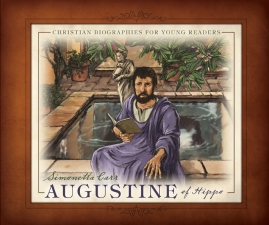 Augustine of Hippo, by Simonetta Carr
Illustrated by Wes Lowe

Hardback, 64 pages
Page size: 8 x 10 inches
Retail Price: $18.00
RHB Price: $14.00
ISBN 978-1-60178-073-7
For Ages 7–12
Available by November 30
Outside of the people in the Bible, Augustine of Hippo is the most influential person in church history. Yet how many people know his story? In this book, Simonetta Car introduces young readers to the life and ministry of Augustine. Readers will come to know Augustine’s personal struggles and the high value he came to place on the Bible and truth. Readers will also see the difficult days in which Augustine lived, learning about his disputes with false teachers and the turbulent times during the fall of the Roman Empire. This volume is vividly illustrated, simply written, and full of interesting facts. It is written for young readers, but is sure to capture the interests of the whole family.
Simonetta Carr was born in Italy and has lived and worked in different cultures. A former elementary school teacher, she has home-schooled her eight children for many years. She has written for newspapers and magazines around the world and has translated the works of several Christian authors into Italian. Presently, she lives in San Diego with her husband Thomas and family. She is a member and Sunday School teacher at Christ United Reformed Church.
Wesley (Wes) Lowe has over 25 years experience as an illustrator, and has illustrated for advertising agencies and publishers in the US, Canada, and Europe. He lives with his wife in British Columbia, and works from his studio on the Sunshine Coast, which is a short ferry ride from Vancouver.
“A splendid way to introduce children—and adults too—to one of the most influential Christians who ever lived.” —Phillip S. Cary,Scholar in Residence at the Templeton Honors College at Eastern University, and author of several books on Augustine
“Few figures in Western history are as important as Augustine. He is one of the early church fathers to whom the Reformers rightly looked as an inspiration for their theology and piety in many respects but he is more than that. He is an old and dear friend. Simonetta Carr has produced a clear, readable introduction to the life and work of this great Christian and our old friend.” —R. Scott Clark, Professor of Church History and Historical Theology at Westminster Seminary California
“Simonetta Car offers a sympathetic, whirlwind tour of the life, times, and beliefs of Augustine of Hippo, one of the most important and long-loved figures for Western Christianity. Maps, illustrations, timelines, and photos engage the imagination at a pace that will hold the interest of young readers.” —Brandon and Mindy Withrow, authors of the popular church history series for children, History Lives
Book Review
Posted: November 2, 2009 Filed under: Book of the Week, Book Review 2 Comments Salvation to the Ends of the Earth: A Biblical Theology of Mission by, Andreas J. Köstenberger and Peter Thomas O’Brien, InterVarsity Press, P.O. Box 1400, Downers Grove, IL 60515, 2001, 351 pages, $26.00.
Positively
First and foremost, the most positive side to Köstenberger and O’Brien’s book is the section which focuses on the biblical books of Luke and Acts. Oftentimes theologians look at the man of missions – the Apostle Paul – as their number one example. They look at his work, who he was, what he did, how he related to the cultures, and of course what his mission to the Gentiles was, in order to come up with their definitions of mission. In Salvation to the Ends of the Earth, I thoroughly enjoyed the time spent looking at the writer of both Christ’s and Paul’s missions – the Apostle Luke. This section on the Lukan writings does a great job describing God’s mission through the coming of Jesus Christ, and how that was applied to the church’s mission (namely through the historical records of the New Testament Church found throughout the book of Acts). Köstenberger and O’Brien also key in on the important passages that played a role in the transition of the mission of God in the Old Testament to that of the New. Looking at Lukan books this way lays out a historical time-line for the reader to see what took place during Christ’s incarnational ministry here on earth, and how it brought about the mission that would then be done by the church.
Another point of great importance is found in the authors’ dealing with the book of Acts, specifically, looking at how the mission of the gospel was spread among Jerusalem, Judea, and Samaria. In this, Köstenberger and O’Brien concentrate on how Luke focused on the promises that were given to Abraham, and how this then ran throughout Luke’s writings (p. 137-8). This is then broken down further in the sermons of Peter, Stephen, and Paul, throughout the key passages which they highlight.
What is most important overall in this section is the understanding that the Gospel of Luke cannot be read without Acts, and likewise, that Acts cannot be read without the Gospel of Luke; they go hand-in-hand if you are looking for a proper biblical theology of mission (p. 111-2). For example: the writers do a great job of explaining that you cannot properly understand Jesus Christ’s command in Acts 1:8 without first reading Luke’s account of Christ’s mission (p. 111). Furthermore, understanding that the early church’s mission is found in what Christ did Himself during His earthly mission (that is, what He did in order to give the Spirit), Luke’s books – both his Gospel and the book of Acts – must be seen as a historical record of the mission of Christ, and the giving of the mission to the New Testament church. In all, Köstenberger and O’Brien seem to see that the book of Acts and the Gospel of Luke are the most helpful and clearest perspectives of the mission of God during Christ’s time, and also for that of the New Testament church today.
Another positive side of this title is the section on John. It seems that over the past 10 years both the Gospel of John, and John himself, have gotten much flack for “not being missional.” Köstenberger and O’Brien hit right at that point – that John is missional in his Gospel. They seem to understand that this mistake of viewing John as non-missional is mostly because of Matthew’s Great Commission, and Luke’s Gospel, which is then followed by the historical value that Acts brings to the theology of mission. Köstenberger and O’Brien see the importance in what John is writing, and also see John’s focus on Jesus’ mission here on earth. In this section, instead of dealing with certain passages the way they did in their previous chapters, the authors lay out the events and topics of Christ’s earthly work, and how they relate with mission. In doing so, they focus on Christ’s humanity while on earth, and how He played out the mission of His Father in the bringing about what was to come. They do this by focusing on the truth that the gospel’s primary interest lies in Christ’s relationship with His Father, and not the ontological nature (p.204).
After dealing with this, the focus is then turned from Christ’s mission to the community of His disciples, to the disciples then going out and living what Christ gave them for their communities (p. 204-22). A key point in this section is found as the authors point out that the Gospel of John never once focuses on the disciples’ work, signs, etc., in the way the other Gospels do. Instead, John focuses on Christ’s mission – both His own earthly mission (John 1-13) and the giving of His mission (John 14-21).
Negatively
Like most biblical theologies I come across, this book seems to have purposely (or unknowingly) neglected the Old Testament. Time and time again biblical scholars spend countless words in their writings dealing with the New Testament, and do not spend enough time dealing with the Old Testament. Here, Köstenberger and O’Brien have spent barely 50 pages looking at the Old Testament’s theology of what mission is, and well over 200 on the New Testament’s theology of mission. Why is this happening so commonly? Is there a lack of mission in the Old Testament? Or is it the lack of dealing with the whole canon equally? It most certainly is not the lack of God’s mission in the Old Testament. For example: if one is looking for a proper understanding of a biblical theology of Mission in the Old Testament, Christopher Wright spends more than 75% of his massive 581-page book The Mission of God looking at the Old Testament.
Another negative aspect of Köstenberger and O’Brien’s title is that they say that Jonah is not a missionary (p.44-5) – something I personally do not agree with. They believe that saying Jonah was a missionary is “going too far.” To me, I feel as though the prophets were, in some way, missionaries to Israel and even to other nations from time to time. Regardless, the authors spent barely one page defending their argument that Jonah is not a missionary, and were therefore quite lacking to convince me of their view.
Lastly, Köstenberger and O’Brien seem to be in disagreement with many Missiologists as they do not believe that the second-temple period of Judaism was missional (p.55-71), nor had a mission at all. I completely disagree with this. I personally felt that their statement, “while the Christian canon itself provides little (if any) information regarding mission in the second-temple period” (p.55) is absurd. Were there not still thousands of synagogues carrying out the same purpose, and countless priests carrying out the same mission they were called to? Furthermore, why in Acts 2 did Peter have to defend the new mission of Pentecost against that of the Old mission, which the Jews were still trying to carry out? I could be wrong, but it seems that this distinction they make is largely due to their separation in eschatology – that is, the Old Testament and New Testament having separate eschatology (p.232-250). I say this based on how they conclude their ending sections on “The Second-temple Period” and how they conclude Revelation as well. It seems that they see the second-temple period as the ending times for Israel; and also see that both the nation of Israel and the New Testament church have separate ends in their missions. In this, they then separate eschatology. How this affects their Old Testament interpretation is that it then creates first-temple mission and second-temple eschatology, which I personally do not see as clear as they try to make it.
Another flaw in thinking that second-temple Judaism was not missional is that it hints that the mission that was given by God was not carried out. God’s mission that started in Genesis 3:9 and Genesis 3:15 was still existing, and yet saying second-temple Judaism was not missional argues whether or not God’s covenant people were still in His mission (Genesis 10). Were not the Lord’s people still waiting for their Kingdom (Psalm 72)? Was not Israel looking for their expansion and shalom (Isaiah 45:22)? Just because they did not keep their covenant with the Lord did not mean that the Lord (and some of the Lord’s chosen nation) did not continue to keep covenant. On this subject, I’d personally rather spend the time reading Walter Kasier’s Mission in the Old Testament: Israel as a Light to the Nations.
Immortal Till Work Done
Posted: November 1, 2009 Filed under: Sundays with Spurgeon Leave a commentI shall not die, but live, and declare the works of the Lord. (Psalm 118:17)
A fair assurance this! It was no doubt based upon a promise, inwardly whispered in the psalmist’s heart, which he seized upon and enjoyed. Is my case like that of David? Am I depressed because the enemy affronts me? Are there multitudes against me and few on my side? Does unbelief bid me lie down and die in despair-a defeated, dishonored man? Do my enemies begin to dig my grave?
What then? Shall I yield to the whisper of fear, and give up the battle, and with it give up all hope? Far from it. There is life in me yet: “I shall not die.” Vigor will return and remove my weakness: “I shall live.” The Lord lives, and I shall live also. My mouth shall again be opened: “I shall declare the works of Jehovah.” Yes, and I shall speak of the present trouble as another instance of the wonder-working faithfulness and love of the Lord my God. Those who would gladly measure me for my coffin had better wait a bit, for “the Lord hath chastened me sore, but he hath not given me over unto death.” Glory be to His name forever! I am immortal till my work is done. Till the Lord wills it, no vault can close upon me.

 Gospel-Centered Musings