How does the Law relate with Apostasy?
Posted: March 31, 2010 Filed under: The Law and Apostasy Leave a commentWhen reading with the Ten Commandments, the first commandment, “You shall have no other gods before me,” seems pretty straight forward. It is very easy to interpret, easy to understand, and yet also very easy to break. One could venture to say that the first commandment is the most broken commandment in the everyday life of a non-believer and believer alike. One could go even further and say that the first commandment is broken every time the other nine commandments are broken. This is because when one sins, they have in some way placed something – or someone – else as a god before committing the sin. But how does that relate with apostasy? The answer is that one who has become an apostate has disregarded the first three commandments in the Moral Law.
Step One – making light the name of the LORD, and using it meaninglessly in life.
Step Two – finding fulfillment in the making and crafting of personal idols, and placing them before the LORD.
Step Three – leaving the Gospel altogether and placing other gods before the LORD.
The constant breaking of the Law and not properly understanding its usefulness for the believer’s life leads to apostasy from the gospel. Apostasy is caused by a loss of the believer’s delight in what God has commanded and given to “His people,” and instead, finding delight in what the world has to offer. It is extremely important to understand the proper relationship between man’s sinful nature – his desires to destroy the Law, to overrule the Law, to break the Law – and living for the gospel… that is, wanting to obey the gospel, yet at the same time, stuck with that every day nature that wants to continue to break the Law. Apostasy comes from allowing that sinful nature and the flesh’s desires overtake what the gospel has taught. This is precisely what Paul deals with in Romans 7:21-25, and it is no where else expressed so well but by him, through the Spirit:
“So I find it to be a law that when I want to do right, evil lies close at hand. For I delight in the law of God, in my inner being, but I see in my members another law waging war against the law of my mind and making me captive to the law of sin that dwells in my members. Wretched man that I am! Who will deliver me from this body of death? Thanks be to God through Jesus Christ our Lord! So then, I myself serve the law of God with my mind, but with my flesh I serve the law of sin.”
Jesus & The Law
Posted: March 30, 2010 Filed under: The Law and Apostasy 4 CommentsThe regenerate and unregenerate person both have a hard time understanding how Law and love go hand-in-hand. At times, Christians want to make up their own model of what the everyday Christian looks like. They come up with ideas, slogans, and programs, sometimes even misrepresenting Scripture in order to get their own point across. People in and out of Christianity want to interpret their own way of living, based on what they think Jesus would have done. What they totally forget at times is that Jesus – in every way – lived out the Law – the moral, civil, and ceremonial Law. Christ, because of His love for His Father, enjoyed living out the Law of God for two reasons:
1. Christ’s Love for His Father – John 17
2. Christ’s Love for His people/to have victory over sin – Hebrews 2:14-18
Christ knew that the Law itself represented the very character of who He was and who His Father was; therefore, breaking that Law was impossible for Him. However, temptation to do so was very real and was one way that Christ showed His love for the Father – that is, by fulfilling and obeying the Law in its entirety.
It is seen many times throughout Scripture how examples of God’s Love interweave with His Law. When one looks at Christ’s example of obedience and love for the Law, we can truly live accordingly also. The Apostle Paul expressed this best in Romans 11: 8-10:
“Owe no one anything, except to love each other, for the one who loves another has fulfilled the law. The commandments, You shall not commit adultery, You shall not murder, You shall not steal, You shall not covet, and any other commandment, are summed up in this word: You shall love your neighbor as yourself. Love does no wrong to a neighbor; therefore love is the fulfilling of the law.”
Paul addresses the Romans so that they would see that love and Law go hand-in-hand. The believer cannot love like Christ without living according to the Law; likewise, the believer cannot live according to the Law with out loving like Christ. When one truly understands that the Law of God flows from His love for His people, to humble them and see how beautiful Christ is, then one can truly value and come to the understanding of how love and Law cannot be separated. J. Douma states the personal effect this has on the individual, when he states:
“Apart from Christ, the law condemns us; but in the hands of Christ, the law remains the charter of our liberty. It functions this way as the foundation for knowing our misery (it drives us to Christ) and as the rule for gratitude (it teaches us the form of Christian living.)”[1]
[1] Douma, The Ten Commandments, p. 10-11.
Man’s Nature and Law
Posted: March 29, 2010 Filed under: The Law and Apostasy Leave a commentThe nature of mankind hates rules, it cannot stand Law[1], regulations, or limits, and wherever the line is drawn, the human flesh always wants to cross it. This is most easily seen from creation in Adam and Eve. In Genesis 2:17 God commands, “but of the tree of the knowledge of good and evil you shall not eat, for in the day that you eat of it you shall surely die.” From Adam – the father of the human race – man has never, and will never, be able to keep the commands of God the Father. The account in Genesis 3:4-7 best describes Man and Law,
“But the serpent said to the woman, ‘You will not surely die. 5 For God knows that when you eat of it your eyes will be opened, and you will be like God, knowing good and evil.’ 6 So when the woman saw that the tree was good for food, and that it was a delight to the eyes, and that the tree was to be desired to make one wise, she took of its fruit and ate, and she also gave some to her husband who was with her, and he ate. 7 Then the eyes of both were opened, and they knew that they were naked. And they sewed fig leaves together and made themselves loincloths.”
Adam and Eve’s flesh saw God’s protection as a rule and not an act of God’s love. J. Douma states how Adam and Eve should have seen the Law:
“A rule that prohibits on particular things still permits many others. In the Garden of Eden, eating from one particular tree was forbidden, but Adam and Eve were permitted to eat from all other trees. The gates of freedom provide a permanent opening in a wall that you may not climb over. Traffic signs do not so much restrict travel, as provide for its safe and orderly movement.”[2]
Adam and Eve did not see all that God had given them, but instead wanted only the one limitation they were told not to take. They wanted to break the Law in every way; and they did in their coveting of what they were not to desire, their moral authority they placed in front of God, their idolatry of placing the fruit before their God, their act of stealing which was not rightfully theirs, their lie after eating of the fruit, and their suicide they committed upon themselves – for they would now surely die after eating the fruit. From this one event, all of mankind will suffer the rest of their lives with authority. In jobs, schooling, households, relationships, marriages, and with children, humanity will forever struggle with dealing with any rules in life. From that day in the garden, man would see God’s commands as rules rather than love. Because of Adam’s decision to take part in eating the forbidden fruit, humanity will always fall short in properly understanding the voice of God and what is required of the “LORD’s people.”
Israel’s and today’s New Testament Church apostasy is because of this fall. The “people of the LORD” struggle to understand the Moral Law; they struggle to understand that God wants “His people” to be separate from the norm of today’s sinful world. “His people” struggle with the understanding that it is God that has shown His love through the Law, in order to keep “His people” from sin. It is “His people” that struggle to understand that the Moral Law is what God has used since the beginning of time to direct “His people” in a pursuit of holiness – sanctifying them as they strive to live like Jesus Christ.
[1] Cf. Watson, The Ten Commandments, “The Right Understanding of the Law,” p. 43-48.
[2] Douma, The Ten Commandments, p.11.
Moral Law Universal or Not?
Posted: March 25, 2010 Filed under: The Law and Apostasy Leave a commentDeuteronomy 27:9-10 states:
“Then Moses and the Levitical priests said to all Israel, Keep silence and hear, O Israel: this day you have become the people of the LORD your God. You shall therefore obey the voice of the LORD your God, keeping his commandments and his statutes, which I command you today.”
If only “the people of the LORD” obeyed the voice of the LORD in keeping His Law, apostasy would not exist. Thomas Watson begins his introduction to the Ten Commandments by saying, “Obedience is a part of the honor we are to give God.”[1] Apostasy comes from the disobedience of the Law, and it comes from one who walks away from the gospel because he does not obey the commands that God has given “His people.” Or is it because he – the so-called Christian – does not see that the Law is a part of his gospel-centered life? Perhaps one of the most important issues in dealing with apostasy and the Ten Commandments is whether or not it is still binding for today’s “people of the LORD.” It is hard to understand how apostasy deals with the Law if one does not even believe the Law is binding at all; and if it is, there is still the question – to whom is it binding? To believers, unbelievers, or both?
Thomas Watson asks the most important question in understanding to whom the Law is given. He saw that the Law – although given in God’s decreed will to the people of Israel – was God’s desired will for all of creation, and he understood how important this was when dealing with the Law. He begins his section on the first commandment asking the following question:
“‘Thou shalt have no other gods before me.’ Exod. 20:3. WHY is the commandment in the second person singular, Thou? Why does not God say, You shall have no other gods?”[2]
He answers his own question by saying:
“Because the commandment concerns everyone, and God would have each one take it as spoken to him by name. Though we are forward to take privileges to ourselves, yet we are apt to shirk off duties from ourselves to others; therefore the commandment is in the second person, Thou and Thou, that every one may know that it is spoken to him, as it were, by name.”[3]
The present need to see this truth (that the Law is for all of creation) is much needed, especially in the 21st century.[4] In a day and age that creates their own ethics, tolerates whatever they can, bases truth from their experiences, and lives according to their own personal convictions, the Law is needed; and it is even more so for the “LORD’s people.”
[1] Thomas Watson, The Ten Commandments (Carlisle: Banner of Truth Trust, 2000), p. 1.
[4] Cf. Sections on why the Moral Law is universal and important today: Brain Edwards, The Ten Commandments (Surrey: Day One, 2002), p. 8-31; Ed. Stuart Bonnington and Joan Milne, Love Rules: The Ten Commandments for the 21st Century (Carlisle: The Banner of Truth Trust, 2004), p. 5-10; Peter Master’s, God’s Rules for Holiness: Unlocking the Ten Commandments (London: The Wakeman Trust, 2003), p. 9-20; Francis Nigel Lee, God’s Ten Commandments: Yesterday, Today, Forever (Ventura: Nordskog, 2007); J. Douma, The Ten Commandments: Manual for the Christian Life. Trans. Nelson Kloosterman. (Philliipsburg: P&R Publishing, 1996), p. 9-11; and James Durham, Practical Exposition of The Ten Commandments (Dallas: Naphtli Press, 2002), p. 51-72.
Welcome to a Reformed Church, by Danny Hyde
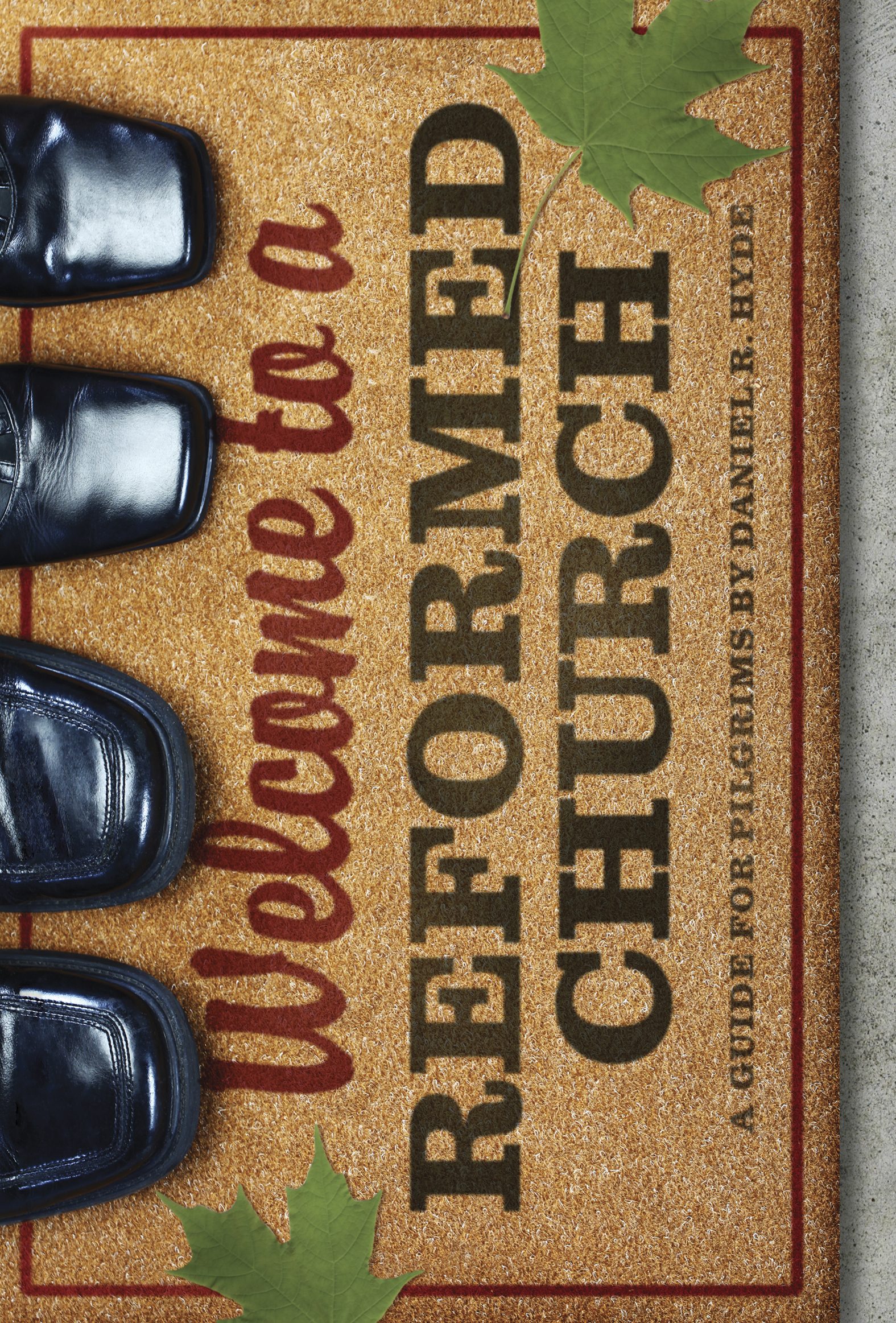
Posted: March 24, 2010 Filed under: Danny Hyde, Reformation Trust 1 Comment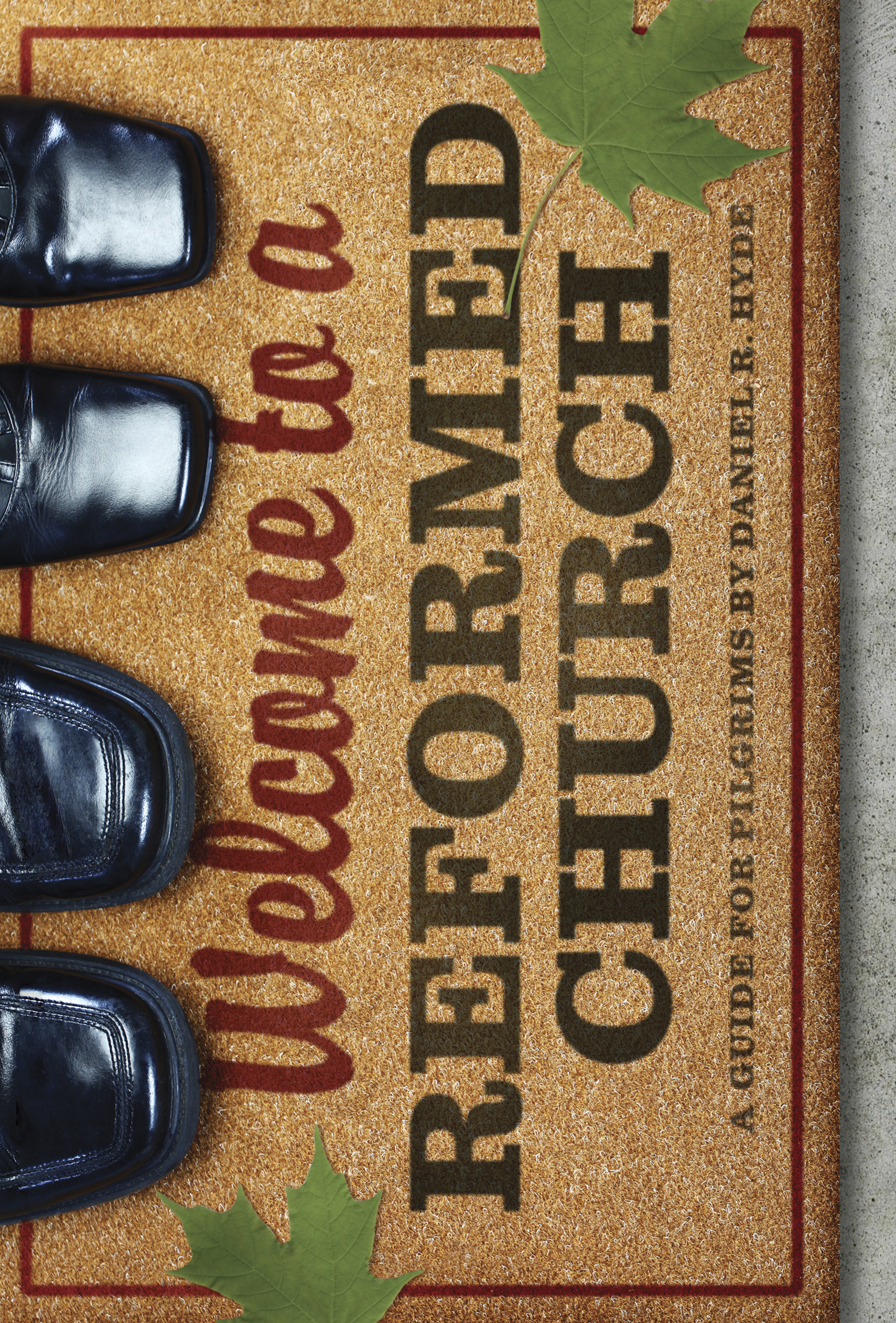 Book: Rev. Daniel Hyde, Welcome to a Reformed Church: A Guide for Pilgrims. (Reformation Trust: Orlando FL, 2010).
Essentials: Rev. Daniel R. Hyde is senior minister of the Oceanside United Reformed Church in Oceanside, California. He is the author of a number of different books such as; Jesus Loves the Little Children, What to Expect in Reformed Worship, The Good Confession, God With Us, In Living Color, and most recently Welcome to a Reformed Church published by Reformation Trust of Orlando Florida in March, 2010. Welcome to a Reformed Church retails at $12.00 and can be purchased through Ligonier’s bookstore at a number of group prices.
- 1-5 ———- $9.60 each
- 6-25 ——– $ 7.80 each
- 26-99 —— $ 5.40 each
- 100+ ——- $3.00 each
Reformation Trust book description states,
“Who are these guys?” That was the question the teenage Daniel R. Hyde posed to his father when he first encountered “Reformed” believers. With their unique beliefs and practices, these Christians didn’t fit any of the categories in his mind. Not so many years later, Hyde is now Rev. Daniel R. Hyde, a pastor of a Reformed church. Recognizing that many are on the outside looking in, just as he once was, he wrote Welcome to a Reformed Church: A Guide for Pilgrims to explain what Reformed churches believe and why they structure their life and worship as they do.”
Reason: The purpose behind Rev. Hyde’s book is to show exactly what are the “roots” of the real Reformed church, to what the believe, how they live, where they came from and how they worship God.
Thesis: The thesis of Rev. Hyde’s book can be found in his introduction on pages xxv-xxvi:
“While there are variations from one Reformed church to another, what I hope to communicate to you in this basic welcome to the Reformed churches as a whole can be summarized in three points. First, Reformed churches are Christian churches. They are Christian churches because they believe the Bible is the Word of God, that there is only one God who exists eternally as a Trinity, and that Jesus Christ our Savior is both God and man. Reformed churches hold these beliefs in common with all Christians in all times and places. In the words of Vincent of Lerins (d. 450), “We hold that faith which has been believed everywhere, always, by all.” Second, Reformed churches are Protestant churches along with Lutheran churches because they reject the claims of the pope to be the head of the church, acknowledging instead that Jesus Christ is the Head of His church, and that He rules and governs His church by His Word and His Spirit, not by the dictates of men. Third, Reformed churches are just that—Reformed churches. They are a subset of Protestant churches in that they believe sinful humans are saved by grace alone, from eternity past to eternity future, and that we experience this grace of God earned for us by Christ alone when the Holy Spirit uses certain means that God has appointed in the church: the preaching of the Word of God, which is the Bible, and the celebration of the sacraments of baptism and the Lord’s Supper.”
Rev. Hyde hopes to settle the dispute today among American-Evangelicalism what really is Reformed in 3-points, Reformed is Christian, Reformed is Protestant, and Reformed is only Reformed churches, nothing else.
Development: Rev. Hyde supports his thesis by focusing in the most important issues dealing with Christianity through its’ history, like: What are their roots, why does the church have confessions, scripture as the final authority, God’s making of covenants with mankind, what is Justification, what is sanctification, what makes a church, what is worship, and how are preaching and the sacraments the means of grace today?
Who is Daniel Hyde?
Rev. Daniel R. Hyde is the church planter and minister of the Oceanside United Reformed Church, a congregation of the United Reformed Churches in North America, in Carlsbad, California. He is married to his college sweetheart, Karajean, and they have three sons, Cyprian, Caiden, and Daxton.
Baptized into the Roman Catholic Church, converted at 17 1/2 in a Foursquare Church, educated at an Assemblies of God liberal arts college, and served as a youth pastor in a non-denominational church while in college, Danny came to experience the joy and assurance that he was justified by faith through the writings of the Puritans. After his undergraduate work in the department of religion (BA, Vanguard University) Danny attended Westminster Seminary California (MDiv) and became the church planter of the Oceanside URC in February 2000, which he has served ever since.
Danny is currently a Master of Theology (ThM) candidate at Puritan Reformed Theological Seminary in Grand Rapids, Michigan. His thesis advisor and mentor is Dr. Joel Beeke and his proposed thesis is on a neglected aspect in seventeenth century studies: the liturgical theology of the English Congregationalist, John Owen. Lord willing, he will complete this thesis and graduate in May 2010.
Welcome to a Reformed Church Format
Abbreviations . . . . . . . . . . . . . . . . . . . . . . . . . . xii
Foreword by Dr . Guy Prentiss Waters . . . . xiii
Acknowledgments . . . . . . . . . . . . . . . xxi
Introduction: Welcome to a New World . . . . xxiii
1 Roots: our History . . . . . . . . . . . . . . . . . . . . . . . . . . . . . . . . 1
2 Confessions: Doctrinal Foundations . . . . . . . . . . . . . . . . 27
3 Scripture: the Final Authority . . . . . . . . . . . . . . . . . . . . . . 35
4 Covenant: God’s story . . . . . . . . . . . . . . . . . . . . . . . . . . . . 51
5 Justification: Grace Alone, Faith Alone, Christ Alone . . 71
6 Sanctification: the Christian Life . . . . . . . . . . . . . . . . . . . 87
7 Church: Distinguishing Marks . . . . . . . . . . . . . . . . . . . . .103
8 Worship: of God, by God, for God . . . . . . . . . . . . . . . . . . . 113
9 Preaching & Sacraments: Means of Grace . . . . . . . . . . . . 131
Conclusion . . . . . . . . . . . . . . . . . . . . . . . . . . . . . . . . . . . . 143
Appendix I: Questions & Answers . . . . . . . . . . . . . . . . . .145
Appendix II: A Basic Bibliography . . . . . . . . . . . . . . . . . 155
Index I: scripture References . . . . . . . . . . . . . . . . . . . . . . 163
Index II: Confessions References . . . . . . . . . . . . . . . . . . . 169
Index III: subjects & Names . . . . . . . . . . . . . . . . . . . . . . . 173
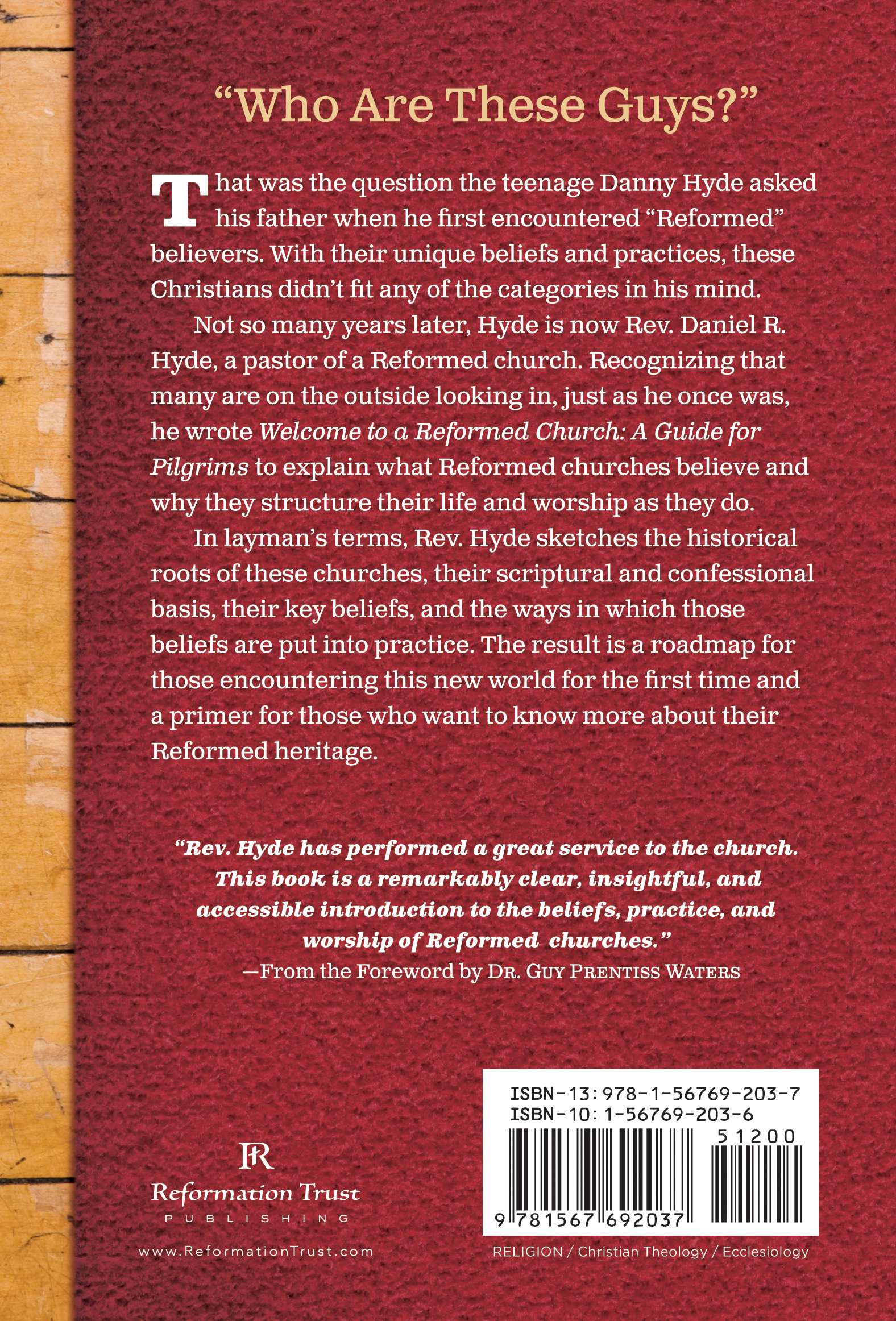 Back matter: “Who are these guys?” That was the question the teenage Daniel R. Hyde posed to his father when he first encountered “Reformed” believers. With their unique beliefs and practices, these Christians didn’t fit any of the categories in his mind.
Not so many years later, Hyde is now Rev. Daniel R. Hyde, a pastor of a Reformed church. Recognizing that many are on the outside looking in, just as he once was, he wrote Welcome to a Reformed Church: A Guide for Pilgrims to explain what Reformed churches believe and why they structure their life and worship as they do.
In layman’s terms, Rev. Hyde sketches the historical roots of the Reformed churches, their scriptural and confessional basis, their key beliefs, and the ways in which those beliefs are put into practice. The result is a roadmap for those encountering the Reformed world for the first time and a primer for those who want to know more about their Reformed heritage.
Summary: A Methodist would never call himself a Baptist, nor would a Lutheran ever called he a Catholic; it simply would make no sense at all! Better yet, a Lutheran would never call himself a Reformed-Lutheran for only agreeing on John Calvin’s Soteriology. Today in American evangelicalism, with the growth of John Calvin’s Soteriology in many different circles, comes the title in which many New-Calvinist claim, “Reformed.” Rev. Hyde places the much-needed definition, historical value, and what it truly means to be a part of a true Reformed church. In less than 160-pages Rev. Daniel Hyde defines and gives proof of the much used word “Reformed,” truly means in its’ historical setting and what the Reformed Church is today.
Rev. Hyde lays out the foundation, the history, why confessions, and what the doctrine is of a true Reformed Church in today’s culture. If new to the term Calvinism, this book should surely help you understand the true Reformed faith that lies in their churches today. If a New-Calvinist, this book is a must read, so that you understand what it means to be truly Reformed in its’ historical definition, and identity. If in a Reformed Church already, this book will give a great reminder of who you are, what it is you came from, and why you believe the truths of the Gospel in the way you do. No matter where you are at in the Christian Faith, Welcome to a Reformed Church must be read for its’ defining of what truly the Reformed Church is today, and why. No matter if your Reformed, New-Reformed, or nothing at all, reading the book will at least make you wonder why you are what you are, and what you believe in the Christian faith.
You can read a sample chapter here.
Depressed about America and Healthcare?
Posted: March 23, 2010 Filed under: Just My Thoughts 1 CommentI have no idea how you can be when Ephesians 1: 11-23 reads,
In him we have obtained an inheritance, having been predestined according to the purpose of him who works all things according to the counsel of his will, so that we who were the first to hope in Christ might be to the praise of his glory. In him you also, when you heard the word of truth, the gospel of your salvation, and believed in him, were sealed with the promised Holy Spirit, who is the guarantee of our inheritance until we acquire possession of it,to the praise of his glory. For this reason, because I have heard of your faith in the Lord Jesus and your love toward all the saints, I do not cease to give thanks for you, remembering you in my prayers, that the God of our Lord Jesus Christ, the Father of glory, may give you a spirit of wisdom and of revelation in the knowledge of him, having the eyes of your hearts enlightened, that you may know what is the hope to which he has called you, what are the riches of his glorious inheritance in the saints, and what is the immeasurable greatness of his power toward us who believe, according to the working of his great might that he worked in Christ when he raised him from the dead and seated him at his right hand in the heavenly places, far above all rule and authority and power and dominion, and above every name that is named, not only in this age but also in the one to come. And he put all things under his feet and gave him as head over all things to the church, which is his body, the fullness of him who fills all in all.
Does the Spirit only work in the PR Denomination?
Posted: March 22, 2010 Filed under: Just for Fun 5 CommentsDid You Know that the Spirit of God is Only Working in one Denomination of the Reformed faith? Either did I! However this past weekend I came across a rather unique book description in a publication catalog by the Reformed Free Publishing Association.
The Book: Always Reforming: Continuation of the Sixteenth-Century Reformation, part of the Protestant Reformed Biblical Studies.
Editor: David J. Engelsma, is emeritus professor of theology at the Protestant Reformed Seminary, Grandville, Michigan.
And here is where either A.) I do not understand, or B.) is simply just stupidity at its best. I have bolded below exactly my issue.
 Book Description: “A church reformed and always reforming, according to the word of God” means that the truly Reformed church continues to live by the word of God from age to age, applies it to every aspect of her life, maintains the sound doctrine of the creeds from generation to generation; resists every threat to the Reformed faith, and develops the truth of the Reformed faith.
Always Reforming demonstrates that the Spirit of Christ has carried on the reforming work of Christ in the sixteenth century in one particular branch of the church of the Reformation. A successor to The Sixteenth-Century Reformation of the Church, this book traces the continuing reformation in the Netherlands in the seventeenth and nineteenth centuries and in the Protestant Reformed Churches in North America in the twentieth century. The fivefold division of this book recognizes the ongoing reformation of these Reformed churches as having taken place in the five distinct and doctrinally significant controversies.”
I want to comment on this, but for the sake of my sanity I think I will leave it up to you to ponder and enjoy thinking about… and I quote, “Spirit of Christ has carried on the reforming work of Christ in the sixteenth century in one particular branch of the church of the Reformation.“
Can you Chew Tobacco and Preach the Bible at the Same Time?
Posted: March 15, 2010 Filed under: Just for Fun, Preaching/Speaking 4 CommentsWell Italian preachers did during the beginning of the 20th-century! This is my kind of preaching…
In Paul Bull’s Lectures on Preaching and Sermon Construction (Chapter 7, Section 5, Point 5) titled “Make a Right Use of Your Voice” he states,
“In normal sermons Italian preachers, arrived at the end of their first point, sit down, mop their faces with a large colored handkerchief, spit, take a pinch of snuff, and then, after two minutes, go on to their next point much refreshed. This would not be suitable in the present state of public opinion in England.”
Footnote: Paul B. Bull, Lectures on Preaching and Sermon Construction. (The MacMillan Co.: New York and Toronto, 1922), pp. 283.
With Arms Wide Open
Posted: March 11, 2010 Filed under: Reformation Trust 8 CommentsAn interview with Danny Hyde about his new book published by Reformation Trust, Welcome to a Reformed Church.
 Rev. Daniel R. Hyde has been the pastor of the Oceanside United Reformed Church in Carlsbad/Oceanside, California, since it was planted in 2000. He is the author of seven books (see his bibliography here). He has a M.Div. from Westminster Seminary California and will complete his Th.M. this May under Joel Beeke and Derek Thomas at Puritan Reformed Theological Seminary with a thesis entitled, “Of Great Importance and of High Concernment: The Liturgical Theology of John Owen (1616–1683).”
Danny, before I begin asking questions about your newest title, Welcome to a Reformed Church: A Guide for Pilgrims (Reformation Trust), let me ask you a few questions in general about your process in writing this book.
1. When did you first realize the need for this title?
Thank you for the opportunity to discuss the book, Michael. As a church planter I am always looking for clear, concise, and cogent literature to give out to the droves of visitors, inquirers, and curious onlookers that have come to OURC over the past ten years. So basically I’ve felt the need since I began planting this church.
2. When did you start the process of writing this title?
The genesis of this book was about seven years ago. I was giving out dozens and dozens of Stephen Smallman’s, What is a Reformed Church?, and John R. DeWitt’s, What is the Reformed Faith? These are fine little booklets, but I felt they were too small and too narrowly focused on only a few doctrines. What I needed was an introductory book that I could give visitors that would explain to them what we are all about, but to do so in a way that was faithful to the emphases and contours of our confessional documents.
3. How long did it take to write this title?
Now that’s a good question! As everyone who knows me knows, I never sit down to write a book. I started a file “Welcome to a Reformed Church” about four years ago. I first wrote a church webpage with that title and topic, then it morphed into a little booklet for our literature rack, then into a proposal that was rejected by a publisher, and finally into a better proposal and manuscript that Reformation Trust so graciously accepted.
4. What was one of the most surprising things you learned when writing this title?
I wouldn’t say I was “surprised” by anything in particular; instead, I was impressed and moved by our historic confessions once again. As you see in the book, I basically follow the doctrinal emphases of our confessions. There is a reason these documents have stood the test of time and I am honored merely to parrot them back to those among whom I minister.
5. What was the hardest part of writing this title, and why so?
The hardest part of writing for me—and this is going to sound contradictory—is starting and stopping. It’s easy to feel some inspiration to pump out a few pages here or there, but having to stay motivated so that I start and re-start over a season of life is a challenge. It’s also a challenge to stop and not blather on and on as if I were God’s gift to literature.
6. How’d you come up with the title, Welcome to a Reformed Church? Or did someone else.
Hey, I’ve got some originality! When I saw the need and started writing, I envisioned this volume as a follow-up to my little booklet, What to Expect in Reformed Worship? I basically thought of a recent visitor we had to church and wanted to communicate warmth and hospitality: Welcome!
 Okay enough of the easy questions; let’s get a little bit more specific with this book.
7. What makes Welcome to a Reformed Church different than any other introduction to Reformed churches and their faith?
I believe the main features that distinguishes my book from others like Smallman’s and DeWitt’s is that I follow the emphases that our own confessions emphasize and that I write an a former outsider to the Reformed Faith in a conversational way.
8. What, who, or where did you come up with the layout for your newest title, Welcome to a Reformed Church? By layout, what I mean is the table of contents – why did you break it down to the topics: Roots, Confession, Scripture, Covenant, etc.?
I wanted to open with a brief history to say to people, “Although you may never have been in a Reformed church, we did not just come out of nowhere. We’ve been around the block a few times.” After that it was necessary to explain what our creeds and confessions are and then to detail their doctrinal emphases.
9. For those of us that know Dr. Godfrey’s title, An Unexpected Journey: Discovering Reformed Christianity, in what ways does your title, Welcome to a Reformed Church differ?
Wow, you’re asking me to compare myself with one of my mentors and men I look up to the most. There’s a reason I dedicated one of my books to him with the inscription, non est servus maior domino suo (“the servant is not greater than his master”). Basically what I would say is that Dr. Godfrey’s book is a different genre, being his spiritual autobiography.
10. As an introduction to your book you place a section entitled “Welcome to a New World?” Besides actually reading the short 3-4 pages of material, can you tell us just how different a Reformed Church is from those that most visitors to your church are used to?
A Reformed church that focuses on reverent worship, expository preaching, the sacraments, and public prayer is going to look like a foreign world to most evangelicals who visit. It seems cold, boring, lifeless, and joyless. I would argue, though that there is nothing farther from the truth. What I’ve always found wonderful is how unbelievers who worship with us always respond, “If I were to become a Christian this is what I expect, a church to be like a church.”
11. What chapter: scripture, confession, justification, etc. was your favorite to write? Why?
No question about it: chapter 5, “Justification: Grace Alone, Faith Alone, Christ Alone.” This is the article upon which the church stands or falls, the hinge upon which true religion turns, the heartbeat of heaven, and the pulse beat of the pilgrim. Westminster Larger Catechism, Q&A 70, was the question my beloved college theology professor read in class one day that transformed my life. I will never tire of preaching, teaching, or writing about justification.
12. Two of the chapters that stood out from the others to me were chapter 8 on worship and chapter 9 on the means of grace in the Reformed church. Can you maybe expound upon the reasoning that you added these to the book, and the importance that worship and the practice of the sacraments have in Reformed churches today?
Sure. Not only is evangelicalism a churchless phenomenon, meaning, that the doctrine and nature of the church is utterly neglected, but much of what is passing itself off as “Reformed” today has no real semblance of ecclesiology. Sure there are great preachers out there and people who believe in the so-called five points of Calvinism, but it’s just evangelicalism with the doctrine of election added on. All this to say that I want visitors to my church, and those who may visit other churches, to know that we have a high regard for the church. Worship is our chief end as the Westminster Catechisms state and it is the context in which God meets with his people through the means he has appointed: Word and sacraments.
13. I must ask the one question that has been bugging me, why the subtitle A Guide for Pilgrims? Is it a guide for only those in the Reformed Church today?
As I mention in the Introduction, I pray that those who are wandering throughout the morass of churches today and who find their way to a Reformed church would find a home—at least a temporary one until the dawning of the age to come.
14. Answering the last question, I move to asking, whom exactly is your book written for? Age? Denomination? Reformed? Non-Reformed?
Every time I write a book I envision myself talking with an individual person. In this case, I wrote it for someone who was just like me the first time I walked wide-eyed into a Reformed church—young, burned out on evangelical religion, without a clue as to what a Reformed church was all about.
15. How do you see this title helping those new to the Reformed faith?
I see it as giving them a road map on their pilgrimage. It is intended to explain as clearly and concisely as I can what we are all about, to enlighten the mind, move the will of a person to united him or her self with a Reformed church, and to fan into flame their affections for the Lord, his Word, and his Church.
16. For those in the New-Calvinist/New-Reformed movement, how would a title like this help them understand what truly is the Reformed Church?
I have such a desire to these brothers and sisters. As I mentioned above with the question about worship and the means of grace, this movement either needs to mature into historic Reformed Christianity or those within it need to transition from it to the authentic article. I hope my book explains, “It’s great you believe in predestination, but so did the rest of medieval Christianity; now you need to mature and see the rest of the story.”
Danny, Let’s end how we started with a few general questions.
17. What other projects are you working on?
Well, first and foremost, I am a husband and father, as well as a pastor and preacher of the Word of God, so all other projects have to fit into my schedule of preaching every Lord’s Day morning and evening, catechizing my group of third to eighth grade students, teaching a mid-week class on theology, and visiting my flock in their homes.
My most pressing project is my Th.M. with Joel Beeke and Derek Thomas on the liturgical theology of John Owen. I will be done by May. I have several books already done and in the process of coming to print. I have a small book on the descent into hell of Jesus Christ coming out in April or May with Reformation Heritage Books, a book I co-edited and contributed to on planting confessionally Reformed churches coming out early in 2011 with RHB, and a booklet in P&R’s series “The Basics of the Faith” on the existence of God coming out early in 2011 as well. Beyond that I still am working on editing my sermons through the tabernacle narrative in Exodus to turn into a book that shows how Christ is the sum of substance of it.
18. What other books have most influenced your life that you would recommend for others to read on the related subject of Welcome to a Reformed Church?
I do offer a list of recommended readings at the end of the book, but I would say the books that have most influenced me are John Calvin’s Institutes for its breadth and depth of doctrinal discussion, John Owen’s Communion with God for its leading me to worship our Triune God, Athanasius’ On the Incarnation of the Word for its causing me to stand in awe of the wonder of the Incarnation, and William Perkins’ The Art of Prophesying for giving me a God-honoring method for proclaiming the Word of the life.
19. In what way do you hope to see Welcome to a Reformed Church used today in the church among believers? Small groups? Book study?
I hope it finds a wide readership in Reformed churches to enliven and equip our people to testify with greater boldness and is used on book racks, book tables, new members’ courses, Sunday school classes, etc. I am so glad that Ligonier has made it available at their special “Spread-the-Word” pricing so that it can be used far and wide.
Lastly, Danny next time you write a book, (I told you this once before with your last title Living In Color) do not, I repeat do not use endnotes. Please for the sake us in seminary that wish to use your title, use footnotes. Thanks!
I Just Received my copy of By Grace Alone
Posted: March 10, 2010 Filed under: Reformation Trust, Sinclair B. Ferguson Leave a comment From RT,
“Are you truly amazed by God’s grace? Or have you grown accustomed to it? Yes, we sing of God’s “Amazing Grace,” but do you truly understand what you as a Christian have experienced in receiving the grace of God? Or do you take divine grace for granted?
In By Grace Alone: How the Grace of God Amazes Me, Dr. Sinclair B. Ferguson laments that “we have lost the joy and energy that is experienced when grace seems truly ‘amazing.’” In an effort to restore the wonder of divine grace, he reflects on it from seven angles, each built around a stanza from a rich but little-known hymn, “O How the Grace of God Amazes Me,” written by Emmanuel T. Sibomana, a pastor in the African nation of Burundi.
This book poses probing questions for today’s believer: “If I am not amazed by God’s grace, can I really be living in it? Can I really be tasting, and savoring, and delighting in it?” But those willing to delve into God’s Word with Dr. Ferguson will come away with a deeper astonishment at the depths of God’s grace.”
| Image: Front Cover (High Res) |
| Image: Back Cover (High Res) |
| Document: Sample Chapter |
| Link: Free MP3 Download: “O How the Grace of God Amazes Me” Hymn |
Welcome to a Reformed Church
Posted: March 9, 2010 Filed under: Danny Hyde, Reformation Trust Leave a comment Available from Reformation Trust here.
Samples: Chapter One, “Roots: Our History” .pdf here.
Taken from Reformation Trust Publishing,
“Who are these guys?” That was the question the teenage Daniel R. Hyde posed to his father when he first encountered “Reformed” believers. With their unique beliefs and practices, these Christians didn’t fit any of the categories in his mind.
Not so many years later, Hyde is now Rev. Daniel R. Hyde, a pastor of a Reformed church. Recognizing that many are on the outside looking in, just as he once was, he wrote Welcome to a Reformed Church: A Guide for Pilgrims to explain what Reformed churches believe and why they structure their life and worship as they do.
In layman’s terms, Rev. Hyde sketches the historical roots of the Reformed churches, their scriptural and confessional basis, their key beliefs, and the ways in which those beliefs are put into practice. The result is a roadmap for those encountering the Reformed world for the first time and a primer for those who want to know more about their Reformed heritage.
Endorsements:
“In the providence of God through Rev. Daniel Hyde, you have in your hands an excellent instrument to use in developing the life and ministry of new members, church leaders, and all disciples. This book illustrates the blessings of the historical legacy of the Reformed church with confessional integrity to equip believers and churches with evangelical breadth and theological depth. This is sound doctrine for sound lives. The key to the apostolic church is prominently displayed and easily accessible throughout the pages of Welcome to a Reformed Church.”
—Dr. Harry L. Reeder, III, Senior pastor, Briarwood Presbyterian Church (PCA), Birmingham, Alabama
__________
“As one who has made much the same journey as I did, Rev. Hyde offers a thoughtful and compelling guide to the distinctive emphases of the Reformed churches for those coming to them. He explains how those wonderful doctrines are worked out in the life and worship of Reformed and Presbyterian churches. If only I had had a book like Rev. Hyde’s Welcome to a Reformed Church, my own journey would have been a bit easier, for I would have had someone to ‘connect the dots’ for me.”
—Dr. Kim Riddlebarger, Senior pastor, Christ Reformed Church (URCNA), Anaheim, California
__________
“Daniel Hyde has written an invaluable road map for pilgrims new and old so they can know what Reformed churches believe and why. With this book, Christians can navigate the often-confusing landscape of different denominations and understand what makes Reformed churches unique and, more important, biblical. Pastor Hyde’s work is clear, succinct, informative, and faithful to the Scriptures. I highly recommend this work to anyone who desires to understand the theological pillars of the Reformed faith.”
—Dr. J. V. Fesko, Academic dean and associate professor of systematic theology, Westminster Seminary California, Escondido, California
__________
“Daniel Hyde’s popular introduction to the Reformed faith will prove a wonderful tool for busy pastors who are looking for help in welcoming new believers into membership in the local church. Welcome to a Reformed Church will also serve as a kind of road map for those who are new to the Reformed faith—to its history, confessions, doctrinal commitments, and patterns of worship and ministry. In its own way, this book is a great example of the kind of ‘hospitality’ Reformed churches are called to show to those whom the Lord is gathering into their fellowship by His Spirit and Word.”
—Dr. Cornelis Venema, President and professor of doctrinal studies, Mid-America Reformed Seminary, Dyer, Indiana
__________
“As a minister in a Reformed church, I am delighted to be able to commend this book by Daniel Hyde, as it provides one of the most useful studies of the basics of Reformed belief, worship, and practice that I have come across. I will be commending it not only for people wishing to know more about the basics of the Reformed faith, but also for those who sit in Reformed churches and need to know more deeply their own heritage.”
—Dr. Mark Jones, Pastor, Faith Presbyterian Church (PCA), Vancouver, British Columbia
__________
“Daniel Hyde has done the church (and church planters) a great service by giving us this well-written, concise, easy-to-understand book explaining what it means to be a ‘Reformed’ church. Yet, at the same time, this is a theologically deep book that will send us back to Scripture and our confessions so that we might understand just what the church really is. In a day of great doctrinal confusion, especially about the church, I know of no better tool to give to those who want to know more about Reformed churches.”
—Rev. Kevin Efflandt, Pastor, Bellingham United Reformed Church (URCNA), Bellingham, Washington
__________
“As a fellow import to the Reformed faith from the Pentecostal/ charismatic movement, I can say that Daniel Hyde has summarized our Reformed distinctives in a clear and concise manner, answer- ing many of the questions modern evangelicals ask. I heartily commend this book to newcomers in my church and all Reformed churches.”
—Rev. Jerrold Lewis, Pastor, Lacombe Free Reformed Church (FRCNA), Lacombe, Alberta
My Response to Dr. Gary Knoppers Article on Aaron & Jeroboam’s Apostasy? or Not?
Posted: March 8, 2010 Filed under: Article Reviews, Gary Knoppers 2 CommentsArticle: Gary N. Knoppers “Aaron’s Calf and Jeroboam’s Calves,” Fortunate the Eyes that See: Essays in Honor of David Noel Freedman In celebration of His Seventieth Birthday, ed. Astrid B. Beck, Andrew H. Bartelt, Paul R. Raabe, and Chris A. Franke. (Eerdmans: Grand Rapids, 1995), pp. 92-104.
Response:
Survey
Dr. Gary N. Knoppers studied Near Eastern Languages and Civilizations at Harvard University, wrote his Ph.D. dissertation on “”What Share Have We in David?”: The Division of the Kingdom in Kings and Chronicles” under the direction of Frank Moore Cross Jr. His most popular work is his 2-volume set in The Anchor Yale Bible Commentaries on 1 Chronicles, which granted him the R. B. Y. Scott award in May of 2005 from the Canadian Biblical Studies. He has written, contributed to, and edited nine books and written over 75 articles dealing with issues on his numerous fields, such as: Ancient Historiography, Old Testament Biblical Theology, The Books of Kings and Chronicles, Comparative Ancient Near Eastern Religions, Inner Biblical Exegesis, and Northwest Semitic Epigraphy. Since 2002, Dr. Knoppers has been the Edwin Erle Sparks Professor in the Department of Classics and Ancient Mediterranean Studies at The Pennsylvanian State University.
Unfortunately, Dr. Knoppers’ field of Ancient Mediterranean Studies seems to have been more and more infected with a serious syndrome; a disease that even coming from Calvin College and Gordon Conwell cannot keep one immune from. So it is with Dr. Knoppers, that Source Criticism has taken its toll on him, to which whoever it was that wrote Deuteronomy, must have written the books of Kings and Chronicles too. Dr. Knoppers, like much of his field in Ancient Studies, can sometimes place too much importance upon the historical, and therefore lose sight of the literary value in the Old Testament. How this affects one’s interpretation and reading of the Old Testament is that what flaws their historical view—JEDP disease.
Summarize
So it is, the disease of JEDP affects Dr. Knoppers’ article from the very beginning. Not even four sentences into the article written in honor of David Noel Freedman, does Dr. Knoppers get off on the wrong path, saying, “The Deuteronomist could have devoted greater coverage to Jeroboam’s fortifications (1 Kings 12:25) and to his military campaigns.” From the very beginning of the article, Dr. Knoppers’ whole argument lies on finding the importance of the history of the accounts of “Aaron’s Calf and Jeroboam’s Calves,” but does it without having a proper history of the events taking place. Dr. Knoppers goes on to point out that the Deuteronomist wrote of very similar stories in how he described Aaron’s calf in Exodus 32 and Jeroboam’s Calves in 1 Kings 12.
After his introduction, stating that both Deuteronomy and the books of Kings are written by the same person, he moves on to compare the two events of Aaron and the golden calf and Jeroboam’s calves. Here Dr. Knoppers shows the similarities in both narratives and how they announce each covenant at the time with God (Mosaic & Davidic). He gives an overview of the events with a point which the writer is getting across—that is that with the covenant event comes covenant breaking. Like that of Aaron during the giving of the Law, Jeroboam plays a most famous role during the giving of the Davidic covenant of the kingdom. One man gave to David and Solomon what was given to Moses and Joshua, comparatively speaking; then the nation fell into apostasy under Aaron and Jeroboam.
From there Dr. Knoppers goes on to show that the motives of both men were that of the same; each, as he puts it, “reacts against an established orthopraxis.” Both men made a corporate decision to apostatize from the LORD—a decision that would not only have an affect upon themselves, but also their followers and their future lineage. Dr. Knoppers mentions that in both accounts they directly make mention of them “referring to deity” and reacting totally against the Lord. Dr. Knoppers sees that it was Aaron’s calf that perverted the people of Israel, but it was Jeroboam’s calves that extended that prevision among YHWH’s people.
Lastly, Dr. Knoppers ends his article focusing on the consequences of these two men’s innovations. He makes light of Aaron’s apostasy, since his event was cut short and ended quickly, therefore not affecting the people of Israel (whereas Jeroboam’s taking of the nation lead them astray). Moses’ being there at the time, Dr. Knoppers says, allowed him to plead on the people’s behalf. Here the intent of Aaron was deliberate, which can be seen by the way Moses treats the calf as a cult symbol. The difference in these two stories of covenant breaking apostates is that in Jeroboam’s story there is no swift resolution. Where Moses mediates for the sins of Aaron, the sins of Jeroboam go unrequited. Here Jeroboam’s symbols of the calves continue on throughout the history of the 10 tribes; even the purge of Jehu does not eradicate them in 2 Kings10:29. Although Dr. Knoppers confesses that the people of Aaron and the followers of Jeroboam “find blessing only through Zion,” he ends on an awful note. He states that the unresolved episodes of Jeroboam’s calves is only because, “That history, as Deuteronomistic commentary on the relationship between Israel and its deity, is unkind to the northern kingdom is therefore hardly surprising. Its course testifies to the enduring value of the Jerusalem temple.” The problem is that Dr. Knoppers does not see the Divine, but only sees a book of history written by people no better than himself. But we will deal with this in the end of my evaluation of Dr. Knoppers’ article.
Evaluate
Although I must start by saying I in no way hold to the JEDP disease theory, there was one positive idea I found in Dr. Knoppers’ article. That is, that both the Mosaic and the Davidic covenants have an act of apostasy shortly after the giving of them. In Exodus 20 the Mosaic covenant is given, and soon following, in Exodus 32, Aaron the apostate has a prominent place in the book. Then once more, in 2 Samuel 7 the Davidic covenant given, and just a little while later in history in 1 Kings 12, Jeroboam the apostate is wrecking the covenant. Taking this a little further, every covenant that is given has a major covenant-breaker that brings damnation upon them and their descendents. For example:
- Edaic – Cain
- Nohaic – Ham
- Abrahamic – Esau
- Mosaic – People of the Wilderness
- Davidic – Jeroboam & 10-Tribes
- New Covenant – Judas
Although this particular idea was not spoken of in Dr. Knoppers’ article, he did compare Aaron and Jeroboam’s events which lead to their so-called “apostasy” as he puts it, in the Old Testament. This got me thinking about how the Lord has planned to have not only a famous person through whom He makes His covenant with people, but also has planned a famous person through the history of redemption who would be an apostate from His covenant each time. People that knew God and knew the truth, and were part of Israel in some way or form; yet they fell away, broke covenant, and left from living for the God of Israel.
As far as examining this article, the heart of the issue is JEDP—seeing that the same author of Exodus 32 is the same writer of 1Kings 12, as Dr. Knoppers does. Since Dr. Knoppers has fallen to the lies in JEDP, he cannot see the history of redemption, nor its unfolding through the covenants for the LORD’s people in the way which the LORD has designed. Dr. Knoppers sees that the reason for Jeroboam’s apostasy and turning of the nation of the LORD’s people away from what was the norm, is simply because of the author’s intent to speak ill, or to belittle the northern kingdom. Dr. Knoppers defends this as if it is the writer’s own personal feeling about them.
This is what leads to the second issue: that Dr. Knopper does not see Jeroboam as an apostate, but as one who just had a difference with his nation and decided to break away, and happened to have most—10 of the 12—tribes follow him. Dr. Knoppers simply sees Jeroboam’s situation not being dealt with properly by the author of the material simply because the author was not a part of the northern kingdom and would have disliked them in his writing. My question to such a line of thought is, why even believe in the Bible as a historical book, if one sees its human authorship over the divine authority from God Himself? Dr. Knoppers’ view that the Scriptures only give us a commentary on history, and are not the very historical happenings of that which has taken place, skews how he sees what is spoken of in the Old Testament. If Dr. Knoppers’ lenses are already set in stone that he must look at the Bible of Old as only some author’s intent to write ill of their northern kingdom, and not as an apostate nation—which believed in idols, left the true God of Israel, Abraham, Isaac, and Jacob—then he will never see the true historical timeline which God Himself has planned.
How Can I declare someone as an Apostate?
Posted: March 4, 2010 Filed under: Apostasy 8 CommentsNot that anyone should want to, but if a Presbyterian goes Baptist, he is NOT an apostate (Okay Scottish covenanters). He is what I came up with…
Primary Essentials (Nature and work of Christ) – Cannot deny and be Christian since they are explicitly stated as required in scripture.
- Jesus is both God and man (John 1:1,14;8:24; Col. 2:9; 1 John 4:1-4).
- Jesus rose from the dead physically (John 2:19-21).
- Salvation is by grace through faith (Rom. 5:1; Eph. 2:8-9; Gal. 5:1-5).
- The gospel is the death, burial, and resurrection of Jesus (1 Cor. 15:1-4; Gal. 1:8-9).
- There is only one God (Exodus 20:1-3; Isaiah 43:10; 44:6,8)
Secondary Essentials – (Nature of God) Cannot deny and be Christian.
- God exists as a Trinity of persons: Father, Son, and Holy Spirit. (See Trinity)
- Virgin Birth of Jesus – relates to incarnation of Christ as God and man.
Primary Non-Essentials (Bible, Church ordinances, and practice) – Denial does not void salvation, yet principles are clearly taught in scripture. Denial suggests apostasy….
- Male eldership and pastorate
- Fidelity in marriage in heterosexual relationships
- The condemnation of homosexuality
- Inerrancy of Scripture
Secondary Non-Essentials – does not affect one’s salvation relationship with God. Debated within Christianity. Denial or acceptance does not suggest apostasy.
- Baptism for adults or infants
- Predestination, election, and free will
- Communion every week, monthly, or quarterly, etc.
- Saturday or Sunday Worship
- Worship with or without instruments, traditional or contemporary.
- Pretribulation rapture, midtribulation rapture, posttribulation rapture.
- Premillennialism, amillennialism, and post millennialism.
- Continuation or cessation of the charismatic gifts
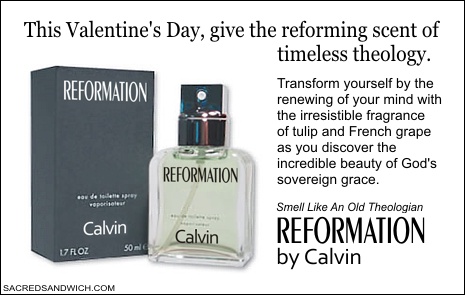
Smell Like an Old Theologian
Posted: March 3, 2010 Filed under: Just for Fun 1 CommentA friend sent me this picture, I found it funny.
My Saving Grace
Posted: March 2, 2010 Filed under: Country Lyrics 1 CommentAs those that know me, know I love country music. So maybe you’ll enjoy this short story and maybe you won’t.
It was the other night studying in the library I was listening to a newer country singer (Jamey Johnson) that I enjoy because of his at times because of his rebel sound, much like that of the 70’s and 80’s. A good many of times I never at all listen to the lyrics, I am either typing, reading, walking around the library researching with head phones and the music/beat/sound of twang is just there in my ears because I enjoy it. However it was getting late and I sit back listening to the lyrics of a song called “My Saving Grace” and how it hit me personally and that of my own life that God has planned for me in my upbringing.
Now I have no idea of Jamey Johnson’s eternal state with Christ. However if he is not a believer, than it is God’s common grace that allows him (and the many others) to sing of His special grace in the gospel that amazes me time and time again.
However as my mother made me go to church, and the stories of my drunkard father that would come home and abuse my mother, such lyrics as these speak to my own personal life in how God uses a number of situations to bring one to the Gospel of Jesus Christ in the Church.
“Daddy’s bourbon breath was strong as gasoline, An’ it seemed to fuel the rage he had inside. He’d come home just burnin’, Mad an’ drunk an’ mean an’ raisin’ hell on a Saturday night. Momma’d lock us up in her bedroom, He’d be lyin’ in the hallway on our way to Sunday school. They both, in their own way became my savin’ grace. Daddy passed out with his demons: Momma passed the offerin’ plate. An’ she’d cry out to Heaven: “Protect this son of mine,” While Daddy kept the devil off my back, By takin’ up his time.
Momma said: “Nobody’s perfect,” as we walked into Church, To ask the Good Lord to forgive him, again. I still recall that sermon, I hung on every word. That’s when I learned just exactly what a Father really meant. And the Angels and the people gathered round, I was standin’ in that water when that Preacher laid me down.
They both, in their own way became my savin’ grace. Daddy passed out with his demons: Momma passed the offerin’ plate. An’ she’d cry out to Heaven: “Protect this son of mine,” While Daddy kept the devil off my back, By takin’ up his time. An’ Daddy kept the devil off my back… By takin’ up his time.”
Coming Titles by The Dutch Reformed Translation Society
Posted: March 1, 2010 Filed under: Dutch Reformed Translation Society Leave a commentTitles in process:
Wilhelmus a Brakel, Edifying Exercises Related to the Lord Supper
Guilelmus Saldanus, The Power of the Lord’s Supper
Godefridus Undemans, The Practice of Faith, Hope, and Love
Jodocus van Lodenstein, Nine Sermons
and what I am really looking froward to… … …
Petrus van Mastricht, Theoretical and Practical Theology (4 volumes).

 Gospel-Centered Musings

