John McCain Denouncing George Bush’s Ties Bob Jones
Posted: September 13, 2008 Filed under: Video of the Week Leave a commentIf your Blogging Politics?
Posted: September 12, 2008 Filed under: Just My Thoughts Leave a commentI have been thinking a lot on the number of blogs (both “Christian” and non) that are blogging like there is no-tomorrow on politics. I am not saying that no one should, but it is getting a bet repetitive and “out-of-control” in a number of ways. This passage has come to my mind when reading the number of those who seem to care so deeply about vocalizing their opinions and thoughts on their blogs.
1 Corinthians 13:1-3 “If I speak with the tongues of men and of angels, but do not have love, I have become a noisy gong or a clanging cymbal. And if I have the gift of prophecy, and know all mysteries and all knowledge; and if I have all faith, so as to remove mountains, but do not have love, I am nothing. And if I give all my possessions to feed the poor, and if I deliver my body to be burned, but do not have love, it profits me nothing.
The Sacredness of an Unborn Life
Posted: September 12, 2008 Filed under: Abortion 1 Comment Proverbs 24:10-12
If you faint in the day of adversity,
your strength is small.
Rescue those who are being taken away to death;
hold back those who are stumbling to the slaughter.
If you say, “Behold, we did not know this,”
does not he who weighs the heart perceive it?
Does not he who keeps watch over your soul know it,
and will he not requite man according to his work.
This past week Michael and I stopped over at our friend’s Seth and Misty Huckstead’s house to pick up a wireless router. As we were standing their chatting, I was approached by Misty Huckstead, on being involved in an extraordinary ministry for the unborn. Misty explained to me with a light in her eyes and passion in her voice about the ministry of the Omega House. This is the letter that she sent out explaining this ministry that ministers to the life of the pregnant girls and women and of course the potentially life saving ministry to the unborn child. This type of ministry gives my heart hope for the millions of little lives that are in jepordy every day.
I would love to tell you all about the home, but I will make it short. God literally gave them this house and all of the funds to fix it up. It is now called the Omega House and is for a place to pray for the clinic next door, to educate people, and a place where they can have post abortion counseling, they are now hiring a professional counselor to come. There are many Reformed Churches represented who volunteer at the house. They now have 32 people there doing counseling Wednesday thru Friday when the abortions are performed and they also go to another clinic in GR two nights a week. So far this year 30 babies have been saved!! God is using this ministry in amazing ways.
I asked how I can help, given very limited time. Mary said they do not need money, they need people who would commit to praying for them. They sit there all year, even on those freezing mornings when I am cuddled in with coffee and a blanket, they are not loosing heart in the battle for the unborn. They are aware that the battle is not theirs, that God is at work.
Cosmic Drama
Posted: September 12, 2008 Filed under: Seminary Questions Leave a commentI was asked to do the following response in a short manner… so I tried, not as if I knew what I was talking about, but hey, I tried right?
ASKED: Comment on the following quotation of Bruce Waltke, noting where you agree with him and where not, and why?
“The cosmic drama of salvation history opens with an awe-inspiring display of theatrics. The palpable excitement and anticipation is pregnant in the text, available to all. Unfortunately, many readers today do not sense the drama nor understand these pivotal words, rich with meaning. This narrative of origins not only opens the cosmic drama of the Bible’s theme – God irrupting into chaos to establish his rule over everything – it also lays the foundation for the biblical worldview of ethical monotheism. God takes his rightful place on his throne in the heavens with the earth as his footstool, appoints human beings as his regents to rule his earth, and establishes laws for Israel in the order of creation” (An OT Theology, 173).
My Answer:
I feel as if I am post to find something here that I disagree with, however for the most part unless I pick apart things that may become too critical, I do not find anything “hugely” that I disagree with. I think I can find two areas that may perk the eyes/ears to the traditional reformist, however I do not know if Waltke is trying to say or bring about what the traditional reformed may believe he is saying.
• “cosmic drama” – I could see some that may get upset at calling the act of God in creation a drama. I can see that the reformed individual may look at seeing the fact that Waltke used the word “drama” relating in a exciting or emotional or unexpected events, because creation was altogether different from all of that. However, I do not know id Waltke is trying to say that the act of creation was unexpected as a drama as he is saying that the Lord played/planed a play-like series of events in creating universe.
• “God irrupting into chaos to establish his rule over everything” – This however is the most upsetting statement I can find in the short little paragraph, (unless I’m blind). That fact that he uses the word, “Chaos” to describe that of what God did in making that of the cosmos, simply is not at all in-line with God’s character, person, and most certainly does not portray a God whom I read about in the Scriptures. God is simply a God of order and planned methods in organization, in everything he has done; he is doing and will do.
Palin and the Pulpit
Posted: September 11, 2008 Filed under: Just for Fun 1 CommentSome have asked me today about the Voddie Video. Here you go.
Sick of Politics!?
Posted: September 11, 2008 Filed under: Just for Fun 3 CommentsIs anyone else sick of Politics? I am! I am only writing this post to give me opinion, that both parties suck tremendously this coming election and that I cannot believe the tremendous amount of Reformed and Evangelicals that jump on the “moral” band wagons of the Republican party, but then in electing a woman VP, we help her after just having a child, not fulfill her biblical role in the home.

Whether or not a woman should work outside the home is a frequent question. The Bible does have instructions regarding a woman’s role. In Titus 2:3-4, Paul gives these instructions as to how a young married woman is to be trained by older women: “…train the younger women to love their husbands and children, to be self-controlled and pure, to be busy at home, to be kind, and to be subject to their husbands so that no one will malign the Word of God.” In this passage, the Bible is clear that when children are in the picture, that is where the young woman’s responsibility lies. The older women are to teach the younger women and to live lives that glorify God. Keeping these responsibilities in mind, the older woman’s time can be spent at the Lord’s leading and her discretion.
Proverbs 31 speaks of “A wife of noble character.” Starting at verse 11, the writer praises this woman as one who does everything in her power to care for her family. She works hard to keep her house and her family in order. Verses 16, 18, 24, and 25 show that she is so industrious that she also moonlights with a cottage industry that provides additional income for her family. This woman’s motivation is important in that her business activities were the means to an end, not an end in themselves. She was providing for her family, not furthering her career, using her degree, or working to keep up with the Joneses. Her employment was only a sidebar to her true calling—the stewardship of her husband, children, and home.
The Bible nowhere forbids a woman from working outside the home. However, the Bible does teach what a woman’s priorities are to be. If working outside the home causes a woman to neglect her children and husband, then it is wrong for that woman to work outside the home. If a Christian woman can work outside the home and still provide a loving, caring environment for her children and husband, then it is perfectly acceptable for a woman to work outside the home.
Now how does the, Reformed, Fundamentalist & Evangelicals feel about helping a woman shortly after having a child take on one of the most hardest, toughest jobs in the world, being the Vice-President of America? To me, it is sicking to see Christians say, “they are against abortion, they are against stem-cell, and they are against gay marriage, they must be voted in.”
PS- I am not democratic in anyway and disagree with Obama in about every way, shape and form. However, I am most certainly this year not Republican either.This will be the only and last politic post you will see on this blog.

Living for God’s Glory
Posted: September 11, 2008 Filed under: Dr. Joel Beeke, Reformation Trust Leave a commentReformation Trust new title (Living for God’s Glory, by Joel R. Beeke) has come out today and can be bought at RHB for only $18.00.

Reformation 21 Funny
Posted: September 10, 2008 Filed under: Just for Fun Leave a commentReformation 21 made a funny today on Justin Taylor and it is quite funny.
More on the CRT Series
Posted: September 10, 2008 Filed under: Classic Reformed Theology, Scott Clark Leave a commentFor more information on the CRT Series by RHB, head on over to Scott Clark’s blog.
Review of Reason for the Hope Within
Posted: September 10, 2008 Filed under: Apologetics, Book Review, Reason for the Hope Within Leave a commentI recently read Reason for the Hope Within, edited by Michael Murray. I have decided to review chapter six of the book in dealing with faith and reason.
A Summary and Evaluation of Chapter Six of Reason for the Hope Within

While reading Reason for the Hope Within, chapter six stood out to me because it dealt with the topic of faith and reason. The book’s aim was to introduce a number of articles dealing with apologetics and Christian philosophy, and while I am sure that it is all well written, it lacks a number of younger audiences in contribution to Christian philosophy. Throughout this book there are often times that the chapter or topic leaves the reader wanting more information/further reading on it. Unfortunately, Reason for the Hope Within seems to be more of an overview of the subjects it deals with, and does not direct the reader to other titles that may contain greater detail for those wanting to advance in reading about Christian philosophy and apologetics.
Chapter six was written by Caleb Miller and is a section that focuses on Faith and Reason. Here Miller goes over the view of Christian Faith and Human Reason and gives attention to the issue of whether they are opposing to one another or if they work together. Miller gives Martin Luther, John Calvin and John Wesley’s view on how faith and reason work together. His purpose in doing this is so that the Christian can see the importance of defending the Christian faith and also understand that reason does have something to do with Christianity. Oftentimes, fundamentalists tend to forget about apologetics and when needed to defend the faith simply say, “The Bible is true.” However, this is not as it should be. Christians who do not defend Christianity both Scripturally and logically are nothing but stubborn.
Miller then addresses whether or not faith is opposed to reason. Here he approaches the problem of when reason makes the individual trust their own faculties. From there he deals with the objection that faith does not measure up to the standards of reason, and also deals with what Søren Kierkegaard says about this topic in his famous book, Concluding Unscientific Postscript. Miller then follows Alvin Plantiga in claiming that belief in God can be rational even though it is not the conclusion of one’s reasoning. This idea insists that the Christian argument gives good reason to think that belief in God can be grounded in types of experiences. Examples of this are: God’s Sovereignty played out in an individual’s life, God’s passing of judgment, or God’s providence where he leads them in life. Miller suggests that there are advantages to an individual basing their faith upon their experiences instead of reasoning. However, in my opinion, this seems to be very scary, especially in a time and culture where people tend to change their decisions based on any circumstance and not on truth.
Lastly, expanding on the topic of the objection of faith and reason, Miller deals with the apologetics of evidentialism. Here he gives a brief explanation of what an evidentialist is and how they try to prove theism by ways of rational arguments based upon evidence that they believe to be true. He explains that oftentimes the evidentialist’s proof unfortunately is merely an argument and needs to be examined deeper. Miller briefly goes over the Scriptural passages that evidentialist’s use for their argument: Romans 1:18-20. However, he tends to disagree with the evidentialist view concerning this passage, saying, “This passage does not seem to say that God’s existence and nature would, but for sin, be obvious to everyone.” Miller then presents some of the problems with evidentialism – one being that every argument demands that it follows the same premises that both sides agree upon. For example: if there is an argument about Creation, both parties must agree upon the reasoning of a Creator. In view of Romans 1:18-20 he says, “They may hold such beliefs but nothing in this passage assures us they do.”
Continuing on into section two, Miller expresses the importance of an individual’s understanding of faith and reason. Here he gives three clear meanings on the subject of faith. These are:
(1.) Christian Faith is a sect of beliefs that Christians typically hold to and that are central to Christianity.
(2.) Faith has a proper human response to God – this response ends up being in two parts: first, one believing that there is an important sect of claims that are true doctrine. And secondly an element of true thought that has to deal with a personal relationship with the Triune God.
(3.) Faith is a source of belief; this view sees faith as something that can be revealed either by Scriptures or the Holy Spirit by supernatural means.
Next he gives means of knowing reason:
(1.) Reason as our proper use of our cognitive faculties: This is the Christian asking himself if faith is either reasonable or rational in their thought process.
(2.) Reason as the proper use as a natural human faculty: This is only seeing the natural use of the human’s cognitive facilities in relationship in the natural world.
(3.) The faculty of reason is that which makes beliefs and reasoning logical.
In part three Miller details the topic of Christian epistemology and goes over the three major parts of it: creation, sin and redemption. With creation, Miller shows how God created humanity with a set of purposes so that mankind would give back (glory) to God. Here Miller alleges that Christians today do not have a good enough reason to believe that prior to the fall Adam knew truth infallibly. From there he then focuses on the human life in fallenness. Here he shows how the affects of sin have corrupted man’s mind in the process of reasoning, which he perceives is what gives humans the tendency to suffer from the inability to determine truth. Lastly, Miller shows that in epistemology the view of redemption is that it has helped cleanse man’s heart in order to improve the process of thinking and reasoning. In this section (which is quite long) he indicates that man best receives truth when indwelt with the Holy Spirit. My only fear in this all is that Miller may be allowing human experience to be the determining factor on things, rather than true propositions.
Lastly, Miller concludes his chapter by dealing with the central issue in his discussion of Christian theology. He does this by answering two questions:
1. Is Christian faith rational for those who accept it?
2. Is there a basis of persuading others rationally to accept Christian faith?
After explaining both of these issues he addresses the conflict between them, and also points out that mankind may make mistakes when living this out. He shows the importance of how a Christian is to identify what God has revealed, but recognizes that it is hard to do this in the fallen state. Miller’s mindset is clearly seen in the last two paragraphs when he reveals his thoughts on the process of the Christian seeking truth, as he ends saying,
“According to Christianity, I argued, we have reason to think that we have been cognately designed by God so that when we honestly seek the truth, our cognitive faculties are reliable and that God has graciously intervened in human life to compensate for the noetic effects of sin.”
Classic Reformed Theology
Posted: September 10, 2008 Filed under: Classic Reformed Theology, Scott Clark Leave a commentReformation Heritage Books is excited to announce a new series of books: Classic Reformed Theology. We are privileged to have the valuable editorial guidance of the R. Scott Clark (the Heidelblogger) on this series. We expect the first book of the series to be available this November. Here is the extended preface that will be printed in the initial volume. We post it here to give everyone an idea of what to expect.
If you would like to pre-order a copy of the first volume of the Classic Reformed Theology Series, you can do so buy calling (616) 977-0599 or by simply going to Reformation Heritage Books website.
The editorial board will consist of,
• Joel R. Beeke, Puritan Reformed Theological Seminary
• J. Mark Beach, Mid America Reformed Seminary
• W. Robert Godfrey, Westminster Seminary California
• Michael S. Horton, Westminster Seminary California
• Joel E. Kim, Westminster Seminary California
• Herman Selderhuis, Theologische Universiteit Apeldoorn
• Paul R. Schaefer, Grove City College
• Carl R. Trueman, Westminster Theological Seminary
Richard Muller says of this series,
“This is an important project that promises to make available in good editions and translations as series of eminent works of Reformed theology from the era of orthodoxy. These volumes will offer students of the Reformed tradition an invaluable resource and will hopefully stimulate interest in the highly refined and carefully defined thought of an era that was formative of the Reformed faith and that assured its intellectual and spiritual vitality for later generations.”

Methods?
Posted: September 9, 2008 Filed under: Seminary Questions Leave a commentDr. Bilkes: How does one avoid the allegorical method without falling into the rationalist method?
Dewalt: Allowing the Scriptures to speak for themselves as much as possible. I think often times we want to preach Christ so much or think he is in the passage one may be preach so much that we end up creating a Rationalist approach when they try to allegorize. How one can stop this is by carefully approaching the text, and preaching what is in front of them and not bringing about “New Ideas” to the text. If it hasn’t been said now in a commentary or in a good book, then don’t come up with something new from the passage.
Presuppositional pointers
- Allowing the text to speak for its’ self
- Not using man’s own mind to make his or her assumptions come from the Scriptures
- What God said and intended in his cannon of Scriptures may go against myself personally but does not give me the right to disagree. I then conform my thinking with that which that Lord has given.
Practical pointers
- If it is not clear, then do not try to add to the text
- Don’t try to fit Christ into the text, but find where Christ is in the text
- Making the text say something you may believe rationally and not scripturally, is only taking the scriptures out of context.
A THEOLOGICAL EVALUATION OF A SECULAR HUMANIST DECLARATION
Posted: September 9, 2008 Filed under: Apologetics, Article Reviews, Paul Kurtz, Secular Humanist 1 CommentRecently I have read a article at the following site. I decided to write a review of the following section that quite disturbed me, extremely! The article was written by Paul Kurtz on, A Secular Humanist Declaration, namely section 4, Ethics Based On Critical Intelligence. You can read below;
(written by Paul Kurtz)
“The moral views of secular humanism have been subjected to criticism by religious fundamentalist theists. The secular humanist recognizes the central role of morality in human life; indeed, ethics was developed as a branch of human knowledge long before religionists proclaimed their moral systems based upon divine authority. The field of ethics has had a distinguished list of thinkers contributing to its development: from Socrates, Democritus, Aristotle, Epicurus, and Epictetus, to Spinoza, Erasmus, Hume, Voltaire, Kant, Bentham, Mill, G. E. Moore, Bertrand Russell, John Dewey, and others. There is an influential philosophical tradition that maintains that ethics is an autonomous field of inquiry, that ethical judgments can be formulated independently of revealed religion, and that human beings can cultivate practical reason and wisdom and, by its application, achieve lives of virtue and excellence. Moreover, philosophers have emphasized the need to cultivate an appreciation for the requirements of social justice and for an individual’s obligations and responsibilities toward others. Thus, secularists deny that morality needs to be deduced from religious belief or that those who do not espouse a religious doctrine are immoral. For secular humanists, ethical conduct is, or should be, judged by critical reason, and their goal is to develop autonomous and responsible individuals, capable of making their own choices in life based upon an understanding of human behavior. Morality that is not God-based need not be antisocial, subjective, or promiscuous, nor need it lead to the breakdown of moral standards. Although we believe in tolerating diverse lifestyles and social manners, we do not think they are immune to criticism. Nor do we believe that any one church should impose its views of moral virtue and sin, sexual conduct, marriage, divorce, birth control, or abortion, or legislate them for the rest of society. As secular humanists we believe in the central importance of the value of human happiness here and now. We are opposed to absolutist morality, yet we maintain that objective standards emerge, and ethical values and principles may be discovered, in the course of ethical deliberation. Secular humanist ethics maintains that it is possible for human beings to lead meaningful and wholesome lives for themselves and in service to their fellow human beings without the need of religious commandments or the benefit of clergy. There have been any number of distinguished secularists and humanists who have demonstrated moral principles in their personal lives and works: Protagoras, Lucretius, Epicurus, Spinoza, Hume, Thomas Paine, Diderot, Mark Twain, George Eliot, John Stuart Mill, Ernest Renan, Charles Darwin, Thomas Edison, Clarence Darrow, Robert Ingersoll, Gilbert Murray, Albert Schweitzer, Albert Einstein, Max Born, Margaret Sanger, and Bertrand Russell, among others.”
Here is my personal response on this section, please be sure to read his article fully…
In the section entitled Ethics Based On Critical Intelligence, Paul Kurtz’s theological errors begin from the very first sentence. Regardless of whether or not Kurtz is a believer, one day he (and the entire human race) will indisputably be held accountable for the entirety of everything in his life, including his beliefs; no matter if an individual believes in a higher power or not, they will be judged (Rev. 20:11-15). Therefore, notwithstanding if Mr. Kurtz is a Christian or if he believes in any absolute truth, he still ought to be – and will be – held accountable for the theology he presents. However, there is much difficulty in revealing theological error to one’s writing and views on life when they have no personal knowledge of Christ, absolute truth, or the gospel. With this said, it is Kurtz’s first sentence in section four that stands out in a way that immediately places him on the defensive side. Kurtz says, “The moral views of secular humanism have been subjected to criticism by religious fundamentalist theists.” This may be the case at times in history – that is true – however, historically/theologically speaking, Christianity has been attacked from the beginning when man thought that they had a better plan of intelligence by partaking from the tree of knowledge (Gen. 3:1-7). Here is the first time that man thought for themselves alone and not for the glory of God. Historically, this is the first time that man went out on his own, so-to-speak, and with the intelligence obtained, began a fatality that all of humanity would be consumed by: the power of pride. This pride is that which critical intelligence is based and founded upon – it is man trying to find happiness in himself and not enjoying God completely. Adam’s intent was nothing less than trying to find intelligence in himself, and not the One who made him.
Next, Kurtz’s second sentence states, “The secular humanist recognizes the central role of morality in human life; indeed, ethics was developed as a branch of human knowledge long before religionists proclaimed their moral systems based upon divine authority.” If secular humanists recognize the central role of morality, then their systems such as detention centers, jails, prisons, and mental health hospitals would be able to fix the problem of humanity’s sin. But this is not the case, is it? No – they need men of God that live by a moral standard of absolute truth from the Word of God to come in and preach, pray, and teach biblical morals, because even the secular systems and men see something different about the Christian faith and Christian ministry. As a matter of fact, in a recent political forum moderated by Rick Warren between Senators Obama and McCain, Warren brought up the issue of faith-based ministries. The astounding result was that well over 70% of individuals would rather be in a ministry that deals with biblical morals and ethics than what the State, the nation, and mankind – such as secular humanists – have to offer. Theologically, Kurtz’s crucial problem is that he sees it as important to place the created above its Creator. This particular outlook is always at the very root of sin and is the cause of man’s failure in glorifying God to the utmost. The theological error in it is that man sees his own morals as his commandments rather than seeing and obeying what God has given to man to live by. Once again, this can be linked back to the fall with Adam, when he placed his moral values before that which God had ordained.
Further on in Kurtz’s fourth section he states another theological inaccuracy that is quite upsetting. When a person does not know the Lord, errors like this are in every way understandable due to a lack of basing ethics upon something that reasons as it ought to, but rather bases ethics upon something that reasons to get what is wanted, when it is wanted. This is seen when Kurtz says, “For secular humanists, ethical conduct is, or should be, judged by critical reason, and their goal is to develop autonomous and responsible individuals, capable of making their own choices in life based upon an understanding of human behavior.” Here Kurtz makes another theological error as he suggests that the correct way of reasoning is for individuals to make their own choices based on the understanding of human behavior. However, the real truth is that man was not created for the sake of his own name or for his own glorification; he did not have a will that made him aim to lift his name above the Lord’s; he was not made so that he may reason at any time to get his personal desires and wants. When the Lord created mankind He did not ask man what he thought about it; He did not ask man his opinion when He created them. Rather, in perfect wisdom and will, He made man to glorify Himself first and foremost above all else.
Lastly, there was one more sentence that stood out most of all in the later part of A Secular Humanist Declaration when Kurtz says, “As secular humanists we believe in the central importance of the value of human happiness here and now. We are opposed to absolutist morality, yet we maintain that objective standards emerge, and ethical values and principles may be discovered, in the course of ethical deliberation.” How can anyone find happiness in change? How does mankind find joy in what they do not know? This may give a temporary high or a season of getting a boost or taste of happiness, but only truth that never changes brings an everlasting happiness that results in morals that humans live by and that are joys to the human heart. Although ethical values may be found or may emerge, as Kurtz says, they only derive from the evil and sin of mankind. Therefore, this is why man must not look at his own fallen state to see what morals and ethical values to stand on, but rather he must look upon the perfect, blameless, and spotless Christ. This is the answer to every fallen need, every fallen want, and every fallen man that may think his mind is greater or thinks he has all the answers, and yet inevitably falls short in his needs. Christ is the answer to the secular humanist; He alone (and through the gospel) has a way of piercing the heart and humbling man before Himself.
In all, theological errors come as men try to be their own saviors – a mind savior, a moral savior, an ethical savior, a humanist savior – but in the end not one of these will save man from hell. There are even those who may know theology and the gospel, and yet rely on their own morals and ethics instead of acknowledging their need for the source of morality – Jesus Christ Himself. Why look for things that will fade away or fall in time? Why try to find answers in the mind that can change at any time? The answer is simple: because man wants to be their own savior and their own personal religion, and they do not want to give themselves up to a personal Christ – a Christ who has never changed, who perfectly lived by His own law, who was morally and ethically spotless, and who continues to be entirely perfect today as He rules from His throne until His return.
Even though my review may be barely read, thanks for reading if you have done so.
No Dancing!
Posted: September 8, 2008 Filed under: You Might be a Calvinist if... 6 Comments(Posted by Jessica Heikoop)
You might be and Calvinist if… you bail out of a wedding becuase there is dancing.
Get Goldsworthy
Posted: September 8, 2008 Filed under: Graeme Goldsworthy 1 CommentThis semester at PRTS, some how in the number of classes that are offered, three Graeme Goldsworthy books was part of my required reading. Then looking at the recommended reading for mid-term book reviews, there was Goldsworthy again! Now, in the last 2 weeks I have already read three and on my fourth and fifth this week. I just “googled” Goldsworthy to read a little more of his works on-line. You can check some of his stuff out here on Monergism, IVP (bio), and interview on Buzzard Blog. If you are looking for Gospel-centered books, writings and theology… I personally enjoy Piper and Keller, however there is something about Goldsworthy that makes him my favorite.
Be sure to check back for those of you who are interested in reading a few book reviews I plan to do in the next coming month on Goldsworthy.
Hole in the Wall
Posted: September 8, 2008 Filed under: Just for Fun Leave a commentI set down this evening to read According to Plan, by Graeme Goldsworthy. I happen to turn on the TV to have the Colts game going on in the background. When I turned on the TV, American’s new game show, Hole in the Wall. I have no thoughts about the TV show, just in awe.
CLOSE
Posted: September 7, 2008 Filed under: Sundays with Spurgeon Leave a commentIF MY READER has not followed me step by step as he has read my pages, I am truly sorry. Book-reading is of small value unless the truths which pass before the mind are grasped, appropriated, and carried out to their practical issues. It is as if one saw plenty of food in a shop and yet remained hungry, for want of personally eating some. It is all in vain, dear reader, that you and I have met, unless you have actually laid hold upon Christ Jesus, my Lord. On my part there was a distinct desire to benefit you, and I have done my best to that end. It pains me that I have not been able to do you good, for I have longed to win that privilege. I was thinking of you when I wrote this page, and I laid down my pen and solemnly bowed my knee in prayer for everyone who should read it. It is my firm conviction that great numbers of readers will get a blessing, even though you refuse to be of the number. But why should you refuse? If you do not desire the choice blessing which I would have brought to you, at least do me the justice to admit that the blame of your final doom will not lie at my door. When we two meet before the great white throne you will not be able to charge me with having idly used the attention which you were pleased to give me while you were reading my little book. God knoweth I wrote each line for your eternal good. I now in spirit take you by the hand. I give you a firm grip. Do you feel my brotherly grasp? The tears are in my eyes as I look at you and say, Why will you die? Will you not give your soul a thought? Will you perish through sheer carelessness? Oh, do not so; but weigh these solemn matters, and make sure work for eternity! Do not refuse Jesus, His love, His blood, His salvation. Why should you do so? Can you do it?
I beseech you,
Do not turn away from your Redeemer!
OSU Highlights from last year, ready for this
Posted: September 6, 2008 Filed under: Just for Fun, Video of the Week 1 CommentThe Bible has no united message
Posted: September 5, 2008 Filed under: Seminary Questions Leave a commentI was asked to Respond to the following opinion:
“The Bible has no united message. It is a book with many, varied messages that are sometimes mutually exclusive. What we must do is select with the help of the Holy Spirit from among the various biblical messages the one that best fits our time.”
I will give my opinion to the following quote in addressing the sections.
The Bible has no united message. This is here is the writer’s presupposition on what he may believe of the Bible. I would say that yes, the Bible does have one united message. That being the work and redemption of sinners by the gospel of Jesus Christ in order that sinners can become saints to glorify God through the work of the Holy Spirit.
It is a book with many, varied messages that are sometimes mutually exclusive.
I would say to this, that yes, there are stories, narratives, and places where one may have a hard tie seeing how it fits into the whole picture of the cannon of Scripture. This problem however is on man’s part in not being able to see and know how every picture, story and area fits into the whole museum of the story of redemption.
What we must do is select with the help of the Holy Spirit from among the various biblical messages the one that best fits our time.”
“What we must do” seems as if he is coming to the table with his own concerns and opinions as if he knows best how to look at the Bible. As far as his comment “the one that best fits our time”, seems as if he does not have any absolute truth. If we are to pick out what we want, when we want, for what we want, then why even believe something that is been inspired by God, and not write our own system of beliefs.
Was Jesus Funny?
Posted: September 5, 2008 Filed under: Jesus Christ, Just for Fun, Mark Driscoll Leave a commentGuide to the Writings of Herman Bavinck
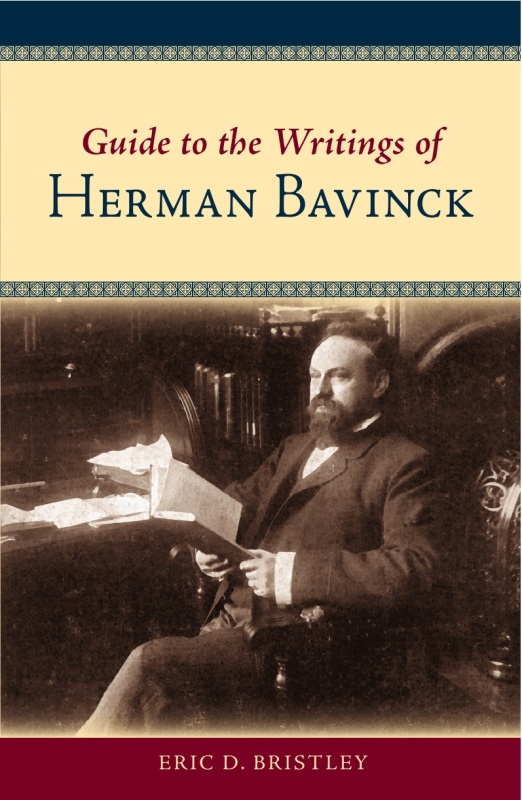
Posted: September 5, 2008 Filed under: Book of the Week Leave a commentThis guide provides English readers with a resource for the study of the works of Herman Bavinck (1854–1921), a profound Christian thinker and one of the most important Reformed theologians at the turn of the twentieth century. In it you will find an annotated bibliography of his writings, a concise biography showing the historical context of his publications, and a bibliography of secondary literature. Anyone interested in learning more about the contribution of Bavinck will want to have this resource. BUY HERE!
You can as well take a look at the first few pages here.
Banner of Truth Trip & the Oneliners
Posted: September 4, 2008 Filed under: Dewalt's One Liner's 3 CommentsI attend a number of conferences in and throughout the year for RHB that I work for. However, attending conferences for my own personal reason and spiritual growth is hard to do at times. This past spring in May, a few guys put some money together and took me to my first Banner Conference. Driving from Michigan gave me and the guys a good amount of to talk about seminary, life, wives or the lack there of, and anything else that randomly came to my mind. With in an hour, my roommate Dirk Naves opened up his computer to begin writing down all of the “one-liners” that came from my mouth. All though some are not given in their context, if you know me, you will laugh.
Derek: “That’s the church we’re gonna buy.” *points to massive Catholic cathedral*
Mike: “Yeah. You can get buildings like that from the government for like a buck!”
Shawn: “I was in a cult.”
Derek: “Is that where you met Tammy? ‘Where’d you meet your wife? We met at a cult meeting.'”
Mike: “Yeah, we were sacrificing racoons; nailin’ ’em to crosses ‘n stuff.”
Derek: “Jeff’s gonna schmooze with all the OPC big-wigs.”
Mike: “Yeah, he’ll probably end up sleeping with Rick Philips or something.” (meaning, sleeping in the same room)
Mike: “Guys, hold on! I was gonna say something serious.”
Mike: “…so this semi comes over the hill and hits the bear *BOOM*! It was just like a commercial!!
Nathan: “A commercial for what!?!”
Mike: *takes picture* “Oh my goodness! You look exactly like Rico Suave!!”
Derek: “Who’s Rico Suave?”
Mike: “Well, I don’t actually know.”
Mike: “A birth canal? What’s a birth canal? Is that where the snork comes out of?”
Nathan: “A snork!?”
Mike: “Whatever they’re called; I’ve always called them snorks.”
Mike: “I’ve got five bucks. That’s a can of chew or five double cheeseburgers!”
Mike: *looking at pocket watches* Do they have any cool lookin’ ones? Like with a deer on it or something?”
Mike: “I just studied and talked about Don Quixote going to hell and stuff. Well, purgatory or hell; whatever, they’re the same.”
Derek: “Don Quixote? He didn’t go to hell! That was Dante!”
Mike: “Oh yeah, Dante Inferno went to hell.”
Mike: “That would suck for the incarnationists.”
Shawn: “You mean reincarnationists…”
Mike: “Oh yeah. I was thinking incarnations were flowers.”
Mike: “Okay, so Dr. Beeke and I were at the bar…” (meaning, we walked into a Pub and ate hamburgers)
For the Christian Video Game Lovers
Posted: September 3, 2008 Filed under: Just for Fun Leave a commentInteresting shirt to say the least, for those of you that may love Wii.

Interesting Article: The Tattoo Fashion
Posted: September 3, 2008 Filed under: Tattoos Leave a commentArticle on tattoos that I thought might be good or bad to take a look at, (depending on your take on the subject).

Question on why studying hermeneutics is important
Posted: September 3, 2008 Filed under: Seminary Questions 1 CommentI am either often asked questions (that I seem to have no idea upon) that I am to answer either for fellow students, classes, or something to do with something in seminary. So, why not answer them on the blog? I will, so from now on, when a student ask me a question, or a professor I will place the question and my response for the world to see. I will admit at times even though I am asked, or have to study, or write answers to questions I feel as if I simply stupid. So therefore, do not think that you are going to read some intense and profound answers, but only simple and easy to read thoughts of a redneck seminarian.
Dr. Bilkes: Why would anyone need to study hermeneutics? Why not just read the Bible?
Dewalt: First off I would start by saying, studying hermeneutics is more necessary then those who just read the bible. Knowing how you read books, articles, blogs, works, and newspapers all make the reader have a hermeneutic, right? If a hermeneutic is the study of the locus of meaning and the principles of interpretation then everyone must have one. Now, the question remains to what may their hermeneutics be or consists of? Studying hermeneutics gives the individual a way of looking, knowing, and seeing the importance of properly reading information so that they can interpret the words read correctly.
Now as far as in, “why not just read the Bible?” My answer is this… I can read words all day long, I can read books, blogs and papers from fellow students however I ALREADY have some type of hermeneutic if I can interpret the writing, right? Yes, no matter who the person may be, they have a hermeneutic if they can read. The question that I believe must be asked, is what is their hermeneutic? Just reading the bible without having a biblical gospel-centered hermeneutic just allows mankind to interpret the Scriptures in a way they think is best or can fit into their own system of man-centeredness.
So in answering the questions quickly and easily in one sentence a piece…
Why would anyone need to study hermeneutics? To see, know, learn a proper Gospel-centered way of studying the bible so that their interpretation is that of what God intended.
Why not just read the Bible? Because without knowing how to, what is the sense of why to?

 Gospel-Centered Musings