Ham & Cheese
Posted: October 13, 2008 Filed under: You Might be a Calvinist if... 3 CommentsYou might be a (Dutch) Calvinist if… every funeral you attend has Ham & Cheese Buns after the service.

They’re Back! Those Wonderful Church Bulletins!
Posted: October 12, 2008 Filed under: Just for Fun 2 CommentsThank God for church ladies with typewriters. These sentences appeared in church bulletins or were announced in church services (Summer, 2007 Release).
———————————————————-
The Fasting & Prayer Conference includes meals.
———————————————————-
The sermon this morning: ‘Jesus Walks on the Water.’ The sermon tonight: ‘Searching for Jesus.’
———————————————————-
Our youth basketball team is back in action Wednesday at 8 PM in the recreation hall. Come out and watch us kill Christ the King.
————————— ——————————-
Ladies, don’t forget the rummage sale. It’s a chance to get rid of those things not worth keeping around the house. Bring your husbands.
———————————————————-
The peacemaking meeting scheduled for today has been canceled due to a conflict.
———————————————————-
Remember in prayer the many who are sick of our community. Smile at someone who is hard to love. Say ‘Hell’ to someone who doesn’t care much about you.
———————————————————
Don’t let worry kill you off – let the Church help.
———————————————————
Miss Charlene Mason sang ‘I Will Not Pass This Way Again,’ giving obvious pleasure to the congregation.
———————————————————-
For those of you who have children and don’t know it, we have a nursery downstairs.
———————————————————-
Next Thursday there will be tryouts for the choir.
They need all the help they can get.
———————————————————-
The Rector will preach his farewell message, after which the choir will sing: ‘Break Forth Into Joy.’
———————————————————
Irving Benson and Jessie Carter were married on October 24th in the church. So ends a friendship
that began in their school days.
———————————————————
At the evening service tonight, the sermon topic will
be ‘What Is Hell?’ Come early and listen to our choir practice.
———————————————————
Eight new choir robes are currently needed due to the addition of several new members and to the deterioration of some older ones.
———————————————————
Scouts are saving aluminum cans, bottles and other items to be recycled. Proceeds will be used to cripple children.
———————————————————
Please place your donation in the envelope along with the deceased person you want remembered.
———————————————————
The church will host an evening of fine dining, super entertainment and gracious hostility.
———————————————————
Potluck supper Sunday at 5:00 PM – Prayer and medication to follow.
———————————————— ———
The ladies of the Church have cast off clothing of
every kind. They may be seen in the basement on Friday afternoon.
———————————– —— —————–
This evening at 7 PM there will be a hymn singing in
the park across from the Church. Bring a blanket and come prepared to sin.
———————————————————
Ladies Bible Study will be held Thursday morning at
10 AM. All ladies are invited to lunch in the Fellowship Hall after the B.S. is done.
———————————————————-
The pastor would appreciate it if the ladies of the congregation would lend him their electric girdles
for the pancake breakfast next Sunday.
——————————————–
Low Self Esteem Support Group will meet Thursday
at 7 PM. Please use the back door.
———————————————————
The eighth-graders will be presenting Shakespeare’s Hamlet in the Church basement Friday at 7 PM. The congregation is invited to attend this tragedy.
———————————————————-
Weight Watchers will meet at 7 PM at the First Presbyterian Church. Please use the large double
doors at the side entrance.
———————————————————-
The Associate Minister unveiled the church’s new tithing campaign slogan last Sunday : ‘I Upped My Pledge – Up Yours’
a fierce attempt is being made to quench or dim the light
Posted: October 12, 2008 Filed under: Sundays with Spurgeon Leave a commentAt this time, there is a great necessity for giving much light, for a fierce attempt is being made to quench or dim the light. Many are scattering darkness on all sides. Therefore, brethren, keep the light burning in your churches, keep the light burning in your pulpits, and hold it forth in the face of men who love darkness because it favors their aims. Teach the people all truth, and let not our distinctive opinions be concealed. There are sheep-stealers about, who come forth in the night, and run away with our people because they do not know our principles,-the principles of Nonconformists, the principles of Baptists, or even the principles of Christianity. Our hearers have a general idea of these things, but not enough to protect them from deceivers. We are beset, not only by sceptics, but by certain brethren who devour the feeble. Do not leave your children to wander out without the guardianship of holy knowledge, for there are seducers abroad who will mislead them if they can. They will begin by calling them “dear” this, and “dear” that, and end by alienating them from those who brought them to Jesus. If you lose your members, let it be in the light of day, and not through their ignorance. These kidnappers dazzle weak eyes with flashes of novelty, and turn weak heads with wonderful discoveries and marvellous doctrines, which all tend towards division, and bitterness, and the exaltation of their own sect. Keep the light of truth burning, and thieves will not dare to plunder your house.
Oh, for a church of believers in Jesus who know why they believe in Him; persons who believe the Bible, and know what it contains; who believe the doctrines of grace, and know the bearings of those truths; who know where they are, and what they are, and who therefore dwell in the light, and cannot he deceived by the prince of darkness! Do, dear friends,-I speak specially to the younger brethren among us,-do let there be plenty of teaching in your ministry. I fear that sermons are too often judged by their words rather than by their sense. Let it not be so with you. Feed the people always with knowledge and understanding, and let your preaching be solid, containing food for the hungry, healing for the sick, and light for those who sit in darkness.
A Buddies Weddin
Posted: October 11, 2008 Filed under: Marriage Leave a commentMarriage… I’ll be honest on this one, and say, “I never had much of a HIGH view of marriage before.” Matter of fact, with a divorced mother, broken family I could not stand watching it nor ever think that I, myself would want to get involved in such a type of “relationship” that would bind someone to another person for life!
Now of-course all of that line of thinking is one, unbiblical and two, before I became a believer. Fall of 2003 I walked onto the campus of Baptist Bible College with hardly any intentions of anything (honestly). Never in the slightest did I believe that I would ever have a best friend, let alone a roommate that would then begin to walk through a spiritual journey of seeing my every move I made in life. Fortunately God new exactly what I needed and who I needed in my life. With ups and downs, watching each others mistakes in life, to watching the beauty of the Gospel mold each others life closer to the form that Christ has given his church has been amazing. Now, Early fall of 2008 I am watching my buddy get married in less than 24 hours. However my view of marriage has changed 180 and degrees. The past 5 years, Christ showing myself through his Scriptures a view that is like none-other.
So, these are my prayers for my dear friend, old roommate, and my dear brother in Christ.
My Prayer for your lives together
Ruth 1:16-17
But Ruth said, “Do not urge me to leave you or turn back from following you; for where you go, I will go, and where you lodge, I will lodge. Your people shall be my people, and your God, my God.
“Where you die, I will die, and there I will be buried. Thus may the LORD do to me, and worse, if anything but death parts you and me.”
My Prayer for your marriage together
Song of Solomon 2:10-13
My beloved responded and said to me,
‘Arise, my darling, my beautiful one,
And come along.
‘For behold, the winter is past,
The rain is over and gone.
‘The flowers have already appeared in the land;
The time has arrived for pruning the vines,
And the voice of the turtledove has been heard in our land.
‘The fig tree has ripened its figs,
And the vines in blossom have given forth their fragrance.
Arise, my darling, my beautiful one,
And come along!’
My Prayer for your ministry together
Ecclesiastes 4:9-12
Two are better than one because they have a good return for their labor.
For if either of them falls, the one will lift up his companion. But woe to the one who falls when there is not another to lift him up.
Furthermore, if two lie down together they keep warm, but how can one be warm alone?
And if one can overpower him who is alone, two can resist him. A cord of three strands is not quickly torn apart.
My Prayer for your love together
I Corinthians 13:1-13
If I speak in the tongues of men and of angels, but have not love, I am only a resounding gong or a clanging cymbal. If I have the gift of prophecy and can fathom all mysteries and all knowledge, and if I have a faith that can move mountains, but have not love, I am nothing. If I give all I possess to the poor and surrender my body to the flames, but have not love, I gain nothing.
Love is patient, love is kind. It does not envy, it does not boast, it is not proud. It is not rude, it is not self-seeking, it is not easily angered, it keeps no record of wrongs. Love does not delight in evil but rejoices with the truth. It always protects, always trusts, always hopes, always perseveres.
Love never fails. But where there are prophecies, they will cease; where there are tongues, they will be stilled; where there is knowledge, it will pass away. For we know in part and we prophesy in part, but when perfection comes, the imperfect disappears. When I was a child, I talked like a child, I thought like a child, I reasoned like a child. When I became a man, I put childish ways behind me. Now we see but a poor reflection as in a mirror; then we shall see face to face. Now I know in part; then I shall know fully, even as I am fully known.
And now these three remain: faith, hope and love. But the greatest of these is love.
Lastly, My Prayer for what you and your wife will represent together
Ephesians5:25-27
Husbands, love your wives, even as Christ loved the Church, and give himself for it; that he might sanctify and cleanse it with the washing of water by the Word, that he might present it to himself a glorious Church, not having spot or wrinkle, or any such thing; but that it should be holy and without blemish.
Pre-order now John Calvin: A Heart for Devotion, Doctrine, and Doxology
Posted: October 10, 2008 Filed under: Book Review Leave a comment John Calvin is often reviled as a humorless doctrinarian who preached an austere theology that twisted Scripture. In John Calvin: A Heart for Devotion, Doctrine, and Doxology, Burk Parsons and a cadre of godly pastors and scholars seek to set the record straight in honor of the 500th observance of John Calvin’s birth in 1509. The book’s nineteen succinct chapters explore aspects of Calvin’s life, ministry, and teachings, and establish his importance even for the twenty-first-century church.
Contributors, in addition to Parsons, include some of the most gifted and godly Reformed leaders alive today: Derek W. H. Thomas, Sinclair B. Ferguson, D. G. Hart, Harry L. Reeder, Steven J. Lawson, W. Robert Godfrey, Phillip R. Johnson, Eric J. Alexander, Thabiti Anyabwile, John MacArthur, Richard D. Phillips, Thomas K. Ascol, Keith A. Mathison, Jay E. Adams, Philip Graham Ryken, Michael Horton, Jerry Bridges, and Joel R. Beeke. The foreword is by Iain H. Murray.
Indexes of Scripture passages, subjects and names, and theological terms make the book helpful for those who want to delve into specific topics.
John Calvin: A Heart for Devotion, Doctrine, and Doxology is a winsome portrait that dashes stereotypes about Calvin and the theological system that bears his name. Pre-order now at Reformation Heritage Books.
Review of Trading and Thriving in Godliness:
Posted: October 9, 2008 Filed under: Book Review Leave a comment Book Review: J. Stephen Yuille, Trading and Thriving in Godliness: The Piety of George Swinnock, (Grand Rapids: Reformation Heritage Books 2008).
Summary of the Piety of George Swinnock:
The 5th volume of the Profiles in Reformed Spirituality series is like a book that is found in the back of a library – hidden with an inch of dust on it, yet is an absolute treasure just waiting to be picked up. George Swinnock – although perhaps not well known – was a great English Puritan of his day, and after reading just the short 17-page biography of him, it is easy to see the passion for godliness in his life. According to Edmund Calamy, Swinnock was a serious, warm, practical, and useful preacher. The passion of piety was unmistakably evident in the characteristics that made up Swinnock’s personality, and was distinctively presented in his pastoring. Dr. Yuille gives a clear overview of Swinnock’s piety in several areas of his life. He starts by showing where Swinnock’s piety began – being greatly influenced by Robert Swinnock (his uncle), Thomas Wilson, and Emanuel College. From there we are told of the foundation on which Swinnock’s piety was set: the covenant promise, the fear of God in the mind, and the fear of God in the will. Lastly, we are given an expression of Swinnock’s piety in several different areas of godliness, and shown how his foresight of godliness was rooted in who God was and how God used man to glorify Himself.
Summary of the selected works of George Swinnock:
Dr. Yuille has picked 50 selections of Swinnock’s writings and thoughtfully categorized them into seven sections. Separating them into different sections under topical headings makes it easy and clear for the reader to see the specific areas in which Swinnock found much importance as he lived out his godliness. The seven sections examine the foundation of godliness, the door to godliness, the value of godliness, the pursuit of godliness, the nature of godliness, the means to godliness, and the motives to godliness. In the first, Dr. Yuille outlines several attributes of the character of God, which show Him to be incomparable. The second section goes over specific pieces of Swinnock’s writings that express the need, nature, effect, and marks of regeneration. Section three deals with the value of godliness – emphasizing how it, in itself, is man’s great reward in living a life of piety and faithfulness. Section four explains how the believer should have a pursuit of godliness in precedency, industry and constancy. Dr. Yuille then gives a number of selected writings in dealing with the nature of godliness, using examples that show and relate to areas in every day life such as relationships with one another, work, parenting, being a child, being a spouse – in good times and bad, among other people or alone, throughout the week until death. The following section then focuses on Swinnock’s means to godliness. In this, Dr. Yuille has chosen selections on how to have a good foundation in your spirituality, how to live by faith, how to set your eyes upon God, and how to watch against sin. Throughout each of the seven sections, it is evident that Dr. Yuille has searched carefully through the writings of Swinnock to find the precise portions that not only deal with every day life, but also deal with doctrine and devotion for the believer’s spirituality, as well as encourage the reader to walk in the fear of the Lord throughout his or her life.
Recommendation: 8 out of 10
This 5th volume of the Profiles in Reformed Spirituality series is put together amazingly! There is no other volume in the series so far that is as carefully laid out, easy to read, and well written as this. The godly motives behind Dr. Yuille’s Trading and Thriving in Godliness are evident and are outlined in a way that the reader can easily see the piety in Swinnock’s own life throughout his writings on topics of the Christian walk. For those believers who want to grow deeper and stronger in their relationship with God than ever before and want a book that will present and lead them in that direction of godliness, this is the book to get.
Asking a Catholic What are the Order of the gospels?
Posted: October 8, 2008 Filed under: Catholic questions on the Gospel, Questions & Answers, The Gospel Leave a commentQuestion: What are the order of the gospels?
Answer: The present order of the Gospels has the twofold advantage of not separating from one another those Evangelical records (St. Matthew, St. Mark, St. Luke) whose mutual resemblances are obvious and striking, and of placing at the end of the list of the Gospels the narrative (that of St. John) whose relations with the other three is that of dissimilarity rather than of likeness. It thus lends itself well to the classification of the Gospels which is now generally admitted by Biblical scholars. St. Matthew, St. Mark, and St. Luke are usually grouped together, and designated under the common name of the Synoptic Gospels. They derive this name from the fact that their narratives may be arranged and harmonized, section by section, so as to allow the eye to realize at a glance the numerous passages which are common to them, and also the portions which are peculiar either to only two, or even to only one, of them. The case stands very differently with regard to our Fourth Gospel. As it narrates but a few incidents in common with the Synoptists, and differs from them in respect to style, language, general plan, etc., its chief parts refuse to be included in a harmony such as may be framed by means of the first three Gospels. While, therefore, the Synoptic narratives are naturally put together into one group, St. John’s record is rightly considered as standing apart and as, so to speak, making up a class by itself (see SYNOPTICS).
Check out RHB’s Deal of the Month!!!
Posted: October 7, 2008 Filed under: Reformation Heritage Books Leave a comment
Retail Price: $15.00
RHB The Month of August Price: $24.99
Author: Clark, R. Scott
Publisher: P&R
Publish Date: 2008
Cover Type: Paperback
Pages: 384
ISBN: 9781596381100
Much of what passes as Reformed among our churches is not. As a class of churches that profess allegiance to Reformed theology, practice, and piety, we have drifted from our moorings. This book is written to facilitate change, specifically reformation according to God’s Word as summarized in the Reformed confessions.
Endorsements:
At a time when “all that is solid melts in the air” and distinct colors fade to gray, R. Scott Clark reminds us of the loveliness, depth, and richness of Reformed Christianity. Not only a TULIP, but a confession that bears fruit in both faith and practice, the account that you will find in this book may challenge, but its point is not to be missed.
Michael S. Horton, Ph.D. J. Gresham Machen Professor of Systematic Theology and Apologetics Westminster Seminary California
In a day when many follow charming personalities, fundamentalism, heterodoxy, individualism, and postmodernity and attempt to commandeer the Reformed tradition, Dr. Clark ably challenges such efforts. Clark brings a much needed corrective for basing Reformed identity in its understanding of the Scriptures through its historic confessions and creeds and a robust understanding historic Reformed worship. Well-researched, thoughtfully presented, and provocative, this work is a must-read for ministers, elders, and for anyone who claims to be Reformed.
J. V. Fesko, Ph.D. Pastor, Geneva Orthodox Presbyterian Church Woodstock, Georgia, Adjunct Professor of Theology, Reformed Theological Seminary
In addition to being a first-rate scholar, Dr. Clark is a brave man. He’s not afraid to remind us of the substance and meaning of many aspects of our historic Reformed confessions which we now either take for granted, or which are at odds with a number of our current practices. In Recovering the Reformed Confession, Clark reminds us of what it means when we “confess” that we are “Reformed.” It means focusing upon those things set forth in our confessions (the highest common denominator), instead of neglecting them or even denying them. In addition to gently pointing out where our words don’t match either our praxis or our deeds, Clark offers a number of practical ways we can recover our confession, and thereby recover a distinctly “Reformed faith and practice.”
Kim Riddelbarger, Ph.D. Pastor, Christ Reformed Church, Anaheim Adjunct Professor of Systematic Theology, Westminster Seminary California Co-host, White Horse Inn
While I am personally encouraged by and enthusiastic about what has been called the “young, reformed awakening,” we still await (and long for) a renaissance of a genuinely confessional reformed theology, piety and practice. Scott Clark’s historical work, diagnosis and critique, and constructive, churchly, confessional recommendations are all worth a rigorous and respectful engagement, and point us in a number of helpful directions. As one who comes from and happily identifies with a branch of the Reformed tradition far from immune to Dr. Clark’s critique, I welcome this volume as a faithful conversation partner, seeking to administer “the wounds of a friend” for the sake of the church and the glory of God in this world.
Ligon Duncan, Ph.D. Senior Minister, First Presbyterian Church, Jackson, Mississippi, USA President, Alliance of Confessing Evangelicals Adjunct Professor, Reformed Theological Seminary
Who do you quote?
Posted: October 6, 2008 Filed under: You Might be a Calvinist if..., You might be a Fundamentalist if Leave a commentYou might be a Calvinist if… you quote Calvin, Zwingli, Burroughs, Owen, Edwards, Spurgeon, Lloyd-Jones & Sproul
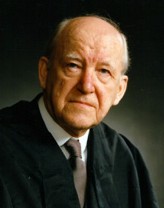
You might be a fundamentalist if… you quote Darby, Moody, Scoldfield, Walvood, Hendricks, Ryrie, Falwell, & MacArthur

A New Departure
Posted: October 5, 2008 Filed under: Sundays with Spurgeon 2 CommentsI do not know, my brethren, that we can expect to see energy continuous at its full in any one of us. I suspect that he who burns like a seraph knows moments in which the flame somewhat abates. As the sun itself is not at all times alike powerful, so the man who, like the shining light, shineth more and more unto the perfect day, is not uniformly bright, nor always at his noon. Nature does not hold the sea for ever at flood; ebbs intervene, and the ocean pauses a while ere it returns again to the fulness of its strength. The vegetable world has its winter, and enjoys a long sleep beneath its bed of snow. It is not wasted time, that ebb or that winter; flood and summer owe much to ebb and frost. I suspect that, because we are in affinity with nature, we, too, shall have our changes, and shall not abide at one elevation. No man’s life is all climax. Let us not despond if, just now, our spirit is at a low ebb; the tide of life will roll up as before, and even reach a higher point. When we stand leafless and apparently lifeless, our soul having become like a tree in winter, let us not dream that the axe will cut us down, for our substance is in us though we have lost our leaves, and before long the time of the singing of birds will come, we shall feel the genial warmth of returning spring, and our lives shall again be covered with blossoms, and laden with fruit.
It will not be wonderful if there should be lulls and pauses in our spiritual work, for we see the like in the affairs of men. The most eager after worldly objects, who can by no means be accused of a want of earnestness in their endeavours, are yet conscious that, by a sort of law, dull times will come, wherein business necessarily flags. It is not the tradesman’s fault that, sometimes, trade must be pushed, and that after pushing it remains as dull as ever. It seems to be the rule that there should be years of great prosperity, and then years of decline; the lean kine still devour the fat kine. If men were not what they are, there might be a perpetuity of equable progress, but it is evident that we have not reached that point yet.
Chief differences between canonical and apocryphal gospels
Posted: October 4, 2008 Filed under: Catholic questions on the Gospel, Questions & Answers, The Gospel Leave a commentQuestion: What is the chief differences between canonical and apocryphal gospels?
Answer: From the outset, the four Gospels, the sacred character of which was thus recognized very early, differed in several respects from the numerous uncanonical Gospels which circulated during the first centuries of the Church. First of all, they commended themselves by their tone of simplicity and truthfulness, which stood in striking contrast with the trivial, absurd, or manifestly legendary character of many of those uncanonical productions. In the next place, they had an earlier origin than most of their apocryphal rivals, and indeed many of the latter productions were directly based on the canonical Gospels. A third feature in favour of our canonical records of Christ’s life was the purity of their teachings, dogmatic and moral, over against the Jewish, Gnostic, or other heretical views with which not a few of the apocryphal gospels were tainted, and on account of which these unsound writings found favour among heretical bodies and, on the contrary, discredit in the eyes of Catholics. Lastly, and more particularly, the canonical Gospels were regarded as of Apostolic authority, two of them being ascribed to the Apostles St. Matthew and St. John, respectively, and two to St. Mark and St. Luke, the respective companions of St. Peter and St. Paul. Many other gospels indeed claimed Apostolic authority, but to none of them was this claim universally allowed in the early Church. The only apocryphal work which was at all generally received, and relied upon, in addition to our four canonical Gospels, is the “Gospel according to the Hebrews“. It is a well-known fact that St. Jerome, speaking of this Gospel under the name of “The Gospel according to the Nazarenes“, regards it as the Hebrew original of our Greek canonical Gospel according to St. Matthew. But, as far as can be judged from its fragments which have come down to us, it has no right to originality as compared with our first canonical Gospel. At a very early date, too, it was treated as devoid of Apostolic authority, and St. Jerome himself, who states that he had its Aramaic text at his disposal, does not assign it a place side by side with our canonical Gospels: all the authority which he ascribes to it is derived from his persuasion that it was the original text of our First Gospel, and not a distinct Gospel over and above the four universally received from time immemorial in the Catholic Church.
Sinclair Ferguson: Where Do You Come From?
Posted: October 4, 2008 Filed under: Desiring God Conference 2008, Video of the Week Leave a commentAsking a Catholic on the Number of the gospels
Posted: October 3, 2008 Filed under: Catholic questions on the Gospel, Questions & Answers, The Gospel 1 CommentQuestion: How man gospels are there?
Answer: The name gospel, as designating a written account of Christ’s words and deeds, has been, and is still, applied to a large number of narratives connected with Christ’s life, which circulated both before and after the composition of our Third Gospel (cf. Luke 1:1-4). The titles of some fifty such works have come down to us, a fact which shows the intense interest which centred, at an early date, in the Person and work of Christ. it is only, however, in connexion with twenty of these “gospels” that some information has been preserved. Their names, as given by Harnack (Chronologie, I, 589 sqq.), are as follows: —
- 1-4. The Canonical Gospels
- 5. The Gospel according to the Hebrews.
- 6. The Gospel of Peter.
- 7. The Gospel according to the Egyptians
- 8. The Gospel of Matthias.
- 9. The Gospel of Philip.
- 10. The Gospel of Thomas.
- 11. The Proto-Evangelium of James.
- 12. The Gospel of Nicodemus (Acta Pilati).
- 13.The Gospel of the Twelve Apostles.
- 14.The Gospel of Basilides.
- 15.The Gospel of Valentinus.
- 16.The Gospel of Marcion.
- 17.The Gospel of Eve.
- 18.The Gospel of Judas.
- 19.The writing Genna Marias.
- 20.The Gospel Teleioseos.
Asking a Catholic “What are the gospels?”
Posted: October 2, 2008 Filed under: Catholic questions on the Gospel, Questions & Answers, The Gospel Leave a commentQuestion: What are the gospels in your terms?
Answer: The first four historical books of the New Testament are supplied with titles (Euaggelion kata Matthaion, Euaggelion kata Markon, etc.), which, however ancient, do not go back to the respective authors of those sacred writings. The Canon of Muratori, Clement of Alexandria, and St. Irenæus bear distinct witness to the existence of those headings in the latter part of the second century of our era. Indeed, the manner in which Clement (Stromata I.21), and St. Irenæus (Against Heresies III.11.7) employ them implies that, at that early date, our present titles to the Gospels had been in current use for some considerable time. Hence, it may be inferred that they were prefixed to the evangelical narratives as early as the first part of that same century. That, however, they do not go back to the first century of the Christian era, or at least that they are not original, is a position generally held at the present day. It is felt that since they are similar for the fourGospels, although the same Gospels were composed at some interval from each other, those titles were not framed, and consequently not prefixed to each individual narrative, before the collection of the four Gospels was actually made. Besides, as well pointed out by Prof. Bacon, “the historical books of the New Testament differ from its apocalyptic and epistolary literature, as those of the Old Testament differ from its prophecy, in being invariably anonymous, and for the same reason. Prophecies whether in the earlier or in the later sense, and letters, to have authority, must be referable to some individual; the greater his name, the better. But history was regarded as a common possession. Its facts spoke for themselves. Only as the springs of common recollection began to dwindle, and marked differences to appear between the well-informed and accurate Gospels and the untrustworthy . . . did it become worth while for the Christian teacher or apologist to specify whether the given representation of the current tradition was ‘according to’ this or that special compiler, and to state his qualifications”. It thus appears that the present titles of theGospels are not traceable to the Evangelists themselves.
Why Support Adoption?
Posted: October 1, 2008 Filed under: Adoption, Questions & Answers, Together for Adoption Leave a commentQuestion: Why should Christians consider supporting an organization that equips Christians to think theologically about adoption but does not directly provide humanitarian aid to orphaned children?
Answer: Planting Gospel Seeds
Tony Jones on Abortion and Obama
Posted: October 1, 2008 Filed under: Questions & Answers, Tony Jones Leave a commentQuestion: What does Tony Jones think about Obama & Abortion?
Answer: There has been a robust conversation in the comments section of my previous post on abortion. There are clearly some policy wonks who read my blog, and I’m not one of them. I mean, I’m not a policy wonk; not that I don’t read my blog. Anyway, I appreciate those of you who can quote particular pieces of legislation and particular votes. My interest is more on the overarching principles at hand, although it does seem to me that BO made it abundantly clear that his most odious vote to pro-lifers was because he thought the bill would be struck down as unconstitutional (HT: Keith).
I am thankful that my friend, Carla Jo, fought the good fight in the comments. For those of you who don’t know her, CJ has a raft of evangelical credentials. In other words, she’s no leftist idealogue. She’s simply trying to deal with the complexity of the issue — I must say, much as BO does.
And I am particularly indebted to the two women who posted about their own abortions. In the wake of that terrible decision, they’ve come to different conclusions about the issue, but their journeys to those conclusions, IMHO, seem a lot more honest than some others who commented. Honestly, I cannot imagine either of them, though they stand on different sides of the debate, referring to someone as a “faggot” or “callous, selfish, and unrepentant.”
The Catholic Gospel
Posted: October 1, 2008 Filed under: Catholic questions on the Gospel, Questions & Answers, The Gospel 4 CommentsQuestion: What is really the Catholic gospel?
Answer: The word Gospel usually designates a written record of Christ’s words and deeds. It is very likely derived from the Anglo-Saxon god (good) and spell (to tell), and is generally treated as the exact equivalent of the Greek euaggelion (eu well, aggello, I bear a message), and the Latin Evangelium, which has passed into French, German, Italian, and other modern languages. The Greek euaggelion originally signified the “reward of good tidings” given to the messenger, and subsequently “good tidings”.

 Gospel-Centered Musings