Here’s the audio from Dan Cruver’s address at the Adoption & Orphan Weekend sponsored by Colonial Baptist Church, Cary, NC. The message given is only 31 minutes long.
God’s Story of Adoption (right click / choose “save target as” to download)
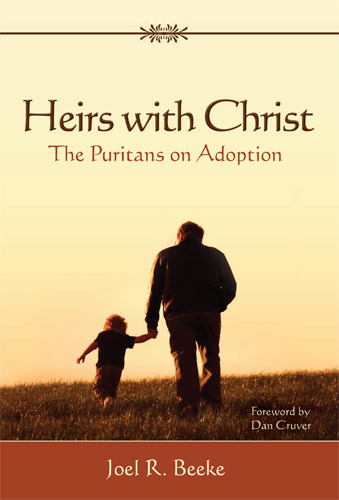
Heirs with Christ: The Puritans on Adoption
Posted: May 7, 2008 Filed under: Adoption, Joel Beeke, Puritans, Reformation Heritage Books Leave a comment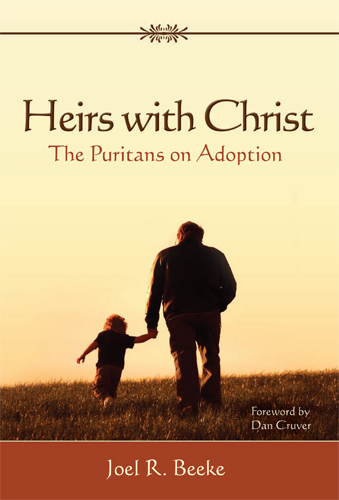 About the Author: JoeL R. Beeke is pastor of Heritage Netherlands Reformed Congregation in Grand Rapids, Michigan, President and Professor of Systematic Theology and Homiletics at Puritan Reformed Theological Seminary, and a prolific author.
Endorsements: Heirs with Christ: The Puritans on Adoption
“Dr. Beeke is well-known for his landmark work setting the record straight on the Puritan doctrine of assurance. Now he comes to our aid again with a superb treatment of the Puritans on adoption. I welcome his expert entry into this important field, and commend his keen insights and careful analysis to all who are interested in knowing ‘what the Puritans really said’ about adoption.” —Ligon Duncan
“In this short but spiritually substantive book, Dr. Beeke—a wise and careful ‘pastor theologian’ in the best sense of both words—introduces us to the Puritans’ comforting and transforming work on spiritual adoption. More than just historically informative, this volume should be warmly welcomed by all Christians who want to learn more about this crucial aspect of our identity as sons of God and joint-heirs with Christ.”
—Justin Taylor
Pre-Order: @ Reformation Heritage Books
Heirs with Christ: The Puritans on Adoption
Posted: May 6, 2008 Filed under: Adoption, Joel Beeke, Puritans, Reformation Heritage Books Leave a comment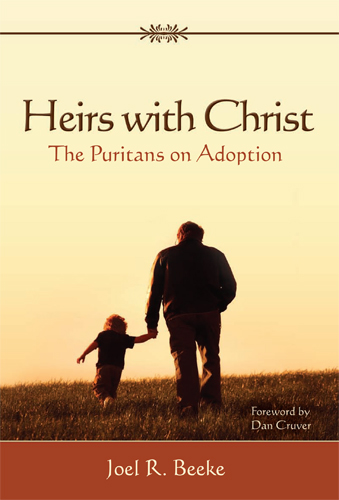 There is a new book being published by Reformation Heritage Books coming out June 3rd. Heirs with Christ: The Puritans on Adoption, by Dr. Joel R. Beeke will survey the beauty that lied in the Puritans firm foundation of the Spiritual Adoption. Below is some of the information that is on the book. Later this week will come more information about the book, samples from the book, and what you can expect to read in Heirs with Christ.
Description: The Puritans have gotten bad press for their supposed lack of teaching on the doctrine of spiritual adoption. In Heirs with Christ, Joel R. Beeke dispels this caricature and shows that the Puritan era did more to advance the idea that every true Christian is God’s adopted child than any other age of church history. This little book lets the Puritans speak for themselves, showing how they recognized adoption’s far-reaching, transforming power and comfort for the children of God.
The Beauty of Adoption: Part Seven
Posted: May 2, 2008 Filed under: Adoption, The Beauty of Adoption Leave a comment
Instructional Point Four- The Joy of the Theology of Adoption– Lastly, the fact that we are adopted heirs to God, with Christ, through the crying of the Spirit, should stir up a joy that fills our heart at all times ,until we are glorified with Him, which will then be ultimate joy forever.
A. Illustration- what does the Bible give us?
The end of verse 17 says, “that we may also be gloried with him.” This truth of adoption should compel the adopted believer to find their happiness in the truth of Christ that awaits us in eternity. The fact that the beginning of the verse says, “Children… heirs of God” should as well lead us to a desire to enjoy this adoption. The happiness of a believer being adopted should make the adopted see that they, the church, are the church of the first-born. For there is no merit, nothing that the adopted ever have to do, but stand in Christ, holding the Spirit that cries for them? This is amazing. This is what should allow the adopted to continue on in obedience to the laws of Christ, to serve him fully and to his best ability because adoption like this, is no other, and cannot be found anywhere else.
B. Application- what does this mean?
This enjoyment of adoption means that the believer as heirs of God may enjoy Him for what he did, Christ dying, what he allows, the Spirit crying, and what he does in allowing us to be a part of his family. This happiness lies in that simple truth of adoption but moreover, the one who you are adopted to. Those that are a part of the family should be content with something that more than three quarters of this world may never find in life or know about in life. Think about this. Often times people in today’s world look for their place to fit into, or something that gives makes them feel well liked. It is often that today people try to fit themselves into a society of people or a family of close-nit individuals that they never belong to, so that they feel liked, or loved. However, this leads to only a temporary fulfillment of one’s soul.
C. Interaction- What would that look like?
In order for the believer to enjoy the family of God to its highest, the adopted individual doesn’t look for other societies, or other means of finding enjoyment besides that of which they were called into. The need for placement in today’s culture seems to be a must. But must I remind the believers that there is no greater place to be than being adopted in this family. For the culture in which we live today tries to find their spirituality from somewhere else than in the family of God. How much more enjoyment should this give the believer that he has his spirituality and all his needs meet in this family, God’s family. St. Augustine saw this best in his life when he was adopted by God. Augustine, having everything he ever wanted, said this after being adopted into the family of God: “Thou hast formed us for thyself. That is our true place. And our hearts are restless till they find rest in Thee.” Augustine makes it clear that all of mankind seeks for this adoption, this partaking in the family of God, and will never in life find enjoyment and rest until they find that which Christ has paved for his elect, which the Spirit can cry for, and which God allows mankind to become heirs of his, for there is nothing sweeter. There is nothing more in life to enjoy than this family. It is the highest blessing of the gospel that you, a sinner slave of Satan, can now partake in the greatest truth, which is to forever be a part of God’s family.
The Beauty of Adoption: Part Six
Posted: April 30, 2008 Filed under: Adoption, The Beauty of Adoption Leave a comment Instructional Point Three- The Beauty of Christ in Adoption– Christ’s cross has allowed a way for the believer to partake in these blessings and privileges that we can have from the Spirit that cries, Abba! Father!
A.Illustration- what does the Bible give us?
Follow with me as I read verse 17, “and if children, then heirs- heirs of God and fellow heirs with Christ, provided we suffer with him in order that we may also be glorified with him.” God will treat those that are adopted as His family. Then also as “heirs”, meaning that we are sons of the heavenly Father. Now what is great to dwell on here is that we are heirs of God and co-heirs with Christ. Christ as the son of God has full the honors and glory of heaven, and to this we are united with Him.
B.Application- what does this mean?
What this means is that we, because we are now joint heirs with Christ, can be sons with Christ of God. Now we must be careful first of all when saying this. Christ is the Son of God by nature, but as far as believers, we are sons only by adoption. Both of these still give the idea of sonship which exists in both adopted believers and Christ, the son. What is of most importance of this idea of being co-heirs with Christ is that we are only co-heirs with Him if we have evidence that we are united to Him. This is shown by what follows, “that we suffer with him.” First I must make clear this does not mean we suffer to the same extent in which Christ did. This means that we must suffer like that of Christ in the fact that we will endure hardship from the world. Being united in this kind of suffering will lead to the end of the verse when it says, “that we may be glorified together.” In adoption must also suffer like Christ being separate from that of the world, but we do have the victory being adopted, and the hopes of being glorified like that of Christ.
C.Interaction- What would that look like?
This makes Christ look beautiful in that because of his cross and good news, his brothers can suffer in the same sense to bring Him greater glory and greater obedience. Paul writes this section, I believe, because he wants to make mention of Christ to make this an encouragement to the believer. God’s inheritance is ours because of this adoption that Christ enabled us to have. This adoption is not doubtful; it is certainly 100 percent paid in full by the cross of Christ. The fact that we have to suffer is only an added blessing in becoming adopted: the fact that we get to suffer for being a part of the family of God, to relate with our brother, Jesus Christ should show us the ultimate suffering, the cross which Christ bore so that we could become a part of this adoption. This is how God governs his family, to enjoy partnership with Christ, in suffering for Christ! What makes it beautiful is that we can look towards our supreme sufferer, Christ, for hope, glory, and that that is where our inheritance lies, in the cross that He overcame to allow us to enter in to this adoption. The fact that we can walk down even a slightly similar path that Christ did should help maintain our focus as adopted heirs towards him and not shift our focus from him, like it so often does.
The Beauty of Adoption: Part Five
Posted: April 29, 2008 Filed under: Adoption, The Beauty of Adoption Leave a comment Instructional Point Two- The Blessings/Privileges of the Theology of Adoption– The believer of the gospel is blessed with privileges that give him the right to an eternal inheritance with the family of God. These blessing are beyond measure.
A.Illustration- what does the Bible give us?
As we move on in our passage, look at verse 16 of Romans chapter 8. It reads, “The Spirit himself bears witness with our spirit that we are children of God.” This Spirit not only cries out in making us a part of God’s adopted family, but gives the believer blessings that he had never had before. For being the child of God is an experience like nothing you knew before, and may not fully understand now. But when you see exactly what this adoption does for the believer and the blessings it provides, you can see that it is nothing but by the grace of God we partake in. From the moment of the time that the Spirit poured into our hearts this confidence of adoption, it poured into us the privileges of adoption as well. These are to the believer nothing but blessing that they could have never imagined existed before being adopted by God.
B.Application- what does this mean?
I will list and touch on briefly these privileges so that you can see the overwhelming amount of delight that takes place in being adopted by God.
1.When we are adopted, “the Spirit himself bears witness with our spirit that we are children of God.” We have intimate fellowship with Christ and God because of this. (Gal. 4:7)
2.When we are adopted, not only is there this intimate fellowship but also there is the blessing of the guidance of this Spirit that cries “Abba, Father.” This how one knows he is a part of the family of God. (Rom. 8:14)
3.When we are adopted, it gives us another blessing. That this Spirit gives His presence to always assure the believer of their status as a child of God. (Rom. 8:16)
4.When we are adopted, it is a blessing that the believer who bears the Spirit that their heart is in perfect relationship with the Father, God. (Rom. 8:14)
5.When we are adopted, most of all, the privilege for believer is that they at the point of adoption now become heirs with God, which is a joint heir to Christ. (Rom. 8:17)
6.Blessing number six is that when we are adopted, his adopted family will in glory bear the likeness of Christ. (1 Jon. 3:2)
7.Lastly the blessing that the believer receives in adoption includes the inheritance of all things since the believer is adopted in being the son of God. (1 Cor. 3:21-23)
C.Interaction- What would that look like?
For the believer, bearing the Spirit is nothing more than a blessing that deserves utmost praise to God for allowing us to partake in His family. This new relationship brings the believer into the household of faith. For the believer it is beautiful to know that they will belong to this family forever and ever and ever. God will care for his family and take care of them for eternity. This is why God sent his Son, Christ to die for the sins of His family, so we can have the highest blessing of the gospel, so that we can have the inheritance, this spiritual richness of being a part of the family of God. This will bring us to the next point, the beauty of Christ in adoption, tomorrow…
The Beauty of Adoption: Part Four
Posted: April 28, 2008 Filed under: Adoption, The Beauty of Adoption 2 Comments The Scripture passage for this weeks posts, will be from the following.
ESV-Romans 8:12-17- So then, brothers, we are debtors, not to the flesh, to live according to the flesh. 13 For if you live according to the flesh you will die, but if by the Spirit you put to death the deeds of the body, you will live. 14 For all who are led by the Spirit of God are sons of God. 15 For you did not receive the spirit of slavery to fall back into fear, but you have received the Spirit of adoption as sons, by whom we cry, “Abba! Father!” 16 The Spirit himself bears witness with our spirit that we are children of God, 17 and if children, then heirs- heirs of God and fellow heirs with Christ, provided we suffer with him in order that we may also be glorified with him.
This is the Word of God…
The following points this week will be over the following.
Propositional Statement (#, Noun, Application, Action)
I have 4 areas to show the beauty of adoption, so that you the believer may grasp the fullest and highest blessing of the Gospel.
• The Ramifications of the Theology of Adoption– That fact that we as sinners can now say with the Spirit, “Abba!, Father!” shows us exactly what it is that this “adoption as sons,” does for us.
• The Blessings/Privileges of the Theology of Adoption– The believer of the gospel is blessed with privileges that give him the right to inheritance for eternity forever with the family of God. These blessing are beyond measure.
• The Beauty of Christ in Adoption– Christ’s cross has allowed a way for the believer to partake in these blessings and privileges so that we can have the Spirit that cries, Abba! Father!
• The Joy of the Theology of Adoption– Lastly, the fact that we are adopted as heirs to God with Christ should stir up a joy that fills our heart at all times, until we are glorified with Him, which will then be ultimate joy forever.
IV. Instructional Point One- The Ramifications of the Theology of Adoption– That fact that we as sinners can now say with the Spirit, “Abba!, Father!” shows us exactly what it is that this “adoption as sons,” does for us.
A. Illustration- what does the Bible give us?
Look with me at Verse fifteen to see the ramifications that adoption has for the believer. It reads, “For you did not receive the spirit of slavery to fall back into fear, but you have received the Spirit of adoption as sons, by whom we cry, “Abba! Father!”” This adoption is the treating of a stranger as if he were child of a family that is not his own. What child, you. What family, God’s. These ramifications are made crystal clear: God brings ones that are not of his family into being a part of his family. He brings children that are not of his nature, and gives them a new nature. This, however, was an act only of kindness and grace for God to ever allow sinners to come into the right standing before Him and belong to Him. As a member of the family of God being adopted, it is important that one sees that the nature of God’s family is not what he had before. For now, having been given the Spirit that cries “Abba!” one can call upon His father at all times, and is completely in-tune with the Father, God.
B. Application- what does this mean?
What this means is that the believer can cry out to His Father because he bears the image of the spirit of adoption. The believer here can now call to God, “Abba, Father.” This Spirit that is crying out means that the believer can pray to God and have a relationship with Him. This Spirit that is given to teach his family how to pray and reach God in crying out to him for their desires, needs and as well for forgiveness. This is best seen in Christ himself. In Mark 14:36, Christ says, “”Abba, Father, all things are possible for you. Remove this cup from me. Yet not what I will, but what you will.” Christ cried out to God in this way. This is how we today, believers sanctified in Christ, can now cry to God in the same Spirit which Christ did. When the act of adoption takes place, after your justification, you have the Spirit, the Spirit in which cries for you to your Father, Abba! Father! John Murray states, “It is as there is the conjunction of the witness of revelation and the inward witness of the Spirit in our hearts that we are able to scale this principle of faith and say with filial confidence and love, Abba Father.”
C. Interaction- What would that look like?
This means we have full confidence that we can go to the throne of God, our father and call upon Him at all times, when in need, or even when we do not think we are in need. How much more should we hold fast to this truth? That we can draw near to our Father through the Spirit always. This special effect of which we can cry is like no other. For, there is no family like the family of God. We often seek for guidance or pursue counsel from our earthly fathers and find contentment or pleasure in their words of wisdom, but how much more do we have to delight and find all pleasures satisfied in knowing that we can call upon the heavenly Father at all times. For the believer, this is important to see that there is no need for pleading your case, no need for trying to cry out on your own behalf. It is so sweet to know that we alone have the Spirit of adoption as sons, that and cry for us, Abba, Father. And even more than this we can know that in full assurance that we can always. There is no need to doubt your prayers when seeking out your Father. Your Father hears every last word of your cries because of this adoption. This truth of the gospel must been kept close to the heart so that one can feel the comfort in knowing that there is a Father who can be called upon at all times. Forgetting this or not using this in the believer’s life only leads to the lessening of and forgetting about one key component of the gospel, which is for the believer to delight in and find its pleasures.
The Beauty of Adoption: Part Three
Posted: April 23, 2008 Filed under: Adoption, The Beauty of Adoption Leave a commentThe Canonicity of the Pauline doctrine of Adoption
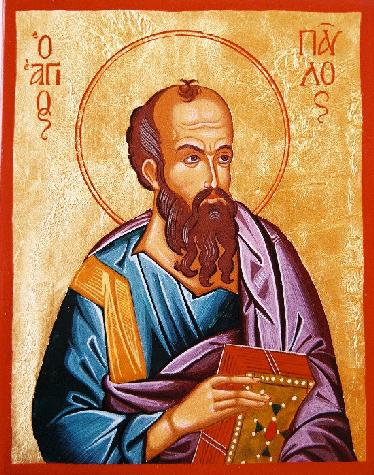 Paul, in Romans 8:15 – 17, states:
“For you did not receive the spirit of slavery to fall back into fear, but you have received the Spirit of adoption as sons, by whom we cry, “Abba! Father!” The Spirit himself bears witness with our spirit that we are children of God, and if children, then heirs- heirs of God and fellow heirs with Christ, provided we suffer with him in order that we may also be glorified with him.”
By using the term “adopted as sons” to gentiles, Paul created the image of what exactly had happened at the act of justification for the believer, which was having become a part of the family of God. Paul used this to show that the believer at the time of justification took on all privileges of the family in becoming a child of God. Paul’s purpose here is different from all other writers in the New Testament who speak of “adoption”. Whereas John uses the phrase “sons of God” to express the new relationship between God and believers, Paul uses “adoption” to also include the benefits of being a “son of God.” To state it again, Paul’s concern is not being a son of God but the result of being a son of God. This is why he is the only writer who uses the term “adoption” and shows here in this text that the believer has the Spirit who cries, “ABBA” in our hearts to the Father. In the Old Testament, the Israelites did not need this full confidence to call upon their father. Here Paul gives us the main concern of the text: the believer has all certainty in calling upon the Father with the Spirit that cries, “ABBA.”
Calvin also elaborates on this doctrine, coming to the same conclusion: “but now, since an entrance has been opened to us by the blood of Christ, we may rejoice fully and openly that we are the children of God.” Calvin goes on in his commentary to bring home the reasoning behind using this term adoption. It is not to that the believer is given a better status by being adopted, but that the believer has the benefits, blessings and all the privileges of being in the family of God. Calvin again makes this clear when he says, “our spirit is made assured of the adoption of God… For when the Spirit testifies to us, that we are the children of God, he at the same time pours into our hearts such confidence, that we venture to call God our Father.”
There are three examples of how Paul uses the term “adoption” throughout the New Testament to explain the reasoning of adoption and bring home to the first-century believers the reality of the being adopted into God’s family, some of which I will briefly cite. My first example is in Romans 9:4, which demonstrates the difference between the “adoption” in the Old Testament and what it means now for the believer in the New Testament. Paul uses this term adoption saying, “4 They are Israelites, and to them belong the adoption, the glory, the covenants, the giving of the law, the worship, and the promises.” Paul is telling them that the sense in which Israel was adopted was different from that which now exists in Christ. Paul means to show the Romans that salvation now adopts men differently than it did under the old dispensation. Whereas before God had called in covenant a whole nation under his blessing to partake in this adoption, now today God makes particular who is his in adopting them with the sealing of the Spirit. Paul uses the words “holy”, “covenants”, “service”, and “promises” to show that the adoption in the Old Testament is not the same as what is now given to the gentiles.
The second meaning Paul gives to the term “adoption” is that adoption is the way in which believers are relieved of the burden of law-keeping as a way to justify themselves. In Galatians 4:5 he says, “…to redeem those who were under the law, so that we might receive adoption as sons.” Here he tells the church that once they were of another family, i.e. the family of Satan. For what is not of the family of God is still a part from which it is born; this is the nature of Satan, a nature that follows its own desires and does what it pleases. Paul shows that they (the readers of this text) had been redeemed from the law that they thought they had to still follow in order to be a part of the family of God. Paul shows them in verse four the reason that they do not to look to the law for redemption saying, “God sent forth his Son, born of woman, born under the law,” then he reveals to them the great doctrine that they now belong to in verse five saying, “to redeem those who were under the law.” Paul then gives the gospel, letting them see that they are adopted into God’s family saying, “so that we might receive adoption as sons.” Paul explained to the readers of his letter that they are the ones who were the offspring of another family from which God graciously brought them out of and into his own family. (This reaffirms what we saw in Romans 8:15-17, in that this is the only way possible for man to be adopted into the family of God.) But more, he does this next in verse six, saying exactly the point of his theology of adoption saying, “And because you are sons, God has sent the Spirit of his Son into our hearts, crying, “Abba! Father!” That he wants them to see that Spirit of God is what confirms them in their relationship to the family of God. Paul wants them to see this term of kind word that only children can say to their father, “ABBA.” Being a part of the family of God and having this Spirit is essential to justification and salvation; these are necessary in order to be free from the law.
Lastly, Paul uses “adoption” in Ephesians 1:5. Here Paul does not change, but brings out the beauty of the Father even more, and again reveals that they have been predestined to partake in this great doctrine of adoption. Paul explains to them the new nature that God has given them, focusing on the fact that this new nature is the nature and image of Christ himself.
Without knowing this gospel truth of adoption and the importance of it, one cannot glorify God to his highest ability that he could, as one is able to when he knows this benefit of being able to cry, “ABBA” to the Father. With this, we may look at the center passage of Paul’s theology of adoption and focus on the truths for the believer to be more satisfied in the family of God, and most of all glorify God to his fullest, in seeing and knowing the joy of Christ in adoption.
The Beauty of Adoption: Part Two
Posted: April 22, 2008 Filed under: Adoption, The Beauty of Adoption Leave a commentThe History of Adoption: Physical and Spiritual
 As far as the Old Testament laws given to the Hebrews, there is not any law recognizing the issue. This was most likely due to the culture of the Old Testament itself. First, polygamy allowed men to marry several wives at a time, which would not lead to any need for adoption. Then secondly, the levirate marriage law provided a way or a means that a family could have heirs to inherit the family’s property. For these reasons, there was no need to create laws for the act of actual physical adoption during their times.
In regards to spiritual adoption, however, it is clear in the language of the Old Testament that God had ‘adopted’ his chosen people. The national covenant that God bestowed on Israel as a nation neither saved them nor gave them saving grace that would give them a right to the heavenly inheritance in which they were wanting to receive. Look closely at Exodus 4:22, “Then you shall say to Pharaoh, ‘Thus says the LORD, Israel is my firstborn son, Jeremiah 3:14, Return, O faithless children, declares the LORD; for I am your master; I will take you, one from a city and two from a family, and I will bring you to Zion”, and explicit passages like the one in Jeremiah 31:20, “Is Ephraim my dear son? Is he my darling child? For as often as I speak against him, I do remember him still. Therefore my heart yearns for him; I will surely have mercy on him, declares the LORD.” Passages like these reveal that God had brought his children under his law and his grace so that they would be able to serve and fear their Father. Paul saw this connection and says in Romans 9:4, “They are Israelites, and to them belong the adoption, the glory, the covenants, the giving of the law, the worship, and the promises.”
For the New Testament believers, physical adoption was a common practice within Roman culture and society. For Roman citizens, adoption of an heir in the case of childlessness was a religious necessity, and so adopting even adults was not an unusual event. Also, it was common that families who had their own biological children would adopt them out to families of a higher social status so that their sons may have a better life.
The spiritual sense of adoption in the New Testament also had an altogether different meaning from what it was in the Old Testament. What was once meant only for a particular nation, was now extended only to individuals. This is further seen in Paul’s theology throughout his writings to the churches. This term, “adoption”, became a way that Paul related to his fellow brothers their new relationship with one another as a result of what Christ had done at the cross, which was to make them heirs with him. This is laid out in his theology of the doctrine of adoption.
The Beauty of Adoption: Part One
Posted: April 21, 2008 Filed under: Adoption, The Beauty of Adoption 2 CommentsThe Introduction of the Theology of Adoption
 The doctrine of adoption is one of, if not the most, overlooked doctrines within soteriology. In general, when expanding upon the doctrine of salvation, people easily include election, effectual calling, regeneration, faith, justification, assurance, sanctification, and finally glorification. Yet believers never mention the doctrine of adoption, or in many cases, many might not even know that the doctrine even exists as an essential component of salvation. The doctrine of adoption as stated in the Baptist Confession of faith is:
“All those that are justified, God vouchsafed, in and for the sake of his only Son Jesus Christ, to make partakers of the grace of adoption, by which they are taken into the number, and enjoy the liberties and privileges of the children of God, have his name put upon them, receive the spirit of adoption, have access to the throne of grace with boldness, are enabled to cry Abba, Father, are pitied, protected, provided for, and chastened by him as by a Father, yet never cast off, but sealed to the day of redemption, and inherit the promises as heirs of everlasting salvation.”[1]
Adoption is the fact that Christ’s atoning blood purchases the elect’s souls so that they might become a part of the family of God. When the elect receive the Spirit they then become children of God and assume all the benefits that Christ bought for them at the cross. This adoption not only brings a sinner into the family of God but makes him a joint heir with Jesus Christ, God’s son. Sinners formerly destined to hell are now allowed to partake in all benefits of the gospel such as fellowship with the Father (God), the guidance of the Holy Spirit, the witnessing presence of the Holy Spirit, a future of glorification, and an inheritance to all things. This is how the believer can say with Paul in Romans 8:15 and 16, “For you did not receive the spirit of slavery to fall back into fear, but you have received the Spirit of adoption as sons, by whom we cry, ‘Abba! Father!’ The Spirit himself bears witness with our spirit that we are children of God.”
I believe Herman Witsius says best what this act of spiritual adoption means for the elect in his introduction:
“That they may enjoy the benefits both of grace and glory, not only by the favor of friendship, but also by a right of inheritance… To express tranquility of conscience, of scripture calls it peace: to shew us the pleasantness of familiarity, it calls it friendship: and when it illustrates a right to the inheritance, it speaks of adoption.”[2]
[1] The Baptist Confessions of Faith (Sterling: GAM Publications, 1996), p. 26.
[2] Herman Witsius, The Economy of the Covenants Between God and Man: Comprehending a Complete Body of Divinity, Vol. I (Phillipsburg, NJ: P & R Publishing, 1990), p. 442.
Ethiopia’s Orphans, Magnifying God, and Carolina Hope
Posted: March 11, 2008 Filed under: Adoption, Carolina Hope Leave a commentVideo of the Week: John Piper Adoption is Greater Than the Universe
Posted: March 8, 2008 Filed under: Adoption, John Piper, Video of the Week Leave a commentDan Cruver Interviews Dr. Timothy Trumper on the Theology of Adoption
Posted: January 21, 2008 Filed under: Adoption, Carolina Hope, Dan Cruver, Interviews, Theology, Timothy Trumper Leave a commentThis is the final part of Dan Cruver’s interview with Dr. Timothy Trumper. Because of the length and richness of his answers, his interview has been posted in six parts. You can read the full interview here. If you are interested in deepening your understanding of the doctrine of adoption significantly, you will want to take the necessary time to carefully read his answers.
Dan Cruver Interviews Dr. Timothy Trumper about Adoption
Posted: January 8, 2008 Filed under: Adoption, Carolina Hope, Dan Cruver, Theology, Timothy Trumper Leave a commentAs part of Carolina’s Hopes adoption interview series, Dan Cruver is interviewing several theologians and New Testament scholars about the doctrine of spiritual adoption and its implications for earthly adoption. The 5th part of Dr. Trumper’s interview can be read here.
Dan says, “Because of the length and richness of Dr. Timothy Trumper’s answers, his interview is being posted in six parts (see Part 1 / Part 2 / Part 3 / Part 4). If you are interested in deepening your understanding of the doctrine of adoption significantly, you will want to take the necessary time to carefully read his answers.”
Dan Cruver Interviews Dr. Trevor Burke on Adoption
Posted: December 31, 2007 Filed under: Adoption, Carolina Hope, Dan Cruver, Interviews, Trevor Bruke Leave a commentCarolina Hope’s next interview of a theologian is with Dr. Trevor J. Burke. He was originally from Belfast, Northern Ireland, Trevor earned his Ph.D. from University of Glasgow, Scotland. He has taught New Testament in seminaries in Nigeria, Wales, and the Fiji Islands and is currently professor of Bible in Moody Bible Institute, Chicago. One of his research interests is in the family expressions in the letters of the apostle Paul. He is author of the recent title Adopted into God’s Family: Exploring a Pauline Metaphor. You can read the interview that Dan Cruver has done with Dr. Burke here.
Dan Cruver Interviews Dr. Timothy Trumper on Adoption: Part Four
Posted: December 19, 2007 Filed under: Adoption, Carolina Hope, Dan Cruver, Theology, Timothy Trumper Leave a commentAs part of Carolina Hope’s adoption interview series, Dan Cruver has interviewed several theologians about the doctrine of spiritual adoption and its implications for earthly adoption. Dan believes that the practice of earthly adoption will be significantly enriched as we grow in our understanding of what it means to be adopted by God.
Because of the length and richness of Dr. Timothy Trumper’s answers, his interview is being posted in six parts (see Part 1 / Part 2 / Part 3). If you are interested in deepening your understanding of the doctrine of adoption significantly, you will want to take the necessary time to carefully read his answers.
In part 4 Tim addresses what Dan Cruver believes is a very important issue.
Dan syas, “Many who preach, teach, or write about theological adoption combine John’s new birth model of entrance into God’s family with Paul’s adoption model. This is unfortunate for a number of reasons, one being that it prevents us from recognizing the full significance of Paul’s doctrine of adoption.”
You can read part four of this interview here.
Dan Cruver Interviews Dr. Robert Peterson on Adoption
Posted: December 17, 2007 Filed under: Adoption, Carolina Hope, Dan Cruver, Interviews, Robert Peterson, Theology 1 CommentCarolina Hope’s next interview of theologians is with Dr. Robert Peterson, professor of systematic theology at Covenant Theological Seminary in St. Louis, Missouri. In addition to teaching on the seminary level, Dr. Peterson has extensive experience as a pastor, including church planting efforts, and has preached in Uganda and Peru on short-term mission trips. His pastoral experience is reflected in the practical emphases in his systematic theology classes. Dr. Peterson is the author of Adopted by God: From Wayward Sinners to Cherished Children. In it he considers the beauty of God’s grace through the lens of the wonderful doctrine of adoption. You can read the interview that Dan did with Dr. Peterson here.
Dan Cruver Interviews Dr. Timothy Trumper on Adoption: Part Three
Posted: December 13, 2007 Filed under: Adoption, Carolina Hope, Dan Cruver, Theology, Timothy Trumper Leave a commentAs part of Carolina Hope’s adoption interview series, Dan Cruver is interviewing several theologians about the doctrine of spiritual adoption and its implications for earthly adoption. Dan believe that the practice of earthly adoption will be significantly enriched as we grow in our understanding of what it means to be adopted by God.
Because of the length and richness of Dr. Timothy Trumper’s answers, his interview will be posted in six parts (see Part 1 / Part 2). If you are interested in deepening your understanding of the doctrine of adoption significantly, you will want to take the necessary time to carefully read his answers. You can read part three of his interview here.
Dan Cruver Interviews Dr. Timothy Trumper on Adoption: Part Two
Posted: December 10, 2007 Filed under: Adoption, Carolina Hope, Dan Cruver, Interviews, Theology, Timothy Trumper Leave a commentAs part of Carolina Hope’s adoption interview series, Dan Cruver is interviewing several theologians about the doctrine of spiritual adoption and its implications for earthly adoption. Dan believes that the practice of earthly adoption will be significantly enriched as we grow in our understanding of what it means to be adopted by God.
Because of the length Dr. Timothy Trumper’s answers, his interview will be posted in six parts (you can read part 1 here). If you are interested in deepening your understanding of the doctrine of adoption significantly, you will want to take the necessary time to carefully read his answers. Part Two can be read here.
Dan Cruver Interviews Dr. Timothy Trumper on Adoption: Part One
Posted: December 7, 2007 Filed under: Adoption, Carolina Hope, Dan Cruver, Interviews, Theology, Timothy Trumper Leave a commentAs part of Carolina’s Hope’s adoption interview series, Dan Cruver is interviewing several theologians about the doctrine of spiritual adoption and its implications for earthly adoption. Dan believes that the practice of earthly adoption will be significantly enriched as the believer grows in understanding of what it means to be adopted by God.
Dan’s fourth interview on adoption and the theology of it is with Dr. Timothy Trumper (you can read the others here). Dr. Trumper is a native of Wales (UK). He was converted at the age of 15 and felt constrained to preach God’s Word while he was as a student of politics at the University of Wales. He then trained for the pastorate at the Free Church of Scotland College, Edinburgh (1989-1993).
While studying theology Dr. Trumper he was captivated by the doctrine of adoption (Eph. 1:5; Gal. 4:4-6; Rom. 8:15, 23; 9:4). As a result, he enrolled in doctoral studies at New College, University of Edinburgh. It is there that he gave himself to a concentrated study on adoption. His dissertation is “An Historical Study of the Doctrine of Adoption in the Calvinistic Tradition” (Ph.D. thesis: University of Edinburgh, 2001). Dr. Trumper taught at Westminster Seminary from 1999-2003. He is presently Senior Minister at Seventh Reformed Church, Grand Rapids, MI. You can read the interview here.
Dan Curver Interviews Dr. Sam Storms on Adoption
Posted: December 5, 2007 Filed under: Adoption, Carolina Hope, Dan Cruver, Interviews, Sam Storms, Theology Leave a commentCarolina Hope adoption agency has a series in which Dan Cruver is interviewing several theologians about the doctrine of spiritual adoption and its implications for earthly adoption. Dan believes that the practice of earthly adoption will be significantly enriched as we grow in our understanding of what it means to be adopted by God.
Carolina’s Hope’s thrid interview done with another theologian (you can read the first and second interviews here and here) is with Dr. Sam Storms, the founder of Enjoying God Ministries. Dan Cruver had thought about interviewing Dr. Storms about spiritual adoption after Dan’s Brother Steve Cruver reminded Dan that Dr. Same Storms had written about it in his book The Singing God: Discover the Joy of Being Enjoyed by God (Creation House, 1998). You can read the interview of Sam Storms here.
Dan Cruver Interviews R. Scott Clark on Adoption
Posted: November 27, 2007 Filed under: Adoption, Carolina Hope, Dan Cruver, Interviews Leave a commentAs part of Carolina Hope’s adoption interview series, Dan Cruver is interviewing several theologians about the doctrine of spiritual adoption and its implications for earthly adoption. Dan believes that the practice of earthly adoption will be significantly enriched as we grow in our understanding of what it means to be adopted by God. You can read the interview here.
The second interview with a theologian (you can read the first interview here) is with Dr. R. Scott Clark, Associate Professor of Historical and Systematic Theology at Westminster Seminary California since 1997. Dr. Clark has also taught at Wheaton College, Reformed Theological Seminary (Jackson), and Concordia University (Irvine). He is also presently Associate Pastor of the Oceanside United Reformed Church, where he preaches and teaches regularly.
Dan Cruver Interviews Dr. Dave Garner on Adoption
Posted: November 19, 2007 Filed under: Adoption, Carolina Hope, Dan Cruver, Dave Garner, Interviews, Theology Leave a commentDr. Dave Garner is the Vice President for Alumni Relations & Educational Advancement at Westminster Theological Seminary. He wrote his doctoral dissertation on the doctrine of adoption. It’s entitled “Adoption in Christ” (Westminster Theological Seminary, 2002). Dr. Garner agreed to allow Dan Cruver to interview him about Scripture’s teaching on the theology of adoption and its implications for the earthly practice of adoption. The interview can be read here.
God’s Story of Adoption
Posted: November 8, 2007 Filed under: Adoption, Dan Cruver Leave a commentAdoption Radio Interview
Posted: October 23, 2007 Filed under: Adoption, Carolina Hope, Dan Cruver Leave a commentHere of recent Dan Cruver, Voddie Bauchamn and Carolina Hope’s director Laura Godwin were interviewed on “Calling for Truth.” The discussion was about theological adoption and its implications for orphan ministry and adoption. This can be listened to here.
Transracial Adoption and the Gospel
Posted: September 20, 2007 Filed under: Adoption, Dan Cruver, The Gospel Leave a commentRecently my friend Dan had the chance to interview Thabiti Anyabwile on “Transracial Adoption and the Gospel.” You can read the article on Carolina Hope Adoption’s blog.

 Gospel-Centered Musings