Get Goldsworthy
Posted: September 8, 2008 Filed under: Graeme Goldsworthy 1 CommentThis semester at PRTS, some how in the number of classes that are offered, three Graeme Goldsworthy books was part of my required reading. Then looking at the recommended reading for mid-term book reviews, there was Goldsworthy again! Now, in the last 2 weeks I have already read three and on my fourth and fifth this week. I just “googled” Goldsworthy to read a little more of his works on-line. You can check some of his stuff out here on Monergism, IVP (bio), and interview on Buzzard Blog. If you are looking for Gospel-centered books, writings and theology… I personally enjoy Piper and Keller, however there is something about Goldsworthy that makes him my favorite.
Be sure to check back for those of you who are interested in reading a few book reviews I plan to do in the next coming month on Goldsworthy.
Hole in the Wall
Posted: September 8, 2008 Filed under: Just for Fun Leave a commentI set down this evening to read According to Plan, by Graeme Goldsworthy. I happen to turn on the TV to have the Colts game going on in the background. When I turned on the TV, American’s new game show, Hole in the Wall. I have no thoughts about the TV show, just in awe.
CLOSE
Posted: September 7, 2008 Filed under: Sundays with Spurgeon Leave a commentIF MY READER has not followed me step by step as he has read my pages, I am truly sorry. Book-reading is of small value unless the truths which pass before the mind are grasped, appropriated, and carried out to their practical issues. It is as if one saw plenty of food in a shop and yet remained hungry, for want of personally eating some. It is all in vain, dear reader, that you and I have met, unless you have actually laid hold upon Christ Jesus, my Lord. On my part there was a distinct desire to benefit you, and I have done my best to that end. It pains me that I have not been able to do you good, for I have longed to win that privilege. I was thinking of you when I wrote this page, and I laid down my pen and solemnly bowed my knee in prayer for everyone who should read it. It is my firm conviction that great numbers of readers will get a blessing, even though you refuse to be of the number. But why should you refuse? If you do not desire the choice blessing which I would have brought to you, at least do me the justice to admit that the blame of your final doom will not lie at my door. When we two meet before the great white throne you will not be able to charge me with having idly used the attention which you were pleased to give me while you were reading my little book. God knoweth I wrote each line for your eternal good. I now in spirit take you by the hand. I give you a firm grip. Do you feel my brotherly grasp? The tears are in my eyes as I look at you and say, Why will you die? Will you not give your soul a thought? Will you perish through sheer carelessness? Oh, do not so; but weigh these solemn matters, and make sure work for eternity! Do not refuse Jesus, His love, His blood, His salvation. Why should you do so? Can you do it?
I beseech you,
Do not turn away from your Redeemer!
OSU Highlights from last year, ready for this
Posted: September 6, 2008 Filed under: Just for Fun, Video of the Week 1 CommentThe Bible has no united message
Posted: September 5, 2008 Filed under: Seminary Questions Leave a commentI was asked to Respond to the following opinion:
“The Bible has no united message. It is a book with many, varied messages that are sometimes mutually exclusive. What we must do is select with the help of the Holy Spirit from among the various biblical messages the one that best fits our time.”
I will give my opinion to the following quote in addressing the sections.
The Bible has no united message. This is here is the writer’s presupposition on what he may believe of the Bible. I would say that yes, the Bible does have one united message. That being the work and redemption of sinners by the gospel of Jesus Christ in order that sinners can become saints to glorify God through the work of the Holy Spirit.
It is a book with many, varied messages that are sometimes mutually exclusive.
I would say to this, that yes, there are stories, narratives, and places where one may have a hard tie seeing how it fits into the whole picture of the cannon of Scripture. This problem however is on man’s part in not being able to see and know how every picture, story and area fits into the whole museum of the story of redemption.
What we must do is select with the help of the Holy Spirit from among the various biblical messages the one that best fits our time.”
“What we must do” seems as if he is coming to the table with his own concerns and opinions as if he knows best how to look at the Bible. As far as his comment “the one that best fits our time”, seems as if he does not have any absolute truth. If we are to pick out what we want, when we want, for what we want, then why even believe something that is been inspired by God, and not write our own system of beliefs.
Was Jesus Funny?
Posted: September 5, 2008 Filed under: Jesus Christ, Just for Fun, Mark Driscoll Leave a commentGuide to the Writings of Herman Bavinck
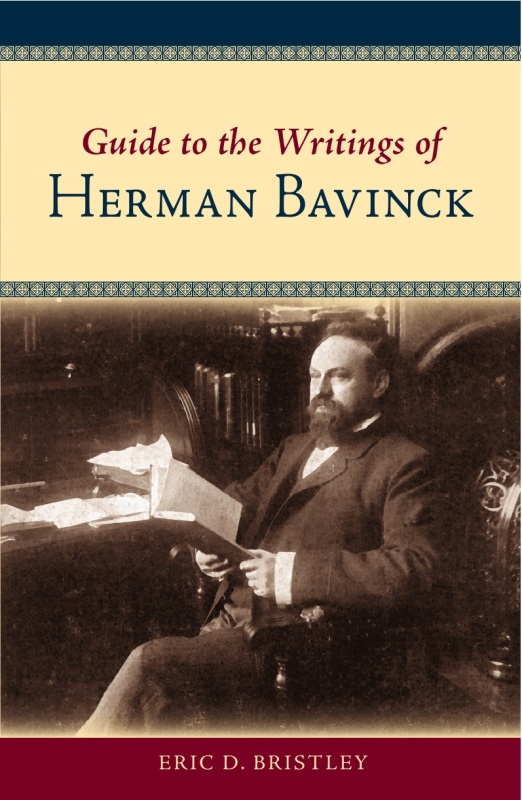
Posted: September 5, 2008 Filed under: Book of the Week Leave a commentThis guide provides English readers with a resource for the study of the works of Herman Bavinck (1854–1921), a profound Christian thinker and one of the most important Reformed theologians at the turn of the twentieth century. In it you will find an annotated bibliography of his writings, a concise biography showing the historical context of his publications, and a bibliography of secondary literature. Anyone interested in learning more about the contribution of Bavinck will want to have this resource. BUY HERE!
You can as well take a look at the first few pages here.
Banner of Truth Trip & the Oneliners
Posted: September 4, 2008 Filed under: Dewalt's One Liner's 3 CommentsI attend a number of conferences in and throughout the year for RHB that I work for. However, attending conferences for my own personal reason and spiritual growth is hard to do at times. This past spring in May, a few guys put some money together and took me to my first Banner Conference. Driving from Michigan gave me and the guys a good amount of to talk about seminary, life, wives or the lack there of, and anything else that randomly came to my mind. With in an hour, my roommate Dirk Naves opened up his computer to begin writing down all of the “one-liners” that came from my mouth. All though some are not given in their context, if you know me, you will laugh.
Derek: “That’s the church we’re gonna buy.” *points to massive Catholic cathedral*
Mike: “Yeah. You can get buildings like that from the government for like a buck!”
Shawn: “I was in a cult.”
Derek: “Is that where you met Tammy? ‘Where’d you meet your wife? We met at a cult meeting.'”
Mike: “Yeah, we were sacrificing racoons; nailin’ ’em to crosses ‘n stuff.”
Derek: “Jeff’s gonna schmooze with all the OPC big-wigs.”
Mike: “Yeah, he’ll probably end up sleeping with Rick Philips or something.” (meaning, sleeping in the same room)
Mike: “Guys, hold on! I was gonna say something serious.”
Mike: “…so this semi comes over the hill and hits the bear *BOOM*! It was just like a commercial!!
Nathan: “A commercial for what!?!”
Mike: *takes picture* “Oh my goodness! You look exactly like Rico Suave!!”
Derek: “Who’s Rico Suave?”
Mike: “Well, I don’t actually know.”
Mike: “A birth canal? What’s a birth canal? Is that where the snork comes out of?”
Nathan: “A snork!?”
Mike: “Whatever they’re called; I’ve always called them snorks.”
Mike: “I’ve got five bucks. That’s a can of chew or five double cheeseburgers!”
Mike: *looking at pocket watches* Do they have any cool lookin’ ones? Like with a deer on it or something?”
Mike: “I just studied and talked about Don Quixote going to hell and stuff. Well, purgatory or hell; whatever, they’re the same.”
Derek: “Don Quixote? He didn’t go to hell! That was Dante!”
Mike: “Oh yeah, Dante Inferno went to hell.”
Mike: “That would suck for the incarnationists.”
Shawn: “You mean reincarnationists…”
Mike: “Oh yeah. I was thinking incarnations were flowers.”
Mike: “Okay, so Dr. Beeke and I were at the bar…” (meaning, we walked into a Pub and ate hamburgers)
For the Christian Video Game Lovers
Posted: September 3, 2008 Filed under: Just for Fun Leave a commentInteresting shirt to say the least, for those of you that may love Wii.

Interesting Article: The Tattoo Fashion
Posted: September 3, 2008 Filed under: Tattoos Leave a commentArticle on tattoos that I thought might be good or bad to take a look at, (depending on your take on the subject).

Question on why studying hermeneutics is important
Posted: September 3, 2008 Filed under: Seminary Questions 1 CommentI am either often asked questions (that I seem to have no idea upon) that I am to answer either for fellow students, classes, or something to do with something in seminary. So, why not answer them on the blog? I will, so from now on, when a student ask me a question, or a professor I will place the question and my response for the world to see. I will admit at times even though I am asked, or have to study, or write answers to questions I feel as if I simply stupid. So therefore, do not think that you are going to read some intense and profound answers, but only simple and easy to read thoughts of a redneck seminarian.
Dr. Bilkes: Why would anyone need to study hermeneutics? Why not just read the Bible?
Dewalt: First off I would start by saying, studying hermeneutics is more necessary then those who just read the bible. Knowing how you read books, articles, blogs, works, and newspapers all make the reader have a hermeneutic, right? If a hermeneutic is the study of the locus of meaning and the principles of interpretation then everyone must have one. Now, the question remains to what may their hermeneutics be or consists of? Studying hermeneutics gives the individual a way of looking, knowing, and seeing the importance of properly reading information so that they can interpret the words read correctly.
Now as far as in, “why not just read the Bible?” My answer is this… I can read words all day long, I can read books, blogs and papers from fellow students however I ALREADY have some type of hermeneutic if I can interpret the writing, right? Yes, no matter who the person may be, they have a hermeneutic if they can read. The question that I believe must be asked, is what is their hermeneutic? Just reading the bible without having a biblical gospel-centered hermeneutic just allows mankind to interpret the Scriptures in a way they think is best or can fit into their own system of man-centeredness.
So in answering the questions quickly and easily in one sentence a piece…
Why would anyone need to study hermeneutics? To see, know, learn a proper Gospel-centered way of studying the bible so that their interpretation is that of what God intended.
Why not just read the Bible? Because without knowing how to, what is the sense of why to?
Reformed Conferences… Churches Jobs?
Posted: September 3, 2008 Filed under: Fears of Reformed Theology 1 CommentMy Thought: This past afternoon a friend in seminary/co-worker approached me about my last post in dealing with Reformed Conferences. He mentioned the issue on how many of the Reformed Conferences in today’s day and age address the issues and deal with the areas that the local church should be addressing.
My Question: My question is then, do these conferences rob from the churches work and are they making it easier for churches to ship their members elsewhere in answering and addressing issues that they cannot.
Twitter Help
Posted: September 3, 2008 Filed under: Just for Fun Leave a commentCan someone tell/teach me how to get twitter to work with WordPress blogs???
Fears for Reformed Conferences
Posted: September 2, 2008 Filed under: Fears of Reformed Theology Leave a commentFears: Going to a Reformed seminary and working for a Reformed book publisher has opened my eyes and also made my mind often wonder about some of the many areas of interest in the many Reformed circles today. I plan on blogging a few of my wonders/thoughts on these issues in the next coming months and maybe you (the reader) can/could leave a little feed back on your thoughts?
Disclaimer: I am “Reformed” in American terms (I guess). Below is not a problem so-to-speak, but just an issue that I see may be or become an issue in the years to come in the “Reformed Circles”. This is ONLY and JUST my concerns I often wonder if Americans easily idolize.
Issue: Reformed Conferences!
Thoughts: I myself attend many conferences throughout the year. Desiring God, Alliance of Confessing Evangelicals, to church conferences and denomination conferences all around American. Nine times out of ten, I attend these for the purpose of selling books for Reformation Heritage Books. However no matter if I am there for work or personal reasons, there are always crowds of others too. Here of late the more conferences I see and hear about I am beginning to wonder, “Why another conference?” Do people go because the conference or because of Christ is being preached at the conference? Do we attend Desiring God, Ligonier, and T4G’s because of their popularity or because we want the Word taught to us? It seems as if many people today may attend the conferences in order to say, “hi” to their circles, friends, and make a name for themselves instead of going for the purpose alone that the conference may be addressing. I hope that in the years to come and even today that we the church do not attend conferences with the thought process of, “I want to see Piper preach and move all around in the pulpit!” but with the purpose of, “I want to Glorify God!”
How to keep Conferences Gospel-Centered: Make sure your reasons in attending a conference in a day and age that tends to nearly have one every week in American is for the purpose to learn, seek, and fall deeper in love with Christ. This will keep the focus of attending conferences become gospel-centered and man-centered in making yourself popular in a particular circle of Christendom.


Challies… From Tree to Chair
Posted: September 1, 2008 Filed under: Just for Fun Leave a commentChallies with a new change! How can this be!

Thee & Thou
Posted: September 1, 2008 Filed under: You Might be a Calvinist if... Leave a commentYou might be a Calvinist… if you only use Thee’s and Thou’s when you pray.

WHY SAINTS PERSEVERE
Posted: August 31, 2008 Filed under: Sundays with Spurgeon Leave a commentTHE HOPE which filled the heart of Paul concerning the Corinthian brethren we have already seen to be full of comfort to those who trembled as to their future. But why was it that he believed that the brethren would be confirmed unto the end?
I want you to notice that he gives his reasons. Here they are:
God is faithful, by whom ye were called unto the fellowship of his Son Jesus Christ (1 Cor. 1:9).
The apostle does not say, “You are faithful.” Alas! the faithfulness of man is a very unreliable affair; it is mere vanity. He does not say, “You have faithful ministers to lead and guide you, and therefore I trust you will be safe.” Oh, no! if we are kept by men we shall be but ill kept. He puts it, “God is faithful.” If we are found faithful, it will be because God is faithful. On the faithfulness of our covenant God the whole burden of our salvation must rest. On this glorious attribute of God the matter hinges. We are variable as the wind, frail as a spider’s web, weak as water. No dependence can be placed upon our natural qualities, or our spiritual attainments; but God abideth faithful. He is faithful in His love; He knows no variableness, neither shadow of turning. He is faithful to His purpose; He doth not begin a work and then leave it undone. He is faithful to His relationships; as a Father He will not renounce His children, as a friend He will not deny His people, as a Creator He will not forsake the work of His own hands. He is faithful to His promises, and will never allow one of them to fail to a single believer. He is faithful to His covenant, which He has made with us in Christ Jesus, and ratified with the blood of His sacrifice. He is faithful to His Son, and will not allow His precious blood to be spilled in vain. He is faithful to His people to whom He has promised eternal life, and from whom He will not turn away.
The Evil of Evils
Posted: August 29, 2008 Filed under: Book of the Week, Jeremiah Burroughs Leave a commentThe Evil of Evils, first printed in 1654, consists of sixty-seven short chapters that expose sin and urge believers to choose affliction over sin. Burroughs organizes his material around seven major thoughts: (1) there is more evil in the least sin than in the greatest affliction; (2) sin and God are contrary to each other; (3) sin is directly against our good; (4) sin opposes all that is good; (5) sin is the evil of all other evils; (6) sin has infinite dimension and character; and (7) sin makes us comfortable with the devil. This treatise is invaluable for sensitizing our consciences to the “exceeding sinfulness of sin” (cf. Rom. 7:13).

BOOK REVIEW: THE RELIGIOUS AFFECTIONS
Posted: August 28, 2008 Filed under: Book of the Week, Jonathan Edwards Leave a comment My plan in reviewing The Religious Affections by Jonathan Edwards is to break this review down into the same sections that he did in his book. There are three main areas in which he explains what the correct affections are that one must look for in the life of a believer. His first section shows what affections should be in the Christian life, and the importance of them. From there, Edwards goes deeper into explaining what signs seem to be genuine signs, but may not be genuine at all. Lastly, Edwards then gives the signs that he believes make the distinction of the true believer from the world.
The Religious Affections was quite hard to read due to Edwards’ overuse of commas, colons, and semicolons. His sentences never seemed to stop thinking. What I mean by this is that Edwards’ thoughts tend to be so deep and so long that he would barely give the reader time to rest his brain while reading the book. As the reader, you must constantly be entirely into this book or you’ll be lost in a matter of seconds. I have not thought so much while reading in a long, long time; but I have also not read a book more soul convicting, mind captivating, and heart grasping than this one by Jonathan Edwards.
What I found quite intriguing was the number of books I came across that commentated on this book, and how many authors have already given their own interpretation of this particular book due to its heaviness of material and ideas that Edwards goes over. But this does not mean that we shouldn’t plow along and walk through the deep trenches of his writings. As Sam Stone says in his interpretation of The Religious Affections,
“The theology of Jonathan Edwards and his insight into the nature of religious experience are simply too important, too relevant, and too enriching to sacrifice on the altar of some lofty ideal that is beneath his (and our) dignity to make his work accessible to a more general audience.”
Therefore, my plan to is go over each of the major sections, and while doing that, to cover one key idea, sign, theological importance, or whatever it may be in that section that I personally found most important.
I. Concerning the Nature of the Affections, and Their Importance in Religion
Jonathan Edwards does not beat around the bush when it comes to explaining what he believes or what he knows to be true. In this first section he gives ten evidences that you should be able to find in a true believer regarding their affections. Edwards deems that the outside of the believer should clearly show whether or not he is a Spirit-filled believer. From the first evidence he gives, Edwards states, “for who will deny that true religion consists in a great measure in vigorous and lively actings of the incarnation and will of the soul, or the fervent exercises of the heart?” Edwards reveals why God gave human nature affections, how men’s souls are taken captive by the Word of God, how the Holy Scriptures cause affections, how the Scriptures take us to the chief end of all affections, and even how saints in Scriptures have experienced such holy affections.
Characteristically, Edwards first makes the point he is trying to get across and then secondly gives his reasoning of it, always using the Scriptures. In this book, this process specifically shows the nature of the affections and their importance to religion. For example: In this section Edwards gives his evidence that true religion is found in the affection of the heart. He then goes deeper than simply stating what he believes, and moves to explain his reasoning behind what he believes to be true. Edwards gives example after example of his belief to back the point he is trying to get across. He shows from Scripture the affection of the heart and how it can bring displeasure to Christ in the hardening of the heart. He also gives both the negative and the positive aspects of the point he is covering, giving Scriptural reference of how the heart should not be (negative), and explaining the proper affections that the heart should practice (positive).
Although this section is short in length, its depth is measureless. Edwards expounds that true religion is shown and revealed in the reflections and actions of the life of one who says he is a believer, and also explains the twofold function of the heart – one which understands, and the other which determines your views or will.
II. Showing What Are No Certain Signs That Religious Affections Are Truly Gracious, or That They Are Not
In the second part of The Religious Affections, Jonathan Edwards lays out a number of areas in a believer’s life that are often said to be true signs of religion, but really are not. No matter the greatness or the effects of the affection, these alone do not determine true signs of religion. Edwards not only deals with these, but also with other signs such as excessive excitement, intense affections, the appearance of love, knowing texts of Scripture, joys following a certain order, and zeal of following the Christian duty. One area of interest that stood out to me in particular was how Edwards did not use the Scriptures as the only way that affections may occur. Rather, he makes it clear that the affections that the believer may have on occasion come about from the fruit of the right use of Scripture, and not merely Scripture alone.
In this section Edwards also gives Scriptural basis from his personal observation of others. He clearly and straightforwardly gives not only Scriptural reference, but also everyday experiences pertaining to each affection. This second part of The Religious Affections is presented as the experiential section, which Edwards uses in showing the Christian faith. It details the significance and importance of how the believer ought to be – and can be – sure of his affections in what he believes in order for others to understand also. Jonathan Edwards’ reason for dealing with this is very helpful when he gives personal examples, and it is that which makes it experiential. Edwards shows best that a spiritual truth is not the affection itself, but is what may cause the religious affection in the heart. For example, he says, “That which many call the witness of the spirit… This kind of knowledge, knowing that a certain person is converted and delivered from hell and entitled to heaven, is no divine sort of knowledge in itself.”
One of the astounding facts that Jonathan Edwards writes about here is how the physical manifestations do not clearly reveal the work of the Holy Spirit. I found this quite intriguing because this issue was not only evident in the 18th century, but is also the same problem in modernity and post modernity. Just because someone acts as though they speak in tongues, or writes spiritually profound material, or attends church, does not mean that they are a believer of the work of the Holy Spirit. This problem existed in Edwards’ day, and appears as though it has forever been this way – and will continue to be this way – with those who let their affections override the authority of Scripture. Although a person may say that their full intention is not harmful to the spirit, their work can be ever deceitful to the body of Christ and harmful to those who follow an experience-based faith.
Structurally, part two is not nearly as difficult to read as part one, but seems to be longer in sentence structure. However, thanks to the powerful and compelling content, this is not a deterrent to reading it.
III. Showing What Are Distinguishing Signs of Truly Gracious and Holy Affections
Part three of Jonathan Edwards’ The Religious Affections clearly shows the uniqueness of his theology. Here Edwards reveals how true affections that are spiritual differ from those that are not. Edwards shows his concern about allowing gracious affections to be the source of what enables a person to discern the way that they live. He then goes on to show how affections arise from the influences and operations that happen spiritually in the heart. In other words, the man who is a spiritual born again believer is not like the natural man, in the sense that only the affections of a spiritual man represent the things of the Spirit of God. This is what Jonathan Edwards spends his time breaking down in nearly 250 pages: how the spiritual man is to discern his affections so that they outwardly reveal the Spirit of God. Edwards then makes the claim that being a spiritual person does not mean that the believer will merely want or try to have affections that resemble the Triune God, but they will fully signify an all-embracing relationship with the Triune God, which will be reflected in their affections.
Near the end of Edwards’ book he focuses on the affections that a believer should live out like Christ. Affections such as love, meekness, quietness, forgiveness, and mercy are to be shown clearly in the life of the believer so that the affections resemble the One who laid down His life: Christ. Edwards says it best like this,
“The evidence of this in Scripture is very abundant, if we judge the nature of Christianity and the proper spirit of the Gospel by the Word of God, this spirit is what may, by the way of eminency, be called the Christian spirit: and may be looked upon as the true and distinguishing position of the hearts of Christians as Christians.”
What Edwards was trying to get across was that, for example, the Sermon on the Mount was Christ preaching to live affections like that of Himself. Matthew 5:5, 7, 9 says, “Blessed are the meek, blessed are the merciful and blessed are the peace makers”… these are the characteristics of one who bears witness of the Spirit; the one who reveals Who is manifested in him.
The whole section can ultimately be narrowed down into a few sentences, showing how the Lord’s operation upon the mind of the natural man works in making him spiritual, so that he is able to discern the characteristics that lie in the person, the will, and the work of Christ. These affections will then glorify God to His utmost, which is a perfect example of what Paul states in Galatians 5:16: “walk in the spirit and you will not fulfill the lusts of the flesh.”
Saint Augustine on the Gospel
Posted: August 27, 2008 Filed under: Gospel Quote of the Week, The Gospel Leave a comment“If you believe what you like in the gospels, and reject what you don’t like, it is not the gospel you believe, but yourself.” – Saint Augustine
Good Luck Bucks
Posted: August 26, 2008 Filed under: Just for Fun 1 CommentESPN favors the Sooners & Buckeyes to reach ’08 title game!

THE APOLOGETICAL VALUE OF THE SELF-WITNESS OF SCRIPTURE
Posted: August 26, 2008 Filed under: Apologetics, James Grier Leave a commentRead Dr. James M. Grier’s Apologetical article at RHB’s blog.
The Shepherd
Posted: August 26, 2008 Filed under: Charles H. Spurgeon Leave a commentWhen a shepherd has at last overtaken his poor, silly, wandering sheep, he does not straightway fall to scolding or beating it for having cost him so much toil and trouble. No; but he observes that it is very weary, that it has torn itself among thorns, and cut itself among jagged rocks, and therefore he first tenderly sees to its wounds, and then bears it back to the fold in his own arms. Poor trembling sinner, the gospel has at length laid hold upon you; you cannot longer run into the paths of sin, grace has stopped your mad career, and made you tremble at the guilt of sin. You are afraid of Jesus, for you know how sorely you have grieved him; you fear that he will chide you severely, and perhaps spurn you from his presence. Oh think not so of the Good Shepherd! He is already gazing on your bleeding wounds, and preparing to bind them up; he will soon take compassion on your weakness, and bear you in his arms. Trust to him, poor sinner, just as the poor sheep trusts the shepherd. A man is more precious than a sheep, and Jesus is more tender than the most careful shepherd. To coming sinners he is gentle indeed. When the prodigal returned all ragged, and filthy, his loving father did not put him in quarantine till he had been cleansed and purified, but there and then he fell upon his neck and kissed him, without so much as giving him one upbraiding word. He came straight from the swine-trough to his parent’s arms. That welcomed prodigal is the type of such sinners such as you are. You too shall have all kisses, and no frowns; all love, and no wrath; all kindness, and no severity. Oh! if you knew the Saviour, you would not delay. Now, now poor heavy-laden sinner, trust the Lord Jesus, and live. He has never treated one returning prodigal with harshness, and he cannot change, and will therefore deal as generously with you as He has done with others. Whether thou wilt trust him or no-I will-I do. Poor sinner, may the Holy Spirit lead thee to look to Jesus and live. (by Charles Spurgeon)
Calvin 500
Posted: August 25, 2008 Filed under: Calvin 500, You Might be a Calvinist if... Leave a commentYou Might be a Calvinist if…
You are attending the Calvin 500 Tour! -OR- read their blog!

CONFIRMATION
Posted: August 24, 2008 Filed under: Sundays with Spurgeon Leave a commentI WANT YOU TO NOTICE the security which Paul confidently expected for all the saints. He says-“Who shall confirm you unto the end, that ye may be blameless in the day of our Lord Jesus Christ.” This is the kind of confirmation which is above all things to be desired. You see it supposes that the persons are right, and it proposes to confirm them in the right. It would be an awful thing to confirm a man in ways of sin and error. Think of a confirmed drunkard, or a confirmed thief, or a confirmed liar. It would be a deplorable thing for a man to be confirmed in unbelief and ungodliness. Divine confirmation can only be enjoyed by those to whom the grace of God has been already manifested. It is the work of the Holy Ghost. He who gives faith strengthens and establishes it: He who kindles love in us preserves it and increases its flame. What He makes us to know by His first teaching, the good Spirit causes us to know with greater clearness and certainty by still further instruction. Holy acts are confirmed till they become habits, and holy feelings are confirmed till they become abiding conditions. Experience and practice confirm our beliefs and our resolutions. Both our joys and our sorrows, our successes and our failures, are sanctified to the selfsame end: even as the tree is helped to root itself both by the soft showers and the rough winds. The mind is instructed, and in its growing knowledge it gathers reasons for persevering in the good way: the heart is comforted, and so it is made to cling more closely to the consoling truth. The grip grows tighter, and the tread grows firmer, and the man himself becomes more solid and substantial.

 Gospel-Centered Musings