God’s Sovereignty over Angels
Posted: January 19, 2011 Filed under: sovereignty of God Leave a commentUNFALLEN
Exodus 23:20 Behold, I send an Angel before thee, to keep thee in the way, and to bring thee into the place which I have prepared.
Psalms 68:17 The chariots of God [are] twenty thousand, [even] thousands of angels: the Lord [is] among them, [as in] Sinai, in the holy [place].
Psalms 91:11 For he shall give his angels charge over thee, to keep thee in all thy ways.
Psalms 103:20 Bless the LORD, ye his angels, that excel in strength, that do his commandments, hearkening unto the voice of his word.
Psalms 104:4 Who maketh his angels spirits; his ministers a flaming fire:
Matthew 26:53 Thinkest thou that I cannot now pray to my Father, and he shall presently give me more than twelve legions of angels?
Hebrews 1:14 Are they not all ministering spirits, sent forth to minister for them who shall be heirs of salvation?
SATAN
Job 1:12 And the LORD said unto Satan, Behold, all that he hath [is] in thy power; only upon himself put not forth thine hand. So Satan went forth from the presence of the LORD.
Job 2:6 And the LORD said unto Satan, Behold, he [is] in thine hand; but save his life.
Matthew 25:41 Then shall he say also unto them on the left hand, Depart from me, ye cursed, into everlasting fire, prepared for the devil and his angels:
Revelation 20:10 And the devil that deceived them was cast into the lake of fire and brimstone, where the beast and the false prophet [are], and shall be tormented day and night for ever and ever.
FALLEN
Psalms 78:49 He cast upon them the fierceness of his anger, wrath, and indignation, and trouble, by sending evil angels [among them].
Matthew 8:31 So the devils besought him, saying, If thou cast us out, suffer us to go away into the herd of swine.
Matthew 8:32 And he said unto them, Go. And when they were come out, they went into the herd of swine: and, behold, the whole herd of swine ran violently down a steep place into the sea, and perished in the waters.
Matthew 25:41 Then shall he say also unto them on the left hand, Depart from me, ye cursed, into everlasting fire, prepared for the devil and his angels:
2 Peter 2:4 For if God spared not the angels that sinned, but cast [them] down to hell, and delivered [them] into chains of darkness, to be reserved unto judgment;
Jude 1:6 And the angels which kept not their first estate, but left their own habitation, he hath reserved in everlasting chains under darkness unto the judgment of the great day.
Revelation 12:7 And there was war in heaven: Michael and his angels fought against the dragon; and the dragon fought and his angels,
Revelation 12:9 And the great dragon was cast out, that old serpent, called the Devil, and Satan, which deceiveth the whole world: he was cast out into the earth, and his angels were cast out with him.
God’s Sovereignty in His Creation
Posted: January 18, 2011 Filed under: sovereignty of God Leave a commentGen 1:1¶ In the beginning God created the heaven and the earth.
Gen 1:27 So God created man in his own image, in the image of God created he him; male and female created he them.
Gen 2:3 And God blessed the seventh day, and sanctified it: because that in it he had rested from all his work which God created and made.
Gen 2:4¶ These are the generations of the heavens and of the earth when they were created, in the day that the LORD God made the earth and the heavens,
Deu 4:32 For ask now of the days that are past, which were before thee, since the day that God created man upon the earth, and ask from the one side of heaven unto the other, whether there hath been any such thing as this great thing is, or hath been heard like it?
Psa 89:12 The north and the south thou hast created them: Tabor and Hermon shall rejoice in thy name.
Psa 104:30 Thou sendest forth thy spirit, they are created: and thou renewest the face of the earth.
Psa 115:3 But our God [is] in the heavens: he hath done whatsoever he hath pleased.
Psa 148:5 Let them praise the name of the LORD: for he commanded, and they were created.
Isa 26:12 ¶ LORD, thou wilt ordain peace for us: for thou also hast wrought all our works in us. (AV)
Isa 40:26 Lift up your eyes on high, and behold who hath created these things, that bringeth out their host by number: he calleth them all by names by the greatness of his might, for that he is strong in power; not one faileth.
Isa 41:20 That they may see, and know, and consider, and understand together, that the hand of the LORD hath done this, and the Holy One of Israel hath created it.
Isa 42:5¶ Thus saith God the LORD, he that created the heavens, and stretched them out; he that spread forth the earth, and that which cometh out of it; he that giveth breath unto the people upon it, and spirit to them that walk therein:
Isa 43:7 Even every one that is called by my name: for I have created him for my glory, I have formed him; yea, I have made him.
Isa 43:13 Yea, before the day [was] I [am] he; and [there is] none that can deliver out of my hand: I will work, and who shall let it?
Isa 45:7 I form the light, and create darkness: I make peace, and create evil: I the LORD do all these things.
Isa 45:8 Drop down, ye heavens, from above, and let the skies pour down righteousness: let the earth open, and let them bring forth salvation, and let righteousness spring up together; I the LORD have created it.
Isa 45:12 I have made the earth, and created man upon it: I, even my hands, have stretched out the heavens, and all their host have I commanded.
Isa 45:18 For thus saith the LORD that created the heavens; God himself that formed the earth and made it; he hath established it, he created it not in vain, he formed it to be inhabited: I am the LORD; and there is none else.
Isa 54:16 Behold, I have created the smith that bloweth the coals in the fire, and that bringeth forth an instrument for his work; and I have created the waster to destroy.
Isa 64:8 But now, O LORD, thou [art] our father; we [are] the clay, and thou our potter; and we all [are] the work of thy hand.
Isa 65:17¶ For, behold, I create new heavens and a new earth: and the former shall not be remembered, nor come into mind.
Dan 4:35 And all the inhabitants of the earth [are] reputed as nothing: and he doeth according to his will in the army of heaven, and [among] the inhabitants of the earth: and none can stay his hand, or say unto him, What doest thou?
Am 4:13 For, lo, he that formeth the mountains, and createth the wind, and declareth unto man what is his thought, that maketh the morning darkness, and treadeth upon the high places of the earth, The LORD, The God of hosts, is his name.
Eph 1:11 In whom also we have obtained an inheritance, being predestinated according to the purpose of him who worketh all things after the counsel of his own will:
Eph 3:9 And to make all men see what is the fellowship of the mystery, which from the beginning of the world hath been hid in God, who created all things by Jesus Christ:
Col 1:16 For by him were all things created, that are in heaven, and that are in earth, visible and invisible, whether they be thrones, or dominions, or principalities, or powers: all things were created by him, and for him:
Rev 4:11 Thou art worthy, O Lord, to receive glory and honour and power: for thou hast created all things, and for thy pleasure they are and were created.
Rev 10:6 And sware by him that liveth for ever and ever, who created heaven, and the things that therein are, and the earth, and the things that therein are, and the sea, and the things which are therein, that there should be time no longer:
God’s Sovereignty of the Heavens and Earth
Posted: January 17, 2011 Filed under: sovereignty of God Leave a commentI recently (last Friday) wrote a short post on a young man I knew of that lost his girlfriend in a wreck when he was driving. The post was to show how the believer gets to enjoy the sovereignty of God during hard times. However I was extremely stunned when I received several Facebook messages and emails asking me what to do, “if you do not believe that God is in control at all times?” So I have decided to put a search together and just simply allow the Scriptures speak for themselves to answer exactly that what younger people, teens and college age groups struggle with, “Is God really in control of all things?” Over the next few days I will simply, from the Bible, show how God is soveregin over all things, speically on one area each post.
For starters, answering the question today, “Is God in control over the heavens and in the earth?”
Gen 1:1¶ In the beginning God created the heaven and the earth.
Gen 2:4¶ These are the generations of the heavens and of the earth when they were created, in the day that the LORD God made the earth and the heavens,
Gen 6:17 And, behold, I, even I, do bring a flood of waters upon the earth, to destroy all flesh, wherein is the breath of life, from under heaven; and every thing that is in the earth shall die.
Gen 14:19 And he blessed him, and said, Blessed be Abram of the most high God, possessor of heaven and earth:
Deu 3:24 O Lord GOD, thou hast begun to shew thy servant thy greatness, and thy mighty hand: for what God is there in heaven or in earth, that can do according to thy works, and according to thy might?
Deu 4:39 Know therefore this day, and consider it in thine heart, that the LORD he is God in heaven above, and upon the earth beneath: there is none else.
Deu 10:14 Behold, the heaven and the heaven of heavens is the LORD’S thy God, the earth also, with all that therein is.
Jos 2:11 And as soon as we had heard these things, our hearts did melt, neither did there remain any more courage in any man, because of you: for the LORD your God, he is God in heaven above, and in earth beneath.
Neh 9:6 Thou, [even] thou, [art] LORD alone; thou hast made heaven, the heaven of heavens, with all their host, the earth, and all [things] that [are] therein, the seas, and all that [is] therein, and thou preservest them all; and the host of heaven worshippeth thee.
1Ch 16:26 For all the gods of the people [are] idols: but the LORD made the heavens.
1Ch 29:11 Thine, O LORD, [is] the greatness, and the power, and the glory, and the victory, and the majesty: for all [that is] in the heaven and in the earth [is thine]; thine [is] the kingdom, O LORD, and thou art exalted as head above all.
1Ch 29:12 Both riches and honour come of thee, and thou reignest over all; and in thine hand is power and might; and in thine hand it is to make great, and to give strength unto all.
2Ch 20:6 And said, O LORD God of our fathers, [art] not thou God in heaven? and rulest [not] thou over all the kingdoms of the heathen? and in thine hand [is there not] power and might, so that none is able to withstand thee?
Neh 9:6 Thou, [even] thou, [art] LORD alone; thou hast made heaven, the heaven of heavens, with all their host, the earth, and all [things] that [are] therein, the seas, and all that [is] therein, and thou preservest them all; and the host of heaven worshippeth thee.
Psa 33:6 By the word of the LORD were the heavens made; and all the host of them by the breath of his mouth.
Psa 62:11 God hath spoken once; twice have I heard this; that power [belongeth] unto God.
Psa 65:6 ¶ Which by his strength setteth fast the mountains; [being] girded with power:
Psa 89:11 The heavens [are] thine, the earth also [is] thine: [as for] the world and the fulness thereof, thou hast founded them.
Psa 89:12 The north and the south thou hast created them: Tabor and Hermon shall rejoice in thy name.
Psa 103:19 ¶ The LORD hath prepared his throne in the heavens; and his kingdom ruleth over all.
Psa 104:5 [Who] laid the foundations of the earth, [that] it should not be removed for ever.
Psa 104:6 Thou coveredst it with the deep as [with] a garment: the waters stood above the mountains.
Psa 104:7 At thy rebuke they fled; at the voice of thy thunder they hasted away.
Psa 104:8 They go up by the mountains; they go down by the valleys unto the place which thou hast founded for them.
Psa 104:9 Thou hast set a bound that they may not pass over; that they turn not again to cover the earth.
Psa 104:13 He watereth the hills from his chambers: the earth is satisfied with the fruit of thy works.
Psa 104:14 He causeth the grass to grow for the cattle, and herb for the service of man: that he may bring forth food out of the earth;
Psa 104:19 ¶ He appointed the moon for seasons: the sun knoweth his going down.
Psa 104:24 O LORD, how manifold are thy works! in wisdom hast thou made them all: the earth is full of thy riches.
Psa 115:3 But our God [is] in the heavens: he hath done whatsoever he hath pleased.
Psa 115:15 Ye [are] blessed of the LORD which made heaven and earth.
Psa 119:89 ¶ LAMED. For ever, O LORD, thy word is settled in heaven.
Psa 119:90 Thy faithfulness [is] unto all generations: thou hast established the earth, and it abideth.
Psa 119:91 They continue this day according to thine ordinances: for all [are] thy servants.
Psa 121:2 My help [cometh] from the LORD, which made heaven and earth.
Psa 124:8 Our help [is] in the name of the LORD, who made heaven and earth.
Psa 134:3 The LORD that made heaven and earth bless thee out of Zion.
Psa 135:6 Whatsoever the LORD pleased, [that] did he in heaven, and in earth, in the seas, and all deep places.
Psa 135:7 He causeth the vapours to ascend from the ends of the earth; he maketh lightnings for the rain; he bringeth the wind out of his treasuries.
Psa 136:5 To him that by wisdom made the heavens: for his mercy [endureth] for ever.
Psa 136:6 To him that stretched out the earth above the waters: for his mercy [endureth] for ever.
Psa 136:7 To him that made great lights: for his mercy [endureth] for ever:
Psa 136:8 The sun to rule by day: for his mercy [endureth] for ever:
Psa 136:9 The moon and stars to rule by night: for his mercy [endureth] for ever.
Psa 147:5 Great [is] our Lord, and of great power: his understanding [is] infinite.
Psa 148:4 Praise him, ye heavens of heavens, and ye waters that be above the heavens.
Psa 148:5 Let them praise the name of the LORD: for he commanded, and they were created.
Isa 37:16 O LORD of hosts, God of Israel, that dwellest [between] the cherubims, thou [art] the God, [even] thou alone, of all the kingdoms of the earth: thou hast made heaven and earth.
Isa 40:26 Lift up your eyes on high, and behold who hath created these things, that bringeth out their host by number: he calleth them all by names by the greatness of his might, for that he is strong in power; not one faileth.
Isa 45:7 I form the light, and create darkness: I make peace, and create evil: I the LORD do all these things
Isa 45:18 For thus saith the LORD that created the heavens; God himself that formed the earth and made it; he hath established it, he created it not in vain, he formed it to be inhabited: I [am] the LORD; and [there is] none else.
Jer 10:12 He hath made the earth by his power, he hath established the world by his wisdom, and hath stretched out the heavens by his discretion.
Jer 27:5 I have made the earth, the man and the beast that [are] upon the ground, by my great power and by my outstretched arm, and have given it unto whom it seemed meet unto me.
Jer 32:17 Ah Lord GOD! behold, thou hast made the heaven and the earth by thy great power and stretched out arm, [and] there is nothing too hard for thee:
Jer 51:15 He hath made the earth by his power, he hath established the world by his wisdom, and hath stretched out the heaven by his understanding.
Dan 4:35 And all the inhabitants of the earth [are] reputed as nothing: and he doeth according to his will in the army of heaven, and [among] the inhabitants of the earth: and none can stay his hand, or say unto him, What doest thou?
Act 4:24 And when they heard that, they lifted up their voice to God with one accord, and said, Lord, thou [art] God, which hast made heaven, and earth, and the sea, and all that in them is:
Act 17:24 God that made the world and all things therein, seeing that he is Lord of heaven and earth, dwelleth not in temples made with hands;
Col 1:16 For by him were all things created, that are in heaven, and that are in earth, visible and invisible, whether [they be] thrones, or dominions, or principalities, or powers: all things were created by him, and for him:
Col 1:17 And he is before all things, and by him all things consist.
1Ti 6:15 Which in his times he shall shew, who is the blessed and only Potentate, the King of kings, and Lord of lords;
Heb 1:1 ¶ God, who at sundry times and in divers manners spake in time past unto the fathers by the prophets,
Heb 1:2 Hath in these last days spoken unto us by [his] Son, whom he hath appointed heir of all things, by whom also he made the worlds;
Heb 1:3 Who being the brightness of [his] glory, and the express image of his person, and upholding all things by the word of his power, when he had by himself purged our sins, sat down on the right hand of the Majesty on high;
Crestview teen dies in crash & God is still Sovereign
Posted: January 14, 2011 Filed under: sovereignty of God Leave a commentThe headline of Mansfield’s New Journal Wednesday morning caught me off guard because I graduated from the school in Ohio. The reason I took a second look at the article was because I recognized one of the names. The name was Garret Mullet, the son of my youth/associate pastor when I grew up in Ohio. The article stated, “the vehicle driven by Garrett D. Mullett, 16, of Ashland, was traveling east on County Road 956…”
But article went on to say,
“Megan Jenkins, 15, of Mansfield, was a front-seat passenger when the 1998 Chrysler Sebring she was riding in slid off the south edge of the snow-covered road and struck a guard rail on County Road 956 in Clear Creek Township, the post reported. Jenkins was transported to MedCentral/Mansfield Hospital and later died as a result of her injuries.”
Oh how my heart broke for this young-man I knew of. I did not know much of, I did not know personally, but I just knew of him through his father who played a major role in my teen years. However, I stopped and thought what could I tell this teen, what would I tell this teen, was the same thing I’d tell anyone in any circumstance, to enjoy the sovereignty of God.
Daniel 4:34-35 At the end of the days I, Nebuchadnezzar, lifted my eyes to heaven, and my reason returned to me, and I blessed the Most High, and praised and honored him who lives forever, for his dominion is an everlasting dominion, and his kingdom endures from generation to generation; all the inhabitants of the earth are accounted as nothing, and he does according to his will among the host of heaven and among the inhabitants of the earth; and none can stay his hand or say to him, “What have you done?”
Ephesians 1:11-12 In him we have obtained an inheritance, having been predestined according to the purpose of him who works all things according to the counsel of his will, so that we who were the first to hope in Christ might be to the praise of his glory.
The sovereignty of God must be boasted in because God, reigning over all creation, reveals His pre-eminence and shows the finiteness of humanity in its ability to know and control things.
Of all the doctrines regarding the attributes of God, His sovereignty is by far the most necessary for the understanding of His character. As believers, this is crucial to living a life of glorifying God to the utmost. The understanding that God is in control over all creation makes it easy to boast in Him. Without the understanding of His control, there is no room for boasting in God. Not knowing that the God who created all things is in control of all things can build a huge barrier to boasting in His control. Being able to boast in such a divine truth that God is in control and is overlord of all things brings the believer to his knees in worship of the Creator’s supremacy over everything. In A.W. Pink’s great work, The Sovereignty of God, he states:
“The sovereignty of God! What do we mean by this expression? We mean the supremacy of God, the kingship of God, the Godhead of God. To say that God is sovereign is to declare that God is God. To say that God is sovereign is to declare that He is the Most High, doing according to His will in the army of heaven, and among the inhabitants of the earth, so that none can stay His hand or say unto Him, What does Thou?”
This gospel truth of the character of God provokes nothing but humility in man. God is the only being that has total control over all things, and therefore deserves to be boasted in more than anything else in this world. Man must look away from himself during troubles, afflictions, trials and suffering. To grasp the concept that God is in control over these areas of life brings the most glory to His being.
To boast in God’s sovereignty is not only to understand or know that God is in control and appoints all things for a reason, but more so, to find it satisfying to the soul. This is how believers can grow in the gospel, knowing that their Creator has a purpose; for the glorification of Himself. When life’s struggles start to eat away at the soul, a gospel-centered individual will first look to the sovereignty of God. No matter what health concerns men may have, they still have the sovereignty of God. No matter what financial concerns may arise in the life of believers, they still trust in God’s perfect control of everything on this earth. No matter what they lose – house, pets, kids, parents, spouse, etc., God knows, and has allowed all of this, to give Himself the glory so that they would find Him to be the highest treasure in the midst of all events, good or bad. One of the greatest areas to boast of in the sovereignty of God is the fact that humans do not always have control. Knowing that there is a Maker of the heavens and earth, and that He holds them in His hand, deserves the uttermost glorifications. As Abraham Kuyper famously said, “There is not a square inch in the whole domain of our human existence over which Christ, who is Sovereign over all, does not cry, Mine!” God’s sovereignty must be boasted in because man’s nature cannot – nor will ever – have the ability to be in control over all events, issues and circumstances in life. Realizing that God has allowed suffering and hardship for the sake of His name is when boasting in the sovereignty of God best glorifies Him. God, therefore, allows hardships, trials, suffering, and situations in which every man does not want to deal with, because only then can they see God in control over all things and there find gratification in knowing that they can enjoy the sovereignty of God.
Reformed and Puritan: Perspectives on Prayer
Posted: January 12, 2011 Filed under: Just for Fun Leave a comment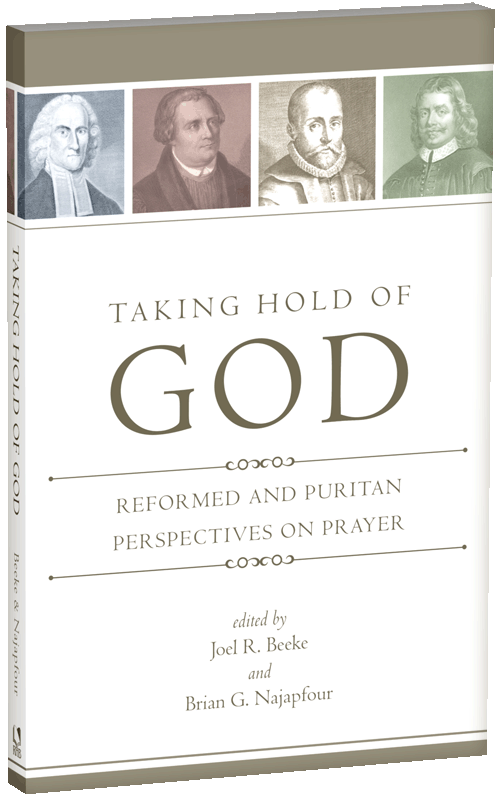 I was recently made aware of the coming title by RHB publications. I am really excited for two reasons.
1. One, because I sit close to one of the editors literally I sit right next to him. In the library (during my seminary years) my study desk was next to Brian Najapfour. I watched him for two years study Bunyan, Owen and Edwards on the issue of prayer and I am very excited to read this particular work that he and my M.A.R. advisor Dr. Beeke has worked on.
2. Secondly, because the Puritans on prayer were the master’s so it seems on the topic. Then again… that may have something to do with hearing Brian constantly talk about the Puritans and prayer for over two years day in and day out. I cannot for the title.
Edited by Joel R. Beeke and Brian G. Najapfour
Description: In Taking Hold of God, you will enter the treasury of the church of Jesus Christ and discover some of its most valuable gems on the subject of Christian prayer. The writings of the Reformers and Puritans shine with the glory of God in Christ, offering us much wisdom and insight today that can make our own prayer lives more informed, more extensive, more fervent, and more effectual. Six contemporary scholars explore the writings and prayer lives of several Reformers and Puritans—among them Martin Luther, John Calvin, William Perkins, Matthew Henry, and Jonathan Edwards—guiding us to growth in prayer and a more grateful communion with God.
Full Endorsements:
“Taking Hold of God is a veritable gold mine on the subject of prayer. Beeke and Najapfour have brought together in one volume the teaching on prayer of the giants of the Reformation and Puritan eras: Luther, Calvin, Knox, Perkins, Bunyan, Henry, Edwards, and others. I was personally encouraged and stimulated to take my own prayer life to a higher and hopefully more productive level. All believers who have any desire to pray effectively will profit from this book.” — Jerry Bridges, a longtime staff member of the Navigators and author ofThe Pursuit of Holiness
“Many of us feel either infants in the school of prayer or intimidated and beaten down by those who accuse us of being prayer-less but do not teach us how to be prayer-full. But here can be found nourishment, example, instruction, encouragement, and, yes, deep challenge, all in one volume. May these pages serve as a tonic for our weakness, a remedy for our sickness, and an inspiration to greater prayerfulness in our churches!” —Sinclair B. Ferguson, senior minister of First Presbyterian Church of Columbia, South Carolina, and professor of Systematic Theology at Redeemer Theological Seminary, Dallas, Texas
“The Protestant Reformation brought a revolution to the life of prayer. This book opens up the story of how the Reformers like Luther and Calvin, followed by the Puritans like William Perkins and Matthew Henry, teach us a surprisingly new approach to the life of prayer.” —Hughes Oliphant Old, John H. Leith Professor of Reformed Theology and Worship, Erskine Theological Seminary, Due West, South Carolina
“Together, Beeke and Najapfour have produced a marvelously helpful and instructive volume on prayer drawn from such giants as Martin Luther, John Calvin, John Bunyan, Matthew Henry, and Jonathan Edwards. It is a veritable potpourri of spiritual insight and godly advice. Books on prayer often induce more guilt than help. Taking Hold of God, as the title itself suggests, aims at doing the latter. It beckons us, allures us, into the challenge of prayer itself: laying hold of a gracious Father who longs for our presence and delights to commune with His children. If you aim to read just one book on prayer this year, choose this one.” —Derek W. H. Thomas, John E. Richards Professor of Systematic and Practical Theology, Reformed Theological Seminary, Jackson, Mississippi
Contents:
Preface
1. Martin Luther on Prayer and Reformation (Brian G. Najapfour)
2. John Calvin on Prayer as Communion with God (Joel R. Beeke)
3. John Knox: A Theologian of Prayer (Brian G. Najapfour)
4. William Perkins on the Lord’s Prayer (J. Stephen Yuille)
5. Anthony Burgess on Christ’s Prayer for Us (Joel R. Beeke)
6. John Bunyan on Praying with the Holy Spirit (Michael A. G. Haykin)
7. The Puritans on the Help of the Holy Spirit in Prayer (Johnny C. Serafini)
8. Matthew Henry on a Practical Method of Daily Prayer (Joel R. Beeke)
9. Thomas Boston and Praying to Our Father (Joel R. Beeke)
10. Jonathan Edwards on Prayer and the Triune God (Peter Beck)
11. Puritan Prayers for World Missions (Joel R. Beeke)
12. Prayerful Praying Today (Joel R. Beeke)
Bibliography
Scripture Index
Subject Index
Contributors:
Peter Beck, Joel R. Beeke, Michael A. G. Haykin, Brian G. Najapfour, Johnny C. Serafini, J. Stephen Yuille
About the Editors:
Joel R. Beeke is president and professor of Systematic Theology and Homiletics at Puritan Reformed Theological Seminary, and a pastor of the Heritage Netherlands Reformed Congregation of Grand Rapids, Michigan.
Brian G. Najapfour, a pastor from the Philippines, is a recent grad uate from Puritan Reformed Theological Seminary (Th.M.) and is a Ph.D. student at Southern Baptist Theological Seminary.
My Interview with Rev. Bill Boekestein
Posted: January 11, 2011 Filed under: Interviews Leave a comment A month ago I was able to interview one of my co-seminarians from Puritan Reformed. William Boekestein (M.Div., Puritan Reformed Theological Seminary) is Pastor of Covenant Reformed Church in Carbondale, Pennsylvania. He previously taught in a Christian School for several years. He and his wife have three children. He blogs regularly at Life Reformation.
When did you decide that you wanted to write a children’s biography? And then, with all the more notable options, why did you choose someone such as Guido de Bres?
The short answer to this is, I have young children, I love church history and our denomination (the URCNA) uses Guido de Bres’ Belgic Confession as a secondary standard of doctrine. From my vantage point the choice made a lot of sense. On the other hand, De Bres’ lived such a fascinating life that even without those three criterion he’d be worth writing about. In addition to this, it can be rewarding to “unearth,” so to speak, the history of an obscure personality from the past.
How has the story of Guido de Bres influenced your own life? What in particular stood out to you about his life that brought to light something, that maybe you did not see as importance in the Christian walk before?
I have been convicted and encouraged by de Bres’ bold commitment to Christ in the face of persecution. I am often easily intimidated by conflict. De Bres consistently preached the gospel knowing that a hangman’s noose was waiting for him if he was caught (and he eventually was). That has been a powerful testimony for me.
Can you give me a few reasons why you think children, of all people, need to know and read the story of Guido de Bres?
That’s a great question since de Bres’ story is a bit graphic. We geared the language toward young children and modified some of the images so they wouldn’t be too scary. That said, some of the themes of the book might seem to be too mature for young children. I address that concern in a note to parents on the last page:
The life of Guido De Bres is not exactly a pleasant read. The story is sad, and, in our age of tolerance, at times it is uncomfortable. Yet we believe his story is important because it really happened. In fact, it happened a lot! In other words, De Bres was not all that extraordinary. He was one of countless Christians who spent their lives in devotion to the Lord and in commitment to His Word.
We should say a few things about the graphic details and references to historical religious conflict in this book. First, the reader should know that every reasonable attempt has been made to avoid gratuitous, unsavory detail. It would be impossible, however, to tell the story of De Bres apart from the theme of suffering. We have also tried carefully to avoid unnecessarily inflammatory religious rhetoric. However, the fact remains that right up to the present, strongly held convictions will produce conflict. Even young children experience this.
Second, we don’t believe it is necessary to shield even young children from the ugliness of life as long as we also provide a context in which this life can be lived victoriously. Guido de Bres thrived in tragedy because he was hoping in the gospel of Jesus Christ. The gospel (or good news) of Jesus is this: because of His perfect life and sacrificial death, those who repent of their sins and trust in Him have God’s promise of forgiveness and eternal life (John 3:16). As this promise is realized in our lives, we too will approach life with the same hope that De Bres had. We will be equipped and motivated to spend our lives for God’s glory as we look to an eternal reward of grace.
This is the value we see in teaching our children about Guido de Bres—not to glorify him, but to be drawn by his example to live to the glory of God.
You can read the full interview here.
Jesus in Every Book of the Bible
Posted: January 10, 2011 Filed under: Jesus Christ Leave a commentI happen to come across this video over the weekend and was blown away. The end of the child’s speech I have heard before which I believe was written by Dr. Lockridge, but I have never heard one expound upon the 66-books in one word or phrase showing Christ through the Scriptures. It was a great reminder of both Christ in and through the entire Bible and secondly, why I am not a fan of Dispensational hermeneutics.
HT: BringtheBooks
A New and Improved David
Posted: December 13, 2010 Filed under: Just for Fun Leave a comment(Post by Ben Thocher)
In 2 Samuel 5:6-10 we read of David laying siege to and capturing Jerusalem, the “stronghold of Zion.” This city of David will come to play a crucial role in Israel’s life and theology:
And the king and his men went to Jerusalem against the Jebusites, the inhabitants of the land, who said to David, “You will not come in here, but the blind and the lame will ward you off”—thinking, “David cannot come in here.” Nevertheless, David took the stronghold of Zion, that is, the city of David. And David said on that day, “Whoever would strike the Jebusites, let him get up the water shaft to attack ‘the lame and the blind,’ who are hated by David’s soul.” Therefore it is said, “The blind and the lame shall not come into the house.” And David lived in the stronghold and called it the city of David. And David built the city all around from the Millo inward. And David became greater and greater, for the Lord, the God of hosts, was with him.
Matthew has made the point time and time again to connect Jesus’ identity to that of David. This is especially true in his account of Jesus’ entry into Jerusalem (cf. Matt. 21:1-11). David flees Jerusalem mounted on a donkey. Jesus enters Jerusalem mounted on a donkey. David weeps for his son. Jesus weeps for God’s city. Further, David’s escape from Jersualem anticipates the spirit of the Lord rising from the temple and departing to the east. The presence of God among his people is cut off. In Jesus we see the return of God’s glory to the temple. Jesus enters Jerusalem from the east. Israel’s Davidic king has returned, and the presence of God with him.
And Jesus entered the temple and drove out all who sold and bought in the temple, and he overturned the tables of the money-changers and the seats of those who sold pigeons. He said to them, “It is written, ‘My house shall be called a house of prayer,’ but you make it a den of robbers.”
And the blind and the lame came to him in the temple, and he healed them. But when the chief priests and the scribes saw the wonderful things that he did, and the children crying out in the temple, “Hosanna to the Son of David!” they were indignant, and they said to him, “Do you hear what these are saying?” And Jesus said to them, “Yes; have you never read,
“‘Out of the mouth of infants and nursing babies
you have prepared praise’?”
And leaving them, he went out of the city to Bethany and lodged there.
When David takes Jerusalem, he is mocked. The city is so well fortified that even the “blind and the lame” could defend it against David’s attack. For this reason, David does not allow the blind or the lame to enter the temple. They are hated by David’s soul.
In Jesus we see a king who is like David, but more importantly, a king who is unlike David, a king who will rule with perfect justice and righteousness. Jesus is a better David. Upon clearing out the temple and disrupting its worship, we read that “the blind and the lame came to him in the temple.” The very people that had banned from the temple are now healed there by David’s greater son. While David was filled with contempt, Jesus is filled with compassion. The true Davidic king is restoring all things to himself, setting the world to rights.
This is the only time Jesus heals in Jerusalem, and we dare not miss the profundity of the situation: the lame and blind do not come to the temple to be healed, but to Jesus. Like the wise men before them, they come to a person, not a place.
Jesus has once more revealed himself as the true center of life and worship for his people.
The Magi in Redemptive-History
Posted: December 9, 2010 Filed under: Ben Thocher 1 Comment(Post by Ben Thocher)
It has been alluded to already that the Magi are in some way a function of Matthew’s fulfillment theology. Their presence before the Christ child carries a measured significance that extends beyond the pages of Matthew’s Gospel and reaches into the prophetic hope and vision of Israel for the end of days. In their presentation, Matthew has provocatively indicated that their visit involves much more than Christmas pageantry; their arrival represents the in-breaking of eschatological reality.
One of the foundation texts for placing the Magi’s visit within the flow of redemptive-history is the Queen of Sheba’s visit to Solomon in 1 Kings 10. She comes to Solomon “bearing spices and very much gold and precious stones” while commending Solomon for executing “justice and righteousness.” This narrative highlights the immense power and wisdom wielded by the Solomonic dynasty. The Queen of Sheba represents the humble submission of nations to Israel’s great king. Provan notes that it is “the worldwide fame of Solomon” that attracts foreign dignitaries to his presence.[1] Brueggemann likewise suggests that “The visit of the Queen of Sheba is emblematic and representative of the pivotal place Solomon had come to occupy, if not in the actual world of royal competition and commercial success, then at least in the imagination of Israel.”[2] Put differently, Solomon is the Israelite king par-excellence. To him belongs the submission of nations.
While Solomon’s glorious kingdom shortly thereafter hurtles headlong into chaos and destruction, his positive portrayal becomes a foundation upon which the messianic hope of Israel is built. Psalm 72 is seemingly modeled after Solomon’s experience with the Queen of Sheba in its prayer for the royal son of God. As the Queen of Sheba lauded Solomon for his “justice and righteousness,” so too the prayer of Psalm 72 is strikingly marked by the frequent and overt use of this same language:
Give the king your justice, O God,
and your righteousness to the royal son!
May he judge your people with righteousness,
and your poor with justice! (Ps 72:1; emphasis mine)
Not only that, but the psalm’s vision for the royal son involves the bringing of gifts and tribute from all nations – including Sheba!
May the kings of Tarshish and of the coastlands
render him tribute;
may the kings of Sheba and Seba
bring gifts!
May all kings fall down before him,
all nations serve him! (Ps 72:10-11; emphasis mine)
That the psalm itself is “of Solomon” intimates a close relationship to Solomon either as author or as subject.[3] It is likely that the prayer offers a prophetic outlook for another king who would arise like Solomon. Given this, Jesus’ words in Matthew 12:42 that “something greater than Solomon is here” takes on a deeper and more significant meaning.
The arrival of the Magi in Matthew’s Gospel is understood then within this wider theological context. Jesus is Solomon’s greatest son, the one to whom worldwide tribute is rendered. Isaiah 60:1-4 likewise presents a picture of Israel’s eschatological hopes. The prophet speaks words of hope to Israel, that “nations shall come to your light, and kings to the brightness of your rising” (Isa 60:3). The passage will later discuss the “wealth of nations” coming to Israel along with camels from Sheba bringing “gold and frankincense” (Isa 60:5-6). It is conceivable – and even likely! – that this passage forms the backdrop for Matthew’s presentation of the Magi’s star rising and resting over the place where Messiah was to be found.[4]
It becomes obvious that the worship of the Magi emerges as the Matthew’s primary focus in this passage.[5] Having seen his star they “come to worship him” (proskunh/sai), while Herod likewise desires to locate and “worship” (proskunh,sw) him.[6] So too, upon their arrival at the house, they “fell down and worshiped (proseku,nhsan) him.”[7] While Matthew may be playing off the ambiguity of the pagan’s worship, their response to finding Jesus – they “rejoiced with an exceedingly great joy”[8] – seems to indicate something beyond mere reverence or political maneuvering.
What is presented to the reader, then, is an understanding of the Magi’s visit which envisions the end of days inauguration of the worship of nations at Zion. The Magi come to Jesus bearing gold, frankincense, and myrrh and bowing down before him in worship.[9] They do not come (ultimately) to physical Jerusalem or its Temple, but to Jesus the Messiah. What is at work here, even in Matthew’s second chapter, is a conception of Jesus as the one true place of worship over-against the Jerusalem Temple and its sacrificial system. Indeed, “something greater than the Temple” has arrived (Matt. 12:6).
[1] Iain Provan, 1 and 2 Kings (NIBC; Peabody: Hendrickson, 2008), 86.
[2] Walter Brueggemann, 1 & 2 Kings (Macon: Smyth and Helwys, 2000), 137.
[3] The function of the lamed preposition here, as with elsewhere in the Psalter, does not necessarily indicate authorship. While the English rendering “of Solomon” is often understood as an ascription of authorship, it is perhaps more helpfully understood as “about Solomon,” “concerning Solomon,” or “to Solomon.”
[4] While it is clear that the Magi are not themselves kings, they are almost always associated with kings. The tribute rendered to Jesus is unilateral. They give, but do not receive. Their worship is not reciprocal: they are servants, Jesus is Lord. The Magi stand in the place of kings, but are not actual royalty. The intertextual effect is one of representation, not identification. Readers are inclined to understand the Magi as kings due to the overt intertextual backdrop onto which Matthew’s story is cast. Powell notes that “…we must affirm, however, that Matthew’s narrative develops in ways that allow readers to connect the magi with kings and still make sense of the story” (“The Magi as Kings: An Adventure in Reader-Response Criticism,” CBQ 62 [2000]: 462.) The conception of kings rendering tribute to the Christ child is therefore not without warrant and may, in fact, more accurately portray the underlying theological point that Matthew is intending to make: In an act of eschatological subordination, the kings of the earth have brought gifts/tribute to Israel’s Messiah.
[5] Indeed, the particle ivdou. (“Behold!”) in 2:1 functions as a discourse marker meant “to focus attention on the introduction of a major participant into the episode…It alerts the audience to pay attention to a particular participant as the plot unfolds” (Richard Young, Intermediate New Testament Greek: A Linguistic and Exegetical Approach [Nashville: Broadman & Holman, 1994], 198). The focus throughout is thus on the arrival and activity of the Magi.
[6] Herod’s motives are dubious at best and likely driven by his desire to locate and destroy the threat to his throne. Powell highlights the irony of Herod’s response, “Matthew’s readers are expected to know that the kings in Scripture honor God’s chosen one, but now, when that one arrives, the kings of the earth do not respond. The gifts and the worship that kings would offer, according to Scripture, are brought by magi instead. To use a medieval analogy, it is as though the time for the king to appear had come, and a court jester showed up in his place. ‘Magi?’ Matthew’s readers are expected to ask. ‘Where are the kings?’ The point of the story, then, is that when Jesus came into the world he was worshiped not by kings but by servants. Part of the irony, of course, is that there is a king in the story, and he even speaks of worshiping Jesus, but he has no intention of doing so” (“Magi as Kings,” 472-73).
[7] The use of the term proskune,w here is seemingly ambiguous. Nolland notes that “[i]n Mark the term means only to show deferential respect to (5:6; 15:19); in Luke it always denotes worship (4:7, 8) and is used with Jesus as its object only after the resurrection (24:52); in Matthew it can mean reverence (4:9, 10), at times seems clearly to involve (religious) worship directed towards Jesus (14:33; 28:9, 17), and is used repeatedly of Jesus from infancy onwards in a manner which seems designed to blur, in the case of response to Jesus, the distinction between deferential respect and religious worship” (Gospel of Matthew, 111). Powell counters this observation by suggesting that, in Matthew, worship always takes as its cue the proper response to Jesus as the true son of God. He notes that “Although Matthew’s Gospel never offers a definition of worship, the accounts of worship that are narrated in this book appear to assume that worship is fundamentally a matter of attitude rather than form or mood” (“A Typology of Worship in the Gospel of Matthew,” JSOT 57 [1995]: 16).
[8] Young suggests rendering evca,rhsan cara.n mega,lhn sfo,dra as “They were thrilled with ecstatic joy” (18), while Keener advocates “they rejoiced with an exceedingly great joy” or, “they were thrilled to bits” (104).
[9] The nature of the Magi’s offerings has elicited much debate and discussion. Is there an underlying significance in their choice of gifts? France helpfully summarizes the possibilities and suggests an appropriate reading focusing on the kingly dimension of the gifts. “Their gifts are those of the affluent: gold, then as now the symbol of ultimate value and exotic spices, which would not normally come within the budget of an ordinary Jewish family. Frankincense…an expensive perfume…was burned not only in worship but at important social occasions…Despite the symbolism traditionally discerned in the gifts of the magi since the time of Irenaeus (gold for royalty, frankincense for divinity, and myrrh for death and burial—the latter based on John 19:39), myrrh, too, was primarily used as a luxurious cosmetic fragrance…These are luxury gifts, fit for a king” (Gospel of Matthew, 75-76).
Women in the Line of Christ: May It Never be?
Posted: December 8, 2010 Filed under: Ben Thocher 1 Comment(Post by Ben Thocher)
Looking closely at Matthew’s genealogy we observe another interesting feature: women! If you read just about any genealogy from the Old Testament it will be comprised exclusively of men. Why? The world of the Old Testament was a patriarchal society – that is, it was concerned almost exclusively with men. Procreation was primarily seen as the action and achievement of men. To not have a child (specifically a son) – even if the woman was barren – was a mark of dishonor for the husband. It was shameful. So the appearance of women in the genealogy of Jesus the Messiah is strange. It happens four times (five including Mary), as Tamar, Rahab, Ruth, and Bathsheba are all included in Matthew’s family overview.
Now, if you’ve read through the Old Testament, and you’re looking for some exemplary women to hold up, you’d probably first consider Rachel, Leah, or Sarah – the matriarchs of Israel. These were women of strong faith and good reputation. The women included in Matthew’s genealogy are in many ways the opposite of this ideal. They were women of scandal, women of disrepute. So what’s the point? Why include these women in the lineage of Jesus the Messiah?
Four possible options:
First, Matthew has included these women to draw attention to their non-Jewish background. None of these women are Jews! This is going to be an important theme for Matthew. The primary issue in the New Testament church that we see addressed again and again is the relationship between Jews and Gentiles. Gentiles, as non-Jews, were strangers to the promises of Israel. Suddenly, Jesus comes on the scene and Gentiles are put on equal ground with Jews. There is no discrimination in Christ! Matthew is then preparing his readers for this reality by carefully selecting these women and including them here.
Second, Matthew has intentionally chosen women of scandal and disrepute to prepare his audience for the virgin birth of Jesus. If God can use these women, these shameful women, to accomplish his purposes then it should come as no surprise when Mary arrives on the scene pregnant by the Holy Spirit. This would then seem to be an apologetic on Matthew’s behalf. He is explaining to his audience why the virgin birth is not something to be ashamed of, but rather something to be praised!
Third, these women, as Gentiles, do have stories of tremendous faith. Their stories of faith come at crucial points in Israel’s history. Their “pagan” faith is superior to that of Israel’s men. Tamar’s faith helps further the line of Judah (Patriarchal period), Rahab’s faith helps the conquest get underway (Conquest generation), Ruth’s faith and actions lead directly to the birth of David the King (time of the Judges) and Bathsheba’s actions bring about Solomon, the great son of David (time of the Monarchy).
Fourth, these women are included because they are, in fact, women. The point being made is that the time of Patriarchal genealogies is over. Men and women are equal and co-heirs in Christ. This is a profound point, and one that Paul is careful to make in Gal 3:27-29 and Eph 2:11-22. The gospel re-orients and re-focuses the way we look at gender roles.
Thoughts?
Ligonier Academy Undergraduate Bible College
Posted: December 7, 2010 Filed under: Ligonier, Ligonier Academy 1 Comment Ligonier Academy undergraduate Bible College is set to open Fall 2011. I was recently able to interview Rev. Michael Morales about Ligonier Academy. Rev. Morales teaches for Ligonier Academy as Assistant Professor of Old Testament and Great Works, as well as Dean of Admissions (recruitment). He is a Teaching Elder in the PCA who, before coming to Ligonier, he taught for three years at an evangelical seminary.
What is the purpose of Ligonier Academy? Why does Ligonier Academy exist?
Ligonier Academy of Biblical and Theological Studies was founded to provide educational opportunities for Christians who recognize that the knowledge of God and the things of God is the mother of devotion and reformation, for Christians who recognize that the knowledge of their God and His holiness if foundational to lives and vocations that lead to the glory and enjoyment of God. Our vision for the Academy is that we will be a community of teaching and learning from which God’s people will emerge with a fuller knowledge of their God and of their gifts for service to Him. In short, we desire to provide an opportunity for Christians to study the riches of the historic Christian faith in a formal collegiate setting.
Why do you think it is necessary to start Ligonier Academy given that there are hundreds of Bible colleges and Christian Universities to choose from in America?
While there are indeed numerous Bible colleges in America that come from a dispensational and/or fundamentalist perspective, there is still an outstanding need for a particularly reformed Bible college, grounded in the five “solas” of the Reformation (salvation by grace alone, through faith alone, in Christ alone, to the glory of God alone, as revealed in the Scriptures alone).
What type of students are you at Ligonier Academy trying to attract?
We are looking for students excited to engage in a rigorous theological education focusing on the study of Scripture, in the context of historic Christian orthodoxy. While anyone may benefit from what we offer, our degree programs may be best suited for those preparing for graduate education (in seminary or otherwise), those desiring a solid foundation in biblical and theological studies before further undergraduate education, those completing an undergraduate education begun elsewhere, and individuals seeking personal enrichment and development.
What can a student do to prepare before attending Ligonier Academy?
Students seeking a basic orientation to Ligonier’s perspective on each of the four main areas of the curriculum may consider working through the Foundations of Faith course by R.C. Sproul for Theology, From Dust to Glory by R.C. Sproul for Biblical Studies, Invitation to the Classics by Louise Cowan and Os Guinness for the Great Works, and The 100 Most Important Events in Christian History by A.K. Curtis, R. Petersen, and J.S. Lang for Church History. However, these works are neither “prerequisites” to study at the Academy nor a reflection of the more rigorous coursework that will be involved in the undergraduate programs—again, these are merely suggested as a basic orientation.
What degrees are going to be offered at Ligonier Academy? Could you describe each of them in some detail?
The Academy offers two four-year Bachelor of Arts and one two-year Associate of Arts:
(1) Bachelor of Arts in Biblical Studies—focuses on the history and background of Scripture, the theology of Paul, and the original languages of Hebrew and Greek.
(2) Bachelor of Arts in Theological Studies—focuses on the history of theology, philosophy, and apologetics, and on the historic ecclesiastical language of Latin.
(3) Associate of Arts in Biblical and Theological Studies—offers a foundation in Scripture and theology.
Who are the full-time and adjunct faculty members of Ligonier Academy?
The formation of the faculty is still underway but, led by Dr. Sproul, the fulltime faculty includes R. Fowler White and L. Michael Morales, while our adjunct faculty includes R. C. Sproul, Jr., Steven C. Adamson, and Keith A. Mathison, and our visiting faculty includes Paul Helm, Stephen J. Nichols, and W. Duncan Rankin.
What classes will Ligonier Academy be offering with R. C. Sproul?
In addition to leadership, R.C. Sproul will likely do guest lectures within various courses; for example, lectures on Melville’s Moby Dick in the Great Works course on 19th century classics, on the Epistle to the Romans, and on justification in the Doctrine of Salvation course.
What is the cost per semester to attend Ligonier Academy?
Full-time tuition per semester (12-18 credit hours) costs $4,250.
Thanks Rev. Morales for your time in answering these questions about Ligonier Academy.
Additional Blogger
Posted: December 6, 2010 Filed under: Just for Fun Leave a commentI have at times wanted to turn my personal blog into a place where others played a part in contributing to it as well. Then I think twice and say no. After leaving seminary, I at times just do not feel like writing all the time, or better yet I just forget! Over the three past years I have thought if one guy was going to help me it was a good friend of mine, Ben Thocher.
Ben Thocher has a B.S. from Philadelphia Biblical University, a M.A.R. from Westminster Theological Seminary and is now in the Th.M. program at Westminster Theological Seminary. Ben also works for Westminster Bookstore and lives outside of Philadelphia PA. Although many of you readers do not know Ben, he has been a great theological buddy of mine throughout the last-8-years that I have known him (besides one-year). Over the next year in 2011, Ben will help me here at the blog writing several post for us as we think about theological issues and continue to learn and search out the Gospel.
To the Idle
Posted: December 5, 2010 Filed under: Sundays with Spurgeon Leave a commentIt is of no more use to give advice to the idle than to pour water into a sieve; and as to improving them, one might as well try to fatten a greyhound. Yet, as The Old Book tells us to cast our bread upon the waters,” we will cast a hard crust or two upon these stagnant ponds; for there will be this comfort about it: if lazy fellows grow no better, we shall be none the worse for having warned them, for when we sow good sense, the basket gets none the emptier. We have a stiff bit of soil to plow when we chide with sluggards, and the crop will be of the smallest. But if none but good land were farmed, plowmen would be out of work, so we’ll put the plow into the furrow. Idle men are common enough and grow without planting, but the quantity of wit among seven acres of them would never pay for raking: nothing is needed to prove this but their name and character; if they were not fools they would be idlers; and though Solomon says, “The sluggard is wiser in his own conceit than seven men that can render a reason,” yet in the eyes of every one else, his folly is as plain as the sun in the sky. If I hit hard while speaking to them, it is because I know they can bear it; for if I had them down on the floor of the old barn, I might thresh many a day before I could get them out of the straw, and even the steam thresher could not do it. It would kill them first; for laziness is in some people’s bones and will show itself in their idle flesh, do what you will with them.
Well, then, first and foremost, it strikes me that lazy people ought to have a large looking glass hung up, where they are bound to see themselves in it; for sure, if their eyes are at all like mine, they would never bear to look at themselves long or often. The ugliest sight in the world is one of those thoroughbred loafers, who would hardly hold up his basin if it were to rain with porridge; and for certain would never hold up a bigger pot than he wanted filled for himself. Perhaps, if the shower should turn to beer, he might wake himself up a bit; but he would make up for it afterwards. This is the slothful man in the Proverbs, who “hideth his hand in his bosom; it grieveth him to bring it again to his mouth.” I say that men the like of this ought to be served like the drones which the bees drive out of the hives. Every man ought to have patience and pity for poverty; but for laziness, a long whip or a turn at the treadmill might be better. This would be a healthy purgative for all sluggards; but there is no chance of some of them getting their full dose of this medicine, for they were born with silver spoons in their mouths, and like spoons will scarce stir their own tea unless somebody lends them a hand. They are, as the old proverb says, gas lazy as Ludham’s dog, that leaned his head against the wall to bark”; and like lazy sheep, it is too much trouble for them to carry their own wool. If they could see themselves, it might by chance do them a world of good; but perhaps it would be too much rouble for them to open their eyes even if the glass were hung for them.
Everything in the world is of some use; but it would puzzle a doctor of divinity, or a philosopher, or the wisest owl in our steeple to tell the good of idleness: that seems to me to be an ill wind which blows nobody any good—a sort of mud which breeds no eels, a dirty ditch which would not feed a frog. Sift a sluggard grain by grain, and you’ll find him all chaff. I have heard men say, better do nothing than do mischief but I am not even sure of that: that saying glitters well, but I don’t believe it’s gold. I grudge laziness even that pinch of praise; I say it is bad and bad altogether. For look ye, a man doing mischief is a sparrow picking the corn—but a lazy man is a sparrow sitting on a nest full of eggs, which will all turn to sparrows before long and do a world of hurt.
My Top Five Favorite Reads of 2010
Posted: December 1, 2010 Filed under: Top Five, Top Five Favorite Books of 2010 2 Comments
1. Natural Law and the Two Kingdoms: A Study in the Development of Reformed Social Thought
Conventional wisdom holds that the theology and social ethics of the Reformed tradition stand at odds with concepts of natural law and the two kingdoms. This volume challenges that conventional wisdom through a study of Reformed social thought from the Reformation to the present. / “The strength of this book is the overwhelming amount of historical evidence, judiciously analyzed and assessed, that positions the Reformed tradition clearly in the natural law, two kingdoms camp. This valuable contribution to our understanding of the Christian life cannot and should not be ignored or overlooked. The growing acceptance of the social gospel among evangelicals puts us in jeopardy of losing the gospel itself; the hostility to natural law and concomitant love affair with messianic ethics opens us up to tyranny. This is a much needed and indispensable ally in the battle for the life of the Christian community in North America.” — John Bolt, Calvin Theological Seminary
 2. Living in God’s Two Kingdoms: A Biblical Vision for Christianity and Culture
“The Apostle Peter writes that Christians are God’s own people, sojourners and exiles in this age. What does this calling mean for the way in which believers work in their jobs, raise their families, educate their children, and vote at the polls? In Living in God’s Two Kingdoms, David VanDrunen addresses these questions and more, offering a robust and reasoned alternative to transformationalist understandings of Christianity and culture. Whether or not readers agree with every argument in Living in God’s Two Kingdoms, they will find themselves engaged and challenged to think constructively and biblically about a critical issue in the life of the church. VanDrunen has done a great service to the church in promoting continued reflection on Christianity and culture, and in offering sound practical counsels to Christians eager to serve God in their pilgrimage heavenward.” —Guy Prentiss Waters, Associate Professor of New Testament, Reformed Theological Seminary, Jackson, MS
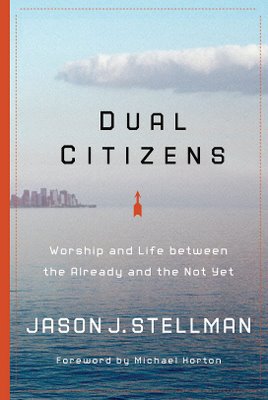 3. Dual Citizens: Worship and Life Between the Already and the Not Yet
The saints of old acknowledged that they were strangers and exiles on the earth (Hebrews 11:13b). This is no less true for Christians today; as Paul writes, “Our citizenship is in heaven” (Philippians 3:20a). But though we are on the road to that homeland, we are not there yet. It is from this understanding of Christians as pilgrims wayfaring strangers on the road to their true home but living in the meantime in a foreign land that Rev. Jason J. Stellman has written Dual Citizens: Worship and Life between the Already and the Not Yet. Stellman wrestles with the implications of the Christian’s dual citizenship in the kingdom of God and the kingdom of man, showing that the great challenge for believers today is maintaining their distinctiveness as redeemed people. Believers are free to participate in culture (though the Bible guides the way they participate), but they must not so immerse themselves in it that they obscure their true identities. Dual Citizens is a call for believers to see the present from the standpoint of the future, for doing so will enable them to see their lives, with all their trials and triumphs, as part of God’s great unfolding story.

4. Tributes to John Calvin: A Celebration of His Quincentenary
The essays in Tributes to John Calvin: A Celebration of His Quincentenary illuminate Calvin’s times, thought and legacy, and provide a celebratory tribute to one of the most influential people in history. This book commemorates the quincentenary of Calvin’s birth (July 10, 1509), and attests to the remarkable fact that a French religious leader from a tiny village is still
remembered half a millennium later. Twenty-three leading Calvin scholars exhibit a firm understanding of Calvin’s era, theology, and the heritage he bequeathed the church. Their articles cover Calvin’s theology, soteriology, and ecclesiology, as well as his doctrines of assurance, worship, and Scripture. They examine Calvin as a Frenchman, lawyer, and liturgist. Other articles explore Calvin’s impact on the arts, Calvinism in Asia, and the influential women in Calvin’s life.
 5. Preaching Like Calvin: Sermons From the 500th Anniversary Celebration
Not only was John Calvin a magisterial theologian and one of the great transformative forces of modern history, he also was a consummate preacher who delivered over two thousand sermons in St. Pierre’s Cathedral in Geneva, Switzerland, where he pastored from 1536 until his death in 1564. What better way to celebrate the 500th anniversary of Calvin’s birth and his towering legacy to the church than by gathering sixteen of the preeminent Reformed pastors of our day to preach commemorative sermons in St. Pierre’s! Preaching Like Calvin faithfully presents the text of these sermons. Reading the sermons shows how Calvin’s theology grew from a clear understanding of the Bible—an understanding and a theology that are alive and well in the church today
Top Five “Almost” Favorite Books of 2010
Posted: November 30, 2010 Filed under: Top Five, Top Five "Almost" Favorite Books of 2010 3 Comments 1. An Exposition of the Apostles’ Creed
Olevianus’s Exposition of the Apostles’ Creed is a collection of sermons he preached on the basic articles of the Christian faith. It serves as a reminder that the Reformed tradition did not see itself as separate from the universal church, though it was principally opposed to Rome. Rather, Olevianus and his tradition argue for a Reformed catholicity rooted in the ancient confession of the church. This new translation by Lyle D. Bierma, along with R. Scott Clark’s historical introduction, will benefit both scholarly and general readers. Charged with federal language, An Exposition explains the Christian faith as the believer’s fellowship with God in the covenant of grace. Thus, it is significant for its contribution to the development of Reformed covenantal theology. In addition to exhibiting its historical value within the Reformed tradition, readers will be “directed,” as Olevianus had intended, “toward edification in true and sound piety.”

2. The Major Works of Herman Witsius
Economy of the Covenants Between God and Man (2 volumes): This, his magnum opus, is a reflection of some of the most fruitful and mature thinking on federal theology during the seventeenth century, and still holds a preeminent place in our own day. Reformed theology has always understand the biblical doctrine of the covenant to be the theological framework which best unifies Scripture, making it a consistent hermeneutic. In this work, Witsius, presents the reader with a fully biblical and experiential doctrine of the divine covenants; opening up their nature, stipulations, curses, and blessings. Anyone interested in Reformed theology should read this book, for it is Reformed theology at its best.
Sacred Dissertations on the Apostles’ Creed (2 volumes): In this work Witsius exemplifies his own principle, that ‘he alone is a true Theologian, who adds the practical to the theoretical part of Religion.’ A marriage of extraordinary intellect and spiritual passion, this phrase-by-phrase exposition of the Creed seeks always to apply Scripture to life. In both tone and substance Witsius draws the reader into a deeper understanding of and love for the truths most central to the Christian faith.
Sacred Dissertations on the Lord’s Prayer (1 volume): This volume contains more than the title reveals. Prefaced to a 230-page exposition of the Lord’s Prayer, Witsius devotes six chapters to the subject of prayer in general, which he calls the pulse of the renewed soul. His exposition on the Lord’s Prayer is itself a masterpiece. In many instances, the questions grappled with receive greater scriptural and practical clarity from Witsius’ pen than from anything else written to date. Sound biblical exegesis and practical doctrinal substance, this book represents the cream of Reformed theology.
 3. The Messianic Hope
In The Messianic Hope, book eight of the New American Commentary Studies in Bible & Theology series, Jewish Studies professor Michael Rydelnik puts forth a thesis that the Old Testament was intended by its authors to be read as a messianic primer. He explains at length how the text reveals significant direct messianic prophecy when read in its final form. Users will find this topical study an excellent extension of the long-respected New American Commentary series.

4. Lukan Authorship of Hebrews
A new volume in the NEW AMERICAN COMMENTARY STUDIES IN BIBLE AND THEOLOGY series, Lukan Authorship of Hebrews explains why Luke is the likely author of the book of Hebrews. The ramifications of this possibility are then detailed in depth, including the way Hebrews informs the interpretation of the books of Luke and Acts. Also present throughout is commentary author David L. Allen’s thorough analysis of the writing style similarities between Hebrews, Luke, and Acts.
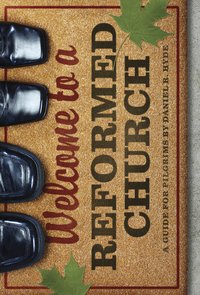
5. Welcome to a Reformed Church
“Who are these guys?” That was the question the teenage Daniel R. Hyde posed to his father when he first encountered “Reformed” believers. With their unique beliefs and practices, these Christians didn’t fit any of the categories in his mind. Not so many years later, Hyde is now Rev. Daniel R. Hyde, a pastor of a Reformed church. Recognizing that many are on the outside looking in, just as he once was, he wrote Welcome to a Reformed Church: A Guide for Pilgrims to explain what Reformed churches believe and why they structure their life and worship as they do. In layman’s terms, Rev. Hyde sketches the historical roots of the Reformed churches, their scriptural and confessional basis, their key beliefs, and the ways in which those beliefs are put into practice. The result is a roadmap for those encountering the Reformed world for the first time and a primer for those who want to know more about their Reformed heritage.
5 Books Every Christian Should Read
Posted: November 29, 2010 Filed under: Top Five 7 CommentsI just saw fellow Christian brother Tim Brister post what he believed to be the top five books that every Christian should read. Seeing a few of the same titles that I would have picked and a few I would have not, I decided to spend today’s post giving my own top 5 books that I believe every Christian needs to read.
1. Redemption Accomplished and Applied by John Murray
2. The Holiness of God by R.C. Sproul
3. The Art of Devine Contentment by Thomas Watson
4. Beginning at Moses: A Guide to Finding Christ in the Old Testament by Michael Barrett
5. Living for God’s Glory: An Introduction to Calvinism by Joel Beeke
Men with Two Faces
Posted: November 28, 2010 Filed under: Sundays with Spurgeon Leave a commentEven bad men praise consistency. Thieves like honest men, for they are the best to rob. When you know where to find a man, he has one good point at any rate; but a fellow who howls with the wolves and bleats with the sheep gets nobody’s good word unless it be the devil’s. To carry two faces under one hat is, however, very common. Many roost with the poultry and go shares with Reynard. Many look as if butter would not melt in their mouths and yet can spit fire when it suits their purpose. I read the other day an advertisement about reversible coats; the tailor who sells them must be making a fortune. Holding with the hare and running with the hounds is still in fashion. Consistency is about as scarce in the world as musk in a dog kennel.
You may trust some men as far as you can see them, but no further, for new company makes them new men. Like water, they boil or freeze according to the temperature. Some do this because they have no principles; they are of the weathercock persuasion and turn with the wind. you might as well measure the moon for a suit of clothes as know what they are. They believe in that which pays best. They always put up at the Golden Fleece; their mill grinds any grist which you bring to it if the ready money is forthcoming. They go with every wind, north, south, east, west, northeast, northwest, southeast, southwest, north-northeast, southwest-by-south, or any other in all the world. Like frogs, they live on land or water and are not at all particular which it is. Like a cat, they always fall on their feet and will stop anywhere if you butter their toes. They love their friends dearly, but their love lies in the cupboard; if that be bare, like a mouse, their love runs off to some other larder. They say, “Leave you, dear girl? Never, while you have a shilling.” How they scuttle off if you come to the bad! Like rats, they leave a sinking ship.
When good cheer is lacking,
Such friends still be packing.
Their heart follows the pudding. While the pot boils, they sit by the fire; when the meal tub is empty, they play at turnabout. They believe in the winning horse; they will wear anybody’s coat who may choose to give them one; they are to be bought by the dozen like mackerel, but he who gives a penny for them wastes his money. Profit is their god; and whether they make it out of you or your enemy, the money is just as sweet to them. Heads or tails are alike to them so long as they win. High road or back lane, all’s the same to them as long as they can get home with the loaf in the basket. They are friends to the goose, but they will eat his giblets. So long as the water turns their wheel, it is none the worse for being muddy; they would bum their mother’s coffin if they were short of fire wood and sell their own father if they could turn a penny by the old gentleman’s bones. They never lose a chance of minding the main chance.
Others are shifty because they are so desperately fond of good fellowship. “Hail fellow, well met,” is their cry, be it traveler or highwayman. They are so good-natured that they must agree with everybody. They are cousins of Mr. Anything. Their brains are in other people’s heads. If they were at Rome, they would kiss the Pope’s toe, but when they are at home they make themselves hoarse with shouting, “No Popery.” They admire the Vicar of Bray, whose principle was to be the Vicar of Bray whether the Church was Protestant or Popish. They are mere time-servers, in hopes that the times may serve them. They belong to the party which wears the yellow colors not in their button-holes, but in the palms of their hands. Butter them, and like turnips you may eat them. Pull the rope, and like the bells they will ring as you choose to make them, funeral knell or wedding peal, come to church or go to the devil. They have no backbones; you may bend them like willow wands, backwards or forwards, whichever way you please. Like oysters, anybody may pepper them who can open them. They are sweet to you and sweet to your enemy. They blow hot and cold. They try to be Jack-o’-both sides and deserve to be kicked like a football by both parties.
Some are hypocrites by nature, slippery as eels, and piebald like Squire Smoothey’s mare. Like a drunken man, they could not walk straight if they were to try. They wind in and out like a Surrey lane. They were born of the breed of St. Judas. The double shuffle is their favorite game, and honesty their greatest hatred. Honey is on their tongues, but gall in their hearts. They are mongrel-bred, like the gypsy’s dog. Like a cat’s feet, they show soft pads but carry sharp claws. If their teeth are not rotten, their tongues are, and their hearts are like dead men’s graves. If speaking the truth and lying were equally profitable, they would naturally prefer to lie; for, like dirt to a pig, it would be congenial. They fawn, and flatter, and cringe, and scrape; like snails they make their way by their slime, but all the while they hate you in their hearts and only wait for a chance to stab you. Beware of those who come from the town of Deceit. Mr. Facing-both-ways, Mr. Fair-speech, and Mr. Two-tongues are neighbors who are best at a distance. Though they look one way, as boatmen do, they are pulling the other; they are false as the devil’s promises, and as cruel as death and the grave.
Religious deceivers are the worst of vermin, and I fear they are as plentiful as rats in an old wheat stack.
They are like a silver pin, Fair without but foul within.
They cover up their black flesh with white feathers. Saturday and Sunday make a wonderful difference in them. They have the fear of the minister a good deal more before their eyes than the fear of God. Their religion lies in imitating the religious; they have none of the root of the matter in them. They carry Dr. Watts’ hymn book in their pocket and sing a roaring song at the same time. Their Sunday coats are the best part about them; the nearer you get to their hearts, the more filth you will Cad. They prate like parrots, but their talk and their walk do not agree. Some of them are fishing for customers, and a little pious talk is a cheap advertisement; if the seat at the church or the meeting costs a trifle, they make it up out of short weights They don’t worship God while they trade, but they trade on their worship. Others of the poorer sort go to church for Soup, and bread, and coal tickets. They love the communion because of the alms’ money. Some of the dear old Mrs. Goodbodies want a blessed almshouse, and so they profess to be so blessed under the blessed ministry or their blessed Pastor every blessed Sabbath. Charity suits them if faith does not; they know which side their bread ice buttered on.
Others make a decent show in religion to quiet their consciences; they use it as a salve for their wounds. If they could satisfy heaven as easily as they quiet themselves, it would be a fine thing for them. It has been my lot to meet with some who went a long way in profession, as far as I could see, for nothing but the love of being thought well of. They got a little knot of friends to believe in their dime talk, and take all in for gospel that they liked to say. Their opinion was the true measure of a preacher’s soundness; they could settle up everything by their own know, and they had gallons of XXX experience for those who liked something hot and strong; but dear, dear, if they had but condescended to show a little Christian practice as well, how much better their lives would have weighed up! These people are like owls, which look to be big birds, but they are not, for they are all feathers; and they look wonderfully knowing in the twilight, but when the light comes, they are regular boobies.
Hypocrites of all sorts are abominable, and he who deals with them will rue it. He who tries to cheat the Lord will be quite ready to cheat his fellow men. Great cry generally means little wool. Many a big chimney in which you expect to see bacon and hams, when you look up it, has nothing to show you but its empty hooks and black soot. Some men’s windmills are only nutcrackers, and their elephants are nothing but sucking pigs. It is not all who go to church or meeting that truly pray, nor those who sing loudest that praise God most, nor those who pull the longest faces who are the most in earnest. What mean animals hypocrites must be! Talk of polecats and weasels, they are nothing in comparison to them. Better be a dead dog than a live hypocrite. Surely when the devil sees hypocrites at their little game, it must be as good as a play to him; he tempts genuine Christians, but he lets these alone, because he is sure of them. He need not shoot at lame ducks; his dog can pick them up any day.
Depend upon it, friends, if a straight line will not pay, a crooked one won’t. What is got by shuffling is very dangerous gain. It may give a moment’s peace to wear a mask, but deception will come home to you and bring sorrow with it. Honesty is the best policy. If the lion’s skin does not do, never try the fox’s. Be as true as steel. Let your face and hands, like the church clock, always tell how your inner works are going. Better be laughed at as Tom Tell-truth than be praised as Crafty Charlie. Plain dealing may bring us trouble, but it is better than shuffling. At the last, the upright will have their reward; but for the double-minded to get to heaven is as impossible as for a man to swim the Atlantic with a millstone under each arm.
5 Reads I Wish Was on the Kindle
Posted: November 26, 2010 Filed under: Top Five 5 Comments1. TableTalk – Over a year ago I started reading TableTalk by Ligonier. I started because it was the first ever devotional I had picked up and read that actually was substantial in its content. I was not like some focus on the family, daily beard, read one page devotional as I am waiting for the coffee to brew. It was an actual, theological devotional with a number of article that constantly kept peaking my interest, to finally my wife and I purchased a one-year subscription about 6-months ago. However, I do wish it was on the Kindle for two reasons. One for the purpose that I could simply pick on my Kindle after dinner and read where I left off the day before. Two, so I could keep them all in one place, searchable for future reference and I not need to keep an ever growing bookshelf for TableTalk alone.
2. Journal of the Evangelical Society – being a member of ETS, I enjoy keeping up with their journal, reading the latest essay written on theological topics and glancing through the book reviews of what is new. These in a kindle format would be idea, searchable for future reference and easy to have all in one spot once again not taking up the room they are now on my book self. Thinking about it more, I wish Puritans’, Themelios, and 9-Marks where are in kindle format. I know I can place the PDF on the Kindle, but the size of the font and search-ability is lost.
3. A RSS Feeder – I wish I could read the blogs I RSS for free on the Kindle, keeping me off my computer. At times at night before bed I want to read for FREE the blogs I keep up with, but not set in my office doing so on my computer or lay in bed with a computer. I really wish NetNewsWire made an app for the Kindle.
4. The New York Times – I simply do not understand this newspaper. Free to read online, free to download the iTouch app (which you can search through) but if you want the Kindle or paper version it will cost you $20 a month. Unreal!?
5. Logos – I know this will never happen, but it sure would be nice to transfer all my “books” from Logos to have on my digital ebook reader.
5 Things I am Thankful For
Posted: November 25, 2010 Filed under: Top Five Leave a comment1. Jesus Christ – my Savior
2. Emily Dewalt – my wife
3. Ardie Dewalt – my mom
4. Country music – reminds me of home and a life that I can make sense with.
5. Hats – to cover my bald head and to represent Ohio wherever I may live.
5 Things I Loved About Seminary
Posted: November 24, 2010 Filed under: Top Five 1 Comment1. Reading – I never once thought I’d become a reader, and in seminary I found out that I loved it. I just did not know exactly what I enjoyed reading yet. But in seminary, with the guidance of my professors, they directed me to the right reading material. That I loved.
2. Writing – I never thought I would enjoy reading, but I honestly had no clue that I would then write as much as I have at this point in my life. A 10-page paper was crazy to me in college, and in my 1st semester under Dr. Joel Beeke, I had a 4, 8, 15, and 30-pager all in one semester only taking two of his classes! Little did I know that I would go from barley being able to write, let alone trying to write a 10-page research paper for english 101 to writing a M.A.R. thesis at 190-pages and a Th.M. thesis at 302-pages.
3. Relationship – The seminary brothers you have to eat with, hangout with, talk theology with is a group of men that become bonded yes in the gospel, but yet closer because of the in-depth studying, process of thinking and work that one another does for those 3-4 years. Better than that, was the time the professor poured into my own life. From the lunches, to the invites in their own home, to the late night talks with Dr. Beeke in his office at midnight after we had studied all day, it was truly a blessing to be apart of.
4. Library – Reading, and writing I could not believe I had come to like, but the last place I thought anyone would find me is a library. After 1 month of seminary, it became my home away from home, the place I literally slept for a nap, the place for research, the place where I’d work, and the place where I could always be found by another seminary brother. Until my last year, being married I then brought home my material and used the kitchen table as my library desk.
5. Food – During my 1st year of seminary I worked 3rd shift, had no money, and went to seminary full-time. It was an awful life as far as in my health. I did not have time to even cook let alone the money to buy food to cook and seriously remember living on a regular diet of two rodeo cheeseburgers from Burger King on a daily basis. My second year I moved from being 30-minutes away to being a 5-minutes away from the seminary and then found out that the seminary had a food-bank of all things I needed. Those next 2 and half years I ate like a champ. Thanks food bank!
Top Five Issues Facing Aspiring Theologians
Posted: November 22, 2010 Filed under: Top Five 4 CommentsRecently a good friend of mine (Ben) told me to stop making mention of other topics and to write my top five of this and that because he much rather read my original posts. He gave me a list of top five things to write about, which will last for about 3 days, but I like the idea, and maybe it will be easier to keep me blogging for the time being. I feel now as if i am out of seminary, I have not much to say, but maybe I can still try to add my two cents to the blogosphere this way.
One area that he made mention to me to write was the five issues facing aspiring theologians. Although I feel as no theologian, I differently wish I was, and I wish I was doing it full-time. However it is those issues that have stopped me, or keep me from becoming a theologian, that may keep a number of “want-to-be” theologians from doing what their hearts desire.
1. Competitive – The field of scholarship in theology at this time is as competitive as it has ever been. With the fall of the US economy, has taken its toll on the Christian Bible college and university in particular to donors. With that, the first thing out the door to go is the theologian, because of the accreditation requirements in the other departments. Making fewer jobs, for more up and coming theologians, making the field very competitive. The real problem in this is that the young theologian (25-35 years-old) has a more competitive field than those that have already been teaching for the past 10-20 years. Why is that you ask, because Bible colleges, Christian universities and seminaries rather hire a 40-60 year old man who has served 20 plus years in the pulpit or in ministry than hire a 30-year old who has just graduated with his Ph.D. and worked a part-time job to make it by the past 12-years.
2. Money – The cost of education is getting ridiculous in the US. Even more, the Christian/Bible college is jacking up their prices to cover the students they are losing to only then lose more students who decided to go to a community college or state university because paying $20,000 a year for a Bible college education is just stupid when one can pay $6,000 a year at a state university after scholarships and grants. But what is the issue that the upcoming theologian faces with this? Bachelor degree at a Bible college for room and board, and education is about $80,000 for four years. Then adding the M.Div. in a seminary. For example Westminster Theological Seminary at $415 a credit hour, taking their 111 credit M.Div. is going to cost you $46,065 and that is without housing. Then after you have gone to school for 8-years, you get to spend another 3-5 (depending the school) years working on your Ph.D. I do believe that these three steps are a must, and in no way should a teacher or a pastor lessen or skip his Biblical training because he one he does not have the time, two the money, or three and worst of all just wants to get into ministry. I myself looking into Ph.D. programs have realized now at this point at finding more money, more funds and more time to do my Ph.D. is hard. Money for example, Southern Baptist Theological Seminary is $45,000 for the degree let alone housing and books. If you want to study in Europe, Whales Theological school was $40,000 let alone the books, flights and stay while there, and Highland Theological school was $50,000 let alone the rest.
Here is the biggest issue the theologians faces. In some cases, if you are called to the pastorate, the church helps you along, pays for your M.Div. or maybe your denomination cuts tuition in half like the Southern Baptist. If you want to be a theologian you are in most cases stuck with having to come up with the $175,000 over 12-years while attending classes full-time, let alone if your married.
3. Family – And if you are married, then comes the next obstacle, being able to balance the life of a full-time husband, maybe a full-time father, then part-time or full-time work on top of one’s studies. After marriage comes a new life that the want to be theologian did not think of while doing his bachelors or maybe his master degree. By the time a Ph.D. rolls around, his time and goals are spent differently than what he had thought they would be 4 years previously.
4. Years – It takes a great deal of self-discipline to remain in so many years of schooling after enduring so many pervious years in middle school, jr. high, than high school. You then see that you have another 12-13 years to go, and it can get tiresome. the real theologian will fall in love with his studies and find enjoyment in knowing God, learning theology and be able to share his wisdom he has learnt with the local church, but the amount of years it takes in order to even apply to become a professor is one long road.
5. Where -Where you go to school will effect the places you teach for the rest of your life. For someone such as myself, applying for teaching jobs over the past 6-months it is a hassle in constantly explaining to people why I have a bachelor degree from a classical dispensational school and two master degrees from a traditional reformed seminary and I am not either. If you attend a seminary, most cases you will not being teaching in Ohio State’s religion department. If you have a degree from Westminster, Greenville, or Puritan you will not be teaching much at Ashland University any time soon. And if you have a Ph.D. from Baptist Bible College, you will most likely not be the next theologian at Reformed Theological Seminary. Where you attend seminary, your Biblical training, and degrees matters to your future employers. The issue that many young theologians do not think of is that where they went to school has an important role where they can teach in the future.
I end with a personal story about this. It was September 2007 and I was sitting in an Old Testament Introduction class when it hit me that I wanted to teach like this professor the rest of my life. I knew I had to attend grad-school or a seminary to get more training and at some point get a Ph.D. I decided Puritan Reformed Seminary for a number of reasons (Maybe I’ll do a post on that later) and no clue where I’d do my Ph.D. It was July 2009 sitting in front of Calvin’s cathedral talking with Drs. Michael Horton and Darryl Hart, when they asked me, “where do you want to teach, or in what setting” and my answer was liberal arts college or the university setting doing introductions to theology and the Bible in a religion department. They laughed a bit and and Dr. Horton said, have fun trying that. I asked them, why? does that sound hard? To which Dr. hart responded to me and I’ll never forget, “Michael, you have a seminary degree, there is no secular college, university, or liberal arts school that will ever offer you a job, let alone allow you to attend their school for a Ph.D. because you simply went to a seminary.”
Since then my own plans have changed, I just want to teach in a high-school, in a college, maybe one day a Christian University. I am looking myself where I can do my Ph.D., under who, where, and how to pay for it, but until I do, the chances of myself teaching in a college setting does not seem like it is going to happen anytime soon.
My Top Five CD’s I listened to in 2010
Posted: November 19, 2010 Filed under: Top Five Leave a comment 1. Jamey Johnson: The Guitar Song
Only been out for 2-months, it is by far my most played CD in my iTunes, and is becoming one of my favorite CD’s ever produced. The Guitar Song. is a 25-song, double album with thematically linked sets of songs dubbed the “Black Album” and the “White Album.” “The original idea was always to do a double album,” says Jamey. “The album is a tale. The first part of it is a very dark and sordid story. Everything after that is progressively more positive, reassuring and redemptive.”The “Black” songs include the menacing, “Poor Man Blues,” the defiant “Can’t Cash My Checks,” the sighing and bluesy “Even the Skies Are Blue” and the chilling “Heartache.” The lighter, “White” songs are highlighted by the strongly autobiographical “That’s Why I Write Songs,” the languid “Front Porch Swing Afternoon,” the rocking “Good Times Ain’t What They Used to Be” and the easy-going groove tune “Macon.” The ambitious project’s textures are many and varied. “Baby Don’t Cry” is a lullaby. “I Remember You” is a gospel song. “That’s How I Don’t Love You” is a deeply sad power ballad. “By the Seat of Your Pants” tells of life’s lessons. The title tune, “The Guitar Song,” is told from the point of view of two forgotten guitars hanging on a pawn shop wall. “Playing the Part” and “California Riots” come from feeling out of place as a country boy in Hollywood. As a lover of classic country sounds, he regularly performs oldies in his stage shows. The Guitar Song contains “For the Good Times,”, “Set `Em Up Joe” and “Mental Revenge”. “Lonely at the Top” is an undiscovered Keith Whitley song.
As Jamey Johnson says,
“The road is where it’s at. I love it. That’s where you take country music. You don’t get the message out there by sitting at the house. I go out there and meet the people. When I come back home to make an album, I don’t want you to second-guess me. I’m telling you what is the right thing, because I’m the guy out there shaking their hands every night. Everything comes from God. So when I write, it is my gift to Him. It is my interpretation of what He gave me, the circumstances that I drew the material from. So when I get done with a song, it’s not for my fans. It’s certainly not for the industry, the trophies, the accolades and the plaques. It is straight from me to God.”
 2. Johnny Cash: American VI: Ain’t No Grave
American VI: Ain’t No Grave, is the sixth and final installment of Johnny Cash’s critically-acclaimed American Recordings album series. As with the previous five albums in the American Recordings series, American VI was produced by Rick Rubin. American VI is deeply elegiac and spiritual, with each song its own piece of the puzzle of life’s mysteries and challenges – the pursuit of salvation, the importance of friendships, the dream of peace, the power of faith, and the joys and adversities that entail simple survival. It is an achingly personal and intimate statement, as, from the end of the line, Johnny Cash looks back on a most extraordinary life.
 3. Waylon Jennings: Nashville Rebel
A 4-CD set that has been out for years, I was finally able to buy and one that I at least listen to every week. A previously unreleased duet with Johnny Cash is among the special tracks to be found on the Waylon Jennings boxed set “Nashville Rebel,” due Sept. 26th via RLG Nashville/Legacy. “The Greatest Cowboy of Them All” was recorded in 1978, the same year the late Jennings’ duet with Willie Nelson, “Mamas Don’t Let Your Babies Grow Up To Be Cowboys,” spent four weeks at No. 1 on Billboard’s country chart. Beyond such hits as “Are You Sure Hank Done It This Way,” “Good Hearted Woman,” “I Ain’t Living Long Like This,” “Highwayman” and “Rose in Paradise,” the four-disc collection includes two early period tracks that have never been released in the U.S.: “It’s Sure Been Fun” and “People in Dallas Got Hair.” “Nashville Rebel” was created in tandem with Jennings’ widow Jessi Colter and their son Shooter Jennings. Liner notes were penned by Patti Smith guitarist Lenny Kaye and country historian Rich Kienzle.
There is not one CD by king George that I could not listen to, let alone listen to it constantly hour after hour. Although Twang is certainly not my favorite of his, it is great. Twang is the follow-up to the platinum selling and CMA Album of the Year, Troubadour. The debut single, “Living For The Night” is the first single as a songwriter. Strait was recently recognized by the Academy of Country Music as the Artist of the Decade and was honored in a primetime CBS TV special.

A CD that since the day it came out has yet to be taken out of my CD player in my truck. 2010 Release from the Country singer/songwriter. Like his heroes George Strait and Ketih Whitley, Easton is unapologetically Country. His songs, while rooted in the present, call to mind simpler times when the back porch was where folks gathered to network. His first single, ‘A Little More Country Than That,’ paints a picture of rural life that speaks to Easton’s small town sensibilities. ”This song identifies who I am,” he says. ”It shows character and that’s important where I’m from. You learn to say ‘yes, ma’am’ and ‘no, sir,’ and to open the door for the ladies.
New Calvinist in Grand Rapids? ahhh, Maybe Not.
Posted: November 16, 2010 Filed under: New Calvinism Leave a commentKevin writes a blog post answering the question, “Can the Reformed Resurgence Fly in Grand Rapids?“
First off I felt the same way about the dutch reform on a number of these areas while in Grand Rapids. Secondly, I said much of the same in agreement with Kevin during my 4 years in Grand Rapids while studying at Puritan Reformed. Lastly, it is great so see other public figure bring to light some of the major issues between the New and “Old” Calvinist, and especially in New Jerusalem… I mean Grand Rapids Michigan. At times I felt as if Grand Rapids did not even know that such a movement, or group existed.
Kevin writes,
“Anyone who knows Grand Rapids knows that it is known for being a conservative town with lots of Dutch people and lots of churches, reformed churches in particular. There are hundreds of RCA and CRC congregations, not to mention URC, PCA, OPC, PR and various and sundry other initials. The area is home to Hope College, Calvin College, Kuyper College, Western Seminary, Calvin Seminary, and Puritan Reformed Seminary, just to name a few institutions in the reformed tradition. And yet, the most famous church in the Grand Rapids area is Mars Hill (the Rob Bell Mars Hill). Why is it that with so many Calvinist schools and churches (and I haven’t even mentioned publishing houses like Zondervan, Baker, Eerdmans, Kregel) that the reformed resurgence is more well known in Minneapolis or Louisville than in Grand Rapids?”
You really should read the rest here.
RHB’s Bavinck Sale
Posted: November 15, 2010 Filed under: Reformation Heritage Books Leave a commentJust saw that RHB is doing a one-week Herman Bavinck Sale with a number of different titles at 50% OFF. However the real kicker is Herman Bavinck’s 4 volume, Reformed Dogmatics for 60% OFF, at only $90.00!
 Reformed Dogmatics by Herman Bavinck
Retail: $200.00 RHB: $90.00
The Dutch Reformed Translation Society is proud to offer in English for the very first time all four volumes of Herman Bavinck’s complete Reformed Dogmatics. This masterwork will appeal not only to scholars, students, pastors, and laity interested in Reformed theology but also to research and theological libraries.
Bloggin Back
Posted: November 15, 2010 Filed under: Just for Fun 2 CommentsI have written fewer and fewer post since I recently moved from the great midwest land of Michigan to the awful east coast city-fied state of Maryland. Thus far after four months it seems as if nothing has went as planned, besides the fact that I did find a nice library and do spend my mornings till afternoon here enjoying the Bel Air branch of the Harford Libraries. I must say, I have never seen a better library than these out here… oh wait, I did live in Grand Rapids, Calvin Colleges library is the best!
Besides that, I will be bloggin a bit more since I have more time, and am looking forward to doing shorter post, quick, one to two paragraphs of quick thoughts of whatever it is that I am working on, or thinking of at the moment. If you have any questions, or anything that you would like to see, remember leave a comment, email me and I’ll try my best to tackle whatever it is you have for me.

 Gospel-Centered Musings