True Humility Rewarded
Posted: November 8, 2009 Filed under: Sundays with Spurgeon Leave a commentHe that humbleth himself shall be exalted. (Luke 18:14)
It ought not to be difficult for us to humble ourselves, for what have we to be proud of? We ought to take the lowest place without being told to do so. If we are sensible and honest, we shall be little in our own eyes. Especially before the Lord in prayer we shall shrink to nothing. There we cannot speak of merit, for we have none; our one and only appeal must be to mercy: “God be merciful to me a sinner.”
Here is a cheering word from the throne. We shall be exalted by the Lord if we humble ourselves. For us the way upward is downhill. When we are stripped of self we are clothed with humility, and this is the best of wear. The Lord will exalt us in peace and happiness of mind; He will exalt us into knowledge of His Word and fellowship with Himself; He will exalt us in the enjoyment of sure pardon and justification. The Lord puts His honors upon those who can wear them to the honor of the Giver. He gives usefulness, acceptance, and influence to those who will not be puffed up by them but will be abased by a sense of greater responsibility. Neither God nor man will care to lift up a man who lifts up himself; but both God and good men unite to honor modest worth.
O Lord, sink me in self that I may rise in Thee
Homiletical Proposals for Romans 11
Posted: November 7, 2009 Filed under: Romans 11 Leave a commentHere of late I have been doing some work dealing with Romans 11, in how the apostasy of the nation of Israel sent froth God’s mission to save the Gentiles. Then deal with how God’s mission will go back to His nation, and the future of Israel. I’ll be posting some thoughts, writings, etc. dealing with the chapter over the next month. I was going to post my translation and Greek work, however I guess WordPress bloggin does not work with that, so forget that idea. For the mean time, here are some homiletical proposals for those that are teachers and preachers of the Word. While… at least they are what I’d do if I was preaching on this passage.
One Sermon
The Grafting of the Gospel to the Gentiles
I. The Hardening of Israel by God (1-10)
II. The Gospel going to the Gentiles (11-16)
III. The Warning of Boasting for the Gentiles (17-24)
Multiple Sermon Series
The Hardening of Israel and Its Purpose for the Gospel
I. Israel Apostasy from the Gospel (1-4)
II. Israel Remnant in the Gospel (5-6)
III. Israel failure in the Gospel (7-10)
IV. Israel’s Apostasy for the sake of the Gospel (11-12)
The Mission of the Gospel to the Gentiles
I. Israel’s Stumbling causes Salvation of the Gentiles (11-12)
II. Israel’s Jealousy causes a Mission to the Gentiles (13-16)
III. A Warning to Gentiles to Not Boast in themselves but the Gospel (17-24)
Israel’s Future with the Gospel
I. God’s Mystery of the Gospel to Israel (25-27)
II. God’s Mercy upon Israel with the Gospel (28-32)
Praise to God for His Plan in the Gospel
I. Oh how Great is God (33)
II. “The Lord’s Mind” (34-35)
III. “All Things” (36)
Important Sermon
God’s Salvation for His People
I. The hardening of Israel (1-10)
II. The mission to the Gentiles (11-24)
III. The plan for Israel (25-320
IV. The Glory of God (33-36)
with them partakest of the root and fatness of the olive tree
Posted: November 6, 2009 Filed under: Romans 11 Leave a comment(Post taken from Tony Warren, in his exposition of Romans 11)
I enjoyed reading this in the wee hours of the night/morning whatever is was. But it was great! You can read it all here.
“And if some of the branches be broken off, and thou, being a wild olive tree, wert grafted in among them, and with them partakest of the root and fatness of the olive tree;”
Verse seventeen continues with the theme of God’s sovereignty in deciding who He will have in the Covenant tree Israel. And note this verse shows the telescoping of Covenant Israel (the old into the new) pictured in the likeness of an olive tree. The Jewish people of Covenant Israel are signified as the branches that were growing out of this same olive tree. We read there that some of the branches of this tree (some of the Jewish people of the Old Covenant congregation Israel) were broken off, and branches from the Gentile nations (Symbolized by a wild Olive tree) were then grafted into that same Covenant tree, Israel. This signifying the telescoping of the Old covenant congregation into the New. And we must be clear on what this imagery represents before we can have any chance of truly understanding what is being said here.
God is making the distinction between the natural olive tree branches (the Jewish people, who are naturally of Covenant Israel) which are the original children, and the wild olive tree branches (the people of the Gentile nations) which were not naturally His covenant people, but that are now brought into God’s Covenant relationship with Israel.
Galatians 3:26-29
“For ye are all the children of God by faith in Christ Jesus.
For as many of you as have been baptized into Christ have put on Christ.
There is neither Jew nor Greek, there is neither bond nor free, there is neither male nor female: for ye are all one in Christ Jesus.
And if ye be Christ’s, then are ye Abraham’s seed, and heirs according to the promise.”
Both Jew and Gentile are made one body of this Covenant tree, Israel. Both are now the Children of Israel, by the faith of Christ. Has the Promise to Israel of a New Covenant and an everlasting inheritance been abrogated? No, but Israel shall be defined by God, not by man. If we are in Christ Israel, then we are all Abraham’s seed and inheritors of the promises to Israel.
Again, it’s very important to understand that distinction in Romans 11:17. Because the symbolism in this Olive Tree ‘proves’ that this tree representing Old Covenant Israel is now telescoped into a tree representing New Covenant Israel. And it is a congregation of Jews and Gentiles alike, in one body. The Gentiles branches were grafted in among the remnant Jewish branches of Covenant Israel. And now ‘with them’ they partake of the root and fatness of this olive tree. The Jews or remnant branches not broken off, are partaking of the fatness of the tree. And God says now we Gentiles are grafted in ‘among them’ in this same Olive tree and also are partaking of the fatness thereof. They are all one people, so we cannot bifurcate this olive tree, negating its one body and one Root. It represents one undivided children of God.
Symbolism is rampant in God’s word, and using objects to illustrate truth is a mainstay of scripture. Thus this imagery of one tree being Covenant Israel (Old Testament Israel), the other being the Gentile nations or peoples collectively, cannot be mistaken. Obviously, if the Olive tree is Covenant Israel and the branches are the Jewish people of that Israel, then when the Gentile branches are taken from their tree and are grafted in with that Israel, they then become part of that Covenant Israel which the tree represented. To say anything less is absurd. They’ve left the Gentile people, and have entered into the tree of the Jews, so that now they are heirs of the promises to ‘Covenant Israel’ right along with the Jewish branches that were not broken off in God’s judgment.
By the same token, those branches broken off (Jewish people who were not truly saved, and are blinded) they are not considered true Israel in God’s eyes. In the Biblical vernacular, they have been cut off from their people. That is the illustration that we saw in Romans chapter nine declaring that, “they are not all Israel, which are of Israel.” Some in covenant Israel have no Root, and thus are not in Christ, the True Seed of Israel. They are those who are cut off from the tree (Covenant Israel) and are made spiritually blind, as some Gentiles have been grafted in, their blindness lifted as they are made to see. Gentiles are now part of Covenant Israel right along with the remnant like the Apostle Peter, Paul and all Jewish people (believers) who rest in Christ. This includes any Jewish Christians today. They are the Jewish remnant and together we make up this Covenant Israel tree. Together we abide in the House that is Christ, Israel. All theological rhetoric not aside, there are not two Godly trees, nor two New Covenants (Testaments) with Israel. There is one children of God, which is the body of Christ consisting of Jews and Gentiles. This is just as Ephesians so boldly declares on this matter:
Ephesians 2:11-20
“Wherefore remember, that ye being in time past Gentiles in the flesh, who are called Uncircumcision by that which is called the Circumcision in the flesh made by hands;
That at that time ye were without Christ, being aliens from the commonwealth of Israel, and strangers from the covenants of promise, having no hope, and without God in the world:
But now in Christ Jesus ye who sometimes were far off are made nigh by the blood of Christ.
For he is our peace, who hath made both one, and hath broken down the middle wall of partition between us;
Having abolished in his flesh the enmity, even the law of commandments contained in ordinances; for to make in himself of twain one new man, so making peace;
And that he might reconcile both unto God in one body by the cross, having slain the enmity thereby:
And came and preached peace to you which were afar off, and to them that were nigh.
For through him we both have access by one Spirit unto the Father.
Now therefore ye are no more strangers and foreigners, but fellow citizens with the saints, and of the household of God;
And are built upon the foundation of the apostles and prophets, Jesus Christ himself being the chief corner stone;”
Where once we were Gentiles, strangers and aliens (noncitizens) of the commonwealth of Israel, we are now fellow citizens. How much clearer does it have to be? We are no longer foreigners or strangers from the Covenant, but are fellow saints. The blood of Christ makes us near. The question is, made near to what? The answer is that, “made nigh by the blood of Christ,” is in answer to how we were once, “aliens from the commonwealth of Israel, and strangers from the covenants of promise.” there can be no mistaking it’s meaning.
In Christ there is one salvation program for Gentile and Jew. It is man’s pride, political agenda, wishful thinking, and Church tradition that promotes the idea that God has two separate salvation plans. The false dichotomy between Israel and the Church has been the stmblingblock to so many Christians. Yet there is one tree, one body, one Israel, and one deliverance of that Israel. Which is not a future event, but that occurred at the cross.
Another thing to be considered in God’s illustration of the Olive tree, is that it simply cannot represent the literal nation Israel, because if it did, that would mean Gentiles were leaving their literal land from the time of the Cross unto today to go live physically in the land of Israel. We clearly understand that this cannot possibly be. i.e., we’re not being grafted into the literal earthly or physical nation of Israel. We are being grafted into “Covenant Israel,” which is not a physical nation nor land, but a corporate or covenanted people of God, once represented in by that nation.
Likewise, the tree cannot be the Spiritual indivisible Israel of God that many Christians think it is. Because in that true Spiritual Israel from above, all are saved. Thus none could have ever been broken off if this was an image of that Israel. It’s important to understand this imagery represents “corporate Israel.” It represents the covenant congregation of the children of God both on the Old Covenant, and the New Covenant side of the cross. And we should not lose sight of the fact that this is the “same” Israel tree (how else could these old testament branches be broken off), but in a New Covenant Israel dispensation. In the New dispensation (Ephesians 1:10, 3:2-6; Colossians 1:25-27) Gentiles are being grafted into this covenant congregation. As indeed we did read in Ephesians chapter 2. It is important for us to understand what it cannot represent, so we may better comprehend what it “must” represent. And that is an external Covenanted congregation of Israel relationship.
Many in God’s congregation today (like many in Israel then) are not truly saved, and they will be cut off. Indeed, in verse eighteen of Romans 11, God warns the Gentiles not to boast. Because if they do, they are deluding themselves thinking that they are something better, or are the ones responsible for their salvation. God assures us, they didn’t bear the Root, but the Root bore them. In other words, we have nothing to boast about, for Christ (the Root) is our help, our strength, the author and finisher of our faith, and we cannot take one ounce of credit for being better than the Jewish people. Such pride brings about the same fall as Israel suffered.
The overview of verse seventeen is that it is illustrating to us that by the Root we partake in the fatness of the olive-tree. Thus we should understand that we are privileged, and all benefits and blessings are by Grace of God. The People of Old Covenant Israel were not broken off from relationship with God, and the Gentiles were grafted in among them because of our own fatness. It is by the Root we partake of the fatness that makes us holy and strong, not by any goodness of our own. Along with the remnant, we are partaker of the root and fatness of the olive tree, and that is what bears us up. We are no better than the Jews, and we can be judged just as the Jews were. God is warning that we stand by Grace, and we are exhorted not to despise or reproach the unbelieving Jewish people. And the following verses underscore that.
What is the Purpose of Genesis?
Posted: November 4, 2009 Filed under: Joel Beeke Leave a comment(Posted by Joel Beeke)
The purpose of the Bible—Genesis in particular—is to reveal God to us. It is to show us His person and nature, insofar as we are able to know Him; His plans and works, insofar as we are able to understand them. The very first words in the divine canon—“In the beginning God”—set us in the presence of the living God in whom we live, move, and have our being, both physically and spiritually.
The Bible begins with God. His existence is presupposed as a fact to be believed. With a few strokes of his pen, Moses, the author of Genesis, repudiates atheism (for he declares the existence of God), materialism (for he distinguishes between God and His material creation), pantheism (for he presents God as a personal Creator), and polytheism (for he sets God forth as the only God).
The infinite source of true blessedness is set before us in four words: “In the beginning God.” The purpose of Genesis is to reveal God to us in His person as the Creator and Provider, as the Redeemer and Lord of history. Like all of Scripture, Genesis is not so much a history of man as of God’s sovereign, gracious redemption of fallen sinners.
Genesis is primarily theocentric (God-centered) and only secondarily anthropocentric (man-centered) and geocentric (earth-centered). “In the beginning God” is the foundational truth of Genesis, the Bible, and all theology. False systems of theology begin with man or this earth and attempt to work up to God, whereas true theology begins with God and works down to man.
Genesis is not primarily a book about biology or geology but theology. That does not mean it is scientifically inaccurate. Rather, the focus of the book of Genesis is on God, which sets the foundation for the God-centeredness of the Bible. Genesis is written and designed that we as needy sinners might come to know and worship God in Jesus Christ, whom God has sent to us unto our everlasting life (John 17:3).
Is God the center and focus of your life? Do you know Him in Jesus Christ?
Coming Soon from RHB
Posted: November 3, 2009 Filed under: Augustine of Hippo, Simonetta Carr Leave a comment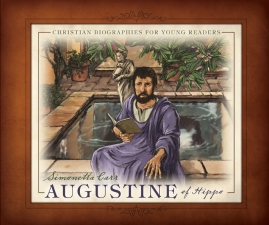 Augustine of Hippo, by Simonetta Carr
Illustrated by Wes Lowe

Hardback, 64 pages
Page size: 8 x 10 inches
Retail Price: $18.00
RHB Price: $14.00
ISBN 978-1-60178-073-7
For Ages 7–12
Available by November 30
Outside of the people in the Bible, Augustine of Hippo is the most influential person in church history. Yet how many people know his story? In this book, Simonetta Car introduces young readers to the life and ministry of Augustine. Readers will come to know Augustine’s personal struggles and the high value he came to place on the Bible and truth. Readers will also see the difficult days in which Augustine lived, learning about his disputes with false teachers and the turbulent times during the fall of the Roman Empire. This volume is vividly illustrated, simply written, and full of interesting facts. It is written for young readers, but is sure to capture the interests of the whole family.
Simonetta Carr was born in Italy and has lived and worked in different cultures. A former elementary school teacher, she has home-schooled her eight children for many years. She has written for newspapers and magazines around the world and has translated the works of several Christian authors into Italian. Presently, she lives in San Diego with her husband Thomas and family. She is a member and Sunday School teacher at Christ United Reformed Church.
Wesley (Wes) Lowe has over 25 years experience as an illustrator, and has illustrated for advertising agencies and publishers in the US, Canada, and Europe. He lives with his wife in British Columbia, and works from his studio on the Sunshine Coast, which is a short ferry ride from Vancouver.
“A splendid way to introduce children—and adults too—to one of the most influential Christians who ever lived.” —Phillip S. Cary,Scholar in Residence at the Templeton Honors College at Eastern University, and author of several books on Augustine
“Few figures in Western history are as important as Augustine. He is one of the early church fathers to whom the Reformers rightly looked as an inspiration for their theology and piety in many respects but he is more than that. He is an old and dear friend. Simonetta Carr has produced a clear, readable introduction to the life and work of this great Christian and our old friend.” —R. Scott Clark, Professor of Church History and Historical Theology at Westminster Seminary California
“Simonetta Car offers a sympathetic, whirlwind tour of the life, times, and beliefs of Augustine of Hippo, one of the most important and long-loved figures for Western Christianity. Maps, illustrations, timelines, and photos engage the imagination at a pace that will hold the interest of young readers.” —Brandon and Mindy Withrow, authors of the popular church history series for children, History Lives
Book Review
Posted: November 2, 2009 Filed under: Book of the Week, Book Review 2 Comments Salvation to the Ends of the Earth: A Biblical Theology of Mission by, Andreas J. Köstenberger and Peter Thomas O’Brien, InterVarsity Press, P.O. Box 1400, Downers Grove, IL 60515, 2001, 351 pages, $26.00.
Positively
First and foremost, the most positive side to Köstenberger and O’Brien’s book is the section which focuses on the biblical books of Luke and Acts. Oftentimes theologians look at the man of missions – the Apostle Paul – as their number one example. They look at his work, who he was, what he did, how he related to the cultures, and of course what his mission to the Gentiles was, in order to come up with their definitions of mission. In Salvation to the Ends of the Earth, I thoroughly enjoyed the time spent looking at the writer of both Christ’s and Paul’s missions – the Apostle Luke. This section on the Lukan writings does a great job describing God’s mission through the coming of Jesus Christ, and how that was applied to the church’s mission (namely through the historical records of the New Testament Church found throughout the book of Acts). Köstenberger and O’Brien also key in on the important passages that played a role in the transition of the mission of God in the Old Testament to that of the New. Looking at Lukan books this way lays out a historical time-line for the reader to see what took place during Christ’s incarnational ministry here on earth, and how it brought about the mission that would then be done by the church.
Another point of great importance is found in the authors’ dealing with the book of Acts, specifically, looking at how the mission of the gospel was spread among Jerusalem, Judea, and Samaria. In this, Köstenberger and O’Brien concentrate on how Luke focused on the promises that were given to Abraham, and how this then ran throughout Luke’s writings (p. 137-8). This is then broken down further in the sermons of Peter, Stephen, and Paul, throughout the key passages which they highlight.
What is most important overall in this section is the understanding that the Gospel of Luke cannot be read without Acts, and likewise, that Acts cannot be read without the Gospel of Luke; they go hand-in-hand if you are looking for a proper biblical theology of mission (p. 111-2). For example: the writers do a great job of explaining that you cannot properly understand Jesus Christ’s command in Acts 1:8 without first reading Luke’s account of Christ’s mission (p. 111). Furthermore, understanding that the early church’s mission is found in what Christ did Himself during His earthly mission (that is, what He did in order to give the Spirit), Luke’s books – both his Gospel and the book of Acts – must be seen as a historical record of the mission of Christ, and the giving of the mission to the New Testament church. In all, Köstenberger and O’Brien seem to see that the book of Acts and the Gospel of Luke are the most helpful and clearest perspectives of the mission of God during Christ’s time, and also for that of the New Testament church today.
Another positive side of this title is the section on John. It seems that over the past 10 years both the Gospel of John, and John himself, have gotten much flack for “not being missional.” Köstenberger and O’Brien hit right at that point – that John is missional in his Gospel. They seem to understand that this mistake of viewing John as non-missional is mostly because of Matthew’s Great Commission, and Luke’s Gospel, which is then followed by the historical value that Acts brings to the theology of mission. Köstenberger and O’Brien see the importance in what John is writing, and also see John’s focus on Jesus’ mission here on earth. In this section, instead of dealing with certain passages the way they did in their previous chapters, the authors lay out the events and topics of Christ’s earthly work, and how they relate with mission. In doing so, they focus on Christ’s humanity while on earth, and how He played out the mission of His Father in the bringing about what was to come. They do this by focusing on the truth that the gospel’s primary interest lies in Christ’s relationship with His Father, and not the ontological nature (p.204).
After dealing with this, the focus is then turned from Christ’s mission to the community of His disciples, to the disciples then going out and living what Christ gave them for their communities (p. 204-22). A key point in this section is found as the authors point out that the Gospel of John never once focuses on the disciples’ work, signs, etc., in the way the other Gospels do. Instead, John focuses on Christ’s mission – both His own earthly mission (John 1-13) and the giving of His mission (John 14-21).
Negatively
Like most biblical theologies I come across, this book seems to have purposely (or unknowingly) neglected the Old Testament. Time and time again biblical scholars spend countless words in their writings dealing with the New Testament, and do not spend enough time dealing with the Old Testament. Here, Köstenberger and O’Brien have spent barely 50 pages looking at the Old Testament’s theology of what mission is, and well over 200 on the New Testament’s theology of mission. Why is this happening so commonly? Is there a lack of mission in the Old Testament? Or is it the lack of dealing with the whole canon equally? It most certainly is not the lack of God’s mission in the Old Testament. For example: if one is looking for a proper understanding of a biblical theology of Mission in the Old Testament, Christopher Wright spends more than 75% of his massive 581-page book The Mission of God looking at the Old Testament.
Another negative aspect of Köstenberger and O’Brien’s title is that they say that Jonah is not a missionary (p.44-5) – something I personally do not agree with. They believe that saying Jonah was a missionary is “going too far.” To me, I feel as though the prophets were, in some way, missionaries to Israel and even to other nations from time to time. Regardless, the authors spent barely one page defending their argument that Jonah is not a missionary, and were therefore quite lacking to convince me of their view.
Lastly, Köstenberger and O’Brien seem to be in disagreement with many Missiologists as they do not believe that the second-temple period of Judaism was missional (p.55-71), nor had a mission at all. I completely disagree with this. I personally felt that their statement, “while the Christian canon itself provides little (if any) information regarding mission in the second-temple period” (p.55) is absurd. Were there not still thousands of synagogues carrying out the same purpose, and countless priests carrying out the same mission they were called to? Furthermore, why in Acts 2 did Peter have to defend the new mission of Pentecost against that of the Old mission, which the Jews were still trying to carry out? I could be wrong, but it seems that this distinction they make is largely due to their separation in eschatology – that is, the Old Testament and New Testament having separate eschatology (p.232-250). I say this based on how they conclude their ending sections on “The Second-temple Period” and how they conclude Revelation as well. It seems that they see the second-temple period as the ending times for Israel; and also see that both the nation of Israel and the New Testament church have separate ends in their missions. In this, they then separate eschatology. How this affects their Old Testament interpretation is that it then creates first-temple mission and second-temple eschatology, which I personally do not see as clear as they try to make it.
Another flaw in thinking that second-temple Judaism was not missional is that it hints that the mission that was given by God was not carried out. God’s mission that started in Genesis 3:9 and Genesis 3:15 was still existing, and yet saying second-temple Judaism was not missional argues whether or not God’s covenant people were still in His mission (Genesis 10). Were not the Lord’s people still waiting for their Kingdom (Psalm 72)? Was not Israel looking for their expansion and shalom (Isaiah 45:22)? Just because they did not keep their covenant with the Lord did not mean that the Lord (and some of the Lord’s chosen nation) did not continue to keep covenant. On this subject, I’d personally rather spend the time reading Walter Kasier’s Mission in the Old Testament: Israel as a Light to the Nations.
Immortal Till Work Done
Posted: November 1, 2009 Filed under: Sundays with Spurgeon Leave a commentI shall not die, but live, and declare the works of the Lord. (Psalm 118:17)
A fair assurance this! It was no doubt based upon a promise, inwardly whispered in the psalmist’s heart, which he seized upon and enjoyed. Is my case like that of David? Am I depressed because the enemy affronts me? Are there multitudes against me and few on my side? Does unbelief bid me lie down and die in despair-a defeated, dishonored man? Do my enemies begin to dig my grave?
What then? Shall I yield to the whisper of fear, and give up the battle, and with it give up all hope? Far from it. There is life in me yet: “I shall not die.” Vigor will return and remove my weakness: “I shall live.” The Lord lives, and I shall live also. My mouth shall again be opened: “I shall declare the works of Jehovah.” Yes, and I shall speak of the present trouble as another instance of the wonder-working faithfulness and love of the Lord my God. Those who would gladly measure me for my coffin had better wait a bit, for “the Lord hath chastened me sore, but he hath not given me over unto death.” Glory be to His name forever! I am immortal till my work is done. Till the Lord wills it, no vault can close upon me.
Happy Reformation Day!
Posted: October 31, 2009 Filed under: Reform Theology, Reformation Church History Leave a commentRHB’s Reformation Day Sale
Posted: October 30, 2009 Filed under: Reformation Heritage Books Leave a comment
For More Than A Dozen Additional Titles ON SALE CLICK HERE
Question of the Day
Posted: October 29, 2009 Filed under: Questions that begged to be asked Leave a commentDr. Joel Beeke Interviewed
Posted: October 28, 2009 Filed under: Interviews, Joel Beeke Leave a comment(Posted by David Wheaton)
Taken from The Christian Worldview
“Once upon a time in America, godly preachers shaped the worldview of the citizens of this country by preaching the Word of God “line upon line and precept upon precept.” No more. Now, the entertainment industry, the media, and the educational system, all with their humanistic, ungodly, unbiblical worldview, are the primary influencers of our society. Is it any wonder why evil is called good now and good called evil?
This Saturday in Hour 1 of The Christian Worldview, we’ll take a look back at the common distinctives of the great preachers of the past that had immense influence on America – from John Calvin and Martin Luther of the Reformation to the Puritan preachers of the 1600’s to George Whitefield and Jonathan Edwards of the Great Awakening to Charles Spurgeon in the 1800’s and several more who revived the hearts of millions for Christ.
Dr. Joel Beeke, president of Puritan Reformed Theological Seminary in Grand Rapids, Michigan and conference speaker with Dr. Steven Lawson at this past week’s Expositor’s Conference in Mobile, AL, will join us to explain what made these preachers so effective and what we need to learn from them.”
You can listen to the interview here.
Can God Know Everything and still give us Free Will?
Posted: October 27, 2009 Filed under: Kevin DeYoung Leave a comment
Problems with Arminian Universal Redemption
Posted: October 27, 2009 Filed under: Joel Beeke 1 Comment(Posted by Joel Beeke)
The Arminian view is by far the most popular of the four views of the atonement in the Christian church today. However, serious objections must be lodged against Arminian universal redemption, among which are these:
It slanders God’s attributes, such as his love. Arminianism presents a love that actually doesn’t save. It is a love that loves and then, if refused, turns to hatred and anger. It is not unchangeable love that endures from everlasting to everlasting. It provides atonement for all, but then withholds the means of grace that would make that salvation effectual in all lives. Are we to believe that Christ died for everyone in the deepest jungle and the darkest city, but his love doesn’t provide the missionaries, preachers, or sermons that would make his death effectual?
It slanders God’s wisdom. Why would God make a plan to save everyone, then not carry it out? Would he be so foolish as to have his Son pay for the salvation of all if he knew that Christ would not be able to obtain what he paid for? Some say he didn’t realise the consequences; he saw far enough to provide atonement, but couldn’t see that some wouldn’t take it. Does not that assertion slander the wisdom of God? Could God plan and provide atonement, but not realise that his atonement would not be accepted?
I would feel foolish if I went into a store and bought something, then walked out without it. Yet Arminianism asks us to believe that this is true of salvation — that there was a purchase made, a redemption, and yet the Lord walked away without those whom he had redeemed. That view slanders the wisdom of God.
It slanders God’s power. Arminian universalism obliges us to believe that God was able to accomplish the meriting aspect of salvation, but that the applying aspect is dependent on man and his free will. It asks us to believe that God has worked out everyone’s salvation up to a point, but no further for anyone. The implication is that God has built the bridge of salvation between him and us, and we have only to walk over it by accepting his terms of salvation through a free act of the will. ‘God does his part,’ Arminians say, ‘and now we must do our part.’
Calvinists respond by saying that this makes salvation dependent on the will of humanity, thereby reducing God and his power. Instead of our coming to God with our withered hands and saying, ‘If Thou wilt, Thou canst make us whole,’ this view has God coming to us with a withered hand, a hand that is not strong enough to save anyone, and saying, ‘If thou wilt, thou canst complete this salvation; thou canst make me whole.’ In essence, modern evangelistic sermons often take such an approach: ‘God has done much, but he needs you to complete the job.’ Does that way of thinking not slander the all-sufficient power of God? It makes God dependent on the will of man.
It slanders God’s justice. Did Christ satisfy God’s justice for everyone? Did Christ take the punishment due to everybody? If he did, how can God punish anyone? Is it justice to punish one person for the sins of another and later to punish the initial offender again? As Augustus Toplady said,
Payment God cannot twice demand;
First at my bleeding Surety’s hand,
And then again at mine.
God can’t and won’t demand payment twice. Double punishment is injustice.
It disables the deity of Christ A defeated Saviour is not God. This error teaches that Christ tried to save everyone but didn’t succeed. It denies the power and efficacy of Christ’s blood, since not all for whom he died are saved. Hence, Christ’s blood was wasted on Judas and Esau. Much of his labour, tears, and blood was poured out in vain. In other words, he will not see of the travail of his soul and be satisfied (Isa. 53:11) on behalf of many for whom he died. There will be many miscarriages — those with whom he travailed in soul yet who will not ultimately be saved. Does such defeat not make Christ less than God? No wonder Charles H. Spurgeon called this a ‘monstrous’ doctrine.1
It undermines the unity of the Trinity. Just as parents must work together to run a family effectively, so the triune God co-labours in each of his persons with identical purposes and goals. One person cannot possibly have in mind to save some that another person has not determined to save, but Arminian universalism implicitly teaches just that. It denies the Father’s sovereign election, since Christ would have died for more than God decreed to save, thereby making Christ seem to have a different agenda from that of the Father. That would have been anathema to Jesus, who asserted that his entire redemptive ministry was consciously designed to carry out a divinely arranged plan (John 6:38-39). T. J. Crawford writes,
The atonement originated in the love of God. It is the consequence and not the cause of God’s willingness to save sinners. In this light the Savior Himself is careful to present it. Instead of ascribing to His Father all the sternness and severity, and claiming as His own all the tenderness and compassion, He takes special pains to impress us with the assurance that the purpose of His mission was to proclaim the loving message and to execute the loving will of His Father who is in heaven.2
In the atonement, we are not running from the Father, who as a stern Judge is ready to condemn us, to the Son, who is more gracious than the Father. Rather, in the atonement we have a way to run to the Father and rest in him, for Christ’s sake, the way a child runs to and rests in the lap of his or her father.
Then, too, Arminian redemption divides Christ from Christ, as it were. Calvinism insists that Christ’s entire priestly work must be viewed as a harmonious whole. His expiation by atoning death and his priestly intercession are co-extensive. What an oxymoron it is to maintain that Christ died for everyone but intercedes only for some (John 17:2, 4, 6, 9, 12, 20, 24).
Finally, Arminian redemption disavows the saving ministry of the Holy Spirit, since it claims that Christ’s blood has a wider application than does the Spirit’s saving work. Any presentation of salvation that makes the Father’s or the Spirit’s work in salvation lag behind Christ’s work contradicts the inherent unity of the Trinity. The Father and the Son are one. The Spirit and the Son are one. Christ cannot possibly have died for those whom the Father did not decree to save and in whom the Spirit does not savingly work. God cannot be at odds with himself. Arminianism is inconsistent universalism.
It rejects all of the other points of Calvinism. The Arminian view of the atonement rejects the doctrine of man’s total depravity, teaching that man has the ability within himself to receive and accept Christ. It rejects unconditional election, teaching that God elects on the basis of foreseen faith. It rejects irresistible grace, teaching that man’s will is stronger than God’s. It rejects perseverance of the saints, teaching that man can apostatize from the faith. J. I. Packer says,
It cannot be over-emphasized that we have not seen the full meaning of the cross till we have seen it as the centre of the gospel, flanked on the one hand by total inability and unconditional election and on the other by irresistible grace and final preservation.3
It detracts from the glory of God. If God does everything in salvation, he gets all the glory. But if God can only do so much and not everything, then the person who completes the bridge gets at least some glory. That is why there is so much emphasis in mass evangelism on the free will of man. The glory of God is not exalted, and neither is the glory of Christ lifted up for providing a perfect and complete salvation. We are told of the free will of man, without which salvation cannot be put into effect. We are told to exercise our free will without being told that this will is in bondage due to our depraved nature. We cannot freely choose God and salvation on our own. We cannot complete the bridge. God completes the bridge, as we are told in 1 Corinthians 1:18-31, so that ‘no flesh should glory in his presence.’ Universal atonement exalts the will of man and debases the glory of God.
It undermines thankfulness and assurance. Why should I thank God for something that I achieved? If the Lord Jesus did no more for me than he did for Judas and the inhabitants of Sodom, why should I thank him rather than myself? And if there are some for whom Christ died who are in hell today, how can I be sure the atonement will atone for me?
It perverts evangelism. We repeatedly hear today in evangelistic messages: “Christ died for you. What will you do for him?’ But do we ever find in the Bible that someone is told personally, ‘Christ died for you’? Rather, we find the work of Christ explained, followed by a call to everyone: ‘Repent and believe the gospel.’ The message is not ‘Believe that Christ died for you’ or ‘Believe that you are one of the elect.’ It is ‘Believe on the Lord Jesus Christ and you will be saved.’
It disparages the intrinsic efficacy of the atonement itself. Arminians teach that Christ’s work induces the Father to accept graciously what Jesus accomplished in the place of a full satisfaction of his justice. It is as if Jesus persuaded his Father to accept something less than justice demanded. That is why Arminius claimed that when God saved sinners, he moved from his throne of justice to his throne of grace. But God does not have two thrones; his throne of justice is his throne of grace (Psa. 85:10). Arminianism forgets that the atonement does not win God’s love but is the provision of his love. In that provision, Christ paid the full price of justice. He did not make a down payment on the debt owed; he paid the full price of sin so that the Father as Judge could justly cancel the debt (Heb. 10:14-18).
Arminianism, then, is ultimately inconsistent universalism, as John Owen showed powerfully in his A Display of Arminianism. Owen explains the fallacy of the Arminian view of the divine design of the atonement as follows:
God imposed his wrath due unto, and Christ underwent the pains of hell, for, either all the sins of all men, or all the sins of some men, or some sins of all men. If the last, some sins of all men, then have all men some sins to answer for, and so shall no man be saved. If the second, that is it which we affirm, that Christ in their stead and room suffered for all the sins of all the elect in the world. If the first, why, then, are not all freed from the punishment of all their sins? You will say, ‘Because of their unbelief; they will not believe.’ But this unbelief, is it a sin, or not? If not, why should they be punished for it? If it be, then Christ underwent the punishment due to it, or not. If so, then why must that hinder them more than their other sins for which he died from partaking of the fruit of his death? If he did not, then did he not die for all their sins.4
Notes:
1. Autobiography, Volume 1: The Early Years (Edinburgh: Banner of Truth, 1962), p. 172. This chapter from The Early Years is also available in booklet form from the Trust, A Defence of Calvinism.
2. The Doctrine of Holy Scripture Respecting the Atonement (Grand Rapids: Baker, 1954), p. 192. My heartfelt thanks to David Murray for several thoughts contained in this article.
3. Quoted in John Blanchard, The Complete Gathered Gold (Darlington, England: Evangelical Press, 2006), p. 35; cf. Ronald Cammenga and Ronald Hanko, Saved by Grace: A Study of the Five Points of Calvinism 2nd ed. (Grandville, Mich.: Reformed Free Publishing Association, 2002), pp. 122-123.
4. The Works of John Owen, Volume 10 (Edinburgh: Banner of Truth, 1967), pp. 173-4.
Taken with permission from the October 2009 Banner of Sovereign Grace Truth. Note 1 added.
Conference: Practical Calvinism in the Global Context in Grand Rapids
Posted: October 26, 2009 Filed under: Calvin for the 21st Century Leave a comment(Posted by Antoine Theron)
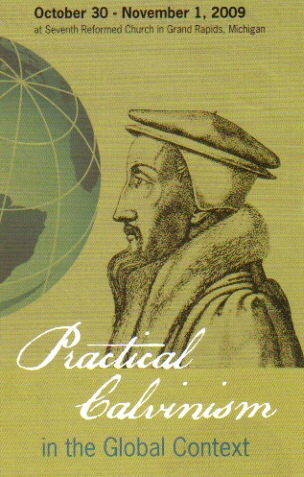
Where: 2009 Seventh Reformed Fall Conference – Co-sponsored by the World Reformed Fellowship
Date: October 30 ~ Nov 1, 2009
Main Speakers: Dr. Samuel T. Logan Jr., International Director, World Reformed Fellowship; Dr. Flip Buys, President, Mukhanyo Theological College , South Africa; and Dr. Tim Trumper, Seventh Reformed Church, Grand Rapids, MI
Theme: Practical Calvinism in the Global Context
Why: Marking the 500th anniversary of the birth of John Calvin
(Click Here to view Conference Program)
God First, Then Extras
Posted: October 25, 2009 Filed under: Sundays with Spurgeon Leave a commentBut seek ye first the kingdom of God, and his righteousness; and all these things shall be added unto you. (Matthew 6:33)
See how the Bible opens: “In the beginning God.” Let your life open in the same way. Seek with your whole soul, first and foremost, the kingdom of God, as the place of your citizenship, and His righteousness as the character of your life. As for the rest, it will come from the Lord Himself without your being anxious concerning it. All that is needful for this life and godliness “shall be added unto you.”
What a promise this is! Food, raiment, home, and so forth, God undertakes to add to you while you seek Him. You mind His business, and He will mind yours. If you want paper and string, you get them given in when you buy more important goods; and just so all that we need of earthly things we shall have thrown in with the kingdom. He who is an heir of salvation shall not die of starvation; and he who clothes his soul with the righteousness of God cannot be left of the Lord with a naked body. Away with carking care. Set all your mind upon seeking the Lord. Covetousness is poverty, and anxiety is misery: trust in God is an estate, and likeness of God is a heavenly inheritance. Lord, I seek Thee; be found of me.
Michael & Emily Dewalt’s Wedding Slideshow
Posted: October 24, 2009 Filed under: Emily and I, Emily's Posts, Vlogs 2 Comments(Posted by Emily Harlan, soon to be Dewalt if the sectary of state will ever take care of my paperwork! )
A special thanks to Kim Westrate for her time spent in doing this for Dewalt and I. Although it was not shown at the wedding… we have a blog right!
Just in Time! Romans by RC Sproul
Posted: October 23, 2009 Filed under: Crossway, R.C. Sproul Leave a comment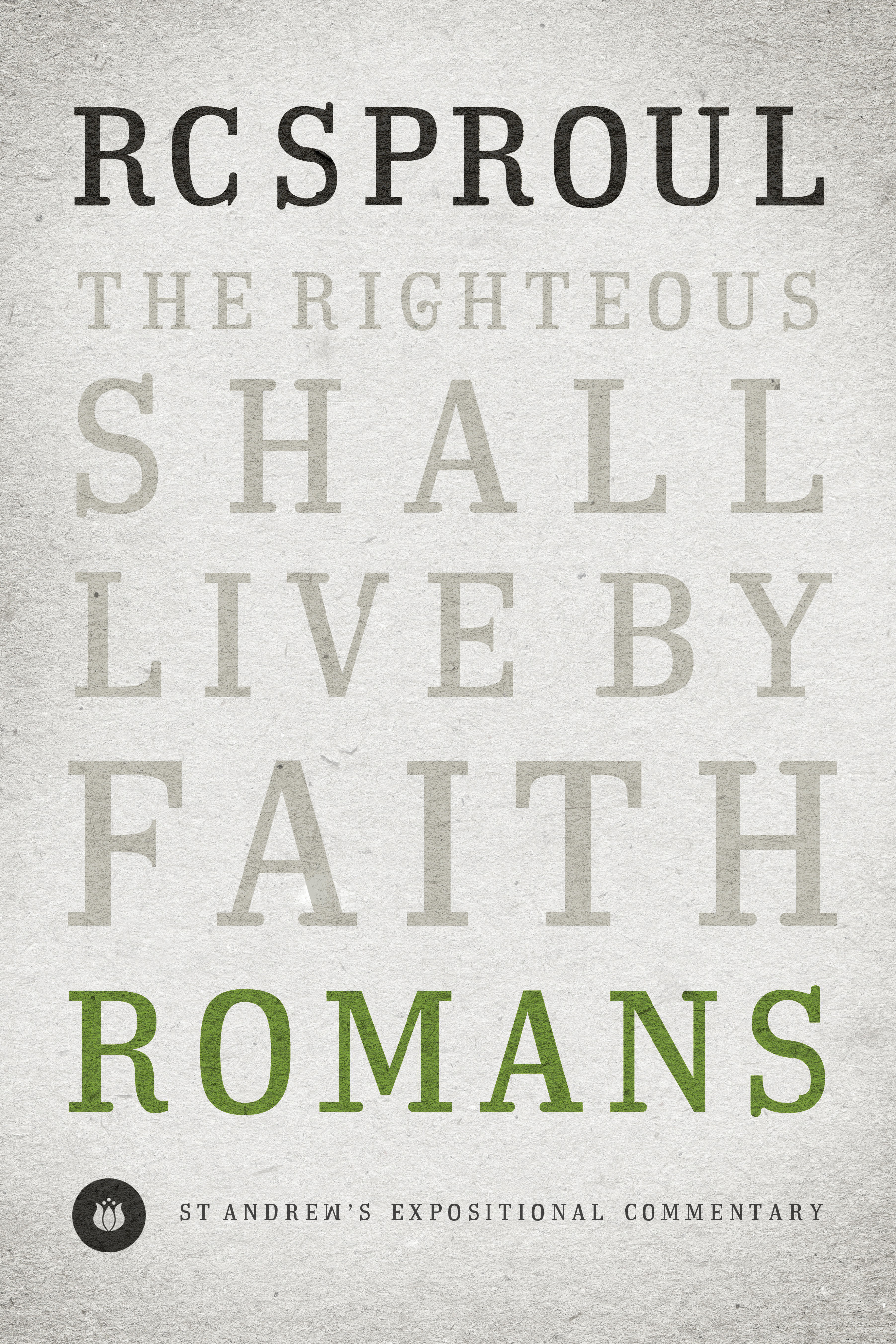 I just started my exegesis paper titled, “The Apostasy of Israel and the Mission to the Gentiles: Looking at Romans 11” for my Biblical Theology of Mission class. And little and behold I received my copy of RC’s newest title by Crossway.
I have heard many say over the last month about this title “do we really need another commentary on the Book of Romans?” But after already reading selected potations of RC’s new title, I say yes, yes for 2 reasons mainly.
One – The commentary is a selection of the sermons RC has preached through the book of Romans. Why is this good? Is instead of a critical, in-depth, hard to follow along read, it is as if you are listening to RC talk right at you with his stories and jokes all together in one.
Two – The commentary is easy to understand. This can be bad and good, but yet great for the unregenerate. The book can and should be given to those that have not heard the Gospel. RC puts the importance upon the gospel and staying focused on that, easy as 1, 2, 3… It is both good for the unsaved and saved.
From Crossway,
“Sproul’s sermons at St. Andrew’s Chapel are the foundation of these never-before-published expositions on Paul’s epistle to the Romans.
Chrysostom had it read aloud to him once a week. Augustine, Luther, and Wesley all came to assured faith through its impact. The Reformers saw it as the God-given key to understanding the whole of Scripture.
Throughout church history the study of the book of Romans has been pivotal to understanding Christian life and doctrine. Convinced that “Paul’s fullest, grandest, most comprehensive statement of the gospel” is just as vital today, R. C. Sproul delivered nearly sixty sermons on Romans from October 2005 to April 2007 at St. Andrew’s Chapel, where he has pastored for more than a decade. These never-before-published, passage-by-passage expositions will enrich any study of this weighty epistle.”
From others,
Sinclair B. Ferguson, Senior Minister, First Presbyterian Church, Columbia, South Carolina
“‘R. C. Sproul,’ someone said to me in the 1970s, ‘is the finest communicator in the Reformed world.’ Now, three decades later, his skills honed by long practice, his understanding deepened by years of prayer, meditation, and testing (as Martin Luther counseled), R. C. shares the fruit of what has become perhaps his greatest love: feeding and nourishing his own congregation at St. Andrew’s from the Word of God and building them up in faith and fellowship and in Christian living and serving. The St. Andrew’s Expositional Commentary will be welcomed throughout the world. It promises to have all R. C.’s hallmarks: clarity and liveliness, humor and pathos, always expressed in application to the mind, will, and affections. R. C.’s ability to focus on the ‘the big picture,’ his genius of never saying too much, leaving his hearers satisfied yet wanting more, never making the Word dull, are all present in these expositions. They are his gift to the wider church. May they nourish God’s people well and serve as models of the kind of ministry for which we continue to hunger.”
W. Robert Godfrey, President, Westminster Seminary California
“R. C. Sproul, well-known as a master theologian and extraordinary communicator, now shows that he is a powerful, insightful, helpful expository preacher. This collection of sermons is of great value for churches and Christians everywhere.”
Derek W. H. Thomas, John E. Richards Professor of Systematic and Practical Theology, Reformed Theological Seminary; Minister of Teaching, First Presbyterian Church, Jackson, Mississippi
“I tell my students again and again, ‘You need to buy good commentaries and do so with some discernment.’Among these commentaries there must be preacher’s commentaries, for not all commentaries are the same. Some may tell you what the text means but provide little help in answering the question, ‘How do I preach this text?’ R. C. Sproul is a legend in our time. His preaching has held us in awe for half a century, and these pages represent the fruit of his latest exposition, coming as they do at the very peak of his abilities and insights. I am ecstatic at the prospect of reading the St. Andrew’s Expositional Commentary series. It represents Reformed theology on fire, delivered from a pastor’s heart in a vibrant congregation of our time. Essential reading.”
Steven J. Lawson, Senior Pastor, Christ Fellowship Baptist Church, Mobile, Alabama
“R. C. Sproul is the premier theologian of our day, an extraordinary instrument in the hand of the Lord. Possessed with penetrating insight into the text of Scripture, Dr. Sproul is a gifted expositor and world-class teacher, endowed with a strategic grasp and command of the inspired Word. Since stepping into the pulpit of St. Andrew’s and committing himself to the weekly discipline of biblical exposition, this noted preacher has demonstrated a rare ability to explicate and apply God’s Word. I wholeheartedly recommend the St. Andrew’s Expositional Commentary to all who long to know the truth better and experience it more deeply in a life-changing fashion. Here is an indispensable tool for digging deeper into God’s Word. This is a must-read for every Christian.”
Joel R. Beeke, President, Puritan Reformed Theological Seminary
“How exciting! Thousands of us have long been indebted to R. C. Sproul the teacher, and now, through the St. Andrew’s Expositional Commentary, we are indebted to Sproul the preacher, whose sermons are thoroughly biblical, soundly doctrinal, warmly practical, and wonderfully readable. Sproul masterfully presents us with the ‘big picture’ of each pericope in a dignified yet conversational style that accentuates the glory of God and meets the real needs of sinful people like us. This series of volumes, a joint effort between two premier publishers, is an absolute must for every Reformed preacher and church member who yearns to grow in the grace and knowledge of Christ Jesus. I predict that Sproul’s pulpit ministry in written form will do for Christians in the twenty-first century what Martyn Lloyd-Jones’s sermonic commentaries did for us last century. Tolle lege, and buy these volumes for your friends.”
Michael S. Horton, J. Gresham Machen Professor of Systematic Theology and Apologetics, Westminster Seminary California
“John Wesley once said of a colleague that Scripture so thoroughly pulsed through his spiritual veins that he ‘bled Bibline.’ The same could be said without exaggeration of R. C. Sproul. More specifically, one could easily say that he ‘bleeds Pauline.’ The theology of the Apostle to the Gentiles courses through Dr. Sproul’s veins in all of his work. Therefore, it is a special privilege to be able to read his sermons on Paul’s Letter to the Romans. Romans has turned the world upside down for two millennia. Not only did it lead to Augustine’s conversion; it was a primary source for his defense of the gospel against Pelagius. This epistle was the catalyst for the Reformation and shaped the minds and hearts of many leaders of the modern missionary movement. Romans continues its revolution to the present day and each of R. C. Sproul’s expositions reminds us why. Read this book and, by God’s grace, you’ll never be the same.”
Crucial Questions Booklet Series
Posted: October 22, 2009 Filed under: R.C. Sproul, Reformation Trust Leave a comment;) Throughout his nearly fifty years of teaching the content of the Bible and theological concepts, Dr. R. C. Sproul has “majored on the majors”—the most important doctrines and truths of the Christian faith. As a gifted communicator, Dr. Sproul has helped many believers grow in their understanding of such matters as the nature of God, the history of redemption, and the manner in which we are saved. Now Dr. Sproul’s lucid teaching on these vital matters is available in a series of concise booklets that are perfect for personal learning and refreshing, as well as small-group study. Throughout his nearly fifty years of teaching the content of the Bible and theological concepts, Dr. R. C. Sproul has “majored on the majors”—the most important doctrines and truths of the Christian faith. As a gifted communicator, Dr. Sproul has helped many believers grow in their understanding of such matters as the nature of God, the history of redemption, and the manner in which we are saved. Now Dr. Sproul’s lucid teaching on these vital matters is available in a series of concise booklets that are perfect for personal learning and refreshing, as well as small-group study. The initial booklets in the Crucial Questions series deal with such topics as the true identity of Jesus, the will of God, the value of prayer, and the trustworthiness of the Bible. Future booklets in the series will address equally important subjects. For a quick introduction to matters at the very core of the Christian life, for yourself or a friend, consider the Crucial Questions booklets, new from Reformation Trust Publishing. The initial booklets in the series include:
|
News Update from the Calvin500 Conference
Posted: October 21, 2009 Filed under: Calvin 500 Leave a comment(Posted by David Hall)
#1 Two of the sermons from our time in the Cathedral are scheduled to air on Ligonier Ministry’s Renewing Your Mind radio broadcast this week.
From John Duncan of Ligonier, see below.
“Make sure your network and interested friends know that Ferguson and Orombi’s Calvin 500 messages will air nationally on RYM, Oct. 20 and 21. The station locator at our site shows listeners what station in their area broadcasts RYM and the time it’s on.
We will feature the series again when the product sets are in house and we’ll take preorders for those that call in during these two messages.”
#2 We’re happy to announce that Ligonier Ministry is partnering with us to release the set of 15 sermons from Calvin500 in CD format. See their website beginning Nov. 1 for a totally cool Christmas gift to friends and family. If your pastor hasn’t heard these, we heartily recommend them.
#3 Book 5 of the Calvin500 series, Calvin and Commerce: The Transforming Power of Calvinism in Market Economies (co-authored by Matt Burton and myself) is just out from P&R this week, and vol. 6 (the morning lectures, Tributes to John Calvin) is slated for release April 1, 2010. Following that, the final two volumes will be released from P&R in 2010. Find all the volumes as available from the P&R website.
Feel free to blog, twitter, or pass the news on about our sermons release as a CD set to whomever you think would benefit. Pastors, if you’re the only ones who know this, it is not boasting to let your congregation know where to find these great sermons.
Interview with Warren Smith on “A Lover’s Quarrel”
Posted: October 20, 2009 Filed under: David Murray, Interview with Warren Smith, Interviews, Warren Smith Leave a comment(Posted by David Murray)
Oh the The Origin of Sin
Posted: October 19, 2009 Filed under: Joel Beeke's Devotionals Leave a comment(Posted by Joel Beeke)
“Now the serpent was more subtle than any beast of the field which the LORD God had made.” ―Genesis 3:1
Genesis 3 is, perhaps, the most pivotal chapter in Scripture. It is the black chapter of sin because of the entrance of sin into the world (v. 6); the red chapter of atonement because of the first proclamation of the coming Messiah (v. 15), typified in the first blood-shedding (v. 21); and the white chapter of hope because it contains the first confession of faith in Adam’s naming his wife, Eve (v. 20).
Our understanding of Genesis 3 affects our understanding of the rest of biblical revelation. It profoundly affects our understanding of our lives, our radical depravity, our desperate need for the Savior, and our daily experience in a fallen world.
Many of the questions people have about their Christian experience come from a failure to understand the implications of the fall and what it means to live, not in the world as God made it, but in the world as sin spoiled it. Many people try to live as if we are not in a fallen world. Few grasp the gravity and depth of our tragic fall and our dire need for a Savior.
Genesis 3 raises the question of how it was possible for sin to enter a beautiful and perfect world that was governed by a man and woman who lived unashamedly naked before God, each other, and all creation (Gen. 2:25).
The answer is that sin entered the world through Satan in the guise of a serpent (Gen. 3:1–5; Rev. 12:9). Though he was one of the highest and brightest angels prior to his fall, Satan (according to Ezek. 28:11–19 and Isa. 14:12–14) seems to have become so preoccupied with his own beauty and glory that he thought he could unseat the God of glory and take His place. When God cast Satan out of heaven, Satan decided to tempt man, the crown of God’s creation, with the very sins that had motivated Satan to fall.
That is as far as we can go in answering the age-old question of where evil came from. Only the sovereign God knows how sin permeated heaven itself in Satan’s rebellion. It is more important for us to understand the nature of sin on earth than to understand the origin of sin in heaven.
Are you convinced of the heinous nature of sin? Are you convicted of the anti-God character of sin? Have you learned to hate sin with all your heart, mind, and strength?
Honeymooning in Florida
Posted: October 17, 2009 Filed under: Emily and I, Emily's Posts, Vlogs 1 Comment(Post by Emily Dewalt)
What is the Covenant of Works?
Posted: October 17, 2009 Filed under: Joel Beeke Leave a comment(Posted by Joel Beeke)
“And the LORD God took the man, and put him into the garden of Eden to dress it and to keep it. And the LORD God commanded the man, saying, Of every tree of the garden thou mayest freely eat: but of the tree of the knowledge of good and evil, thou shalt not eat of it: for in the day that thou eatest thereof thou shalt surely die.” —Genesis 2:15–17
The Bible is covenant-centered. It consists of the Old Testament, or old covenant, and the New Testament, or new covenant. The word covenant, which is used more than three hundred times in the Bible, comes from the Latin term con venire, meaning “coming together.” It presupposes that two or more parties come together in an agreement that includes promises, stipulations, privileges, and responsibilities. A covenant is an agreement between parties that binds them to certain acts on each other’s behalf.
When the Bible speaks of covenant, it speaks mostly of God making a covenant with man. God is a covenant God. He deals with man in a covenantal way. A biblical covenant is an agreement between God and man that stipulates the conditions of our relationship with Him.
The covenant between God and man that is commonly called the covenant of works almost jumps out at us in Genesis 2:15–17, even though the word covenant is absent. All the essential parts of a covenant are here:
● The sovereign God and sinless Adam, representing all mankind, are the two parties of the covenant of works (vv. 15–16).
● The condition of the covenant of works is perfect obedience (v. 17). No allowance is made for repentance or forgiveness, and the smallest infraction moves God to exact judgment (Gal. 3:10).
● God offers a clear test or stipulation. Genesis 2:16 says, “The LORD God commanded the man” not to eat of the forbidden tree.
● In this covenant, God promises life. He condescends to affirm that He will graciously reward obedience by attaching a token of His promise in the tree of life (Gen. 3:24).
● The penalty for violating this covenant is death: physical death of the body, spiritual death of the soul, and eternal death of the soul and body in hell (Gen. 2:17). Eternal death, which includes the loss of God’s favor, is the ultimate punishment for sin. Hell is the loss of all good and the gain of all evil; it is ultimate despair.
Such punishment is just because sin is injurious to an infinite God. Sin is an offense to infinite majesty. It is contempt of infinite authority, abuse of infinite mercy, and dishonor to infinite excellence. It is an affront to infinite holiness, a reproach to infinite glory, and an enemy of infinite love.
Has the Holy Spirit convinced you of your lost state before God? Have you identified with Adam in his tragic fall and seen yourself as a covenant breaker? Have you then taken refuge in Christ and the covenant of grace? Everything you need is offered by our able and willing Savior, Jesus Christ.
For further reading: Romans 5:12–21
Jesus the “I AM” (Part 2)
Posted: October 16, 2009 Filed under: Bible Study, Christ, God, Theology Leave a comment[Posted by Benjamin Thocher]
So what is the point? What is our take away, as contemporary Christians, from Jesus calling himself the “true vine”? Jesus tells the disciples that they are branches of the “true vine” and that they are to “abide in him.” In verse 4 Jesus says “Abide in me, and I in you.” I would guess that at this point the disciples would have, at best, understood this as a reference to Jesus’ teaching – they were, therefore, to let the words of Jesus dwell or abide in their heads and hearts. While this is not necessarily an incorrect understanding, it is only one small dimension of what Jesus is communicating.
This discourse is sandwiched between the end of chapter 14 and the end of chapter 15, both of which contain statements about the Comforter that Jesus would send after his departure. This Comforter, we know, is the Holy Spirit. We see, then, that Jesus is looking forward to the day of Pentecost when he would pour out the Holy Spirit to empower and equip the church for her mission in the world. 1 Corinthians 15:45 says that Jesus, in his resurrection and ascension became to us and for us “life-giving Spirit.”
Therefore, the abiding activity that Jesus speaks of is accomplished by the indwelling presence and work of the Spirit of God. Jesus says that “fruit bearing” will not happen unless we abide in him. If we understand “fruit bearing” to be the primary aim of the Christian life – which it is – then what Jesus is saying is radical, he is saying that the Christian life, and fellowship with the God of the universe, does not happen apart from intimate relationship with him.
What I like about John is he uses heightened contrast to drive home his points. In 1 John we are either in the light or we are in the darkness. Not one or the other, not a little of both. Light. Darkness. Here, we are either abiding in Christ or we are not abiding in Christ. There is no middle ground. We either abide in Christ and are pruned in order that we bear more fruit or we do not abide in Christ and are thrown into the fire. No in between. No casual, take-it-or-leave-it attitude. There is no Christ-likeness apart from intimate relationship with Christ. There is no Christian faith that is not first and foremost focused on the person and work of Jesus. As branches of the true vine, all that is his is ours.
Two points of application from this passage:
As we “abide” in Christ…it redefines what we are…
Our Spirit-wrought union with Christ dramatically redefines what we are. In the Old Testament the division was between Jews and Gentiles. Basically, the haves and the have-nots. The Jews were the people of God while the Gentiles (everyone not a Jew) stood on the outside of that relationship looking in. Jesus, though, as he applies to himself the description of being the “true vine” reorients the way we think about ethnic distinctions. If Jesus is the one true Israelite then we, as we are in relationship with him, are constituted as God’s people on his behalf. There are no longer any distinctions between Jew and Gentile – we are now defined only with respect to whether or not we are “in Christ.” Paul says in Ephesians 2 that Jesus Christ has “brought near those who were far off” and that he has “broken down the dividing wall” between Jew and Gentile in order that God might create for himself a “new humanity.” We, as the body of Christ in all the world are that “new humanity.”
Sometimes this truth does not hit us the way it should. We don’t live in a world where Jew/Gentile distinctions mean much. However, we do live in a world that values social and economic status. What we want to say as loud as possible to ourselves and to those around us is that right standing before God is not determined by what family you were born into, or what country you live in, or what ethnic background you share in. We are Christians by virtue of our faith in Christ and nothing else. Faith in Jesus, not ethnic background, has become the decisive characteristic and requirement for membership among God’s people.
What we sometimes miss is that for the Jewish people this was a difficult teaching. This seemed to go against everything that the Old Testament taught. The Old Testament struggles greatly with the issue of Jews and Gentiles. Those inside the covenant relationship with God and those on the outside looking in. When we get through the Gospel accounts and come to Acts we find that the Jews had a difficult time accepting that Gentiles could be included into the people of God as Gentiles (no circumcision necessary!). This is what the gospel has done for us: we Gentiles who were far off have now been brought near by the shed blood of Christ. What we are is no longer central – we have become branches of the one true Israelite on account of his righteousness and perfect obedience.
As we “abide” in Christ…it redefines who we are…
As it redefines what we are, it at the same time redefines who we are. We abide in Christ on account of his work. We abide in Christ on the basis of what he has done and we bring nothing to the table. It is all about who Christ is and has nothing to do with who we are as individuals. We are not central in this picture – we are branches! We are peripheral at best! Branches only have existence as they are connected to the vine. There are no lone ranger Christians who can do things on their own.
John has laid down the gauntlet and given us a choice: we are either abiding in Christ by trusting in him alone, or we are branches that get tossed into the fire. We desperately, desperately need Jesus Christ. Our lives and accomplishments mean nothing before the creator of the universe. All of our success, popularity, fame, and fortune will never be pleasing to God. There is one life that pleases God and that life is Christ’s. Only because his life is accepted can those who are “in him” be pleasing to God and filled with the Spirit, because every believer possesses everything of Christ’s.
Jesus the “I AM” (Part 1)
Posted: October 15, 2009 Filed under: Bible Study, Christ, Eschatology, God, Theology Leave a comment[Posted by Benjamin Thocher]
At the beginning of John 15 Jesus says to disciples “I AM the true vine, and my Father is the vinedresser.” The rest of the chapter revolves around this illustration and what it means first of all for who Jesus is and secondly for who we are, as believers, in relationship with him. As we move through John’s Gospel we find Jesus issuing seven “I AM” statements (cf. 6:35; 8:12 & 9:5; 10:7; 10:11; 11:25; 14:6; 15:1).
When Jesus says “I AM,” he is not making a simple statement about himself and tacking on some interesting imagery. The Greek construction utilized in these statements is one of emphasis and could be woodenly rendered “I Myself Am.” By including these seven statements in his Gospel, though, John is communicating something to us about who Jesus is. What is it that John wants to communicate?
In Exodus chapter 3, Moses encounters God at the burning bush. During this encounter God reveals his name to Moses – he tells Moses that his name is “I AM.” Fast forward a few thousand years to Jesus walking around making statements like “I AM the good shepherd” and “I AM the way, and the truth, and the life” and we see a much more profound intention. Jesus is invoking the personal name of God revealed to Moses and claiming to be equal with the God of the Old Testament. YHWH, the God of Israel.
We come then to John 15 and understand Jesus’ statement “I AM the true vine” to be a statement with respect to his deity. Jesus identifies himself as God. What then does he mean when he says that he is the “true vine”? My saying “I am a tree” is meaningless as there is no prior context for it to be significant. However, looking again to the Old Testament we receive assistance in discerning what Jesus is communicating about himself.
In Psalm 80 Israel is said to be a vine that God brought out of Egypt and “planted” in the Promised Land. Throughout the Old Testament – here in Psalm 80 and especially in Isaiah 5 – Israel is called God’s vine, or God’s vineyard. As God’s vine they were called to be obedient. Or, to utilize the language of John’s illustration, they were called to be “fruitful.” Israel, however, did not fulfill their calling.
Adam, as God’s son, failed in the garden to obey the Law of God and to rule over creation. So too Israel failed in the Promised Land, as God’s son, to obey the Law of God and to rule over her enemies. Jesus, in calling himself the “true vine” stands in opposition and stark contrast to that which is inherently counterfeit, or perhaps better put, that which is “less ultimate.” Jesus has in clear view here the disobedience of Israel as God’s faithless vine.
Jesus Christ, not Israel, is the “true vine” of God. Jesus here shows himself to fulfill Israel’s destiny – whereas Israel did not bear fruit, Jesus will bear the fruit of true obedience. This is what I like to think of as the punch-line of the whole Bible: Jesus defines himself as the one true Israelite. He represents in himself the faithful nation of Israel. “Faithful Israel” had been reduced to one man, and one man alone.
All that God had done for Israel looked forward to what he would do in and through his only son, Jesus Christ. Jesus as the true Israelite keeps the law perfectly, he worships God perfectly, and he succeeds in every place that Israel before him had failed. His obedience was a perfect obedience. In Philippians 3:8 Paul says that Jesus’ obedience was an obedience “unto death – even death on a cross.” His deliverance was not a deliverance from the hands of foreign oppressors, but a deliverance from the grip of sin itself.

 Gospel-Centered Musings