Regenerate Paedobaptism Heresy or Not?
Posted: March 31, 2009 Filed under: paedobaptism, The Gospel 1 CommentGalatains 1:8-9 But even if we or an angel from heaven should preach to you a gospel contrary to the one we preached to you, let him be accursed. As we have said before, so now I say again: If anyone is preaching to you a gospel contrary to the one you received, let him be accursed.
Review of Kindle 2 by Gadget Queen
Posted: March 30, 2009 Filed under: Kindle Leave a commentSure glad I have a Kindle 1 after reading the many review like this!
Review: I was DELIGHTED to upgrade my Kindle 1 to K2…until I got down to using it every day.
Having invested HEAVILY in Amazon Kindle content, I looked forward to the new and improved version! I really wanted to love this device just as much, if not more, than my original purchase! It was to be my “backup insurance” and “protect my investment” in Amazon content for the device. I expected and looked forward to everything Amazon said this device would be.
Out of the box, and on the surface, big cosmetic changes for the better. Once I began using it, however, my experience became more and more frustrating.
1. I have a tremendous volume of Kindle content (public domain and Amazon). I discovered that I could not directly transfer from my computer backup for Kindle 1 to the new K2 (why my backup is on the computer is addressed later in this review). All my content had to be reformatted by Amazon and re-downloaded from their site specifically for and to the Kindle 2 (I am NOT in a Whispernet area). Major pain. Major time-investment. Major inconvenience. Major turn-off. Have you guys ever heard of “bulk-download” capability, or choose many files at once for copy to a new device??? Guess not.
2. All of my previous issues of magazines and newspapers were lost (ie, I could not re-download them specifically for the K2) because Amazon does not back up subscriptions on their server for more than 6 days. SINCE I PAID FOR THE CONTENT, I SHOULD BE ABLE TO HAVE THAT CONTENT ALWAYS AVAILABLE FOR DOWNLOAD. Sorry, but I won’t consider buying any more newspapaers or magazine subscriptions to the Kindle 1 or 2. Several (Wall Street Journal, Reader’s Digest) are less expensive online (with print edition also included) and have ALL content (not MIA content pictures, charts, quotes, etc).
3. Several books I purchased read “Kindle 2” in the title, but were Kindle 1 books with a new title page. OOPS!
4. Although Amazon says it keeps you content on their server, I found many instances where I could not download my books to my computer because the item THAT I PAID FOR was not available for download to my new Kindle2. Amazon said the book had been “pulled.” Excuse me, but I paid for it, pulled or not, it should always be avaiable to me since I paid for it. When I asked for a refund for the pulled item now unavailable to me, SINCE I COULD NOT GET THE ITEM REDOWNLOADED, I was told that a refund was not possible. LESSON LEARNED: I now back up ALL my Kindle content on my computer. Since Amazon says “Don’t worry, your content is safe with us.” I respectfully disagree. Also, some authors issued new versions of their books for K2. However, then the original version for K1 “disappeared” from the server so I could not even download it to K2, nor K1. Same filename, so if I had been in a Whispernet area, the original would have been completely overwritten without my realizing it! Imagine, I bought a K2 Users Guide in May 2008, before it come off the engineers drafting table, instead of in February 2009!
5. The “Jump-ahead” and “Jump-back” feature (so convenient in Kindle 1, expecially in those instances where a Table of Contents does not exist and/or does not work–too often, I am afraid, in Kindle content) is not a feature in the K2 due to publisher formatting issues for the Kindle 2. Except for the User Guide that comes pre-installed on the device, it works fine in that document! After you have paged tru a 500-page book one-page-at-a-time to get from Chapter 2 to Chapter 15, see how excited you are about a low battery and all the time it took to get there!
6. The “Table of Contents” in many books is non-functional, frustrating in a 500 page book that you cannot “jump ahead” to Chapter 15 from Chapter 2. I reapeat this because of the level of angst it created in me for a device that was supposed to be “new and improved.” See the above issue as well!!
7. The Text-to-Speech feature just got put in limbo by the Authors Guild, so Amazon had to agree to let the publishers decide if this feature would be “enabled,” or not, for a particular book. Leads me to think they may be forced to forgo this “experimental” feature in the future…hmmm!!!
8. No way to choose left or right justification in the print of a book (like in K1). You get what you get. I, for one, find fully-justified text distracting. I prefer left-justified text. Publishers control this with their formatting. Please take note that it is not a negotiable issue in the K2.
9. Content storage: NO SD CARD, NO SD CARD, NO SD CARD!!! With all my content (re-downloaded) on the Kindle 2, I had used 3/4 of the “expansive,” yet limited (in my case) storage available on K2. Couple that with the trouble I had downloading my content from Amazon.com (again, no Whispernet available), and I was more than a little angry.
10. NO USER REPLACEABLE BATTERY–Unless you buy the extended warranty for $65. After 1 year you pay $80 plus shipping to send the device to Amazon and have the Kindle REPLACED, not the battery changed out (per Amazon Kindle Customer Service). I guess you then get the added “priviledge” of re-downloading all your amazon Kindle content manually!!
11. The 2-year extended warranty really isn’t for 2 years after the original 1 year warranty ends (like most places offering extended warranties in addition to the factory warranty). This one REPLACES the Amazon 1 year warranty, so you get 2 years, period.
12. NO FOLDERS OR OTHER WAY TO SORT CONTENT ACCORDING TO GENRE. I use SD cards for this on Kindle 1. No way on Kindle 2. So, if you have a large volume of content, too bad, so sad, you have to wade thru it all (if you, like me, have learned not to trust Amazon with your purchased content).
13. Display screen: the white is really GREY, and to avoid considerable eye-strain I had to refresh pages (using ALT-G) every other page. Also, in the sunlight (outside), the screen washes out, making it impossible to read. If you are over 40, have cataracts, or otherwise don’t have the vision of a 20-year old, have fun squinting (even with large fonts)!
14. Home Screen: For whatever reason, Amazon decided to make the Font on the Home Screen (much) harder to read (much less bold) than on the K1. Also, if you select a book, the full title does not appear (as it does with K1). On Kindle 2, if the book has a long title, you must push the 5-way selector to the right to get the rest of the title.
15. PRICE! NO INCLUDED COVER! NO DISCOUNT FOR EARLY ADOPTERS. See SonyStyle.com for details. They allow a trade-in and $100 discount to buy their newest reader if you have the previous version. Too bad they don’t have Amazon’s content!
LASTLY–Amazon–I SENT MY KINDLE 2 BACK AND WILL WAIT FOR KINDLE 3. Meanwhile, I am buying a used Kindle 1 to protect my content investment with your company. Sorry, I think you laid an expensive egg that couldn’t hatch and refuses to fly. My ugly duckling (K1) will wait for K3 (what I hope will be a swann).
Lead the Way
Posted: March 29, 2009 Filed under: Sundays with Spurgeon Leave a commentThe Lord shall make thee the head, and not the tail. (Deuteronomy 28:13)
If we obey the Lord, He will compel our adversaries to see that His blessing rests upon us. Though this be a promise of the law, yet it stands good to the people of God; for Jesus has removed the curse, but He has established the blessing.
It is for saints to lead the way among men by holy influence: they are not to be the tail, to be dragged hither and thither by others. We must not yield to the spirit of the age, but compel the age to do homage to Christ. If the Lord be with us, we shalt not crave toleration for religion, but we shall seek to seat it on the throne of society. Has not the Lord Jesus made His people priests” Surely they are to teach and must not be learners from the philosophies of unbelievers. Are we not in Christ made kings to reign upon the earth? How, then can we be the servants of custom, the slaves of human opinion?
Have you, dear friend, taken up your true position for Jesus? Too many are silent because diffident, if not cowardly. Should we allow the name of the Lord Jesus to be kept in the background? Should our religion drag along as a tail? Should it not rather lead the way and be the ruling force with ourselves and others?
Children at the Lord’s Table? Assessing the Case for Paedocommunion
Posted: March 28, 2009 Filed under: Book of the Week Leave a comment
 A growing trend among Reformed churches is the practice of admitting young children to the Lord’s Supper. In Children at the Lord’s Table?, Cornelis P. Venema provides an insightful analysis of the theoretical arguments used by advocates of this recent trend. After clarifying terms and explaining arguments often made in favor of paedocommunion, he considers the history of the church’s confessions, teaching, and practice regarding the proper recipients of the Lord’s Supper. Presenting a historical, exegetical, and systematic treatment of the subject, Venema demonstrates the validity and value of having covenant children partake of first communion subsequent to their personal profession of faith. This is an invaluable resource for every pastor within the Reformed tradition.
“Dr. Venema has done a great service for the Reformed churches in presenting a clear, compelling, biblical case for our historic practice regarding admission to the Lord’s Table. For about thirty-five years now, proponents of paedocommunion have been producing papers, articles, and monographs stating their historical and exegetical case(s) for paedocommunion. They have argued that to be consistent with our covenant theology we need to practice infant or young child communion. In this carefully and charitably articulated book, Venema shows why their arguments are not persuasive, and counters with historical, confessional, and exegetical support for what has been the official public theology and practice of the Protestant churches from their inception.”
—J. Ligon Duncan III Senior Minister of First Presbyterian, Jackson, Mississippi
“Children at the Lord’s Table?, one of the best treatments of this question, shows that Scripture clearly articulates that those invited to the table are called to come by believing in Christ, and not merely because they have been baptized as infants. I highly recommend this book.”
—George W. Knight III Adjunct Professor of New Testament, Greenville Presbyterian Theological Seminary
“Dr. Venema has written an important, useful, and timely book defending Reformed sacramental theology and practice against a novel and dangerous hyper-covenantal theology. Through a careful look at church history, the Reformed confessions, and the Bible, Dr. Venema presents and defends the historic Reformed teaching on who may come to the Lord’s Table in a way that is readable, thorough, helpful, and orthodox. I recommend it highly.”
—W. Robert Godfrey President and Professor of Church History, Westminster Seminary California
50% OFF of ALL RHB and SDG Titles for Two Days!? How?
Posted: March 27, 2009 Filed under: Just for Fun Leave a commentWould you like to know how to get 50% off ALL RHB & SDG titles for the next two days?
Come find me (Michael Dewalt) at the Philadelphia Conference on Reformed Theology tomorrow or Saturday in Grand Rapids, MI for more information.
Hope to see you there!
Does your desk glorify God?
Posted: March 27, 2009 Filed under: Video of the Week Leave a commentFound this pretty interesting.
Does your desk glorify God? from Puritan Reformed on Vimeo.
Calvin’s doctrine of the church
Posted: March 26, 2009 Filed under: MAR Comprehensive Exam Leave a commentDr. Beeke asked: “You are to present a 15 minute paper to an educated audience of ministers and theologians about Calvin’s doctrine of the church. In your conclusion, you want to provide three reasons why Calvin’s doctrine of the church is relevant today. Present me with the full manuscript–both of Calvin’s doctrine and of the applicable conclusions.” (Church History)
My Response: (In which I had no idea how I was to answer this within the time frame, material, how long, nothing, I was lost and just started to go with whatever was flowing at the time.)
Calvin’s Doctrine/View of the Church
One can spend years, and most likely even a full lifetime, studying John Calvin’s doctrine of the church. After Googling “Calvin’s doctrine of the church,” I found over 3,500,000 articles dealing with the issue. After using first-search, I then received over 125 books that dealt with the topic. Then, when trying to research for a paper on Mongerism.com, I ended up getting over 365 of them! All this to say, that spending nearly 15 minutes or 5 pages on Calvin’s doctrine of the church is only but a glance and an overview of his doctrine, to which he himself dedicated the entire fourth volume to his Institutes. For one that wants to study this further and more in-depth, I would suggest taking some time to read, Benjamin Charles Milner’s book entitled Calvin’s Doctrine of the Church.
Calvin spent the end of his Institutes dealing with exactly how the doctrine of the church is placed together – that is, its function, what it is, and how the Spirit works in it. He brings all that he had previously done in the first three volumes into play with the body of Christ. This is where he shows the truth of the church in its function in ministry, rule in authority, and practice of the sacraments. In his fourth volume, Calvin deals with the denial of papal claim to primacy and the accusation that the Reformers would split the church. The Reformer John Calvin had such a unique structure for the church, that not only did its roots branch into Dutch Calvinism, but also became the Reformed/Presbyterian standard for church government in practice and theology. During his time, Calvin sought to bring about pure doctrine, and in doing so, aimed to purify the church from the perversion that had corrupted it for hundreds of years. With that said, from here I plan to present an overview of Calvin’s major doctrines and views on the church from his own words. I have used view and doctrine interchangeably so that the reader can see exactly what Calvin himself said, how he viewed the doctrine itself, and what exactly he made mention of on the doctrine.
Calvin’s view of the function of the church: “Because of the crudity and ignorance, and I would add also the vanity of our minds, have need of an external aid by which faith may be engendered in us, grow and advance in us step by step, God has not forgotten to provide this for us, for the support of our infirmity. And in order that the preaching of the Gospel should go on, he has committed this treasure in trust to his Church: he has instituted pastors and teaches through whose mouths he teaches us; in short, he has omitted nothing whatever that might promote a holy agreement in faith and good order among us. Above all, he has instituted the sacraments, which as we know by experience are means more than useful to the nourishment and confirmation of out faith.”
Calvin’s view of his purpose for the church: “I have no other purpose than to benefit the church.”
Calvin’s view of the purpose of the church: Francois Wendel spends some time dealing with this exact topic. He states, “The purpose of the church is to be an instrument to our vocation and to come to the aid of our sanctification.”
Calvin’s view of the necessity of the church in the believer’s life: “Because of present intention to speak of the visible Church, let us learn, if only from her title of mother, how much the knowledge of this same is useful, and indeed necessary; seeing that there is no entering into the life everlasting unless we are conceived in the womb of that mother and she gives birth to us, feeds us… For our weakness does not allow of our being withdrawn from school until we have been pupils for the whole course of our lives. It is also to be noted that outside the bosom of the Church one can hope for no remission of sins nor any salvation.”
Calvin’s view of a Church where God exists: “Wherever we see the Word of God purely preached and heard, and the sacraments administered according to Christ institution, there, it is not to be doubted, a church of God exist.”
Calvin’s view of Christ being the head of the church: “Jesus Christ, he says ascended into heaven to accomplish and fulfill all things… So that is how the restoration of the saints comes about, that is how the body of Christ is built up, how we are untied among ourselves, how we are all brought into unity of Christ.”
Calvin’s view of how sanctification is part of the church: “St. Paul says that Jesus Christ, in order that all things might be fulfilled, made some apostles, others prophets, others evangelist, and other pastors and teachers for the perfecting of the saints and for the work of administration, in order to build up the body of Christ until we all should have attained to the unity of the faith and the knowledge of the Son of God, to mature manhood, to the measure of the stature of the fullness of Christ (Eph. 4:11-13). We see that God, although he could raise his own up to perfection in a moment, nerveless prefers to make them grow little by little under the nurture of the Church. We see that manner of this is made know; that is, inasmuch as the preaching is entrusted to the pastors: we see how all are under that rule, that they allow themselves with a docile and gentle spirit to be governed by the pastors created for that purpose… Let it be no grievance on our part, then, to receive in all obedience the doctrine of salvation that they propose to us at his express command. For although his virtue is not attached to any external means, yet he has willed to constrain us to this common usage, and if one rejects it as some fantastic people do, one becomes enmeshed in many mortal ties.”
Calvin’s view of the visible church: “To extent that some marks of the church remain, we do not impugn the existence of the churches among them.”
Calvin’s view of discipline in the church: Derek Thomas shows Calvin’s thought on discipline, describing it as “the ‘sinew’ by which the members of the body were held together, each in its own places.”
Calvin’s view on the role of the pastor: “For it is no light matter to represent God’s Son in such a great task as erecting and extending God’s Kingdom, in caring for the salvation of souls whom the Lord Himself has designed to purchase with His own blood, and in ruling the Church which is god’s inheritance.”
Calvin’s view on ordination of a pastor: A “legitimate act of consecration before God, something that could be done only by the power of the Holy Spirit.”
Calvin’s view of what forms the church: “We have said that the Holy Scriptures speaks of the Church in two ways: sometimes it means by that word the Church which is such in very truth, no one being included expecting those who by grace of adoption are children of God, and by the sanctification of his Spirit are true members of Jesus Christ. And then, not only is it speaking of the saints dwelling upon earth, but al the elect that have been since the beginning of the world. But often, by the name of the Church, it means the whole multitude of men who, scattered over various regions of the world, make the same profession of honoring God in Jesus Christ, have the same baptism as evidence of their faith, who by the partaking of the Supper claim to have unity in doctrine and in charity, who accept the word of God and seek to protect the preaching of it in obedience to the commandment of Jesus Christ.”
Three Applicable Conclusions Why Calvin’s doctrine of the Church is Relevant Today.
1. A love for the church – Today, believers can often treat church as if it is something to schedule in the week, or something that “has to be done.” However, Calvin’s view of loving the church in the same manner of Christ’s love for the church brings an overwhelming amount of conviction to the heart of the believer. Knowing that Christ is at work at all times for His bride still today, working as King and Priest, interceding on her behalf, is important for the believer in the church to see. This encourages one to think about the time, money, and talents that he or she pours into the church today. When the doors open, the bride should be there contributing and loving the body of Christ like He did – and still does and will continue to do for His people throughout eternity. This is of utmost importance today because oftentimes people see the church for themselves, to get what they can out of it. However, that is not the case of Christ’s bride, because the believer that loves the church gives his life for it, as Christ did.
2. A love for the pulpit – Calvin’s high view of preaching and how the minister is to resemble Christ is important in two ways. First, it demands that the pulpit be taken more serious than any other office in the church and any calling that exists. Second, it encourages that the believer who is not in the pulpit – who is not called to the pastorate – should look for one who carries out the work of the pastor/teacher in the way that the Scriptures command.
3. A love for sanctification – The importance that Calvin placed on the church in its role to aid the process of growth in the believer’s life needs to be seen and understood today more than ever. In a world that teaches “easy believism,” it is important to hold that the church, pastor, elder, and laymen work together in the process of continual growth of the bride of Christ in knowing the Scriptures and partaking of the ordinances, to experience the truth and beauty that Christ has given His elect for the glorification of God in the church. It is crucial that sanctification is evident as the saints in the church grow in and through the Word of God.
Inst., 4. 1. 1.
Francois Wendel, Calvin: Origins and Development of His Religious Thought. (Baker: Grand Rapids, 1950), p. 292. Cf. for Wendel’s thoughts on Calvin’s doctrine and thoughts of the church p. 291-355, namely p. 291-311.
Derek Thomas, “Reforming the Church”, Living for God’s Glory: An Introduction to Calvinism, ed. Joel Beeke. (Reformation Trust: Orlando, 2008), p. 225.
Calvin Commentaries, The Epistles to Timothy, Titus, and Philemon, p. 22.
Photo of the Week
Posted: March 25, 2009 Filed under: Just for Fun 1 CommentI placed this picture up on my Facebook wall, and it seemed to have gotten quite the feedback, so I figured (for fun) I’d throw it up on my blog for you that read here.

Now, she is very angry with God, and declares that if He exists, He is only a tyrant unworthy to be served.
Posted: March 25, 2009 Filed under: MAR Comprehensive Exam Leave a commentDr. Beeke asked, “You have an agnostic friend who longs to have a baby. Twice she has managed to achieve pregnancy. Both times she carried the baby to full-term, and both times the umbilical cord of the baby was wrapped around the baby’s neck so tightly that the baby was still born. Now, she is very angry with God, and declares that if He exists, He is only a tyrant unworthy to be served. Write her a four-page letter from a 2nd person perspective, using your apologetics skills throughout!” (Apologetics)
My Answer to him: I understand that you have a perspective of God as a tyrant, not worthy to be served. I would like to show you why I believe this isn’t true. I must begin by explaining that the presumptions I carry and hold to aren’t the same as yours. However, if you believe that there is a God – the God I hold to as sovereign over all things and reigns over all, allowing all that happens to happen for His purpose – then I can help present the reality of Him so that you may understand who He is. Because I hold to the truth that the Bible is the only sufficient rule for faith, and as it shapes my practice, it also governs every aspect of my life in both belief and conduct. This is why I am able to face any suffering, hardship, trials, or good and happiness that I encounter in my own life knowing they are predestined by the Creator (and sovereign) God. Here, I must tell you (my friend in hardship) that this is where I place the biblical theory of values. God Himself has declared what is good in His revelation throughout the Scriptures. What I mean by this is that you and I are not able to determine exactly what we think should be done or what we wish would be done based on our own perceptions; nor can we declare things good or bad based on our experiences. This is because good and bad are to be categorized by the revelation of God Himself – not our own judgments. What He does in the life of a believer is for His own purpose. To put this in the simplest of terms so that you may understand, the issue here is that what you and I may believe is good or bad, may not be good or bad to God. This is best shown through the progression of the Covenant of Grace, played throughout the Scriptures. I have illustrated some examples:
Examples from the Covenants from Scripture:
Genesis 3 —> fall of man —> to bring redemption for mankind (Adam)
Genesis 6 —> flood of earth —> to bring grace to the Lord’s people (Noah)
Genesis 22 —> sacrifice of Isaac seems bad —> to bring the gospel to all nations (Abraham)
Exodus 20 —> Law to live, that Israel broke —> to bring one who fulfilled the Law (Moses)
II Samuel 7 —> King to Israel that man failed —> to bring Christ our King (David)
Jeremiah 31 —> New Covenant that was hard to understand —> Christ giving it (N.T. Church)
Examples from personal living in Scripture:
Job —> suffering —> for the Glory of God to be seen
Paul —> suffering —> for the sake of the gospel to the Jews
The Disciples —> for the sake of the gospel to the N. T. Church
Christ —> suffering & cross —> for the sake of the elect
I have never seen, heard, nor read a better work explaining or addressing this very issue than Daniel Howard-Snyder’s article in Reason for the Hope Within. Therefore, I will largely be using the same mindset as that from Daniel’s article on dealing with those who suffer and do not understand the sovereignty of God.
From the perspective of systematic theology, how would you reconcile Romans 3:28 and James 2:24?
Posted: March 24, 2009 Filed under: MAR Comprehensive Exam 7 Comments
Last week I spent Monday like never before. At week 6 of your last semester of the MA program at PRTS, you are to take a comprehensive exam with your advisor over your major for your degree. A little behind of my schedule (which I do not like) I was set to to take the comprehensive exam last Monday and had 24 hours to complete it. I was given only three questions over both my major and minor of my Masters of Arts degree.
1. on Systematics – my major
2. on Apologetics – and area of interest of Systematics
3. on History Theology – my minor of my degree
Little did I know that it would take 16 hours. The next three days will be post from the questions that Dr. Beeke asked me, and the answer in which I gave.
Dr. Beeke asked: “From the perspective of systematic theology, how would you reconcile Romans 3:28 and James 2:24?” (Systematic Theology)
Romans 3:28 – For we hold that one is justified by faith apart from works of the law.
James 2:24 – You see that a person is justified by works and not by faith alone.
My Response: In order to reconcile Romans 3:28 and James 2:24 one must first understand and hold to at least two fundamental presumptions before working with the text. First, that all Scripture is God-breathed (2 Timothy 3:16) and used for teaching, reproof, correction, and for the training of righteousness. This clarifies that all Scripture is the final authority for all of mankind. Secondly, God is not a God of chaos and contradiction, but is a God of plan and order (Genesis 1-2, Jeremiah 31:35-36, 1 Corinthians 14:40). This truth of systematic theology brings one to see that nowhere in Scripture can one doctrine contradict another; if it did, the system would merely be one that breaks itself down. There can be passages that are difficult to explain, and can even seem in our minds to be contradictory, but that does not mean that they are contradictory. One must seek the Scriptures to understand what the Holy Spirit was expressing; studying deeper than their common intellect, in order to interpret the Scriptures correctly.
Kindle Stuff
Posted: March 23, 2009 Filed under: Kindle Leave a commentIn case you want to buy one: buy here —> Kindle (Amazon’s New Wireless Reading Device)
In case you wanted to transfer PDF’s on a Kindle
In case you want some FREE titles for your Kindle
In case you are looking for some New Titles for your Kindle
In case you was wondering if Amazon had a store
Avoid That Slip
Posted: March 22, 2009 Filed under: Sundays with Spurgeon Leave a commentThen shalt thou walk in thy way of safety, and thy foot shall not stumble. (Proverbs 3:23)
That is to say, if we follow the ways of wisdom and holiness we shall be preserved in them. He who travels by daylight along the highway is under some protection. There is a way for every man, namely, his own proper calling in life, and if we devoutly walk therein in the fear of God He will preserve us from evil. We may not travel luxuriously, but we shall walk safely. We may not be able to run like young men, but we shall be able to walk like good men.
Our greatest danger lies in ourselves: our feeble foot is so sadly apt to stumble. Let us ask for more moral strength that our tendency to slip may be overcome. Some stumble because they do not see the stone in the way: divine grace enables us to perceive sin and so to avoid it. Let us plead this promise and trust in Him who upholds His chosen.
Alas! Our worst peril is our own carelessness, but against this the Lord Jesus has put us on our guard, saying, “Watch and pray.”
Oh, for grace to walk this day without a single stumble! It is not enough that we do not actually fall; our cry should be that we may not make the smallest slip with out feet but may at the last adore Him “who is able to keep us from stumbling.”
Amazon’s Kindle
Posted: March 21, 2009 Filed under: Kindle Leave a comment
So I got a, buy here —> Kindle (Amazon’s New Wireless Reading Device)
I had wanted to get one some time ago but being a seminary student like the many of my brothers know, $360 bucks is a ton of money for us. However, through some crazy reason I was able to get one through a friend of mine, trading him some commentaries for his old Kindle. In case you was wondering any of specs here they are.
Slim: Just over 1/3 of an inch, as thin as most magazines
Lightweight: At 10.2 ounces, lighter than a typical paperback
Wireless: 3G wireless lets you download books right from your Kindle, anytime, anywhere; no monthly fees, service plans, or hunting for Wi-Fi hotspots
Books in Under 60 Seconds: Get books delivered in less than 60 seconds; no PC required
Improved Display: Reads like real paper; now boasts 16 shades of gray for clear text and even crisper images
Longer Battery Life: 25% longer battery life; read for days without recharging
More Storage: Take your library with you; holds over 1,500 books
Faster Page Turns: 20% faster page turns
Read-to-Me: With the new text-to-speech feature, Kindle can read every newspaper, magazine, blog, and book out loud to you, unless the book is disabled by the rights holder
Large Selection: Over 245,000 books plus U.S. and international newspapers, magazines, and blogs available
Low Book Prices: New York Times Best Sellers and New Releases $9.99, unless marked otherwise
From the words of Amazon themselves:
“At Amazon, we’ve always been obsessed with having every book ever printed, and we know that even the best reading device would be useless without a massive selection of books. Today, the Kindle Store has more than 245,000 books available, plus top newspapers, magazines, and blogs. This is just the beginning. Our vision is to have every book ever printed, in any language, all available in under 60 seconds on Kindle. We won’t stop until we get there.
Whether you prefer biographies, classics, investment guides, thrillers, or sci-fi, thousands of your favorite books are available, including 103 of 111 books currently found on the New York Times® Best Seller list. New York Times Best Sellers and most new releases are $9.99, and you’ll find many books for less.”
In case your interested watch here.
Things you don’t say to your wife
Posted: March 20, 2009 Filed under: Video of the Week Leave a commentWhat am I Reading Today?
Posted: March 19, 2009 Filed under: Uncategorized, What am I Reading Today? 2 Comments Buy Here —> The Bible and the Future
This book is an attempt to set forth Biblical eschatology, or what the Bible teaches about the future. The point of view adopted in this study regarding the coming of the kingdom of God: both present and future, recognizes a distinction between the “already” ,the present state of the kingdom as inaugurated by Christ, and the “not yet”, the final establishment of the kingdom which will take pla ce at the time of Christ’s Second Coming. This is the third in a compendium of doctrinal studies that includesCreated in God’s Image and Saved by Grace.
Special Magazine Offer for Apparel and Shoes Orders
Posted: March 18, 2009 Filed under: Amazon Leave a commentStarting now until April 3, 2009, spend $25 or more in apparel or shoes and get an annual subscription to Lucky (a $12 value) or Details (a $9.97 value) included with your purchase. In addition, for orders over $25 from select merchants, shipping is free. See here.
In addition, find savings and deals on Apparel and Accessories on our On Sale Now page. See here.
The Great Bavinck Giveaway
Posted: March 18, 2009 Filed under: The Great Bavinck Giveaway Leave a commentReformation Heritage Books , Joel Heflin , myself and Feeding on Christ are hosting a Bavinck giveaway, to be drawn on April 20. There are three unique giveaways.
The first will be sponsored by Reformation Heritage Book Talk . They will be giving away 2 Bavinck books, Saved by Grace: The Holy Spirit’s Work in Calling and Regeneration (Reformation Heritage Books, 2008) and Essays on Religion, Science and Society (Baker Academic, 2008). In order to be entered into this contest, simply subscribe to RH blog, and email Michael at mmdewalt@gmail.com and let him know you have subscribed.
The second Bavinck giveaway is hosted by Joel Heflin . He is giving away Saved by Grace: The Holy Spirit’s Work in Calling and Regeneration (Reformation Heritage Books, 2008) ) hosted by RHB. To be entered to this drawing, subscribe to Joel ’s blog spot and email jheflin27 [at] yahoo [dot] com to let him know you have subscribed to the blog.
The third giveaway is sponsored by Feeding on Christ . The guys at Feeding on Christ are giving away Saved by Grace: The Holy Spirit’s Work in Calling and Regeneration (Reformation Heritage Books, 2008) . To enter this contest, simply subscribe to Feeding on Christ and email them at nbatzig@gmail.com to let them know you have subscribed.
If you have already subscribed to all or any of these blogs, and you want to be entered into the contest, simply email the sight manager of the blog you subscribed to above. Please let him know who you are, where you’re from, and that you’ve subscribed. Your name will be entered into the contest of the blog(s) to which you have subscribed.
2009 BoB Book Giveaways
Posted: March 17, 2009 Filed under: Band of Bloggers Leave a commentBand of Bloggers writes,
“With about a month away, those of you who are still debating whether or not to attending this year’s Band of Bloggers (and Gospel Coalition National Conference) might be interested in knowing that we are giving away over $120 worth of books alone at BoB with over 1700 pages of great reading material! These books will be given only to those who register online. Here they are…
Keller at Newfrontiers
Posted: March 17, 2009 Filed under: Tim Keller Leave a commentListen to these over the weekend, and love them. Maybe you will too?
Adrian Warnock has posted videos of Tim Keller recently teaching at Newfrontiers in London:
Preach to Change Them in Their Seats
Why Cities Matter
Relate to the Culture
Conversation on Rob Bell Quotes (Quote #2)
Posted: March 16, 2009 Filed under: Conversation on Rob Bell Quotes, Just for Fun 4 Comments#2 “The main reason of the incarnation of Jesus is so that we can understand how to be human” – Rob Bell
I then simply ask then, “Someone want to tell me what is wrong with this?”
And this is what I got…
Conversation on Rob Bell Quotes (Quote #1)
Posted: March 16, 2009 Filed under: Conversation on Rob Bell Quotes, Just for Fun 2 CommentsSince last Monday’s Calvinist jokes went so well with some and not so well with the one or two I decided to spend today going a different direction then a “You might be a Calvinist” joke. Although this topic may be just interesting for the Calvinist, Reformed, Baptist, etc.
Yesterday a friend and I decided to attend Mars Hill in Grand Rapids, MI. Rob Bell at the time is going through Lent (yes Catholic Lent) and doing a Lamentations. It doesn’t really matter what preached, or the lack thereof, nor does it matter context of the whole sermon really. However I had decided to twitter during the church service for those that either are friends on Facebook, or follow me on Twitter. By the time I got home after the message, Facebook friends and a number of people had already started to comment on a quote that I posted by Rob Bell. I am posting the quote and the number of comments below and continuing the action, comments, and words here for the sake of my Facebook wall which look ridiculous.
The statements/quotes of Rob Bell are listed below in bold. They are a bit in length and may include some vulgar language for what reason, I do not know.
Tender Comfort
Posted: March 15, 2009 Filed under: Sundays with Spurgeon Leave a commentAs one whom his mother comforteth, so will I comfort you. (Isaiah 66:13)
A mother’s comfort! Ah, this is tenderness itself. How she enters into her child’s grief! How she presses him to her bosom and tries to take all his sorrow into her own heart! He can tell her all, and she will sympathize as nobody else can. Of all comforters the child loves best his mother, and even full-grown men have found it so.
Does Jehovah condescend to act the mother’s part? This is goodness indeed. We readily perceive how He is a father; but will He be as a mother also? Does not this invite us to holy familiarity, to unreserved confidence, to sacred rest? When God Himself becomes “the Comforter,” no anguish can long abide. Let us tell out our trouble, even though sobs and sighs should become our readiest utterance. He will not despise us for our tears; our mother did not. He will consider our weakness as she did, and He will put away our faults, only in a surer, safer way than our mother could do. We will not try to bear our grief alone; that would be unkind to one so gentle and so kind. Let us begin the day with our loving God, and wherefore should we not finish it in the same company, since mothers weary not of their children?
Like the Puritans
Posted: March 14, 2009 Filed under: Dr. Joel Beeke, Gospel Quote of the Week Leave a comment“Like the Puritans, live in terms of the settled judgement that the joy of heaven will make amends of any losses and crosses, strains and pains that we must endure on earth if we are going to follow Christ faithfully. Regard preparedness to die as the first step in learning to live. ” – Joel Beeke
Out with the Old and In with the New
Posted: March 13, 2009 Filed under: New Calvinism Leave a commentAs everyone heard, read or was told yesterday on some blog, According to TIME magazine, Calvinism is one of the top “10 Ideas Changing the World Right Now,” ranking at number 3.
“with the pioneering new-Calvinist John Piper of Minneapolis, Seattle’s pugnacious Mark Driscoll and Albert Mohler, head of the Southern Seminary of the huge Southern Baptist Convention. The Calvinist-flavored ESV Study Bible sold out its first printing, and Reformed blogs like Between Two Worlds are among cyber-Christendom’s hottest links.”
Here is the list:

1. Jobs Are the New Assets
2. Recycling the Suburbs
3. The New Calvinism
4. Reinstating the Interstate
5. Amortality
6. Africa, Business Destination
7. The Rent-a-Country
8. Biobanks
9. Survival Stores
10. Ecological Intelligence
Later in the afternoon, Mark Driscoll wrote “His Thoughts” to TIME’s article. He also gives four reasons why New Calvinism is better then the Old Calvinism.
- Old Calvinism was fundamental or liberal and separated from or syncretized with culture. New Calvinism is missional and seeks to create and redeem culture.
- Old Calvinism fled from the cities. New Calvinism is flooding into cities.
- Old Calvinism was cessationistic and fearful of the presence and power of the Holy Spirit. New Calvinism is continuationist and joyful in the presence and power of the Holy Spirit.
- Old Calvinism was fearful and suspicious of other Christians and burned bridges. New Calvinism loves all Christians and builds bridges between them.
In the evening Justin Taylor posted TIME magazine’s Calvinist Comeback article that was written in 1947.
My thoughts are to the three types of people groups that this deals with…
1. The unsaved – That they will see, hear, and learn about the person and work of Jesus Christ in a way that forever changes their lives from and out of sin, in living and enjoying Jesus Christ.
2. The Old Calvinist – That they will see that their traditions and lack of culture reaching, and fleeing from cities are not what John Calvin nor the Reformed Faith practiced during the later 1500’s to the 1700’s.
3. The New Calvinist – To continue learning ways that they can help aid in more church planting, more discipleship, and most of all, more preaching Christ to all of this world.
What am I Reading Today?
Posted: March 12, 2009 Filed under: What am I Reading Today? Leave a commentBible doctrine student workbook: An introductory course

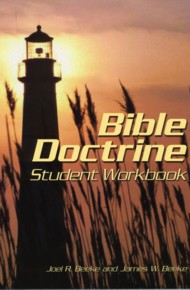
The Bible Doctrine Student Workbook is part of an introductory course based on The Compendium, an abbreviated form of the Heidelberg Catechism that was compiled by Herman Faukeel in 1611. This course covers core concepts of biblical doctrine, aiming to promote a Reformed balance of truth in which head knowledge provides the soil in which the Holy Spirit may plant the saving seeds of heart knowledge. The workbook may be adapted for various uses, including church Confession of Faith classes, units in junior high and high school Bible courses, adult Bible classes, Christian school teacher courses, sourcebook for catechism instructors, and family or individual study. The Teachers’ Guide provides detailed answers for all 568 questions.

 Gospel-Centered Musings