Adoption makes the believer an heir of salvation through Christ
Posted: April 12, 2011 Filed under: Adoption, Calvinism Leave a comment(Guest post by Maarten Kuivenhoven)
Adoption makes the believer an heir of salvation through Christ. The adopted child of God becomes the recipient of salvation through Christ, for “the name of Christ excludes all merit, and everything which men have of their own.” Christ’s merits, through His obedience, death and resurrection, are what secure the believer’s adoption. This is clear from Calvin’s writing on the purpose of why God had to become man. He had to become man to rescue us from our self-made hell, to conquer death, and to procure salvation for his people. This too, serves the believer’s assurance of salvation and heir to the Kingdom, “for the Son of God, to whom it wholly belongs, has adopted us as his brothers.” This work of salvation was achieved through the Incarnation, when “ungrudgingly he took our nature upon himself to impart to us what was his, and to become both Son of God and Son of man in common with us.”
In his application of the doctrine of adoption, it must be noted that John Calvin was discriminatory, opening up its comforts to believers, but also preserving this doctrine from those who would abuse it in unbelief. This discriminatory note can be detected when he cautions that the Incarnation must not be used to automate adoption. Just because Christ came in human flesh does not mean that all are the children of God. He argues rightly that
“when we say that Christ was made man that he might make us children of God, this expression does not extend to all men. For faith intervenes, to engraft us spiritually into the body of Christ.”
The fact that the believer becomes an heir of Christ also has eschatological dimensions. Although this is present in the Pauline doctrine of adoption, Calvin also brings it out in the Johannine complement of the same doctrine. He clearly brings out the ‘now-not yet’ tension of the enjoyment of the inheritance that believers receive through adoption. In his Commentary on 1 John, especially 1 John 3:2, Calvin notes that the believer’s condition as an adopted child of God has not yet reached full fruition and the believer is subject to death, misery, and all manner of evil. He counsels the believer to consider the privileges that yet await being stored up in heaven, looking to the coming of Christ which sustains faith,
“because the fruit of our adoption is as yet hid, for in heaven is our felicity, and we are now far away travelling on the earth.”
This tension is also apparent in his Commentary on Romans in which he highlights the fact that the believer’s inheritance through adoption will be fully realized in the future. He states that
“we shall partake of it in common with the only-begotten Son of God,” which requires patience and endurance in the present Christian life.
What Really is a Reformed Baptist Church Anymore?
Posted: April 11, 2011 Filed under: Baptist, Reform Theology, Reformed Confessions 3 CommentsWhat Is A Reformed Baptist Church? William Payne
What Is A Reformed Baptist Church? Jim Savastio
Who Are The Reformed Baptists? Poh Boon Sing, Damansara Church, Kuala Lumpur, Malaysia, and Earl M. Blackburn,Heritage Baptist Church, Shreveport, Louisiana
What Is A Reformed Baptist Church? Reformed Baptist Church of Sault Ste Marie, Michigan
What Is A Reformed Baptist Church? Andrew Kerkham, Tauranga Reformed Baptist Church, Papamoa, Tauranga, New Zealand
The Empire of the Holy Spirit
Posted: April 8, 2011 Filed under: Holy Spirit, Michael Haykin Leave a comment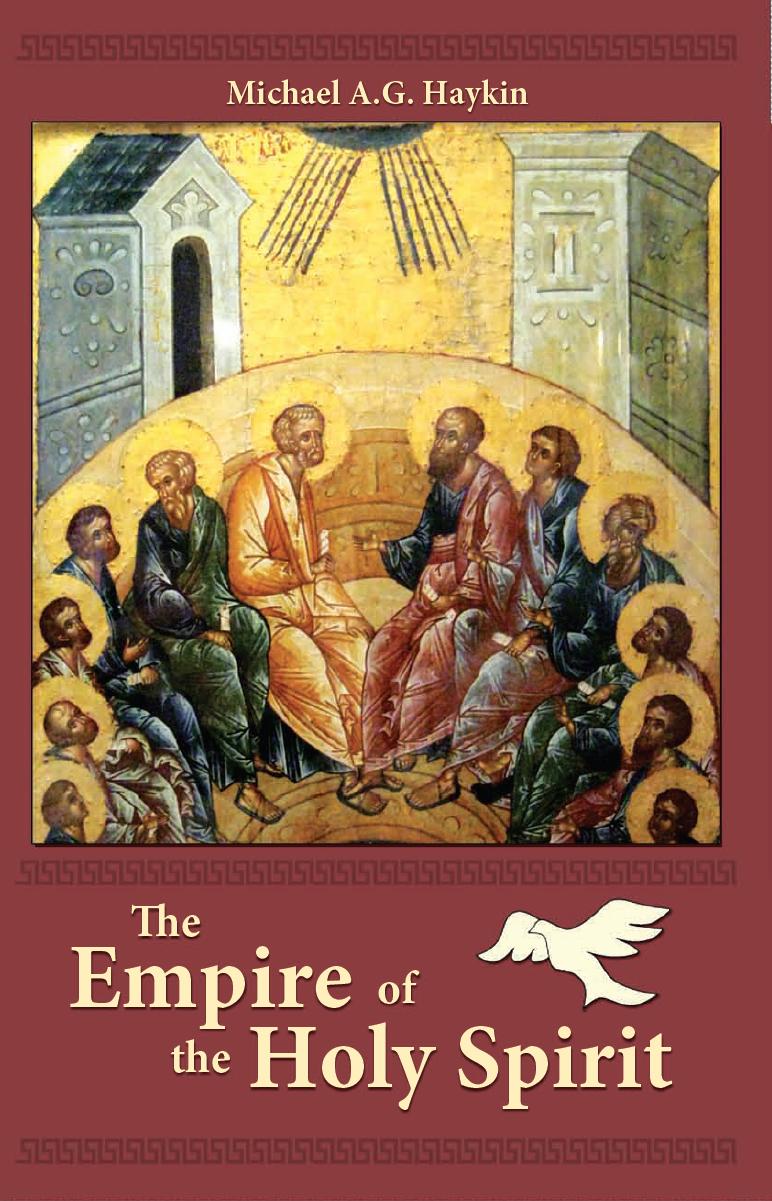 Written by Dr. Michael Haykin is one of the greatest books I have read in the last 10-years. $20 paperback and only $3 Kindle, it is a must read for any believer seeking to learn both a Biblical understanding and historical overview of the role of the Sprit in the life of a believer.
Combining both keen historical reflection and rich biblical insight, Michael Haykin has pulled from his expertise in both church history and biblical spirituality in the writing of this volume. The book has already received high praise from several individuals who have endorsed the book.
Malcolm B. Yarnell states:
“This little treasure…comes with my highest recommendation.”
Dr. Russell Moore, Dean of the School of Theology at The Southern Baptist Theological Seminary, writes:
Michael Haykin’s The Empire of the Holy Spirit is not just a book about the Holy Spirit. This is a book written, obviously, by one who knows the Person (not just the topic) of which he writes. This book will prompt you to think. You’ll want to scratch down notes, and talk about insights over coffee with friends. But, more than that, this book will prompt you to get on your knees, through the Spirit of God, and cry out “Abba Father!”
Dr. Joel Beeke, President of Puritan Reformed Theological Seminary, has written:
Haykin’s Empire of the Spirit covers a rich cluster of subjects on the Holy Spirit from various biblical, historical, and theological perspectives. Whether speaking about the Spirit’s role in sanctification, in revival, in the Great Commission, in the exercise of genuine success, or in promoting Christian unity, Haykin’s thoughts, tethered to Scripture, offer an exciting read. This book needs to be pondered over and yet it is a page-turner. I pray that it may promote a deepening interest in and appreciation for the Spirit’s indispensable, variegated ministry in the lives of believers.
If you would like to listen to the author’s own thoughts on the book, you can download this podcast in which I interview Dr. Haykin about his most recent book.
Chaos and Equality: Part 1
Posted: April 7, 2011 Filed under: Just for Fun | Tags: blessing, chaos, equality, Job, wisdom Leave a commentThe Book of Job has been a text that I’ve never really known how to approach, and have always been confused and troubled by. William P. Brown offers a phenomenal commentary on the poetic tale of Job in The Ethos of the Cosmos: The Genesis of Moral Imagination in the Bible. Brown shows how the relationship between Job and Yahweh radically confronts the wisdom tradition and critiques the privileged patriarchy that Job so piously identifies himself with. The supposedly righteous Job losing everything flies in the face of ancient wisdom teachings. This is a good thing! Admittedly, I’m not a fan of Proverbs. While there is genuinely good advice and truth to be found in its wisdom, it presupposes a cosmic/divine submission to the implementation of moral and ethical aphorisms; it is wisdom in a vacuum. The issue of injustice is greater than my personal adherence to the maxims of Proverbs. My facing adversity, failure, and hardships are not results of my failure to live up to a particular standard of moral or spiritual conduct. Likewise, the oppression endured by millions around the world is not a result of their failure to live up to a moral or spiritual standard. And conversely, the success, health, good fortune, and abundance that we enjoy in the West and Global North is also not the result of our righteousness, spiritual fervor, and ability to carve out a moral society that reflects biblical values. The connections between wealth, success, and divine blessing are deeply woven into the cosmology ancient Judaism and other Near East religions as well.
Enter Job. Here is a person of incredible means who is in want of nothing, and believes he doing everything right. Brown writes,
Befitting his eminence, Job is a man of unprecedented blessing, hard evidence for the satan to challenge Yahweh (1:10). In the satan’s own words, Job’s possessions have ‘broken out over’ or ‘overrun’ the land. As Job’s wealth has transgressed the land, as it were, so Yahweh has violated all sense of equity in favoring Job (Brown, 321).[1]
Job’s identity lies within his righteousness, wealth, status, and piety. The wisdom tradition says that Job has done everything correctly, yet Job does not reap the benefits of blessing and wealth. Job becomes the archetype of privilege, blessing, and wealth lost. Job is now caught in poverty, desperation, and confusion, and has come to become who he detests. Rather than losing his status, Job curses his existence and would rather see a massive reversal and undoing of creation than to be on the bottom of society, sitting on an “ash heap, bereft of the trappings of patriarchy: ownership, honor, and stature” (321).[2] Job’s new situation is a destructive threat to his worldview, as he now believes himself to be a “victim of God’s abusive whim (7:12-15; 9:17-19, 30-32; 10:16-17)” (322).[3] Carrying on the imagery of his own undoing, Job “envisions existence in Sheol as one that encompasses all walks of life, both great and small . . .Social divisions are erased, and the inhabitants of Sheol enjoy the eternal blessings of freedom . . .Job, one the wielder of wealth, can now identify with those who forever have lacked material means” (323).[4]
It is only in this realm of Sheol that Job sees a veritable equity. Princes and slaves are side by side; the “small and the great” together (3:19). Job’s worldview, preoccupied with wealth, status, blessing, and stratification, cannot imagine this equality in reality. Job finds liberation within his call for cosmic undoing. His imagined chaos frees him from the shackles of his unjust reality. However, it is not simply a selfish freedom. The liberating chaos of his imagination levels all. Brown notes,
Chaos serves to erase all form and structure associated with life and community on this side of existence. For Job, this is indeed salutary, even liberating. Chaos has paved the way to freedom; it packs a revolutionary wallop. As the subversive instrument that disrupts and breaks down the cosmos, chaos ushers in new possibilities of social existence. The ancient sages long equated social upheaval with cosmic upheaval (324). [5]
Job is exploring the other side of structure and the other side of patriarchy and sees an equality. The opposite of structure and order is chaos. Because patriarchy and governance is associated with structure and order, envisioning egalitarianism and radical equality is equated with chaos and anarchy. Equality becomes an enemy of structure and order. The sacrifice of power is too great and too threatening to yield to any new social, familial, ecclesial, or political order on this side of life. Appealing to the equality in which we stand before God but not seeking to implement and live out that equality “on earth as it is in heaven” is a result of the love of power that thrives on comfortable structure and order.
Only in death can Job reside in such a community of equals, one so radical in its orientation that only predatory chaos can clear away the cosmic clutter and set the stage for a new morphology of community. Only in the land of the dead, stripped of all stratification, can freedom and equality reign, so Job imagines. The dissolution of the cosmic community is ultimately its rehabilitation (324).[6]
Rehabilitation, discipleship, and restoration next week.
___________________________
Brown, William P. The Ethos of the Cosmos: The Genesis of Moral Imagination in the Bible. Grand Rapids: Wm. B. Eerdmans, 1998.
Learning from Paul
Posted: April 5, 2011 Filed under: Bible Study | Tags: Eschatology, Intertextuality, Pauline Studies, Preaching, Richard Hays 2 Comments(Guest Post by Ben. T)
This weekend I finally made my way through Echoes of Scripture in the Letters of Paul by Richard Hays. As expected, the book was loaded with helpful insights from a seasoned Pauline scholar. Surprisingly, though, I found the book personally challenging on a number of practical levels.
Hays writes as both a scholar and a churchman, seeking to make accessible and practical his insights to the community of faith. He writes, “Paul’s readings characteristically treat Scripture as a living voice that speaks to the people of God. The Bible for Paul is not just a chronicle of revelation in the past; the words of Scripture sound from the page in the present moment and address the community of believers with authority.” [1]
The book ends with several points aimed at summarizing his proposal. His observations and trajectories are not new in the sense of being unique, but it is refreshing to read a scholar who is so candid regarding the functional role of Scripture in the formation and transformation of the church as God’s eschatological community.
He writes:
If we learned from Paul how to read Scripture, we would read it in the service of proclamation. Christian biblical interpretation has its original and proper Sitz im Leben in preaching or (as in Paul’s letters) in pastoral counsel–that is to say, in acts of reading that construe Scripture as a word of direct address to the community. When Bonhoeffer read in 2 Tim. 4:21, ‘Do your best to come before winter,’ and took it as God’s word to him, he was operating with hermeneutical assumptions faithful to Paul’s example. This may not be good exegesis, but it was never proposed as exegesis of the text; rather, it was a charismatic, prophetic transference of the text’s sense. Indeed, Paul’s way of using Scripture suggests that homiletical and prophetic readings can sometimes be more faithful than rigorously exegetical ones. Exegesis gives us critical distance from the text; preaching thrusts the text’s word directly into our faces. The word is near us, and it demands a response. This strategy of reading is risky, because it strips away critical controls, exposing us to the danger of arbitrary or manipulative interpretations. On the other hand, unless we learn from Paul to read Scripture as a word addressed directly to us, we will never proclaim the word of God with power. [2]
I am constantly wrestling with the divide that exists between the academy and the church. How do we go about bridging the chasm between the two while moving towards synthesis over mere supplementation? Is it even possible?
Whatever the case, Hays presents a vital starting point—we must (re)capture the kerygmatic function of Scripture. It is God’s living and active word to us.
See also:
Richard Hays on “Why we need Eschatology
Richard Hays on “Reading the Bible with Eyes of Faith”
[1] Richard B. Hays, Echoes of Scripture in the Letters of Paul (New Haven: Yale University Press, 1989), 165.
[2] Hays, Echoes, 185.
What Can We Learn From the Law?
Posted: April 4, 2011 Filed under: Calvinism Leave a commentFrom the knowledge of God, furnished by the Law, we learn that God is our Father and Ruler. Righteousness is pleasing, iniquity is an abomination in his sight. Hence, how weak soever we may be, our duty is to cultivate the one, and shun the other.
Taken from 2.8.2,
“It is now easy to understand the doctrine of the law—viz. that God, as our Creator, is entitled to be regarded by us as a Father and Master, and should, accordingly, receive from us fear, love, reverence, and glory; nay, that we are not our own, to follow whatever course passion dictates, but are bound to obey him implicitly, and to acquiesce entirely in his good pleasure. Again, the Law teaches, that justice and rectitude are a delight, injustice an abomination to him, and, therefore, as we would not with impious ingratitude revolt from our Maker, our whole life must be spent in the cultivation of righteousness. For if we manifest becoming reverence only when we prefer his will to our own, it follows, that the only legitimate service to him is the practice of justice, purity, and holiness. Nor can we plead as an excuse, that we want the power, and, like debtors, whose means are exhausted, are unable to pay. We cannot be permitted to measure the glory of God by our ability; whatever we may be, he ever remains like himself, the friend of righteousness, the enemy of unrighteousness, and whatever his demands from us may be, as he can only require what is right, we are necessarily under a natural obligation to obey. Our inability to do so is our own fault. If lust, in which sin has its dominion, so enthrals us, that we are not free to obey our Father, there is no ground for pleading necessity as a defence, since this evil necessity is within, and must be imputed to ourselves.”
Of Religious Worship and the Sabbath Day
Posted: April 3, 2011 Filed under: London Baptist Confession, Lord's Day Leave a comment1. The light of nature shews that there is a God, who hath lordship and sovereignty over all; is just, good and doth good unto all; and is therefore to be feared, loved, praised, called upon, trusted in, and served, with all the heart and all the soul, and with all the might. But the acceptable way of worshipping the true God, is instituted by himself, and so limited by his own revealed will, that he may not be worshipped according to the imagination and devices of men, nor the suggestions of Satan, under any visible representations, or any other way not prescribed in the Holy Scriptures. ( Jeremiah 10:7; Mark 12:33; Deuteronomy 12:32; Exodus 20:4-6 )
2. Religious worship is to be given to God the Father, Son, and Holy Spirit, and to him alone; not to angels, saints, or any other creatures; and since the fall, not without a mediator, nor in the mediation of any other but Christ alone. ( Matthew 4:9, 10; John 6:23; Matthew 28:19; Romans 1:25; Colossians 2:18; Revelation 19:10; John 14:6; 1 Timothy 2:5 )
3. Prayer, with thanksgiving, being one part of natural worship, is by God required of all men. But that it may be accepted, it is to be made in the name of the Son, by the help of the Spirit, according to his will; with understanding, reverence, humility, fervency, faith, love, and perseverance; and when with others, in a known tongue. ( Psalms 95:1-7; Psalms 65:2; John 14:13, 14; Romans 8:26; 1 John 5:14; 1 Corinthians 14:16, 17 )
4. Prayer is to be made for things lawful, and for all sorts of men living, or that shall live hereafter; but not for the dead, nor for those of whom it may be known that they have sinned the sin unto death.
( 1 Timothy 2:1, 2; 2 Samuel 7:29; 2 Samuel 12:21-23; 1 John 5:16 )
5. The reading of the Scriptures, preaching, and hearing the Word of God, teaching and admonishing one another in psalms, hymns, and spiritual songs, singing with grace in our hearts to the Lord; as also the administration of baptism, and the Lord’s supper, are all parts of religious worship of God, to be performed in obedience to him, with understanding, faith, reverence, and godly fear; moreover, solemn humiliation, with fastings, and thanksgivings, upon special occasions, ought to be used in an holy and religious manner. ( 1 Timothy 4:13; 2 Timothy 4:2; Luke 8:18; Colossians 3:16; Ephesians 5:19; Matthew 28:19, 20; 1 Corinthians 11:26; Esther 4:16; Joel 2:12; Exodus 15:1-19, Psalms 107 )
6. Neither prayer nor any other part of religious worship, is now under the gospel, tied unto, or made more acceptable by any place in which it is performed, or towards which it is directed; but God is to be worshipped everywhere in spirit and in truth; as in private families daily, and in secret each one by himself; so more solemnly in the public assemblies, which are not carelessly nor wilfully to be neglected or forsaken, when God by his word or providence calleth thereunto. ( John 4:21; Malachi 1:11; 1 Timothy 2:8; Acts 10:2; Matthew 6:11; Psalms 55:17; Matthew 6:6; Hebrews 10:25; Acts 2:42 )
7. As it is the law of nature, that in general a proportion of time, by God’s appointment, be set apart for the worship of God, so by his Word, in a positive moral, and perpetual commandment, binding all men, in all ages, he hath particularly appointed one day in seven for a sabbath to be kept holy unto him, which from the beginning of the world to the resurrection of Christ was the last day of the week, and from the resurrection of Christ was changed into the first day of the week, which is called the Lord’s day: and is to be continued to the end of the world as the Christian Sabbath, the observation of the last day of the week being abolished. ( Exodus 20:8; 1 Corinthians 16:1, 2; Acts 20:7; Revelation 1:10 )
8. The sabbath is then kept holy unto the Lord, when men, after a due preparing of their hearts, and ordering their common affairs aforehand, do not only observe an holy rest all day, from their own works, words and thoughts, about their worldly employment and recreations, but are also taken up the whole time in the public and private exercises of his worship, and in the duties of necessity and mercy. ( Isaiah 58:13; Nehemiah 13:15-22; Matthew 12:1-13 )
Adoption assures the believer of God’s Fatherly electing grace
Posted: April 1, 2011 Filed under: Adoption, Calvinism Leave a comment(Guest post by Maarten Kuivenhoven)
At the heart of John Calvin’s theology and undergirding his development of the ordo salutis is the doctrine of adoption. Many scholars note that Calvin does not treat adoption as a separate locus in his systematic theology and magnum opus, The Institutes of the Christian Religion. This is due in part to the fact that Calvin weaves the doctrine throughout the tapestry of God’s marvelous work in the salvation of sinners. The doctrine of adoption is not peripheral, but rather central to Calvin’s theology as noted by Sinclair Ferguson writes, (The Reformed Doctrine of Sonship, in Pulpit and People, Essays in Honor of William Still) “students of Calvin’s theology have too rarely recognized how important the concept of sonship was to his understanding of the Christian life.”
The fountainhead of adoption and its privileges in John Calvin’s thought is found in God the Father. Specifically the privileges that the adopted child of God receives are the comfort of the Father’s providence and the assurance received through the Father’s electing grace.
One of those privileges is that Adoption assures the believer of God’s Fatherly electing grace. The electing grace of the Father almost becomes synonymous in Calvin’s writings with the doctrine of adoption. He does not clearly delineate between these two concepts but rather merges them to show how adoption becomes a confirmation of election. Howard Griffith in his article clearly proves that election and adoption are closely tied in Calvin’s thought when he states:
It is quite clear that Calvin’s intention was to use the biblical teaching on election as Scripture does: in the service of assurance for believers. Election was dangerous and only a snare when considered abstractly. But if for the sake of the analysis of Calvin’s own thinking, we think of it first, it is fascinating to notice that Calvin repeatedly refers to election as God’s adoption of the believer. This is not just the slip of a pen: Calvin repeats it often.
Adoption can be conceived of as the rearview mirror if you will, confirming the electing grace of the Father in the life of the believer. The close relationship of election and adoption serves to assure the believer that he is indeed a child of God.
In his Sermons on Election and Reprobation, Calvin closely links election and adoption when he says, “So, when our Lord engraveth his fear in our hearts by his holy spirit, and such an obedience towards him, as his Children ought to perform unto him, this is as if he should set upon us the seal of his election, and as if he should truly testify that he hath adopted us and that he is a Father unto us.” Throughout the Institutes he makes several references to the close relation between election and adoption where free election by the grace of God becomes the ground of the believer’s adoption. He states, “We were adopted in Christ into the eternal inheritance because in ourselves we were not capable of such great excellence.” Furthermore, man cannot renovate himself to receive the adoption of sons, nor is adoption because of any foreseen merit on God’s part, because “God’s special election towers and rules over all, alone ratifying his adoption.”
This assurance of election is further buttressed in his Sermons on Ephesians where he says, “When he [Paul] says that God has predestinated us by adoption, it is to show that if we be God’s children it is not through nature but through his pure grace…For we have no such status by birth or inheritance, neither does it come of flesh and blood.” The assurance this affords the believer is that it is by the grace of God in Jesus Christ that they are adopted into the family of God and thus “they whom he calls to salvation ought not to seek the cause of it anywhere else than in this gratuitous adoption.” Calvin continues speaking of the assurance that election and adoption affords the believer:
Whosoever then believes is thereby assured that God has worked in him, and faith, as it were, the duplicate copy that God gives us of the original of our adoption…It follows then that if we have faith, we are also adopted. For why does God gives us faith? Even because he elected us before the creation of the world. This therefore is an infallible order, that insofar as the faithful receive God’s grace and embrace his mercy, holding Jesus Christ as their Head, to obtain salvation in this way, they know assuredly that God has adopted them.
Far from declaring God’s election to be cold, calculating and deterministic, Calvin ties election and adoption closely together showing the comfort and warmth that can be derived from doing so. Election becomes the ground of adoption, and thus offers assurance to the child of God that he really is one of God’s children. The root of adoption is not found in the believer, but in God the Father, through Jesus Christ.
Gebara on Anthropology
Posted: March 31, 2011 Filed under: Just for Fun | Tags: Anthropology, ecofeminism, egalitarianism, hierarchy Leave a commentA major component in the eco-theology discussion is Christian anthropology and the ordering of humanity within the cosmos; human relationship and positioning to God and to the universe.
Ivone Gebara responds to the question, “What are you proposing when you say we must change the anthropological basis upon which Christianity is built?”
I suggest that we must first change our image of men and women within the cosmos. And when we change that image, our image of God changes. Any image of God is nothing more than the image of the experience or the understanding we have of ourselves. We must re-situate the human within –not above – the cosmos. This is diametrically opposed to a Christian anthropology that insists humanity is ‘Lord of Creation’ ordered by the Creator to ‘increase and dominate the Earth.’ In the current anthropology, the human’s right to dominate, control, and posses has been legitimized by the Creator and thus becomes part of human nature, pre-established – and therefore impossible to change. [1]
A few weeks ago I briefly detailed the hierarchical ordering of the cosmos derived from the creation poem in Genesis. Classical theism is dependent upon this structure, but is this anthropology one that is essential to Christianity? Is this a framework that is biblically consistent?
Here are two options for reconfiguring our anthropological situation into more linear renderings:
1. God
Humanity Animal life Nature
2. Humanity Animal life God Nature
The first still maintains the God-World transcendence of classical theism. The second, something of an incarnational anthropology, brings God into the center of the world, intimately involving God with the ebb and flow of creation. What implications do both of these renderings present?
The second rendering moves beyond an emphasis on God’s transcendence from the world and places God within the world, necessarily deconstructing the dualist separation between matter and spirit. However, as Gebaras states, this can only occur through egalitarianism. Gender is the paradigm through which our anthropology shifts or remains the same.
How does the classic hierarchical structure compare to the more linear structures vis-a-vis the stewardship of creation? Does the classic structure import an ethical responsibility for the care of all of life? Can gender-equality be assumed within the hierarchical structure without radical reconstruction?
______________________________________________
[1] Gebara, Ivone. “Ecofeminism and Panentheism,” in Readings in Ecology and Feminist Theology. Edited by Mary Heather MacKinnon and Moni McIntyre (Lanham: Sheed and Ward, 1995), 210-11.
What is Rhetorical Criticism?
Posted: March 30, 2011 Filed under: Bible Study | Tags: Hebrew Bible, Historiography, Ideology, Patricia Tull, Rhetorical Criticism Leave a comment(Guest Post by Ben T.)
Rhetorical criticism, like many approaches to biblical interpretation, can be understood and applied in a number of ways to both Old Testament and New Testament studies. For our purposes, rhetoric among the ancient Greeks can be concisely understood as the “art of effective communication.”
Does this so-called rhetorical analysis provide a helpful framework in our interpretation and application of biblical texts? Arising from dissatisfaction with historical-critical analysis of the Bible, rhetorical criticism is an author-centered interpretive approach that generally regards the ‘final form’ of the text as the object of investigation. In this way, rhetorical criticism may provide a helpful and compelling way forward.
Patricia Tull writes:
…many have begun to direct attention to the hortatory nature of the much of the Bible—that is, its effort to persuade audiences not merely to appreciate the aesthetic power of its language but, even more importantly, to act and think according to its norms. Thus while rhetorical critics often begin with textual, literary questions reminiscent of the approaches of the Muilenberg school, many also inquire about the ways in which a text ‘establishes and manages its relations to its audience in order to achieve a particular effect.’ [1]
Interacting with Meir Sternberg’s The Poetics of Biblical Narrative, Tull demonstrates the confluence of rhetorical criticism with a more literary approach:
To Sternberg, biblical narrative is regulated by three principles coexisting in ‘tense complementarity’ with one another: ideology, historiography, and aesthetics. Although one might conclude that these principles would drive the discourse in contradictory directions, Sternberg is convinced that the Bible’s ideology is reinforced and underscored by its aesthetic choices. In Sternberg’s view, the most important rhetorical goal of biblical narrative is to inculcate in its readers a divine system of norms: By appearing to serve the readers, the narrator seeks to readers’ subjugation to God and God’s ways. In intricate retellings of biblical stories in which every word and every silence counts, Sternberg shows how the reader is ineluctably drawn into the narrator’s ideological orbit—that is, if the reader first lays aside his or her own opinions to ‘play by the Bible’s rules of communication.’ [2]
What do you think? Does this approach/method represent a viable way forward? Are there any issues inherent in its application to biblical texts?
[1] Patricia K. Tull, “Rhetorical Criticism and Intertextuality,” in Steven L. McKenzie and Stephen R. Haynes, eds., To Each Its Own Meaning: An Introduction to Biblical Criticisms and their Application (Louisville: WJK Press, 1999), 160-61.
[2] Tull, “Rhetorical Criticism and Intertextuality,” 162. For a more comprehensive overview of Rhetorical Criticism and its application see Phyllis Trible, Rhetorical Criticism: Context, Method, and the Book of Jonah (Minneapolis: Augsburg Fortress, 1994), 1-90.
Christ in the Old Testament: New video series
Posted: March 29, 2011 Filed under: Christ in the Old Testament, David Murray Leave a comment
Want to find and worship Christ in the Old Testament?
Need a weekly Bible Study that’s doctrinal, devotional, and doable?
Trying to help your children study the Bible on a Sunday afternoon, but they aren’t great readers?
Looking for a Sunday school series that marries “old” theology with new technology?
The CrossReference series of films from Head Heart Hand Media may be for you.
The first DVD & Study Guide will launch on April 12 at the Gospel Coalition Conference. But come back tomorrow for pre-launch preview and special offer.
RHB’s New Release
Posted: March 28, 2011 Filed under: Danny Hyde, Reformation Heritage Books Leave a comment Danny Hyde and Shane Lems, Planting, Watering, and Growing: Planting Confessionally Reformed Churches in the 21st Century
As a response to the unique challenges facing the twenty-first-century American church, church planting has become a popular topic. But at a time when churches that spread the seed of the Word through preaching, the sacraments, and prayer are greatly needed, much of the focus has been on planting churches that adapt pop culture to meet “consumer demand.” In Planting, Watering, Growing, the authors of this collection of essays weave together theological wisdom, personal experiences, and practical suggestions, guiding readers through the foundations and methods of planting confessional churches that uphold the Word of God.
You can view the sample pages here.
Table of Contents:
Foreword: Was the Reformation Missions-Minded?—Michael S. Horton
Introduction—Daniel R. Hyde and Shane Lems
Part 1: The Foundation of Planting Churches
1 The Fruitful Grain of Wheat—Brian Vos
2 The Sovereign Spirit of Missions: Thoughts on Acts 16:6–10 and Church Planting—Daniel R. Hyde
3 The Reformed Confessions and Missions—Wes Bredenhof
4 No Church, No Problem?—Michael S. Horton
Part 2: The Methods of Planting Churches
5 Church Planting Principles from the Book of Acts—Daniel R. Hyde
6 Heart Preparation in Church Planting—Paul T. Murphy
7 Church Planting: A Covenantal and Organic Approach—Paul T. Murphy
8 Planning the Plant: Some Thoughts on Preparing to Plant a New Church—Kim Riddlebarger
Part 3: The Work of Planting Churches
9 On Being a Church Planter—Daniel R. Hyde
10 Being a Welcoming Church Plant—Kevin Efflandt
11 Flock and Family: A Biblical Balance—Shane Lems
12 Declare His Praise among the Nations: Public Worship as the Heart of Evangelism—Daniel R. Hyde
13 “How’s the Food?” The Church Plant’s Most Important Ingredient—Michael G. Brown
14 Church Membership and the Church Plant—Michael G. Brown
15 Shepherding Toward Maturity, Part 1: The Authority in Church Planting— Spencer Aalsburg
16 Shepherding Toward Maturity, Part 2: Identifying a Mature Church Plant— Spencer Aalsburg
17 Motivation: The Planting Church and the Planted Church—Eric Tuininga
Part 4: The Context of Planting Churches
18 Church Planting in a Melting Pot—Shane Lems
19 The Cultural Factor in Church Planting—Mitchell Persaud
20 Growing Contextually Reformed Churches: Oxymoron or Opportunity?—Phil Grotenhuis
21 Does Anybody Really Know What Time It Is?—Michael S. Horton
About the Editors: Daniel R. Hyde and Shane Lems are the church planters and pastors of the Oceanside United Reformed Church in Carlsbad/Oceanside, California, and United Reformed Church of Sunnyside in Sunnyside, Washington.
Contributors: Michael S. Horton, Brian Vos, Wes Bredenhof, Paul T. Murphy, Kim Riddlebarger, Kevin Efflandt, Michael G. Brown, Spencer Aalsburg, Eric Tuininga, Mitchell Persaud, Phil Grotenhuis
Understanding the Lord’s Day as the Christian Sabbath
Posted: March 27, 2011 Filed under: Lord's Day, Sabbath, Theology 1 Comment Robert Lewis Dabney, “The Christian Sabbath: Its Nature, Design, and Proper Observance” in Dabney’s Discussions, Volume I (Sprinkle reprint, 1982): pp. 496-550.
The Presbyterian stalwart doggedly defends the classical Reformed position by exhaustively reviewing the Biblical texts to defend the fourth commandment as “moral and perpetual.” Of note is his exegetical review of “objection passages” like Romans 14:5-6; Galatians 4:9-11; and Colossians 2:16-17 (see pp. 521-530). Dabney does not suffer lightly those with mushy and inconsistent thinking on this issue.
(HT: Jeffrey T. Riddle)
St. Basil, Ecology, and Fellowship: Part 3
Posted: March 24, 2011 Filed under: Just for Fun | Tags: conservation, dominion, dualism, ecology, St.Basil Leave a commentMay we realize that they live not for us alone
but for themselves and for thee,
and that they love the sweetness of life.
-St. Basil, 4th Century
______
The largely unexamined view of creation that exists within much of Evangelicalism is that nonhuman creatures and the rest of creation do not have intrinsic value, but derive their value from human usage. This view towards creation goes hand in hand with traditional theism’s understanding of the dominion language of Genesis 1, and the hierarchical divides outlined in Part 2 of this series. In his book, For the Beauty of the Earth, Steven Bouma-Prediger examines seven realms of ecological thought on a continuum ranging from the “Conservation Movement” to the opposite end in the “Deep Ecology” movement (which we will look at another time). It is my presumption that the “Conservation Movement” is the prevailing position of Evangelicalism. It is also my presumption that faithfulness to God and to the earth requires Christianity to move beyond this realm of “Conservation,” the basic outline of which Bouma-Prediger states thusly:
“Nonhuman creatures do not have intrinsic value. Their value is derived exclusively from their usefulness for humans––trees are for lumber, water for human consumption, the prairie for grazing cattle. The natural world is valuable only as a means of serving human interests. The scope of what is morally considerable is relatively small––only humans count morally, and usually only humans here and now.” [1]
What are your thoughts and reactions to this position? Do you see it reflected within the Christian community today? Does this position seem too human-centered? Also, do you see it as a biblical position? The questions raised by this ethic are: What is the value of a tree? Of a wetland? A mountain? A spider? Do they have value? If so, how much value do they possess and at what point does the human community sacrifice its power for something nonhuman?
I purposefully made quite a jump from exploring the intrinsic value of nonhuman life to the competing interests between human and nonhuman life. That logical jump is firmly rooted within the anthropocentric view of creation espoused by the “Conservation Movement,” assuming that valuing nonhuman life is a slippery slope towards the impediment to human progress and growth.
When we begin to examine these questions from just outside of our traditional Western (and dualistic) worldviews, we can evaluate them in a new light. Recognizing the influence of modern science on the way we think, we often fail to process the individual entities listed above within their ecological contexts. They remain isolated and examined within the realm of substance. Stated another way, we fail to comprehend the relations that each of these entities engage in because we tend to extract individuals and valuate them apart from the community they exist in. John Cobb asserts that,
“The effort to study things in abstraction from their relations is based on a misunderstanding. This misunderstanding is that things exist as independent entities and only incedentally are related to one another. This is the misunderstanding that lies at the base of the materialistic view of nature (which is shared by both the dualistic and the materialistic worldviews).” [2]
Cobb joins in the critique of Western dualism and its difficulty in viewing things in relation to one another. The relational vision of all creation proposed here is what is precisely what is meant by the term ecology. Ecology deals explicitly with relationships within ecosystems. Everything is in relationship. Nothing exists in a vacuum. Once we remove objects, people, animals, or other components of creation from their relational context, we strip them of life. Relationship is the language of creation. Therefore, developing an ecological theology is in a sense, to borrow from St. Basil, part of enlarging our “sense of fellowship.” This requires a shift from our understanding of nature and creation as the backdrop for human history to an understanding of nature and creation as intimately and indispensably related to human history.
As we finish our look at this ecologically minded poem from St. Basil, his final stanza places an intrinsic value on the nonhuman community. His hope is wrapped up in a vision of an earth community that embraces all of life, eschews dominion as domination, and sees all of creation as possessing great worth because it was made by the hand of God. Animals, plants, and the earth exists not for humanity alone, but for all of life in a great web of relationship. Throughout history many prominent theological voices have proclaimed the beauty of creation as witness to God’s glory. This is not merely an aesthetic beauty experienced upon creation as it is pleasing to the human eye, but the inherent beauty in the systems and cycles of creation that occur in transcendence to human experience and participation. This is nothing new or radical. However, the implications of recapturing an inclusion of the greater earth community (human and nonhuman life) within our enlarged sense of fellowship requires a shift in not only our environmental ethics, but also our political ethics, and our economic ethics as well.
Our attendance to the world’s current environmental situation is deeply connected to both our theologies of creation and anthropology. These prophetic words of St. Basil that we have explored over the past three weeks speak arguably more loudly to us today than to their original audience. Over the past three weeks, Basil has been the avenue through which I have laid down some statements, ideas, and thoughts that I am currently seeking to work out and explore in my own personal academic and spiritual journey. I feel that these issues of ecology are deeply important to the Church today as it seeks to curate hope in a world desperately seeking purpose, community, and answers. They are also intimately tied to our views of God, the Incarnation, and the restoration we hope for in Jesus, which makes wrestling with an ecological theology even more important for us today.
Dialogue, feedback, criticism, and amens are welcomed and encouraged. Thanks for reading.
St. Basil, Ecology, and Fellowship: Part 2
St. Basil, Ecology, and Fellowship: Part 1
_______________
Notes
1. Bouma-Prediger, Steven. For the Beauty of the Earth: A Christian Vision for Creation Care, 2nd Edition (Grand Rapids: Baker Academic, 2010), 128.
2. Cobb, John B. “Ecology, Science, and Religion: Toward a Postmodern Worldview,” in Readings in Ecology and Feminist Theology. Edited by Mary Heather MacKinnon and Moni McIntyre (Lanham: Sheed and Ward, 1995), 241.
What does the Law Teach?
Posted: March 23, 2011 Filed under: Calvinism Leave a commentThe Law was committed to writing, in order that it might teach more fully and perfectly that knowledge, both of God and of ourselves, which the law of nature teaches meagrely and obscurely. Proof of this, from an enumeration of the principal parts of the Moral Law; and also from the dictate of natural law, written on the hearts of all, and, in a manner, effaced by sin.
Taken from Calvin’s Institutes 2.8.1,
“I believe it will not be out of place here to introduce the Ten Commandments of the Law, and give a brief exposition of them. In this way it will be made more clear, that the worship which God originally prescribed is still in force (a point to which I have already adverted); and then a second point will be confirmed—viz. that the Jews not only learned from the law wherein true piety consisted, but from feeling their inability to observe it were overawed by the fear of judgments and so drawn, even against their will, towards the Mediator. In giving a summary of what constitutes the true knowledge of God,192 we showed that we cannot form any just conception of the character of God, without feeling overawed by his majesty, and bound to do him service. In regard to the knowledge of ourselves, we showed that it principally consists in renouncing all idea of our own strength, and divesting ourselves of all confidence in our own righteousness, while, on the other hand, under a full consciousness of our wants, we learn true humility and self-abasement. Both of these the Lord accomplishes by his Law, first, when, in assertion of the right which he has to our obedience, he calls us to reverence his majesty, and prescribes the conduct by which this reverence is manifested; and, secondly, when, by promulgating the rule of his justice (a rule, to the rectitude of which our nature, from being depraved and perverted, is continually opposed, and to the perfection of which our ability, from its infirmity and nervelessness for good, is far from being able to attain), he charges us both with impotence and unrighteousness. Moreover, the very things contained in the two tables are, in a manner, dictated to us by that internal law, which, as has been already said, is in a manner written and stamped on every heart. For conscience, instead of allowing us to stifle our perceptions, and sleep on without interruption, acts as an inward witness and monitor, reminds us of what we owe to God, points out the distinction between good and evil, and thereby convicts us of departure from duty. But man, being immured in the darkness of error, is scarcely able, by means of that natural law, to form any tolerable idea of the worship which is acceptable to God. At all events, he is very far from forming any correct knowledge of it. In addition to this, he is so swollen with arrogance and ambition, and so blinded with self-love, that he is unable to survey, and, as it were, descend into himself, that he may so learn to humble and abase himself, and confess his misery. Therefore, as a necessary remedy, both for our dullness and our contumacy, the Lord has given us his written Law, which, by its sure attestations, removes the obscurity of the law of nature, and also, by shaking off our lethargy, makes a more lively and permanent impression on our minds.”
What is Historiography?
Posted: March 22, 2011 Filed under: Bible Study | Tags: Hermenetics, Historical Narrative, History Leave a comment(Guest Post by Ben T.)
Historiography, properly understood, is the study of the way in which history is (and has been) written. The term “history” itself proves at times a confusing concept as it can refer to either the bare events of the past or the written (and oral) records of those events.
When studying history we rarely (if ever) have unmediated access to the bare facts of the past. The way in which these events—and the circumstances and motivations surrounding them—are preserved is always perspectival. That is, history is always codified through the ideologies and experiences of certain persons or groups. This does not make the history less valuable as historical artifact, but helps us realize that when we read history—especially biblical history—we are not encountering un-interpreted and un-mediated facts.
Following Huizenga and VanSeters we may helpfully define history as “the intellectual form in which a civilization renders account to itself of its past.” This definition highlights at least two important points:
1. History writing is purposeful, not accidental: When encountering and engaging narrative texts in the Bible, it is important that we attempt to discern the purpose(s) behind them. We should ask the same questions of these narrative accounts that we do of Pauline Epistles. Who wrote this? What may have occasioned its writing? What is its rhetorical function or strategy? The sweeping biblical narrative is more than just the mere accumulation of traditions and accounts over time. It is a deliberate re-telling of events. In this way, we may note that the biblical writers purposed much more than simply relating past events to future generations. They are purposeful documents, meant to give shape and substance to the Israelite identity as a people set apart to YHWH.
2. History writing uses the past to explain the present: It can be persuasively argued that some of the best history writing takes place far after the events it purports to record. It has long been assumed that an author’s close historical proximity to an event ensures the accuracy of the recounting. While this may be true to a certain degree, it is also true that historical distance allows for a more comprehensive perspective on the event, its importance, and its lasting significance. Take for instance the recent earthquake and tsunami in Japan. While we can certainly document and write of the immediate impact caused by these destructive forces, it will take many years to fully understand the implications and significance of these events. In much the same way, assigning a later compositional date to biblical texts may in fact heighten their value as historical texts. Due to this historical distance between text and event, we also see that these narratives are not written to the same people that they are written about. Thus past recounting is meant to address present situations. For instance, the so-called historical narratives of the Hebrew Bible appear to be shaped in some capacity by the catastrophic experience of exile.
It is my suspicion that approaching narrative texts as compilations of bare historical facts has ultimately proven detrimental to the contemporary evangelical church and its understanding and appropriation of these texts. If Joshua, Judges, Samuel, Matthew, or Acts are “just bare history,” it is difficult to see their practical import. There are certainly things we can learn through the unfolding of history, but it is my contention that this approach tends to miss the rich contours of these historical narratives. More than simply “what happened?” perhaps we need to learn to ask questions like “why this story?” or “how does the narrator want people to respond to this account?” More pointedly for us as a contemporary audience, “what is this text trying to accomplish in the lives of its hearers/readers?”
What do you think? Does our understanding of historical narrative require more nuance? Is this trajectory practically helpful or is it more trouble than it’s worth?
Why do Bad Things Happen in this World?
Posted: March 21, 2011 Filed under: Just for Fun Leave a commentI cannot think of a more clear explanation than the one Paul writes of in Romans 8,
18 For I consider that the sufferings of this present time are not worth comparing with the glory that is to be revealed to us. 19 For the creation waits with eager longing for the revealing of the sons of God. 20 For the creation was subjected to futility, not willingly, but because of him who subjected it, in hope 21 that the creation itself will be set free from its bondage to corruption and obtain the freedom of the glory of the children of God.22 For we know that the whole creation has been groaning together in the pains of childbirth until now. 23 And not only the creation, but we ourselves, who have the firstfruits of the Spirit, groan inwardly as we wait eagerly for adoption as sons, the redemption of our bodies. 24 For in this hope we were saved. Now hope that is seen is not hope. For who hopes for what he sees? 25 But if we hope for what we do not see, we wait for it with patience.
26 Likewise the Spirit helps us in our weakness. For we do not know what to pray for as we ought, but the Spirit himself intercedes for us with groanings too deep for words. 27 And he who searches hearts knows what is the mind of the Spirit, because the Spirit intercedes for the saints according to the will of God. 28 And we know that for those who love God all things work together for good, for those who are called according to his purpose. 29 For those whom he foreknew he also predestined to be conformed to the image of his Son, in order that he might be the firstborn among many brothers. 30 And those whom he predestined he also called, and those whom he called he also justified, and those whom he justified he also glorified.
Sanctifying The Lord’s Day
Posted: March 20, 2011 Filed under: Lord's Day Leave a commentAn excerpt from the practical puritan, Thomas Watson from his title Heaven Taken by Storm: Part 6, by sanctifying the Lord’s Day and holy conversation.
The sixth duty wherein we must offer violence to ourselves, is the religious sanctifying of the Lord’s day. That there should be a day of holy rest dedicated to God appears from its institution. ‘Remember to keep holy the Sabbath.’ Our Christian Sabbath comes in the room of the Jewish Sabbath: it is called the Lord’s day, Rev. i.10. from Christ the author of it. Our Sabbath is altered by Christ’s own appointment. He arose this day out of the grave, and appeared on it often to His disciples, 1 Cor. xvi. 1: to intimate to them (saith Athanasius) that he transferred the Sabbath to the Lord’s day. And St. Austin saith that by Christ’s rising on the first day of the week, it was consecrated to be the Christian Sabbath, in remembrance of his resurrection. This day was anciently called dies lucis, the day of light, as Junius observes. The other days of the week would be dark, were it not for the shining of the sun of righteousness on this day. This day hath been called by the ancients, regina dierum, the queen of days. And St. Hierom prefers this day above all solemn festivals. The primitive church had this day in high veneration: it was a great badge of their religion: for when the question was asked, servasti dominicum?, keepest thou the Sabbath?; the answer was, Christianus sum, I am a Christian; I dare not omit the celebration of the Lord’s day! What great cause do we have to thankfully remember this day! As the benefit of Israel’s deliverance from the Babylonish captivity was so great that it drowned the remembrance of their deliverance from Egypt, Jer. xvi. 14: so the benefit of our deliverance from Satan’s captivity and the rising of Christ after finishing the glorious work of our redemption are so famous, that in respect of his other benefits, receive as it were in diminution. Great was the work of creation; but greater the work of redemption. It cost more to redeem us than to make us. In the one, there was only the speaking a word, Psalm cxlviii. 5: in the other, the shedding of blood, Heb. ix. 22. The creation was the work of God’s fingers, Psalm viii. 3: the redemption, the work of his arm, Luke i. 5. In creation God gave us ourselves; in redemption he gives us himself. So that the Sabbath, putting us in mind of our redemption, ought to be observed with the highest devotion. — Herein we must offer holy violence to ourselves.
When this blessed day approacheth, we should labour, that as the day is sanctified, so may our hearts be sanctified.
We must on this day rest from all the works of our calling. As Abraham, when he went to sacrifice, left his servant and ass at the bottom of the hill, Gen. xxii. 5: so when we are to worship God this day, we must leave all secular business behind. — And as Joseph, when he would speak with his brethren, thrust out the Egyptians: so when we would have converse with God this day, we must thrust out all earthly employments. Though works of necessity may be done and works of charity, (for God will have mercy, and not sacrifice) yet in other cases we must cease from all worldly negotiations. It is observable concerning Mary Magdalene, that she refused to anoint Christ’s dead body on the Sabbath day, Luke xxiii. 56. She had before prepared her ointment, but came not come to the sepulcher till the Sabbath was past. She rested that day from all work, though it were a commendable and glorius work; the anointing of Christ’s dead body.
When this blessed day approacheth, we must lift up our heart in thankfulness to God, that he has put another price into our hands for gaining heavenly wisdom. These are our spiritual-harvest days; now the wind of God’s Spirit blows upon the sails of our affections, and we may be much further on in our heavenly voyage. Christian, lift up thy heart to God in thankfulness, that he hath given thee another golden season, and be sure you improve it; it may be the last. Seasons of grace are not like the tide; if a man misseth one tide, he may have another.
This day approaching, we must in the morning dress and fit our souls for the receiving of the Word. The people of Israel must wash their garments before the law was delivered to them.Our hearts must be washed by prayer and repentance, the oracles of God being to be delivered to us.
And being met together, we must set ourselves, as in the presence of God, with seriousness and delight to hear God’s sacred Word. Take heed of distractions which fly-blow our duties.
We must labor to be bettered by every Sabbath: where the Lord lays out cost, he looks for fruit. Fresh anointings of God are to be thirsted after; and new cubits are to be added to our spiritual stature. We must not be like the Salamander, which lives in the fire but never becomes hotter. Christians should on these days aspire after communion with God, and endeavor to have the illapses of his Spirit, and clearer discoveries of his love in Christ. In short, we should do on a Sabbath as Moses: he ascended the Mount that he might have a sight of God.
We must dedicate the whole day to God. Under the law a single sacrifice was appointed for other days of the week; but two lambs were to be offered upon the Sabbath. All this day must be spent with God: he must be worshipped in public; and when we come home, we must have family worship. Many leave all their religion at church, as I have seen some do their bibles; not hallowing God’s name in their own houses, Mal. iii. 8. ‘Will a man rob God?’ When men pretend to worship God in the temple but cut him short from family and closet duties on a Sabbath; this is to rob God, and steal part of his day from him.
Good reason we should consecrate the whole Sabbath to God and give him double devotion is that God doubles his blessings upon us this day. As the Manna rained twice as much on the sixth day, as any of. the other days: so the Manna of spiritual blessings falls twice as much on the Sabbath day as any other.
We must rejoice in this day, as being a day wherein we enjoy much of God’s presence, John viii. 56. ‘Abraham saw my day and rejoiced. So when we see a Sabbath day coming, we should rejoice. The Protestants in France called their church Paradise, be cause there they met with God. The Jews called the Sabbath desiderium dierum, the desire of days, Isaiah lviii. 13. ‘Thou shalt call the Sabbath a delight.’ This we should look upon as the best
day, as the queen of days, crowned with a blessing, Psalm cxviii. 24. ‘This is the day which the Lord hath made; we will rejoice and be glad in it.’ — He has made all the days, but hath sanctified this. We should look upon this day as a spiritual market for our souls, wherein we have holy commerce and traffic with God. This day of rest is the beginning of an eternal rest. This day God sets open the pool of Bethesda, in which those waters flow that refresh the broken in heart. And shall not we call this day a delight? The Jews on the Sabbath laid aside their sackcloth and mourning.
This is in a right manner to sanctify a duty; and it is a duty wherein Christians must excite and offer violence to themselves.
Above all others, how well doth it become those into whose hands God hath put the power of magistracy to show forth holy violence in causing the Lord’s day to be strictly observed? What a rare pattern has Nehemiah set for all good magistrates, Neh. xiii. 15. ‘In those days saw I in Judah some treading wine-presses on the Sabbath, and bringing in sheaves, and all manner of burdens, which they brought into Jerusalem on the Sabbath day, and I testified against them in the day wherein they sold victuals,’ verse 17. ‘Then I contended with the nobles of Judea, and said unto them, what evil thing is this that ye do, and profane the Sabbath day?” How dare ye infringe the command, and make a false entry upon God’s freehold? My lord, your proclamation for the pious observation of the Sabbath and your punitive acts upon some offenders have given a public testimony of your zeal for this day. The keeping of the honour of the Sabbath, which will keep up your magisterial honour.
The seventh duty wherein we must offer violence to ourselves, is holy converse: and indeed we are backward enough to it, therefore had need to provoke ourselves, Mal. iii. 17. ‘They that feared the Lord spake often one to another.’ A gracious person hath not only religion only in his heart, but also in his tongue, Psalm xxxvii. 30. ‘The law of God is in his heart, and his tongue talketh of judgment:’ he drops holy words as pearls. ‘Tis the fault of Christians, that they do not in company provoke themselves to sey good discourse on foot: it is a sinful modesty; there is much visiting, but they do not give one another’s souls a visit. In worldly things their tongue is as the pen of a ready writer, but in matters of religion, it is as if their tongue did cleave to the roof of their mouth. As we must answer to God for idle words: so also for sinful silence.
Oh let us offer violence to ourselves on this, in setting abroach good discourse! — What should our words dilate and expiate upon but Heaven? The world is a great Inn; we are guests in this Inn. Travellers, when they are met in their Inn, do not spend all their time in speaking about their Inn; they are to lodge there but a few hours, and are gone; but they are speaking of their home, and the country wither they are travelling. So when we meet together, we should not be talking only about the world; we are to leave this presently; but we should talk of our heavenly country, Heb. xi. 16.
That we may provoke ourselves to good discourse (for it will not be done without some kind of violence) let these considerations be duly weighed.
The discourse demonstrates what the heart is. As the glass shows what the face is, whether it be fair or foul; so the words show what the heart is. Vain speeches discover a light, feathery heart; gracious speeches are the birth of a gracious heart. The water of the conduit shows what the spring is.
Holy conference is very edifying. The apostle bids us ‘edify one another,’ Ephes. iv. 20. And how more than in this way? — Good conference enlightens the mind when it is ignorant; settles it when it is wavering. A good life adorns religion; good discourse propagates it.
Gracious discourse makes us resemble Christ. His words were perfumed with holiness: ‘grace was poured into his lips,’ Psalm xlv. 2. He spake to the admiration of all: his hands worked miracles and his tongue spake oracles, Luke iv. 22. ‘All bare him witness, and wondered at the gracious words which proceeded out of his mouth.’ Christ never came into any company, but he set good discourse on foot. Levi made him a feast, Luke v. 29. and Christ feasted him with holy discourse. When he came to Jacob’s well, he presently speaks of the
‘water of life,’ Jude 4. The more holy our speeches are, the more we are like Christ. Should not the members be like the head?
God takes special notice of every good word we speak when we meet, Mal. iii. 16. ‘They that feared the Lord spake often one to another; and the Lord hearkened and heard, and a book of remembrance was written before him.’ Tamerlain, that Scythian captain, had always a book by him of the names and good deserts of his servants which he bountifully rewarded. As God hath a bottle for the tears of his people: — so he has a book in which he writes down all their good speeches, and will make honorable mention of them at the last day.
Holy discourse will be a means to bring Christ into our company. The two disciples were communing of the death and sufferings of Christ; and while they were speaking, Jesus Christ came among them, Luke xxiv. 15. ‘While they communed together, Jesus himself drew near, and went with them.’ — When men entertain bad discourse, Satan draws near, and makes one of the company; but when they have holy and gracious conference, Jesus Christ draws near, and wherever he comes, he brings a blessing along with him. So much for the first, the offering of violence to ourselves.
A New Release from RHB
Posted: March 18, 2011 Filed under: Reformation Heritage Books Leave a comment Introduction to Reformed Scholasticism, by Willem J. van Asselt with contributions by T. Theo J. Pleizier, Pieter L. Rouwendal, andMaarten Wisse, Translated by Albert Gootjes and Foreword by Richard A. Muller.
This work supplies a long-standing need in the field of early modern studies by providing a basic introduction to Reformed Scholasticism. Although technical studies abound and interest in the subject continues to rise, until the appearance of this work by Willem van Asselt and his colleagues, students of history have lacked a concise guide to help them navigate the difficult waters of Reformed Scholasticism. This book carefully defines the phenomena of scholasticism and orthodoxy, concisely surveys the era, notes the most significant thinkers together with the various trajectories of thought, and references the relevant secondary scholarship. In short, this Introduction to Reformed Scholasticism surveys the topic and provides a guide for further study in early modern Reformed thought.
St. Basil, Ecology, and Fellowship: Part 2
Posted: March 17, 2011 Filed under: Just for Fun | Tags: dominion, dualism, ecology, Genesis 1, hierarchy, St.Basil Leave a commentWe remember with shame that in the past
we have exercised the high dominion of humankind with ruthless cruelty
so that the voice of the earth, which should have gone up to thee in song,
has been a groan of travail.
This second stanza from the poem of our Cappadocian father, St. Basil, is one of repentance, humility, and vision for a better reality. Before continuing the exegesis of St. Basil’s poem where I left off last week, I’d like to share a little bit of the perspectives from which I am writing. One of the major threads that has woven itself into our theology – and which I wish to unravel and deconstruct – is dualism. Its absorption into Christianity has much to do with our Western thought processes of either/or instead of being able to hold a both/and in tension and embrace mystery and paradox within our faith. The most prominent way in which dualism manifests itself is the separation between the spiritual and material. The blending of the spiritual and material to form the adam from the adama in Genesis 2 presents us with a wild pattern for creation that ultimately finds its culmination in the Incarnation. Secondly, our dualism also locks us into limited metaphors for God. None of our language for God is completely adequate, nor can our metaphors and images of God be taken literally in ways that bind God because they all break down at one point or another. Thirdly, because of this dualism, Christianity has prescribed an anthropocentrism that sharply divides between human and non-human based on an understanding of the imago Dei as located within the human soul and equated with rationality. Recognizing and breaking free from these dualistic tendencies allows us to enter into paradox in a way that enables us to see God, creation, and ourselves afresh–enabling us to see God in all people and in all things, and in ourselves as well.
Returning to St.Basil’s poem, we are confronted with the notion of the “high dominion of humankind.” Bound up in this language of Genesis 1 are the dual ideas of privileged relationship and tremendous responsibility. It’s striking to imagine what St. Basil meant by such ruthless cruelty in his pre-Industrial Age, fourth-century context while we read from our own twenty-first century era of ecological unrest and strife.
The first chapter of Genesis is our source for this dominion language.
So God created humankind in his image, in the image of God he created them; male and female he created them. God blessed them, and God said to them, “Be fruitful and multiply, and fill the earth and subdue it; and have dominion over the fish of the sea and over the birds of the air and over every living thing that moves upon the earth. (Gen 1.27-28 NRSV)
This notion has been the justification for centuries of harm to the earth, to animals, and to other humans in the name of Christianity. The misinterpretation of this dominion language is a result of our previously mentioned dualism. “Dominion” has not been tempered by servanthood. Basil aptly laments that humanity actively silences the song, life, and fecundity of the earth, God’s creation. Dominion has been understood to mean ours for the taking, for our benefit, power to manipulate, absolute sovereignty over. While these concepts do speak to dominion, they fail to capture the fullness of dominion. They promote ownership without responsibility; leading without serving; consuming and not refilling. Those are not the traits of healthy, fulfilling relationships. Our understanding of dominion has been constructed outside of the Gospel. For God, dominion entailed not strength and power, but weakness and servanthood. It meant becoming human. The incarnation–the blending of the material and the spiritual says something about God, and it says something about the way in which we live our lives in reflection of God. A dominion that is not lived out through a servanthood that tracks with God the worth, value, and beauty of the creation is illegitimate and has failed to enter into the radical reversal of the Gospel: everyone and everything matters.
Our vision of dominion establishes a hierarchy from creation that denies that everyone and everything matters. It looks like this:
God
Male
Female
Animal
Earth
This hierarchy plays out in the following ways. Closeness to God is about spirituality, which means becoming less human and more divine so as to escape the physical obstructions that stand between us and God. God is understood to be intimately close to humans, but not intimately close to the rest of creation. Male is over and above female. Male and female both are over and above the animals. The feminist critique recognizes a line between Male and Female, denoting Female association with nature and maternal processes within non-human life, dividing the hierarchy between God and Male, and the rest of creation. Animals sit below humans. Lastly, the earth – consisting of all non-animal life – sits at the bottom of this hierarchy. With such sharp separations between humanity and the earth, and between the earth and God, we lose a sense of God within all of creation. Dualism yields separation, and separation results in enmity. This separation and enmity has caused us to remove God from the very foundational elements of creation, life, and sustainability: arable soil, adama. When we remove God from something or someone, it doesn’t matter what we do to it, or him, or her. Is God present in the dirt? Is God the dirt (which is different than asking “is the dirt God?”)? What are your reactions to these notions?
Is this observed hierarchy God’s construction? The biblical authors’ constructions? Genesis 3 is often appealed to as the source for this hierarchy vis-a-vis the fall, but here is the question we must ask ourselves: is this hierarchy prescriptive or descriptive. Is this the way things will be ordered in a fallen world in which sin is chief? Or is it a description of how humanity fails to live in proper relationship to one another, to God, and to creation, from which we strive to evolve?
Basil sees that the self-sustaining and self-regulating fecundity with which God has created is being systematically interrupted by dominion. Within the framework I have outlined, dominion and fellowship are in opposition. Our fellowship is limited by anthropocentrism, preventing us from seeing God alive and present within non-human creation. This desacralizes both human and non-human life, rendering us unable to see the thread of God stitching all of life together within creation’s interdependent ecosystems.
Given the global consequences of our disassociation with creation, removal of God from creation, and subsequent abuses of nature, it is our responsibility to reconcile dominion and fellowship if we wish to be faithful to the earth, to humanity, and to God. We must come to realize that there is no environmental injustice that is not also a social injustice, that is not also painful to God.
What Does Sin Deserve and How Good is the Lord?
Posted: March 16, 2011 Filed under: Questions & Answers Leave a commentThe question that many can answer, yet fully understanding the answer is often hard to grasp. One of the clearest examples in the Bible to aid in understanding how offensive sin is to God can be found in Genesis 6 during the time of Noah. Here because of man’s sin one can read of the The judgment of God upon mankind’s great sin. Genesis 7:17-24 reads,
17 The flood continued forty days on the earth. The waters increased and bore up the ark, and it rose high above the earth. 18 The waters prevailed and increased greatly on the earth, and the ark floated on the face of the waters. 19 And the waters prevailed so mightily on the earth that all the high mountains under the whole heaven were covered. 20 The waters prevailed above the mountains, covering them fifteen cubits deep. 21 And all flesh died that moved on the earth, birds, livestock, beasts, all swarming creatures that swarm on the earth, and all mankind. 22 Everything on the dry land in whose nostrils was the breath of life died. 23 He blotted out every living thing that was on the face of the ground, man and animals and creeping things and birds of the heavens. They were blotted out from the earth. Only Noah was left, and those who were with him in the ark. 24 And the waters prevailed on the earth 150 days.
But, as the Psalmist says in Psalms 100, “For the Lord is good; his steadfast love endures forever, and his faithfulness to all generations.” How could the Lord be “good” in the Genesis 7 flood judgement?
Genesis 9:8-17 reads,
8 Then God said to Noah and to his sons with him, 9 “Behold, I establish my covenant with you and your offspring after you, 10 and with every living creature that is with you, the birds, the livestock, and every beast of the earth with you, as many as came out of the ark; it is for every beast of the earth. 11 I establish my covenant with you, that never again shall all flesh be cut off by the waters of the flood, and never again shall there be a flood to destroy the earth.” 12 And God said, “This is the sign of the covenant that I make between me and you and every living creature that is with you, for all future generations: 13 I have set my bow in the cloud, and it shall be a sign of the covenant between me and the earth. 14 When I bring clouds over the earth and the bow is seen in the clouds, 15 I will remember my covenant that is between me and you and every living creature of all flesh. And the waters shall never again become a flood to destroy all flesh. 16 When the bow is in the clouds, I will see it and remember the everlasting covenant between God and every living creature of all flesh that is on the earth.” 17 God said to Noah, “This is the sign of the covenant that I have established between me and all flesh that is on the earth.”
The Noahic Covenant was initiated and dictated by God. The sovereignty of God is clearly seen in this covenant. While some ancient covenants were the result of negotiation, this one was not. God initiated the covenant as an outward expression of His purpose revealed in Genesis 3:20-22. God dictated the terms of the covenant to Noah, and there was no discussion.
The Noahic Covenant was made with Noah and all successive generations: “And God said, ‘This is the sign of the covenant which I am making between Me and you and every living creation that is with you, for all successive generations;’” ( Genesis 9:12). This covenant will remain in force until the time when our Lord returns to the earth to cleanse it by fire (II Peter 3:10).
This is a universal covenant. While some covenants involve a small number, this particular covenant includes “all flesh.” That is, all living creatures, including man and animals: Now behold, I Myself do establish My covenant with you, and with your descendants after you; and with every living creature that is with you, the birds, the cattle, and every beast of the earth with you; of all that comes out of the ark, even every beast of the earth (Genesis 9:9,10).
This covenant was God’s promise never again to destroy the earth by a flood: “and I will remember My covenant, which is between Me and you and every living creature of all flesh; and never again shall the water become a flood to destroy all flesh” (Genesis 9:15). God will destroy the earth by fire (II Peter 3:10), but only after salvation has been purchased by the Messiah and the elect are removed, even as Noah was protected from the wrath of God.
The sign of the Noahic Covenant is the rainbow: I set My bow in the cloud, and it shall be for a sign of a covenant between Me and the earth. And it shall come about, when I bring a cloud over the earth, that the bow shalt be seen in the cloud and I will remember My covenant, which is between Me and you and every living creature of all flesh; and never again shall the water become a flood to destroy all flesh (Genesis 9:13-15). Every covenant has its accompanying sign. The sign of the Abrahamic Covenant is circumcision (Genesis 17:15-27); that of the Mosaic Covenant is the observance of the Sabbath day (Exodus 20:8-11; 31:12-17). The “sign” of the rainbow is appropriate. It consists of the reflection of the rays of the sun in the particles of moisture in the clouds. The water which destroyed the earth causes the rainbow. Also, the rainbow appears at the end of a storm. So this sign assures man who the storm of God’s wrath (in a flood) is over. Most interesting is the fact that the rainbow is not designed so much for man’s benefit (in this text, at least) but for God’s. God said that the rainbow would cause Him to remember His covenant with man. What a comfort to know that God’s faithfulness is our guarantee.
God shows his grace to mankind in essence by promising to never wipe all of mankind again. Although he could have continued to do so by means of a flood, fire, earthquakes, etc. and have been very just in doing anything He pleases. But as the psalmist writes in Ps. 100, the “Lord is good” and so the judgment by which we are saved is actually not by flood and fire upon us, but by our Covenant Head the Lord Jesus Christ taking this judgment for us so that we may be saved. This Noahic administration of the Covenant of Grace is a wonderful picture of God’s grace to mankind, and in essence it points to that Mediator whom God promised in Genesis 3:15 would come.
History, Narrative, and the Book of Judges
Posted: March 15, 2011 Filed under: Bible Study | Tags: Book of Judges, History, Narrative, Old Testament Leave a comment(Guest Post by Ben T.)
Like many, I grew up with a steady diet of Old Testament Bible stories. David, Noah, Adam and Eve, Abraham, and even Samson were all quasi-familiar characters in what appeared at the time as a disorganized conglomeration of ancient events. How these individual stories related to one another, and what held them together appeared unimportant to my understanding of what it meant to “be like David.” It wasn’t until my undergraduate studies that I began to realize the serious deficiencies in my piecemeal understanding of the Old Testament. The realization that (a) Genesis-2 Chronicles tells essentially one story and (b) Jesus doesn’t come to us in a historical vacuum spurred me on to further study of this strange and wonderful collection of Old Testament books.
Recently, I have become deeply interested in the function and purpose of biblical narratives. In my current studies I have focused primarily on the Book of Judges and its role within the sweeping story of the Hebrew Bible. More broadly I have taken a keen interest in the writing of history (historiography) and the ways in which the Israelite storytellers shaped and crafted their narratives in order to communicate and impart to future generations their grand successes, epic failures, and unique identity as a people in covenant with YHWH.
I must admit that many of my conclusions remain provisional, as my thinking in this area continues to mature. Over the next several weeks and months I will post a variety of materials (bibliographies, summaries, quotes, etc.) related to the issues mentioned above. I would gladly welcome any and all feedback or thoughts!
By way of introduction I’ve provided three brief bibliographies. The first relates generally to the study of historiography and biblical narratives. I have been heavily influenced in this area by the work of Robert Alter and Adele Berlin. The second list is like the first, but aimed specifically at the study of Judges. I am persuaded that Judges is a late(ish) book, perhaps taking its final form in the exilic period. I have also included a selection of commentaries that I have found to be exceptionally useful. Most of these commentaries helpfully–and in my opinion rightly–treat the book of Judges as a literary whole.
Enjoy!
Historiography and Narrative
:: General Introduction ::
Alter, Robert. The Art of Biblical Narrative. New York: Basic Books, 1983.
Amit, Yairah. “Narrative Art of Israel’s Historians.” Pages 708-15 in Dictionary of the Old Testament Historical Books. Edited by B. T. Arnold and H. G. M. Williamson. Downers Grove: InterVarsity Press, 2005.
Berlin, Adele. Poetics and the Interpretation of Biblical Narrative. Winona Lake, IN: Eisenbrauns, 1994.
Kofoed, Jens Bruun. Text & History: Historiography and the Study of the Biblical Text. Winona Lake, IN: Eisenbrauns, 2005.
Long, V. Philips. “The Art of Biblical History.” Pages 281-429 in Foundations of Contemporary Interpretation. Edited by M Silva. Grand Rapids: Zondervan, 1996.
McConville, J. Gordon. “Faces of Exile in Old Testament Historiography.” Pages 519-34 in Israel’s Past in Present Research: Essays on Ancient Israelite Historiography. Edited by V. P. Long. Winona Lake, IN: Eisenbrauns, 1999.
Merrill, Eugene H. “Old Testament History: A Theological Perspective.” Pages 65-82 in A Guide to Old Testament Theology and Exegesis. Edited by W. A. VanGemeren. Grand Rapids: Zondervan, 1999.
Provan, Iaian, “Ideologies, Literary and Critical: Reflections on Recent Writing on the History of Israel.” Journal of Biblical Literature 114 (1995): 585-606.
Historiography and Narrative
:: Book of Judges ::
Brettler, Marc. “The Book of Judges: Literature as Politics.” Journal of Biblical Literature 108 (1989): 395-418.
Dumbrell, William. “‘In Those Days There Was No King in Israel; Every Man Did That Which Was Right in His Own Eyes’: The Purpose of the Book of Judges Reconsidered.” Journal for the Study of the Old Testament 25 (1983): 23-33.
Spronk, Klaas. “The Book of Judges as a Late Construct.” Pages 15-28 in Historiography and Identity (Re)Formulation in Second Temple Historiographical Literature. Edited by L. Jonker. Library of Hebrew Bible/Old Testament Studies 534. London: T & T Clark International, 2010.
Tollington, Janet. “The Book of Judges: The Result of Post-Exilic Exegesis?” Pages 186-96 in Intertextuality in Ugarit and Israel. Edited by J. C. De Moor. Leiden: Brill, 1998.
Wenham, Gordon J. “The Rhetorical Function of Judges.” Pages 45-71 in Story as Torah: Reading Old Testament Narrative Ethically. Grand Rapids: Baker Academic, 2000.
Select Commentaries
:: Book of Judges ::
Block, Daniel. Judges. New American Commentary. Nashville: Broadman & Holman, 1999.
Butler, Trent. Judges. Word Biblical Commentary. Nashville: Thomas Nelson, 2009.
Niditch, Susan. Judges: A Commentary. Old Testament Library. Louisville: WJK Press, 2008.
Ryan, Roger. Judges. Readings. Sheffield: Sheffield Phoenix Press, 2007.
Schneider, Tammi. Judges. Berit Olam. Collegeville, MN: Liturgical Press, 2000.
Webb, Barry. The Book of Judges: An Integrated Reading. Eugene: Wipf and Stock, 2008.
Earthquakes, Tsunamis, Japan and Psalms 46
Posted: March 14, 2011 Filed under: Questions & Answers Leave a commentQuestion: Why Did God allow an 8.9 Earthquake to Strike and trigger a Tsunami crushing Japan? A question that arises in times of tragedy such as the one last week. A question that came to me this past weekend – I gave the simplest answer I could think of.
Answer: Because of Adam’s sin that took place in Genesis 3:1-7 (which represented all of mankind) God states to Adam in Genesis 3:17-19 this,
“Because you have listened to the voice of your wife and have eaten of the tree of which I commanded you, ‘You shall not eat of it,’ cursed is the ground because of you; in pain you shall eat of it all the days of your life; thorns and thistles it shall bring forth for you; and you shall eat the plants of the field. By the sweat of your face you shall eat bread, till you return to the ground, for out of it you were taken; for you are dust, and to dust you shall return.”
Then reading why these things happen because of man’s sin… it dawned on me just how good God really is. While mankind, in Adam fell into sin, reaping the repercussions of that sin on this earth, God would then promise not leave mankind in what it deserves but making covenant with man in Genesis 3:14-15 of a deliverer to come and save them.
“Because you have done this, cursed are you above all livestock and above all beasts of the field; on your belly you shall go, and dust you shall eat all the days of your life. I will put enmity between you and the woman, and between your offspring and her offspring; he shall bruise your head, and you shall bruise his heel.”
My prayer for Japan is that they may see that deliverer that God promised mankind, Jesus Christ. Then they can sing with the Sons of Korah Psalms 46.Psalms
God is our refuge and strength, a very present help in trouble. Therefore we will not fear though the earth gives way, though the mountains be moved into the heart of the sea, though its waters roar and foam, though the mountains tremble at its swelling. Selah There is a river whose streams make glad the city of God, the holy habitation of the Most High. God is in the midst of her; she shall not be moved; God will help her when morning dawns. The nations rage, the kingdoms totter; he utters his voice, the earth melts. The Lord of hosts is with us; the God of Jacob is our fortress. Selah Come, behold the works of the Lord, how he has brought desolations on the earth. He makes wars cease to the end of the earth; he breaks the bow and shatters the spear; he burns the chariots with fire. “Be still, and know that I am God. I will be exalted among the nations, I will be exalted in the earth!” The Lord of hosts is with us; the God of Jacob is our fortress. Selah
Celebrate the Festival Day of Our Saviour’s Resurrection
Posted: March 13, 2011 Filed under: Lord's Day, Sabbath Leave a comment107AD IGNATIUS: let every friend of Christ keep the Lord’s Day as a festival, the resurrection-day, the queen and chief of all the days of the week. (Ignatius, Epistle to the Magnesians, chp 9. Ante-Nicene Fathers , vol. 1, pg. 62-63.)
130AD BARNABAS: Moreover God says to the Jews, ‘Your new moons and Sabbaths 1 cannot endure.’ You see how he says, ‘The present Sabbaths are not acceptable to me, but the Sabbath which I have made in which, when I have rested [heaven: Heb 4] from all things, I will make the beginning of the eighth day which is the beginning of another world.’ Wherefore we Christians keep the eighth day for joy, on which also Jesus arose from the dead and when he appeared ascended into heaven. (15:8f, The Epistle of Barnabas, 100 AD, Ante-Nicene Fathers , vol. 1, pg. 147)
150AD JUSTIN: But Sunday is the day on which we hold our common assembly, because it is the first day of the week and Jesus our saviour on the same day rose from the dead. (First apology of Justin, Ch 68)
150AD JUSTIN: And on the day called Sunday there is a gathering together in the same place of all who live in a city or a rural district. … We all make our assembly in common on the day of the Sun, since it is the first day, on which God changed the darkness and matter and made the world, and Jesus Christ our Savior arose from the dead on the same day. For they crucified him on the day before Saturn’s day, and on the day after (which is the day of the Sun the appeared to his apostles and taught his disciples these things. (Apology, 1, 67:1-3, 7; First Apology, 145 AD, Ante-Nicene Fathers , Vol. 1, pg. 186)
190AD CLEMENT OF ALEXANDRIA: He does the commandment according to the Gospel and keeps the Lord’s day, whenever he puts away an evil mind . . . glorifying the Lord’s resurrection in himself. (Vii.xii.76.4)
200AD TERTULLIAN: Others . . . suppose that the sun is the god of the Christians, because it is well-known that we regard Sunday as a day of joy. (To the Nations 1: 133)
225 AD The Didascalia “The apostles further appointed: On the first day of the week let there be service, and the reading of the Holy Scriptures, and the oblation, because on the first day of the week our Lord rose from the place of the dead, and on the first day of the week he arose upon the world, and on the first day of the week he ascended up to heaven, and on the first day of the week he will appear at last with the angels of heaven” (Didascalia 2).
300AD EUSEBIUS: [The Ebionites] were accustomed to observe the Sabbath and other Jewish customs but on the Lord’s days to celebrate the same practices as we in remembrance of the resurrection of the Savior. (Church History Ill.xxvii.5)
300 AD Eusebius of Caesarea “The day of his [Christ’s] light . . . was the day of his resurrection from the dead, which they say, as being the one and only truly holy day and the Lord’s day (Proof of the Gospel 4:16:186).
350 AD APOSTOLIC CONSTITUTIONS: Be not careless of yourselves, neither deprive your Saviour of His own members, neither divide His body nor disperse His members, neither prefer the occasions of this life to the word of God; but assemble yourselves together every day, morning and evening, singing psalms and praying in the Lord’s house: in the morning saying the sixty-second Psalm, and in the evening the hundred and fortieth, but principally on the Sabbath-day. And on the day of our Lord’s resurrection, which is the Lord’s day, meet more diligently, sending praise to God that made the universe by Jesus, and sent Him to us, and condescended to let Him suffer, and raised Him from the dead. Otherwise what apology will he make to God who does not assemble on that day to hear the saving word concerning the resurrection, on which we pray thrice standing in memory of Him who arose in three days, in which is performed the reading of the prophets, the preaching of the Gospel, the oblation of the sacrifice, the gift of the holy food? (Constitutions of the Holy Apostles, book 2)
350 AD APOSTOLIC CONSTITUTIONS: Do you therefore fast, and ask your petitions of God. We enjoin you to fast every fourth day of the week, and every day of the preparation, and the surplusage of your fast bestow upon the needy; every Sabbath-day excepting one, and every Lord’s day, hold your solemn assemblies, and rejoice: for he will be guilty of sin who fasts on the Lord’s day, being the day of the resurrection, or during the time of Pentecost, or, in general, who is sad on a festival day to the Lord For on them we ought to rejoice, and not to mourn. (Constitutions of the Holy Apostles, book 5)
350 AD APOSTOLIC CONSTITUTIONS “Which Days of the Week We are to Fast, and Which Not, and for What Reasons: But let not your fasts be with the hypocrites; for they fast on the second and fifth days of the week. But do you either fast the entire five days, or on the fourth day of the week, and on the day of the Preparation, because on the fourth day the condemnation went out against the Lord, Judas then promising to betray Him for money; and you must fast on the day of the Preparation, because on that day the Lord suffered the death of the cross under Pontius Pilate. But keep the Sabbath, and the Lord’s day festival; because the former is the memorial of the creation, and the latter of the resurrection. But there is one only Sabbath to be observed by you in the whole year, which is that of our Lord’s burial, on which men ought to keep a fast, but not a festival. For inasmuch as the Creator was then under the earth, the sorrow for Him is more forcible than the joy for the creation; for the Creator is more honourable by nature and dignity than His own creatures.” … … “How We Ought to Assemble Together, and to Celebrate the Festival Day of Our Saviour’s Resurrection. On the day of the resurrection of the Lord, that is, the Lord’s day, assemble yourselves together, without fail, giving thanks to God, and praising Him for those mercies God has bestowed upon you through Christ, and has delivered you from ignorance, error, and bondage, that your sacrifice may be unspotted, and acceptable to God, who has said concerning His universal Church: “In every place shall incense and a pure sacrifice be offered unto me; for I am a great King, saith the Lord Almighty, and my name is wonderful among the heathen.” (Constitutions of the Holy Apostles, book 7)
St.Basil, Ecology, and Fellowship: Part 1
Posted: March 8, 2011 Filed under: Guest Bloggers | Tags: dominion, ecology, environment, St.Basil 3 CommentsAs part of my academic and spiritual pursuits, I am deeply interested in reconciling a care for creation within a faith tradition that has generally ventured beyond negligence and into the realm of disdain for nature. There is much tension within popular Christianity regarding the ecological movement and the church’s involvement in environmental issues. It is my goal to explore and wrestle with our understandings of scripture, our relation to creation, God’s relation to creation, and how the synthesis of the three influences our theology, actions, and our understanding of the Gospel in light of ecological concerns.
I’d like to commence my blogging on GCM with a poem by St. Basil that exudes a deep care for creation, both human and non-human. This poem will serve as a foundation for exploring our relationships to God, to creation, and to ourselves–the stuff of the Gospel.
O God, enlarge within us the sense of fellowship with all living things,our brothers the animals to whom thou gavest the earth as their home in common with us.
We remember with shame that in the past we have exercised the high dominion of humankind with ruthless cruelty so that the voice of the earth, which should have gone up to thee in song, has been a groan of travail.
May we realize that they live not for us alone but for themselves and for thee, and that they love the sweetness of life
At the heart of Basil’s first stanza is a deep reflection upon the ministry and work of Jesus. An enlarged sense of fellowship marked the experience of Jesus’ earthly ministry. The socio-economic and purity barriers that dominated Jesus’ first century Jewish experience in an occupied state are torn down by Jesus’ ethic of inclusion and “enlarged sense of fellowship.” Nowhere else is this more richly displayed than in the healing stories and meal pericopes which exemplify non-judgment and inclusion into deep hospitality, communion, and life sharing.
In the second half of this first stanza, Basil humbly asserts the equality of life amongst human and non-human creatures. He says that our home is their home, too. We share the common space of the earth with a vast amount of non-human creatures. Humanity inhabits less than 2% of the earth’s surface. Considering that there are roughly 1.7 million identified differing species living on the planet (this number includes both animal and plant species), it could be more accurately said that they share the earth with us.
The relationships envisioned by this first part of St. Basil’s poem redefine conceptions of our separation from the rest of creation by challenging himself to not simply experience and benefit from creation, but to relate to it. This can be conceived in terms of shifting our understandings of our relationships to all of life–human and non-human–away from I-It patterns and into an I-Thou paradigm. This is the relational model of the Gospel.
If we can humbly redefine our place within the created order (read: rethink our understanding of what dominion means in terms of theology and praxis; more on this next week) to that of sisters and brothers, servants and keepers, shepherds and shepherdesses, then does our call to love our neighbors extend to the broader earth community? Through this we can image God in the reconciliation of all things spoken of in the rich Colossian poem (1:15-29).
We’ll continue with St. Basil’s poem next week.

 Gospel-Centered Musings