A Pair of Sirens
Posted: July 11, 2008 Filed under: A Pair of Sirens Leave a comment Instead of the Book of the Week, this Friday’s post is the CD of the week! Matt Haeck a young gifted musician that I happen to attend my undergrad with has just released his first CD. I only remember hearing one of his songs in undergrad, but it was well worth my ticket price that I bought to get into the social at BBC. Below is the comments written by Scott Clark.
“Matt Haeck is a student at WSC and a gifted song writer and musician. It’s hard to find contemporary music that works both musically and theologically–Hey, he uses the uses the word “archetypal.”
Matt’s got the whole package. You can order it at his site (where there are sample songs playing) or you can download it at iTunes.
He’s accompanied by some fellow WSC students and alumni.”
Happy Birthday Calvin
Posted: July 10, 2008 Filed under: Calvin 500 Leave a comment Today would be John Calvin’s 499th birthday. Does that have much influence on us today? in many ways yes, but not near as much as his next birthday. In 356 days John Calvin’s 500th birthday will bring much to talk about in the legacy that he brought about to the bride of Christ. The church is in much debt to Calvin and his work with the church and in the next year, there will be a large amount of discussion I am sure. One place that I can assure you is the new Calvin 500 Blog that is lunching today. I am extremely happy to be able to be the administrator and one of the many bloggers that will partake in this blog. Along with me will be a host of men that will help this discussion about the quincentenary of Calvin’s birth. The blog will help foster a healthy discussion for an international community about events, conferences, tours, reviews, studies, discussions, and developments related to the 2009 quincentenary of Calvin’s birth. The writers that have so far committed to blogging along with David Hall and myself are; Joel Beeke, Ligon Duncan, Darryl Hart, Sebastian Hecht, Jon Payne, Geoffrey Thomas, Timothy Russell, and Daniel Wilson. Please take the time over the next year to check out the Calvin 500 Blog anf be sure to check it enormous amounts of time with updates, discussions and articles dealing with Calvin’s 500th birthday.
Sermons for Kids
Posted: July 10, 2008 Filed under: Sermon of the Week Leave a commentI did not look at everything on this site, but when listening to and looking for sermons this week I found this site that parents may be interested in for Children’s Sermons.
How Often Do You Preach the Gospel?
Posted: July 9, 2008 Filed under: Gospel Quote of the Week Leave a comment My Thoughts: How often do many of us preach the Gospel? How often should we preach the Gospel? How often can we preach the Gospel? At certain times in the time-consuming world that we live in, we get caught up with work, family, situations in making us react a certain way and the daily grind of walking through life and forgetting about the Gospel, extremely easily. How often does the Good News of the Gospel even cross ours minds throughout one day? In our life’s we often think of it as some story, event, but should view it as it is, OUR LIFE, OUR BREATH, OUR EVERYTHING. Living out the Gospel, is living our your life.
“Preach the Gospel at all times and when necessary use words.” – St. Francis of Assisi
Christ, the Samarai Stranger?!
Posted: July 8, 2008 Filed under: Where is Christ in the Culture Today? 1 Comment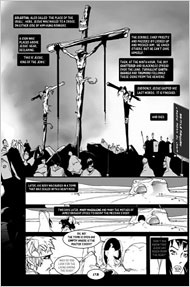
As a believer in the Lord Jesus Christ, and the Holy Scriptures, I can confidently say, that there is never a time where I have found the need to make the Bible and it’s stories and truths more “relevant” for today’s culture. It is relevant in every way, and as I was looking through articles in the New York Times, I was appalled at what this man’s efforts to bring the Bible and our precious Lord a newer more “hip” look. You can read the article here.
How Long is That Sermon?
Posted: July 7, 2008 Filed under: You Might be a Calvinist if... Leave a comment You might be a Calvinist if… your 3 point message somehow has 12 points embedded in it.
ALAS! I CAN DO NOTHING!
Posted: July 6, 2008 Filed under: Sundays with Spurgeon Leave a comment AFTER THE ANXIOUS HEART has accepted the doctrine of atonement, and learned the great truth that salvation is by faith in the Lord Jesus, it is often sore troubled with a sense of inability toward that which is good. Many are groaning, “I can do nothing.” They are not making this into an excuse, but they feel it as a daily burden. They would if they could. They can each one honestly say, “To will is present with me, but how to perform that which I would I find not.”
This feeling seems to make all the gospel null and void; for what is the use of food to a hungry man if he cannot get at it? Of what avail is the river of the water of life if one cannot drink? We recall the story of the doctor and the poor woman’s child. The sage practitioner told the mother that her little one would soon be better under proper treatment, but it was absolutely needful that her boy should regularly drink the best wine, and that he should spend a season at one of the German spas. This, to a widow who could hardly get bread to eat! Now, it sometimes seems to the troubled heart that the simple gospel of “Believe and live,” is not, after all, so very simple; for it asks the poor sinner to do what he cannot do. To the really awakened, but half instructed, there appears to be a missing link ; yonder is the salvation of Jesus, but how is it to be reached? The soul is without strength, and knows not what to do. It lies within sight of the city of refuge, and cannot enter its gate.
Is this want of strength provided for in the plan of salvation? It is. The work of the Lord is perfect. It begins where we are, and asks nothing of us in order to its completion. When the good Samaritan saw the traveler lying wounded and half dead, he did not bid him rise and come to him, and mount the ass and ride off to the inn. No, “he came where he was,” and ministered to him, and lifted him upon the beast and bore him to the inn. Thus doth the Lord Jesus deal with us in our low and wretched estate.
We have seen that God justifieth, that He justifieth the ungodly and that He justifies them through faith in the precious blood of Jesus; we have now to see the condition these ungodly ones are in when Jesus works out their salvation. Many awakened persons are not only troubled about their sin, but about their moral weakness. They have no strength with which to escape from the mire into which they have fallen, nor to keep out of it in after days. They not only lament over what they have done, but over what they cannot do. They feel themselves to be powerless, helpless, and spiritually lifeless. It may sound odd to say that they feel dead, and yet it is even so. They are, in their own esteem, to all good incapable. They cannot travel the road to Heaven, for their bones are broken. “None of the men of strength have found their hands;” in fact, they are “without strength.” Happily, it is written, as the commendation of God’s love to us:
When we were yet without strength, in due time Christ died for the ungodly (Romans 5:6).
Here we see conscious helplessness succored-succored by the interposition of the Lord Jesus. Our helplessness is extreme. It is not written, ” When we were comparatively weak Christ died for us”; or, “When we had only a little strength”; but the description is absolute and unrestricted; “When we were yet without strength.” We had no strength whatever which could aid in our salvation; our Lord’s words were emphatically true, “Without me ye can do nothing.” I may go further than the text, and remind you of the great love wherewith the Lord loved us, “even when we were dead in trespasses and sins.” To be dead is even more than to be without strength.
The one thing that the poor strengthless sinner has to fix his mind upon, and firmly retain, as his one ground of hope, is the divine assurance that “in due time Christ died for the ungodly.” Believe this, and all inability will disappear. As it is fabled of Midas that he turned everything into gold by his touch, so it is true of faith that it turns everything it touches into good. Our very needs and weaknesses become blessings when faith deals with them.
Let us dwell upon certain forms of this want of strength. To begin with, one man will say, “Sir, I do not seem to have strength to collect my thoughts, and keep them fixed upon those solemn topics which concern my salvation; a short prayer is almost too much for me. It is so partly, p erhaps, through natural weakness, partly because I have injured myself through dissipation, and partly also because I worry myself with wordly cares, so that I am not capable of those high thoughts which are necessary ere a soul can be saved.” This is a very common form of sinful weakness. Note this! You are without strength on this point; and there are many like you. They could not carry out a train of consecutive thought to save their lives. Many poor men and women are illiterate and untrained, and these would find deep thought to be very heavy work. Others are so light and trifling by nature, that they could no more follow out a long process of argument and reasoning, than they could fly. They could never attain to the knowledge of any profound mystery if they expended their whole life in the effort. You need not, therefore, despair: that which is necessary to salvation is not continuous thought, but a simple reliance upon Jesus. Hold you on to this one fact-“In due time Christ died for the ungodly. ” This truth will not require from you any deep research or profound reasoning, or convincing argument. There it stands: “In due time Christ died for the ungodly.” Fix your mind on that, and rest there.
Let this one great, gracious, glorious fact lie in your spirit till it perfumes all your thoughts, and makes you rejoice even though you are without strength, seeing the Lord Jesus has become your strength and your song, yea, He has become your salvation. According to the Scriptures it is a revealed fact, that in due time Christ died for the ungodly when they were yet without strength. You have heard these words hundreds of times, maybe, and yet you have never before perceived their meaning. There is a cheering savor about them, is there not? Jesus did not die for our righteousness, but He died for our sins. He did not come to save us because we were worth the saving, but because we were utterly worthless, ruined, and undone. He came not to earth out of any reason that was in us, but solely and only out of reasons which He fetched from the depths of His own divine love. In due time He died for those whom He describes, not as godly, but as ungodly, applying to them as hopeless an adjective as He could well have selected. If you have but little mind, yet fasten it to this truth, which is fitted to the smallest capacity, and is able to cheer the heaviest heart. Let this text lie under your tongue like a sweet morsel, till it dissolves into your heart and flavors all your thoughts; and then it will little matter though those thoughts should be as scattered as autumn leaves. Persons who have never shone in science, nor displayed the least originality of mind, have nevertheless been fully able to accept the doctrine of the cross, and have been saved thereby. Why should not you?
I hear another man cry, “Oh, sir my want of strength lies mainly in this, that I cannot repent sufficiently!” A curious idea men have of what repentance is! Many fancy that so many tears are to be shed, and so many groans are to be heaved, and so much despair is to be endured. Whence comes this unreasonable notion? Unbelief and despair are sins, and therefore I do not see how they can be constituent elements of acceptable repentance; yet there are many who regard them as necessary parts of true Christian experience. They are in great error. Still, I know what they mean, for in the days of my darkness I used to feel in the same way. I desired to repent, but I thought that I could not do it, and yet all the while I was repenting. Odd as it may sound, I felt that I could not feel. I used to get into a corner and weep, because I could not weep; and I fell into bitter sorrow because I could not sorrow for sin. What a jumble it all is when in our unbelieving state we begin to judge our own condition! It is like a blind man looking at his own eyes. My heart was melted within me for fear, because I thought that my heart was as hard as an adamant stone. My heart was broken to think that it would not break. Now I can see that I was exhibiting the very thing which I thought I did not possess; but then I knew not where I was.
Oh that I could help others into the light which I now enjoy! Fain would I say a word which might shorten the time of their bewilderment. I would say a few plain words, and pray “the Comforter” to apply them to the heart.
Remember that the man who truly repents is never satisfied with his own repentance. We can no more repent perfectly than we can live perfectly. However pure our tears, there will always be some dirt in them: there will be something to be repented of even in our best repentance. But listen! To repent is to change your mind about sin, and Christ, and all the great things of God. There is sorrow implied in this; but the main point is the turning of the heart from sin to Christ. If there be this turning, you have the essence of true repentance, even though no alarm and no despair should ever have cast their shadow upon your mind.
If you cannot repent as you would, it will greatly aid you to do so if you will firmly believe that “in due time Christ died for the ungodly. ” Think of this again and again. How can you continue to be hard-hearted when you know that out of supreme love “Christ died for the ungodly”? Let me persuade you to reason with yourself thus: Ungodly as I am, though this heart of steel will not relent, though I smite in vain upon my breast, yet He died for such as I am, since He died for the ungodly. Oh that I may believe this and feel the power of it upon my flinty heart!
Blot out every other reflection from your soul, and sit down by the hour together, and meditate deeply on this one resplendent display of unmerited, unexpected, unexampled love, “Christ died for the ungodly.” Read over carefully the narrative of the Lord’s death, as you find it in the four evangelists. If anything can melt your stubborn heart, it will be a sight of the sufferings of Jesus, and the consideration that he suffered all this for His enemies.
O Jesus! sweet the tears I shed,
While at Thy feet I kneel,
Gaze on Thy wounded, fainting head,
And all Thy sorrows feel.
My heart dissolves to see Thee bleed,
This heart so hard before;
I hear Thee for the guilty plead,
And grief o’erflows the more.
‘Twas for the sinful Thou didst die,
And I a sinner stand:
Convinc’d by Thine expiring eye,
Slain by Thy pierced hand.
Ray Palmer
Surely the cross is that wonder-working rod which can bring water out of a rock. If you understand the full meaning of the divine sacrifice of Jesus, you must repent of ever having been opposed to One who is so full of love. It is written, “They shall look upon him whom they have pierced, and they shall mourn for him, as one mourneth for his only son, and shall be in bitterness for him, as one that is in bitterness for his firstborn.” Repentance will not make you see Christ; but to see Christ will give you repentance. You may not make a Christ out of your repentance, but you must look for repentance to Christ. The Holy Ghost, by turning us to Christ, turns us from sin. Look away, then, from the effect to the cause, from your own repenting to the Lord Jesus, who is exalted on high to give repentance.
I have heard another say, “I am tormented with horrible thoughts. Wherever I go, blasphemies steal in upon me. Frequently at my work a dreadful suggestion forces itself upon me, and even on my bed I am startled from my sleep by whispers of the evil one. I cannot get away from this h orrible temptation.” Friend, I know what you mean, for I have myself been hunted by this wolf. A man might as well hope to fight a swarm of flies with a sword as to master his own thoughts when they are set on by the devil. A poor tempted soul, assailed by satanic suggestions, is like a traveler I have read of, about whose head and ears and whole body there came a swarm of angry bees. He could not keep them off nor escape from them. They stung him everywhere and threatened to be the death of him. I do not wonder you feel that you are without strength to stop these hideous and abominable thoughts which Satan pours into your soul; but yet I would remind you of the Scripture before us-“When we were yet without strength, in due time Christ died for the ungodly.” Jesus knew where we were and where we should be; He saw that we could not overcome the prince of the power of the air; He knew that we should be greatly worried by him; but even then, when He saw us in that condition, Christ died for the ungodly. Cast the anchor of your faith upon this. The devil himself cannot tell you that you are not ungodly; believe, then, that Jesus died even for such as you are. Remember Martin Luther’s way of cutting the devil’s head off with his own sword. “Oh,” said the devil to Martin Luther, “you are a sinner. ” “Yes,” said he, “Christ died to save sinners.” Thus he smote him with his own sword. Hide you in this refuge, and keep there: “In due time Christ died for the ungodly.” If you stand to that truth, your blasphemous thoughts which you have not the strength to drive away will go away of themselves; for Satan will see that he is answering no purpose by plaguing you with them.
These thoughts, if you hate them, are none of yours, but are injections of the Devil, for which he is responsible, and not you. If you strive against them, they are no more yours than are the cursings and falsehoods of rioters in the street. It is by means of these thoughts that the Devil would drive you to despair, or at least keep you from trusting Jesus. The poor diseased woman could not come to Jesus for the press, and you are in much the same condition, because of the rush and throng of these dreadful thoughts. Still, she put forth her finger, and touched the fringe of the Lord’s garment, and she was healed. Do you the same.
Jesus died for those who are guilty of “all manner of sin and blasphemy,” and therefore I am sure He will not refuse those who are unwillingly the captives of evil thoughts. Cast yourself upon Him, thoughts and all, and see if He be not mighty to save. He can still those horrible whisperings of the fiend, or He can enable you to see them in their true light, so that you may not be worried by them. In His own way He can and will save you, and at length give you perfect peace. Only trust Him for this and everything else.
Sadly perplexing is that form of inability which lies in a supposed want of power to believe. We are not strangers to the cry:
Oh that I could believe,
Then all would easy be;
I would, but cannot; Lord, relieve,
My help must come from thee.
Many remain in the dark for years because they have no power, as they say, to do that which is the giving up of all power and reposing in the power of another, even the Lord Jesus. Indeed, it is a very curious thing, this whole matter of believing; for people do not get much help by trying to believe. Believing does not come by trying. If a person were to make a statement of something that happened this day, I should not tell him that I would try to believe him. If I believed in the truthfulness of the man who told the incident to me and said that he saw it, I should accept the statement at once. If I did not think him a true man, I should, of course, disbelieve him ; but there would be no trying in the matter. Now, when God declares that there is salvation in Christ Jesus, I must either believe Him at once, or make Him a liar. Surely you will not hesitate as to which is the right path in this case, The witness of God must be true, and we are bound at once to believe in Jesus.
But possibly you have been trying to believe too much. Now do not aim at great things. Be satisfied to have a faith that can hold in its hand this one truth, “While we were yet without strength, in due time Christ died for the ungodly.” He laid down His life for men while as yet they were not believing in Him, nor were able to believe in Him. He died for men, not as believers, but as sinners. He came to make these sinners into believers and saints; but when He died for them He viewed them as utterly without strength. If you hold to the truth that Christ died for the ungodly, and believe it, your faith will save you, and you may go in peace. If you will trust your soul with Jesus, who died for the ungodly, even though you cannot believe all things, nor move mountains, nor do any other wonderful works, yet you are saved. It is not great faith, but true faith, that saves; and the salvation lies not in the faith, but in the Christ in whom faith trusts. Faith as a grain of mustard seed will bring salvation. It is not the measure of faith, but the sincerity of faith, which is the point to be considered. Surely a man can believe what he knows to be true; and as you know Jesus to be true, you, my friend, can believe in Him.
The cross which is the object of faith, is also, by the power of the Holy Spirit, the cause of it. Sit down and watch the dying Saviour till faith springs up spontaneously in your heart. There is no place like Calvary for creating confidence. The air of that sacred hill brings health to trembling faith. Many a watcher there has said:
While I view Thee, wounded, grieving,
Breathless on the cursed tree,
Lord, I feel my heart believing
That Thou suffer’dst thus for me.
“Alas!” cries another, “my want of strength lies in this direction, that I cannot quit my sin, and I know that I cannot go to Heaven and carry my sin with me.” I am glad that you know that, for it is quite true. You must be divorced from your sin, or you cannot be married to Christ. Recollect the question which flashed into the mind of young Bunyan when at his sports on the green on Sunday: “Wilt thou have thy sins and go to hell, or wilt thou quit thy sins and go to heaven?” That brought him to a dead stand. That is a question which every man will have to answer: for there is no going on in sin and going to heaven. That cannot be. You must quit sin or quit hope. Do you reply, “Yes, I am willing enough. To will is present with me, but how to perform that which l would I find not. Sin masters me, and I have no strength.” Come, then, if you have no strength, this text is still true, “When we were yet without strength, in due time Christ died for the ungodly.” Can you still believe that? However other things may seem to contradict it, will you believe it? God has said it, and it is a fact; therefore, hold on to it like grim death, for your only hope lies there. Believe this and trust Jesus, and you shall soon find power with which to slay your sin; but apart from Him, the strong man armed will hold you for ever his bond slave. Personally, I could never have overcome my own sinfulness. I tried and failed. My evil propensities were too many for me, till, in the belief that Christ died for me, I cast my guilty soul on Him, and then I received a conquering principle by which I overcame my sinful self. The doctrine of the cross can be used to slay sin, even as the old warriors used their huge two-handed swords, and mowed down their foes at every stroke. There is nothing like faith in the sinner’s Friend: it overcomes all evil. If Christ has died for me, ungodly as I am, without strength as I am, then I cannot live in sin any longer, but must arouse myself to love and serve Him who hath redeemed me. I cannot trifle with the evil which slew my best Friend. I must be holy for His sake. How can I live in sin when He has died to save me from it?
See what a splendid help this is to you that are without strength, to know and believe that in due time Christ died for such ungodly ones as you are. Have you caught the idea yet? It is, somehow, so difficult for our darkened, prejudiced, and unbelieving minds to see the essence of the gospel. At times I have thought, when I have done preaching, that I have laid down the gospel so clearly, that the nose on one’s face could not be more plain; and yet I perceive that even intelligent hearers have failed to understand what was meant by “Look unto me and be ye saved.” Converts usually say that they did not know the gospel till such and such a day; and yet they had heard it for years. The gospel is unknown, not from want of explanation, but from absence of personal revelation. This the Holy Ghost is ready to give, and will give to those who ask Him. Yet when given, the sum total of the truth revealed all lies within these words: “Christ died for the ungodly.”
I hear another bewailing himself thus: “Oh, sir, my weakness lies in this, that I do not seem to keep long in one mind! I hear the word on a Sunday, and I am impressed; but in the week I meet with an evil companion, and my good feelings are all gone. My fellow workmen do not believe in anything, and they say such terrible things, and I do not know how to answer them, and so I find myself knocked over.” I know this Plastic Pliable very well, and I tremble for him; but at the same time, if he is really sincere, his weakness can be met by divine grace. The Holy Spirit can cast out the evil spirit of the fear of man. He can make the coward brave. Remember, my poor vacillating friend, you must not remain in this state. It will never do to be mean and beggarly to yourself. Stand upright, and look at yourself, and see if you were ever meant to be like a toad under a harrow, afraid for your life either to move or to stand still. Do have a mind of your own. This is not a spiritual matter only, but one which concerns ordinary manliness. I would do many things to please my friends; but to go to hell to please them is more than I would venture. It may be very well to do this and that for good fellowship; but it will never do to lose the friendship of God in order to keep on good terms with men. “I know that,” says the man, “but still, though I know it, I cannot pluck up courage. I cannot show my colors. I cannot stand fast.” Well, to you also I have the same text to bring: “When we were yet without strength, in due time Christ died for the ungodly.” If Peter were here, he would say, “The Lord Jesus died for me even when I was such a poor weak creature that the maid who kept the fire drove me to lie, and to swear that I knew not the Lord.” Yes, Jesus died for those who forsook him and fled. Take a firm grip on this truth-“Christ died for the ungodly while they were yet without strength.” This is your way out of your cowardice. Get this wrought into your soul, “Christ died for me,” and you will soon be ready to die for Him. Believe it, that He suffered in your place and stead, and offered for you a full, true, and satisfactory expiation. If you believe that fact, you will be forced to feel, “I cannot be ashamed of Him who died for me.” A full conviction that this is true will nerve you with a dauntless courage. Look at the saints in the martyr age. In the early days of Christianity, when this great thought of Christ’s exceeding love was sparkling in all its freshness in the church, men were not only ready to die, but they grew ambitious to suffer, and even presented themselves by hundreds at the judgment seats of the rulers, confessing the Christ. I do not say that they were wise to court a cruel death; but it proves my point, that a sense of the love of Jesus lifts the mind above all fear of what man can do to us. Why should it not produce the same effect in you? Oh that it might now inspire you with a brave resolve to come out upon the Lord’s side, and be His follower to the end!
May the Holy Spirit help us to come thus far by faith in the Lord Jesus, and it will be well!
BJU Protests
Posted: July 5, 2008 Filed under: Video of the Week 2 CommentsWhen Christians stand against those who are in sin, do we do it in a Gospel loving way, or do we bash them because of their sin? How did the Gospel come to you, when you was deep into sin and lost? Does the cross scream at you, Your Gay! You are going to Hell! -OR- does it come in gracefully, peacefully, mercy, kindness, and tenderhearted love that Saved your Soul from the pit of hell.
Devoted To the Service of the Temple
Posted: July 4, 2008 Filed under: Book of the Week, Book Review, Hercules Collins, Profiles in Reformed Spirituality, Reformation Heritage Books Leave a comment This weeks Book of the Week is, Michael Haykin, and Steve Weaver: Devoted To the Service of the Temple: Piety, Persecution, and Ministry in the Writings of Hercules Collins, (Grand Rapids: Reformation Heritage Books 2007).
Summary of the Piety, Persecution, and Ministry in the writings of Hercules Collins:
When seeing the name Hercules Collins, not many postmodern individuals even know who the man is. Collins lived during the later 1700s and early 1800s as one of the most profound Calvinistic Baptists in London, England. Being one of the greatest Baptist figures of all time, this short biography shows a life of piety that the believer today could only wish to experience personally. In this biography, Dr. Haykin and Steve Weaver outline the beginning of Collins’ life in England, his pastorate, his imprisonment, his popularity among the London Baptists, his piety in knowing God, and his persecution while building the Baptist faith in London. Although many have never heard of him and do not know anything about him, it was his gospel-centered ministry that helped redeem London from the cesspool of sin in his time. Despite the drunkards, the prideful, the profane, homosexuals, and adulterers, Collins’ dedication to the gospel was to preach the good news to all types of people. Collins truly knew how to preach, and one of the characteristics of his preaching was how he prepared for his sermons. In preparing and giving sermons, he aimed to be plain and simple so that even the unregenerate could easily see sound words that soon became light and fire to their hearts. If you are looking for an easy biography to read, there is nothing like that of Hercules Collins’.
Summary selected writings of Hercules Collins:
Dr. Haykin has closely selected 35 different sections from Collins’ writings to show the magnitude of his “plain Jane” writing that was so profound. These writings reveal the relationship he had with his Father, the Lord Jesus Christ. Some of these sections include writings from when he was in prison, and deal with topics such as how to submit to God’s will. Many people in the 21st Century often look at one of the most prolific speakers of our day, John Piper, because of how he speaks, writes and preaches. If there were a Reformed Baptist that was as insightful to the Scriptures, as vigorous in the pulpit, and as striking with their words as John Piper, it would have to be Collins in the early 18th Century. Writings like: God is the Gospel, The Christ-Finding Soul, Grace Sweetens the Music, and An Old Gospel are just some of the topics of which you can read when picking up Devoted to the Service of the Temple. Not only were his writings profound, but he was also known to be a pastor like no other. Included are articles on being a pastor, such as: The Art of Preaching, The Value of Pastoral Ministry, Interpreting Scripture, Plain Preaching, Sermon Preparation, Preaching the Whole Counsel of God, Advice about Preaching, The Use of Notes in Preaching, and The Believers Ultimate Comfort.
Recommendation: 9 out of 10
Having no clue who Hercules Collins was when I began this book, I was surprised that by the time I had read 125 pages I found out just how gospel-centered he was. These inspiring writings that Dr. Haykin and Steve Weaver compiled are tremendously valuable, and truly Christ-saturated. Although half of them seemed to be more geared towards pastoring, there was still a great amount of theological emphasis placed upon Collins’ writings. Whether about preaching or about the gospel, Collins’ focus was always centered on both the unregenerate and regenerate, to see the promises of God and to live a life of piety for Him.
No Post becuase the Flood
Posted: July 3, 2008 Filed under: Uncategorized Leave a commentDue to my apartment flooding there will be no post today!
So instead of the sermon of the week, here’s and article for you to read. 
Responsibility of Communicating the Gospel
Posted: July 2, 2008 Filed under: Gospel Quote of the Week Leave a commentGospel Quote of the Week
 “Each generation of the church in each setting has the responsibility of communicating the gospel in understandable terms, considering the language and thought-forms of that setting.” – Francis Schaeffer
Christ on Blogs
Posted: July 1, 2008 Filed under: Where is Christ in the Culture Today? Leave a commentWhere is Christ in the Culture Today?
Today people are blogging like mad! Blogs in every area of interest! But one of mine is today very post. Christ in the culture. Take a look for your selves at some of the top-hits of blogs in dealing with Christ, at Google.
Tulips the Calvinist Flower
Posted: June 30, 2008 Filed under: You Might be a Calvinist if... Leave a comment You might be a Calvinist if… you buy your girlfriend/wife TULIPS for Valentines Day.
WHY ARE WE SAVED BY FAITH?
Posted: June 29, 2008 Filed under: Sundays with Spurgeon Leave a comment TO MAKE THE MATTER Of faith clearer still, I will give you a few illustrations. Though the Holy Spirit alone can make my reader see, it is my duty and my joy to furnish all the light I can, and to pray the divine Lord to open blind eyes. Oh that my reader would pray the same prayer for himself!
The faith which saves has its analogies in the human frame.
It is the eye which looks. By the eye we bring into the mind that which is far away; we can bring the sun and the far-off stars into the mind by a glance of the eye. So by trust we bring the Lord Jesus near to us; and though He be far away in Heaven, He enters into our heart. Only look to Jesus; for the hymn is strictly true-
There is life in a look at the Crucified One,
There is life at this moment for thee.
Faith is the hand which grasps. When our hand takes hold of anything for itself, it does precisely what faith does when it appropriates Christ and the blessings of His redemption. Faith says, “Jesus is mine.” Faith hears of the pardoning blood, and cries, “I accept it to pardon me.” Faith calls the legacies of the dying Jesus her own; and they are her own, for faith is Christ’s heir; He has given Himself and all that He has to faith. Take, O friend, that which grace has provided for thee. You will not be a thief, for you have a divine permit: “Whosoever will, let him take the water of life freely.” He who may have a treasure simply by his grasping it will be foolish indeed if he remains poor.
Faith is the mouth which feeds upon Christ. Before food can nourish us, it must be received into us. This is a simple matter-this eating and drinking. We willingly receive into the mouth that which is our food, and then we consent that it should pass down into our inward parts, wherein it is taken up and absorbed into our bodily frame. Paul says, in his Epistle to the Romans, in the tenth chapter, “The word is nigh thee, even in thy mouth.” Now then, all that is to be done is to swallow it, to suffer it to go down into the soul. Oh that men had an appetite! For he who is hungry and sees meat before him does not need to be taught how to eat. “Give me,” said one, “a knife and a fork and a chance.” He was fully prepared to do the rest. Truly, a heart which hungers and thirsts after Christ has but to know that He is freely given, and at once it will receive Him. If my reader is in such a case, let him not hesitate to receive Jesus; for he may be sure that he will never be blamed for doing so: for unto “as many as received him, to them gave he power to become the sons of God.” He never repulses one, but He authorizes all who come to remain sons for ever.
The pursuits of life illustrate faith in many ways. The farmer buries good seed in the earth, and expects it not only to live but to be multiplied. He has faith in the covenant arrangement, that “seed-time and harvest shall not cease,” and he is rewarded for his faith.
The merchant places his money in the care of a banker, and trusts altogether to the honesty and soundness of the bank. He entrusts his capital to another’s hands, and feels far more at ease than if he had the solid gold locked up in an iron safe.
The sailor trusts himself to the sea. When he swims he takes his foot from the bottom and rests upon the buoyant ocean. He could not swim if he did not wholly cast himself upon the water.
The goldsmith puts precious metal into the fire which seems eager to consume it, but he receives it back again from the furnace purified by the heat.
You cannot turn anywhere in life without seeing faith in operation between man and man, or between man and natural law. Now, just as we trust in daily life, even so are we to trust in God as He is revealed in Christ Jesus.
Faith exists in different persons in various degrees, according to the amount of their knowledge or growth in grace. Sometimes faith is little more than a simple clinging to Christ; a sense of dependence and a willingness so to depend. When you are down at the seaside you will see limpets sticking to the rock. You walk with a soft tread up to the rock; you strike the mollusk a rapid blow with your walking-stick and off he comes. Try the next limpet in that way. You have given him warning; he heard the blow with which you struck his neighbor, and he clings with all his might. You will never get him off; not you! Strike, and strike again, but you may as soon break the rock. Our little friend, the limpet, does not know much, but he clings. He is not acquainted with the geological formation of the rock, but he clings. He can cling, and he has found something to cling to: this is all his stock of knowledge, and he uses it for his security and salvation. It is the limpet’s life to cling to the rock, and it is the sinner’s life to cling to Jesus. Thousands of God’s people have no more faith than this; they know enough to cling to Jesus with all their heart and soul, and this suffices for present peace and eternal safety. Jesus Christ is to them a Saviour strong and mighty, a Rock immovable and immutable; they cling to him for dear life, and this clinging saves them. Reader, cannot you cling? Do so at once.
Faith is seen when one man relies upon another from a knowledge of the superiority of the other. This is a higher faith; the faith which knows the reason for its dependence, and acts upon it. I do not think the limpet knows much about the rock: but as faith grows it becomes more and more intelligent. A blind man trusts himself with his guide because he knows that his friend can see, and, trusting, he walks where his guide conducts him. If the poor man is born blind he does not know what sight is; but he knows that there is such a thing as sight, and that it is possessed by his friend and therefore he freely puts his hand into the hand of the seeing one, and follows his leadership. “We walk by faith, not by sight.” ” Blessed are they which have not seen, and yet have believed.” This is as good an image of faith as well can be; we know that Jesus has about Him merit, and power, and blessing, which we do not possess, and therefore we gladly trust ourselves to Him to be to us what we cannot be to ourselves. We trust Him as the blind man trusts his guide. He never betrays our confidence ; but He “is made of God unto us wisdom, and righteousness, and sanctification, and redemption.”
Every boy that goes to school has to exert faith while learning. His schoolmaster teaches him geography, and instructs him as to the form of the earth, and the existence of certain great cities and empires. The boy does not himself know that these things are true, except that he believes his teacher, and the books put into his hands. That is what you will have to do with Christ, if you are to be saved; you must simply know because He tells you, believe because He assures you it is even so, and trust yourself with Him because He promises you that salvation will be the result. Almost all that you and I know has come to us by faith. A scientific discovery has been made, and we are sure of it. On what grounds do we believe it? On the authority of certain well-known men of learning, whose reputations are established. We have never made or seen their experiments, but we believe their witness. You must do the like with regard to Jesus: because He teaches you certain truths you are to be His disciple, and believe His words; because He has performed certain acts you are to be His client, and trust yourself with Him. He is infinitely superior to you, and presents himself to your confidence as your Master and Lord. If you will receive Him and His words you shall be saved.
Another and a higher form of faith is that faith which grows out of love. Why does a boy trust his father? The reason why the child trusts his father is because he loves him. Blessed and happy are they who have a sweet faith in Jesus, intertwined with deep affection for Him, for this is a restful confidence. These lovers of Jesus are charmed with His character, and delighted with His mission, they are carried away by the lovingkindness that He has manifested, and therefore they cannot help trusting Him, because they so much admire, revere, and love Him.
The way of loving trust in the Saviour may thus be illustrated. A lady is the wife of the most eminent physician of the day. She is seized with a dangerous illness, and is smitten down by its power; yet she is wonderfully calm and quiet, for her husband has made this disease his special study, and has healed thousands who were similarly afflicted. She is not in the least troubled, for she feels perfectly safe in the hands of one so dear to her, and in whom skill and love are blended in their highest forms. Her faith is reasonable and natural; her husband, from every point of view, deserves it of her. This is the kind of faith which the happiest of believers exercise toward Christ. There is no physician like Him, none can save as He can; we love Him, and He loves us, and therefore we put ourselves into His hands, accept whatever He prescribes, and do whatever He bids. We feel that nothing can be wrongly ordered while He is the director of our affairs; for He loves us too well to let us perish, or suffer a single needless pang.
Faith is the root of obedience, and this may be clearly seen in the affairs of life. When a captain trusts a pilot to steer his vessel into port he manages the vessel according to his direction. When a traveler trusts a guide to conduct him over a difficult pass, he follows the track which his guide points out. When a patient believes in a physician, he carefully follows his prescriptions and directions. Faith which refuses to obey the commands of the Saviour is a mere pretence, and will never save the soul. We trust Jesus to save us; He gives us directions as to the way of salvation; we follow those directions and are saved. Let not my reader forget this. Trust Jesus, and prove your trust by doing whatever He bids you.
A notable form of faith arises out of assured knowledge; this comes of growth in grace, and is the faith which believes Christ because it knows Him, and trusts Him because it has proved Him to be infallibly faithful. An old Christian was in the habit of writing T and P in the margin of her Bible whenever she had tried and proved a promise. How easy it is to trust a tried and proved Saviour! You cannot do this as yet, but you will do so. Everything must have a beginning. You will rise to strong faith in due time. This matured faith asks not for signs and tokens, but bravely believes. Look at the faith of the master mariner-I have often wondered at it. He looses his cable, he steams away from the land. For days, weeks, or even months, he never sees sail or shore; yet on he goes day and night without fear, till one morning he finds himself exactly opposite to the desired haven toward which he has been steering. How has he found his way over the trackless deep ? He has trusted in his compass, his nautical almanac, his glass, and the heavenly bodies; and obeying their guidance, without sighting land, he has steered so accurately that he has not to change a point to enter into port. It is a wonderful thing-that sailing or steaming without sight. Spiritually it is a blessed thing to leave altogether the shores of sight and feeling, and to say, “Good-by” to inward feelings, cheering providences, signs, tokens, and so forth. It is glorious to be far out on the ocean of divine love, believing in God, and steering for Heaven straight away by the direction of the Word of God. “Blessed are they that have not seen, and yet have believed”; to them shall be administered an abundant entrance at the last, and a safe voyage on the way. Will not my reader put his trust in God in Christ Jesus. There I rest with joyous confidence. Brother, come with me, and believe our Father and our Saviour. Come at once.
Free Will Song
Posted: June 28, 2008 Filed under: Video of the Week Leave a commentThis is quite the song. The song simply sadden my heart when watching such views of God. What is even more saddening is Jim Schettler at the end that gets up and says, “That it is not only one of the greatest themes but truths of the entire Bible.”
Christ is All
Posted: June 27, 2008 Filed under: Book of the Week, Book Review, Reformation Heritage Books Leave a commentThis weeks Book of the Week is Christ is All by, Michael Haykin, and Darrin R. Brooker. 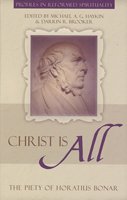
Summary of the Piety of Horatius Bonar:
Volume 4 in the Profiles in Reformed Spirituality series was written and edited by Dr. Michael Haykin and Darrin R. Brooker (the latter being the editor and publisher of the Life and Works of Horatius Bonar CD-Rom).
This volume – entitled Christ is All – gives a biography of Horatius Bonar and picks many glorious writings that help reveal his piety. Bonar is greatly known for his preaching of the gospel, which in turn saved many souls. Throughout his biography, it is shown how many great theologians influenced his life. Dr. Haykin also provides a brief summary of some of Bonar’s early pastorates in Leith and Kelso, and tells about the many writings that created revivals in Scotland. This book summarizes what was clearly seen in Bonar’s life, pastorate, and writings: that Christ is all. Bonar’s whole life centered around Christ, in Whom he served.
Summary of the selected works of Horatius Bonar:
The second section of Christ is All includes 65 selected writings from Horatius Bonar. These writings clearly reveal Bonar’s love for Christ. It seems that on every page Bonar points to Christ… whether it is the way we read, the way we grow, the way we do our work, or the way we pray – every aspect points to Him. Bonar saw that Christians were to be above reproach, were to be a strong and bold witness, and were to stay true to their Christian walk until the end of their ministry. He placed emphasis on the way that Christians use their time – not in things of the world, but spending time in the Scriptures, which led to a life of piety. Bonar knew the trouble of sin, and that is why his writings made it clear that believers are to aim to glorify God and focus their faith on Christ. He believed that all of Christianity was to be summed up in the lives of believers in how they lived out their doctrines. One of my favorite sections of Bonar’s writings is found in section 41, entitled Christianity: Doctrine in Life, where he says, “Christianity is both a life and a dogma; quite as much the one as the other.”
Recommendation: 8 out 10
Christ is All is lengthier than the first 3 volumes in The Profiles of Reformed Spirituality. Where the others had 28-30 sections, Bonar’s selected writings include 65. For the sincere Christian that wants to see and know how to live a life in tune with Christ, Bonar is a great example. His spirituality is clearly shown throughout his life and throughout these particular sections of writings. No matter if you are young or old in age, or young or old in the faith, like Dr. David Murray says, “As Bonar would wish, every word points us to the Christ of all ages for all ages.” And the same goes for us in the 21st Century, as Christians need to be reading substantial theology and substantial writings that point us to Whom saved us. When we read such writings as this, the believer will truly see that Christ is all.
Pour Out Your Indignation Upon Them
Posted: June 26, 2008 Filed under: Sermon of the Week Leave a comment This weeks sermon of the week is by John Piper. It is often at times hard to understand how to see the Psalms which are spewing cruses upon mankind. However Piper brings good insight to just that. You may enjoy listening. You can see, watch and listen to it all here.
The Gospel is a Treasure
Posted: June 25, 2008 Filed under: Gospel Quote of the Week Leave a commentGospel Quote of the Week

“Christ’s riches are unsearchable, and this doctrine of the gospel is the field this treasure is hidden in.” – Thomas Goodwin.
My Thoughts: It is often great to dwell upon the gospel at least a few times a day. When seeing the gospel rooted in and through Christ is when the believer can enjoy the true treasures that are in it. Make sure you, yourself at least take a few times out of the day thanking Christ for the gospel.
Passion of the Christ 2
Posted: June 24, 2008 Filed under: Where is Christ in the Culture Today? Leave a commentWhere is Christ in the Culture Today? On YouTube, that’s where!
My Thoughts: This seems to maybe one of my favorite post that I am going to be able to do on Tuesdays. However, it is the most heart broken at times as well. Christ seems to be a hot issue these days in these postmodern times. For fellow believers but even more for those who may not know Christ in a personal and loving, honoring, and respectful kind of way. In all, it seems that the respect of Christ is often forgotten about in the 21st century, or even more belittled to just annoy Christians like us. So, when seeing a video such as this, you want to get mad, almost wish you could meet the guy that made it, and tell him all about the wrath of God coming for his head. Maybe some of us make a “youtube” account and leave some filthy, slanderous remark in trying to rebuke the unregenerate, as if he knows better. Maybe, just maybe you could tell him how you really feel inside and basically react the same way he did in offending you, ungospel-centered. yes, I made up that word (maybe) ungospel-centered.
Christ-centered Thoughts: Although many Christians may get offended when watching such a video (which I do to), or simply set back in their seats in front of their computer, not one time may the thought cross their mind to pray for the maker of this video or pray for the lost souls that belittle Christ in our culture, the ones that use Jesus Christ as a joke, and take the person of Jesus Christ as if he is only but yet another human who lived on earth. As living gospel-centered lives we as believers need to react as what the gospel did for us. Grace filled and tons of mercy, passing judgement every breath we took as unregenrate souls before the rightousness of Christ clothed us. May you think, “It could have been you making such blaspmy” but only by the grace of God, you know Jesus Christ as a brother. Living gospel-centered lives as believers is seeing what the gospel has done for you, and only hoping that it does it for the maker of this clip.
Do Calvinist always dress their family the same?
Posted: June 23, 2008 Filed under: You Might be a Calvinist if... Leave a comment
You might be a Calvinist if… you make your children dress alike to be consistent.
This post was written by my 13 year old cousin, who came and visited me in MI for the last 2 weeks. After visiting a few churches, He thought Calvinist had to all dress the same. Maybe it is a Dutch Reform thing in Grand Rapids culture.
FAITH, WHAT IS IT?
Posted: June 22, 2008 Filed under: Sundays with Spurgeon Leave a commentTHAT IS THIS FAITH concerning which it is said, “By grace are ye saved, through faith?” There are many descriptions of faith; but almost all the definitions I have met with have made me understand it less than I did before I saw them. The Negro said, when he read the chapter, that he would confound it; and it is very likely that he did so, though he meant to expound it. We may explain faith till nobody understands it. I hope I shall not be guilty of that fault. Faith is the simplest of all things, and perhaps because of its simplicity it is the more difficult to explain.
What is faith? It is made up of three things-knowledge, belief, and trust. Knowledge comes first. “How shall they believe in him of whom they have not heard?” I want to be informed of a fact before I can possibly believe it. “Faith cometh by hearing”; we must first hear, in order that we may know what is to be believed. “They that know thy name shall put their trust in thee.” A measure of knowledge is essential to faith; hence the importance of getting knowledge. “Incline your ear, and come unto me; hear, and your soul shall live.” Such was the word of the ancient prophet, and it is the word of the gospel still. Search the Scriptures and learn what the Holy Spirit teacheth concerning Christ and His salvation. Seek to know God: “For he that cometh to God must believe that he is, and that he is a rewarder of them that diligently seek him.” May the Holy Spirit give you the spirit of knowledge, and of the fear of the Lord! Know the gospel: know what the good news is, how it talks of free forgiveness, and of change of heart, of adoption into the family of God, and of countless other blessings. Know especially Christ Jesus the Son of God, the Saviour of men, united to us by His human nature, and yet one with God; and thus able to act as Mediator between God and man, able to lay His hand upon both, and to be the connecting link between the sinner and the Judge of all the earth. Endeavour to know more and more of Christ Jesus. Endeavour especially to know the doctrine of the sacrifice of Christ; for the point upon which saving faith mainly fixes itself is this- “God was in Christ, reconciling the world unto himself, not imputing their trespasses unto them.” Know that Jesus was “made a curse for us, as it is written, Cursed is every one that hangeth on a tree.” Drink deep of the doctrine of the substitutionary work of Christ; for therein lies the sweetest possible comfort to the guilty sons of men, since the Lord “made him to be sin for us, that we might be made the righteousness of God in him.” Faith begins with knowledge.
The mind goes on to believe that these things are true. The soul believes that God is, and that He hears the cries of sincere hearts; that the gospel is from God; that justification by faith is the grand truth which God hath revealed in these last days by His Spirit more clearly than before. Then the heart believes that Jesus is verily and in truth our God and Saviour, the Redeemer of men, the Prophet, Priest, and King of His people. All this is accepted as sure truth, not to be called in question. I pray that you may at once come to this. Get firmly to believe that “the blood of Jesus Christ, God’s dear Son, cleanseth us from all sin”; that His sacrifice is complete and fully accepted of God on man’s behalf, so that he that believeth on Jesus is not condemned. Believe these truths as you believe any other statements; for the difference between common faith and saving faith lies mainly in the subjects upon which it is exercised. Believe the witness of God just as you believe the testimony of your own father or friend. “If we receive the witness of men, the witness of God is greater.”
So far you have made an advance toward faith; only one more ingredient is needed to complete it, which is trust. Commit yourself to the merciful God; rest your hope on the gracious gospel; trust your soul on the dying and living Saviour; wash away your sins in the atoning blood; accept His perfect righteousness, and all is well. Trust is the lifeblood of faith; there is no saving faith without it. The Puritans were accustomed to explain faith by the word “recumbency.” It meant leaning upon a thing. Lean with all your weight upon Christ. It would be a better illustration still if I said, fall at full length, and lie on the Rock of Ages. Cast yourself upon Jesus; rest in Him; commit yourself to Him. That done, you have exercised saving faith. Faith is not a blind thing; for faith begins with knowledge. It is not a speculative thing; for faith believes facts of which it is sure. It is not an unpractical, dreamy thing; for faith trusts, and stakes its destiny upon the truth of revelation. That is one way of describing what faith is.
Let me try again. Faith is believing that Christ is what He is said to be, and that He will do what He has promised to do, and then to expect this of Him. The Scriptures speak of Jesus Christ as being God, God is human flesh; as being perfect in His character; as being made of a sin-offering on our behalf; as bearing our sins in His own body on the tree. The Scripture speaks of Him as having finished transgression, made an end of sin, and brought in everlasting righteousness. The sacred records further tell us that He “rose again from the dead,” that He “ever liveth to make intercession for us,” that He has gone up into the glory, and has taken possession of Heaven on the behalf of His people, and that He will shortly come again “to judge the world in righteousness, and his people with equity.” We are most firmly to believe that it is even so; for this is the testimony of God the Father when He said, “This is my beloved Son; hear ye him.” This also is testified by God the Holy Spirit; for the Spirit has borne witness to Christ, both in the inspired Word and by divers miracles, and by His working in the hearts of men. We are to believe this testimony to be true.
Faith also believes that Christ will do what He has promised; that since He has promised to cast out none that come to Him, it is certain that He will not cast us out if we come to Him. Faith believes that since Jesus said, “The water that I shall give him shall be in him a well of water springing up into everasting life, it must be true; and if we get this living Water from Christ it will abide in us, and will well up within us in streams of holy life. Whatever Christ has promised to do He will do, and we must believe this, so as to look for pardon, justification, preservation, and eternal glory from His hands, according as He has promised them to believers in Him.
Then comes the next necessary step. Jesus is what He is said to be, Jesus will do what He says He will do; therefore we must each one trust Him, saying, “He will be to me what He says He is, and He will do to me what He has promised to do; I leave myself in the hands of Him who is appointed to save, that He may save me. I rest upon His promise that He will do even as He has said.” This is a saving faith, and he that hath it hath everlasting life. Whatever his dangers and difficulties, whatever his darkness and depression, whatever his infirmities and sins, he that believeth thus on Christ Jesus is not condemned, and shall never come into condemnation.
May that explanation be of some service! I trust it may be used by the Spirit of God to direct my reader into immediate peace. “Be not afraid; only believe.” Trust, and be at rest.
My fear is lest the reader should rest content with understanding what is to be done, and yet never do it. Better the poorest real faith actually at work, than the best ideal of it left in the region of speculation. The great matter is to believe on the Lord Jesus at once. Never mind distinctions and definitions. A hungry man eats though he does not understand the composition of his food, the anatomy of his mouth, or the process of digestion: he lives because he eats. Another far more clever person understands thoroughly the science of nutrition; but if he does not eat he will die, with all his knowledge. There are, no doubt, many at this hour in Hell who understood the doctrine of faith, but did not believe. On the other hand, not one who has trusted in the Lord Jesus has ever been cast out, though he may never have been able intelligently to define his faith. Oh dear reader, receive the Lord Jesus into your soul, and you shall live forever! “He that believeth in Him hath everlasting life.”
What do you tell pastors about their families?
Posted: June 21, 2008 Filed under: Video of the Week Leave a commentThe Video of the Week is done as a reminder by Tim Keller about pastoring and the family. Make sure you who are pastors, teachers, professors or any type of ministry are spending enough time with the ones you promised!
What Is a Healthy Church Member?
Posted: June 20, 2008 Filed under: Book of the Week Leave a commentThis weeks, Book of the Week is of a book that is to be released June 30th by Crossway. Below is a review done by one of my co-workers, the Director of Publications at Reformation Heritage Books, Jay T. Collier.
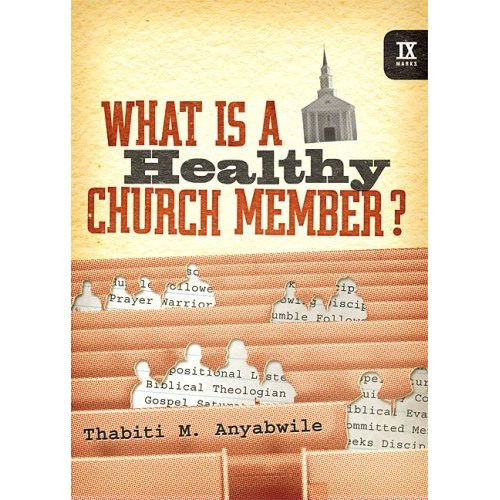 Although not out, Thabiti M. Anyabwile’s new book is set for release of June 30th. Jay T. Collier of Reformation Heritage Books has done a wonderful review of the book. You can pre-order a copy of this at Reformation Heritage Books for their low price of $9.00. Below is the review.
Books on church vitality and health have largely been directed toward pastors. I suppose this is wise, for a church with ill-informed leadership is bound to be riddled with problems. Yet the church is more than just its pastors. The whole congregation makes up the body of Christ, and every member carries a certain responsibility in that body. Thabiti M. Anyabwile’s What Is a Healthy Church Member? is a welcome addition to books addressing the health of the church.
Anyabwile’s book is part of Crossway’s 9Marks series, and as such, seeks to address the concerns of Mark Dever’s Nine Marks of a Healthy Church from yet another angle. In fact, Anyabwile’s chapters mirror those nine characteristics that Dever discusses, focusing them on the common member, and adding one. Here is a summary of Anyabwile’s 10 marks of a healthy Christian.
Mark 1: Where Dever’s first mark of a healthy church is expositional preaching, Anyabwile encourages Christians to perform expositional listening. That is, it is not good enough to attend a church with solid preaching. Believers should be active in listening to the sermon to discern the meaning of the Scripture, accept it, and apply it to their lives. Anyabwile goes on to discuss the benefits of such listening skills and gives practical suggestions for cultivating this mark.
Mark 2: Since a healthy church adheres to biblical theology, healthy church members should be biblical theologians. They should desire to know God more and know the overarching themes of the Bible. Here, Anyabwile shows why biblical theology promotes vitality in Christians and how to become theologically informed members.
Mark 3: If a healthy church is committed to a proper understanding of the gospel, healthy church members are gospel saturated. They will think about the good news of Jesus Christ, strive to understand it more, continually draw comfort and strength from it, and boast in it. In an age where the gospel is treated as if it were only good for addressing the unconverted, it is comforting to read that the gospel is good news for the Christian, too!
Mark 4: Because a healthy church has a biblical understanding of conversion, the healthy members will be genuinely converted. They will dig past the presumptive, easy-believism that inundates the evangelical scene, and exercise self-examination. Anyabwile encourages a better understanding of conversion and gives valuable directions for knowing better the state of one’s own soul.
Mark 5: A church having a biblical understanding of evangelism will have members that are biblical evangelists. They take delight in the gospel and share it with others.
Mark 6: While churches should seek to implement a biblical understanding of church membership, healthy Christians will likewise seek to be committed members of a local congregation. They will dedicate themselves to loving the brethren and building them up in the Lord. Here we see a thoughtful description of what committed church members look like.
Mark 7: If practicing biblical church discipline faithfully is a mark of a healthy church, healthy church members will seek discipline. They will be open to biblical guidance and correction from others, and lovingly seek to provide them to others. Anyabwile helpfully describes what discipline looks like among members and shows how they can joyfully seek it.
Mark 8: A healthy church has a concern for discipleship and growth, so healthy church members must be growing disciples. Rather than being satisfied with nominal Christianity, they progressively increase in spiritual maturity. Here Anyabwile discusses problems in our thinking that hinder our growth, and the means God has given us to cultivate godliness.
Mark 9: Dever stresses the need for churches to implement biblical church leadership, so Anyabwile calls church members to be humble followers. This section addresses how members are to honor and love their leaders with a teachable spirit, and proposes actions they should take in order to follow the leadership of their local church.
Mark 10: Dever never stated prayer as a mark of a healthy church, since he did not see it as something that was being challenged. However, Anyabwile sees this as a point worth making, describing healthy Christians as prayer warriors. He talks about how and when church members should pray, and addresses things for which they should pray.
Throughout the book, Anyabwile presents a picture of the church as a gathering of those glorying in the gospel to represent “the body of Christ” to this world. By addressing the relationship of the individual believer to the congregation, he enables us to see that the health of the church is stunted if reform is confined to the level of leadership. Christ is interested in the whole body being built up.
I heartily recommend this book. Its greatness lies not in novelty of insight. Rather, it is found in its ability to address the everyday basics in a clear, concise, and compelling way. The sad fact is that we easily overlook simple responsibilities, and someone has to recall them to our attention. Anyabwile does this in a winsome fashion.
Furthermore, this is not simply a book to be read by individuals. Its short, well-organized chapters with questions “for further reflection” make it helpful for study groups. This is a book for Sunday Schools, Bible studies, and other church groups to discuss together. I, for one, look forward to reading this book again, but next time reflecting upon it with my fellow church members.
—Jay T. Collier
Dwelling in the Kingdom
Posted: June 19, 2008 Filed under: Sermon of the Week Leave a comment
The sermon of the week comes from Ed Stetzer at the Dwell conference in later April. The message was entitled Dwelling in the Kingdom. I had never even heard of him until listening to the messages in mid May. I was quite intrigued with his way of teaching and thought provoking-ness on the gospel being lived out among christians today. For missiology… this is a must listen to. Here is the link.
NetNewsWire
Posted: June 18, 2008 Filed under: Web Material 3 CommentsFor those of you who may read an extremely amount of RSS feeds, news articles like CNN and BBC, sports like ESPN, and tons of blog like Gospel-Centered Musings I found last night a program that is amazing! There are many programs I found that are great and tons for you PC users, but if you are a Mac user life myself, check this out from News Gator.

 Gospel-Centered Musings