Tim Keller on the Gospel
Posted: May 28, 2008 Filed under: The Gospel, Tim Keller Leave a commentA must read on the Gospel.
Tim Keller- “The gospel has been described as a pool in which a toddler can wade and yet an elephant can swim. It is both simple enough to tell to a child and profound enough for the greatest minds to explore. Indeed, even angels never tire of looking into it (1 Peter 1:12). Humans are by no means angels, however, so rather than contemplating it, we argue about it.” Read the rest at Christianity Today, The Gospel in All its Forms.
Dr. Iain Murray on The Best Command of the Lord
Posted: May 27, 2008 Filed under: The Banner of Truth Leave a comment I am no writer by any means, and I am barley even a blogger, but nonetheless I am going to try to write down a few thoughts, one-liners and notes from the messages that are being done at the Banner of Truth Conference. Below are just the thoughts that were and are still running through my head on paper.
I am setting here at the Banner of Truth conference in Grantham, PA. Dr. Iain Murray is speaking on The Best Command of the Lord, which is the 1st session of the conference this week. Dr. Murray preached from the text John 21:19-22.
19 (This he said to show by what kind of death he was to glorify God.) And after saying this he said to him, Follow me. 20 Peter turned and saw the disciple whom Jesus loved following them, the one who had been reclining at table close to him and had said, Lord, who is it that is going to betray you? 21 When Peter saw him, he said to Jesus, Lord, what about this man? 22 Jesus said to him, If it is my will that he remain until I come, what is that to you? You follow me!
Dr. Murray’s main concern seem to be that he bring to the table the importance of showing Christ, the believer’s need to a Holy Christ, that is all to the believer’s life. Dr. Murray sets forth on how Christ is the believer’s Savior in that Christ wants those who are His. Some of the following statements just happen to be things that just happen to stick out to me during the message that I wanted to write down for others. Maybe the will leave the impact that they did for me, in sticking out among the rest of sentences that were spoken.
“Following Christ is the believer’s sole responsibility.”
“To stay close to Christ, is the priority of the Christian.”
At the end of the sermon Dr. Murray asked the question, “What are the means of this that Christ has made it, for the Christian to be able to live close to Christ? “
He answered as followed:
Christ shows the disciples that He is the Lord over all things and all history.
Christ makes known that his love and concern is that his believers follow Him, that His people would live beside Him.
@ Banner
Posted: May 27, 2008 Filed under: The Banner of Truth Leave a commentI just got to the Banner conference. So, I may be writing a few brief articles and linking to others as well as I am here. Or just take some annoying pictures and be goofy!

Reformed Presbyterian Theological Seminary
Posted: May 26, 2008 Filed under: My Travels 1 CommentOn my way to the Banner of Truth Conference, I stopped on my way through Pittsburgh at the Reformed Presbyterian Theological Seminary campus and decided to spend the night there, since it only cost me 10 bucks!!! Below is some of the pictures so that you can get a image of what exactly I am talking about.


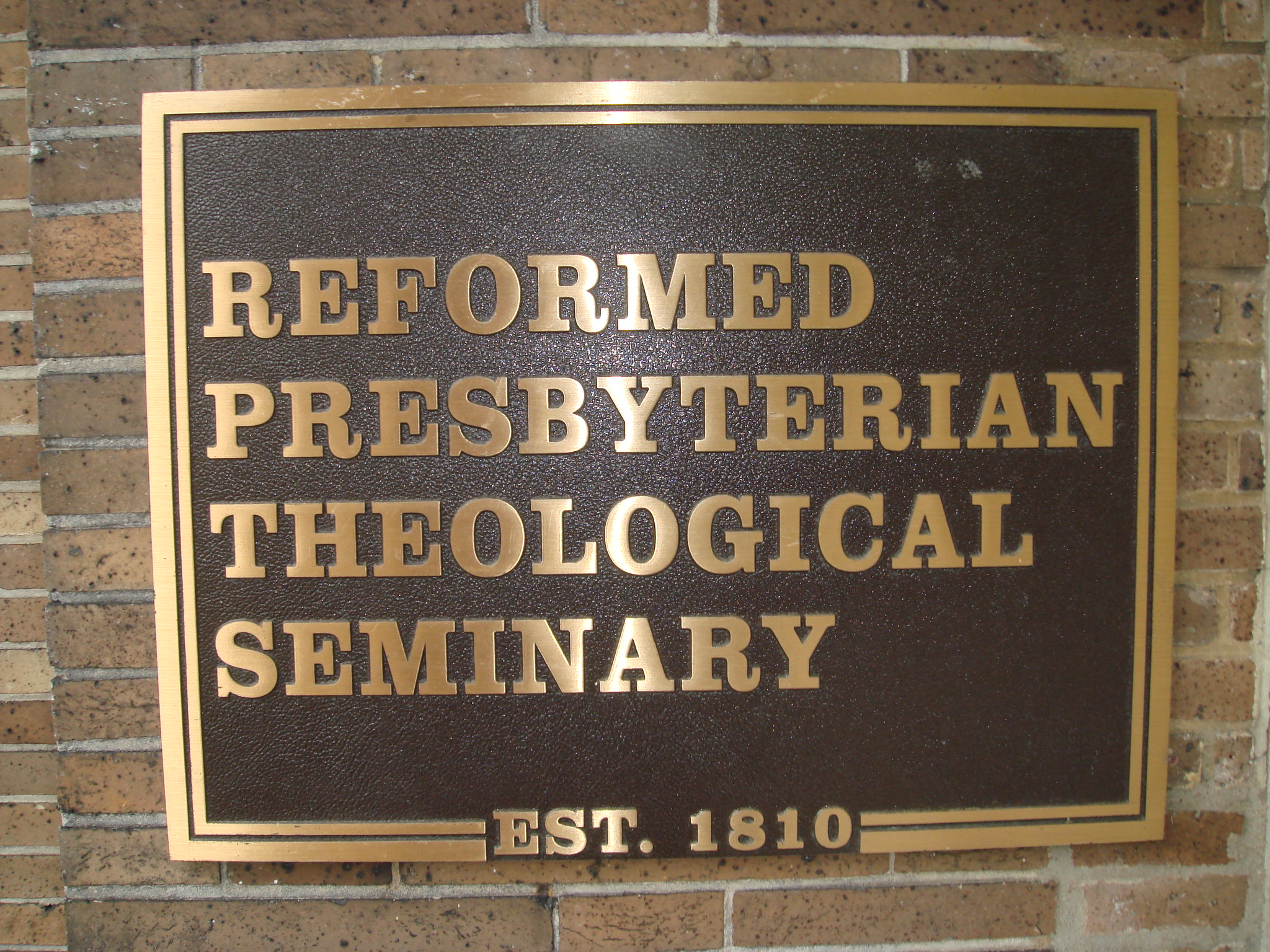
If you want to be updated more on the Banner conference, travels and maybe some ridiculous pictures, check out my buddies blog. Be sure to check back for pictures of this coming weeks travel with 4 of my buddies.
PS- I am mostly doing this for my mom, so that she can read and see the things that I do in life.
Banner of Truth Conference
Posted: May 26, 2008 Filed under: The Banner of Truth Leave a comment I am headed out to the Banner of Truth Minister’s Conference for a week of fun with some brother’s from my seminary. The information is listed below for those of you who may want to take a look at it.
May 27-29, 2008 – Banner of Truth Ministers’ Conference,
at Messiah College Grantham, PA
Speakers Include:
- Iain H. Murray
- Richard D. Phillips
- Ian Hamilton
- David Campbell
- A. Craig Troxel
 Download Conference Brochure
Click Here for Online Registration
Click Here for Testimonials and Pictures
Sunday’s with Spurgeon
Posted: May 25, 2008 Filed under: Sundays with Spurgeon Leave a comment
“IT IS GOD THAT JUSTIFIETH”
 WONDERFUL THING it is, this being justified, or made just. If we had never broken the laws of God we should not have needed it, for we should have been just in ourselves. He who has all his life done the things which he ought to have done, and has never done anything which he ought not to have done, is justified by the law. But you, dear reader, are not of that sort, I am quite sure. You have too much honesty to pretend to be without sin, and therefore you need to be justified.
 Now, if you justify yourself, you will simply be a self-deceiver. Therefore do not attempt it. It is never worth while.
If you ask your fellow mortals to justify you, what can they do? You can make some of them speak well of you for small favors, and others will backbite you for less. Their judgment is not worth much.
Our text says, “It is God that justifieth,” and this is a deal more to the point. It is an astonishing fact, and one that we ought to consider with care. Come and see.
In the first place, nobody else but God would ever have thought of justifying those who are guilty. They have lived in open rebellion; they have done evil with both hands; they have gone from bad to worse; they have turned back to sin even after they have smarted for it, and have therefore for a while been forced to leave it. They have broken the law, and trampled on the gospel. They have refused proclamations of mercy, and have persisted in ungodliness. How can they be forgiven and justified? Their fellowmen, despairing of them, say, “They are hopeless cases.” Even Christians look upon them with sorrow rather than with hope. But not so their God. He, in the splendor of his electing grace having chosen some of them before the foundation of the world, will not rest till He has justified them, and made them to be accepted in the Beloved. Is it not written, ” Whom he did predestinate, them he also called: and whom he called them he also justified: and whom he justified, them he also glorified”? Thus you see there are some whom the Lord resolves to justify: why should not you and I be of the number?
None but God would ever have thought of justifying me. I am a wonder to myself. I doubt not that grace is equally seen in others. Look at Saul of Tarsus, who foamed at the mouth, against God’s servants. Like a hungry wolf, he worried the lambs and the sheep right and left; and yet God struck him down on the road to Damascus, and changed his heart, and so fully justified him that ere long, this man became the greatest preacher of justification by faith that ever lived. He must often have marveled that he was justified by faith in Christ Jesus; for he was once a determined stickler for salvation by the works of the law. None but God would have ever thought of justifying such a man as Saul the persecutor; but the Lord God is glorious in grace.
But, even if anybody had thought of justifying the ungodly, none but God could have done it. It is quite impossible for any person to forgive offences which have not been committed against himself. A person has greatly injured you; you can forgive him, and I hope you will; but no third person can forgive him apart from you. If the wrong is done to you, the pardon must come from you. If we have sinned against God, it is in God’s power to forgive; for the sin is against Himself. That is why David says, in the fifty-first Psalm: “Against thee, thee only, have I sinned, and done this evil in thy sight”; for then God, against whom the offence is committed, can put the offence away. That which we owe to God, our great Creator can remit, if so it pleases Him; and if He remits it, it is remitted. None but the great God, against whom we have committed the sin, can blot out that sin; let us, therefore, see that we go to Him and seek mercy at His hands. Do not let us be led aside by those who would have us confess to them; they have no warrant in the Word of God for their pretensions. But even if they were ordained to pronounce absolution in God’s name, it must still be better to go ourselves to the great Lord through Jesus Christ, the Mediator, and seek and find pardon at His hand; since we are sure that this is the right way. Proxy religion involves too great a risk: you had better see to your soul’s matters yourself, and leave them in no man’s hands.
Only God can justify the ungodly; but He can do it to perfection. He casts our sins behind His back, He blots them out; He says that though they be sought for, they shall not be found. With no other reason for it but His own infinite goodness, He has prepared a glorious way by which He can make scarlet sins as white as snow, and remove our transgressions from us as far as the east is from the west. He says, “I will not remember your sins. ” He goes the length of making an end of sin. One of old called out in amazement, “Who is a God like unto thee, that pardoneth iniquity, and passeth by the transgression of the remnant of his heritage? he retaineth not his anger for ever, because he delighteth in mercy” (Micah 7:18).
We are not now speaking of justice, nor of God’s dealing with men according to their deserts. If you profess to deal with the righteous Lord on law terms, everlasting wrath threatens you, for that is what you deserve. Blessed be His name, He has not dealt with us after our sins; but now He treats with us on terms of free grace and infinite compassion, and He says, “I will receive you graciously, and love you freely.” Believe it, for it is certainly true that the great God is able to treat the guilty with abundant mercy; yea, He is able to treat the ungodly as if they had been always godly. Read carefully the parable of the prodigal son, and see how the forgiving father received the returning wanderer with as much love as if he had never gone away, and had never defiled himself with harlots. So far did he carry this that the elder brother began to grumble at it; but the father never withdrew his love. Oh my brother, however guilty you may be, if you will only come back to your God and Father, He will treat you as if you had never done wrong! He will regard you as just, and deal with you accordingly. What say you to this?
Do you not see—for I want to bring this out clearly, what a splendid thing it is—that as none but God would think of justifying the ungodly, and none but God could do it, yet the Lord can do it? See how the apostle puts the challenge, “Who shall lay anything to the charge of God’s elect? It is God that justifieth.” If God has justified a man it is well done, it is rightly done, it is justly done, it is everlastingly done. I read a statement in a magazine which is full of venom against the gospel and those who preach it, that we hold some kind of theory by which we imagine that sin can be removed from men. We hold no theory, we publish a fact. The grandest fact under heaven is this—that Christ by His precious blood does actually put away sin, and that God, for Christ’s sake, dealing with men on terms of divine mercy, forgives the guilty and justifies them, not according to anything that He sees in them, or foresees will be in them, but according to the riches of His mercy which lie in His own heart. This we have preached, do preach, and will preach as long as we live. “It is God that justifieth”—that justifieth the ungodly; He is not ashamed of doing it, nor are we of preaching it.
The justification which comes from God himself must be beyond question. If the Judge acquits me, who can condemn me? If the highest court in the universe has pronounced me just, who shall lay anything to my charge? Justification from God is a sufficient answer to an awakened conscience. The Holy Spirit by its means breathes peace over our entire nature, and we are no longer afraid. With this justification we can answer all the roarings and railings of Satan and ungodly men. With this we shall be able to die: with this we shall boldly rise again, and face the last great assize.
Bold shall I stand in that great day,
For who aught to my charge shall lay?
While by my Lord absolved I am
From sin’s tremendous curse and blame.
Zinzendorf
Friend, the Lord can blot out all your sins. I make no shot in the dark when I say this. “All manner of sin and of blasphemy shall be forgiven unto men.” Though you are steeped up to your throat in crime, He can with a word remove the defilement, and say, “I will, be thou clean.” The Lord is a great forgiver.
“I believe in the Forgiveness of Sins.” Do You?
He can even at this hour pronounce the sentence, “Thy sins be forgiven thee; go in peace;” and if He do this, no power in Heaven, or earth, or under the earth, can put you under suspicion, much less under wrath. Do not doubt the power of Almighty love. You could not forgive your fellow man had he offended you as you have offended God; but you must not measure God’s corn with your bushel; His thoughts and ways are as much above yours as the heavens are high above the earth.
“Well,” say you, “it would be a great miracle if the Lord were to pardon me.” Just so. It would be a supreme miracle, and therefore He is likely to do it; for He does “great things and unsearchable” which we looked not for.
I was myself stricken down with a horrible sense of guilt, which made my life a misery to me; but when I heard the command, “Look unto me, and be ye saved, all the ends of the earth, for I am God and there is none else “—I looked, and in a moment the Lord justified me. Jesus Christ, made sin for me, was what I saw, and that sight gave me rest. When those who were bitten by the fiery serpents in the wilderness looked to the serpent of brass they were healed at once; and so was I when I looked to the crucified Saviour. The Holy Spirit, who enabled me to believe, gave me peace through believing. I felt as sure that I was forgiven, as before I felt sure of condemnation. I had been certain of my condemnation because the Word of God declared it, and my conscience bore witness to it; but when the Lord justified me I was made equally certain by the same witnesses. The word of the Lord in the Scripture saith, “He that believeth on him is not condemned,” and my conscience bears witness that I believed, and that God in pardoning me is just. Thus I have the witness of the Holy Spirit and my own conscience, and these two agree in one. Oh, how I wish that my reader would receive the testimony of God upon this matter, and then full soon he would also have the witness in himself!
I venture to say that a sinner justified by God stands on even a surer footing than a righteous man justified by his works, if such there be. We could never be surer that we had done enough works; conscience would always be uneasy lest, after all, we should come short, and we could only have the trembling verdict of a fallible judgment to rely upon; but when God himself justifies, and the Holy Spirit bears witness thereto by giving us peace with God, why then we feel that the matter is sure and settled, and we enter into rest. No tongue can tell the depth of that calm which comes over the soul which has received the peace of God which passeth all understanding.
Book of the Week
Posted: May 23, 2008 Filed under: Book of the Week Leave a comment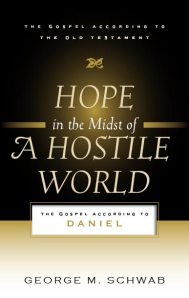 Author: Schwab, George M.
Publisher: P&R
Publish Date: 2006
Cover Type: Paperback
Pages: 196
ISBN: 9781596380066
God reveals the future to affect the present. Prophecy glorifies the One in control, inspires believers’ confidence, intensifies hope for God’s will to be done, and moves people to repentance and holiness. This study of the book of Daniel highlights these essential aspects of prophecy. Schwab’s focus is clear: God’s absolute control and unrelenting resolve to accomplish His redemptive purpose in Christ should give God’s people in every age ‘hope in the midst of a hostile world. Buy here.
Theological Guide to Calvin’s Institutes
Posted: May 22, 2008 Filed under: John Calvin Leave a comment Author: David W. Hall & Peter Lillback (ed.)
Publisher: P&R
Publish Date: May 2008
Cover Type: Hardback
Pages: 506
ISBN: 9781596380912
Information: Capturing both the best of elite scholarship, as well as exhibiting a firm understanding of and passion for Calvin’s own work, these essays by 20 elite Calvin scholars who appreciate the abiding value of Calvin’s Institutes provide definitive and section-by-section commentary on Calvin’s magnum opus. Buy here.
ReThink Conference – Wrap Up
Posted: May 21, 2008 Filed under: Conferences Leave a commentHead on over and take the time to look at the ReThink Conference wrap up.
1. Introduction
2. Interview with Steve Wright (part 1)
3. Interview with Steve Wright (part 2)
4. Session I – Leon Tucker
5. Session II – David Horner
6. Session III – Dave Owen
7. Session IV – Steve Wright
8. Session V – Randy Stinson
Merriam-Webster Definition of the Gospel: Part Two
Posted: May 21, 2008 Filed under: The Gospel Leave a commentGospel as an Adjective
1a. having a basis in or being in accordance with the gospel
1b. marked by special or fervid emphasis on the gospel
2. of, relating to, or being religious songs of American origin associated with evangelism and popular devotion and marked by simple melody and harmony and elements of folk songs and blues
Merriam-Webster Definition of the Gospel: Part One
Posted: May 20, 2008 Filed under: The Gospel Leave a commentGospel as a Noun
1. This word is often capitalized: The message concerning Christ, the kingdom of God, and salvation
2. Always capitalized : one of the first four New Testament books telling of the life, death, and resurrection of Jesus Christ; also : a similar apocryphal book : an interpretation of the Christian message
3. The message or teachings of a religious teacher
4. Something accepted or promoted as infallible truth or as a guiding principle or doctrine
5. A music genre
What is your definition of the Gospel, or gospel??
Tim Keller- The Prayer and the Gospel
Posted: May 19, 2008 Filed under: The Gospel, Tim Keller Leave a commentPrinciples
One of the most basic things that the gospel does is change prayer from mere petition to fellowship and the praise of his glory. Galatians 4:6-7 teaches us that when we believe the gospel, we not only become God’s children legally, but we receive the Spirit in order to experience our sonship. The Spirit leads us to call out passionately to God as our tender and loving Father. The Spirit calls out ‘Abba’ (4:7). In the very next verse Paul refers to this experience as “knowing God” (4:8). We do not just know and believe that God is holy and loving, but we actually experience contact with his holiness and his love in personal communion with him.
No one had a deeper insight into the gospel and prayer than Jonathan Edwards. Edwards concluded the most essential difference between a Christian and a moralist is that a Christian obeys God out of the sheer delight in who he is. The gospel means that we are not obeying God to get anything but to give him pleasure because we see his worth and beauty. Therefore, the Christian is able to draw power out of contemplation of God. Without the gospel, this is impossible. We can only come and ask for things- petition. Without the gospel, we may conceive of a holy God who is intimidating and who can be approached with petitions if we are very good. Or we may conceive of a God who is mainly loving and regards all positively. To approach the first “God” is fearsome; to approach the second is no big deal. Thus without the gospel, there is no possibility of passion and delight to praise and approach God. Read more here.
Sunday’s with Spurgeon
Posted: May 18, 2008 Filed under: Sundays with Spurgeon Leave a comment GOD JUSTIFIETH THE UNGODLY
THIS MESSAGE is for you. You will find the text in the Epistle to the Romans, in the fourth chapter and the fifth verse:
To him that worketh not, but believeth on him that justifieth the ungodly, his faith is counted for righteousness.
I call your attention to those words, “Him that justifieth the ungodly.” They seem to me to be very wonderful words.
Are you not surprised that there should be such an expression as that in the Bible, “That justifieth the ungodly?” I have heard that men that hate the doctrines of the cross bring it as a charge against God, that He saves wicked men and receives to Himself the vilest of the vile. See how this Scripture accepts the charge, and plainly states it! By the mouth of His servant Paul, by the inspiration of the Holy Ghost, He takes to Himself the title of “Him that justifieth the ungodly.” He makes those just who are unjust, forgives those who deserve to be punished, and favors those who deserve no favor. You thought, did you not, that salvation was for the good? that God’s grace was for the pure and holy, who are free from sin? It has fallen into your mind that, if you were excellent, then God would reward you; and you have thought that because you are not worthy, therefore there could be no way of your enjoying His favor. You must be somewhat surprised to read a text like this: “Him that justifieth the ungodly. ” I do not wonder that you are surprised; for with all my familiarity with the great grace of God, I never cease to wonder at it. It does sound surprising, does it not, that it should be possible for a holy God to justify an unholy man? We, according to the natural legality of our hearts, are always talking about our own goodness and our own worthiness, and we stubbornly hold to it that there must be somewhat in us in order to win the notice of God. Now, God, who sees through all deceptions, knows that there is no goodness whatever in us. He says that “there is none righteous, no not one.” He knows that “all our righteousnesses are as filthy rags,” and, therefore the Lord Jesus did not come into the world to look after goodness and righteousness with him, and to bestow them upon persons who have none of them. He comes, not because we are just, but to make us so: he justifieth the ungodly.
When a counsellor comes into court, if he is an honest man, he desires to plead the case of an innocent person and justify him before the court from the things which are falsely laid to his charge. It should be the lawyer’s object to justify the innocent person, and he should not attempt to screen the guilty party. It lies not in man’s right nor in man’s power truly to justify the guilty. This is a miracle reserved for the Lord alone. God, the infinitely just Sovereign, knows that there is not a just man upon earth that doeth good and sinneth not, and therefore, in the infinite sovereignty of His divine nature and in the splendor of His ineffable love, He undertakes the task, not so much of justifying the just as of justifying the ungodly. God has devised ways and means of making the ungodly man to stand justly accepted before Him: He has set up a system by which with perfect justice He can treat the guilty as if he had been all his life free from offence, yea, can treat him as if he were wholly free from sin. He justifieth the ungodly.
Jesus Christ came into the world to save sinners. It is a very surprising thing—a thing to be marveled at most of all by those who enjoy it. I know that it is to me even to this day the greatest wonder that I ever heard of, that God should ever justify me. I feel myself to be a lump of unworthiness, a mass of corruption, and a heap of sin, apart from His almighty love. I know by a full assurance that I am justified by faith which is in Christ Jesus, and treated as if I had been perfectly just, and made an heir of God and a joint heir with Christ; and yet by nature I must take my place among the most sinful. I, who am altogether undeserving, am treated as if I had been deserving. I am loved with as much love as if I had always been godly, whereas aforetime I was ungodly. Who can help being astonished at this? Gratitude for such favor stands dressed in robes of wonder.
Now, while this is very surprising, I want you to notice how available it makes the gospel to you and to me. If God justifieth the ungodly, then, dear friend, He can justify you. Is not that the very kind of person that you are? If you are unconverted at this moment, it is a very proper description of you; you have lived without God, you have been the reverse of godly; in one word, you have been and are ungodly. Perhaps you have not even attended a place of worship on Sunday, but have lived in disregard of God’s day, and house, and Word—this proves you to have been ungodly. Sadder still, it may be you have even tried to doubt God’s existence, and have gone the length of saying that you did so. You have lived on this fair earth, which is full of the tokens of God’s presence, and all the while you have shut your eyes to the clear evidences of His power and Godhead. You have lived as if there were no God. Indeed, you would have been very pleased if you could have demonstrated to yourself to a certainty that there was no God whatever. Possibly you have lived a great many years in this way, so that you are now pretty well settled in your ways, and yet God is not in any of them. If you were labeled
UNGODLY
it would as well describe you as if the sea were to be labeled salt water. Would it not?
Possibly you are a person of another sort; you have regularly attended to all the outward forms of religion, and yet you have had no heart in them at all, but have been really ungodly. Though meeting with the people of God, you have never met with God for yourself; you have been in the choir, and yet have not praised the Lord with your heart. You have lived without any love to God in your heart, or regard to his commands in your life. Well, you are just the kind of man to whom this gospel is sent—this gospel which says that God justifieth the ungodly. It is very wonderful, but it is happily available for you. It just suits you. Does it not? How I wish that you would accept it! If you are a sensible man, you will see the remarkable grace of God in providing for such as you are, and you will say to yourself, “Justify the ungodly! Why, then, should not I be justified, and justified at once?”
Now, observe further, that it must be so—that the salvation of God is for those who do not deserve it, and have no preparation for it. It is reasonable that the statement should be put in the Bible; for, dear friend, no others need justifying but those who have no justification of their own. If any of my readers are perfectly righteous, they want no justifying. You feel that you are doing your duty well, and almost putting heaven under an obligation to you. What do you want with a Saviour, or with mercy? What do you want with justification? You will be tired of my book by this time, for it will have no interest to you.
If any of you are giving yourselves such proud airs, listen to me for a little while. You will be lost, as sure as you are alive. You righteous men, whose righteousness is all of your own working, are either deceivers or deceived; for the Scripture cannot lie, and it saith plainly, “There is none righteous, no, not one.” In any case I have no gospel to preach to the self-righteous, no, not a word of it. Jesus Christ himself came not to call the righteous, and I am not going to do what He did not do. If I called you, you would not come, and, therefore, I will not call you, under that character. No, I bid you rather look at that righteousness of yours till you see what a delusion it is. It is not half so substantial as a cobweb. Have done with it! Flee from it! Oh believe that the only persons that can need justification are those who are not in themselves just! They need that s omething should be done for them to make them just before the judgment seat of God. Depend upon it, the Lord only does that which is needful. Infinite wisdom never attempts that which is unnecessary. Jesus never undertakes that which is superfluous. To make him just who is just is no work for God—that were a labor for a fool; but to make him just who is unjust—that is work for infinite love and mercy. To justify the ungodly—this is a miracle worthy of a God. And for certain it is so.
Now, look. If there be anywhere in the world a physician who has discovered sure and precious remedies, to whom is that physician sent? To those who are perfectly healthy? I think not. Put him down in a district where there are no sick persons, and he feels that he is not in his place. There is nothing for him to do. “The whole have no need of a physician, but they that are sick.” Is it not equally clear that the great remedies of grace and redemption are for the sick in soul? They cannot be for the whole, for they cannot be of use to such. If you, dear friend, feel that you are spiritually sick, the Physician has come into the world for you. If you are altogether undone by reason of your sin, you are the very person aimed at in the plan of salvation. I say that the Lord of love had just such as you are in His eye when He arranged the system of grace. Suppose a man of generous spirit were to resolve to forgive all those who were indebted to him; it is clear that this can only apply to those really in his debt. One person owes him a thousand pounds; another owes him fifty pounds; each one has but to have his bill receipted, and the liability is wiped out. But the most generous person cannot forgive the debts of those who do not owe him anything. It is out of the power of Omnipotence to forgive where there is no sin. Pardon, therefore, cannot be for you who have no sin. Pardon must be for the guilty. Forgiveness must be for the sinful. It were absurd to talk of forgiving those who do not need forgiveness—pardoning those who have never offended.
Do you think that you must be lost because you are a sinner? This is the reason why you can be saved. Because you own yourself to be a sinner I would encourage you to believe that grace is ordained for such as you are. One of our hymn-writers even dared to say:
A sinner is a sacred thing;
The Holy Ghost hath made him so.
It is truly so, that Jesus seeks and saves that which is lost. He died and made a real atonement for real sinners. When men are not playing with words, or calling themselves “miserable sinners,” out of mere compliment, I feel overjoyed to meet with them. I would be glad to talk all night to bona fide sinners. The inn of mercy never closes its doors upon such, neither weekdays nor Sunday. Our Lord Jesus did not die for imaginary sins, but His heart’s blood was spilt to wash out deep crimson stains, which nothing else can remove.
He that is a black sinner—he is the kind of man that Jesus Christ came to make white. A gospel preacher on one occasion preached a sermon from, ” Now also the axe is laid to the root of the trees,” and he delivered such a sermon that one of his hearers said to him, “One would have thought that you had been preaching to criminals. Your sermon ought to have been delivered in the county jail.” “Oh, no,” said the good man, “if I were preaching in the county jail, I should not preach from that text, there I should preach ‘This is a faithful saying, and worthy of all acceptation, that Christ Jesus came into the world to save sinners.’ ” Just so. The law is for the self-righteous, to humble their pride: the gospel is for the lost, to remove their despair.
If you are not lost, what do you want with a Saviour? Should the shepherd go after those who never went astray? Why should the woman sweep her house for the bits of money that were never out of her purse? No, the medicine is for the diseased; the quickening is for the dead; the pardon is for the guilty; liberation is for those who are bound: the opening of eyes is for those who are blind. How can the Saviour, and His death upon the cross, and the gospel of pardon, be accounted for, unless it be upon the supposition that men are guilty and worthy of condemnation? The sinner is the gospel’s reason for existence. You, my friend, to whom this word now comes, if you are undeserving, ill-deserving, hell-deserving, you are the sort of man for whom the gospel is ordained, and arranged, and proclaimed. God justifieth the ungodly.
I would like to make this very plain. I hope that I have done so already; but still, plain as it is, it is only the Lord that can make a man see it. It does at first seem most amazing to an awakened man that salvation should really be for him as a lost and guilty one. He thinks that it must be for him as a penitent man, forgetting that his penitence is a part of his salvation. “Oh,” says he, “but I must be this and that,” —all of which is true, for he shall be this and that as the result of salvation; but salvation comes to him before he has any of the results of salvation. It comes to him, in fact, while he deserves only this bare, beggarly, base, abominable description, “ungodly.” That is all he is when God’s gospel comes to justify him.
May I, therefore, urge upon any who have no good thing about them—who fear that they have not even a good feeling, or anything whatever that can recommend them to God—that they will firmly believe that our gracious God is able and willing to take them without anything to recommend them, and to forgive them spontaneously, not because they are good, but because He is good. Does He not make His sun to shine on the evil as well as on the good? Does He not give fruitful seasons, and send the rain and the sunshine in their time upon the most ungodly nations? Ay, even Sodom had its sun, and Gomorrah had its dew. Oh friend, the great grace of God surpasses my conception and your conception, and I would have you think worthily of it ! As high as the heavens are above the earth; so high are God’s thoughts above our thoughts. He can abundantly pardon. Jesus Christ came into the w orld to save sinners: forgiveness is for the guilty.
Do not attempt to touch yourself up and make yourself something other than you really are; but come as you are to Him who justifies the ungodly. A great artist some short time ago had painted a part of the corporation of the city in which he lived, and he wanted, for historic purposes, to include in his picture certain characters well known in the town. A crossing-sweeper, unkempt, ragged, filthy, was known to everybody, and there was a suitable place for him in the picture. The artist said to this ragged and rugged individual, “I will pay you well if you will come down to my studio and let me take your likeness.” He came round in the morning, but he was soon sent about his business; for he had washed his face, and combed his hair, and donned a respectable suit of clothes. He was needed as a beggar, and was not invited in any other capacity. Even so, the gospel will receive you into its halls if you come as a sinner, not otherwise. Wait not for reformation, but come at once for salvation. God justifieth the ungodly, and that takes you up where you now are: it meets you in your worst estate.
Come in your deshabille [disorder]. I mean, come to your heavenly Father in all your sin and sinfulness. Come to Jesus just as you are, leprous, filthy, naked, neither fit to live nor fit to die. Come, you that are the very sweepings of creation; come, though you hardly dare to hope for anything but death. Come, though despair is brooding over you, pressing upon your bosom like a horrible nightmare. Come and ask the Lord to justify another ungodly one. Why should He not? Come for this great mercy of God is meant for such as you are. I put it in the language of the text, and I cannot put it more strongly: the Lord God Himself takes to Himself this gracious title, ” Him that justifieth the ungodly.” He makes just, and causes to be treated as just, those who by nature are ungodly. Is not that a wonderful word for you? Reader, do not delay till you have well considered this matter.
Book of the Week
Posted: May 16, 2008 Filed under: Book of the Week Leave a comment
;) In What’s So Great About the Doctrines of Grace?, the Rev. Richard D. “Rick” Phillips shows that “the doctrines of grace,” those theological tenets more popularly known as “the five points of Calvinism,” are comforting, faith-strengthening, and humbling teachings. In six short chapters, Rev. Phillips demonstrates conclusively from Scripture that this view of salvation exalts God and makes plain His great love for man, which drove Him to do all that was necessary to redeem a people for Himself. In his opening chapter, Rev. Phillips cites the calling of Isaiah the prophet to show that a proper understanding of the sovereignty of God leads to a willingness to serve, a humble obedience to God’s commands, a holy boldness, and a firm reliance on sovereign, saving grace. Then, over the next five chapters, he deals with the five doctrines of grace one by one – total depravity, unconditional election, limited atonement, irresistible grace, and perseverance of the saints – providing thorough explanations, answering objections, and showing how the doctrines advance Christian living. What’s So Great About the Doctrines of Grace? is a compact, highly readable treasure chest of scriptural wisdom.
In What’s So Great About the Doctrines of Grace?, the Rev. Richard D. “Rick” Phillips shows that “the doctrines of grace,” those theological tenets more popularly known as “the five points of Calvinism,” are comforting, faith-strengthening, and humbling teachings. In six short chapters, Rev. Phillips demonstrates conclusively from Scripture that this view of salvation exalts God and makes plain His great love for man, which drove Him to do all that was necessary to redeem a people for Himself. In his opening chapter, Rev. Phillips cites the calling of Isaiah the prophet to show that a proper understanding of the sovereignty of God leads to a willingness to serve, a humble obedience to God’s commands, a holy boldness, and a firm reliance on sovereign, saving grace. Then, over the next five chapters, he deals with the five doctrines of grace one by one – total depravity, unconditional election, limited atonement, irresistible grace, and perseverance of the saints – providing thorough explanations, answering objections, and showing how the doctrines advance Christian living. What’s So Great About the Doctrines of Grace? is a compact, highly readable treasure chest of scriptural wisdom.
Retail $15.00 | Ligonier’s Price $12.00
Hardcover 5.5 x 8 | 111 Pages
ISBN 1-56769-091-2 | Released April 2008
Order Here for $12.00
Table of Contents and Sample Chapter
High-Res Images: Front Cover | Back Cover
“The heart of the gospel is contained in the doctrines of grace. To understand these truths is to understand the height, depth, breadth, and length of the saving grace of God for sinners. Richard Phillips has done an outstanding job of capturing the heartbeat of these precious truths. Prepare your heart to be greatly blessed as this pastor and author guides you into a greater appreciation of the sovereign grace of God.”
— Dr. Steven J. Lawson, Senior pastor, Christ Fellowship Baptist Church, Mobile, Ala.
“Rick Phillips has an unbounded love for the doctrines of grace and writes about them with an enviable simplicity and clarity. Here is persuasive exposition of biblical teaching that captures the thrill of knowing a sovereign God. What’s So Great about the Doctrines of Grace? never loses sight of the grace to which these doctrines point. This is a wonderful book to read, study, lend, and give away.”
— Dr. Sinclair B. Ferguson, Senior minister, First Presbyterian Church, Columbia, S.C.
“Richard “Rick” Phillips has done it again! In summarizing the doctrines of grace in this book, he brings us into the arena of historic Calvinism, which, as C. H. Spurgeon said, “is the Gospel and nothing else.” But what we have here is more than just a re-telling of the doctrines themselves; it is an account of why these truths matter in the church of the twenty-first century. Its enthusiasm is infectious, its urgency compelling, and its logic irrefutable.”
— Dr. Derek W. H. Thomas, Professor of systematic and practical theology, Reformed Theological Seminary Minister of teaching, First Presbyterian Church, Jackson, Miss.
About the Author Rev. Richard D. Phillips is the senior minister of Second Presbyterian Church in Greenville, S.C., and he also serves on the board of directors for the Alliance of Confessing Evangelicals. He has written numerous books including Jesus the Evangelist, Holding Hands, Holding Hearts, and The Reformed Expository Commentary: Hebrews.
Heirs With Christ-Trailer #1
Posted: May 15, 2008 Filed under: Adoption, Dr. Joel Beeke, Puritans, Reformation Heritage Books Leave a commentHeirs with Christ: The Puritans on Adoption
Posted: May 14, 2008 Filed under: Adoption, Dan Cruver, Dr. Joel Beeke, Puritans, Reformation Heritage Books Leave a comment Foreword to Heirs with Christ:
Earthly adoption is horizontal. It is one human being establishing a relationship with another human being. Heavenly adoption isvertical. It is the eternal God graciously establishing a relationship with fallen human beings, creatures who are by nature “children of disobedience” (Eph. 2:2) or “children of wrath” (Eph. 2:3).
God is an adoptive Father. Jesus, our Elder Brother, is God the Father’s eternal, only-begotten, natural Son. We believers are His children through adoption. This identity is central to who we are. As adopted children, we enjoy all the rights and privileges of the relationship that God the Father enjoys with His eternal Son. This is an amazing reality and eternal privilege.
Adoption is heavenly before it is earthly. One is what God does; the other is what we do. Adoption is something God has done and is doing before it is something we have done and are doing. Adoption was invented by God even before He created the world. Adoption is how God brings us into His family.
If adoption is first heavenly before it is earthly, why do we Christians so often think of earthly adoption before we think of heavenly adoption? Why do we think horizontally before we think vertically? I think one reason for this is the neglect of the doctrine of adoption in the history of the church. In his massive, 2,600-page work The Creeds of Christendom, the church historian Philip Schaff only includes six creeds that contain a section on adoption because they are the only ones he could find while scouring almost 1,900 years of church history.
The early church was primarily concerned, and rightly so, with the doctrines of the Trinity and of Christ because those doctrines were being attacked within the church. The Reformation and post-Reformation church necessarily focused on defending the doctrine of justification. These battles were all essential for the church to fight in the defense of Christian truth, but unintentionally they resulted in the church’s failure thoroughly to develop Scripture’s teaching on adoption.
Even though adoption has been relatively neglected in the history of the church, the Puritans have not contributed to that neglect. To my knowledge, no tradition in the history of the church has rejoiced in and proclaimed the truth of adoption as have the Puritans. Though the Puritans, as f late, have received bad press in their treatment of this great doctrine, their writings demonstrate that they esteemed nothing higher than the incomparable privilege of being God’s children through adoption.
Dr. Joel Beeke offers a great service to the contemporary church by examining the Puritans’ substantial and worship-filled treatment of the believer’s adoption by God. Beeke does a masterful job of setting the record straight on behalf of the Puritans. He has extensively studied the Puritans and is uniquely qualified to write on this most important subject.
The church today should richly benefit from this exposure to Puritan teaching on the biblical doctrine of adoption. If we as Christians even begin to approach the Puritans’ love of heavenly adoption, we will be spiritually richer for it. Therefore, I highly recommend Dr. Beeke’s book Heirs with Christ: The Puritans on Adoption.
By: Dan Cruver, Co-Founder of Together for Adoption.
Pre-Order: by calling 616-977-0599 or clicking here.
Capitol Hill Baptist Church Podcast
Posted: May 12, 2008 Filed under: Adoption, C. J. Mahaney 1 CommentTake the time to listen to C. J. Mahaney’s message from Galatians 4:1-7 on Adoption.
Sunday’s with Spurgeon
Posted: May 11, 2008 Filed under: Sundays with Spurgeon Leave a comment What Are We At?
I HEARD A STORY; I think it came from the North Country: A minister called upon a poor woman, intending to give her help; for he knew that she was very poor. With his money in his hand, he knocked at the door; but she did not answer. He concluded she was not at home, and went his way. A little after he met her at the church, and told her that he had remembered her need: “I called at your house, and knocked several times, and I suppose you were not at home, for I had no answer.” “At what hour did you call, sir?” “It was about noon.” “Oh, dear,” she said, “I heard you, sir, and I am so sorry I did not answer; but I thought it was the man calling for the rent.” Many a poor woman knows what this meant. Now, it is my desire to be heard, and therefore I want to say that I am not calling for the rent; indeed, it is not the object of this book to ask anything of you, but to tell you that salvation is all of grace, which means, free, gratis, for nothing.
Oftentimes, when we are anxious to win attention, our hearer thinks, ” Ah! now I am going to be told my duty. It is the man calling for that which is due to God, and I am sure I have nothing wherewith to pay. I will not be at home.” No, this book does not come to make a demand upon you, but to bring you something. We are not going to talk about law, and duty, and punishment, but about love, and goodness, and forgiveness, and mercy, and eternal life. Do not, therefore, act as if you were not at home: do not turn a deaf ear, or a careless heart. I am asking nothing of you in the name of God or man. It is not my intent to make any requirement at your hands; but I come in God’s name, to bring you a free gift, which it shall be to your present and eternal joy to receive. Open the door, and let my pleadings enter. “Come now, and let us reason together.” The Lord himself invites you to a conference concerning your immediate and endless happiness, and He would not have done this if He did not mean well toward you. Do not refuse the Lord Jesus who knocks at your door; for He knocks with a hand which was nailed to the tree for such as you are. Since His only and sole object is your good, incline your ear and come to Him. Hearken diligently, and let the good word sink into your soul. It may be that the hour is come in which you shall enter upon that new life which is the beginning of heaven. Faith cometh by hearing, and reading is a sort of hearing: faith may come to you while you are reading this book. Why not? O blessed Spirit of all grace, make it so!
Book of the Week
Posted: May 10, 2008 Filed under: Book of the Week Leave a comment
Go over and see the deal at Reformation Heritage Books this month, Francis Turretin- Institutes of Elenctic, in 3 Volumes. For only $70.00!!! This set is retailed at $125.00, and RHB sells it for $80.00, but for only the month of May, they are willing to drop 10 more bucks off of this great set of systematics.
This is Francis Turretin’s magnum opus, a massive work of Reformed scholasticism. Written originally in Latin with sentences frequently lasting nearly a half a page, Turretin’s Institutes are at once familiar, profound, erudite, thorough and precise, detailed, comprehensive, historically significant, and truly Reformed, etc. Turretin organized his Institutes into 20 topics (loci) that range from “Prolegomena” (that is, very necessary introductory considerations) to “The Last Things.” Each topic (locus) is organized by specific questions. The work is Elenctic (polemic or argumentitive), for a large chunk of this work is written against the Roman Catholics, Arminians, Socinians, Anabaptists, Molinists and others. Translated by George Musgrave Giger Edited by James T. Dennison Jr. Order here.
Heirs with Christ: The Puritans on Adoption
Posted: May 7, 2008 Filed under: Adoption, Joel Beeke, Puritans, Reformation Heritage Books Leave a comment About the Author: JoeL R. Beeke is pastor of Heritage Netherlands Reformed Congregation in Grand Rapids, Michigan, President and Professor of Systematic Theology and Homiletics at Puritan Reformed Theological Seminary, and a prolific author.
Endorsements: Heirs with Christ: The Puritans on Adoption
“Dr. Beeke is well-known for his landmark work setting the record straight on the Puritan doctrine of assurance. Now he comes to our aid again with a superb treatment of the Puritans on adoption. I welcome his expert entry into this important field, and commend his keen insights and careful analysis to all who are interested in knowing ‘what the Puritans really said’ about adoption.” —Ligon Duncan
“In this short but spiritually substantive book, Dr. Beeke—a wise and careful ‘pastor theologian’ in the best sense of both words—introduces us to the Puritans’ comforting and transforming work on spiritual adoption. More than just historically informative, this volume should be warmly welcomed by all Christians who want to learn more about this crucial aspect of our identity as sons of God and joint-heirs with Christ.”
—Justin Taylor
Pre-Order: @ Reformation Heritage Books
Heirs with Christ: The Puritans on Adoption
Posted: May 6, 2008 Filed under: Adoption, Joel Beeke, Puritans, Reformation Heritage Books Leave a comment There is a new book being published by Reformation Heritage Books coming out June 3rd. Heirs with Christ: The Puritans on Adoption, by Dr. Joel R. Beeke will survey the beauty that lied in the Puritans firm foundation of the Spiritual Adoption. Below is some of the information that is on the book. Later this week will come more information about the book, samples from the book, and what you can expect to read in Heirs with Christ.
Description: The Puritans have gotten bad press for their supposed lack of teaching on the doctrine of spiritual adoption. In Heirs with Christ, Joel R. Beeke dispels this caricature and shows that the Puritan era did more to advance the idea that every true Christian is God’s adopted child than any other age of church history. This little book lets the Puritans speak for themselves, showing how they recognized adoption’s far-reaching, transforming power and comfort for the children of God.

 Gospel-Centered Musings