Christ, Israel, and the Church
Posted: May 31, 2011 Filed under: Dispensationalism 1 CommentWritten by Kenneth L. Gentry, Jr., Th.D., Director, NiceneCouncil.com
Dispensationalism has two key commandments that call its followers to true obedience: “First, thou shalt always, forever, and without fail hold, maintain, defend, promote, and even suffer martyrdom for a distinct and dominant future for geo-political Israel — thou and thy house after thee.” Indeed, the distinction between Israel and the Church embodied in this commandment is a sine qua non of the whole system. For dispensationalists, everything rises or falls on the question of Israel. Which being interpreted means that the whole system ultimately falls. (That is why their frequent calls for the Rapture always fail: it is not due to their lame excuse that they hit some dense clouds and dropped back down to earth.) In this regard dispensationalism differs from the teaching of Jesus — and of the whole New Testament. But not to worry, for this is only the first and great commandment. But there is a second commandment that is like unto it: “Second, thou shalt surely interpret the Old Testament without reference to Jesus or his tiny band of Apostles — for what do they know, since they ante-date Scofield? Yea, and thou shalt be satisfied no matter what Jesus saith.” On these two commandments hang the whole system and the mass-market paperback industry — and its publishing houses. In this blog I will select some insightful quotations from an important older article that absolutely demolishes the dispensational view of Israel by demonstrating that this was not Christ’s view: R. T. France, “Old Testament Prophecy and the Future of Israel” published in the Tyndale Bulletin (vol. 26: 1975). I highly recommend your reading, studying, memorizing, copying, distributing, and promoting this article to erstwhile dispensationalists. It is a marvelous exposition of Christ’s teaching about Israel, and the Church’s replacement of Israel as drawn from Christ’s teaching in the Synoptic Gospels. I keep a copy of this article beside my bed for devotional study, world without end. Amen.
Read the full article written here.
Lord’s Day Quotes
Posted: May 22, 2011 Filed under: Lord's Day 1 CommentHere are a few Lord’s Day quote I found interesting while reading today.
Sir James Crichton-Browne, A British physician once said,
We doctors, in the treatment of nervous disease, are now constantly compelled to prescribe periods of rest. Some periods are, I think, only Sundays in arrears.
Samuel Wilberforce, son of William Wilberforce, and Anglican bishop,
O what a blessing is Sunday, interposed between the waves of worldly business like the divine path of the Israelites through the sea.
John McLean, U.S. Supreme Court justice and dissenter in Dred Scott decision,
Where there is no Christian Sabbath, there is no Christian morality, and without these our free institutions cannot long be sustained.
Henry Doddridge Ganse, American Dutch Reformed pastor,
It would be as difficult to take an inventory of the benefits the world receives from the sunshine as to enumerate the blessings we derive from the Christian Sabbath.–
The Meaning and Applications of “Abide with Christ”
Posted: May 11, 2011 Filed under: Christ Leave a commentJohn 15:1-5, “I am the true vine, and my Father is the vinedresser. Every branch in me that does not bear fruit he takes away, and every branch that does bear fruit he prunes, that it may bear more fruit. Already you are clean because of the word that I have spoken to you. Abide in me, and I in you. As the branch cannot bear fruit by itself, unless it abides in the vine, neither can you, unless you abide in me. I am the vine; you are the branches. Whoever abides in me and I in him, he it is that bears much fruit, for apart from me you can do nothing.”
1. The branch grows out of the vine = God’s children have the new birth by Christ.
2. The branch is totally depentdent upon the vine for its life and nurture = God’s children have no spiritual life apart from Christ.
3. The branch’s sole identity is in its vine = the identity of God’s people is in Christ.
4. The substance of the vine is in the branch = Christ’s word abides in His people.
5. God’s people abide in Christ love.
6. Everything needed for spiritual life and fruitfulness is drawn from Christ.
What Does it Mean to Abide in Christ?
Posted: May 10, 2011 Filed under: Christ Leave a commentJohn 15:4-5 reads, “Abide in me, and I in you. As the branch cannot bear fruit by itself, unless it abides in the vine, neither can you, unless you abide in me. I am the vine; you are the branches. Whoever abides in me and I in him, he it is that bears much fruit, for apart from me you can do nothing.”
But to what “abide in Christ” exactly means, one must take a deeper look into the Scriptures seeing its great detail God has put into place for His elect with and in His Son, Jesus Christ.
By God’s sovereign choice before the foundation of the world.
Ephesians 1:3-6 – Blessed be the God and Father of our Lord Jesus Christ, who has blessed us in Christ with every spiritual blessing in the heavenly places, even as he chose us in him before the foundation of the world, that we should be holy and blameless before him. In love he predestined us for adoption as sons through Jesus Christ, according to the purpose of his will, to the praise of his glorious grace, with which he has blessed us in the Beloved.
We were crucified with Him
Galatians 2:20 – I have been crucified with Christ. It is no longer I who live, but Christ who lives in me. And the life I now live in the flesh I live by faith in the Son of God, who loved me and gave himself for me.
We were buried with Christ
Romans 6:3-9 – Do you not know that all of us who have been baptized into Christ Jesus were baptized into his death? We were buried therefore with him by baptism into death, in order that, just as Christ was raised from the dead by the glory of the Father, we too might walk in newness of life. For if we have been united with him in a death like his, we shall certainly be united with him in a resurrection like his. We know that our old self was crucified with him in order that the body of sin might be brought to nothing, so that we would no longer be enslaved to sin. For one who has died has been set free from sin. Now if we have died with Christ, we believe that we will also live with him. We know that Christ, being raised from the dead, will never die again; death no longer has dominion over him.
We are risen with Christ
Ephesians 2:1, 4-7 – And you were dead in the trespasses and sins… But God, being rich in mercy, because of the great love with which he loved us, even when we were dead in our trespasses, made us alive together with Christ—by grace you have been saved— and raised us up with him and seated us with him in the heavenly places in Christ Jesus, so that in the coming ages he might show the immeasurable riches of his grace in kindness toward us in Christ Jesus.
Colossians 3:1 – If then you have been raised with Christ, seek the things that are above, where Christ is, seated at the right hand of God.
We live in Christ
2 Corinthians 5:14-17 – For the love of Christ controls us, because we have concluded this: that one has died for all, therefore all have died; and he died for all, that those who live might no longer live for themselves but for him who for their sake died and was raised. From now on, therefore, we regard no one according to the flesh. Even though we once regarded Christ according to the flesh, we regard him thus no longer. Therefore, if anyone is in Christ, he is a new creation. The old has passed away; behold, the new has come.
We are seated with Christ in the heavenly places
Ephesians 1:3 – Blessed be the God and Father of our Lord Jesus Christ, who has blessed us in Christ with every spiritual blessing in the heavenly places…
Ephesians 2:4-6 – But God, being rich in mercy, because of the great love with which he loved us, even when we were dead in our trespasses, made us alive together with Christ—by grace you have been saved— and raised us up with him and seated us with him in the heavenly places in Christ Jesus,
We wil be glorified with Christ
Romans 8:16-21 – The Spirit himself bears witness with our spirit that we are children of God, and if children, then heirs—heirs of God and fellow heirs with Christ, provided we suffer with him in order that we may also be glorified with him. For I consider that the sufferings of this present time are not worth comparing with the glory that is to be revealed to us. For the creation waits with eager longing for the revealing of the sons of God. For the creation was subjected to futility, not willingly, but because of him who subjected it, in hope that the creation itself will be set free from its bondage to corruption and obtain the freedom of the glory of the children of God
1 Corinthians 15:20-23 – But in fact Christ has been raised from the dead, the firstfruits of those who have fallen asleep. For as by a man came death, by a man has come also the resurrection of the dead. For as in Adam all die, so also in Christ shall all be made alive. But each in his own order: Christ the firstfruits, then at his coming those who belong to Christ.
1 Corinthians 15:41-44 – There is one glory of the sun, and another glory of the moon, and another glory of the stars; for star differs from star in glory. So is it with the resurrection of the dead. What is sown is perishable; what is raised is imperishable. It is sown in dishonor; it is raised in glory. It is sown in weakness; it is raised in power. It is sown a natural body; it is raised a spiritual body. If there is a natural body, there is also a spiritual body.
1 Corinthians 15:51-58 – Behold! I tell you a mystery. We shall not all sleep, but we shall all be changed, in a moment, in the twinkling of an eye, at the last trumpet. For the trumpet will sound, and the dead will be raised imperishable, and we shall be changed. For this perishable body must put on the imperishable, and this mortal body must put on immortality. When the perishable puts on the imperishable, and the mortal puts on immortality, then shall come to pass the saying that is written: “Death is swallowed up in victory.” “O death, where is your victory? O death, where is your sting?” The sting of death is sin, and the power of sin is the law. But thanks be to God, who gives us the victory through our Lord Jesus Christ. Therefore, my beloved brothers, be steadfast, immovable, always abounding in the work of the Lord, knowing that in the Lord your labor is not in vain.
Calvin & Wine
Posted: April 27, 2011 Filed under: John Calvin 2 CommentsReading Calvin in His Letters a fun piece where John Calvin uses a cask of wine to try and lure a friend to join him in Geneva…
When he would induce his friend M. de Falais to come to Geneva and take up his abode there, he slyly adds that he has laid in a cask of good wine for his benefit. “I wish very much that it may please God to bring you hither to drink of the wine upon the spot and that soon. If the bearer had left this earlier in the morning, you might have had a flask of it. If there were any means of sending you the half of it, I should not have failed to do so, but when I inquired, I found that it could not be done.” Calvin, we see, had some very human traits.
Taken from Henry Henderson, Calvin in His Letters (Bellingham, WA: Logos Research Systems, Inc., 2009), 27.
Jesus Christ The Fulfillment of the Old Testament
Posted: April 26, 2011 Filed under: Just for Fun 2 CommentsJesus Christ fulfilled the Messianic Prophecy foretold by the Old Testament authors. Study the prophecies yourself and consider the probability of just one person fulfilling even a few of these specific prophecies! Luke 24:44 says, “Then he said, ‘When I was with you before, I told you that everything written about me by Moses and the prophets and in the Psalms must all come true.'”
Consider these Old Testament prophecies and the New Testament fulfillment by Christ…
Born in Bethlehem (Micah 5:2, Matthew 2:1; Luke 2:4-7)
Born of a virgin (Isaiah 7:14; Matthew 1:21-23)
as a descendant of Abraham (Genesis 12:1-3; 22:18; Matthew 1:1; Galatians 3:16)
of the tribe of Judah (Genesis 49:10; Luke 3:23, 33; Hebrews 7:14)
and of the house of David (2 Samuel 7:12-16; Matthew 1:1)
Herod killing the infants (Jeremiah 31:15; Matthew 2:16-18)
Taken to Egypt (Hosea 11:1; Matthew 2:14-15)
Heralded by the messenger of the Lord (John the Baptist) (Isaiah 40:3-5; Malachi 3:1; Matthew 3:1-3)
Anointed by the Holy Spirit (Isaiah 11:2; Matthew 3:16-17)
Preached good news (Isaiah 61:1; Luke 4:14-21)
Performed miracles (Isaiah 35:5-6; Matthew 9:35)
Cleansed the Temple (Malachi 3:1; Matthew 21:12-13)
Ministered in Galilee (Isaiah 9:1; Matthew 4:12-16)
Entered Jerusalem as a king on a donkey (Zechariah 9:9; Matthew 21:4-9)
First presented Himself as King 173,880 days from the decree to rebuild Jerusalem (Daniel 9:25; Matthew 21:4-11)
Rejected by Jews (Psalm 118:22; 1 Peter 2:7)
Then….
Died a humiliating death (Psalm 22; Isaiah 53)
involving: rejection (Isaiah 53:3; John 1:10-11; 7:5,48)
betrayal by a friend (Psalm 41:9; Luke 22:3-4; John 13:18)
sold for 30 pieces of silver (Zechariah 11:12; Matthew 26:14-15)
silence before His accusers (Isaiah 53:7; Matthew 27:12-14)
being mocked (Psalm 22: 7-8; Matthew 27:31)
beaten (Isaiah 52:14; Matthew 27:26)
spit upon (Isaiah 50:6; Matthew 27:30)
piercing His hands and feet (Psalm 22:16; Matthew 27:31)
being crucified with thieves (Isaiah 53:12; Matthew 27:38)
praying for His persecutors (Isaiah 53:12; Luke 23:34)
piercing His side (Zechariah 12:10; John 19:34)
given gall and vinegar to drink (Psalm 69:21, Matthew 27:34, Luke 23:36)
no broken bones (Psalm 34:20; John 19:32-36)
buried in a rich man’s tomb (Isaiah 53:9; Matthew 27:57-60)
casting lots for His garments (Psalm 22:18; John 19:23-24)
Rose from the dead! (Psalm 16:10; Mark 16:6; Acts 2:31)
Ascended into Heaven (Psalm 68:18; Acts 1:9)
Sat down at the right hand of God (Psalm 110:1; Hebrews 1:3)
Calvinism is Not Merely a Soteriology
Posted: April 25, 2011 Filed under: Calvinism Leave a commentLast Friday I was able to work from home on a number of things that needed to be done. During my lunch hour I began to read and came across an article in which I am sure most have read that read my blog – yet I had never. There are often times those who claim to be Calvinist that miss the total essence in understanding what Calvinism is truly about. One may believe in total depravity, or unconditional election, but is Calvinism only the Doctrines of Grace? Is Calvinism only dealing with 5-points? Or is there something more to Calvinism than just Soteriology? The late professor at Princeton Theological Seminary B.B. Warfield thought so when he writes the following;
Deep as its interest is in salvation, it cannot escape the question—“Why should God thus intervene in the lives of sinners to rescue them from the consequences of their sin?” And it cannot miss the answer—“Because it is to the praise of the glory of His grace”. Thus it cannot pause until it places the scheme of salvation itself in relation with a complete world-view in which it becomes subsidiary to the glory of the Lord God Almighty. If all things are from God, so to Calvinism all things are also unto God, and to it God will be all in all. It is born of the reflection in the heart of man of the glory of a God who will not give His honour to another, and draws its life from constant gaze upon this great image. And let us not fail punctually to note, that “it is the only system in which the whole order of the world is thus brought into a rational unity with the doctrine of grace, and in which the glorification of God is carried out with absolute completeness”. Therefore, the future of Christianity—as its past has done—lies in its hands. For, it is certainly true, as has been said by a profound thinker of our own time, that “it is only with such a universal conception of God, established in a living way, that we can face with hope of complete conquest all the spiritual dangers and terrors of our times”. “It, however,” as the same thinker continues, “is deep enough and large enough and divine enough, rightly understood, to confront them and do battle with them all in vindication of the Creator, Preserver and Governor of the world, and of the Justice and Love of the divine Personality.”
You can read the full article here.
The Resurrection of Christ
Posted: April 24, 2011 Filed under: Christ Leave a comment
(Sermon by Octavious Winslow)
‘And if the Spirit of him who raised Jesus from the dead is living in you, he who raised Christ from the dead will also give life to your mortal bodies through his Spirit, who lives in you.” Romans 8:11
Having affirmed of the redeemed body that it was dead because of sin, the Apostle, as if anxious to rescue the saints from the humiliation of so affecting a truth, hastens to unveil the light which plays so brightly and cheeringly around each believer’s tomb. He shows that light to spring from the fact of the resurrection of the Savior. This doctrine is the grand luminary of the Christian system- it touches and gilds with its brilliance each cardinal doctrine of our faith. If Christ has not been risen from the dead, then is that faith vain and lifeless; but if he is risen, then each truth becomes instinct with life; and hope, like the day-spring from on high, rises with light and glory upon the soul.
The credibility of this great fact is perhaps the first point to which the mind naturally directs its inquiry. But in the present instance the truth of the doctrine must be assumed rather than established. We are not writing for the sceptic, but for the believer. Not so much to convince as to confirm the mind. And yet, were we arguing the question with a disputant, we might pursue a simple line of reasoning, somewhat like this- That the body of our Lord left the tomb is a fact which even those who have attempted to invalidate the doctrine readily concede. The great question in dispute, then, is- Who removed it? Did the enemies of Christ? What would they have gained by that step? Would they not on the contrary have lost much? Would it not have weakened their declaration that he was an impostor, and have strengthened that of his apostles, that he was risen? Why did not the priests and rulers, who bribed the Roman soldiers to affirm that his disciples had first surreptitiously possessed themselves of the body, and then secreted it, prove their assertion to the satisfaction of all Jerusalem, and thus at once strike the death-blow at the infant religion, and overwhelm the apostles with infamy and scorn? With the power of search which they possessed, surely, this were a natural and an easy process. To have produced the still lifeless body of our Lord would have substantiated their assertion, and thus have set at rest a question, upon which interests of such moment hung, at once and forever. But what were the circumstances of our Lord’s interment? They were all such as to strengthen the fact of his resurrection.
He was buried in a tomb hewn out of a rock. To have excavated that rock would have been a work of time, of immense difficulty, if not of utter impossibility. The exit of our Lord therefore from the tomb could only have been by the door through which he passed within it. And, as if to encircle the grave of the Savior with sentinels of unimpeachable veracity, the Holy Spirit informs us, that in the “place where he was crucified, there was a garden, and in the garden a new sepulcher, wherein was never man laid.” Thus, then, if that sepulcher were emptied, none other than the body of Jesus had broken from its lone captivity. The substitution of another for the corpse of the Savior, was beyond the range of possibility. And who are the witnesses? A company of poor, unlearned, and timid fishermen- as unskilled in the art of falsehood and collusion, as they were in the lettered sciences of their age. They had nothing earthly to gain in testifying to the fact, but everything to lose. Instead of human applause, and honor, and wealth, they were rewarded with every species of obloquy, deprivation, and suffering. And yet, oppressed by poverty and persecution, and with the gloomy machinery of torture- the dungeon, the rack, and the cross staring them in the face, they traveled everywhere, testifying to the sceptic philosophers of Athens, as to the unlettered peasants of Rome, that Christ was risen from the dead. Nor were they men likely to be imposed upon. They were at first strangely incredulous of the fact itself. How slow of heart were they to welcome the testimony that their Lord was indeed alive. Retired from the sepulcher, where in love and sadness they had laid him, they met the holy women, who at the dawn of day had borne their aroma to the tomb, and returning, who proclaimed to the “eleven and to all the rest,” that he was alive. Yet we are told, “their words seemed to them as idle tales.” And when one of the witnesses to the credibility of the fact testified to Thomas, “We have seen the Lord,” how was the testimony received? “Except I shall see in his hands the print of the nails,” were the words of that disbelieving disciple, “and put my finger into the print of the nails, and thrust my hand into his side, I will not believe.” Thus reluctant to receive the fact of his resurrection, is it possible that they could have been easily imposed upon by a fiction? We may, then, safely leave the credibility of this cardinal doctrine of our faith to its own evidence, and pass on to other and more experimental views of the glorious truth.
We may refer for a moment to the necessity that Jesus should rise again from the dead; and this will supply a collateral argument in favor of the truth of the doctrine. It was necessary that he should make good his own prediction, “Destroy this temple, and in three days I will raise it up.” That some of his enemies rightly understood him to refer to the temple of his body is evident from their subsequent allusion to these words, “We remember that that deceiver said, while he was yet alive, After three days I will rise again.” Our Lord thus fulfilled his own undeviating prediction. But the perfection of his mediatorial work also pleaded for its necessity. “He was delivered for our offences, and raised again for our justification.” The Father’s glory was clearly interwoven with the fact- his honor, faithfulness, and power. Thus it is said, “Therefore are we buried with him by baptism unto death; that like as Christ was raised up from the dead by the glory of the Father, even so we also should walk in newness of life.”
But let us trace the effect of this truth in the believing soul, and this will supply us with no small evidence in favor of its credibility. For if the power of the fact is experienced, the fact itself must be certain. It is one thing to yield the assent of an informed understanding to a truth, and it is another to feel the influence of that truth in the heart. But what is it to sympathize with Christ’s resurrection? It is to be a partaker of its quickening energy, to be sensible of its life-giving, life-elevating power. Oh, there is no single truth which embodies and conveys so much blessing to the believer as his Lord’s resurrection. Trace its sanctifying tendency: “Blessed be the God and Father of our Lord Jesus Christ, who according to his abundant mercy has begotten us again unto a lively hope by the resurrection of Jesus Christ from the dead.” To be sensible of this amazing power in the soul is to be born again- to be raised from the grave of corruption- to live on earth a heavenly, a resurrection-life- to have the heart daily ascending in the sweet incense of love, and prayer, and praise, where its risen Treasure is. It possesses, too, a most comforting power. What but this sustained the disciples in the early struggles of Christianity, amid the storms of persecution which else had swept them from the earth? They felt that their Master was alive. They needed no external proof of the fact. They possessed in their souls God’s witness. The truth authenticated itself. The three days of his entombment were to them days of sadness, desertion, and gloom. Their sun had set in darkness and in blood, and with it every ray of hope had vanished. All they loved, or cared to live for, had descended to the grave. They had now no arm to strengthen them in their weakness- no bosom to sympathize with them in sorrow- no eye to which they could unveil each hidden thought and struggling emotion.
But the resurrection of their Lord was the resurrection of all their buried joys. They now traveled to him as to a living Savior, conscious of a power new-born within them, the power of the Lord’s resurrection. “Then were the disciples glad when they saw the Lord.” But is this truth less vivifying and precious to us? Has it lost anything Of its vitality to quicken, or its power to soothe? Oh, no! truth is eternal and immutable. Years impair not its strength, circumstances change not its character. The same truths which distilled as dew from the lips of Moses; which awoke the seraphic lyre of David; which winged the heaven-soaring spirit of Isaiah; which inspired the manly eloquence of Paul; which floated in visions of sublimity before the eye of John; and which in all ages have fed, animated, and sanctified the people of God- guiding their counsels, soothing their sorrows, and animating their hopes- still are vital and potent in the chequered experiences of the saints, hastening to swell the cloud of witnesses to their divinity and their might. Of such is the doctrine of Christ’s resurrection. Oh, what consolation flows to the church of God from the truth of a living Savior- a Savior alive to know and to heal our sorrows- to inspire and sanctify our joys- to sympathize with and supply our need! Alive to every cloud that shades the mind, to every cross that chafes the spirit, to every grief that saddens the heart, to every evil that threatens our safety, or perils our happiness! What power, too, do the promises of the gospel derive from this truth! When Jesus speaks by these promises, we feel that there is life and spirit in his word, for it is the spoken word of a living Savior. And when he invites us to himself for rest, and bids us look to his cross for peace, and asks us to deposit our burdens at his feet, and drink the words that flow from his lips, we feel a living influence stealing over the soul, inspiriting and soothing as that of which the trembling Evangelist was conscious, when the glorified Savior gently laid his right hand upon him, and said, “Fear not; I am the first and the last: I am he that lives, and was dead; and, behold, I am alive for evermore, Amen; and have the keys of hell and of death.” Is Jesus alive? Then let what else die, our life, with all its supports, and consolations, and hopes, is secure in him. “Because I live, you shall live also.” A living spring is he. Seasons vary, circumstances change, feelings fluctuate, friendships cool, friends die, but Christ is ever the same. He is that “Tree of Life,” whose boughs overhang either side of the river, and which yields its fruit every month. Travel to it when we may, we find it fruitful. It may be winter with us, it is always summer with the Tree. Cold and dreary may be the region where we have come, all chilled and desolate, to the spot where it stands: in an instant it is as though we had emerged into a southern climate- its balmy air, its spicy breezes, and its warm sunlight, encircling us in their soft robes. Oh, the blessedness of dealing with a risen, a living Redeemer! We take our needs to him they are instantly supplied. We take our sins to him- they are immediately pardoned. We take our griefs to him they are in a moment assuaged. “Every month,” ay, and each moment of every month, finds this Tree of Life proffering its ample foliage for our shade, and yielding its rich fruit for our refreshment. Such are some of the blessings which flow from the resurrection of Christ. The identity of this great fact with the resurrection of the saints we reserve for the next chapter; closing the present with the fervent prayer that the Eternal Spirit may give us a heartfelt possession of its power, enabling us to exclaim, with the unwavering faith and undimmed hope of the holy patriarch- “I know that my redeemer lives!”
The Resurrection of Christ
Posted: April 24, 2011 Filed under: Christ Leave a commentSermon by J. Gresham Machen (1881-1937)
Some nineteen hundred years ago, in an obscure corner of the Roman Empire, there lived one who, to a casual observer might have seemed to be a remarkable man. Up to the age of about thirty years. He lived an obscure life in the midst of an humble family. Then He began a remarkable course of ethical and religious teaching, accompanied by a ministry of healing. At first He was very popular. Great crowds followed Him gladly, and the intellectual men of His people were interested in what He had to say. But His teaching presented revolutionary features, and He did not satisfy the political expectations of the populace. And so, before long, after some three years, He fell a victim to the jealousy of the leaders of His people and the cowardice of the Roman governor. He died the death of the criminals of those days, on the cross. At His death, the disciples whom He had gathered about Him were utterly discouraged. In Him had centered all their loftiest hopes. And now that He was taken from them by a shameful death, their hopes were shattered. They fled from Him in cowardly fear in the hour of His need, and an observer would have said that never was a movement more hopelessly dead. These followers of Jesus had evidently been far inferior to Him in spiritual discernment and in courage. They had not been able, even when He was with them, to understand the lofty teachings of their leader. How, then, could they understand Him when He was gone? The movement depended, one might have said, too much on one extraordinary man, and when He was taken away, then surely the movement was dead.
But then the astonishing thing happened. The plain fact, which no one doubts, is that those same weak, discouraged men who had just fled in the hour of their Master’s need, and who were altogether hopeless on account of His death, suddenly began in Jerusalem, a very few days or weeks after their Master’s death, what is certainly the most remarkable spiritual movement that the world has ever seen. At first, the movement thus begun remained within the limits of the Jewish people. But soon it broke the bands of Judaism, and began to be planted in all the great cities of the Roman world. Within three hundred years, the Empire itself had been conquered by the Christian faith.
But this movement was begun in those few decisive days after the death of Jesus. What was it which caused the striking change in those weak, discouraged disciples, which made them the spiritual conquerors of the world?
Prophecies Fulfilled by the Crucifixion of Jesus Christ
Posted: April 22, 2011 Filed under: Christ, Christ in the Old Testament Leave a commentBible Prophecy: Isaiah 53:3 says, “He was despised and rejected by men, a man of sorrows, and familiar with suffering. Like one from whom men hide their faces he was despised, and we esteemed him not.”
Fulfillment: John 1:10-11 says, “He was in the world, and though the world was made through him, the world did not recognize him. He came to that which was his own, but his own did not receive him.”
Bible Prophecy: Psalm 41:9 says, “Even my close friend, whom I trusted, he who shared my bread, has lifted up his heel against me.”
Fulfillment: Mark 14:10 says, “Then Judas Iscariot, one of the Twelve, went to the chief priests to betray Jesus to them.”
Bible Prophecy: Zechariah 11:12 says, “I told them, ‘If you think it best, give me my pay; but if not, keep it.’ So they paid me thirty pieces of silver.”
Fulfillment: Matthew 26:14-16 says, “Then one of the Twelve – the one called Judas Iscariot – went to the chief priests and asked, ‘What are you willing to give me if I hand him over to you?’ So they counted out for him thirty silver coins.”
Bible Prophecy: Isaiah 53:7 says, “He was oppressed and afflicted, yet he did not open his mouth; he was led like a lamb to the slaughter, and as a sheep before her shearers is silent, so he did not open his mouth.”
Fulfillment: Mark 15:5 says, “But Jesus still made no reply, and Pilate was amazed.”
Bible Prophecy: Psalm 22:1-2 says, “My God, my God, why have you forsaken me? Why are you so far from saving me, so far from the words of my groaning? O my God, I cry out by day, but you do not answer, by night, and am not silent.”
Fulfillment: Matthew 27:46 says, “About the ninth hour Jesus cried out in a loud voice, ‘Eloi, Eloi, lama sabachthani?’ – which means, ‘My God, my God, why have you forsaken me?'”
Bible Prophecy: Psalm 22:7-8 says, “All who see me mock me; they hurl insults, shaking their heads: ‘He trusts in the LORD; let the LORD rescue him. Let him deliver him, since he delights in him.'”
Fulfillment: Matthew 27:41-44 says, “In the same way the chief priests, the teachers of the law and the elders mocked him. ‘He saved others,’ they said, ‘but he can’t save himself! He’s the King of Israel! Let him come down now from the cross, and we will believe in him. He trusts in God. Let God rescue him now if he wants him, for he said, I am the Son of God.’ In the same way the robbers who were crucified with him also heaped insults on him.”
Bible Prophecy: Psalm 22:15 says, “My strength is dried up like a potsherd, and my tongue sticks to the roof of my mouth; you lay me in the dust of death.”
Fulfillment: Matthew 27:48 says, “Immediately one of them ran and got a sponge. He filled it with wine vinegar, put it on a stick, and offered it to Jesus to drink.”
Bible Prophecy: Psalm 22:17-18 says, “I can count all my bones; people stare and gloat over me. They divide my garments among them and cast lots for my clothing.”
Fulfillment: John 19:23 says, “When the soldiers crucified Jesus, they took his clothes, dividing them into four shares, one for each of them, with the undergarment remaining. This garment was seamless, woven in one piece from top to bottom.”
What Does it Mean to be Forsaken by God?
Posted: April 20, 2011 Filed under: Christ 1 CommentIn Luke 17 Christ Described the Condition of the damned soul, from which we may learn some of what it means to be forsaken by God. It is to suffer torment and thirst with nothing to diminish either verse 24;
“For as the lightning flashes and lights up the sky from one side to the other, so will the Son of Man be in his day.”
To be without comfort in verse 25;
“But first he must suffer many things and be rejected by this generation.”
Removed from the help of man and of God in verse 26;
“Just as it was in the days of Noah, so will it be in the days of the Son of Man.”
It was to be awear of loved ones facing the same destruction, but unable to warn them in verses 27-30,
“They were eating and drinking and marrying and being given in marriage, until the day when Noah entered the ark, and the flood came and destroyed them all. Likewise, just as it was in the days of Lot—they were eating and drinking, buying and selling, planting and building, but on the day when Lot went out from Sodom, fire and sulfur rained from heaven and destroyed them all— so will it be on the day when the Son of Man is revealed.
Christ and the apostles speak of the darkness of being forsaken by God – read the following;
Matthew 8:11-12 I tell you, many will come from east and west and recline at table with Abraham, Isaac, and Jacob in the kingdom of heaven, while the sons of the kingdom will be thrown into the outer darkness. In that place there will be weeping and gnashing of teeth.”
Matthew 22:13 This is why I speak to them in parables, because seeing they do not see, and hearing they do not hear, nor do they understand.
Matthew 25:29-31 For to everyone who has will more be given, and he will have an abundance. But from the one who has not, even what he has will be taken away. And cast the worthless servant into the outer darkness. In that place there will be weeping and gnashing of teeth.’ “When the Son of Man comes in his glory, and all the angels with him, then he will sit on his glorious throne.
II Peter 2:4 For if God did not spare angels when they sinned, but cast them into hell and committed them to chains of gloomy darkness to be kept until the judgment;
Jude 6-7 And the angels who did not stay within their own position of authority, but left their proper dwelling, he has kept in eternal chains under gloomy darkness until the judgment of the great day— 7 just as Sodom and Gomorrah and the surrounding cities, which likewise indulged in sexual immorality and pursued unnatural desire, serve as an example by undergoing a punishment of eternal fire.
Jude 12-13 These are hidden reefs at your love feasts, as they feast with you without fear, shepherds feeding themselves; waterless clouds, swept along by winds; fruitless trees in late autumn, twice dead, uprooted; 13 wild waves of the sea, casting up the foam of their own shame; wandering stars, for whom the gloom of utter darkness has been reserved forever.
And… remember the demons begged Christ not to send them to torment…
Matthew 8:29 And behold, they (demons) cried out, “What have you to do with us, O Son of God? Have you come here to torment us before the time?”
Luke 8:28-31 When he saw Jesus, he cried out and fell down before him and said with a loud voice, “What have you to do with me, Jesus, Son of the Most High God? I beg you, do not torment me.” For he had commanded the unclean spirit to come out of the man. (For many a time it had seized him. He was kept under guard and bound with chains and shackles, but he would break the bonds and be driven by the demon into the desert.) Jesus then asked him, “What is your name?” And he said, “Legion,” for many demons had entered him.
Just one of the many truths of the Gospel in which one should be thankful for this coming Easter… or every Resurrection-Day for that matter.
Christ Forsaken in Psalm 22
Posted: April 17, 2011 Filed under: Christ in the Old Testament Leave a commentMatthew 27:46
And about the ninth hour Jesus cried out with a loud voice, saying, “Eli, Eli, lema sabachthani?” that is, “My God, my God, why have you forsaken me?”
Jesus Christ was forsaken by God. He affirmed this by His own statement, and He cannot lie. Our understanding of what this means is limited, and it difficult to conceive of God forsaking His beloved Son. But God truly did forsake Jesus Christ. What does it mean to be forsaken by God? Psalm 22 offers some insight. Christ quoted from this psalm when he cried, “why have you forsaken me?” Psalm 22:1;
“My God, my God, why have you forsaken me? Why are you so far from saving me, from the words of my groaning?”
Thus it may be perceived as describing some of the experience of being God=forsaken. God was unresponsive to His cries as verses 1-6 show;
“My God, my God, why have you forsaken me? Why are you so far from saving me, from the words of my groaning? O my God, I cry by day, but you do not answer, and by night, but I find no rest. Yet you are holy, enthroned on the praises of Israel. In you our fathers trusted; they trusted, and you delivered them. To you they cried and were rescued; in you they trusted and were not put to shame. But I am a worm and not a man, scorned by mankind and despised by the people.”
And far removed from helping verse 11 shows;
“Be not far from me, for trouble is near, and there is none to help.”
Verses 7 and 8 shows us that man was merciless in his hostility,
“All who see me mock me; they make mouths at me; they wag their heads; “He trusts in the Lord; let him deliver him; let him rescue him, for he delights in him!”
Yet God seemed absent in verse 11…
“Be not far from me, for trouble is near, and there is none to help.”
Christ was overcome by this sense of helplessness verses 12 and 13 read;
“Many bulls encompass me; strong bulls of Bashan surround me; they open wide their mouths at me, like a ravening and roaring lion.”
and was utterly powerless in verses 14 and 15;
“I am poured out like water, and all my bones are out of joint; my heart is like wax; it is melted within my breast; my strength is dried up like a potsherd, and my tongue sticks to my jaws; you lay me in the dust of death.”
The psalm describes crucifixion in verses 16 through 18;
“For dogs encompass me; a company of evildoers encircles me; they have pierced my hands and feet— I can count all my bones— they stare and gloat over me; they divide my garments among them, and for my clothing they cast lots.”
Thus offering this answer: For the Son of God to be crucified was to be forsaken by God. Something none of us truly know, yet those in Christ will never have to endure.
Adoption makes the believer an heir of salvation through Christ
Posted: April 12, 2011 Filed under: Adoption, Calvinism Leave a comment(Guest post by Maarten Kuivenhoven)
Adoption makes the believer an heir of salvation through Christ. The adopted child of God becomes the recipient of salvation through Christ, for “the name of Christ excludes all merit, and everything which men have of their own.” Christ’s merits, through His obedience, death and resurrection, are what secure the believer’s adoption. This is clear from Calvin’s writing on the purpose of why God had to become man. He had to become man to rescue us from our self-made hell, to conquer death, and to procure salvation for his people. This too, serves the believer’s assurance of salvation and heir to the Kingdom, “for the Son of God, to whom it wholly belongs, has adopted us as his brothers.” This work of salvation was achieved through the Incarnation, when “ungrudgingly he took our nature upon himself to impart to us what was his, and to become both Son of God and Son of man in common with us.”
In his application of the doctrine of adoption, it must be noted that John Calvin was discriminatory, opening up its comforts to believers, but also preserving this doctrine from those who would abuse it in unbelief. This discriminatory note can be detected when he cautions that the Incarnation must not be used to automate adoption. Just because Christ came in human flesh does not mean that all are the children of God. He argues rightly that
“when we say that Christ was made man that he might make us children of God, this expression does not extend to all men. For faith intervenes, to engraft us spiritually into the body of Christ.”
The fact that the believer becomes an heir of Christ also has eschatological dimensions. Although this is present in the Pauline doctrine of adoption, Calvin also brings it out in the Johannine complement of the same doctrine. He clearly brings out the ‘now-not yet’ tension of the enjoyment of the inheritance that believers receive through adoption. In his Commentary on 1 John, especially 1 John 3:2, Calvin notes that the believer’s condition as an adopted child of God has not yet reached full fruition and the believer is subject to death, misery, and all manner of evil. He counsels the believer to consider the privileges that yet await being stored up in heaven, looking to the coming of Christ which sustains faith,
“because the fruit of our adoption is as yet hid, for in heaven is our felicity, and we are now far away travelling on the earth.”
This tension is also apparent in his Commentary on Romans in which he highlights the fact that the believer’s inheritance through adoption will be fully realized in the future. He states that
“we shall partake of it in common with the only-begotten Son of God,” which requires patience and endurance in the present Christian life.
What Really is a Reformed Baptist Church Anymore?
Posted: April 11, 2011 Filed under: Baptist, Reform Theology, Reformed Confessions 3 CommentsWhat Is A Reformed Baptist Church? William Payne
What Is A Reformed Baptist Church? Jim Savastio
Who Are The Reformed Baptists? Poh Boon Sing, Damansara Church, Kuala Lumpur, Malaysia, and Earl M. Blackburn,Heritage Baptist Church, Shreveport, Louisiana
What Is A Reformed Baptist Church? Reformed Baptist Church of Sault Ste Marie, Michigan
What Is A Reformed Baptist Church? Andrew Kerkham, Tauranga Reformed Baptist Church, Papamoa, Tauranga, New Zealand
The Empire of the Holy Spirit
Posted: April 8, 2011 Filed under: Holy Spirit, Michael Haykin Leave a comment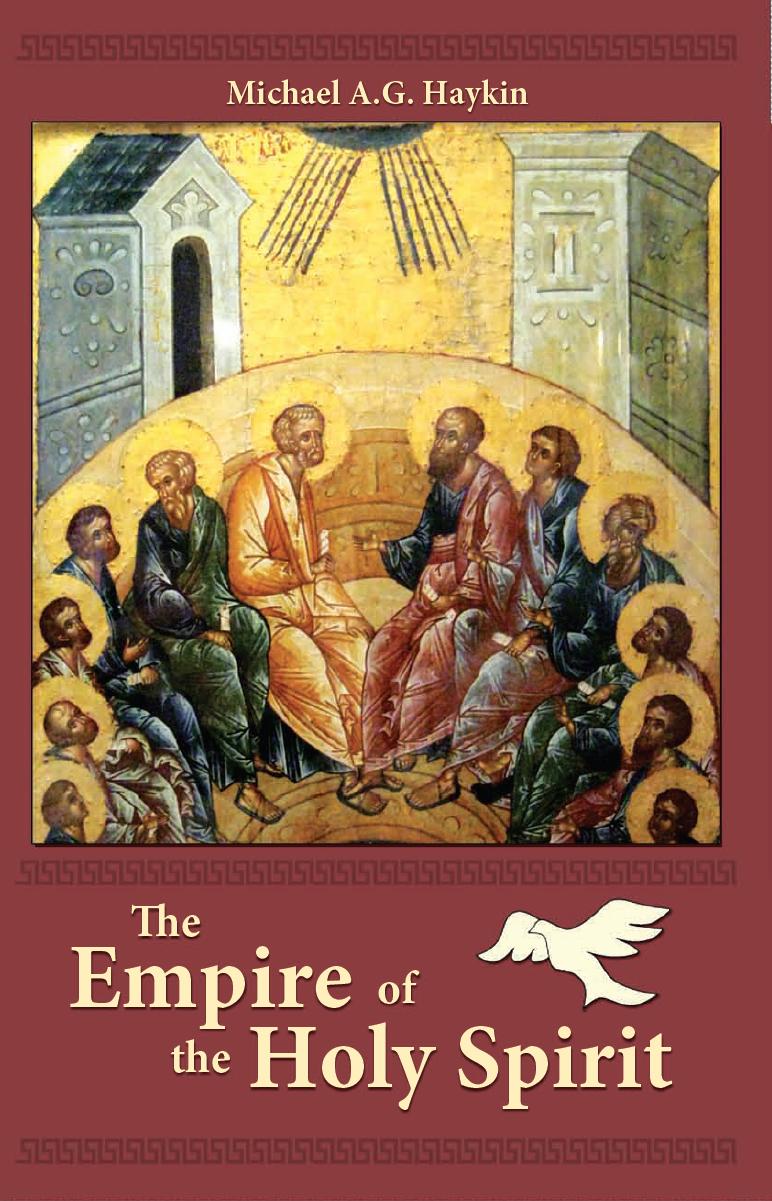 Written by Dr. Michael Haykin is one of the greatest books I have read in the last 10-years. $20 paperback and only $3 Kindle, it is a must read for any believer seeking to learn both a Biblical understanding and historical overview of the role of the Sprit in the life of a believer.
Combining both keen historical reflection and rich biblical insight, Michael Haykin has pulled from his expertise in both church history and biblical spirituality in the writing of this volume. The book has already received high praise from several individuals who have endorsed the book.
Malcolm B. Yarnell states:
“This little treasure…comes with my highest recommendation.”
Dr. Russell Moore, Dean of the School of Theology at The Southern Baptist Theological Seminary, writes:
Michael Haykin’s The Empire of the Holy Spirit is not just a book about the Holy Spirit. This is a book written, obviously, by one who knows the Person (not just the topic) of which he writes. This book will prompt you to think. You’ll want to scratch down notes, and talk about insights over coffee with friends. But, more than that, this book will prompt you to get on your knees, through the Spirit of God, and cry out “Abba Father!”
Dr. Joel Beeke, President of Puritan Reformed Theological Seminary, has written:
Haykin’s Empire of the Spirit covers a rich cluster of subjects on the Holy Spirit from various biblical, historical, and theological perspectives. Whether speaking about the Spirit’s role in sanctification, in revival, in the Great Commission, in the exercise of genuine success, or in promoting Christian unity, Haykin’s thoughts, tethered to Scripture, offer an exciting read. This book needs to be pondered over and yet it is a page-turner. I pray that it may promote a deepening interest in and appreciation for the Spirit’s indispensable, variegated ministry in the lives of believers.
If you would like to listen to the author’s own thoughts on the book, you can download this podcast in which I interview Dr. Haykin about his most recent book.
What Can We Learn From the Law?
Posted: April 4, 2011 Filed under: Calvinism Leave a commentFrom the knowledge of God, furnished by the Law, we learn that God is our Father and Ruler. Righteousness is pleasing, iniquity is an abomination in his sight. Hence, how weak soever we may be, our duty is to cultivate the one, and shun the other.
Taken from 2.8.2,
“It is now easy to understand the doctrine of the law—viz. that God, as our Creator, is entitled to be regarded by us as a Father and Master, and should, accordingly, receive from us fear, love, reverence, and glory; nay, that we are not our own, to follow whatever course passion dictates, but are bound to obey him implicitly, and to acquiesce entirely in his good pleasure. Again, the Law teaches, that justice and rectitude are a delight, injustice an abomination to him, and, therefore, as we would not with impious ingratitude revolt from our Maker, our whole life must be spent in the cultivation of righteousness. For if we manifest becoming reverence only when we prefer his will to our own, it follows, that the only legitimate service to him is the practice of justice, purity, and holiness. Nor can we plead as an excuse, that we want the power, and, like debtors, whose means are exhausted, are unable to pay. We cannot be permitted to measure the glory of God by our ability; whatever we may be, he ever remains like himself, the friend of righteousness, the enemy of unrighteousness, and whatever his demands from us may be, as he can only require what is right, we are necessarily under a natural obligation to obey. Our inability to do so is our own fault. If lust, in which sin has its dominion, so enthrals us, that we are not free to obey our Father, there is no ground for pleading necessity as a defence, since this evil necessity is within, and must be imputed to ourselves.”
Of Religious Worship and the Sabbath Day
Posted: April 3, 2011 Filed under: London Baptist Confession, Lord's Day Leave a comment1. The light of nature shews that there is a God, who hath lordship and sovereignty over all; is just, good and doth good unto all; and is therefore to be feared, loved, praised, called upon, trusted in, and served, with all the heart and all the soul, and with all the might. But the acceptable way of worshipping the true God, is instituted by himself, and so limited by his own revealed will, that he may not be worshipped according to the imagination and devices of men, nor the suggestions of Satan, under any visible representations, or any other way not prescribed in the Holy Scriptures. ( Jeremiah 10:7; Mark 12:33; Deuteronomy 12:32; Exodus 20:4-6 )
2. Religious worship is to be given to God the Father, Son, and Holy Spirit, and to him alone; not to angels, saints, or any other creatures; and since the fall, not without a mediator, nor in the mediation of any other but Christ alone. ( Matthew 4:9, 10; John 6:23; Matthew 28:19; Romans 1:25; Colossians 2:18; Revelation 19:10; John 14:6; 1 Timothy 2:5 )
3. Prayer, with thanksgiving, being one part of natural worship, is by God required of all men. But that it may be accepted, it is to be made in the name of the Son, by the help of the Spirit, according to his will; with understanding, reverence, humility, fervency, faith, love, and perseverance; and when with others, in a known tongue. ( Psalms 95:1-7; Psalms 65:2; John 14:13, 14; Romans 8:26; 1 John 5:14; 1 Corinthians 14:16, 17 )
4. Prayer is to be made for things lawful, and for all sorts of men living, or that shall live hereafter; but not for the dead, nor for those of whom it may be known that they have sinned the sin unto death.
( 1 Timothy 2:1, 2; 2 Samuel 7:29; 2 Samuel 12:21-23; 1 John 5:16 )
5. The reading of the Scriptures, preaching, and hearing the Word of God, teaching and admonishing one another in psalms, hymns, and spiritual songs, singing with grace in our hearts to the Lord; as also the administration of baptism, and the Lord’s supper, are all parts of religious worship of God, to be performed in obedience to him, with understanding, faith, reverence, and godly fear; moreover, solemn humiliation, with fastings, and thanksgivings, upon special occasions, ought to be used in an holy and religious manner. ( 1 Timothy 4:13; 2 Timothy 4:2; Luke 8:18; Colossians 3:16; Ephesians 5:19; Matthew 28:19, 20; 1 Corinthians 11:26; Esther 4:16; Joel 2:12; Exodus 15:1-19, Psalms 107 )
6. Neither prayer nor any other part of religious worship, is now under the gospel, tied unto, or made more acceptable by any place in which it is performed, or towards which it is directed; but God is to be worshipped everywhere in spirit and in truth; as in private families daily, and in secret each one by himself; so more solemnly in the public assemblies, which are not carelessly nor wilfully to be neglected or forsaken, when God by his word or providence calleth thereunto. ( John 4:21; Malachi 1:11; 1 Timothy 2:8; Acts 10:2; Matthew 6:11; Psalms 55:17; Matthew 6:6; Hebrews 10:25; Acts 2:42 )
7. As it is the law of nature, that in general a proportion of time, by God’s appointment, be set apart for the worship of God, so by his Word, in a positive moral, and perpetual commandment, binding all men, in all ages, he hath particularly appointed one day in seven for a sabbath to be kept holy unto him, which from the beginning of the world to the resurrection of Christ was the last day of the week, and from the resurrection of Christ was changed into the first day of the week, which is called the Lord’s day: and is to be continued to the end of the world as the Christian Sabbath, the observation of the last day of the week being abolished. ( Exodus 20:8; 1 Corinthians 16:1, 2; Acts 20:7; Revelation 1:10 )
8. The sabbath is then kept holy unto the Lord, when men, after a due preparing of their hearts, and ordering their common affairs aforehand, do not only observe an holy rest all day, from their own works, words and thoughts, about their worldly employment and recreations, but are also taken up the whole time in the public and private exercises of his worship, and in the duties of necessity and mercy. ( Isaiah 58:13; Nehemiah 13:15-22; Matthew 12:1-13 )
Adoption assures the believer of God’s Fatherly electing grace
Posted: April 1, 2011 Filed under: Adoption, Calvinism Leave a comment(Guest post by Maarten Kuivenhoven)
At the heart of John Calvin’s theology and undergirding his development of the ordo salutis is the doctrine of adoption. Many scholars note that Calvin does not treat adoption as a separate locus in his systematic theology and magnum opus, The Institutes of the Christian Religion. This is due in part to the fact that Calvin weaves the doctrine throughout the tapestry of God’s marvelous work in the salvation of sinners. The doctrine of adoption is not peripheral, but rather central to Calvin’s theology as noted by Sinclair Ferguson writes, (The Reformed Doctrine of Sonship, in Pulpit and People, Essays in Honor of William Still) “students of Calvin’s theology have too rarely recognized how important the concept of sonship was to his understanding of the Christian life.”
The fountainhead of adoption and its privileges in John Calvin’s thought is found in God the Father. Specifically the privileges that the adopted child of God receives are the comfort of the Father’s providence and the assurance received through the Father’s electing grace.
One of those privileges is that Adoption assures the believer of God’s Fatherly electing grace. The electing grace of the Father almost becomes synonymous in Calvin’s writings with the doctrine of adoption. He does not clearly delineate between these two concepts but rather merges them to show how adoption becomes a confirmation of election. Howard Griffith in his article clearly proves that election and adoption are closely tied in Calvin’s thought when he states:
It is quite clear that Calvin’s intention was to use the biblical teaching on election as Scripture does: in the service of assurance for believers. Election was dangerous and only a snare when considered abstractly. But if for the sake of the analysis of Calvin’s own thinking, we think of it first, it is fascinating to notice that Calvin repeatedly refers to election as God’s adoption of the believer. This is not just the slip of a pen: Calvin repeats it often.
Adoption can be conceived of as the rearview mirror if you will, confirming the electing grace of the Father in the life of the believer. The close relationship of election and adoption serves to assure the believer that he is indeed a child of God.
In his Sermons on Election and Reprobation, Calvin closely links election and adoption when he says, “So, when our Lord engraveth his fear in our hearts by his holy spirit, and such an obedience towards him, as his Children ought to perform unto him, this is as if he should set upon us the seal of his election, and as if he should truly testify that he hath adopted us and that he is a Father unto us.” Throughout the Institutes he makes several references to the close relation between election and adoption where free election by the grace of God becomes the ground of the believer’s adoption. He states, “We were adopted in Christ into the eternal inheritance because in ourselves we were not capable of such great excellence.” Furthermore, man cannot renovate himself to receive the adoption of sons, nor is adoption because of any foreseen merit on God’s part, because “God’s special election towers and rules over all, alone ratifying his adoption.”
This assurance of election is further buttressed in his Sermons on Ephesians where he says, “When he [Paul] says that God has predestinated us by adoption, it is to show that if we be God’s children it is not through nature but through his pure grace…For we have no such status by birth or inheritance, neither does it come of flesh and blood.” The assurance this affords the believer is that it is by the grace of God in Jesus Christ that they are adopted into the family of God and thus “they whom he calls to salvation ought not to seek the cause of it anywhere else than in this gratuitous adoption.” Calvin continues speaking of the assurance that election and adoption affords the believer:
Whosoever then believes is thereby assured that God has worked in him, and faith, as it were, the duplicate copy that God gives us of the original of our adoption…It follows then that if we have faith, we are also adopted. For why does God gives us faith? Even because he elected us before the creation of the world. This therefore is an infallible order, that insofar as the faithful receive God’s grace and embrace his mercy, holding Jesus Christ as their Head, to obtain salvation in this way, they know assuredly that God has adopted them.
Far from declaring God’s election to be cold, calculating and deterministic, Calvin ties election and adoption closely together showing the comfort and warmth that can be derived from doing so. Election becomes the ground of adoption, and thus offers assurance to the child of God that he really is one of God’s children. The root of adoption is not found in the believer, but in God the Father, through Jesus Christ.
Christ in the Old Testament: New video series
Posted: March 29, 2011 Filed under: Christ in the Old Testament, David Murray Leave a comment
Want to find and worship Christ in the Old Testament?
Need a weekly Bible Study that’s doctrinal, devotional, and doable?
Trying to help your children study the Bible on a Sunday afternoon, but they aren’t great readers?
Looking for a Sunday school series that marries “old” theology with new technology?
The CrossReference series of films from Head Heart Hand Media may be for you.
The first DVD & Study Guide will launch on April 12 at the Gospel Coalition Conference. But come back tomorrow for pre-launch preview and special offer.
RHB’s New Release
Posted: March 28, 2011 Filed under: Danny Hyde, Reformation Heritage Books Leave a comment Danny Hyde and Shane Lems, Planting, Watering, and Growing: Planting Confessionally Reformed Churches in the 21st Century
As a response to the unique challenges facing the twenty-first-century American church, church planting has become a popular topic. But at a time when churches that spread the seed of the Word through preaching, the sacraments, and prayer are greatly needed, much of the focus has been on planting churches that adapt pop culture to meet “consumer demand.” In Planting, Watering, Growing, the authors of this collection of essays weave together theological wisdom, personal experiences, and practical suggestions, guiding readers through the foundations and methods of planting confessional churches that uphold the Word of God.
You can view the sample pages here.
Table of Contents:
Foreword: Was the Reformation Missions-Minded?—Michael S. Horton
Introduction—Daniel R. Hyde and Shane Lems
Part 1: The Foundation of Planting Churches
1 The Fruitful Grain of Wheat—Brian Vos
2 The Sovereign Spirit of Missions: Thoughts on Acts 16:6–10 and Church Planting—Daniel R. Hyde
3 The Reformed Confessions and Missions—Wes Bredenhof
4 No Church, No Problem?—Michael S. Horton
Part 2: The Methods of Planting Churches
5 Church Planting Principles from the Book of Acts—Daniel R. Hyde
6 Heart Preparation in Church Planting—Paul T. Murphy
7 Church Planting: A Covenantal and Organic Approach—Paul T. Murphy
8 Planning the Plant: Some Thoughts on Preparing to Plant a New Church—Kim Riddlebarger
Part 3: The Work of Planting Churches
9 On Being a Church Planter—Daniel R. Hyde
10 Being a Welcoming Church Plant—Kevin Efflandt
11 Flock and Family: A Biblical Balance—Shane Lems
12 Declare His Praise among the Nations: Public Worship as the Heart of Evangelism—Daniel R. Hyde
13 “How’s the Food?” The Church Plant’s Most Important Ingredient—Michael G. Brown
14 Church Membership and the Church Plant—Michael G. Brown
15 Shepherding Toward Maturity, Part 1: The Authority in Church Planting— Spencer Aalsburg
16 Shepherding Toward Maturity, Part 2: Identifying a Mature Church Plant— Spencer Aalsburg
17 Motivation: The Planting Church and the Planted Church—Eric Tuininga
Part 4: The Context of Planting Churches
18 Church Planting in a Melting Pot—Shane Lems
19 The Cultural Factor in Church Planting—Mitchell Persaud
20 Growing Contextually Reformed Churches: Oxymoron or Opportunity?—Phil Grotenhuis
21 Does Anybody Really Know What Time It Is?—Michael S. Horton
About the Editors: Daniel R. Hyde and Shane Lems are the church planters and pastors of the Oceanside United Reformed Church in Carlsbad/Oceanside, California, and United Reformed Church of Sunnyside in Sunnyside, Washington.
Contributors: Michael S. Horton, Brian Vos, Wes Bredenhof, Paul T. Murphy, Kim Riddlebarger, Kevin Efflandt, Michael G. Brown, Spencer Aalsburg, Eric Tuininga, Mitchell Persaud, Phil Grotenhuis
Understanding the Lord’s Day as the Christian Sabbath
Posted: March 27, 2011 Filed under: Lord's Day, Sabbath, Theology 1 Comment Robert Lewis Dabney, “The Christian Sabbath: Its Nature, Design, and Proper Observance” in Dabney’s Discussions, Volume I (Sprinkle reprint, 1982): pp. 496-550.
The Presbyterian stalwart doggedly defends the classical Reformed position by exhaustively reviewing the Biblical texts to defend the fourth commandment as “moral and perpetual.” Of note is his exegetical review of “objection passages” like Romans 14:5-6; Galatians 4:9-11; and Colossians 2:16-17 (see pp. 521-530). Dabney does not suffer lightly those with mushy and inconsistent thinking on this issue.
(HT: Jeffrey T. Riddle)
What does the Law Teach?
Posted: March 23, 2011 Filed under: Calvinism Leave a commentThe Law was committed to writing, in order that it might teach more fully and perfectly that knowledge, both of God and of ourselves, which the law of nature teaches meagrely and obscurely. Proof of this, from an enumeration of the principal parts of the Moral Law; and also from the dictate of natural law, written on the hearts of all, and, in a manner, effaced by sin.
Taken from Calvin’s Institutes 2.8.1,
“I believe it will not be out of place here to introduce the Ten Commandments of the Law, and give a brief exposition of them. In this way it will be made more clear, that the worship which God originally prescribed is still in force (a point to which I have already adverted); and then a second point will be confirmed—viz. that the Jews not only learned from the law wherein true piety consisted, but from feeling their inability to observe it were overawed by the fear of judgments and so drawn, even against their will, towards the Mediator. In giving a summary of what constitutes the true knowledge of God,192 we showed that we cannot form any just conception of the character of God, without feeling overawed by his majesty, and bound to do him service. In regard to the knowledge of ourselves, we showed that it principally consists in renouncing all idea of our own strength, and divesting ourselves of all confidence in our own righteousness, while, on the other hand, under a full consciousness of our wants, we learn true humility and self-abasement. Both of these the Lord accomplishes by his Law, first, when, in assertion of the right which he has to our obedience, he calls us to reverence his majesty, and prescribes the conduct by which this reverence is manifested; and, secondly, when, by promulgating the rule of his justice (a rule, to the rectitude of which our nature, from being depraved and perverted, is continually opposed, and to the perfection of which our ability, from its infirmity and nervelessness for good, is far from being able to attain), he charges us both with impotence and unrighteousness. Moreover, the very things contained in the two tables are, in a manner, dictated to us by that internal law, which, as has been already said, is in a manner written and stamped on every heart. For conscience, instead of allowing us to stifle our perceptions, and sleep on without interruption, acts as an inward witness and monitor, reminds us of what we owe to God, points out the distinction between good and evil, and thereby convicts us of departure from duty. But man, being immured in the darkness of error, is scarcely able, by means of that natural law, to form any tolerable idea of the worship which is acceptable to God. At all events, he is very far from forming any correct knowledge of it. In addition to this, he is so swollen with arrogance and ambition, and so blinded with self-love, that he is unable to survey, and, as it were, descend into himself, that he may so learn to humble and abase himself, and confess his misery. Therefore, as a necessary remedy, both for our dullness and our contumacy, the Lord has given us his written Law, which, by its sure attestations, removes the obscurity of the law of nature, and also, by shaking off our lethargy, makes a more lively and permanent impression on our minds.”
Why do Bad Things Happen in this World?
Posted: March 21, 2011 Filed under: Just for Fun Leave a commentI cannot think of a more clear explanation than the one Paul writes of in Romans 8,
18 For I consider that the sufferings of this present time are not worth comparing with the glory that is to be revealed to us. 19 For the creation waits with eager longing for the revealing of the sons of God. 20 For the creation was subjected to futility, not willingly, but because of him who subjected it, in hope 21 that the creation itself will be set free from its bondage to corruption and obtain the freedom of the glory of the children of God.22 For we know that the whole creation has been groaning together in the pains of childbirth until now. 23 And not only the creation, but we ourselves, who have the firstfruits of the Spirit, groan inwardly as we wait eagerly for adoption as sons, the redemption of our bodies. 24 For in this hope we were saved. Now hope that is seen is not hope. For who hopes for what he sees? 25 But if we hope for what we do not see, we wait for it with patience.
26 Likewise the Spirit helps us in our weakness. For we do not know what to pray for as we ought, but the Spirit himself intercedes for us with groanings too deep for words. 27 And he who searches hearts knows what is the mind of the Spirit, because the Spirit intercedes for the saints according to the will of God. 28 And we know that for those who love God all things work together for good, for those who are called according to his purpose. 29 For those whom he foreknew he also predestined to be conformed to the image of his Son, in order that he might be the firstborn among many brothers. 30 And those whom he predestined he also called, and those whom he called he also justified, and those whom he justified he also glorified.
Sanctifying The Lord’s Day
Posted: March 20, 2011 Filed under: Lord's Day Leave a commentAn excerpt from the practical puritan, Thomas Watson from his title Heaven Taken by Storm: Part 6, by sanctifying the Lord’s Day and holy conversation.
The sixth duty wherein we must offer violence to ourselves, is the religious sanctifying of the Lord’s day. That there should be a day of holy rest dedicated to God appears from its institution. ‘Remember to keep holy the Sabbath.’ Our Christian Sabbath comes in the room of the Jewish Sabbath: it is called the Lord’s day, Rev. i.10. from Christ the author of it. Our Sabbath is altered by Christ’s own appointment. He arose this day out of the grave, and appeared on it often to His disciples, 1 Cor. xvi. 1: to intimate to them (saith Athanasius) that he transferred the Sabbath to the Lord’s day. And St. Austin saith that by Christ’s rising on the first day of the week, it was consecrated to be the Christian Sabbath, in remembrance of his resurrection. This day was anciently called dies lucis, the day of light, as Junius observes. The other days of the week would be dark, were it not for the shining of the sun of righteousness on this day. This day hath been called by the ancients, regina dierum, the queen of days. And St. Hierom prefers this day above all solemn festivals. The primitive church had this day in high veneration: it was a great badge of their religion: for when the question was asked, servasti dominicum?, keepest thou the Sabbath?; the answer was, Christianus sum, I am a Christian; I dare not omit the celebration of the Lord’s day! What great cause do we have to thankfully remember this day! As the benefit of Israel’s deliverance from the Babylonish captivity was so great that it drowned the remembrance of their deliverance from Egypt, Jer. xvi. 14: so the benefit of our deliverance from Satan’s captivity and the rising of Christ after finishing the glorious work of our redemption are so famous, that in respect of his other benefits, receive as it were in diminution. Great was the work of creation; but greater the work of redemption. It cost more to redeem us than to make us. In the one, there was only the speaking a word, Psalm cxlviii. 5: in the other, the shedding of blood, Heb. ix. 22. The creation was the work of God’s fingers, Psalm viii. 3: the redemption, the work of his arm, Luke i. 5. In creation God gave us ourselves; in redemption he gives us himself. So that the Sabbath, putting us in mind of our redemption, ought to be observed with the highest devotion. — Herein we must offer holy violence to ourselves.
When this blessed day approacheth, we should labour, that as the day is sanctified, so may our hearts be sanctified.
We must on this day rest from all the works of our calling. As Abraham, when he went to sacrifice, left his servant and ass at the bottom of the hill, Gen. xxii. 5: so when we are to worship God this day, we must leave all secular business behind. — And as Joseph, when he would speak with his brethren, thrust out the Egyptians: so when we would have converse with God this day, we must thrust out all earthly employments. Though works of necessity may be done and works of charity, (for God will have mercy, and not sacrifice) yet in other cases we must cease from all worldly negotiations. It is observable concerning Mary Magdalene, that she refused to anoint Christ’s dead body on the Sabbath day, Luke xxiii. 56. She had before prepared her ointment, but came not come to the sepulcher till the Sabbath was past. She rested that day from all work, though it were a commendable and glorius work; the anointing of Christ’s dead body.
When this blessed day approacheth, we must lift up our heart in thankfulness to God, that he has put another price into our hands for gaining heavenly wisdom. These are our spiritual-harvest days; now the wind of God’s Spirit blows upon the sails of our affections, and we may be much further on in our heavenly voyage. Christian, lift up thy heart to God in thankfulness, that he hath given thee another golden season, and be sure you improve it; it may be the last. Seasons of grace are not like the tide; if a man misseth one tide, he may have another.
This day approaching, we must in the morning dress and fit our souls for the receiving of the Word. The people of Israel must wash their garments before the law was delivered to them.Our hearts must be washed by prayer and repentance, the oracles of God being to be delivered to us.
And being met together, we must set ourselves, as in the presence of God, with seriousness and delight to hear God’s sacred Word. Take heed of distractions which fly-blow our duties.
We must labor to be bettered by every Sabbath: where the Lord lays out cost, he looks for fruit. Fresh anointings of God are to be thirsted after; and new cubits are to be added to our spiritual stature. We must not be like the Salamander, which lives in the fire but never becomes hotter. Christians should on these days aspire after communion with God, and endeavor to have the illapses of his Spirit, and clearer discoveries of his love in Christ. In short, we should do on a Sabbath as Moses: he ascended the Mount that he might have a sight of God.
We must dedicate the whole day to God. Under the law a single sacrifice was appointed for other days of the week; but two lambs were to be offered upon the Sabbath. All this day must be spent with God: he must be worshipped in public; and when we come home, we must have family worship. Many leave all their religion at church, as I have seen some do their bibles; not hallowing God’s name in their own houses, Mal. iii. 8. ‘Will a man rob God?’ When men pretend to worship God in the temple but cut him short from family and closet duties on a Sabbath; this is to rob God, and steal part of his day from him.
Good reason we should consecrate the whole Sabbath to God and give him double devotion is that God doubles his blessings upon us this day. As the Manna rained twice as much on the sixth day, as any of. the other days: so the Manna of spiritual blessings falls twice as much on the Sabbath day as any other.
We must rejoice in this day, as being a day wherein we enjoy much of God’s presence, John viii. 56. ‘Abraham saw my day and rejoiced. So when we see a Sabbath day coming, we should rejoice. The Protestants in France called their church Paradise, be cause there they met with God. The Jews called the Sabbath desiderium dierum, the desire of days, Isaiah lviii. 13. ‘Thou shalt call the Sabbath a delight.’ This we should look upon as the best
day, as the queen of days, crowned with a blessing, Psalm cxviii. 24. ‘This is the day which the Lord hath made; we will rejoice and be glad in it.’ — He has made all the days, but hath sanctified this. We should look upon this day as a spiritual market for our souls, wherein we have holy commerce and traffic with God. This day of rest is the beginning of an eternal rest. This day God sets open the pool of Bethesda, in which those waters flow that refresh the broken in heart. And shall not we call this day a delight? The Jews on the Sabbath laid aside their sackcloth and mourning.
This is in a right manner to sanctify a duty; and it is a duty wherein Christians must excite and offer violence to themselves.
Above all others, how well doth it become those into whose hands God hath put the power of magistracy to show forth holy violence in causing the Lord’s day to be strictly observed? What a rare pattern has Nehemiah set for all good magistrates, Neh. xiii. 15. ‘In those days saw I in Judah some treading wine-presses on the Sabbath, and bringing in sheaves, and all manner of burdens, which they brought into Jerusalem on the Sabbath day, and I testified against them in the day wherein they sold victuals,’ verse 17. ‘Then I contended with the nobles of Judea, and said unto them, what evil thing is this that ye do, and profane the Sabbath day?” How dare ye infringe the command, and make a false entry upon God’s freehold? My lord, your proclamation for the pious observation of the Sabbath and your punitive acts upon some offenders have given a public testimony of your zeal for this day. The keeping of the honour of the Sabbath, which will keep up your magisterial honour.
The seventh duty wherein we must offer violence to ourselves, is holy converse: and indeed we are backward enough to it, therefore had need to provoke ourselves, Mal. iii. 17. ‘They that feared the Lord spake often one to another.’ A gracious person hath not only religion only in his heart, but also in his tongue, Psalm xxxvii. 30. ‘The law of God is in his heart, and his tongue talketh of judgment:’ he drops holy words as pearls. ‘Tis the fault of Christians, that they do not in company provoke themselves to sey good discourse on foot: it is a sinful modesty; there is much visiting, but they do not give one another’s souls a visit. In worldly things their tongue is as the pen of a ready writer, but in matters of religion, it is as if their tongue did cleave to the roof of their mouth. As we must answer to God for idle words: so also for sinful silence.
Oh let us offer violence to ourselves on this, in setting abroach good discourse! — What should our words dilate and expiate upon but Heaven? The world is a great Inn; we are guests in this Inn. Travellers, when they are met in their Inn, do not spend all their time in speaking about their Inn; they are to lodge there but a few hours, and are gone; but they are speaking of their home, and the country wither they are travelling. So when we meet together, we should not be talking only about the world; we are to leave this presently; but we should talk of our heavenly country, Heb. xi. 16.
That we may provoke ourselves to good discourse (for it will not be done without some kind of violence) let these considerations be duly weighed.
The discourse demonstrates what the heart is. As the glass shows what the face is, whether it be fair or foul; so the words show what the heart is. Vain speeches discover a light, feathery heart; gracious speeches are the birth of a gracious heart. The water of the conduit shows what the spring is.
Holy conference is very edifying. The apostle bids us ‘edify one another,’ Ephes. iv. 20. And how more than in this way? — Good conference enlightens the mind when it is ignorant; settles it when it is wavering. A good life adorns religion; good discourse propagates it.
Gracious discourse makes us resemble Christ. His words were perfumed with holiness: ‘grace was poured into his lips,’ Psalm xlv. 2. He spake to the admiration of all: his hands worked miracles and his tongue spake oracles, Luke iv. 22. ‘All bare him witness, and wondered at the gracious words which proceeded out of his mouth.’ Christ never came into any company, but he set good discourse on foot. Levi made him a feast, Luke v. 29. and Christ feasted him with holy discourse. When he came to Jacob’s well, he presently speaks of the
‘water of life,’ Jude 4. The more holy our speeches are, the more we are like Christ. Should not the members be like the head?
God takes special notice of every good word we speak when we meet, Mal. iii. 16. ‘They that feared the Lord spake often one to another; and the Lord hearkened and heard, and a book of remembrance was written before him.’ Tamerlain, that Scythian captain, had always a book by him of the names and good deserts of his servants which he bountifully rewarded. As God hath a bottle for the tears of his people: — so he has a book in which he writes down all their good speeches, and will make honorable mention of them at the last day.
Holy discourse will be a means to bring Christ into our company. The two disciples were communing of the death and sufferings of Christ; and while they were speaking, Jesus Christ came among them, Luke xxiv. 15. ‘While they communed together, Jesus himself drew near, and went with them.’ — When men entertain bad discourse, Satan draws near, and makes one of the company; but when they have holy and gracious conference, Jesus Christ draws near, and wherever he comes, he brings a blessing along with him. So much for the first, the offering of violence to ourselves.
A New Release from RHB
Posted: March 18, 2011 Filed under: Reformation Heritage Books Leave a comment Introduction to Reformed Scholasticism, by Willem J. van Asselt with contributions by T. Theo J. Pleizier, Pieter L. Rouwendal, andMaarten Wisse, Translated by Albert Gootjes and Foreword by Richard A. Muller.
This work supplies a long-standing need in the field of early modern studies by providing a basic introduction to Reformed Scholasticism. Although technical studies abound and interest in the subject continues to rise, until the appearance of this work by Willem van Asselt and his colleagues, students of history have lacked a concise guide to help them navigate the difficult waters of Reformed Scholasticism. This book carefully defines the phenomena of scholasticism and orthodoxy, concisely surveys the era, notes the most significant thinkers together with the various trajectories of thought, and references the relevant secondary scholarship. In short, this Introduction to Reformed Scholasticism surveys the topic and provides a guide for further study in early modern Reformed thought.

 Gospel-Centered Musings