“In these things consisted the mystery of iniquity, the springs and occasions of that great apostasy which was in the worldunder the Papacy.
1. The doctrine of the gospel (as to its peculiar nature, the causes, motives, and ends of it) was generally lost, partly through the horrible ignorance of some, and partly through the pernicious errors of others, whose duty it was to have preserved it. And how impossible it is to maintain the life and power of obedience when this spring of it is dried up orcorrupted, when this root is withered and decayed, is not hard to apprehend. Sometimes truth is lost first in a church, and then holiness, and sometimes the decay or hatred of holiness is the cause of the loss of truth; but where either is rejected, the other win not abide, as we have declared. And so it fell out in that fatal apostasy; these evils promoted and furthered each other.”
The past two years I have attended Puritan Reformed Theological Seminary for my Masters of Arts (MAR). Realizing I now only have 13 months to go, I am starting now to think about what is it that I’ll be doing in January of 2010. But for the past two, and still this next one to go, I have had to study personally and number of areas of theology because my lack of wisdom from North-Central Ohio, or my pervious under grads that I had attended. Doctrines like going over the human soul, the humanity of Christ, to baptism, church government, and end times… They have all been a path that I have enjoyed dearly studying beside my reformed brothers that at often times may disagree with me on a number of issues (Baptism, Church Government, End Times) but still respect me and what I hold to from the Scriptures. Over the past year I have read numerous books, heard a number of debates and listen to many people on how the Sabbath carries over to that of the Church in the New Testament.
I hear:
“The Moral Law still exists”
“The Sabbath was made before the Moral Law was given”
“The Sabbath was given at creation”
“The Moral Law cannot be fulfilled”
“The Sabbath is a Law given to all of creation”
“The Sabbath was a type of Christ and now looks back to Christ”
“The Sabbath is a clear distinction of seeing who the Lord’s people are”
“The Sabbath has now transferred to Sunday”
“It’s not Sunday, It’s Sabbath Day!”
“We have Sabbath-school, not Sunday-school…”
I hear a number of comments, sayings, sides, etc. Now since this is my own personal blog hopefully this post nor the numbers that will come that I plan to write on the Sabbath/Lord’s Day will not get me into trouble with my seminary nor my work. These post that I plan are only and will be only my thoughts as this next 3 months I plan to study the other side (against the keeping of the Sabbath) and just place them up for whoever wants to read, whoever wants to comment, and whoever wants to bash me. I plan NOT to respond back due to the lack of argument I want to create but just give my opinion and my thoughts as I study this area of Theology out, and please do leave whatever thoughts you may have.
Thought #1
Exodus 16:22-30 22 On k the sixth day they gathered twice as much bread, two omers each. And when all the leaders of the congregation came and told Moses, 23 he said to them, “This is what the Lord has commanded: ‘Tomorrow is a day of l solemn rest, a holy Sabbath to the Lord; bake what you will bake and boil what you will boil, and all that is left over lay aside to be kept till the morning.’” 24 So they laid it aside till the morning, as Moses commanded them, and m it did not stink, and there were no worms in it. 25 Moses said, “Eat it today, for l today is a Sabbath to the Lord; today you will not find it in the field. 26 Six days you shall gather it, but on the seventh day, which is a Sabbath, there will be none.”
27 On the seventh day some of the people went out to gather, but they found none. 28 And the Lord said to Moses, n “How long will you refuse to keep my commandments and my laws? 29 See! The Lord has given you the Sabbath; therefore on the sixth day he gives you bread for two days. Remain each of you in his place; let no one go out of his place on the seventh day.” 30 So the people o rested on the seventh day.
Exodus 16:22-30 is the 1st occurrence of the actual term and/or concept of the Sabbath. The passage clearly allows one to believe that the institution of the Sabbath was unknown to the people of God (Israel) at this time. Before this actual mention of the Sabbath, the Israelites had been holding to the Egyptian 10-day week calendar. Matter of fact the narrative seems to be preparing the Israelites for the Sabbath which would then be commanded to then in the next coming months, namely Exodus 20 (Decalogue). Matter of fact verse 30 of this section says, “so the people ceased to gather on the seventh day.” Which clearly shows us that this celebration was not on the cultic aspect yet, but a human preparation.
Was Asked – Is the Spirit’s work that which is new about the New Covenant?
My Answer was – Yes! I simply do not see one can argue the fact that the work of the New Covenant is not established today! I have heard a number of times by mainly classical dispensationalist (who have made up their minds that no covenant is given to the church) that this is not in order today for the local church. I think to show how the New Covenant is consummate by the pouring of the Spirit on and in man is best to go to the Scriptures which seem at least to myself in making this clear.
The New Covenant as the Law of God in the human mind Ezekiel 36: 26-27 – A new heart I will give you, and a new spirit I will put within you; and I will remove from your body the heart of stone and give you a heart of flesh. I will put my spirit within you, and make you follow my statutes and be careful to observe my ordinances.
The New Covenant as a gift from the Holy Spirit Galatians 5:22-23 – By contrast, the fruit of the Spirit is love, joy, peace, patience, kindness, generosity, faithfulness, gentleness, and self-control. There is no law against such things.
The New Covenant as a fulfillment by the Spirit Romans 8:4 – so that the just requirement of the law might be fulfilled in us, who walk not according to the flesh but according to the Spirit.
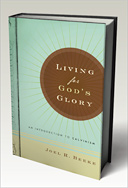
Living for God’s Glory: An Introduction to Calvinism, by Joel R. Beeke retails at $24.00. Today for the next 4 hours from this post, will be sold for 50% off at only $12.00 from RHB.
In this introduction to the doctrinal system known as Calvinism, Joel Beeke—with contributions from Sinclair Ferguson, Michael Haykin, Derek Thomas, Ray Pennings, and others—displays the biblical, God-centered, winsome, comprehensive, and practical nature of Calvinism.
In this comprehensive survey of Reformed Christianity, Dr. Beeke and eight fellow contributors offer twenty–eight chapters that trace the history of Calvinism; explore its key doctrinal tenets, such as the so-called five points of Calvinisms and the solas of the Protestant Reformation; reveal how Calvinists have sought to live in devotion to God; and survey Calvinism’s influence in the church and in the world at large. In the end, the book asserts that the overriding goal of Calvinism is the glory of God. Saturated with Scripture citations and sprinkled with quotations from wise giants of church history, this book presents Calvinism in a winsome and wondrous fashion.
Sammy and His Shepherd by Susan Hunt (and illustrated by Cory Godbey) is a delightful story centered around the 23rd Psalm. The book tells of Sammy – a sheep who is tended by a loving and protective shepherd who befriends another sheep on the other side of the fence. The sheep across the fence has no name and is very neglected and sickly. Sammy soon sees what it is like not to be under the loving care of a kind shepherd. As the story progresses, the sickly sheep ends up in the care of the good shepherd and is loved as he should be.
At the beginning of each chapter Hunt features a line from the 23rd Psalm and then her main character – Sammy – lays out the focal concepts of that line in fun, witty, and heart-tugging conversations with his friend. The chapters are short and energetic enough to capture the imagination of small children. At the end of book there is an interactive portion for deeper knowledge of what the book captures in fictional tales. There are 3 parts to the interactive portion that includes: “The Bible Tells us…” – where there is a cross-reference to a New Testament passage on the specific topic of the chapter and a brief explanation of the passage’s message. The next part is “Something to talk about…” – where it gives pointed questions that pick out the main biblical themes to live by, drawn from each chapter. The last part of the interactive section is “Something to do…” – where there is a practical action brought out that can be shown in one’s life, which is taken from the moral focused on in each chapter. The entire story and the activity section is a wonderful way to teach children deep biblical truths that they can easily understand and apply to their daily lives!
I also found the illustrations completely enrapturing and perfect – very much displaying what the reader’s mind would imagine! The beautiful colors and lovable characters portrayed are sure to be a winner in any child’s eye. This book will be a wonderful tool in a parent’s library to help their child gain a deeper knowledge of the love that Christ bestows upon his “sheep” – his beloved children.
It seems Spurgeon had then same issues we deal with today?
Those who set aside the atonement as a satisfaction for sin, also murder the doctrine of justification by faith. They must do so. There is a common element which is the essence of both doctrines; so that, if you deny the one, you destroy the other. Modern thought is nothing but an attempt to bring back the legal system of salvation by works. Our battle is the same as that which Luther fought at the Reformation. If you go to the very ground and root of it, grace is taken away, and human merit is substituted. The gracious act of God in pardoning sin is excluded, and human effort is made all in all, both for past sin and future hope. Every man is now to set up as his own savior, and the atonement is shelved as a pious fraud. I will not foul my mouth with the unworthy phrases which have been used in reference to the substitutionary work of our Lord Jesus Christ; but it is a sore grief of heart to note how these evil things are tolerated by men whom we respect.
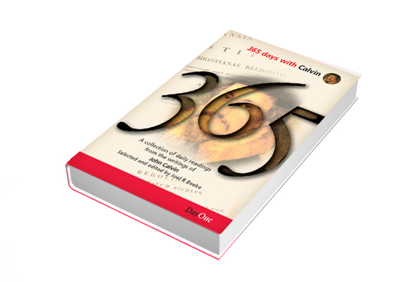
For the 500th post on this blog, I thought I’d give you a little taste of the new title that Dr. Joel Beeke has done on John Calvin. Over the next year, Dr. Joel R. Beeke will have a number of titles (I know of 4 right now) coming out for Calvin’s 500th birthday. For next year (2009) this is one title you may want to use for a devotion throughout the 500th year of the birth of John Calvin. As the year 2009 is the 500th anniversary of John Calvin’s birth, 365 Days with Calvin invites readers to celebrate this memorable occasion by prayerfully reading these daily portions culled from Calvin’s writings. A biographical sketch co-authored by Joel R. Beeke and Michael A. G. Haykin is provided at the beginning of the book, which will make readers more aware of Calvin’s contribute to the Reformed tradition. Each day’s selection contains four parts: a biblical text, suggested further reading, Calvin’s comments on the main text, and a meditation on those comments designed to stimulate further reflection, examination, and action. Pick up your copy of 365 Days with Calvin and make this coming year a memorable one. It is our prayer that the spirit of genuine piety that so enveloped Calvin may also penetrate you as you read this book. May your 365 days with Calvin be a year of rich growth.
“The consummation of redemption is, according to prophetic intuition, introduced on the one hand by the personal coming of Jehovah in His glory, but on the other by the coming of a King of the race of David, the Messiah” (Oehler).
My purpose in reviewing Graeme Goldsworthy’s According to Plan is not to merely repeat and summarize what he has already said, but is to bring out the truths in it which highlight his major ideas. His approach and intent in writing this book is not to speak only to an audience of the typical scholar or even seminarian, rather, it is for the layman that works five days a week, 40 hours a week, and sits in the pew on Sunday. Goldsworthy works out this objective by three means:
1. To introduce the reader to an integrated theology of the whole Bible.
2. To write this introduction wholly accepting the full inspiration and authority of the Bible as the Word of God.
3. To write for ordinary Christians at a level that avoids technicalities.
Goldsworthy is like no other in today’s realm of Reformed evangelicals. When discussing a person or a ministry that is gospel-centered, we Americans so often mention the best known of today – John Piper, or Tim Keller, 9-Marks Ministry or Resurgence Ministries. However, in my personal opinion, there is no one that compares to Graeme Goldsworthy, especially on his level of compassion.
Goldsworthy’s introduction is simple and can be easily read. No matter who the reader is, they can come with as little as they may know and have the major questions answered that one often asks about Old Testament Biblical theology. Goldsworthy explains that the reader is to find the meaning of the Bible as the basis of their understanding. He even shows how to deal with problematic passages which individuals often times struggle with. Goldsworthy sees the significance and meaning of Biblical theology as to understand and deal with the hardest of passages so one can see the truth about God in what they are reading. In addition, he sees the importance of not only dealing with the major or most well-known stories, but stresses how every section of the Old Testament is a framework in the whole message of the Bible. He brings out this view of the Old Testament in four ways:
1. The Old Testament is pre-Christian, and even though it never mentions the distinctions of the faith, the Christian can still look at Israel’s life for example.
2. The Old Testament contains many areas that apply to the Christian life that are still in effect to the New Testament Christian. Example: the Sabbath.
3. Although the prophets, when talking about God’s final saving work, may not make any reference of Jesus Christ by name, the kingdom of God – which includes Christ – is still portrayed.
4. The Old Testament is the preparation of the grounds that lie before the New Testament for Christianity.
Understanding the importance of Old Testament Biblical theology aids one’s understanding of the interpretation of Scripture for hermeneutics. Goldsworthy, at the end of every chapter, provides four unique questions designed in helping the reader look deeper into the importance of Biblical theology in the Old Testament. These questions are crucial for the reader because with them the reader is able to take what he has read and put it into practical use with the Scriptures.
Question: The Prophets prophesied on the basis of the covenants. Show this for two or more of the biblical covenants discussed thus far.
1.The Covenant of Grace- that was promised to Adam and Eve that Christ then came to crush the serpent in defeating satan at the cross.
2.The Abrahamic Covenant- would then come about being written on the hearts of the church that replaces Israel as being the nation of god’s people. Jer. 31 & 33
3.The Davidic Covenant- would then be fulfilled with Christ then sitting on his thrown after his work was done on that of the cross.
Question: How would biblical theology be different if we had no record of Solomon’s person, life, and contribution?
With other words, what did God intend with the extensive section on Solomon and from Solomon in the OT history of revelation?
Answer: The decline of the kingdom lies in the decision and the fall of Solomon. No, person, no history of how the king and his kingdom followed the ways or the wickedness of this world would leave biblical theology wondering what happen to Israel. However, there are two sides of seeing Solomon in the biblical theology. Instead of naming the negative way of looking at him, another one that is even more important is the wisdom that he had, that was a type of that of our Lord and Savior, Jesus Christ. God intentions were to have that of a king rebuilding the temple, like that of Christ would come and then become the king of today setting his temple else where, being the greater king and the wiser man then that of Solomon. This being the foreshowing of Christ one day ruling on the new earth among his nation of peoples.
Question: How is Christ present in the Song of Solomon?
Answer: I hold to the Historical Interpretation (but do believe sections may be types of Christ and His church), if one even has room for such terms in their hermeneutics.I know that this may not be the answer you wanted, nor the normal one here at PRTS, however it is what I believe seems most fitting and closest to the Scriptures without spiritualizing the text. Now is Christ could someone use this book in allegory, or to resemble Christ love for the church? Yes, I believe it can be done as long as it is seen as and allegory and not the Interpretation of Scripture. I am trying to figure out how to answer this question, believing in an historical view…
So I would say Christ is shown in several ways:
1.That marriage is two individuals becoming one, loving each other, shadowing what Christ does do for his church.
2.That with Christ at the center of marriage, one can restore or have a marriage that is focused around the gospel and not for their own enjoyment.
3.Christ is the great bridegroom, the greater enjoyment, and the greater relationship
This book review is by no means aiming to be a critical, scholarly, in-depth work that one can use as a commentary or analysis of Graeme Goldsworthy’s Preaching the Whole Bible as Christian Scripture. Rather, I chose to do this review as a personal project in hopes that writing this paper in a personal way will display to you the deep impact that Goldsworthy’s book had on my life, being a part of bringing my head and heart to a further understanding of Reformed theology, which when seen and understood was exactly what I needed. To accomplish this, I selected three different areas I feel are important to discuss – as in any book review – and will add to that stylistically with a personal perspective of what was read. These three areas will outline my personal thoughts on the content that Goldsworthy wrote, key points that I found to be particularly insightful, and will provide a personal critique in which I will voice my opinions and feelings about Preaching the Whole Bible as Christian Scripture. I must add that although this piece is written as a seminary level review and passed in for a grade, it is meant for others to see the importance of proper hermeneutics that will give the Gospel its proper glory. This book review may not have the many footnotes that a regular paper tends to have, but rather it will be a guide to follow the footpaths that the Lord has given us to properly see and enjoy when going to the Scriptures.
II. Personal Thoughts on the Content
Graeme Goldsworthy begins Preaching the Whole Bible as Christian Scripture by expounding the importance of preaching, and that it is the very act of preaching which the local church lives to do in order to reach the hearts of people. Goldsworthy uses the text of 1 Corinthians 2:2 to show how Paul constantly addresses the main issue of his letters, which is always “Christ first.” He then continues and explains how the subject of Christ is easily misinterpreted when preaching on stories in the Old Testament. Christians today tend to not understand that Christ is the center of the New Testament and Old Testament alike. Many Christians live as though the Gospel was an event in and of itself, and they do not actually see its role throughout the entirety of the Scriptures. When we believe that the Gospel is a sole event it does not become a lifestyle as it was meant to be; and in order for it to be a lifestyle, it must be the center of our thinking. In practicing this we must remember, as Christians, that the Gospel is central to not only our minds and thinking, but also to the Bible and theology. The Bible brings this to a climax when it points to Christ on the cross because it is there that freedom comes from the Law.
In my life I have come to understand the meaning of what an evangelical person is: which is, simply put, a “Gospel person.” A “Gospel person” is someone who accepts biblical authority in all areas of life. The Bible starts with the authority of God immediately when He said, “Let there be light” (Genesis 1:3) and there was light. What His Word says has always been – and will always be – final in a Christian’s life.
The Bible has been under attack since the Enlightenment through the rejection of God. That is when a change in man’s mind occurred and he started to question the Word of God. Man now has skepticisms of the truth and unity of God’s Word, and even questions God Himself. With this, man has started to look at and treat human individuals in the Bible as examples of how to live – missing the true mark of the work of God, which is Christ alone. The center of the Bible is Christ, and not other individual’s writings or stories. This is where many theologians and pastors have taken God’s Word out of context and have misled entire congregations.
I have also come to recognize how God calls His people to serve and live for Him. It is never the man setting out to do work for God because he wants to, but God doing the work in the man. God called Abraham and Moses to do His will and work in order that they may serve Him, because He wants His Glory. The only way man found God was through God first calling them out of Egypt. The example of Egypt shows that God is first and fundamental, and not something we think of after our story of the wilderness.
The prime question in chapter three of Preaching the Whole Bible as Christian Scripture is “what is biblical theology?” It concentrates on the quest for the big picture, or in other words, what the main focus of the Bible is through its revelation. Preaching with a purpose should always bring people back to that core focus. Today, liberal theology has made it seem as though God was not up to the task of saying and showing what He wanted to in ways humans today can understand. This destroys the message of the Word of God. Due to this, we look at the Old Testament not as theology, but as an impersonal historical record. This is a critical issue because we must look at the Bible as a whole historical event, and not merely a number of random events just thrown together. It is in this truth that we remember that Scripture stands alone; it is only then that biblical theology works, as we understand that we do not need man’s presumptions, theories, or methods which do nothing but fragment the Word.
At this point we come to look for the core of the message that the Bible is trying to show to us – namely the message of Christ as seen throughout the Old and New Testament. Jesus is the goal of the Old Testament – that which the Old Testament pointed to and looked towards – and He fulfilled that goal in the New Testament. As such a consistent focus throughout the Bible, how can this not be the key message of Scripture? We cannot look at the message’s content simply how we want to, see what we want to see, and be concerned merely with what we want to say or prove; rather we must see what the writers understood from their own historical context, and be concerned with how God’s character is revealed at that given time. We must watch the still shots that put it all together to show the all-encompassing message of God’s Word. This is the function of biblical theology.
The final content in this chapter talks of how the story of redemption is shown throughout the Word. Man looks at history as a series of events and does not place them together, unlike Scripture, which is a series of events divinely ordered for a purpose. Through this it is seen how God fulfills past events and how He had placed them together to make known His message. This is where salvation is shown. Redemption is shown theologically, historically, and liturgically in God’s Word. The literature of God’s Word works to convey His message. This is the essence and the chief aspect in the context of any biblical text.
From the very beginning, the act of preaching has taken place not for the sake of giving a new opinion or creative thoughts, but has always been to set forth and proclaim the Word of God. No matter what form was used to present the Word, the Gospel was always proclaimed, which is the reason why the church kept growing. Seeing how Jesus Christ preached and taught the Scriptures helps us understand the way we need to study for ourselves, and the way we need to get the message of the Scriptures across to people. One of the ways of doing this is to become sensitive to the Christology in the New Testament. The key point of this is that Christ did not come to wipe out the Old Testament or to start something altogether different, but He came to fulfill the teaching and the prophecies of Himself in the Scriptures. It is evident that Jesus was a biblical theologian, and that the Old Testament is needed to enable us to interpret the New Testament. Seeing the Gospel in the New Testament shows us what the Old Testament was all about, which gives an added depth, understanding, and reasoning of it.
Lastly, Preaching the Whole Bible as Christian Scripture expresses how necessary it is to know the framework of how the Bible was written. That is, how the Word of God leads to, and then shows, the redemptive work of Christ. How can one teach, study, preach, and learn the Bible without explaining the Gospel of Christ? It seems to me that sometimes man makes the focus and emphasis on something in particular but ends up missing the mark of the true meaning found in Scripture. This is due to man’s mindset of Scripture. Without an understanding of biblical theology there ends up being misinterpretations of the Scriptures. Making sermons and devotions to fit one’s mind or to emphasize what you want to get across is dangerous. There needs to always be a clear exposition of the Gospel throughout any text or study. Although there is much content in the Bible that does not speak specifically of the Gospel itself, there is nothing in the Bible that can be understood apart from it.
III. Personal Key Insights
The biggest insight that I first came to while reading Preaching the Whole Bible as Christian Scripture was that there are so many preachers today that miss the mark in their sermons and teachings. That mark is Christ – as the Bible starts with Him, speaks of Him all throughout, and ends with Him. During the writing of the books of the Bible the focus was Christ… so I am compelled to ask: “why would Christ not be the focus now?” I see how we rob Christ of His glory when we preach about Moses, David, or Peter without referring to what – or Who – was behind these men. What was the focus of the men when they wrote their accounts? Christ. These men are used to be illustrations to direct us to the glory of the reason the Bible was written: the glory of Christ.
Another insight I gained was seeing how God used Christ as the center of the New Testament to do what we could not do, which is bring ourselves – depraved human beings – to God. Stories like Moses leading the Jews out of the wilderness are not meant to merely portray the work of the depraved man, but to see a story that starts with Christ leading His people with magnificent redemption. This salvation in the Old Testament is the same salvation that Christ would come to live out – and accomplish – in paying for our debt to His Father. The works of Noah, Moses, and others are not the work of man, but are God’s sovereign works to bring man back to Himself through redemption. With this thought we can see God always at the beginning of any task, situation, or trial we are given, and we are not to let our minds run wild by focusing on our own ideas, intellect, or worries.
The first insight I learned in chapter two was the fact that I will not rob the God that sent His Son of what is His. His work – the Bible – is meaningful, and is all for the glory and honor of God. It is not here so that I can lift up a sinner like Noah or Moses, but rather to see how God is in control and what the work of His design and will has been and is today. Not one of the men in the Bible that people tend to revere – like Moses, Daniel, Paul, etc – would lift themselves up and say, “live after me.” They would always direct their work(s) back to God who had set forth all things to happen according to His will.
My favorite insight I obtained in this chapter was that preaching from the Bible without the Gospel makes life grow to be observed and lived through legalistic reasoning. The reason and motive behind why we do things for Christ – and how we do them – should come from true love in our hearts. A message without the Gospel brings no relief to life. How can a man bring a message without the basis and source of it being grace? Without grace there leaves no hope for the hearers of the Word.
One thing I noticed right away was how much we as Christians miss the message of the Bible because our focus is simply on a story or event we like to read. When I teach a message or a piece of Scripture I must always remember what its meaning was for the purpose of God’s Word as a whole. Without the riches of Christ shown in a message, the reason behind it is left void of hope and the true meaning of joy. We must show the relationship between passages to properly preach Christ. This is where the enrichment comes to the listener, knowing the reasoning of how a passage has hope, victory, and grace. Knowing these things shows a proper view of what God meant for His Word to show – that is His Son.
Another key insight I attained and have contemplated to a great extent was the fact that Christ declared Himself as the goal of the sovereign work of His Father. This made me think about how much we as Christians tend to miss that mark – especially in our Christian educations. I see an extreme need for a course on correct biblical theology, and not some light, simple, feel-good class that allows the hearer to be perverse in their own thinking about Jesus Christ. Most schools (and even churches) today have a weak understanding of the Old Testament, and with this comes a weak understanding of the Gospel. Therefore, both schools and churches need proper biblical theology.
The Bible is primarily about God and Jesus’ saving act – not about man. It is imperative to take the focus off of man and put it on Christ. When this is done, a sermon will be enriched with the depths of the fullness of Jesus and His true redemptive work, rather than merely a mindset upon a sinner that can never have hope in himself when focused on nothing but himself. To preach, speak, and teach about man’s problems, situations, life, etc, without the significance of the Gospel is to go against God’s Word by taking it out of context, proper perception, and meaning. To preach a message or study the Word with a focus toward humans and their nature – leaving out hope, joy, and the Gospel – is like perverting one’s mind and not giving one’s problems, trails, and life the correct theology/solution needed.
Preachers (and students, teachers, theologians, and so on) must be careful that they don’t try to be relevant to humans just because they think that’s what people are looking for. A sermon that is made for the purpose of entertainment in the church or class is wrong in every way. This displays a frame of mind that has already formed certain ideas and is prejudice towards an alternative something or someone. Studying and relaying the Scriptures in this way is not the reason why – or foundation of how – we should teach the Word. Preaching the Word must be done with as much purity in mind and life as possible, and with an open mindset and heart that will allow you to learn even more than the audience.
When studying a passage or book of the Bible, it must be done in a way and with an outcome that testifies to Christ and His Gospel as God meant it: for salvation. Therefore, we must not go into the Scriptures looking for texts that simply make us feel good, or be on the lookout for something that will help man, but we must dig deep into theology. When we do this we see that Jesus has given us victory and redeemed us from hell, and we realize that the stories within the story will help one find the true meaning of Scripture, which doesn’t just give warm-fuzzies and temporal changes – but is the Gospel, which changes lives completely and eternally.
For my own personal use in preaching and teaching a further insight has been very applicable, and that is how we make preaching and teaching sound too simplified. This hurts the hearer as they get a wrong view of what is supposed to be. Making a message sound simple for an audience is, in essence, making the message fit your personal ease. Who are we to pick and choose how to make something “sound good” or to make it “fit” for one’s ears? We should never lessen the Word by any means in order to entertain one’s wants or likes, but ought to preach the Word with the fullness and richness that it contains.
In reading this book I also found that merely telling a person that they need to choose between heaven and hell is not giving the Gospel. One must explain the fact that true repentance and faith go hand-in-hand. This is a free gift from the Holy Spirit that God has given us through His Son Jesus Christ. Without giving the true and full Gospel it is as if we are lessening the Gospel, and it then sounds like a free gift that anyone can have without making any commitments or changes, etc. Yet true faith is only when one has repented and turned from sin, knowing that the faith they now have in Christ was only given to them from God through Christ’s work on the cross – and was not accomplished or attained by any man’s message or decision.
Lastly, I see and hear preachers today preaching messages entirely lawful in teaching what we must do, yet not explaining what God has done. They explain how we can get ourselves right before the eyes of the Lord, yet it is done in such a way that seems like we can accomplish salvation without Christ. These messages never explain where our hope lies or where we can find a Savior that has already given grace in order to change our lives for Him. Accordingly, any message without Christ always shows Law alone. Preaching lawful sermons undermines the thinking of a congregation and does not reveal the true mystery of the Gospel that leads them to God.
IV. My Personal Critique
I would have to say that this has been the hardest and longest book I have read in a long time. But I have never learned so much from one book in my life, and I cannot thank Mr. Goldsworthy enough for his time, thought, and manner set upon the Scriptures, which has shown my eyes, mind, and heart things in the Word of God I had never seen. What I love most about this book is the fact that its influence has made my own messages, devotions, and studies change to be more in-depth thanks to newfound intellect on the Scriptures. I can start to use this in my life to turn all things and aspects into a loving relationship my own personal Savior Jesus Christ.
The book’s content has helped me in such a way that I am now getting a more correct view on what the Gospel truly is and what it has already done in my life – not to mention what it will continue to do in my life from this day on. In understanding how to make a better interpretation of Scripture from different areas in the Word, I now see that the Bible is not merely stories of individuals. Now every story and person makes the story – the story of Christ – so much richer and so much more meaningful in my own life. When I read the Word I can see for myself the divine plan that God had set out for my own soul. I can only try to grasp the grace of God’s glory that is shown throughout the Bible, and while doing so can actually know with a more in-depth understanding the reasoning behind Christ’s payment on the cross. Also, now knowing that one must have an understanding of the Old Testament to see what the New Testament is about and fully grasp it, I see how little I know about the Old Testament. I need to start to learn and recognize more about what God made known to the writers and hearers of the Word in the Old Testament so that I can see even more than I do now what the New Testament offers and conveys for my life.
As for my preaching and speaking on the Word – it will never be the same! I have started to realize just how much it means to preach the Word. I am beginning to comprehend how important it is to make the Word clear, but also to make it correct in the eyes of the Lord and not to merely please man. It is not meant for entertainment, but is meant to correct one’s mind and view of what God has set forth, for the purpose of making my audience’s – and my own – pursuit of holiness even more pure until the day we meet Christ. I now can see how the stories in the Old Testament lead up to the story, and how the books of the Bible go hand-in-hand in order to show Christ’s amazing love for His people. Upon seeing this, preaching will never be the same again.
I am also aware that there is a necessity to want to actually show the hope in a message – and the source of that hope – and to give hope through personal accounts of what has happened in my own life, with the aim and focus of allowing the giver of grace to alone receive the glory, and not myself receiving it for my words. After a message I want others to see that Christ is our ability and source to find hope and that He is the giver of (and in) our faith, so that all will be able to see from beginning to end what the core and purpose of the Bible is.
To conclude this review, I want to convey that being able to see the big picture in the small pictures throughout the books of the Bible helps me to see just how amazing redemption is. I can already see and recognize that one can preach or study a story without seeing what the reason and significance behind the story was. From Noah to Abraham, Moses to David, and to the decline of the Lord’s people thereafter, all I can say now is that I never want to lose sight of what the Lord is doing in the world with – and through – His people. Nor do I ever want to think for a moment that I cannot explain or teach this to others. I want others to have a correct view on His Word, to see His grace, and to have His faith – and not just for their personal entertainment. I do not want man to be happy with milk every time they study or hear the Word. Instead, I want them to taste the meat God has given so they can fall more in love with Him. He is their Messiah who has laid out His life and His purposes throughout His Word for His chosen people.
The Princes Poison Cup written by R.C. Sproul, and illustrated by Justin Gerard, is a beautiful depiction of some of the most profound stories and concepts in the Bible, mainly that even the most horrible of things can produce the best results! Although it tells of profound truths, these truths are put into a delightful story that is easily understood by young children alike. In book, R.C. Sproul starts out with a small girl who doesn’t understand why her medicine to make her better tastes so bitter! Her loving grandfather begins to tell her of a depiction of who God is, “The King of Light”, and quickly skims through a Garden of Eden account. The people that were made by the King of Light loved Him so much and spent time with him but were tempted by a dark cloaked figure, “the King’s archenemy” to drink of the forbidden fountain. In response the story gloriously unfolds the will of The King of Light, to send his Son, the prince to drink the bitter cup of poison from the fountain that flows the King’s wrath, to save the people whose hearts had turned to stone. The prince had to die from this poison to truly save the hearts of the people, but the prince did not stay dead, but was gloriously brought to life from the King of Light.He defeated the archenemy of the King and saved the people’s hearts from stone. In return the prince gave the people this offer, “If anyone thirsts, let him come to Me and drink”.
This book contains some spiritual concepts that are deep, deep enough that many adults have a problem grasping at times but this book shows them in a light that I found very true to Bible and easy to understand. Here are just 2 of the many concepts that were brought out in this children’s book:
Man’s Inability: R.C. Sproul does an amazing job of truly showing kids that it is nothing on their own will or power that can save them from their sin! In the story the people’s hearts have turned to stone and only the prince’s sacrifice was the hope for them to live in love again. It also showed that not all chose to come back to the “King of Light”, and that was the perfect plan of the King.
Christ’s desire to please His Father: In the story Sproul shows the princes emotions on the quest to the Poison Fountain. The prince, like our Lord Jesus, struggled with the hardness of the task put before Him. The poison was going to taste bad, it was going to be painful and yet the prince pressed on. The prince thought of the people and their stony hearts and took in his responsibility, but above all the Sproul shows that the prince’s true desire in completing this task was to please His Father, the King.
At the end of the book there are a series of questions that parents can go through with their child. Even though the story clearly depicts biblical accounts and truths, Sproul lays out questions that lead the child to conclusions about the connection between the fictional story of the Prince’s Poison Cup and the very Word of God. Some of these questions are:
·Who is the real king of life?
·Does God have an archenemy, someone like the man in the black cloak?
·The prince was treated very badly when he came to the city of man, how did people treat Jesus when he came?
·Does Jesus offer a “drink” of some kind?
Not only does this book have the answers for these questions, the answers supply exact references from the Scriptures that tell of these truths! All in all the story, the delightful illustrations and the truths that R.C. Sproul weaves this book into will be a great and important addition to any child’s collection of books and even more importantly a very sharp and effective tool that parents can use to show the truths of the Word of God.
[1]R.C. Sproul, The Prince’s Poison Cup (Reformation Trust Publishing, 2008), p32.
It is always overlooked! Many times in life the highest blessing of the gospel can easily be forgotten throughout the years and travels of the Christian walk. However, a dear friend of mine, Dan Cruver, has put together a ministry called Together for Adoption that reminds us of this blessing. You may be wondering what Together for Adoption is. I’ll rob Dan’s own answer by quoting him as he explains,
“Together for Adoption (T4A) sponsors regional adoption conferences that focus primarily on vertical adoption (i.e., God adopting us in Christ), with a secondary focus on its implications for orphan care and horizontal adoption (i.e., couples adopting children). In fulfillment of our objectives, we desire to see conference attendees walk away from a T4A event understanding why it is that vertical adoption is the highest blessing of the gospel, rejoicing afresh in the gospel, and moved to act on James 1:27 both locally and globally.”
The importance of constantly preaching the gospel to the believer is seen through the value of knowing and understanding adoption as beautiful as it truly is, and living the truth of being heirs with Christ every day. From the day I first met Dan, I saw clearly that his passion and love is always the gospel first and foremost! His love for the cross, Christ, and relaying the climax of the whole Scriptures to those who sit under his ministry is easily seen. When it comes to adoption, it is no different. Dan’s passion is always evident throughout his conversation and teaching, as he desires to see believers today grasp this essential doctrine that is so influential to the gospel and work of Jesus Christ. The truths of adoption that lie in the gospel and are blessings to the true believer’s life are the very heart and core of the gospel, given for the believer to fully and everlastingly enjoy it. Truths like:
1.When we are adopted, “the Spirit himself bears witness with our spirit that we are children of God.” We have intimate fellowship with Christ and God because of this. (Gal. 4:7)
2.When we are adopted, not only is there this intimate fellowship, but there is also the blessing of the guidance of this Spirit that cries “Abba, Father.” This is how one knows he is a part of the family of God. (Rom. 8:14)
3.When we are adopted we are given another blessing, as the Spirit gives His presence to always assure the believer of their status as a child of God. (Rom. 8:16)
4.When we are adopted, it is a blessing to the believer who bears the Spirit that their heart is in perfect relationship with the Father, God. (Rom. 8:14)
5.When we are adopted, the utmost privilege for the believer is that they have now become heirs with God, which is a joint heir to Christ. (Rom. 8:17)
6.Sixthly, God’s adopted family will bear the likeness of Christ in glory. (1 John 3:2)
7.Lastly, the blessing that the believer receives in adoption includes the inheritance of all things since the believer is adopted in being a son of God. (1 Cor. 3:21-23)
As people study the Scriptures today they often try to look deep into theology, care most for history, or aim to become language scholars. But it is vital that simple but beautiful truths like those noted above be preached to every believer so that they may enjoy the work of Christ above all else. At times it seems that even believers tend to go elsewhere to look for enjoyment. They seek enjoyment of this world in friendships, a buzz, a new kind of fad, clothes to look cool… anything that the world has to offer in a tangible way, so that they can enjoy their own life. However Christ’s cross has made the availability for the believer to enjoy Him in a way that lasts eternally, like nothing that this world may have to offer. So how does adoption help this? The answer is simple: Focusing on Christ as your brother and God as your Father, is far superior than any enjoyment that one can feel, see, taste, hear, or know about in this world.
The fact that we are adopted heirs to God with Christ, through the crying of the Spirit, should stir up a joy that fills our heart at all times, until we are glorified with Him, which will then be ultimate joy forever. This enjoyment of adoption means that the believer – as heirs of God – may enjoy Him for what He did… for Christ dying, the Spirit crying, and what He does in allowing us to be a part of His family. This happiness lies in the simple truth of adoption, and moreover, the One to whom you have been adopted. Those who are a part of the family should be content with something that more than three-quarters of this world may never find in life or know about in life. Think about this. Oftentimes people in today’s world look for their place to fit in, or something that makes them feel well liked. It is often that people try to fit in to a society of people or a family of close-knit individuals that they never actually belong to, just so that they feel liked or loved. However, this leads to only a temporary fulfillment in one’s soul.
In order for the believer to enjoy the family of God to its highest, the adopted individual doesn’t look for other societies or other means of finding enjoyment, besides that of which they were called into. The need for placement in today’s culture seems to be a must. But I must remind the believer that there is no greater place to be than being adopted in this family. The culture in which we live today tries to find their spirituality from somewhere else than in the family of God. But the believer has infinite enjoyment in that he has his spirituality and all of his needs met in this family – God’s family. St. Augustine saw this best in his life when God adopted him. Augustine, having everything he ever wanted, said this after being adopted into the family of God: “Thou hast formed us for thyself. That is our true place. And our hearts are restless till they find rest in Thee.”[1] Augustine makes it clear that all of mankind seeks for this adoption – this partaking in the family of God – and will never find enjoyment and rest in life until they find this. That which Christ has paid for (for His elect), which the Spirit can cry for, and which God allows, is that mankind can become heirs of His – and there is nothing sweeter than that. There is nothing to enjoy more in life than this family. It is the highest blessing of the gospel, that you – a sinner and slave of Satan – can now partake in the greatest truth – which is to forever be a part of God’s family.
[1] Augustine, the Confessions, I, In the Basic Writings of Saint Augustine, ed. Whitney J. Oates (New York: Random House, 1948), vol. 1, p.3.
Take the time if you can at all today and checkout the live blogging by Dave Cruver on the Together for Adoption Conference. If you are also interested in adoption, take time to look through a number of great resources at the Together for Adoption website.
There are endless examples of this ongoing process, so I’ll describe just one. Around 500 years ago, a man named Martin Luther raised a whole series of questions about the painting the church was presenting to the world. He insisted that God’s grace could not be purchased with money or good deeds. He wanted everyone to have their own copy of the Bible in a language they could read. He argued that everyone had a divine calling on their lives to serve God, not just priests who have jobs in churches. This concept was revolutionary for the world at that time. He was articulating earth-shattering ideas for his listeners. And they heard him. And something big, something historic, happened. Things changed. Thousands of people connected with God in ways they hadn’t before.[1]
Although there is no apparent problem within this statement made of Luther and the beginning of his reformation, Bell goes on and adds:
But that wasn’t the end of it. Luther was taking his place in a long line of people who never stopped rethinking and repainting their faith. Shedding unnecessary layers and at the same time rediscovering essentials that had been lost. Luther’s work was part of what came to be called the Reformation. Because of this movement, the churches he was speaking against went through their own process of rethinking and repainting, making significant changes as a result. And this process hasn’t stopped. It can’t.[2]
Would Luther agree with Bell’s analysis of the situation?Luther would assuredly see himself rethinking the faith, but it is highly unlikely that he saw himself repainting the faith for indeed he did not.To clearly understand Bell’s statement one must know his definition of “repainting.” It appears that by “repainting” he means to change, correct, or bring something new in to the situation.Bell’s following comment supports this theory.
By this I do not mean cosmetic, superficial changes like better lights and music, sharper graphics, and new methods with easy-to-follow steps. I mean theology: the beliefs about God, Jesus, the Bible, salvation, the future. We must keep reforming the way the Christian faith is defined, lived, and explained.[3]
Bell’s idea of repainting faith is to change doctrines, theology, and truths.Arguably, however, if one changes the truths of God he ends up with a different God.If one repaints Jesus, there is a different Jesus.If one changes the truths of the Bible, the natural consequence is the doctrines of God and Jesus are changed.And to repaint salvation causes the gospel to be something of man’s own making.Luther would disagree vehemently with such actions.
Today (Thursday) and tomorrow, Oct. 31st, 2008’s Reformation Day, Reformation Heritage Books is offering one of their own titles, Reformation Heroes for 40% off. Retailing at $25.00, these two days alone you can get it for only $15.17.
The Reformation did not happen instantaneously; it was something God patiently arranged over a number of years. As you read this book, you will learn how the Lord used some people to plant the seeds of church reform long before October 31, 1517, when Martin Luther published his ninety-five theses. Luther’s story is well-known; we trust you will find it interesting and instructive to read about him and about forty others (John Knox, Peter Martyr Vermigli, Zacharias Ursinus, Willem Teellinck, etc.) who contributed to the Reformation – some well known and others not so – most of whom are Reformation heroes. To provide a more full picture of the many sided Reformation, chapters are also included on the Anabaptist and Counter Reformation movements. The book concludes with a brief summary of the influence of the Reformation in different areas of life.
Question: What are the gospels, and what is the oral gospel?
Answer: All recent critics admit that the contents of our four Gospels are intimately connected with more primitive accounts of Christ’s life, which may be described, in a general way, as an Oral Gospel. They are well aware that Jesus Himself did not consign to writing His own teachings, and directed His Apostles not to write, but to preach, the Gospel to their fellow-men. They regard as an undoubted fact that these first disciples of the Master, faithful to the mission which He had entrusted to them, began, from the day of Pentecost on, boldly to declare by word of mouth what they had seen and heard (cf. Acts 4:2), considering as a special duty of theirs “the ministry of the word” (Acts 6:4). It is plain, too, that those whom the Apostles immediately selected to help them in the discharge of this most important mission had to be, like the Apostles themselves, able to bear witness to the life and teachings of Christ (cf. Acts 1:21 sq.). The substance of the Evangelical narratives would thus be repeated viva voce by the early teachers of Christianity, before any one of them bethought himself to set it down in writing. It can be readily seen that such Apostolic teaching was then inculcated in words which tended to assume a stereotyped form of expression, similar to that which we find in the Synoptic Gospels. In like manner, also, one can easily realize how the Apostles would not be concerned with the exact order of events narrated, and would not aim at completeness in telling what they “had seen and heard”. Thus, according to this opinion, was gradually formed what may be called the “Oral Gospel”, that is, a relation of Christ’s words and deeds, parallel, in respect to matter and form, to our canonical Gospels. In view of this, critics have endeavoured to find out the general contents of this Oral Gospel by means of the second part of the Book of the Acts, by a study of the doctrinal contents of the Epistles of St. Paul, and more particularly by a close comparison of the Synoptic narratives; and it may be freely said that their efforts in that direction have met with considerable success. As regards, however, the precise relation which should be admitted between our canonical Gospels and the Oral Gospel, there is still, among contemporary scholars, a variety of views which will be set forth and examined in the special articles on theindividual Gospels. Suffice it to say, here, that the theory which regards the canonical Gospels as embodying, in substance, the oral teaching of the Apostles concerning the words and deeds of Christ is in distinct harmony with the Catholic position, which affirms both the historical value of these sacred records and the authoritative character of the Apostolic traditions, whether these are actually consigned to writing or simply enforced by the ever living voice of the Church.
Click on the image below to download our conference poster as a pdf. Please consider using it as a bulletin insert to help spread the word about the upcoming conference. Register for Together for Adoption Conference 2008 here.
Many people in the 21st century (at least in America) call themselves “Reformed.” However, do many of us even know what we mean when we say that, and can we give a defense for what we call “Reformed”? Regardless if you truly are Reformed or are simply using that title, this is a volume that is a must-have for your library. Those today that call themselves Reformed – true or not – need to take a look back into the history of their fathers and understand their time and, most of all, their confessions, which show how the true Reformers stood for truth and doctrine against the evils of their day. This book is the first of a 3-volume set that James T. Dennison will be working on for the next two years, which sets forth a translation of a number of the Reformed Confessions that have never been in English until today. Some may wonder how this project differs from that of what Phillip Schaff has done in his 3-volume Creeds of Christendom. The answer to that is that there are three main areas in which Dennison’s differs from Schaff’s:
1.Dennison’s works include a number of the Reformed Confessions that are not in Schaff’s, which have never before been translated into the English language.
2.Dennison’s project is much more focused on only the Reformed statements and confessions of the past, whereas Schaff brings creeds and confessions from a number of different spectrums of Christendom.
3.Dennison’s 4-volume set will be far narrower in its focus, to give a much deeper perspective on the Reformed faith alone, through the Reformation and after.
By no means am I going to argue that Dennison’s work is better, or that it is set to bring down Schaff’s. The main point is that this new project may have a particular appeal to those that are interested in having a set of books that solely focuses on the Reformed faith and includes a number of different confessions that have never before been available.
This volume that is set to release October 31st (Reformation Day) is one that includes a number of different Reformed Confessions from during the 16th and 17th centuries. For the next two years, Reformation Heritage Books is aiming to release the coming volumes on Reformation Day in 2009 and 2010. This project, done by both James Dennison and Reformation Heritage Books, gives the English-speaking world a deeper look into the Reformed faith and their own confessions, which were made during the time of the Reformation itself. During the Reformation the need for correct theology was a must in order to stand firm, and during the dark times in which we (Americans) live today, we also must know where we stand, along with knowing our past, where our church stood, and what they stood for. Dennison’s project brings forth just that! Bringing together these confessions, volume one goes over 33 different confessions during the time of 1523 – 1552.
Some of the Reformed Confessions that you will read in volume one include: Zwingli’s Catechisms, Calvin’s Catechisms, The Geneva Confession, The First Helvetic Confession, Waldensian Confessions of 1541 and 1543, Consensus Tigurinus, The Anglican Catechism and many, many more. This invaluable resource is great for every personal library, and is well worth the $38.00 from Reformation Heritage Books. The statements of faith that were much needed during these first 30 years of the Reformation around Europe are still needed for the postmodern day. So, if you tend to be among the many in the “American Reformed movement,” this is a set to study deeply, read carefully, learn from, and hold-to dearly. This will help many of us that tend to jump on America’s popular bandwagons to actually know what we are, where we come from, and what we are to stand upon for the gospel. As my mentor and dear friend Dr. Joel Beeke says, “Every Reformed pastor, professor, seminary student, library, and thoughtful layman should buy and study this remarkable collection.”
Table of Contents
1. The Sixty-Seven Articles of Huldrych Zwingli (1523)
2. Zwingli’s Short Christian Instruction (1523)
3. The Ten Theses of Bern (1528)
4. Confession of the East Friesland Preachers (1528)
5. William Farel’s Summary (1529)
6. Zwingli, Fidei ratio (1530)
7. The Tetrapolitan Confession (1530)
8. Waldensian Confession (1530)
9. Zwingli, Fidei Expositio (1531)
10. The Bern Synod (1532)
11. Waldensian Synod of Chanforan (1532)
12. The Waldensian Confession of Angrogna (1532)
13. The First Confession of Basel (1534)
14. The Bohemian Confession (1535)
15. The Lausanne Articles (1536)
16. The First Helvetic Confession (1536)
17. Calvin’s Catechism (1537)
18. Geneva Confession (1536/37)
19. Calvin’s Catechism (1538)
20. Waldensian Confession of Merindol (1541)
21. Waldensian Confession of Provence (1543)
22. The Waldensian Confession of Merindol (1543)
23. The Walloon Confession of Wesel (1544/45)
24. Calvin’s Catechism (1545)
25. Juan Diaz’s Sum of the Christian Religion (1546)
26. Valdes’s Catechism (1549)
27. Consensus Tigurinus (1549)
28. Anglican Catechism (1549)
29. London Confession of John a Lasco (1551)
30. Large Emden Catechism of the Strangers’ Church, London (1551)
31. Vallerandus Poullain: Confession of the Glastonbury Congregation (1551)
32. Rhaetian Confession (1552)
33. Consensus Genevensis: Calvin on Eternal Predestination (1552)
Some other reviews/post that you may want to as well take a look at:
Michael Dewalt is a humanities teacher and junior high assistant football coach at Cair Paravel Latin School in Topeka, KS. There he also serves as a member of the Integrated Humanities Committee and Academic Committee. His undergrad studies are from Word of Life Bible Institute and Clarks Summit University and his graduate studies are from Puritan Reformed Theological Seminary and Faith Theological Seminary. He is a member of Grace Evangelical Presbyterian Church in Lawerence, KS, the Evangelical Theological Society, and the American Society of Church History, and winner of the Zwingli Prize Award at the Calvin500 Conference & Tour in 2009. Michael blogs at Gospel-Centered Musings, has written numerous articles for Logo’s Calvin500, Place for Truth a voice of the Alliance of Confessing Evangelicals, and Heritage Book Talk, and is published in the Puritan Theological Journal. Michael lives in Kansas with his wife, Emily, their son Wyatt Cash, two cats Nutkin and Ariel and dog Brutus.





 Together for Adoption Endorsements

 Gospel-Centered Musings