Reformation Worship Conference
Posted: August 10, 2010 Filed under: Reform Theology Leave a commentThe Reformation Worship Conference is an outstanding opportunity for pastors, elders, leaders, and church members to gather to hear some of the leading experts in Reformed Worship. The Conference will be held in suburban Atlanta, Oct. 21-24, featuring Hughes Old, Terry Johnson, T. David Gordon, Mark Ross, Roy Taylor, Carl Robbins, Jon Payne, and others. Special sessions for church musicians will be held, and embedded within the conference is a seminary course by Dr. Hughes Old (also available for D. Min. credit).
Early registration is available until Aug. 31, so don’t miss this opportunity to bring many from your church or presbytery for this outstanding conference.
Getting Settled In
Posted: August 9, 2010 Filed under: My Life Leave a commentMy blogging has been scarce the past week being that 7-days ago I moved from Michigan to Maryland. Hopefully today I can get back on track of blogging daily. I often wonder after being in seminary (having so much to say) if I will continue to have anything to blog on a regular basis. When I asked my wife, she said I should not have a problem with that, and thinking about it, hopefully I will not.
After driving the five hours from Michigan to Ohio, there I visited with my best friends Chris and Logan, and had a family cookout with the Dewalts at my uncle Grizz’s. Then one week ago today, last Monday Emily and I made the nine hour drive from Ohio to Bel Air Maryland where for the past week we have been unpacking. Over the past week I have had mixed feelings about leaving Michigan, my past friends, my seminary and my church. A few of those things stand out among everything, so I decided to list them on my blog this morning.
The things I have enjoyed about moving to Maryland.
1. The area is Beautiful
2. The Christian lady I meet at PNC was so kind and sweet.
3. An old buddy I barley spoke with in College, has been a huge help with getting moved in and settled.
4. Starting my teaching job this week, looking over their program, their curriculum, meeting my fellows teachers, meeting my boss,
5. NOT living in the city! This may be my favorite part about the “move” to Maryland, is now I am 40 minutes north of Baltimore and no longer live 2 minutes from actual downtown Grand Rapids, Michigan.
6. Gas prices are cheaper.
The things I have not liked about Maryland.
1. The driver’s here do not seem to be as smart as they are in Michigan.
2. I miss my church, after spending one Lord’s Day out of Grand Rapids, I already miss the solid preaching and teaching of Harvest OPC that I attended in Michigan.
How does Classical schools differ from Private schools?
Posted: August 6, 2010 Filed under: Classical Schooling Leave a commentAs a Classical School, one differs in our structure and curriculum – in both methods and content – as one seeks to give children the tools for learning. As a Christian School, classical schools teach all subjects from a Biblical perspective, integrating a Christian world and life view, rather than merely teaching Bible as a separate subject. A classical small class size, high caliber of teachers, and beautiful location are clear distinctions.
Dr. Haykin Reviews a New Edition of the 1689 London Confession of Faith
Posted: August 5, 2010 Filed under: Michael Haykin Leave a commentOver at the Sola Scriptura blog, Dr. Haykin has reviewed a new edition of the 1689 London Confession of Faith which was edited by 17th Century Baptist Scholar James Renihan.
Do I Miss Michigan?
Posted: August 5, 2010 Filed under: Just for Fun 2 CommentsNO. But 3 things I do miss…
1. PRTS & RHB
2. Michigan drivers may be the best I have meet, Maryland drivers are just stupid.
3. Michigan weather for how much people complain about it, is way better than M 92 degrees, no sun, and 105 heat index.
New film and study guide
Posted: July 29, 2010 Filed under: Just for Fun Leave a commentGod’s Technology is ideal for families, schools, and churches that want to help their children to use God’s good gift of technology in a God-glorifying way. And although it gives parents and teachers many helpful tools, it emphasizes that the Gospel of Jesus Christ is the ultimate firewall for our children.
You can download the 40 minute film in high definition ($5.99) or standard definition ($4.99). The DVD should be ready soon and can be pre-ordered for $9.99. There is also a free study guide available here.
Psalm 121
Posted: July 28, 2010 Filed under: My Life 1 CommentLast night was my last dinner and “hang-out” time with the Beeke family. Joel Beeke, a mentor who has meant much to me in a fatherly kind of way and to my education over the past three and half years I made sure was my “last” visit before the move. After dinner we all sit down as Joel read to Emily and I a passage which he had planned to explain to us before we move to Maryland. I figured I would share the passage with you all here that read my blog to enjoy.
Psalm 121
“A SONG OF ASCENTS. I lift up my eyes to the hills. From where does my help come? My help comes from the LORD, who made heaven and earth. He will not let your foot be moved; he who keeps you will not slumber. Behold, he who keeps Israel will neither slumber nor sleep. The LORD is your keeper; the LORD is your shade on your right hand. The sun shall not strike you by day, nor the moon by night. The LORD will keep you from all evil; he will keep your life. The LORD will keep your going out and your coming in from this time forth and forevermore.”
Does the New Covenant Teach the Law? or is it Done With?
Posted: July 27, 2010 Filed under: Moral Law 1 CommentExodus 20:3 You shall have no other gods before me.
Romans 11:36 For from him and through him and to him are all things. To him be the glory forever!
Exodus 20:4-6 You shall not make for yourself an idol.
Colossians 1:13-20 : In Christ we have redemption, the forgiveness of sins. He is the image of the invisible God, the firstborn over all creation.
Exodus 20:7 You shall not misuse the name of the Lord your God, for the Lord will not hold anyone guiltless who misuses his name.
Hebrews 13:15 Let us continually offer to God a sacrifice of praise– the fruit of lips that confess his name.
Exodus 20: 8-11 Remember the Sabbath day by keeping it holy. Six days you shall labor and do all your work, but the seventh day is a Sabbath to the Lord your God.
Colossians 3:16 Let the word of Christ dwell in you richly as you teach and admonish one another with all wisdom, and as you sing psalms, hymns and spiritual songs with gratitude in your hearts to God.
Exodus 20: 12 Honor your father and your mother, so that you may live long in the land the Lord your God is giving you.
Colossians 3:20 Children, obey your parents in everything, for this pleases the Lord.
Exodus 20: 13 You shall not murder.
Ephesians 4:32 Be kind and compassionate to one another, forgiving each other, just as in Christ God forgave you.
Exodus 20: 14 You shall not commit adultery.
1 Corinthians 6:20 You are not your own; you were bought at a price. Therefore honor God with your body.
Exodus 20: 15 You shall not steal.
Ephesians 4:28 He who has been stealing must steal no longer, but must work, doing something useful with his hands, so that he may have something to share with those in need.
Exodus 20: 16 You shall not give false testimony against your neighbor.
Ephesians 4:15 Instead, speaking the truth in love, we will in all things grow up into him who is the Head, that is, Christ.
Exodus 20:17 You shall not covet your neighbor’s house or anything that belongs to your neighbor.
Philippians 4:11 I have learned to be content whatever the circumstances.
Did Jesus Teach the Law? or is it Done With?
Posted: July 26, 2010 Filed under: Moral Law 2 CommentsThis week will be taking a look at Natural Law throughout the Bible. Something I believe the American Evangelical Church has simply lost in the 20th & 21st century. Today let’s take a look at Jesus Christ own words from the Gospels.
Exodus 20:3 You shall have no other gods before me.
Matthew 4:10 It is written: “Worship the Lord your God, and serve him only.”
Exodus 20:4-6 You shall not make for yourself an idol.
John 4:24 God is spirit, and his worshipers must worship in spirit and in truth.
Exodus 20:7 You shall not misuse the name of the Lord your God.
Matthew 5:34-37 “Do not swear at all: either by heaven, for it is God’s throne; or by the earth, for it is his footstool. . . . Let your ‘Yes’ be ‘Yes’, and your ‘No,’ ‘No’; anything beyond this comes from the evil one.”
Exodus 20:9-11 Remember the Sabbath day by keeping it holy…
Mark 2:27-28 The Sabbath was made for man, not man for the Sabbath. So the Son of Man is Lord even of the Sabbath.
Exodus 20:12 Honor your father and your mother.
Matthew 5:4 For God said, “Anyone who curses his father or mother must be put to death.”
Exodus 20:13 You shall not murder.
Matthew 5:44-45 Love your enemies and pray for those who persecute you, that you may be sons of your Father in heaven.
Exodus 20:14 You shall not commit adultery.
Matthew 5:28 Anyone who looks at a woman lustfully has already committed adultery with her in his heart.
Exodus 20:15 You shall not steal.
Matthew 15-19 For out of the heart come evil thoughts, murder, adultery . . . theft . . . . These are what make a man “unclean.”
Exodus 20:16 You shall not give false testimony.
Matthew 12:34 For out of the overflow of the heart the mouth speaks. . . . For by your words you will be acquitted, and by your words you will be condemned.
Exodus 20:17 You shall not covet.
Luke 12:15: Watch out! Be on your guard against all kinds of greed; a man’s life does not consist in the abundance of his possessions.
John Calvin Preaching On the Sabbath
Posted: July 25, 2010 Filed under: Calvinism, John Calvin 1 CommentOn Thursday the 20th of June, 1555. The 34th sermon, which is the fifth on the fifth chapter.
After he had spoken of the pure worship and serving God, by glorifying his name without dishonoring it in oaths or in other ways, he now mentions service to God as it is required in his Law, and of the order which he has set down by which the faithful are to exercise themselves.
For example, the [Sabbath or] day of rest was, first, a figure partly to show that men cannot serve God properly unless they put to death all that is of their own nature and dedicate themselves fully to him so as to be separate from the world. Second, the day of rest was a ceremony to bring the people together so that they could hear the Law, call upon the name of God, and offer sacrifices and do all other things that concern the spiritual government. Thus we see the type of Sabbath day being spoke of yet it cannot be well understood without setting forth these two parts separately.
Therefore, we have to note that the Sabbath, or day of rest, was a shadow under the Law until the coming of our Lord Jesus Christ so as to make men understand that God requires that they should utterly cease from their own works. This is what I meant when I said that we must put to death all that is of our own nature if we are to conform ourselves to our God. This is what Saint Paul declares, and we have many other instances in the NT. But it is sufficient to declare what is apparent, namely in Colossians (2.17) where it is said that we have in Jesus Christ the substance and the principal part of the things that were under the Law. Therefore it was necessary for the fathers of old to be trained in this hope, by the day of rest as well as by other ceremonies.
New Address
Posted: July 23, 2010 Filed under: My Life 2 CommentsFor those wondering, not that many of you are, but Emily and I’s new address is 903 St. Andrews Way, Bel Air, MD 21015.
What Kind of Songs Did Johnny Cash Like?
Posted: July 22, 2010 Filed under: Johnny Cash | Tags: Johnny Cash Leave a comment“I love songs about horses, railroads, land, Judgment Day, family, hard times, whiskey, courtship, marriage, adultery, separation, murder, war, prison, rambling, damnation, home, salvation, death, pride, humor, piety, rebellion, patriotism, larceny, determination, tragedy, rowdiness, heartbreak and love. And Mother. And God.” – Johnny Cash
Office Hours Interviews David Hall
Posted: July 21, 2010 Filed under: Calvin 500 Leave a commentDr. R. Scott Clark writes,
“This week Office Hours talks to the Rev Mr David Hall, Senior Pastor of Midway Presbyterian Church (PCA) and editor of the Calvin500 Series. In this interview we discuss the Calvin500 series and the recent volume Tributes to John Calvin. For more on the volume see this post.”
Be sure to take a listen! Subscribe to Office Hours in iTunes.
What is a Classical & Christ-Centered Education?
Posted: July 21, 2010 Filed under: RCCS 2 CommentsIn all its levels, it is…
A Classical Education is provided by:
- Emphasizing grammar, logic, and rhetoric in all subjects, which are described as follows:
- Grammar Stage (Grades K – 6): The fundamental facts and rules of each subject.
- Logic (Grades 7 – 9): The ordered relationship of particulars in each subject.
- Rhetoric (Grades 10-12): The clear expression and application of the grammar and logic of each subject may be clearly expressed.
- Encouraging every student to develop a love for learning and live up to his or her academic potential. By virtue of its definition, the classical model is both academically challenging and developmentally appropriate.
- Providing an orderly atmosphere conducive to the attainment of the above goals.
A Biblical World and Life View is provided by:
- Teaching all subjects as part of an integrated whole with the Scriptures at the center. (II Timothy 3:16-17)
- Providing a clear model of the Biblical Christian life though our staff and board. (Matthew 22:37-40)
- Encouraging every student to begin and develop his or her relationship with God the Father through Jesus Christ. (Matthew 28:18-20, Matthew 19:13-15)
- Providing a means for parents to involve themselves in the educational development of their children. (Deuteronomy 6:6,7)
What is RCCS?
Posted: July 20, 2010 Filed under: RCCS Leave a commentRCCS received full accreditation with the Middle States Association of Colleges and Schools in 2005. RCCS is:
- a non-denominational school, affiliated with Redeemer Presbyterian Church (PCA)
- governed by a Board of Directors, composed of members/designees of Redeemer Presbyterian Church and parents of students
- supported solely by tuition and donations
- registered with the State of Maryland as a church exempt school
- a member of the Association of Classical Christian Schools
- a member of the Maryland Association of Christian Schools
- a member of the Maryland Christian Athletic League
Announcing My New Job
Posted: July 19, 2010 Filed under: My Life 4 CommentsWhat seemed like was going to be a long summer (May & June) came to a head the past two weeks. After sending out my resume to nearly 200 high schools, colleges, and universities in America, the Lord planned that I begin teaching this fall 2010 at Redeemer Classical Christian Schools, in Kingsville Maryland.
Redeemer Classical Christian School (RCCS) was established in 1996. There the students benefit from an excellent faculty and staff, outstanding curriculum, small classes, music and fine arts, competitive athletics and an environment that challenges the mind and inspires the soul. Redeemer Classical Christian School is located in a rural setting in Baltimore County approximately 10 miles northeast of Baltimore City. The school is a Pre-K through 12th grade college preparatory program utilizing the classical approach to education. The foundation of all instruction at RCCS is the truth as found in the Scriptures. All RCCS students must take Latin, Logic, and Rhetoric. In addition, students receive Bible instruction in every grade. These courses, in addition to the typical courses in language, math, science, etc., make for a very demanding and rigorous program. As a result, RCCS students have performed approximately 3 years above their grade level on the standardized tests. In addition, their average SAT scores have been well above the national average. As a result, nearly 100% of our graduates pursue further education – 90% of their graduates have gone on to 4-year colleges.
But RCCS is not all work and no play. An extensive extra curricular program is part of the educational experience. Some of these activities are: Band (2 bands), Choirs (2 choirs), annual Drama production, Sports (soccer, volleyball, basketball, cross country), 19th Century Ball, annual Luau, annual Talent Show, etc. In addition to these activities, students can take part in the annual Science Fair and various enrichment classes and clubs. One of these activities my wife Emily will be the head coach of, volleyball.
I am extremely ready to start teaching, and looking forward to making the move with my wife 13 hours east. We plan to move from Grand Rapids Michigan July 31st. We then will spend one day in my favorite state Ohio, then make the move to Maryland on August 2nd. We ask for your prayers as we pack, move, and travel to Maryland. There I will be teaching junior systematic theology and senior apologetics.
A Chasm is No Place for Any Man
Posted: July 18, 2010 Filed under: Johnny Cash Leave a commentJohnny Cash on the life of mankind.
“How well I have learned that there is no fence to sit on between heaven and hell. There is a deep, wide gulf, a chasm, and in that chasm is no place for any man.”
Perspectives on the Sabbath
Posted: July 18, 2010 Filed under: Lord's Day Leave a comment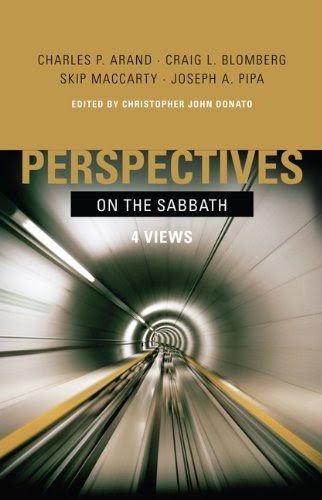 Thanks to Chris Donato for the below information…
He writes,
“That’s the question the introduction of this Perspectives volume on the Sabbath seeks to answer. In so doing, it sets up the rest of the book, which presents in point-counterpoint form the four most common views of the Sabbath commandment that have arisen throughout church history, representing the major positions held among Christians today (and despite their absence, Catholics and Orthodox can also be found on the continuum this project articulates). The publisher summarizes the book as follows:”
Skip MacCarty (Andrews University, Pioneer Memorial Church) defends the Seventh-day view, which argues the Sabbath commandment is a moral law of God requiring us to keep the seventh day (Saturday) holy. It must therefore remain the day of rest and worship for Christians. Jospeh A. Pipa (Greenville Presbyterian Theological Seminary) backs the Christian Sabbath view, which reasons that ever since the resurrection of Christ, the one day in seven to be kept holy is the first day of the week. Craig L. Blomberg (Denver Seminary) supports the Fulfillment view, which says that since Christ has brought the true Sabbath rest into the present, the Sabbath commands of the Old Testament are no longer binding on believers. Charles P. Arand (Concordia Seminary) upholds the Lutheran view that the Sabbath commandment was given as Torah to the Israelites alone and does not concern Christians. Rest and worship are still required but not tied to a particular day.
Comes out 2011 and I cannot wait for the read!
The Blasphemy in Breaking the 3rd Commandment
Posted: July 16, 2010 Filed under: Just My Thoughts 5 CommentsHow one is to under the practical theology behind the blasphemy in breaking the third commandment. Here is eight common ways in which one does so today
- A common swear word (Leviticus 24:11)
- Misusing His name in false worship (Psalm 24:4; Judges 17:2-3; Deuteronomy 12:4,8,13; John 14:6 & Acts 12)
- Misusing the name of the Lord in careless worship (Ecclesiastes 5:1-2; Numbers 26:61; Deuteronomy 12:48 & John 14:14)
- Using the name of the Lord to support a lie (Leviticus 19:12; 1Kings 13:18 & Acts 5)
- Mocking God (Isaiah 52:5; 2 Samuel 12:14 & Romans 2:23-24)
- Using the name of the Lord in idle oaths (Numbers 30:2 & Matthew 5:33-37)
- Using the name of the Lord in complaint and unbelief (Malachi 3:13-14; Numbers 14:27 & 1Corinthians 10:10)
- In mishandling His word (Example: Matthew 8:5-13 was a homosexual slave)
The issue behind these common actions among humanity is that the name of the LORD is carelessly thrown around, and His character is belittled. But what is even worse is when the actions are commonly done in and by the church – that is, among so-called believers of the gospel. If the believer of the gospel properly understood that the squandering of God’s name is to really say that their God is of no noteworthy value, the beginnings of apostasy would never exist; for doing this is the very beginning of leaving the central gospel truths, is making less of who God is, and using His name meaninglessly. The way the believer talks about God – the way he talks about the One in whom he claims relationship with – can begin a pathway to apostasy.
To make light of His name, to make fun of His being, to speak loosely of His character, to joke about His Word, to laugh at His nature, to allow His name to be misused, to constantly gain a tolerance for the misuse of God Himself, then claim that one is in right relationship with Him is thoroughly hypocritical. Yet this is where it is most typical to begin falling away from Christ and leave the gospel, if one does not fully understand or know the importance of the third commandment. They put to waste the LORD’s name, and make light of Him as if He is like any other human being. But how does that lead to apostasy? Simply put, it is this command that the LORD’s people are asked to keep, and yet they allow themselves to fall short, and in most cases allow the way of the culture to decide for them what is acceptable and what is not. To some it is just a name or perhaps just a little joke… no biggie, just something to swear by in order to sound right… make a promise in His name because that is what people do. It is these acts which draw the individual away from the gospel truths, and it is in these acts that the individual starts to leave that which God has asked of His people.
If one breaks the third commandment of the Decalogue, does that make him an apostate? Is not an apostate one who departs from the gospel? Though it does not make one an apostate directly, this here – the misuse of the LORD’s name – is where apostasy easily begins. Disrespecting the LORD’s name is only the beginning of the act of apostatizing. It is here where one loses their respect for the name of the LORD and begins their path of leaving either what they had claimed to believe, or what they were taught about the gospel. But how can the believer of the gospel keep from a constant breaking of the third commandment?
The believer must see and fully understand that the use of the LORD’s name a privilege for them to use. Edwards speaks to this when dealing with the third commandment in relation to us today:
“It is our privilege to use the ‘name’ of our triune God-the Father, Son and Holy Spirit-both in worship and in witness. But we must use it carefully. There are few things more wonderful than to use the name of our God and Saviour-and nothing more dangerous than to abuse it.”[1]
This is how the Law is love to the believer: not that it is restricting us from the things our nature wants to do, but it lays the principles in which we can enjoy the gospel fully. It is in this that one can continue to focus in happiness, being able to speak of God as his God.
You can read the full paper here. The Law and Apostasy
[1] Edwards, The Ten Commandments for Today, p. 115.
Book Review: Preaching Like Calvin: Sermons from the 500th Anniversary Celebration
Posted: July 15, 2010 Filed under: Book of the Week, Calvin 500 Leave a comment Edited by David W. Hall, Preaching Like Calvin: Sermons from the 500th Anniversary Celebration. P&R Publishing: Phillipsburg, NJ, 2010, 289 pages.
Preaching Like Calvin is the newest addition to the Calvin 500 Series from P&R Publishing. These 289-pages contain 16 sermons which were (all but one) originally delivered at the Commemorating Calvin Conference, July 9-11, 2009 in Geneva, Switzerland. The sermons cover a variety of topics—from Predestination and The Christian Life, to The Offices of Christ and Calvin’s Cherished Text—by a host of speakers including Iain D. Campbell, Edward Donnelly, Sinclair B. Ferguson, Martin Holdt, Hywel R. Jones, Steven J. Lawson and Derek W. H. Thomas. As is said in the book’s introduction, “Preaching Like Calvin faithfully preserves the original sixteen sermon texts, including their original ‘shape’ and, in some cases, brief preaching notes and preaching outlines.” Editor David W. Hall notes that the “goal has been for the written versions of the sermons to mirror the oral form in which they were delivered, thus ensuring, as much as possible, that the written word is a facsimile of the spoken word.” Because of this, the reader is able to experience the sermons to their fullest, in book form.
Preaching Like Calvin begins with a foreward by Rev. Eric Alexander, which, though brief, outlines three great characteristics of John Calvin—a man of “Gigantic Intellect,” “Extraordinary Industry,” and “Remarkable Godliness.” This 3-page forward succeeds in whetting the appetite for the readings to come. Beginning the sermons, David W. Hall opens with a message which summarizes Calvinism under three points (“The Glory and Sovereignty of God,” “The Fall of Man,” and “Calling to the World”). In the third sermon of the book, Henry Luke Orombi examines the question, “Who is the faithful servant whom the Master has set over his household?”—a message laced with the urging passion to proclaim the Word of God; followed by Bryan Chapell, who looks at the doctrine of predestination with the focus on its blessings—reminding us that “predestination is meant to bless believers’ hearts.” In chapter 6, Peter A. Lillback discusses All the Glorious Offices of Christ “as taught by the apostle Paul and explained by Calvin;” while W. Robert Godfrey’s follows up with his message which focuses on Calvin’s Cherished Text—John 17:3. In chapter 12, Joel R. Beeke discusses Cherishing the Church by examining The Church’s Status, The Church’s Substance, and The Church’s Success. Martin Holdt addresses John Calvin and Psalm 110, and Edward Donnelly looks at what it means to be More Than Conquerors. The book finishes with a message delivered by Derek W. Thomas entitled Bowing Before the Majesty of God—a very powerful message which looks at God’s Incomprehensibleness, God’s Sovereignty, and God’s Glory—a perfect ending thought for this collection of sermons.
Initially upon hearing about these sermons, which were preached at the 500th Anniversary celebration of John Calvin, I wasn’t sure what to expect, thinking that perhaps they would all be messages about Calvin himself. I realized immediately upon beginning Preaching Like Calvin that this wasn’t the case! These messages, though celebrating Calvin’s life and what he has done in contribution to Christianity, focus on many different aspects of the doctrines he taught—but most of all, focus on the Christ he loved and lived for. Because of this, these messages not only give us a glimpse into Calvin’s life, but also bring to us thoughts and applications for every man’s Christian walk. With so many sermons on such a variety of topics, this book is great to pick up and read at any given time, and also serves as being a great resource for the doctrines and teachings of Calvinism.
Preaching Like Calvin is a fantastic book, full of engaging expositions, thoughts, and truths that are applicable to any Christians’ life. You don’t have to be an expert on Calvin to be able to appreciate what is presented through these sermons. Although “these messages provide a current apology for the vitality of Calvinism, and are exemplars to modern audiences of what living Calvinism looks like and sounds like today” (David W. Hall), they are not delivered in a way that is hard to understand or “over one’s head.” Some hear the name Calvin and think they are about to read a whole lot of hard-to-grasp theological terms; but in this collection, we are clearly presented gospel truths in an applicable and comprehensive way. Because of this, I would feel confident recommending this book to anyone—student, parent, preacher or layman. Overall, Preaching Like Calvin will prove to be a great addition to anyone’s collection.
The (Im)Morality of Tattoos
Posted: July 14, 2010 Filed under: Tattoos 1 CommentTattoos can easily raise eyebrows in any circle. From Presbyterians, most certainly the Dutch-Reformed to even the other side of the spectrums like Fundamental Baptist, Pensacola Christian College and good ole’ Dispensationalist. The issue is always around three things; Lev. 19:27, the image of God and the body is the Holy Temple of God. If one knows me, better yet sees me they know my stance clearly from looks. The one paper I wrote on the topic 8-years ago, I thought could use some re-wording sometime soon. Until an old Word of Life friend sent me an email this past week of a paper he found in the Christian Research Journal (Vol. 28/ No. 06/ 2005) available at http://www.equip.org. The author, Lorne Zelyck reserves all editorial rights and privileges of this paper, which I hope is okay that I post a PDF of it here on my blog.
If interested in tattoos, the issue and looking for a good read, maybe the best yet I have read, this is the one. I really would like to hear your comments, questions, and remarks on this and your thoughts on the issue so please, do not be shy of that little comment box below and look forward to hearing those of you who do leave your words.
Divorce
Posted: July 13, 2010 Filed under: Divorce 1 CommentJust recently one of my long time, (what I thought was) Christian friends told me she was getting divorced. Ahhh, I was blown away. A girl that I saw in my eyes when I was 14, 16, and 18 years old I called prime material as a christian wife, had gotten married to some guy (which I was blown away that she had married at the time) that she is now walking out on for no reason but other than what she said…
“I am 25-years old and still yet can make things right that will make me happy”
Are we serious Christians!? I might as well fold up, shut up and go home with Jesus Christ if this is the mind-set of those the claim the name of being married to Jesus Christ as Savior! Are we serious? Are we for real? and yes… we are folks. It has come to the point that so-called Christians after getting married right out of College (because they insists upon) get married and then within 2-5 years they think, “what did I do marrying this person!?”
To which my only responds it, “I do not care what you did! You got married, you claim the name of Jesus Christ as Savior, over the man or woman you came into covenant with! Deal with it till death do you part!“
A lot could be said right now, but I’ll leave it open for your own comments. Think with me… the last time your illness as a believer sinned against the holiness of God, did He, God, think twice upon that fact that He was about to cut you off from His ever lasting covenant (in marriage) that He made with His people? #1 I think not! AND #2 Such an idea would be ridiculous!
I am not going to go into this in detail, but you can read the paper I wrote about 8-months ago from this date below in which I still stand by and agree 100%.
PS (my belief) – Above in the 1st paragraph it may seem as if I do not believe a Divorced person cannot be a believer of the Gospel. That is not true at all, I do believe one can be. It just may be harder to be a believer of the gospel if one is ddivorced than if they are single or married.
What Ever Happen to AIM?
Posted: July 12, 2010 Filed under: My High Schools Days, My Life Leave a commentI can no-lie remember the days (1999-2002) I would go to school at 7am, spend all day trying to stay awake in classes and sleeping 5 out of 8 periods a day to only be at home at 3pm to only get on AIM (American Instant Messaging). I rememeber at times even passing out my messanger name as if it was an handle for a CB… wait no one knows what that is… handing out my screen name to girls, my buddies at school, so that as soon as I got off the bus from high-school during my freshmen and sphomore years, later after work (10pm) my junior and senior years to talk to my friends. Some people had 30, 40, 50 , I knew friends that had 100, but mostly because I was in band and dealt with state band I meant a lot of friends from other high-schools I remember myself having over 200 AIM friends/buddies.
Yet today I own a MacBook which I use iChat on. There I can send my G-chat, Facebook chat and my younger days of Yahoo messenger and AIM through.
- Gmail chat I have about 20
- Facebook depdning on the time and day I have 100-300.
- Yahoo I have not a single person
- AIM out of my 300 friends from high school and college I only have five, and all five have it sent drectly to their cell phone which I’d guess do not have anyone contact them.
It is funny how times change. This morning I signed on AIM and saw 5, then before I wane to bed tonight I wanted to see how many which was still the same 5. It is at time funny to grow up and see differences in times. Some times you think everything stays the same, then you grow up and see nothing stays the same.
It only made me think, the gospel since creation never once has changed, not one time, not in a single way, no more, and none less have come to it, the same that are to are called everyday… How great the gospel is, that those who are a member of it, do not wear out, do not give up, but in their assurance continue on their this day and age until Christ’s coming.
John Calvin on the Lord’s Supper
Posted: July 11, 2010 Filed under: Calvinism Leave a comment“It is not the principal part of a sacrament simply to hold forth the body of Christ to us without any higher consideration, but rather to seal and confirm that promise by which he testifies that his flesh is meat indeed, and his blood drink indeed, nourishing us unto life eternal, and by which he affirms that he is the bread of life, of which, whosoever shall eat, shall live for ever—I say, to seal and confirm that promise, and in order to do so, it sends us to the cross of Christ, where that promise was performed and fulfilled in all its parts. For we do not eat Christ duly and savingly unless as crucified, while with lively apprehension we perceive the efficacy of his death. When he called himself the bread of life, he did not take that appellation from the sacrament, as some perversely interpret; but such as he was given to us by the Father, such he exhibited himself when becoming partaker of our human mortality, he made us partakers of his divine immortality; when offering himself in sacrifice, he took our curse upon himself, that he might cover us with his blessing, when by his death he devoured and swallowed up death, when in his resurrection he raised our corruptible flesh, which he had put on, to glory and incorruption.”
Taken from 4.17.4

 Gospel-Centered Musings