Don’t Bash the Man They Called CASH – Part 3
Posted: May 29, 2009 Filed under: Johnny Cash Leave a commentThe last two days I have spent sometime talking about Johnny Cash, Gospel-Centered living and what we can learn from both of them. You can read both of them, Part-1 and Part-2 by clicking on the links.
 The posts have several intentions in them:
1. That you can take the good of a person and leave the bad after Jesus Christ has clothed them in righteousness.
2. That we can learn how to practice Gospel-Centered living from dealing with those that have had hardships in their lives.
3. That Johnny Cash was a believer!
4. That we can see God’s great saving Grace saves many different people, from different backgrounds, dealing with different sins, and saving them out of different circumstances.
5. That I personally take Johnny Cash life story to heart (as you can see) because not in everyway, but many similar struggles and examples in which the Gospel saved him, it saved me.
Johnny Cash lived a crazy life style until the Lord found him that dark night in the cave. Cash was only known for his rebel, fast speed life that was young, wild and free-caring in spirit. With a new kind of country/rock sound he got on tour with Elvis and Jerry Lewis and partied, sang, partied, sang, drugs, women, partied and sung some more. He was different, something knew and along with the fame came the culture of the world at his time and drug him in with it.
Cash’s earlier life struggled much with the temptations that this world has to offer a person. Living a Gospel-Centered life in today’s world is no easier, so it is important to feed the life of a believer with passages like James 1:12-18, it reads;
Blessed is the man who remains steadfast under trial, for when he has stood the test he will receive the crown of life, which God has promised to those who love him. Let no one say when he is tempted, “I am being tempted by God,” for God cannot be tempted with evil, and he himself tempts no one. But each person is tempted when he is lured and enticed by his own desire. Then desire when it has conceived gives birth to sin, and sin when it is fully-grown brings forth death.
Do not be deceived, my beloved brothers. Every good gift and every perfect gift is from above, coming down from he Father of lights with whom there is no variation or shadow due to change. Of his own will he brought us forth by the word of truth, that we should be a kind of first-fruits of his creatures.
And then focusing on the one who gave Johnny Cash victory over sin and us over sin, Jesus Christ example in Hebrews 4:14-16.
Since then we have a great high priest who has passed through the heavens, Jesus, the Son of God, let us hold fast our confession. For we do not have a high priest who is unable to sympathize with our weaknesses, but one who in every respect has been tempted as we are, yet without sin. Let us then with confidence draw near to the throne of grace, that we may receive mercy and find grace to help in time of need.
 One song I remember hearing about three years ago by Johnny Cash was a song titled, God’s Gonna Cut You Down.
The title seems harsh enough, and then even more after hearing the lyrics, Mr. Cash’s view on the sinner that continues in his path seemed black and white to him. Cash’s view of God was no joke, and in Cash’s later years he saw the seriousness of the Lord and that God did not and will not allow sinners to continually walk along this earth in doing what they want. Sooner or later every believer and man will face God and if you had lived for yourself, fulfilling fleshly wants and desires you can run for only so long before God cuts them off. As Johnny Cash says, “But as sure as God made black and white, What’s done in the dark will be brought to the light.”
And so should be the message that Gospel-Centered people bring to this world and the cultures in it. When preaching, teaching and telling to the unsaved people about the Gospel we cannot simply give a message that says, “pray this prayer with me” and then allow them to continue to live however they want and do whatever they feel. We preach Christ crucified, meaning we tell that Jesus died, but also why he died! Because of sin, sinners need not only to come by faith (Eph. 2:8-9) but in repentance (Is. 6) for their sin before God cuts them off from this world.
God’s Gonna Cut You Down
You can run on for a long time, Run on for a long time, Run on for a long time, Sooner or later God’ll cut you down, Sooner or later God’ll cut you down.
Go tell that long tongue liar, Go and tell that midnight rider, Tell the rambler, the gambler, the back biter, Tell ’em that God’s gonna cut ’em down, Tell ’em that God’s gonna cut ’em down.
Well my goodness gracious let me tell you the news, My head’s been wet with the midnight dew, I’ve been down on bended knee talkin’ to the man from Galilee, He spoke to me in the voice so sweet, I thought I heard the shuffle of the angel’s feet, He called my name and my heart stood still, When he said, “John go do My will!”
Go tell that long tongue liar, Go and tell that midnight rider, Tell the rambler, the gambler, the back biter, Tell ’em that God’s gonna cut ’em down, Tell ’em that God’s gonna cut ’em down.
You can run on for a long time, Run on for a long time, Run on for a long time, Sooner or later God’ll cut you down, Sooner or later God’ll cut you down.
Well you may throw your rock and hide your hand, Workin’ in the dark against your fellow man, But as sure as God made black and white, What’s done in the dark will be brought to the light
You can run on for a long time, Run on for a long time, Run on for a long time, Sooner or later God’ll cut you down, Sooner or later God’ll cut you down.
Go tell that long tongue liar, Go and tell that midnight rider, Tell the rambler, the gambler, the back biter, Tell ’em that God’s gonna cut you down, Tell ’em that God’s gonna cut you down, Tell ’em that God’s gonna cut you down.
The video is even more harsh if you actually understand it.
What can we take from this?
1. That no matter what level of sin one is in, the Gospel is always the remedy to sins sickness.
2. That we are to preach a full Gospel. Believing on Jesus Christ as Lord, AND repentance for our sins that we have done in which have offended a Holy God.
3. If you are a believer of the Gospel, praise him now that you will never be cut off from Him and His promises.
4. That Jesus Christ is our example in defeating sin, as the writer of Hebrews says so clearly, “For we do not have a high priest who is unable to sympathize with our weaknesses, but one who in every respect has been tempted as we are, yet without sin.”
5. Pray that God continues to keep us from sin, and to help us when in temptation throughout the day in living for Him and not for ourselves.
Don’t Bash on the Man They called CASH – Part 2
Posted: May 28, 2009 Filed under: Johnny Cash Leave a comment Yesterday I wrote the first of a four part series that I am doing this week. It was the beginning of my views on many things in Conservative Evangelicalism that have often gotten under my skin in Gospel-Centered living that traditionalist and legalistic thinking easily corrupts. However the post and the post to come are to be more directed to the man Johnny Cash. Yesterday I started by saying “I frankly get sick-n-tired of hearing Christians bash the man they called, Johnny Cash!” And what I meant by that was at times, Christians can hear one thing about a fellow brother, or his past life in and of sin and easily condemn the individual and go as far as in having nothing to do with him.
One of the problems that happen in conservative evangelical circles is that his temptations, trails and struggles in life are not talked about much. Which make stories of temptation hard to find for the layman to relate to his pastor or preacher. The real man in the pew has hardship in his work environment, struggles in his family, abuse of drugs, lust, and can easily feel alone in his battle for holiness to live like Christ. If the conservative pastor, professor, elder, or deacon struggles with an area in his life, or goes through hardship, it is often not talked about or pushed down deep so that he never has to deal with it again. What happens then is our pastors, elders or professors then are never looked at as a real man, but someone who doesn’t struggle with anything and doesn’t realize the issues that the layman goes through in life.
Now I do believe that the pastor and elder, etc. are to be blameless and high above the layman in his calling as a pastor. But what happens all so often is that because of this pushing down of hardship and temptations, is he is lifted so high, that it becomes hard for the layman to relate with his elder, pastor or professor. Sometimes even, he is then lifted and seen so highly above all the rest, that he has no family problems, no struggles in real life, and no trails that we laymen can relate to. The layman easily then doesn’t think that the pastor can relate to him nor does the layman feel that he has a pastor that know what he is talking about. The pastor at times doesn’t talk about reality, real life situations in his own life and can often draw himself out and even away from those he is pastoring over.
The reason I direct these post to Johnny Cash is for these very reasons. Johnny Cash was a man that grew up listening to gospel songs on the radio, going to church every Sunday, having a family that read the Scriptures and even had brother named Jack who had wanted to be a pastor. Mr. Cash found it hard to relate to them because temptations, struggles and hard times were never talked about, but pushed down into the barrel so that no one could find them. Because of Cash’s struggles when young he left home early. His view of this is best shown in a later song he wrote in 1996, I Never Picked Cotton. It reads:
“I never picked cotton But my mother did And my brother did And my sister did And my daddy died young Workin’ in the coal mine.
When I was just a baby Too little for a cotton sack I played in the dirt While the others worked ‘Til they couldn’t straighten up their backs I made myself a promise When I was big enough to run That I’d never stay a single day In that Oklahoma sun.
Folks said I grew up early And that the farm couldn’t hold me then so I stole ten bucks and a pickup truck And I never went back again Then it was fast cars and whiskey Long haired girls and fun I had everything that money could bring And I took it all with a gun.
It was Saturday night in Memphis When a redneck grabbed my shirt When he said go back to your cotton sack I left him dying in the dirt They’ll take me in the morning To the gallos just outside And in the time I got There ain’t a hell of a lot That I can look back on with pride”
Cash wanted nothing to do with his early life, no one understood him, no one wanted the things he did in life, so he left town and never looked back doing whatever he could to continue to make it in the big light. Even though this is the Johnny Cash we so often think about or have heard of, during the same time in 1996, Cash wrote a number of songs about his conversation and the change in which took place in his heart, the Gospel. Something in Cash’s life changed when exactly that was some guess that it was his “Cave” experience, when he crawled into a cave and tried to take his own life, being alone completely in the dark realizing that there in that cave he was the furthest from God that he had ever been in his life. There in the cave in all loneliness Cash said, “I felt something very powerful start to happen to me.” There in that cave he came to the knowledge that God was in control of his life and when he came out of that cave he knew that then he was going to get off drugs and come back to God which he had known when he was a little boy. From that day the Gospel forever changed Johnny Cash’s life.
Some of his greatest words in how the Gospel changed his life are in his later writings and songs in the 1990’s and early 2000’s. Songs like:
Redemption (1994)
From the hands it came down, From the side it came down, From the feet it came down, And ran to the ground, Between heaven and hell, A teardrop fell In the deep crimson dew The tree of life grew
And the blood gave life, To the branches of the tree, And the blood was the price, That set the captives free, And the numbers that came, Through the fire and the flood Clung to the tree, And were redeemed by the blood
From the tree streamed a light, That started the fight ‘Round the tree grew a vine, On whose fruit I could dine, My old friend Lucifer came, Fought to keep me in chains, But I saw through the tricks, Of six-sixty-six
And the blood gave life, To the branches of the tree, And the blood was the price, That set the captives free, And the numbers that came, Through the fire and the flood Clung to the tree, And were redeemed by the blood
From his hands it came down, From his side it came down, from his feet it came down, And ran to the ground, And a small inner voice Said “You do have a choice.” The vine engrafted me, And I clung to the tree
Unchained (1996)
Oh I am weak. Oh I know I am vain. Take this weight from me, Let my spirit be unchained. Old man swearin’ at the sidewalk, I’m overcome. Seems that we’ve both forgotten, forgotten to go home. Oh have I seen an angel, or have I seen a ghost? Where’s that Rock of Ages when I need it most?
Meet Me in Heaven (1996)
We saw houses falling from the sky Where the mountains lean down to the sand We saw blackbirds circling ’round an old castle keep And I stood on the cliff and held your hand
We walked troubles brooding wind swept hills And we loved and we laughed the pain away At the end of the journey, when our last song is sung Will you meet me in Heaven someday
Can’t be sure of how’s it’s going to be When we walk into the light across the bar But I’ll know you and you’ll know me Out there beyond the stars
We’ve seen the secret things revealed by God And we heard what the angels had to say Should you go first, or if you follow me Will you meet me in Heaven someday
Living in a mansion on the streets of gold At the corner of Grace and Rapture Way In sweet ecstasy while the ages roll Will you meet me in Heaven someday
In sweet ecstasy while the ages roll Will you meet in Heaven someday
My personal favorite, Spiritual (1996)
Jesus I don’t wanna die alone Jesus oh Jesus I don’t wanna die alone, My love wasn’t true Now all I have is you, Jesus oh Jesus I don’t wanna die alone, Jesus If you hear my last breath, Don’t leave me here Left to die a lonely death I know I have sinned but Lord I’m suffering.
Jesus Oh Jesus If you hear my last breath, Jesus I don’t wanna die alone Jesus oh Jesus I don’t wanna die alone, My love wasn’t true Now all I have is you, Jesus Oh Jesus I don’t wanna die alone, Jesus Jesus All my troubles All My pain Will leave me Once again.
All my troubles All my pain Will leave me once again, All my troubles All my pain Will leave me once again Once again.
The song that shows Cash’s view of his pasted wasted life. Why Me Lord? (1994)
Why me Lord, what have I ever done To deserve even one, of the pleasures I’ve known. Tell me Lord, what did I ever do, That was worth love FROM you, Or the kindness you’ve shown.
Lord help me Jesus, I’ve wasted it so, Help me Jesus, I know what I am. Now that I know, that I’ve need you so, Help me Jesus, my soul’s in your hand.
Try me Lord, if you think there’s a way, That I can repay, all I’ve taken from you. Maybe Lord, I can show someone else, What I’ve been through myself, on my way back to you.
Lord help me Jesus, I’ve wasted it so, Help me Jesus I know what I am. Now that I know that I’ve need you so, Help me Jesus, my soul’s in your hand.
Back to what the post was at the beginning. Pastors, elders, and professors of the Gospel-ministry that God has aloud you to so kindly work for, remember the following.
1. God saved you like he saved Johnny Cash. No matter how much more sin someone else may have committed, nor how much longer one continually lived in sin, once saved by faith and grace alone, he is no different in the eyes of the Lord then you.
2. No sinner is ever to far from God’s great grace.
3. Be sure that we never place ourselves to high above the rest, that we cannot relate with the average man in the pew of our churches.
4. No matter how many degrees, titles to our name and prestige that can come along with our work, we should never allow ourselves to look better then the one in need of the Gospel, and two, not allow out heads to puff up and place ourselves high above the rest in the pew of Christ’ church.
5. Try to relate to those in your church, classroom or work. No, I don’t mean to sin on purpose, but I mean hang out with your people, get to know them on a personal level. Pastors and professors if you don’t know your flock and students outside your church and seminary, how well you ever be an effective tool for the gospel-ministry?
I mean yes, you can teach and preach until your blue in the face, but until you put time, effort, tenderness, love and caring practice of what you so boldly speaking of, it may never sink-in the heart of the layman.
6. Laymen need to see real people, real hearts and real life situations. If all they see is a preacher and professor, they’ll never know correct Gospel-Centered living. Did not Christ teach AND WALK with his disciples?

You can Read Part-1 HERE.
Don’t Bash on the Man They called CASH – Part 1
Posted: May 27, 2009 Filed under: Johnny Cash 8 Comments I frankly get sick-n-tired of hearing Christians bash the man they called, Johnny Cash!
I was recently talking to a guy that felt the need to confront me on listening to Johnny Cash, and began the conversation asking me, “was he a Christian?” I guess his purpose was something like this:
All unsaved people are against God in what they do.
All saved people should be for God in what they do.
All saved people should be against all unsaved people in what they do and produce.
Which is known as the antithesis view on culture and unregenerate people. While I theologically tend to agree with the antithesis view that men unsaved are against God (total depravity), one must be carful in how this is played out in everyday living in culture and in practice. Many that are against him, do not know they are against God. So if the believer bashes this in their face, does their Gospel-Centered view help or hurt the unsaved person? His argument went something like this:
Johnny Cash is unsaved (so he thinks)
Johnny Cash then is against God
So saved people should be against Johnny Cash
He then later felt the need to email me a document that stated a number of thoughts for believers against secular music (which was very thoughtful of him and thought provoking as well). It stated a number of thoughts but the two statements below are what really got me fired up.
“All unregenerate persons hate God and thus all unregenerate musical artists hate God.”
Further in the document it stated,
“A person who enjoys secular music has no right to any assurance of being regenerate or of a good hope for eternity.”
*** By secular music he meant– “By “secular music” I mean to refer to that contemporary music which radio stations make available to the general public and that does not claim to be Christian nor is it written by artists who make a credible profession of Christianity; e.g. rock, pop, rap, alternative, country, oldies, etc.”
To which then I felt then the need to write this blog post. Now I am NOT going to deal with the above statements at all. Nor do I want to, if you agree with them, fine with me and if you don’t, good for you.
But what I am going to deal with is the fact that conservative evangelicals, the traditionalist, and those that tend to be legalistic can often times be so consuming that the secular culture does not come to the Gospel because of the Christians’ stupidity that lies in how they are treated. Now I know that many of you automatically may think, “Dewalt you are making generalizations in your groupings above.” To which I may, but there are the number of Christians that may believe theologically in Gospel-Centeredness, but they do not practice it when it comes to dealing with those that are lost. Nor do they practice it to those that were lost and have came to the Gospel later in life and have a reckless history of sin which had stained their name for their rest of their own lives. Men like myself, and men like Johnny Cash.
It seems to me that there are a good many of conservative evangelicals that enjoy separating themselves from he world (which is a good thing), but even more enjoy finding their piety from whom they separate from (which is a bad thing).
Examples of this:
1. I don’t watch TV or I don’t own a TV so because of that, I am separate from the world and that makes me more spiritual or holy then those that do.
2. I separate myself from listening to secular music or men like Johnny Cash because it makes me more “holy” then those that do.
3. I don’t wear jeans to church, so therefore I respect the Lord more then those that do.
4. I do not dance, the world does, so therefore I am more holy then those that do.
5. I do not drink any alcoholic beverage, so therefore I am more holy then those that do.
6. I do not play video games because they are a waste of time, so therefore I spend my time more wisely, I have better standing with God.
Now the believer that separates him self from watching NBA, News, or listening to country music, not drinking a beer, or not playing a video game may not say with his lips, “I’m doing this for more piety” but in practice can easily do so. This is important to everyday living as a believer to not think in our minds that we are better then Sam, or Sue, or Pam because I do not partake in watching the evening news on a TV.
If one has personal conviction about having a TV, then that is fine, do not have one. But when one finds his righteousness in not having a TV, we have a problem. Then when one binds that belief onto another believer that he or she should not have a TV, we have a larger problem, called legalism. See it is easy to be Gospel-Centered in believing that our righteousness is in Christ, but it can be hard when living that truth out and reminding ourselves about Gospel-Centered living that out.
Conservative Reformed Evangelicals when hearing about the man called, “CASH” easily hear of all the hell-rising, drug-abusing, alcoholic days, running around on his wife stories that the secular culture places to the front of Johnny Cash’s life. And from reading much about the man, there are a number of events and areas that I’m sure Johnny Cash regretted in his life.
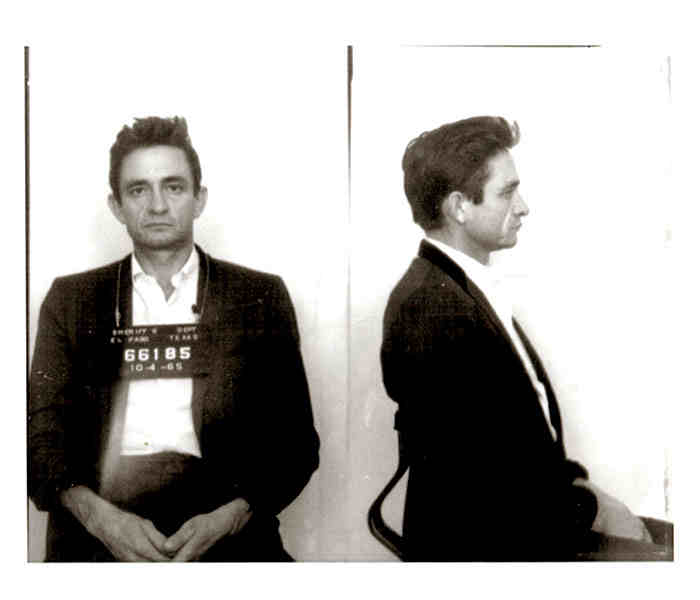
Two Thoughts:
1. If you are a believer and reading this, it was by God’s great grace that you did not fall into the world like that of Johnny Cash and fall deep into the sins of this world.
2. If you are a believer and reading this, your before state of salvation was no different of that in which Johnny Cash’s was either.
I’m going to add to this to this post a video that Resurgence Ministries has done on the Rebel, Johnny Cash. For the rest of this week, I’ll continue my thoughts on Johnny Cash and add some of the material that he produced in his later life.
The Beauty of God’s Kingdom – Part 3
Posted: May 26, 2009 Filed under: The Beauty of God's Kingdom Leave a commentAn Acceptable Kingdom. The beauty of God’s Kingdom is that it deserves your worship with reverence and that it leaves the believer of the gospel in nothing else but awe.
Speaking about the unshakable kingdom, we now look at how the believer lives in the kingdom. The writer of Hebrews says in verse 28, “and thus let us offer to God acceptable worship, with reverence and awe.” The privileges that the believer has, living in the gospel kingdom, are of the very highest regard. No believer can say, “well, I think I could do better” or “I wish this was different.” There is nothing whatsoever more satisfying than living under the gospel! We live under this gospel which is endless – it is for now and forevermore, as Christ sits on His throne above and is our Ruler.
We must look at what this means for the believer. Think back to when your heart was not part of the kingdom of God. And then think of where you are now – an heir with Christ and having part of God’s eternal inheritance. What more could we ask for? What more needs to be said or done that would cause us to live in reverence and awe? Nothing! This is of incomparable worth. This is why we, as believers, must keep our eye on Mount Zion; keep our eye on Christ, the mediator of the new covenant. This means that we live a life in two very important ways. They are:
1. Reverence – that we bow in humble adoration, in the highest respect, every day to Christ for what he has done for us.
2. Awe – that we live in holy fear, showing our Savior that we live in absolute wonder and amazement of what He has done.
Do you live your Christianity like this?
One may think of this and ask, “why is this so important?” or “why must I do this?”… Which I will easily answer. Being a part of the kingdom that will remain forever and that is unmovable should call you to live in zeal and with a passion for living in reverence and awe continually throughout your days. How can any believer sit under the words here in Hebrews 12 and not be struck with awe? When we hear of this inheritance and understand how unworthy we are to receive it, and yet know that it is bestowed upon us so graciously, how can we not feel that love bursting forth from our heart in thankfulness for this great gift Christ has given? How can we not want to give thanks for the kingdom that will forever reign? What makes this so incredible to the believer is that we did no work for it – if it had been our own work, we would be across the valley hanging out on Mount Sinai. But it’s not of our own work, and therefore we look towards Zion, look towards Christ, and see that it was His work alone through which we inherit this kingdom. In light of this, serving Christ must be done gratefully – or as the writer of Hebrews said, to be serving in reverence and awe. If it’s not, what is the real heart of our service? If the true heart of our service is focused on Christ, it will be done in reverence and awe. Everything we do – our worship, service, life, parenting, being a spouse, a teacher, or working on studies… everything from our waking up until our laying down at night is done for the kingdom of the gospel, and is done in reverence and awe to Christ alone.
Why “reverence and awe”? We’ll look at that in this third and last point later this week.
Choosing can be hard
Posted: May 25, 2009 Filed under: You Might be a Calvinist if... Leave a commentI haven’t done one of these in awhile, so here are two.
You might be a Calvinist if… someone offers three pieces of candy and you don’t know how to chose which one you are going to take.
You might be a Calvinist if… you refuse to take a multiple choice test, you just don’t know what you’d do.
One a Majority!
Posted: May 24, 2009 Filed under: Sundays with Spurgeon Leave a commentOne man of you shall chase a thousand: for the Lord your God, he it is that fighteth for you, as he hath promised you. (Joshua 23:10)
Why count heads? One man with God is a majority though there be a thousand on the other side. Sometimes our helpers may be too many for God to work with them, as was the case with Gideon, who could do nothing till he had increased his forces by thinning out their numbers. But the Lord’s hosts are never too few. When God would found a nation, He called Abram alone and blessed him. When He would vanquish proud Pharaoh, He used no armies, but only Moses and Aaron. The “one-man ministry,” as certain wise men call it, has been far more used of the Lord than trained bands with their officers. Did all the Israelites together slay so many as Samson alone? Saul and his hosts slew their thousands but David his ten thousands.
The Lord can give the enemy long odds and yet vanquish him. If we have faith, we have God with us, and what are multitudes of men? One shepherd’s dog can drive before him a flock of sheep. If the Lord sent thee, O my brother, His strength will accomplish His divine purpose. Wherefore, rely on the promise, and be very courageous.
Sermons on Genesis: Chapters 1-11, by John Calvin
Posted: May 23, 2009 Filed under: Book of the Week, John Calvin Leave a comment NEWLY PUBLISHED – FIRST, AND ONLY, ENGLISH TRANSLATION
John Calvin is generally thought of as the greatest theologian of the Protestant Reformation or as a gifted Bible commentator whose insights into the text of Scripture are still highly valued today. Yet it is not widely known that the greatest obligation Calvin felt was not to his fellow scholars, nor even to his students, but to the ordinary people – citizens of Geneva and persecuted refugees, shopkeepers and merchants, the young and the old – who crowded St. Peter’s Church no less than ten times a fortnight to listen to his sermons in French.
Calvin’s sermons have lain for too long in the shadow of his commentaries. In seeking to correct this imbalance, it should be remembered that a sermon serves a very different purpose from a commentary. While explanation and interpretation are enough for students, they are never enough for a congregation of sinners. That is why Calvin’s sermons always combine the essential elements of all true preaching – exposition, exhortation and practical application. So let the reader be warned: this volume contains lively preaching! Calvin aims to awaken the conscience and also demands life-changing action. Is it any wonder that such preaching was used by God to bring spiritual renewal on an unprecedented scale to the people and nations of sixteenth-century Europe?
The Beauty of God’s Kingdom – Part 2
Posted: May 22, 2009 Filed under: The Beauty of God's Kingdom Leave a commentI now want to focus on bringing to your attention three things so that you may see the Beauty of God’s Kingdom. These three things are: 1. An Unshakable Kingdom 2. An Acceptable Kingdom 3. A Consuming God.
An Unshakable Kingdom. The beauty of God’s Kingdom is that it is not like any kingdom or place of this world that will be shaken in the end of days.
We are told that believers are to be grateful for receiving the kingdom. I say “believers” because the writer specifically says in verse 28, “we.” In this, he was referring to believers, and that he himself was a believer. This kingdom he speaks of, however, is different than what we often may think about when making mention of the kingdom of God. The members of this kingdom whom the writer is referring to, are the members of the gospel kingdom – that is, those who have professed Christianity; who follow it, have repented, and believed on Jesus Christ. Those who have done this are a part of a kingdom that is unshakable – a kingdom of the saints, a kingdom that will remain, a part of the Mount Zion that cannot be destroyed.
I would like to go back to where the writer of Hebrews mentions Deuteronomy 4:24, where it states: “For the LORD your God is a consuming fire, a jealous God.” In his time and day, Moses constantly warned the Israelites about apostasy and idolatry. Likewise, the writer of Hebrews is warning his readers about falling back to the beliefs they once held – that is, Judaism – and is encouraging them to persevere and continue to run the race, looking toward Mount Zion and their new kingdom. And this is a call for us today as well, as we are of the same gospel kingdom.
Believers of the gospel – and even unbelievers – hear these words of the Spirit and through these words we are shown the greatness contained in the gospel. We are given something that otherwise would be unattainable, as we are part of a kingdom that will not and cannot be shaken or destroyed, and is unlike any kingdom that has ever existed. This kingdom has been granted to us on behalf of Christ’s blood alone. We now have received a kingdom that is under the new covenant, which is a part of the freedom and grace we have received in Christ Himself. Believer, in this kingdom you have numerous and invaluable rights and privileges that you could never think of when dead in sin. In this kingdom you have been made kings – a royal priesthood. You receive happiness and honor because of your representation in the kingdom of the gospel. Not only can this kingdom not be moved, but it is one that will never change and will forever be bestowed upon your heart so that you can enjoy the gospel – that is, Jesus’ work.
How can we do this – enjoy the gospel, and live in light of this kingdom and Jesus’ work? Well, that brings us to the next part… in which I’ll post within the next week sometime.
50 Banned Books That Everyone Should Read
Posted: May 21, 2009 Filed under: Uncategorized 1 CommentI came across an email late at night or early in the morning which ever it was, sometime after 2am on an article written over at Online College Degree. Not knowing much about the site/blog and what it was about I went ahead and spent some time checking it out. Besides finding that Liberty University was ranked 3rd in online education on their site (side-note, do NOT attend their seminary please), I also found an article on their blog titled, the top 50 Banned Books that everyone should read. They have made a list of some of the excellent literature that has become banned or that some see inappropriate for the public eye. I found this pretty interesting to take a look at.
The reason the article caught my eye is because some of my gal’s favorite titles like, #36 To Kill a Mockingbird by Harper Lee, and #6 The Harry Potter series by JK Rowling were on the list. Now I do not read much at this point being in seminary, reading theology, history of the church and many textbooks for class, however I saw that two of my own favorite non-christian books were on the list and even my all-time fav, Animal Farm by George Orwell. In any view christian or non the post deals with the top 10 or so books in dealing with children, religion and politics, sex, race and gender, and multiple reasons. Below are the top banned books in each of their categories.
Children
#1 Catcher in the Rye by JD Salinger. Frequently a target of censorship, this classic coming-of-age story of a teenage boy in New York is often banned due to the language and sexuality–particularly a scene with a prostitute.
Religion and Politics
The Satanic Verses by Salman Rushdie. This book of magical realism describes a battle between God and the devil through the depiction of two men who go through fantastical journeys. This book was so reviled by several governments and religious leaders in Asia and the Middle East that a fatwa was issued against Rushdie, who had to live in hiding for many years in order to avoid being killed.
Sex
Lady Chatterley’s Lover by DH Lawrence. Lawrence’s book tells the story of an adulterous love affair and includes explicit sexual language. It was banned in the UK and Lawrence eventually published in Italy, where the first edition sold out immediately.
Race and Gender
To Kill a Mockingbird by Harper Lee. Racism, language, and a rape scene are the usual culprits when banning this book. In reality, Lee was highlighting the rampant racism of her time in this much beloved book in an attempt to change the wrongs she saw in society.
Multiple Reason
Fahrenheit 451 by Ray Bradbury. Perhaps the most ironic banned book situation, Fahrenheit 451 deals with the issue of censorship in a dystopian society that sends firefighters out to burn down houses discovered to have books inside. Those opposed to this book claim various reasons for banning it including profanity, portrayal of smoking and drinking, and anti-religious and anti-establishment sentiments.
What Am I Reading this summer? Baptism in the Early Church
Posted: May 20, 2009 Filed under: What am I Reading Today? 2 CommentsThis summer I intend to take a break from most of my studies at PRTS, and read maybe one, two or three books at the most. I intend to relax either hanging with friends and family, doing a little bit of work here and there, and playing some video games like always. About a month ago on Justin Taylor’s (I believe) blogged a post on Everett Ferguson’s newest title published by Eerdmans titled, Baptism in the Early Church: History, Theology, and Liturgy in the First Five Centuries. When first seeing the title, I wanted it as soon as I could, and with Eerdmans Publishing Co. being about 5 blocks from my townhouse, I was going to get it as soon as I could! However, I went to the store and it was $60.00 which is about half of my weekly income. So therefore I started to think of a plan to buy this massive 912 page book. A week later I was in Chicago at the Gospel-Coalition Conference and Eermands happen to be there selling it for only $40.00! However by the end of the conference I was already given 17 books from different publishers, I still had one week of classes then five exams, so I figured it was best to not stick my nose in this yet. During exam week I had heard all seminary students, professors, and pastors got 50% OFF of the retail value on any commentaries or references works (this is still good until May 30th.) With a gift of $30.00 from my grandparents for graduation I walked down to the Eerdmans store and picked it up. Besides the naked picture of Jesus Christ on the front cover, the book is amazing! This great comprehensive work done by Ferguson no matter what view one holds, either infant-baptism or believer’s baptism will influence your thought of the history of baptism in the early church. From dealing with pre-NT Church washings, pagan cultures, biblical teachings, literature of the period and the massive amount of examples of baptismal fonts throughout the early church is a MUST read for the serious student in seminary, pastor or one the is dealing with the issue.
 The book is broken down into 7 main parts having 55 chapters dealing with baptism, mainly in the first three centuries of the church and also with the fourth and fifth centuries. It breaks down as followed;
1. Antecedents to Christian Baptism
2. Baptism in the New Testament
3. The Second Century
4. The Third Century to Nicaea (325)
5. The Fourth Century
6. The Fifth Century
7. Baptisteries
At first when hearing about the title and being published by Eerdmans I figured it was Traditional/Confessional Reformed in infant-baptism. Then after talking to the store manger when buying the book he told me, “it was believer baptism” baptist in view. Now after reading the book for the last week I believe it is neither. I may be wrong on this so please do not quote me (I’ll look into Ferguson’s views later, or see them in his writings maybe?) but he seems to have the stance of believer’s baptism yes, but that baptism is what washes the sins away from the individual. Meaning that regeneration happens at baptism, by emersion. No matter what his stance is, one that is looking to study the topic (baptism) this is a must have, and a must read for its historical value in which Ferguson has done for the church today.
As the back of the book says best:
“Everett Ferguson’s work here is a compendium of almost everything that is currently known about the Christian ritual of baptism, with extensive citations to the primary and secondary literature, and as such is destined to be an extremely valuable reference work.”
The Beauty of God’s Kingdom – Part 1
Posted: May 19, 2009 Filed under: The Beauty of God's Kingdom 2 CommentsLet me invite you to turn in your Bibles to Hebrews chapter 12. We will start our reading at verse 18 through 29, and will be focusing on verses 28 and 29. ESV – Hebrews 12:18-29 – 18For you have not come to what may be touched, a blazing fire and darkness and gloom and a tempest 19and the sound of a trumpet and a voice whose words made the hearers beg that no further messages be spoken to them. 20For they could not endure the order that was given, If even a beast touches the mountain, it shall be stoned. 21Indeed, so terrifying was the sight that Moses said, I tremble with fear. 22But you have come to Mount Zion and to the city of the living God, the heavenly Jerusalem, and to innumerable angels in festal gathering, 23and to the assembly of the firstborn who are enrolled in heaven, and to God, the judge of all, and to the spirits of the righteous made perfect, 24and to Jesus, the mediator of a new covenant, and to the sprinkled blood that speaks a better word than the blood of Abel. 25See that you do not refuse him who is speaking. For if they did not escape when they refused him who warned them on earth, much less will we escape if we reject him who warns from heaven. 26At that time his voice shook the earth, but now he has promised, Yet once more I will shake not only the earth but also the heavens. 27This phrase, Yet once more, indicates the removal of things that are shaken—that is, things that have been made—in order that the things that cannot be shaken may remain. 28Therefore let us be grateful for receiving a kingdom that cannot be shaken, and thus let us offer to God acceptable worship, with reverence and awe, 29for our God is a consuming fire.
It is important that while studying this chapter you don’t look at only a tree, or just the leaves; rather, you need to look at the whole forest. In order to see that whole scope here, I am going to first spend some time in introduction to the verses we read. I believe that it’s necessary to do this so that the points are understood all the more. So, I am going to start by going back to the beginning of the chapter and my aim will be to show the beauty that lies there, from the beginning to the end… the end being what we will be specifically dealing with today.
In the first 17 verses, which we did not read, the writer of the book of Hebrews asks his audience to throw aside everything they are going through – their pain, hardship, and suffering – so that they can know Christ even more.
Verse One – The writer wants his readers to lay aside all their weight; any hook that has gotten a hold of them. In essence he is saying, “If it does not help your progression in Christianity, then get rid of it.”
Verses Two – Four – How does one do this? He looks to Jesus. He focuses as though on a one-lane road, seeing and knowing where Jesus is at all times, not turning any other way, not looking back and forth. The writer of Hebrews relates Christians to being those running a race; we are running towards Christ, who has endured the cross because of the joy He knew that would come from it. It was us whom He went to the cross for, and He alone is the founder and perfector of our faith. Christ went beyond all measure in both trial and temptation, shedding His blood for our sin, and He is now seated at the right hand of God. This is the Jesus we look to.
Verses Five – Thirteen – Here the focus shifts to show that the Lord’s people do suffer. But it also shows that we are to receive our suffering with the knowledge and assurance that the Lord is always at hand. In verses 6 to 8, we see that the Lord chastens His people because He loves His people; and it is through suffering for Him that we can know in our hearts that we are the Lord’s people. Verses 9 and 10 show how people are subject to the correction of earthly fathers, and through that, we both know and learn how to be submissive; thus, there is even so much more reason to be submissive to our heavenly Father who disciplines us. Through verses 11 to 13, the writer makes it clear that there are no excuses when it comes to suffering and living for the Lord. The benefits of suffering for Christ are great. Therefore, we are encouraged to continue throughout, and to enjoy the Christian life at all times, no matter what it consists of.
Verses Fourteen – Seventeen – This portion of the chapter ends with the writer urging Christians to persevere. He shows us the seriousness of sin, and that once one renounces their confidence in God, it is impossible to retrieve what was lost. We see here that the writer does not want Christians to claim Christ and then turn away and expect that they can come back after they had renounced their faith.
This brings us to the second part of the chapter, and the main context (verses 18 through 29) where our two verses are placed. Here the writer gives a bit of biblical history of Israel, using it to relate to the readers. As throughout the whole book, he looks again at the person and work of Jesus Christ, showing us both what was written in the Old Testament and the New Testament about Him. In this, the writer uses the example of Mount Sinai because of the redemption and deliverance which Moses brought to the Lord’s people with the Law. This is shown in comparison with the redemption that Christ gave in the gospel.
It is significant to notice the two “for’s” here, so that we see the importance of what the writer is doing with the whole of the passage. First it says, “For you have not come to what may be touched.” Over the next seven verses he then gives the reason why we are not to be like Esau, which is something he stated in verse 16. The writer is expressing that he doesn’t want to see these new Christians – who had left the Jewish faith – to compromise or leave what they now claim and believe. Next, in verse 25 he states, “For if they did not escape when they refused him who warned them on earth, much less will we escape if we reject him who warns from heaven.” Both of these bring us to the final section where the writer declares, “For our God is a consuming fire” in verse 29. This whole section is used to bring the believer to see that his mediator, his better blood, his new covenant, is found in Christ. It helps us understand and to love that better blood, the new covenant, and most of all, to love Jesus.
Next we see that verse 28 begins with “Therefore.” Why this word? We can see it this way – verse 22: “Therefore those that have come to Mount Zion and the city of the living God;” “Therefore those who come to the angels, therefore those who are enrolled in heaven;” verse 23: “Therefore those whose God is your judge, therefore who righteousness is made perfect, therefore those who have Jesus as their mediator;” verse 24: “who is apart of the new covenant, and therefore to those that are sprinkled with a better blood then that of Abel.” Why the “Therefore?” It is because the writer is now giving the climax of his chapter to those who believe the gospel; ‘you are a believer, therefore,’ “be grateful for receiving a kingdom that cannot be shaken, and thus let us offer to God acceptable worship, with reverence and awe, 29for our God is a consuming fire.”
Interview with Dr. W. Robert Godfrey on his new title, John Calvin: Pilgrim and Pastor
Posted: May 18, 2009 Filed under: Crossway 3 Comments Q: In two or three ways, how has John Calvin influenced your life and ministry?
A: I think often that people forget that Calvin was a preacher of the gospel and I heard the gospel from Calvinists. It is not something esoteric. Calvin’s favorite verse was John 17:3, “And this is eternal life, that they know you the only true God, and Jesus Christ whom you have sent” (ESV). Calvin was Christ-centered in his preaching and that Christ-centeredness is the powerful fruit of Calvin that Calvinists today don’t stress. I wanted to show the Christ-centeredness of the gospel.
Calvin’s doctrine of providence is also a great comfort knowing that in the circumstances of our lives our heavenly Father is overseeing and directing all things. Even in the bitter times we can have comfort in the advancement of his kingdom. This is a huge blessing and encouragement as an individual, father, teacher, and pastor.
Q: After the enormous amount of works on and about John Calvin, what made you want to write a biography on John Calvin?
A: A lot of the books I read on Calvin didn’t seem to me to communicate the Calvin I felt that I met in his writings. Some of these books are by scholars and for scholars so not accessible and they focus narrowly on one issue and so distort Calvin. There are books that are a good introduction to his life and others to his thought but these two things have been kept separate. Some introductions speak only about his life and there are other introductions that speak only about his theology. It would bring Calvin alive to integrate both his life and thought. I thought to write a book of his life and thought for laymen in the church, but I hope also reflecting good scholarship in my presentation.
Q: How has the life of John Calvin helped your work ethic in teaching and preaching?
A: Knowing something about Calvin’s life is profoundly humbling since most of his work and scholarly production was done in his last 25 years. It helps to be a genius, as Calvin was; he had remarkable gifts of memory and analytical skills. In his own life this was linked to a remarkably disciplined will to be productive and in a sense he wore himself out and worked himself to death. Most of us, if we worked as hard as he did would not produce the quality of work that he did. It is good to have him as inspiration but also to realize that we don’t have the same gifts. This will keep us humble as we work.
Q: In a few ways, how has John Calvin/Calvinism influenced Westminster Seminary California?
A: Our seminary, Westminster Seminary California, does follow Calvin’s basic curriculum for the preparation of ministers. The first thing Calvin would stress is that education take place in the context of faith and piety and life for God.
Secondly, Calvin would say that one could not be a good pastor who is not a good student. The critical part of the office is to study and preach the word of God. The knowledge of Greek and Hebrew is important to study the Bible in the biblical languages. We continue that with talented teachers of Greek and Hebrew at our seminary.
Q: What do you believe to be the most important truth that Calvin lived out of his theology in the ministry of teaching the gospel to Geneva?
A: I think the single most important teaching of Calvin would be justification by faith alone in Christ alone. Calvin believed that it was the hinge on which our religion turns because justification teaches us that we are helpless in ourselves and that Christ must do it all. This was foundational to what Calvin did in Geneva.
Q: In what ways do you think today’s younger generation could learn from the life and work of John Calvin?
A: I believe they can learn that Calvinism in the first place is not theology, but it is Christianity for the church. Calvin did not see himself primarily as a theologian but as a pastor. This is critical. Some people have been drawn to Calvinism because of intellectual power. As valuable as that is, Calvin would have seen intellectual power as secondary to Christ and the church.
The second thing is the church today needs to listen to Calvin on worship. There is all sorts of craziness being done and promoted in the worship of the church usually in the name of evangelism. We need to learn afresh from Calvin that worship is not evangelism but meeting with God and that meeting has to be conducted on God’s terms and most people in America today don’t think like this. Reading Calvin on this would help the church to worship God appropriately.
Q: What do you want your readers to get the most out of reading John Calvin: Pilgrim and Pastor?
A: I hope in the first place that if they’ve been influenced by the negative stereotype that float in various books they’ll begin to see the real Calvin who was a real person, whose personality was positive and not negative and grim.
Secondly, I would want them to learn Calvinism not only as theology but as a living form of religion that certainly has theology but encourages the life of the community in a vibrant way.
Q: In one or two sentences, why would you tell people to read John Calvin: Pilgrim and Pastor?
A: They should read it because they’ll find it readable, interesting, informative and spiritually profitable.
You can purchase John Calvin: Pilgrim and Pastor, by Dr. Robert Godfrey here.
The same day I release mine, so did another, here is Collin Hansen’s interview with Dr. Godfrey.
(special thanks to Maatern Kuivenhoven for transcribing this interview)
We Receive as We Give
Posted: May 17, 2009 Filed under: Sundays with Spurgeon Leave a commentBlessed are the merciful for they shall obtain mercy. (Matthew 5:7)
It is not meet that the man who will not forgive should be forgiven, nor shall he who will not give to the poor have his own wants relieved. God will measure to us with our own bushels, and those who have been hard masters and hard creditors will find that the Lord will deal hardly with them. “He shall have judgment without mercy, that hath shewed no mercy.”
This day let us try to give and to forgive. Let us mind the two bears-bear and forbear. Let us be kind, gentle, and tender. Let us not put harsh constructions upon men’s conduct, nor drive hard bargains, nor pick foolish quarrels, nor be difficult to please. Surely we wish to be blessed, and we also want to obtain mercy: let us be merciful, that we may have mercy. Let us fulfill the condition, that we may earn the beatitude. Is it not a pleasant duty to be kind? Is there not much more sweetness in it than in being angry and ungenerous? Why, there is a blessedness in the thing itself! Moreover, the obtaining of mercy is a rich reward. What but sovereign grace could suggest such a promise as this’. We are merciful to our fellow mortal in pence, and the Lord forgives us “all the debt.”
The God Who Reveals Himself
Posted: May 16, 2009 Filed under: Gospel Boasting Leave a comment1 Peter 1:3-5 Blessed be the God and Father of our Lord Jesus Christ! According to his great mercy, he has caused us to be born again to a living hope through the resurrection of Jesus Christ from the dead, to an inheritance that is imperishable, undefiled, and unfading, kept in heaven for you, who by God’s power are being guarded through faith for a salvation ready to be revealed in the last time.
The fact that we as human beings can come to know the omnipotent God ought to be a truth that makes the believer yearn to boast in the gospel. For there is nothing greater, more satisfying, or more delightful in the heavens and on this earth than knowing God.
One might ask, “How can God allow sinners – allow the ones that have left the side of God and sinned against Him – to know Him?” The question does not remain unanswered, like many think. God has given men and women faith so that they may know Him and boast in Him more. The fact that human beings can know God should be boasted high above the many people and things that we know today. God giving His Son to people so that they could come to hope in the death, burial, and resurrection of Jesus Christ – and then know God through this – does not only call for this amazing truth to be shown in the lives of believers, but to be praised in every day of life. It is truly amazing to dwell upon the fact that God would design a plan throughout all of history, and act to redeem the peoples among the earth, so that they can take part in knowing God! This is another gleam of the gospel in knowing God, which brings home the fact that God has called His people to know Him. In the secular world, where we see people who have no idea of the Gospel Giver, it is so sweet to the soul to see that believers can boast in the vast glory God has in Himself.
Knowing God is the sweetest and most gratifying knowledge that exists. To be able to boast in this truth, man must see that not all men are called to this; and that the ones who are called sometimes do not find their satisfaction in this. When a believer knows God first and foremost in his or her life, this helps to overcome lust, pride, greed, envy, and all other sins that can destroy a Christian’s life piece by piece. When God is known more than anything else and is enjoyed far above anything, this alone gives the upright and correct relationship that God’s people are to have with Him. Many of God’s people today will look for other areas in life that make them comfortable. They trust in their job, family, or friends to give them their satisfaction or their happiness. The problem with this, though, is that it does not boast God to His highest when satisfaction is found in anything else without Him or in anything else that does not glorify Him first. John Piper said, “We were made to know Christ as He really is (which is why Biblical doctrine is so important). We were created to comprehend – as much as a creature can – the supremacy of Christ.”[1] Man must know God more and more every day in order to fight sin’s ongoing battle. If man wants to gain victory over struggles and sin problems, he will look at God – wanting to know Him more and more, until he is so saturated with God that he wants to know Him more than his own selfish desires.
It seems to be especially true in American culture that we love to find our pleasures in what we know to be true. Oftentimes, pride can dominate even the life of a believer in what he chooses to know. Believers choose to know things of the wrong nature and not dwell upon the all- knowing God. They seldom think about the fact that there are billions of people on their way to hell and some of them may never hear of the gospel truth about knowing their Creator, God. For those who know God, and have a relationship with Him, this should bring them to their knees in awe of the highest-knowing God. If man does not boast in the fact that he is called to know God, then He will never get the full glorification out of the individual whom He called. This is just another area that man was called throughout life to do: to know Him, for Him.
[1] John Piper, Sex and the Supremacy of Christ, ed. Justin Taylor (Wheaton: Crossway, 2005), p. 38.
Thanks You’s
Posted: May 15, 2009 Filed under: Masters of Arts Thanks You's 3 CommentsToday I gradate with my Masters of Arts degree from Puritan Reformed Theological Seminary in Grand Rapids, Michigan. If you are near the area and actually would like to come see it, Leonard St. at the seminary and be there at 7pm. For those that read this blog and keep up with me and my life, I wanted to make a list of those who I owe a special thanks to during the last two and half years while studying at PRTS.
- Dr. Joel Beeke, for giving me a chance at PRTS, working for and with him, and studying Systematic Theology under him.
- Emily, for being there at the beginning and now the end of my degree while brining many smiles to those stressful days.
- My Mom, for helping me here and there, the 1,000 text I receive from her every month, and having a place to stay to get away from studies.
- Dirk Naves, for leaning more from one-individual in a year and half then anyone else in my life.
- Mr. & Mrs. Wynalda, who housed me for one year when starting seminary and making sure I always had something to eat.
- Jessica Hoop-da-loo for editing all my poor english papers!
- RHB/Steve, for giving me a job part-time to aid me in being able to have enough money to at least rent a place to stay in.
- Dr. Bilkes, for teaching me how to dress like a seminarian and not a red-neck & I thank him for picking out the best text books.
- Dr. Murray for kicking my butt in bass-fishing.
- Maarten K. for his class notes that help me study for exams.
- The people that give into the scholarship fund that helped me continue my schooling.
- Dan Cruver for being a great friend, and elder brother of the faith who has done so much for me.
- David Hall for having me work with the Calvin500 Tour this past year.
- Nate Eshelman for taking me out for my 1st lunch with someone from the seminary.
- David Kim for staying up till 2 and 3am my 1st semester and studying with me.
- My Macbook, because my 1st year of seminary with those 2 PC’s that broke 7 times sucked!
- Last but not least, I thank Monday night football, College Football on Saturday’s and NBA on TNT for breaks from my studies.
If I have forgotten anyone, please tell me and why.
To those above, I thank you for your time you have put into my life and I am in much debt to you all!
If interested in watching PRTS’s graduation and Dr. Sinclair Ferguson’s commencement address you can go to this site (click students) and view this event as it happens.
Upcoming Events at PRTS
Posted: May 14, 2009 Filed under: PRTS Leave a comment(Guest Post by Chris Engelsma)
In the coming days, there will be several significant events at PRTS which you can participate in even if you can’t be present. The most significant is the 2009 PRTS graduation ceremony. We intend to video tape the ceremony in such a way that you can watch the event as it is happening. If you are interested in this, you can go to this site (click students) and view this event as it happens. Dr. Sinclair Ferguson is delivering the keynote address. Dr. Ferguson will also be speaking Thursday night. This event can be viewed using the same procedure as the graduation. There is no charge for these events.
We also remind you of two classes which are being taught this week.
- Dr. Godfrey will be teaching a class on The Reformation in the Netherlands. For many of us, our Dutch heritage remains locked in history books inaccessible to us since they are written in the Dutch language. Here is a golden opportunity to get into this history even if you cannot read Dutch.
- Dr. Ferguson and Dr. Murray will be team teaching a course on the Westminster Assembly.
- There is a $40 charge for viewing these courses.
If you would like to browse the other courses that PRTS offers, you can go here. At the same site, you can see syllabi of various courses and listen to that course’s first lecture as well as see some sample videos. Contact the director of distance learning if you would like further clarification.
Portraits of Jesus
Posted: May 13, 2009 Filed under: Joel Beeke Leave a comment(Guest Post by Joel Beeke)
Matthew 8 presents several portraits of Christ in ministry. A comparison of Matthew’s accounts with those in other gospels makes it clear that Matthew’s portraits are not arranged in chronological order. Rather, they are given to us to teach us how Jesus is Savior, Master, and Lord of All. Let us walk through this portrait gallery, one room at a time.
First Room (vv. 1–17): The Savior who bears our griefs and sorrows
In the first portrait, Christ has given His great Sermon on the Mount with such authority that great multitudes of people are compelled to follow Him. From amid the crowd a leper presents himself to Jesus, saying, “Lord, if thou wilt, thou canst make me clean” (v. 12). This simple prayer is a confession of faith in the authority of Jesus and Jesus honors it. In granting this request, He both speaks and acts. It would be enough to speak the healing word (see v. 8), but the Lord is moved to do more: He extends His hand to touch and bless the leper. We today might not appreciate how shocking this action was to onlookers, or how welcome it must have been to the leper. The holiness of Christ comes into direct contact with the uncleanness of the leper, conveying the blessing, healing, and love of God.
The next portrait of Christ is in Capernaum. A Roman centurion, perhaps the ranking officer of the local garrison, pleads with Jesus to deliver his personal servant from the torments of paralytic disease. The Lord agrees to go home with the centurion and heal the servant. This action, too, is shocking, since a pious Jew of that time would not have entered a Gentile home. Knowing this, the centurion protests, saying that Jesus has such power that he need “speak the word only.” Jesus marvels at the man’s great faith and cites it as proof that many other Gentiles will likewise believe to the shame of unbelieving “children of the kingdom,” that is, fellow Jews who “received him not” (John 1:11).
Next we see Jesus in Peter’s home, where the disciple’s mother-in-law lies sick with fever. Jesus administers healing to the woman with the touch of His hand.
In the last portrait of the room, we see before Jesus a large number of people afflicted not only with physical illness but also demonic possession. The Lord speaks the word; devils are cast out and their illnesses are healed.
All of these portraits show how Christ’s ministry of healing fulfills the prophecy of the Messiah as the Suffering Servant who “shall justify many” by bearing their sins (Isa. 53:4, 11,12).
Second Room (vv. 18–27): The master and His disciples
At the height of his popularity, Jesus chooses to separate Himself from the multitude. He crosses the sea, putting more than seven miles of space between Himself and His eager followers. In the three portraits of this second room, Jesus asserts his authority as master. Note that the Greek word for “master” (kurios) can mean the teacher who has authority over disciples, the master who has command over servants, or the lord who has power over all. With Jesus, all three meanings apply.
In the first portrait, Jesus says that following him involves living in the world as strangers and pilgrims (Heb. 11:13) and knowing “the fellowship of his sufferings” (Phil. 3:10). In the second portrait, Jesus teaches that the highest duty of a disciple is to follow Him first. This takes precedence even over what a son owes to a dead father. Finally, Christ stills a tempest on the Sea of Galilee and rebukes the unbelief of His disciples. They are to trust Him regardless of the dangers or trials they face; He is altogether worthy of such abiding faith. A disciple must believe at all times, especially in a time of crisis.
Third Room (vv. 28–34): Lord of all
This last room holds one, colorful portrait. Christ goes to the dangerous territory of the Gergesenes (in other versions, the Gerasenes or Gadarenes), where he meets two men possessed with demons who live among the tombs. They are so fierce that they scare off anyone who might pass that way. Jesus puts Himself in physical danger to show that he is Lord of all, even of the powers of darkness that bind men and torment them unto death. The demons themselves know and address Christ as “the son of God,” a truth His disciples are slow to grasp and most unbelievers outright deny.
Even more remarkable is the response of the Gergesenes. Although they are Jews, they seem more like the Gentiles around them. Indeed, later excavations of ruins in the area reveal a thoroughly Hellenized or Greek settlement. Perhaps, like the Saducees, these Gergesenes scoffed at the notion of supernatural beings such as angels or devils. What’s more, Christ’s very presence is an embarrassment to these nominal Jews. His display of divine authority brings them no comfort or joy. They are more concerned with the economic loss of their herd of swine than the deliverance granted to their fellow suffering men. Unwilling to believe and sensing a threat to their shallow religion, their economic way of life, and their friendship with the world, the Gergesenes beg Jesus to go away.
If Jesus visited our churches today, how many, do you suppose, might be inclined to ask Him to leave rather than threaten our way of life? Are you bowing before Christ as Savior, Master, and Lord with your entire life?
Calvin in the Public Square: Liberal Democracies, Rights, and Civil Liberties
Posted: May 12, 2009 Filed under: Calvin 500 Leave a comment Released today!!!
In the past two decades, a small cottage industry of important new scholarship has emerged documenting the distinctive Calvinist contributions to the development of Western theories of law, democracy, and human rights. In this engaging volume, David Hall offers a crisp distillation of the latest scholarly findings and a clarion call to reclaim the Calvinist pedigree of some of our most cherished political ideas and institutions.
LAST CHANCE FOR DISCOUNTS !!
Posted: May 11, 2009 Filed under: Calvin 500 Leave a commentTo register for a Calvin500 “Conference Only” for a discount, please do so by May 15 to receive the discounted price. Of course, you may still join us in Geneva and register at the door, but the best prices (same for flights, hotels) are now!
If you wish to register for the Geneva “Conference Only” Package, assuming responsibility for your own arrangements, please register here.
Don’t miss this opportunity: grab a cheap flight, find a hotel, and meet us for these amazing conferences!
Fear Only God
Posted: May 10, 2009 Filed under: Sundays with Spurgeon Leave a commentSo that we may boldly say, The Lord is my helper, and I will not fear what man shall do unto me. (Hebrews 13:6)
Because God will never leave nor forsake us, we may well be content with such things as we have. Since the Lord is ours, we cannot be left without a friend, a treasure, and a dwelling place. This assurance may make us feel quite independent of men. Under such high patronage we do not feel tempted to cringe before our fellowmen and ask of them permission to call our lives our own; but what we say we boldly say and defy contradiction.
He who fears God has nothing else to fear. We should stand in such awe of the living Lord that all the threats that can be used by the proudest persecutor should have no more effect upon us than the whistling of the wind. Man in these days cannot do so much against us as he could when the apostle wrote the verse at the head of this page. Racks and stakes are out of fashion. Giant Pope cannot burn the pilgrims now. If the followers of false teachers try cruel mockery and scorn, we do not wonder at it, for the men of this world cannot love the heavenly seed. What then? We must bear the world’s scorn. It breaks no bones. God helping us, let us be bold; and when the world rages, let it rage, but let us not fear it.
The Piety of John Calvin
Posted: May 9, 2009 Filed under: Calvin 500 Leave a comment The Piety of John Calvin is an anthology that promotes “a warm personal grasp” of Calvin, the man. This book seeks to show the Christian man as he saw himself, to see the Christian life as he understood it, and to examine both his theoretical exposition or prayer and his own prayers, in the liturgy and for other occasions.
In Living Color: Images of Christ and the Means of Grace
Posted: May 8, 2009 Filed under: Danny Hyde Leave a comment RHB now has Danny Hyde’s new title. See here.
While man has universally and perpetually desired the visual in his relationship with God, God has given His people the Word and sacraments as manifestations of His presence until Christ comes again, visibly and corporeally—in living color. This is the classic Reformed exegesis of Scripture as expressed in its confessions. Forward by Joel R. Beeke.
Exam Week & Next Year
Posted: May 7, 2009 Filed under: My Life Leave a commentExam week
Enough is enough already! Man alive after only 3 and half days, I have written 4 exams in which each one took at least an hour and half and total over 20 pages in length. With about 2 days left and one exam Friday morning to finish my Masters of Arts, I cannot wait to have some type of break. No matter if it is lay on the couch, playing some 360, or heading home to Ohio and fishing with the buddies, I need one!
Plans for the Future
Many keep asking me if I am teaching, where am I going, what is next, so I am answering on my blog in as short as possible answer as I can post. I graduate with my Master os Arts in Religion next friday evening from Puritan Reformed Theological Seminary. The plan after that is to start my Masters of Theology focusing on Biblical Theology, writing my Thesis on The Biblical Doctrine of Apostasy. I’ll start August 1st and will be sitting under Dr. Bilkes at PRTS as well, hoping (Lord willing) to graduate next May 2010 with my Th.M. and applying for Ph.D. programs next spring to further my studies before I look for teaching jobs. As in the mixed I will be getting married Oct. 10th of this year. Lots to do and a lot going on the next year, you can see exactly what and where on my schedule section on my blog if it really matters to ya.
RHB Just Got In…
Posted: May 6, 2009 Filed under: Book of the Week Leave a comment RHB: $11.00
Adopted for Life: The Priority of Adoption for Christian Families and Churches
Russell D. Moore
The gospel of Jesus Christ—the good news that through Jesus we have been adopted as sons and daughters into God’s family—means that Christians ought to be at the forefront of the adoption of orphans in North America and around the world.
Russell D. Moore does not shy away from this call in Adopted for Life, a popular-level, practical manifesto for Christians to adopt children and to help equip other Christian families to do the same. He shows that adoption is not just about couples who want children—or who want more children. It is about an entire culture within evangelicalism, a culture that sees adoption as part of the Great Commission mandate and as a sign of the gospel itself.
Moore, who adopted two boys from Russia and has spoken widely on the subject, writes for couples considering adoption, families who have adopted children, and pastors who wish to encourage adoption.

 Gospel-Centered Musings