Can We Call John Calvin a Biblical Theologian?
Posted: January 25, 2010 Filed under: Just for Fun Leave a commentPhilip Schaff speaking on John Calvin,
“was the founder of grammatical-historical exegesis”; “My readers must now be requested not only to pardon me for abstaining from subtle speculations, but also themselves willingly to keep within the bounds of simplicity.”
What is Biblical Theology?
Posted: January 22, 2010 Filed under: New Testament Theology Leave a commentJerry Bilkes,
“Biblical Theology is that discipline of faithful confession, defense, and worship of the truth as it is revealed in the Old and New Testament, performed by the redeemed church of God on earth, normed exclusively and totally by the Word of Christ, illumined by the Spirit of Christ, unto obedience and witness in the world and praise and edification in the church, with special regard to the formal character of revelation, that is the categories of history, theological themes, and writing.”
John Murray says,
“Systematic theology will fail of its task to the extent to which it discards its rootage in biblical theology as properly conceived and developed.”
Geerhardus Vos: Biblical Theology shows…
“That in the Bible there is an organization finer, more complicated, more exquisite than even the texture of muscles and nerves and brain in the human body, its various parts are interwoven and correlated in the most subtle manner, each sensitive to the impressions received from all the others, perfect in itself, and yet dependent upon the rest, while in them and through them all throbs as a unifying principle the Spirit of God‟s living truth” (RHBI 21-22).”
What is Biblical Theology’s Relationship to Systematic Theology?
Posted: January 21, 2010 Filed under: New Testament Theology Leave a commentJerry Bilkes states,
“The definition of Systematic Theology accords with that of biblical theology in all elements except that it collapses the formal character of Scripture for the purpose of a more strictly logical presentation. The two disciplines rely on each other and together rely on Scripture. Biblical theology is especially ancillary to systematic theology and grows out of the sola scriptura of doctrine and life.”
How does Biblical Theology differ from Systematic Theology?
Posted: January 20, 2010 Filed under: New Testament Theology Leave a commentAlthough we don’t always agree… J. P. Gabler says,
“Biblical theology possesses a historical character, transmitting what the sacred writers thought about divine matters; dogmatic theology, on the contrary, possesses a didactic character, teaching what a particular theologian philosophizes about divine matters in accordance to his ability, time, age, place, sect, or school, and other similar things.”
Online registration is now available for the 2nd Puritan Reformed Conference
Posted: January 19, 2010 Filed under: PRTS Leave a comment(Posted by Joel Beeke)
Dear Friends,
I am excited to invite you to the second annual Puritan Reformed conference. We are delighted to be hosting this year’s event August 26 – 28, at the beautiful Prince Conference Center, on the campus of Calvin College and Seminary, in Grand Rapids. Last year’s turnout was tremendous, and the response to the conference was overwhelmingly positive. Many of you said you were looking forward to coming back this year.
We feel deeply about our conference theme this year: “The Beauty and Glory of Christ.” By the Spirit’s grace, we long to saturate your mind and soul for two and a half days with this glorious theme of Christ, who is the hope of our glory and the glory of our hope.
As a Reformed Christian, I am convinced that to be truly evangelical, one must embrace doctrinally and experientially the Reformation’s major tenets: sola gratia, sola fide, solus Christus, sola scriptura, and soli Deo gloria. At the heart of these stalwart truths is solus Christus (Christ alone). “Christ alone” is our life and salvation, our beauty and glory.
Please join us at the Puritan Reformed Conference, August 26-28. Hear some of the world’s finest speakers on the grandest of all subjects. Plumb the depths of God’s holy Word with us on the beautiful, glorious Savior and Lord, whose “legs are as pillars of marble” (Song of Sol. 5:15), for He is strong and steadfast and is “altogether lovely” (v. 16). As Thomas Brooks said, “Christ is lovely, Christ is very lovely, Christ is most lovely, Christ is always lovely, Christ is altogether lovely. Christ is the most sparkling diamond in the ring of glory.”
If you are new to the Reformed faith, you will find no better way to meet likeminded believers and to find encouragement in your walk with Christ than to attend this year’s Puritan Reformed Conference. Once again, we have kept your cost of the conference well below our cost, not wanting to hinder anyone from attending. Donations to help cover our shortfall are most appreciated.
Pray for Chris Hanna and our team at Puritan Reformed Seminary as we prepare for another wonderful conference. Pray that God will do far more than we can ask or think (Eph. 3:20) to revive our souls at this conference with His superlative Son.
As I write this in late January, we are going to press with a beautiful book, Calvin for the 21st Century,containing edited versions of last year’s fifteen conference addresses. As editor of this 300-page book, I know its worth. If you sign up for this year’s conference by the early registration deadline and include $10 extra, we’ll send you this $25 book.
I hope to see you in August, Lord willing.
Wanna Meet the Puritans?
Posted: January 19, 2010 Filed under: Joel Beeke, Puritans Leave a commentHere is how – Just read every book that Dr. Joel R. Beeke put together for you to learn the Puritans… Meet the Puritans-bib.
What is Rationalism?
Posted: January 19, 2010 Filed under: New Testament Theology Leave a commentRationalism is human reason exalted. It is an anti-authoritarian view of knowledge, an emphasis on subjective verification of the truth, a break up of Aristotelian and scholastic metaphysics, an emphasis on historical consciousness and historiographic concerns, a sense of progress, and even the inception of biblical criticism (cf. rise of Arminianism, Amyraldism, Socianism, and Deism).
Bibliography on New Testament Theology
Posted: January 18, 2010 Filed under: New Testament Theology Leave a commentAdam, Peter. Hearing God’s Words: Exploring Biblical Spirituality. Downers Grove, Ill: InterVarsity Press, 2004.
Bass, Christopher David. That You May Know: Assurance of Salvation in 1 John. NAC studies in Bible & theology, v. 5. Nashville, Tenn: B & H Academic, 2008.
Beale, G. K. The Temple and the Church’s Mission: A Biblical Theology of the Dwelling Place of God. Leicester, England: Apollos, 2004.
Bolt, Peter. The Cross from a Distance: Atonement in Mark’s Gospel. Downers Grove, Ill: InterVarsity Press, 2004.
Brower, K. E., and M. W. Elliott. Eschatology in Bible & Theology Evangelical Essays at the Dawn of a New Millennium. Downers Grove, Ill: InterVarsity Press, 1997.
Burke, Trevor J. Adopted into God’s Family: Exploring a Pauline Metaphor. Nottingham, England: Apollos, 2006.
Gilliland, Dean S. Pauline Theology & Mission Practice. Eugene, Or.: Wipf and Stock Publishers, 1983. Pp 71-120.
Goppelt, Leonard. Theology of the New Testament. Grand Rapids: Eerdmans, 1981. Guthrie, Donald. New Testament Theology. Downer’s Grove: Intervarsity, 1981.
Morris, Leon. New Testament Theology. Grand Rapids, Mich: Academie Books, 1986.
Ridderbos, Herman. Paul: An Outline of His Theology. Grand Rapids: Eerdmans, 1975. Schreiner, Thomas R. New Testament Theology Magnifying God in Christ. Grand Rapids, MI: Baker Academic, 2008.
Vos, G. Redemptive History and Biblical Interpretation: The Shorter Writings of Geerhardus Vos. Phillipsburg: Presbyterian and Reformed, 1980. 3-58, 126-233.
Waters, Guy Prentiss. Justification and the New Perspectives on Paul A Review and Response. Phillipsburg, N.J.: P & R Pub, 2004.
Horton, Michael Scott. God of Promise Introducing Covenant Theology. Grand Rapids, Mich: Baker Books, 2006.
Köstenberger, Andreas J., and Scott R. Swain. Father, Son, and Spirit: The Trinity and John’s Gospel. Nottingham, England: Apollos, 2008.
Ladd, George Eldon. A Theology of the New Testament. Grand Rapids, Mich: Eerdmans, 1974.
Marshall, I. Howard. New Testament Theology: Many Witnesses, One Gospel. Downers Grove, Ill: InterVarsity Press, 2004.
Morris, Leon. The Cross in the New Testament. Grand Rapids: W. B. Eerdmans Pub. Co, 1965.
O’Brien, Peter Thomas. Gospel and Mission in the Writings of Paul: An Exegetical and Theological Analysis. Grand Rapids, Mich: Baker Books, 1995.
Pao, David W. Thanksgiving: An Investigation of a Pauline Theme. Leicester, England: Apollos, 2002.
Peterson, David. Possessed by God: A New Testament Theology of Sanctification and Holiness. Grand Rapids, Mich: Eerdmans, 1995.
Piper, John. The Future of Justification: A Response to N.T. Wright. Wheaton, Ill: Crossway Books, 2007.
Reymond, Robert L. Paul, Missionary Theologian. Ross-Shire, Scotland: Christian Focus Publications, 2000.
Thielman, Frank. Theology of the New Testament: A Canonical and Synthetic Approach. Grand Rapids, Mich: Zondervan, 2005.
Thompson, Mark. A Clear and Present Word: The Clarity of Scripture. Nottingham, England: Apollos, 2006.
Wenham, David. Paul: Follower of Jesus or Founder of Christianity? Grand Rapids: W.B. Eerdmans, 1995.
Conversion & Fruits of Conversion in Petrine Theology
Posted: January 18, 2010 Filed under: Petrine Theology Leave a commentConversion
- “tasting that the Lord is gracious” (2:3)
- “coming as unto a living stone, disallowed indeed of men, but chosen of God, and precious” (2:4)
- “called out of darkness into his marvelous light” (2:9; see 3:9; 5:10)
- “obtained mercy” (2:10)
- “ye were as sheep going astray, but are now returned unto the Shepherd and Bishop of your souls” (2:25)
- Following that which is good (3:13)
- “bring us to God, being put to death in the flesh, but quickened by the Spirit” (3:18)
- Baptism “the answer of a good conscience toward God” (3:21)
- Obeying the gospel of God (4:17)
- Humbling yourselves under the mighty hand of God (4:6)
- Obtaining like precious faith through the righteousness of God and our Saviour Jesus Christ (II :1)
- The divine power hath given unto us all things that pertain unto life and godliness through the knowledge of him that hath called us to glory and virtue (II 1:3)
- Escaping the corruption that is in the world through lust and partaking of the divine nature through the gift of promises (2 Pet 1:4); “escaping from them who live in error” (II Pet 2:18); “escaping the pollutions of the world through knowledge” (II Peter 2:20)
- Taking heed to prophecy (II 1:19) as unto a light until the day start arise in your hearts
- “knowing the way of righteousness” (II Pet 2:21)
- Minding the words through having your minds stirred up by way of remembrance” (2 Pet 3:1-2)
- Coming to repentance (2 Pet 3:9)
Fruits of Conversion
- Love (1:8)
- Joy (1:8), and rejoicing in suffering (4:13-14)
- Hope (1:13)
- Holiness and pilgrimage, good works, honesty, chaste conversation [inner beauty], meek and quiet spirit (1:13-17; 2:11-12; 3:2-4); sobriety (5:8)
- Desire of the Word (2:2)
- Growth (2:2; 2 Pet 3:18)
- Showing forth the praises of God (2:9); winning others (3:1); giving answer of hope (3:15); speaking that God in all things may be glorified (4:11)
- Service of God, and respect and love for others (2:16, 17)
- Patience in suffering, and suffering in well-doing (2:20; 3:17; 4:16)
- Praying (2:7; 3:12; 4:7)
- Compassion and love, courtesy among the brethren (3:8); charity among yourselves, and hospitality (4:8)
- Good tongue and deeds (3:10-11), and conscience (3:16)
- Arming yourself with the mind of Christ (4:1)
- Stewardship of the manifold grace of God (4:10)
- “Commit the keeping of their souls to God in well doing, as unto a faithful Creator” (4:19)
- Casting care upon God (5:7)
- Vigilance (5:8) and resisting the devil (5:8-9)
- Fruitfulness: Adding virtue, knowledge, temperance, patience, godliness, brotherly kindness, charity, abounding in them (II 1:5-8)
- Making calling and election sure (II 1:10)
- Vexing righteous soul with unlawful deeds (II 2:8)
Opposite of Conversion
- Forsaken the right way and gone astray, following the way of Balaam. Who loved the wages of unrighteousness” (2 Pet 2:15); wresting the Scriptures to their own destruction (2 Pet3:16)
- After having escaped, entangled in pollution, and overcome (2 Pet 2:19)
- Turning from the holy commandment ( 2 Pet 2:21) – like a dog turned to his vomit
- “allured through the lusts of the flesh” (2 Pet 2:18)
The Contrast between True and False Religion
Posted: January 15, 2010 Filed under: James Leave a commentLet me list in summary form what James says about true and false religion:
- True religion comes down from God and is established in the heart by the spiritual regeneration (1:17).
- Carnal religion springs from the heart, which bringeth forth sin, and sin bringeth forth death (1:15).
3. True religion arises from the engrafted word, which saves the soul (1:21).
4. Carnal religion proceeds from the wrath of man (1:20).
5. True religion, when tested, is patient, constant, and God-glorifying (1:2-18).
6. Vain religion wavers, is unstable in everything, and fades away (1:2-18).
7. True religion is faith working by love (2:14-26), keeps itself unspotted from the world (1:27), respects not persons (2:1-3), bridles the tongue (3:5-12), and humbles itself before God (4:8-10), relies on God (4:13-17), and is fervent in prayer (5:13-20).
8. Vain religion does not work (2:4-26), promotes envyings (3:13-18), lusts (4:1-12), and is wanton (5:5).
9. True religion has its perfect work (1:4), and leads to peace (3:18), and precious fruits unto the coming again of the Lord (5:7).
10. Carnal religion will be judged without mercy (2:13), and will fall into condemnation (5:12).
11. True religion saves from death (5:19) and will be lifted up (4:10).
12. Carnal religion will lead to death (5:20) with the devil and his hosts (4:7).
Some of my Favorite Past Memories in Life are…
Posted: January 13, 2010 Filed under: Just for Fun, Just My Thoughts 2 CommentsIn no particular order…
- Playing video games (NCAA Football) with Nick till 6am
- Catfishing with Chris, Bobby, Logan, every weekend in Ohio when I visited
- Hanging out in Bubba’s garage all night not knowing a thing I was working on
- Library dates with Emily in college
- Playing euchre with bobby and his dad, it was always eventful
- Going to listen to Country music every friday night with Donnie in Michigan
- Beating Matt Dick every year in NCAA Football (besides 2003)
- Going to Big Lots with my Mom, no matter how long, or when I visit, somehow we end up there
- Grandma telling me stories of her past
- Talking to Dan Cruver, at least 3x’s a week in his office and learning oh so much
- Grandpa making 101 noises with his lips, but yet never says one word
- Dollar movies with Logan, Cam, Jessi, Jerod, … way too many people I did this with to remember.
- Late nights at the Estep’s & dinner’s at the Estep’s
- Summer fishing with Tommy up at Lake Ann
- Date nights with Emily
- Hanging out with Shane Miller and his family during my college years
- Traveling with Beeke to Reformed conferences and learning
Do you have any to share?
Looking for material on Conversion in the OT & NT?
Posted: January 11, 2010 Filed under: Biblical Theology, Biblical Theology of Conversion Leave a commentPhillips, Richard D. Turning Back the Darkness.
Wright, Christopher J.H. Implications of Conversion.
Peace, Richard. Conversion in the NT.
Longenecker, Richard. The Road from Damascus.
Alexander, Archibald. Thoughts on Religious Experience. Google Other
Edwards, Jonathan. A Narrative CCEL Google
Hiebert, Paul. Conversion and Worldview Transformation.
Larson, Warren. Critical Contextualization.
Wells, David. Comparing Modern-Day Alternatives.
Flavel, John. Conversion. page 1, 2, 3, 4, 5, 6, 7, 8.
Buchanan, James. The Holy Spirit.
RHB is doing a SALE on some really good titles
Posted: January 5, 2010 Filed under: Reformation Heritage Books Leave a commentFirst Come, First Serve
Order ONLY by email or phone
orders@heritagebooks.org or 616.977.0889
$2.99 USPS Media Mail On ALL Orders!!!
Adopted Into God’s Family – Trevor J. Burke Retail: $22.00, RHB: $11.00
Successful Adoption – Natalie Nichols Gillespie Retail: $20.00, RHB: $10.00
Helping Your Adopted Child – Retail: $4.00, RHB: $2.00
Secure In God’s Embrace – Ken Fong Retail: $12.00, RHB: $6.00
Your Jesus is Too Safe – Jared Wilson Retail: $14.00, RHB: $7.00
Adopted for Life – Russell Moore Retail: $16.00, RHB: $8.00
When History Teaches Us Nothing – Tim Trumper Retail: $15.00, RHB: $8.00
As We Forgive – Catherine Claire Larson Retail: $16.00, RHB: $8.00
Adoption as a Ministry, Adoption as a Blessing – Michelle Gardner Retail: 14.00, RHB: $7.00
Rich Christians In an Age of Hunger – Ronald J. Sider Retail: $16.00, RHB: $8.00
The Da Vinci Code Controversy – Michael Easley & John Ankerberg Retail: $7.00, RHB: $4.00
Interludes – Michael Easley Retail: $10.00, RHB: $5.00
From Creation to New Creation – Tim Chester Retail: $12.00, RHB: $6.00
The World We All Want – Tim Chester and Steve Timmis Retail: $10.00, RHB: $5.00
Total Church – Tim Chester and Steve Timmis Retail: $16.00, RHB: $8.00
The Cross and the Prodigal – Kenneth Bailey Retail: $15.00, RHB: $8.00
Ministries for Mercy – Tim Keller Retail: $13.00, RHB: $7.00
Why We Love the Church – Kevin DeYoung & Kluck Retail: $15.00, RHB: $8.00
Why We are Not Emergent – Kevin DeYoung & Kluck Retail: $15.00, RHB: $8.00
God’s Big Picture – Vaughan Roberts Retail: $13.00, RHB: $7.00
Do I Know God? – Tullian Tchividjian Retail: $14.00, RHB: $7.00
Holiness by Grace – Bryan Chapell Retail: $17.00, RHB: $9.00
Lost and Found – Ed Stetzer Retail: $18.00, RHB: $9.00
Breaking the Missional Code – Ed Stetzer & David Putman Retail: $18.00, RHB: $9.00
Breaking the Discipleship Code – Ed Stetzer & David Putman Retail: $18.00, RHB: $9.00
Lord and Servant – Michael Horton Retail: $40.00, RHB: $20.00
Renewal As a Way of Life – Richard F. Lovelace Retail: $23.00, RHB: $12.00
A Gospel Primer for Christians – Milton Vincet Retail: $11.00, RHB $6.00
Knowing God the Father Through the Old Testament – Christopher Wright Retail: $19.00, RHB: $10.00
The Message of James – J.A. Motyer Retail: $18.00, RHB: $9.00
Heaven is a Place on Earth – Michael Wittmer Retail: $17.00, RHB: $9.00
Don’t Stop Believing – Michael Wittmer $8.00 Retail: $17.00, RHB $9.00
Blogs seem to be dying 1 by one…
Posted: January 4, 2010 Filed under: Feeding on Christ 2 CommentsAs Blogs in general seem to be dying off, and only the top dogs remaining…I guess I’ll keep doing it, but not nearly as much as I have done in the past here on my own personal blog (daily). But I will however be doing some weekly post else where if you care to follow there as well. Be sure to check the other places I’ll be writing. Places like…
Reformation Heritage Books Blog – I Blog here with books that are soon to be published, updates on their newest titles, author interviews, book reviews, and from time to time I’ve been known to get my boss to do some pretty big deals on titles here and there. Like the one now, R.C. Sproul’s commentaries on John and Romans for 50% OFF! Buy it now!
Puritan Reformed Theological Seminary Blog – Here I blog very little, mostly just updates on the Puritan Reformed Conferences in which will be taking place once a year, to updates on upcoming classes. However this year in 2010 I plan on blogging a little more at the PRTS blog, on the PRTS professor and their Lord’s Day sermons.
Feeding on Christ – New this year in 2010 I plan to blog weekly (I hope) dealing with the person and work of Jesus Christ at the blog, Feeding on Christ. My hope is that I can write a series of post from time to time dealing with the beautiful truths in which lie in the gospel, but writing them in a way for the believer to see, and ever more so enjoy in their everyday life of knowing Jesus Christ.
Calvin500 Blog – although 2009 has passed and since no one that I know of celebrates John Calvin’s 501 birthday, the blog is dead, but you can for sure always go back and browse through the material that was done over the 500th anniversary of John calvin’s birthday.
John by Dr. R.C. Sproul
Posted: December 24, 2009 Filed under: R.C. Sproul, Reformation Trust Leave a comment
In John, the second volume in the St. Andrew’s Expositional Commentary series, Dr. Sproul deals with major themes in his easily understandable style. Readers will find invaluable insights into the goals John had in writing his Gospel, the background for Jesus’ time, and the meanings of some of John’s most difficult passages. This introduction to the Gospel of John is packed with insights and exhortations that will draw the reader closer to the Savior and encourage him or her to a greater depth of love and devotion to Him.
John presents the fruits of Dr. R. C. Sproul’s lifetime of biblical study as expressed in his most recent calling. After a long and distinguished ministry as a teacher in various settings, Dr. Sproul accepted a call in 1997 to preach at St. Andrew’s in Sanford, Florida. There, he adopted the ancient practice of preaching through books of the Bible, eventually working his way through several of them. He has now begun to adapt those sermon series in book form, and the result is the St. Andrew’s Expositional Commentary series.
Listening to 1,500 Lectures by R.C. Sproul in One-Year
Posted: December 23, 2009 Filed under: Ligonier 1 Comment About 2-weeks ago I got an (what I thought was a joke) email from Ligonier ministries about doing some part-time work for them while I finish my Th.M. at Puritan Reformed Theological Seminary. I was a little stunned in some ways, but was overly filled with joy in the fact that I could be able to help Ligonier ministry in someway, being in how much debt I am already to them for their work of the gospel ministry today.
Now to what it is exactly I’ll be doing? I’ll be listening to over 1,500 lectures on various topics of theology from Dr. R.C. Sproul, and writing brief descriptions of them for their Teaching Series section on the New Ligonier website. Yes, 1,500 lectures, in one year, 6-hours a day, 5 days a week, for near 60 weeks. That’s a lot of lectures by one person! But if I had to listen to one man, R.C. it would be.
If you are interested in buying the complete collection of MP3 teaching series by Dr. Sproul on MP3 DVD ROM discs for a special discounted price at 70% off! This special collection includes five different categories filled with all the MP3 series available on that topic. See individual collection pages for included series. Over 1500 Messages regular $3000, for only $700!
Be sure to asked me questions from time to time on how the lectures are going, what series of lecturers am I on, how it is going, etc. I’m sure after 3 to 4 months I’ll need some help to keep on going. I’ll be sure to twitter some thoughts and maybe even write up some blog post here and there to review how the process is going as I make my very long walk through the trail of RC’s teaching.
Wish me luck God’s providence in this!
8 Reasons Why People Don’t Preach Christ from the Old Testament
Posted: December 21, 2009 Filed under: Christ in the Old Testament 3 Comments(Post from David P. Murray)
1. Liberalism
Firstly, there has been a prolonged and sustained critical attack on the Old Testament by Liberal scholars. This has shaken the confidence of preachers and hearers alike in this part of the Holy Scriptures.
2. Ignorance
It is almost impossible to preach from large parts of the Old Testament without a knowledge of the historical context and geographical setting. However, while this knowledge was once widespread in many churches, most hearers now know little or nothing of biblical history, and preachers find it hard to interest their hearers in it.
3. Relevance
In addition, the historical and geographical details mentioned above seem to distance the preacher and hearer from modern reality. The fact is that we stand approximately 6,000 years from the earliest recorded Old Testament event and over 2,000 years from the most recent. This opens up a “relevance gap” in the minds of many modern preachers and hearers. This is widened further by the fact that the New Testament makes it clear that many Old Testament practices are now terminated. So, why study them?
4. Dispensationalism
Dispensational theology, with its rigid division of Scripture into different eras and methods of salvation, tends to relegate the Old Testament to a minor role in the life of the Church and of the individual Christian. However, it has been surprising to me how many even in Reformed circles have a latent dispensationalism, which becomes patent in their confused and inconsistent view of Old Testament salvation – with ideas ranging from salvation by works, through salvation by faith in the sacrificial rituals, to salvation by a general faith in God plus a sincere attempt to obey His law. These legalistic views of Old Testament salvation inevitably produce less preaching from the Old Testament, and certainly less preaching of Christ and His grace from the Old Testament.
5. Bad practice
It must be admitted that one of the reasons why so many, even in Reformed and Evangelical Churches, have minimized Christ in the Old Testament is because they have seen so many bad examples of preaching Christ from the Old Testament – examples which expose the whole exercise to the just ridicule of a mocking and cynical world. However, the malpractice of some should not lead to the non-practice of others.
6. Laziness
I concede that preaching Christ from the Old Testament is more demanding than preaching Him from the New Testament. It requires greater mental and spiritual labor to prepare and present Christ-centered Old Testament sermons in a comprehensible and engaging way – especially when we are not practiced in the art. For a busy pastor with two or three sermons to prepare each week, the well-worn paths of the New Testament seem much more inviting than Leviticus, 2 Chronicles, or Nahum!
7. Lack of models
Many sincere and devout pastors want to preach from the Old Testament, and they feel guilty about their failure to do so. However, when they look around for preaching models to follow, they find few men whose practice they can learn from. Then, in the absence of the living practice, they look for principles of interpretation that would teach them the practice, and this too is largely lacking.
8. Academic credibility
Finally, there has been a tendency in academic circles, even in Reformed and Evangelical academic circles, to minimize the place of the Son of God in the Old Testament. Passage after Old Testament passage is being evacuated of Christ to the nodding approval of the scholarly community, and few are brave enough to stick their heads above the parapet and question this trend. Little surprise then that preachers turn away from the Old Testament and towards the New in order to “find Jesus” and “preach Christ crucified”.
Books I am Looking Forward to in 2010
Posted: December 16, 2009 Filed under: Uncategorized 1 Comment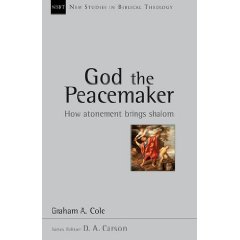 #5 God the Peacemaker: How Atonement Brings Shalom (New Studies in Biblical Theology), by Graham Cole, published by InterVarsity Press. What does God intend for his broken creation? In this book Graham A. Cole seeks to answer this question by setting the atoning work of the cross in the broad framework of God’s grand plan to restore the created order, and places the story of Jesus, his cross and empty tomb within it. Since we have become paradoxically the glory and garbage of the universe, our great need is peace with God and not just with God, but also with one another. Atonement brings shalom by defeating the enemies of peace, overcoming both the barriers to reconciliation and to the restoration of creation through the sacrifice of Christ. The “peace dividend” that atonement brings ranges from the forgiveness of sins for the individual to adoption into the family of God.
 #4 An Exposition of the Apostles’ Creed, by Casper Olevianus, Published by Reformation Heritage Books. Olevianus’s Exposition of the Apostles’ Creed is a collection of sermons he preached on the basic articles of the Christian faith. It serves as a reminder that the Reformed tradition did not see itself as separate from the universal church, though it was principally opposed to Rome. Rather, Olevianus and his tradition argue for a Reformed catholicity rooted in the ancient confession of the church. This new translation by Lyle D. Bierma, along with R. Scott Clark’s historical introduction, will benefit both scholarly and general readers. Charged with federal language, An Exposition explains the Christian faith as the believer’s fellowship with God in the covenant of grace. Thus, it is significant for its contribution to the development of Reformed covenantal theology. In addition to exhibiting its historical value within the Reformed tradition, readers will be “directed,” as Olevianus had intended, “toward edification in true and sound piety.”
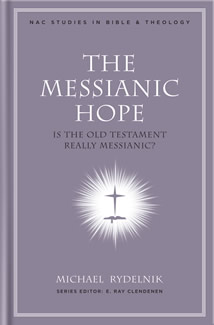 #3 The Messianic Hope: Is the Old Testament Really Messianic?, by Michael Rydelnik, published by B&H Publishing. In The Messianic Hope, book eight of the New American Commentary Studies in Bible & Theology series, Jewish Studies professor Michael Rydelnik puts forth a thesis that the Old Testament was intended by its authors to be read as a messianic primer. He explains at length how the text reveals significant direct messianic prophecy when read in its final form. Users will find this topical study an excellent extension of the long-respected New American Commentary series.
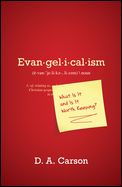 #2 Evangelicalism: What Is It and Is It Worth Keeping?, by D. A. Carson, published by Crossway. What defines today’s evangelicals? Are they people who fit an empirical, social-science profile? Have historical roots in the Reformation? Hold to certain theological priorities or fall within particular parameters? Is the term evangelical even useful anymore? D. A. Carson responds to all of these questions and more in Evangelicalism. Carson defines and upacks the term, advocating a biblical/theological foundation that is built on the description of the gospel found in 1 Corinthians 15. First establishing that evangelicalism is Christological, biblical, historical, theological, apostolic, heraldic, and personal, he proceeds to demonstrate its continuing relevance and our need for its scripturally defined boundaries. Carson then critiques Mark Noll’s book Is the Reformation Over? and draws examples from Catholic doctrine, Christian experience, and modern scholarship to illustrate that the issues at stake in the Reformation are not settled. Carson’s book will be welcomed by readers concerned about the future of evangelicalism and thinking about evangelicalism’s place in today’s religious forums.
#1 Set to release February 18th of 2010, Welcome to a Reformed Church, by Rev. Daniel Hyde, published by my ever favorite publisher, Reformation Trust. “Who are these guys?” That was the question the teenage Daniel R. Hyde posed to his father when he first encountered “Reformed” believers. With their unique beliefs and practices, these Christians didn’t fit any of the categories in his mind. Not so many years later, Hyde is now Rev. Daniel R. Hyde, a pastor of a Reformed church. Recognizing that many are on the outside looking in, just as he once was, he wrote Welcome to a Reformed Church: A Guide for Pilgrims to explain what Reformed churches believe and why they structure their life and worship as they do. In layman’s terms, Rev. Hyde sketches the historical roots of the Reformed churches, their scriptural and confessional basis, their key beliefs, and the ways in which those beliefs are put into practice. The result is a roadmap for those encountering the Reformed world for the first time and a primer for those who want to know more about their Reformed heritage.
Why is this #1? Simply, because today’s evangelicalism NEEDS to know what really is Reformed? What is the Reformed Confessional Faith? What is a Reformed Church? NOT New Reformed/Calvinism! I know Danny Hyde as my seminary brother at Puritan Reformed Theological Seminary, and I am ever looking forward to being able to give this book to those that think they are “Reformed”.
Looking to get into Biblical Theology? Read the following…
Posted: December 15, 2009 Filed under: Biblical Theology Leave a commentBartholomew, Craig. “Babel and Derrida: the Challenge of Postmodernism for Biblical Interpretation. TynB 49.2 (1998): 305-28.
Bartholomew, Craig. “Reading the Old Testament in Postmodern Times.” TynB 49.1 (1998): 91-114.
Goldingay, Old Testament Theology, I: Israel’s Gospel (Downers Grove, Ill.: InterVarsity, 2003).
Green, Joel B. “Afterword: Rethinking History (and Theology).” Pages 237-42 in Between Two Horizons: Spanning New Testament Studies and Systematic Theology. Edited by Joel B. Green and Max Turner. Grand Rapids: Eerdmans, 2000.
Greenspahn, Frederick E. (ed.). The Hebrew Bible: New Insights and Scholarship. Jewish Studies in the Twenty-First Century. New York: NYU Press, 2007.
Harrisville, Roy A., and Walter Sundberg. The Bible in Modern Culture: Baruch Spinoza to Brevard Childs. 2d ed. Grand Rapids: Eerdmans, 2002.
Hayes, J. H., and F. Preussner. Old Testament Theology: Its History and Development. Atlanta: John Knox, 1985.
Helmer, Christine. “Biblical Theology: Bridge Over Many Waters.” Currents in Biblical Research 3 (2005) 169-96.
Knight, G. A. F. A Christian Theology of the Old Testament. London: SCM, 1958; reprint Carlisle, Cumbria: Paternoster, 1998.
Linnemann, Eta. Biblical Criticism on Trial. Translated by R. Yarbrough. Grand Rapids: Kregel Academic and Professional, 2001.
Linnemann, Eta. Historical Criticism of the Bible: Methodology or Ideology. Translated by R. Yarbrough. Grand Rapids: Kregel Academic and Professional, 2001.
Maier, G. The End of the Historical-Critical Method. Translated by Edwin W. Leverenz and Rudolf F. Norden. St. Louis: Concordia, 1977.
Moberly, R. W. L. From Eden to Golgotha: Essays in Biblical Theology. Atlanta: Scholars, 1992.
Perdue, Leo G. The Collapse of History: Reconstructing Old Testament Theology. Overtures to Biblical Theology. Minneapolis: Fortress, 1994.
Rendtorff, Rolf. The Canonical Hebrew Bible: A Theology of the Old Testament. Tools for Biblical Study 7. Leiderdorp, The Netherlands: Deo, 2005.
Reventlow, H. Graf, “Theologie und Hermeneutik des Altentestaments,” TRu 61.1-2 (1996): 48-102, 123-76.
Reventlow, Problems of Biblical Theology in the Twentieth Century (Philadelphia: Fortress, 1986).
Schreiner, J. Theologie des Alten Testaments. NEchtB ; Ergänzungsband zum Alten Testament, I ; Würzburg : Echter, 1995.
Watson, Text and Truth: Redefining Biblical Theology. Grand Rapids: Eerdmans, 1997.
My Top 2009 Reads
Posted: December 15, 2009 Filed under: My Top 2009 Reads 1 Comment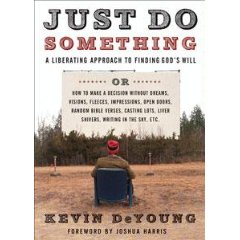 #10 Just Do Something: How to Make a Decision Without Dreams, Visions, Fleeces, Open Doors, Random Bible Verses, Casting Lots, Liver Shivers, Writing in the Sky, etc., by Kevin DeYoung, published by Moody Publishing. Hyper-spiritual approaches to finding God’s will don’t work. It’s time to try something new: Give up. Pastor and author Kevin DeYoung counsels Christians to settle down, make choices, and do the hard work of seeing those choices through. Too often, he writes, God’s people tinker around with churches, jobs, and relationships, worrying that they haven’t found God’s perfect will for their lives. Or—even worse—they do absolutely nothing, stuck in a frustrated state of paralyzed indecision, waiting . . . waiting . . . waiting for clear, direct, unmistakable direction. But God doesn’t need to tell us what to do at each fork in the road. He’s already revealed his plan for our lives: to love him with our whole hearts, to obey His Word, and after that, to do what we like. No need for hocus-pocus. No reason to be directionally challenged. Just do something.
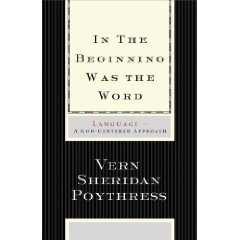 #9 In the Beginning Was the Word: Language–A God-Centered Approach, by Vern Sheridan Poythress, published by Crossway. With scriptural teaching and broad-ranging application, this follow-up to Redeeming Science builds a Christian theology of language and reforms our thinking about words. Language is not only the centerpiece of our everyday lives, but it gives significance to all that we do. It also reflects and reveals our all-sustaining Creator, whose providential governance extends to the intricacies of language.
 #8 The Righteous Shall Live by Faith: Romans, by R.C. Sproul, Published by Crossway. How exciting! Thousands of us have long been indebted to Sproul the teacher, and now, through the St. Andrew’s Expositional Commentary series, we are indebted to Sproul the preacher, whose sermons are thoroughly biblical, sound doctrinal, warmly practical, and wonderfully readable. This series of volumes is an absolute must for every Reformed preacher and church member who yearns to grow in the grace and knowledge of Christ Jesus. Tolle lege, and buy these volumes for your friends.
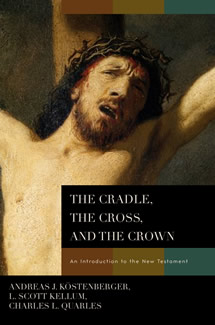 #7 The Cradle, the Cross, and the Crown: An Introduction to the New Testament, by Andreas J. Köstenberger, L. Scott Kellum, Charles L. Quarles, published by B&H Publishing. Although Scripture cannot be reduced to a mere piece of human writing, there is much to gain by paying careful attention to the historical, literary, and theological dimensions of the biblical text. For this reason, The Cradle, the Cross, and the Crown is offered to the serious New Testament student who seeks to better understand and share God’s “word of truth” (2 Timothy 2:15). Across nearly one thousand pages, it thoroughly introduces all twenty-seven New Testament books and closely examines Christ’s incarnation and virgin birth, the heart of His ministry shown so vividly in the Gospels’ Passion Narratives, and the triumphant return of Jesus and our eternal reign with Him as depicted in Revelation.
 #6 Gospel-Driven Life, The: Being Good News People in a Bad News World by Michael Horton, published by Baker Book House. In his well-received Christless Christianity Michael Horton offered a prophetic wake-up call for a self-centered American church. With The Gospel-Driven Life he turns from the crisis to the solutions, offering his recommendations for a new reformation in the faith, practice, and witness of contemporary Christianity. This insightful book will guide readers in reorienting their faith and the church’s purpose toward the good news of the gospel. The first six chapters explore that breaking news from heaven, while the rest of the book focuses on the kind of community that the gospel generates and the surprising ways in which God is at work in the world. Here is fresh news for Christians who are burned out on hype and are looking for hope.
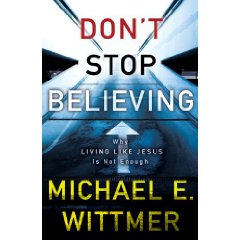 #5 Don’t Stop Believing: Why Living Like Jesus Is Not Enough, by Michael Wittmer, publishing by Zondervan. Evangelicals who reject the narrow fundamentalism of previous generations are in danger of over-correction. Don’t Stop Believing is an urgent call for both right practice and right belief. Our concern for social issues must not diminish the core doctrines of our faith. We must not stop believing.
 #4 The End of the Law: Mosaic Covenant in Pauline Theology, by Jason Meyer, published by B&H Publishing. Commonly understood as the first theologian of the Christian faith, Paul set forth the categories by which we describe our relationship with Christ. Did he understand the new covenant Jesus announced at the Last Supper primarily as a replacement of the old Mosaic covenant God made with Israel, or as a renewal and completion of the old? Jason Meyer surveys the various differences that have been argued between the two covenants in The End of the Law, carefully and inductively performing a semantic, grammatical, and contextual analysis of all the Pauline texts dealing with covenant concepts.
 #3 Baptism in the Early Church: History, Theology, and Liturgy in the First Five Centuries, by Everett Ferguson, published by Eerdmans. Everett Ferguson’s work here is a compendium of almost everything that is currently known about the Christian ritual of baptism, with extensive citations to the primary and secondary literature, and as such is destined to be an extremely valuable reference work.
 #2 Our Secure Salvation: Preservation and Apostasy, by Robert A. Peterson, published by P&R Publishing. Can believers lose their faith? Robert Peterson addresses an age-old question crucial to an insecure modern world. Tracing preservation and apostasy throughout the Bible, he illustrates how God saves and keeps his people, giving them confidence to live for his glory.
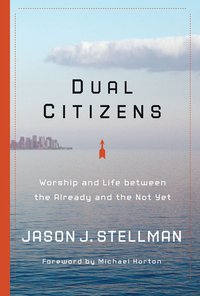 #1 Dual Citizens: Worship and Life Between the Already and the Not Yet, by Jason Stellman, publishing Reformation Trust. New covenant believers live between “the already” and “not yet,” a point in redemptive history between the partial and complete fulfillment of God’s promises. This means they are exiles and pilgrims in the divinely ordained overlap of the ages. As Rev. Jason J. Stellman argues in his book Dual Citizens: Worship and Life Between the Already and the Not Yet, this biblical motif shapes the identity of Christians at every turn and affects their every activity in both the sacred and secular realms. Stellman explores the Christian pilgrimage with deep biblical insight, humor, and relevance to our contemporary context, revealing how Christians are to think of themselves and their role this side of heaven.
***Honorable Mentions:
- Tim Keller: Counterfeit Gods
- J. V. Fesko: The Rule of Love
- Robert Letham: The Westminster Assembly, Reading Its Theology in Historical Context
- John Colquhoun, A Treatise on the Law and Gospel
- Who Made God? by Edgar Andrews
- Warren Cole Smith: A Lover’s Quarrel with the Evangelical Church
- Four Views on Moving beyond the Bible to Theology ~ Gary T. Meadors (Editor), Stanley N. Gundry (Series Editor), Walter C. Kaiser Jr., Daniel M. Doriani, Kevin J. Vanhoozer, William J. Webb, Mark L. Strauss, Al Wolters, Christopher J. H. Wright
My Favorite Books Published on Calvin in 2009
Posted: December 14, 2009 Filed under: Just for Fun Leave a comment #5 The Calvin Handbook, by Herman J. Selderhuis, published by Eerdmans. Research on French theologian John Calvin is flourishing around the world today, and Calvin’s quincentennial this year has lent such research even greater momentum. The Calvin Handbook is designed to support and stimulate this research. An international team of renowned scholars here offers a comprehensive view of Calvin’s biography, his theology, and the history of his reception. The Calvin Handbook is a uniquely helpful resource on Calvin for readers of every interest level.
 #4 Friends of Calvin, by Machiel A. van den Berg, Reinder Bruinsma (translator), published by Eerdmans. In two dozen short biographies of John Calvin’s friends — including some who turned into enemies — Machiel A. van den Berg paints an intimate portrait of the great Reformer’s life and circle that most of us have never seen. In these pages we accompany Calvin from his early boyhood in Noyon to his student days in Paris and Orleans, to his pastorate in and exile from Geneva, all the way to his deathbed. We meet his famous Reformer friends, such as Martin Bucer, William Farel, Heinrich Bullinger, Theodore Beza, and John Knox, but also friends whose names are more obscure: his cousin Pierre Robert Olivétan, the first translator of the Bible into French; René de France of French royalty; Laurent de Normandie, the mayor of Noyon who later escaped to Geneva; Pierre Viret, his “best friend of all”; and Idelette van Buren, his beloved wife during their brief but “blissful” marriage.
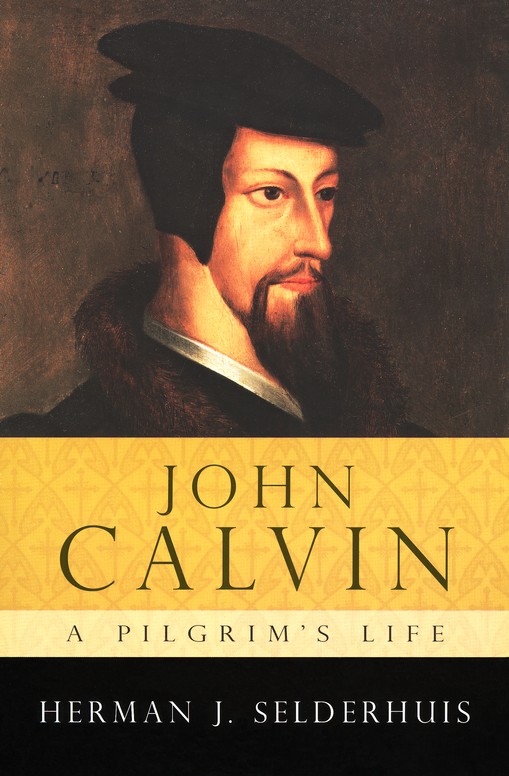 #3 John Calvin: A Pilgrim’s Life, by Herman J. Selderhuis, published by InterVarsity Press. Selderhuis draws on Calvin’s own publications and commentary on the biblical figures with whom he strongly identified to describe his theology in the context of his personal development. Throughout we see a person who found himself alone at many of the decisive moments of his life–a fact that echoed through Calvin’s subsequent sermons and commentaries. Selderhuis’s unique and compelling look at John Calvin, with all of his merits and foibles, ultimately discloses a man who could not find himself at home in the world in which he lived.
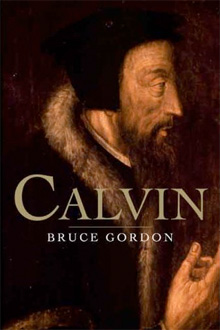 #2 Calvin, by Bruce Gordon, Published by Yale Press. During the glory days of the French Renaissance, young John Calvin (1509-64) experienced a profound conversion to the faith of the Reformation. For the rest of his days he lived out the implications of that transformation-as exile, inspired reformer and ultimately the dominant figure of the Protestant Reformation. Calvin’s vision of the Christian religion has inspired many volumes of analysis, but this engaging biography examines a remarkable life. Bruce Gordon presents Calvin as a human being, a man at once brilliant, arrogant, charismatic, unforgiving, generous and shrewd.
 #1 John Calvin: Pilgrim and Pastor, by W. Robert Godfrey, published by Crossway. An introduction to the essential life and thought of one of history’s most influential theologians, who considered himself first and foremost a pilgrim and a pastor.
July 10, 2009, marks the five-hundredth anniversary of the birth of John Calvin. As controversial as he was influential, his critics have named a judgmental and joyless attitude after him, while his admirers celebrate him as the principal theologian of Reformed Christianity. Yet his impact is unmistakable-a primary developer of western civilization whose life and work have deeply affected five centuries’ worth of pastors, scholars, and individuals. What will surprise the readers of this book, however, is that Calvin did not live primarily to influence future generations. Rather, he considered himself first and foremost a spiritual pilgrim and a minister of the Word in the church of his day. It was from that “essential” Calvin that all his influence flowed. Here is an introduction to Calvin’s life and thought and essence: a man who moved people not through the power of personality but through passion for the Word, a man who sought to serve the gospel in the most humble of roles.
Honorable Mention: Institutes of the Christian Religion: The First English Version of the 1541 French Edition, by John Calvin, Elsie Anne McKee (translator), and anything in the “Calvin500 Series” (8 Volume set) by P&R Publishing.
A Divorce Bibliography
Posted: December 12, 2009 Filed under: bibliography on Divorce, Divorce Leave a commentSome people had seen my Twitter and Facebook updates during the month of November when I was writing a paper on Divorce for an Ethics class. They had asked me what I was studying, where I was looking and what was my take on the subject of divorce. I spent about a week after writing the paper researching for the best resources on the topic of Divorce, and what would be best for those that wanted to study the topic. You can read my bibliography here.
Are You SAD?
Posted: December 11, 2009 Filed under: David Murray 1 CommentAfter waiting nearly two months for another post, David Murray finally gets back to vloggin’.
Is Divorce Okay?
Posted: December 11, 2009 Filed under: Divorce Leave a commentIs it really? I’m still not exactly sure… but this is what I wrote. You can read my paper for New Testament Ethics here.

 Gospel-Centered Musings