Asking a Catholic What are the Order of the gospels?
Posted: October 8, 2008 Filed under: Catholic questions on the Gospel, Questions & Answers, The Gospel Leave a commentQuestion: What are the order of the gospels?
Answer: The present order of the Gospels has the twofold advantage of not separating from one another those Evangelical records (St. Matthew, St. Mark, St. Luke) whose mutual resemblances are obvious and striking, and of placing at the end of the list of the Gospels the narrative (that of St. John) whose relations with the other three is that of dissimilarity rather than of likeness. It thus lends itself well to the classification of the Gospels which is now generally admitted by Biblical scholars. St. Matthew, St. Mark, and St. Luke are usually grouped together, and designated under the common name of the Synoptic Gospels. They derive this name from the fact that their narratives may be arranged and harmonized, section by section, so as to allow the eye to realize at a glance the numerous passages which are common to them, and also the portions which are peculiar either to only two, or even to only one, of them. The case stands very differently with regard to our Fourth Gospel. As it narrates but a few incidents in common with the Synoptists, and differs from them in respect to style, language, general plan, etc., its chief parts refuse to be included in a harmony such as may be framed by means of the first three Gospels. While, therefore, the Synoptic narratives are naturally put together into one group, St. John’s record is rightly considered as standing apart and as, so to speak, making up a class by itself (see SYNOPTICS).
Check out RHB’s Deal of the Month!!!
Posted: October 7, 2008 Filed under: Reformation Heritage Books Leave a comment
Retail Price: $15.00
RHB The Month of August Price: $24.99
Author: Clark, R. Scott
Publisher: P&R
Publish Date: 2008
Cover Type: Paperback
Pages: 384
ISBN: 9781596381100
Much of what passes as Reformed among our churches is not. As a class of churches that profess allegiance to Reformed theology, practice, and piety, we have drifted from our moorings. This book is written to facilitate change, specifically reformation according to God’s Word as summarized in the Reformed confessions.
Endorsements:
At a time when “all that is solid melts in the air” and distinct colors fade to gray, R. Scott Clark reminds us of the loveliness, depth, and richness of Reformed Christianity. Not only a TULIP, but a confession that bears fruit in both faith and practice, the account that you will find in this book may challenge, but its point is not to be missed.
Michael S. Horton, Ph.D. J. Gresham Machen Professor of Systematic Theology and Apologetics Westminster Seminary California
In a day when many follow charming personalities, fundamentalism, heterodoxy, individualism, and postmodernity and attempt to commandeer the Reformed tradition, Dr. Clark ably challenges such efforts. Clark brings a much needed corrective for basing Reformed identity in its understanding of the Scriptures through its historic confessions and creeds and a robust understanding historic Reformed worship. Well-researched, thoughtfully presented, and provocative, this work is a must-read for ministers, elders, and for anyone who claims to be Reformed.
J. V. Fesko, Ph.D. Pastor, Geneva Orthodox Presbyterian Church Woodstock, Georgia, Adjunct Professor of Theology, Reformed Theological Seminary
In addition to being a first-rate scholar, Dr. Clark is a brave man. He’s not afraid to remind us of the substance and meaning of many aspects of our historic Reformed confessions which we now either take for granted, or which are at odds with a number of our current practices. In Recovering the Reformed Confession, Clark reminds us of what it means when we “confess” that we are “Reformed.” It means focusing upon those things set forth in our confessions (the highest common denominator), instead of neglecting them or even denying them. In addition to gently pointing out where our words don’t match either our praxis or our deeds, Clark offers a number of practical ways we can recover our confession, and thereby recover a distinctly “Reformed faith and practice.”
Kim Riddelbarger, Ph.D. Pastor, Christ Reformed Church, Anaheim Adjunct Professor of Systematic Theology, Westminster Seminary California Co-host, White Horse Inn
While I am personally encouraged by and enthusiastic about what has been called the “young, reformed awakening,” we still await (and long for) a renaissance of a genuinely confessional reformed theology, piety and practice. Scott Clark’s historical work, diagnosis and critique, and constructive, churchly, confessional recommendations are all worth a rigorous and respectful engagement, and point us in a number of helpful directions. As one who comes from and happily identifies with a branch of the Reformed tradition far from immune to Dr. Clark’s critique, I welcome this volume as a faithful conversation partner, seeking to administer “the wounds of a friend” for the sake of the church and the glory of God in this world.
Ligon Duncan, Ph.D. Senior Minister, First Presbyterian Church, Jackson, Mississippi, USA President, Alliance of Confessing Evangelicals Adjunct Professor, Reformed Theological Seminary
Who do you quote?
Posted: October 6, 2008 Filed under: You Might be a Calvinist if..., You might be a Fundamentalist if Leave a commentYou might be a Calvinist if… you quote Calvin, Zwingli, Burroughs, Owen, Edwards, Spurgeon, Lloyd-Jones & Sproul
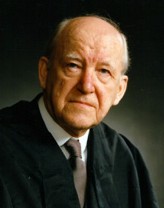
You might be a fundamentalist if… you quote Darby, Moody, Scoldfield, Walvood, Hendricks, Ryrie, Falwell, & MacArthur

A New Departure
Posted: October 5, 2008 Filed under: Sundays with Spurgeon 2 CommentsI do not know, my brethren, that we can expect to see energy continuous at its full in any one of us. I suspect that he who burns like a seraph knows moments in which the flame somewhat abates. As the sun itself is not at all times alike powerful, so the man who, like the shining light, shineth more and more unto the perfect day, is not uniformly bright, nor always at his noon. Nature does not hold the sea for ever at flood; ebbs intervene, and the ocean pauses a while ere it returns again to the fulness of its strength. The vegetable world has its winter, and enjoys a long sleep beneath its bed of snow. It is not wasted time, that ebb or that winter; flood and summer owe much to ebb and frost. I suspect that, because we are in affinity with nature, we, too, shall have our changes, and shall not abide at one elevation. No man’s life is all climax. Let us not despond if, just now, our spirit is at a low ebb; the tide of life will roll up as before, and even reach a higher point. When we stand leafless and apparently lifeless, our soul having become like a tree in winter, let us not dream that the axe will cut us down, for our substance is in us though we have lost our leaves, and before long the time of the singing of birds will come, we shall feel the genial warmth of returning spring, and our lives shall again be covered with blossoms, and laden with fruit.
It will not be wonderful if there should be lulls and pauses in our spiritual work, for we see the like in the affairs of men. The most eager after worldly objects, who can by no means be accused of a want of earnestness in their endeavours, are yet conscious that, by a sort of law, dull times will come, wherein business necessarily flags. It is not the tradesman’s fault that, sometimes, trade must be pushed, and that after pushing it remains as dull as ever. It seems to be the rule that there should be years of great prosperity, and then years of decline; the lean kine still devour the fat kine. If men were not what they are, there might be a perpetuity of equable progress, but it is evident that we have not reached that point yet.
Chief differences between canonical and apocryphal gospels
Posted: October 4, 2008 Filed under: Catholic questions on the Gospel, Questions & Answers, The Gospel Leave a commentQuestion: What is the chief differences between canonical and apocryphal gospels?
Answer: From the outset, the four Gospels, the sacred character of which was thus recognized very early, differed in several respects from the numerous uncanonical Gospels which circulated during the first centuries of the Church. First of all, they commended themselves by their tone of simplicity and truthfulness, which stood in striking contrast with the trivial, absurd, or manifestly legendary character of many of those uncanonical productions. In the next place, they had an earlier origin than most of their apocryphal rivals, and indeed many of the latter productions were directly based on the canonical Gospels. A third feature in favour of our canonical records of Christ’s life was the purity of their teachings, dogmatic and moral, over against the Jewish, Gnostic, or other heretical views with which not a few of the apocryphal gospels were tainted, and on account of which these unsound writings found favour among heretical bodies and, on the contrary, discredit in the eyes of Catholics. Lastly, and more particularly, the canonical Gospels were regarded as of Apostolic authority, two of them being ascribed to the Apostles St. Matthew and St. John, respectively, and two to St. Mark and St. Luke, the respective companions of St. Peter and St. Paul. Many other gospels indeed claimed Apostolic authority, but to none of them was this claim universally allowed in the early Church. The only apocryphal work which was at all generally received, and relied upon, in addition to our four canonical Gospels, is the “Gospel according to the Hebrews“. It is a well-known fact that St. Jerome, speaking of this Gospel under the name of “The Gospel according to the Nazarenes“, regards it as the Hebrew original of our Greek canonical Gospel according to St. Matthew. But, as far as can be judged from its fragments which have come down to us, it has no right to originality as compared with our first canonical Gospel. At a very early date, too, it was treated as devoid of Apostolic authority, and St. Jerome himself, who states that he had its Aramaic text at his disposal, does not assign it a place side by side with our canonical Gospels: all the authority which he ascribes to it is derived from his persuasion that it was the original text of our First Gospel, and not a distinct Gospel over and above the four universally received from time immemorial in the Catholic Church.
Sinclair Ferguson: Where Do You Come From?
Posted: October 4, 2008 Filed under: Desiring God Conference 2008, Video of the Week Leave a commentAsking a Catholic on the Number of the gospels
Posted: October 3, 2008 Filed under: Catholic questions on the Gospel, Questions & Answers, The Gospel 1 CommentQuestion: How man gospels are there?
Answer: The name gospel, as designating a written account of Christ’s words and deeds, has been, and is still, applied to a large number of narratives connected with Christ’s life, which circulated both before and after the composition of our Third Gospel (cf. Luke 1:1-4). The titles of some fifty such works have come down to us, a fact which shows the intense interest which centred, at an early date, in the Person and work of Christ. it is only, however, in connexion with twenty of these “gospels” that some information has been preserved. Their names, as given by Harnack (Chronologie, I, 589 sqq.), are as follows: —
- 1-4. The Canonical Gospels
- 5. The Gospel according to the Hebrews.
- 6. The Gospel of Peter.
- 7. The Gospel according to the Egyptians
- 8. The Gospel of Matthias.
- 9. The Gospel of Philip.
- 10. The Gospel of Thomas.
- 11. The Proto-Evangelium of James.
- 12. The Gospel of Nicodemus (Acta Pilati).
- 13.The Gospel of the Twelve Apostles.
- 14.The Gospel of Basilides.
- 15.The Gospel of Valentinus.
- 16.The Gospel of Marcion.
- 17.The Gospel of Eve.
- 18.The Gospel of Judas.
- 19.The writing Genna Marias.
- 20.The Gospel Teleioseos.
Asking a Catholic “What are the gospels?”
Posted: October 2, 2008 Filed under: Catholic questions on the Gospel, Questions & Answers, The Gospel Leave a commentQuestion: What are the gospels in your terms?
Answer: The first four historical books of the New Testament are supplied with titles (Euaggelion kata Matthaion, Euaggelion kata Markon, etc.), which, however ancient, do not go back to the respective authors of those sacred writings. The Canon of Muratori, Clement of Alexandria, and St. Irenæus bear distinct witness to the existence of those headings in the latter part of the second century of our era. Indeed, the manner in which Clement (Stromata I.21), and St. Irenæus (Against Heresies III.11.7) employ them implies that, at that early date, our present titles to the Gospels had been in current use for some considerable time. Hence, it may be inferred that they were prefixed to the evangelical narratives as early as the first part of that same century. That, however, they do not go back to the first century of the Christian era, or at least that they are not original, is a position generally held at the present day. It is felt that since they are similar for the fourGospels, although the same Gospels were composed at some interval from each other, those titles were not framed, and consequently not prefixed to each individual narrative, before the collection of the four Gospels was actually made. Besides, as well pointed out by Prof. Bacon, “the historical books of the New Testament differ from its apocalyptic and epistolary literature, as those of the Old Testament differ from its prophecy, in being invariably anonymous, and for the same reason. Prophecies whether in the earlier or in the later sense, and letters, to have authority, must be referable to some individual; the greater his name, the better. But history was regarded as a common possession. Its facts spoke for themselves. Only as the springs of common recollection began to dwindle, and marked differences to appear between the well-informed and accurate Gospels and the untrustworthy . . . did it become worth while for the Christian teacher or apologist to specify whether the given representation of the current tradition was ‘according to’ this or that special compiler, and to state his qualifications”. It thus appears that the present titles of theGospels are not traceable to the Evangelists themselves.
Why Support Adoption?
Posted: October 1, 2008 Filed under: Adoption, Questions & Answers, Together for Adoption Leave a commentQuestion: Why should Christians consider supporting an organization that equips Christians to think theologically about adoption but does not directly provide humanitarian aid to orphaned children?
Answer: Planting Gospel Seeds
Tony Jones on Abortion and Obama
Posted: October 1, 2008 Filed under: Questions & Answers, Tony Jones Leave a commentQuestion: What does Tony Jones think about Obama & Abortion?
Answer: There has been a robust conversation in the comments section of my previous post on abortion. There are clearly some policy wonks who read my blog, and I’m not one of them. I mean, I’m not a policy wonk; not that I don’t read my blog. Anyway, I appreciate those of you who can quote particular pieces of legislation and particular votes. My interest is more on the overarching principles at hand, although it does seem to me that BO made it abundantly clear that his most odious vote to pro-lifers was because he thought the bill would be struck down as unconstitutional (HT: Keith).
I am thankful that my friend, Carla Jo, fought the good fight in the comments. For those of you who don’t know her, CJ has a raft of evangelical credentials. In other words, she’s no leftist idealogue. She’s simply trying to deal with the complexity of the issue — I must say, much as BO does.
And I am particularly indebted to the two women who posted about their own abortions. In the wake of that terrible decision, they’ve come to different conclusions about the issue, but their journeys to those conclusions, IMHO, seem a lot more honest than some others who commented. Honestly, I cannot imagine either of them, though they stand on different sides of the debate, referring to someone as a “faggot” or “callous, selfish, and unrepentant.”
The Catholic Gospel
Posted: October 1, 2008 Filed under: Catholic questions on the Gospel, Questions & Answers, The Gospel 4 CommentsQuestion: What is really the Catholic gospel?
Answer: The word Gospel usually designates a written record of Christ’s words and deeds. It is very likely derived from the Anglo-Saxon god (good) and spell (to tell), and is generally treated as the exact equivalent of the Greek euaggelion (eu well, aggello, I bear a message), and the Latin Evangelium, which has passed into French, German, Italian, and other modern languages. The Greek euaggelion originally signified the “reward of good tidings” given to the messenger, and subsequently “good tidings”.
John Piper’s New Coat
Posted: September 30, 2008 Filed under: Desiring God Conference 2008, John Piper Leave a commentJob
Posted: September 30, 2008 Filed under: John Piper 1 CommentFor those of you who are interested in John Piper’s new book, here is a video.
Devotion for Introduction to Apologetics
Posted: September 30, 2008 Filed under: Adoption Leave a commentPoint of Devotion – The Blessings/Privileges of Adoption- The believer of the gospel is blessed with privileges that give him the right to an eternal inheritance with the family of God.
Let’s read our passage for the devotion.
Romans 8:15 For you did not receive the spirit of slavery to fall back into fear, but you have received the Spirit of adoption as sons, by whom we cry, “Abba! Father!” 16 The Spirit himself bears witness with our spirit that we are children of God, 17 and if children, then heirs—heirs of God and fellow heirs with Christ, provided we suffer with him in order that we may also be glorified with him.
This is the Word of God…
This Spirit not only cries out in making us a part of God’s adopted family, but gives the believer blessings that he had never had before as a fallen man. For being the child of God is an experience like nothing you knew before in the fallen state and may not fully understand even now because how often the doctrine of adoption is overlooked. But when you see exactly what this adoption does for the believer and the blessings it provides, you can see that it is nothing but by the grace of God. From the moment of the time that the Spirit is poured into our hearts this confidence of adoption, it poured into us the privileges of adoption as well. These are to the believer nothing but blessings that they could have never imagined existed before the act of adoption.
I will list these blessings or privileges that are given at the time of our adoption so that you can grip overwhelming amount of delight that takes place in being adopted by God.
1. When we are adopted, “the Spirit himself bears witness with our spirit that we are children of God.” We have intimate fellowship with Christ and God because of this. (Gal. 4:7)
2. When we are adopted, not only is there this intimate fellowship but also there is the blessing of the guidance of this Spirit that cries “Abba, Father.” This how one knows he is a part of the family of God. (Rom. 8:14)
3. When we are adopted, it gives us another blessing. That this Spirit gives His presence to always assure the believer of their status as a child of God. (Rom. 8:16)
4. When we are adopted, it is a blessing that the believer who bears the Spirit that their heart is in perfect relationship with the Father, God. (Rom. 8:14)
5. When we are adopted, most of all, the privilege for believer is that they at the point of adoption now become heirs of God, which is a joint heir to Christ. (Rom. 8:17)
6. When we are adopted, his adopted family (us) is promised to one day after being redeemed in glory bear the likeness of Christ. (1 Jon. 3:2)
7. Lastly the blessing that the believer receives in adoption includes the inheritance of all things since the believer is adopted in being the sons of God. (1 Cor. 3:21-23)
For the believer, bearing the Spirit is nothing more than a blessing that deserves utmost praise to God for allowing us to partake in His family. I would ask of us, when was the last time we actually thought of our adoption, then even thanked our Father for such a plan that would allow him to take in illegitimate children like it.
This new relationship brings the believer into the household of faith. For the believer it is beautiful to know that they will belong to this family forever and ever and ever. God will care for his family and take care of them for eternity. This is why God sent his Son, Christ to die for the sins of His family, so we can have the highest blessing of the gospel, so that we can have the inheritance, this spiritual richness of being a part of the family of God. God gave us the gospel so that we could become children of God.
Desiring God 2008
Posted: September 29, 2008 Filed under: You Might be a Calvinist if..., You might be a Fundamentalist if Leave a commentYou might be a Calvinist if… You attended the Desiring God National Conference because Sinclair Ferguson was there.
You might be a Fundamentalist if… You don’t know Sinclair Ferguson…

Day Three of DG 2008
Posted: September 28, 2008 Filed under: Desiring God Conference 2008, My Travels 2 Comments
Day three, and the last for the conference. Waking up to my boss walking already out the door to head down to the conference center I awoke as fast as I could to get around and head downtown. For the four time, and maybe even the last in a long time I ate breakfast before the conference and then started to pack up and get checked out of the hotel. Waking to the center in a mist, I got there about 15 minutes before the last session began. I am not going to review, or even begin to try to talk about the session by Piper, because there was a number of times I was unable to follow along with his mind and I need to take the time once again tonight to listen to it once more. As for now below is a list of a few things (if interested) you can take the time to listen and read (John Piper’s sermon/speech given this morning).

John Piper- 5 Benefits of Christian Eloquence
1. Eloquence—that is, artistic, surprising, provocative, or aesthetically pleasing language—may keep people awake and focused because they find it interesting for reasons they can’t articulate.
2. Eloquence may bring an adversarial mind into greater sympathy with the speaker.
3. Eloquence may have an awakening effect on a person’s heart and mind short of regeneration, but still important in awakening in them emotional sensitivity to beautiful things.
4. Certain kinds of eloquence (cadence, parallelism, meter, rhyme, assonance, consonance) may not only add interest, but also increase impact by helping the memory.
5. The beauty of eloquence can join with the beauty of truth and increase the power of your words.
Desiring God Live Blog – Mike Anderson
Conference Book Recommendations
Check out this kids blog I found who had done a little blogging of some sessions. Or this one to. There may be more and you can let me know if there is, I just found these easily.
As for my top three events of the weekend, I’ll list them below and in order of how I believe them to have impacted my mind in thinking a number of different ways on the words I chose, and use.
#1 Mark Discroll’s message
#2 Sinclair Ferguson’s 20 Resolutions on Taming the Tongue
#3 Eating breakfast every morning (four in a row) for the first time since I was in grade school when my grandmother made me eat Marshmallow and Stars cereal every morning before school.

Individuality, and Its Opposite
Posted: September 28, 2008 Filed under: Sundays with Spurgeon Leave a commentit is a very delightful thing to feel that all the work we are doing is Jesus Christ’s work. All the sheep we have to shepherd are His sheep; the souls we have to bring to Him were bought with His blood; the spiritual house that is to be built is for His habitation. It is all His. I delight in working for my Lord and Master, because I feel a blessed community of interest with Him. That is not my Sunday-school, it is my Lord’s; and He says, “Feed My lambs.” It is not my church, but His; and He cries, “Feed My sheep.” Mine are His, and His are mine; yea, all are His. In the days when servants used to be servants, and were attached to their masters, one of our nobility had with him an old butler who had lived with his father, and was getting grey. The nobleman was often much amused with the way in which the good old man considered everything that was his master’s to be his own. I was not only pleased with the story, but it touched my heart when I heard it. His lordship once said to him, “John, whose waggon is that which has just come up loaded with goods?” “Oh!” said he, “that is ours. Those are goods from our town house.” His lordship smiled, and as a carriage came up the drive, he said, “John, whose coach is that coming into the park?” “Oh!” said he, “that is our carriage.” “But,” said the master, “there are some children in it, John; are they our children?” “Yes, my lord, they are our children, bless them, I will run, and bring them in.” My Lord Jesus, how dare I have the impertinence to claim anything which is Thine? And yet, when I gaze upon Thy Church, I am so completely Thy servant, and so wholly absorbed in Thee, that I look upon it as mine as well as Thine, and I go to wait upon Thy beloved ones. Yea, Lord, and all these my brethren are going, too. Come with us, Lord, for Thy love’s sake!
Day Two at DG 2008
Posted: September 28, 2008 Filed under: Desiring God Conference 2008, My Travels Leave a comment
Day two was grand! Waking up and eating breakfast for the third time in a row I personally cannot remember since I was a little kid! Even better it was a redneck one, sausage biscuits and gravy, my personal favorite. From there was a number of sessions and breaks to sell many of the RHB titles I took to the conference. Another great day I believe in sales. I would like to take the time to blog my thoughts about the conference and sessions but am not going to waste my time when you can read other blogs that have done so during the day. However I’ll give my personal three top highlights from the day.
#1 Mark Discroll’s message – Not because of the usual riskiness but just simply was clear and a must listen to for everyone!
#2 Paul Tripp’s message – Thinking about living for God’s kingdom and not my own, listen to the message!

#3 The Blog Open House – It was great to spend time with others that bloggers may not see, know, or get to talk to.
Take the time to check out the following
Ligonier West Coast Conference

Day One of DG 2008
Posted: September 27, 2008 Filed under: Desiring God Conference 2008, My Travels Leave a comment
Waking up this morning I ate breakfast for the second time in a row, which may be a first in years, and I mean literally years! My boss and I arrived downtown to unpack the SUV and start stacking books on our four tables in the Desiring God Bookstore. By noon we were done and began the search of a semi-cheap hamburger joint somewhere down town. After walking what seemed an hour in circles we finally asked as typical “out-of-townees” and stopped in at The Keys Cafe where I got my absolute favorite type of hamburger, BBQ & SLAW! This made up for the time well spent in searching for Steve’s (my boss) hamburger he “needed.” After doing so, I went back to get suited up for the conference and preparing myself for this years messages. People began to role in about 3pm and started to buy books right away! I was quite impressed by the numbers I sold on the first day and am looking forward to sales tomorrow. It was a great evening being able to catch up with old friends like Luke S. and Ben V. to talk about what old friends are doing now with their lives, and finding out about old friends that are getting married but never have seem to have the time to tell me! However the highlight of the night of course was Sinclair Ferguson message on James 3:1-12. There is not much to say, being that you can read or listen to it already on Desiring God’s website and read several blog post that I’ll list here for you below.
20 Resolutions on Taming the Tongue

The Tongue, the Bridle, and the Blessing: An Exposition of James 3:1-12

Desiring God Live Blog – Mike Anderson
Conference Book Recommendations
For tomorrow’s posting I am not sure how often or when I will be able to get on-line since the Internet prices are about as high as I pay per-month in Grand Rapids, Michigan. But I’ll be sure at least in the evening to place up some links, thoughts, and highlights of the day.
PS – Hope to see you at tomorrow’s Open House after the evening session.
Blessing! What!?
Posted: September 26, 2008 Filed under: Just My Thoughts Leave a commentPsalms 137:7-9
7 Remember, O Lord, against the Edomites the day of Jerusalem, how they said, “Lay it bare, lay it bare, down to its foundations!”
8 O daughter of Babylon, doomed to be destroyed, blessed shall he be who repays you with what you have done to us!
9 Blessed shall he be who takes your little ones and dashes them against the rock!
That is quite the blessing for taking the lives of little ones don’t ya think?
Piper on DG’ 08
Posted: September 26, 2008 Filed under: Desiring God Conference 2008, John Piper Leave a commentJohn Piper
- John Piper’s Topic
- John Piper on Why He Invited Sinclair Ferguson
- John Piper on Why He Invited Dan Taylor
- John Piper on Why He Invited Mark Driscoll
- John Piper on Why He Invited Paul Tripp
- John Piper on Why He Invited Bob Kauflin
- John Piper on the Importance of Conferences
- John Piper on Why He Chose This Topic
Blogging in Minneapolis
Posted: September 26, 2008 Filed under: Desiring God Conference 2008, Just for Fun, My Travels Leave a comment
After three breakfast burritos from MacDonald’s this morning, four burritos from Taco Bell, a peanut butter and cookie dough ice cream cone, and ten hours of driving I made it with about 30 boxes of books to a wonderful family in Minnesota who is housing me for a day before the Desiring God National Conference. I have not drove 10 hours since my freshmen year of college when I attended a small “die-hard” classical dispy school in the upper state of New York. However, nor do I want to drive another 10 hours strait (besides Monday) for at least another 365 days. Although it is for a great and wonderful purpose, I was glad to have along with me the new iPod touch for the convince of watching 3 movies in one day. Now I know to those back at PRTS, “what a waste of time” you will say, but it was much better then listening to the ten hours of TALK radio that my boss did on how Obama sucks and McCain rocks, blah blah.
I will try for those of you who read this, to keep up in the next 5 days with being here and there. Actually I will try hard to keep up with at least posting something for you all, but please bare with me over these next two weeks and being on the road. (Cannot wait Nick!)
As far as this weekend, I am only posting for three reasons here at the Desiring God Conference.
1. For my mom (Love you) to be able to see and read what I am doing.
2. For my wonderful girlfriend to enjoy seeing and reading what I am doing.
3. For those of you who may read this for fun, so that I can direct you to better blogs, the sermons, and happenings of what will be going on. For a better blog to follow this coming conference then mine, I take a good look at what Mike Anderson will be doing over at the Resurgence blog.
PS- I found gas tonight for $3.39!!
On the Road
Posted: September 25, 2008 Filed under: Desiring God Conference 2008 Leave a commentSince I am on the road today, take sometime and watch the DG 2008 National Conference videos.

Bob Kauflin
- Bob Kauflin: Should Christians Sing the Good News?
- Bob Kauflin on Singing and Preaching
- Bob Kauflin on Style of Music
- Bob Kauflin on Why Christians Sing
- Bob Kauflin: Does God Sing?
- Bob Kauflin on the Human Voice in Congregational Worship
- Bob Kauflin: Is Music Without Words a Language?
- Bob Kauflin on Truth and Music
- Bob Kauflin on the Importance of Singing Truth
- Bob Kauflin: Why Does God Want Us to Sing?
Sinclair Ferguson
- Sinclair Ferguson on Union with Christ
- Sinclair Ferguson on Penal Substitution
- Sinclair Ferguson on Imputed Righteousness
- Sinclair Ferguson on Gospel Indicatives and Imperatives
- Sinclair Ferguson on How the Heart Affects Words
- Sinclair Ferguson on Acceptable Speech
- Sinclair Ferguson on Being Judged for Our Words
Does praying and meditating on a passage ensure better interpretation?
Posted: September 24, 2008 Filed under: Seminary Questions Leave a commentAsked: Does praying and meditating on a passage ensure better interpretation?
Answer: Yes, praying and meditating on a passage does ensure a better interpretation of the Scripture. Here are some passages that apply to this very subject that comes to my mind:
- Psalms 111:10 The fear of the LORD is the beginning of wisdom; all those who practice it have a good understanding. His praise endures forever!
- Proverbs 1:7 The fear of the LORD is the beginning of knowledge; fools despise wisdom and instruction.
- Proverbs 9:10 The fear of the LORD is the beginning of wisdom, and the knowledge of the Holy One is insight.
The only foundation for one to properly interpret Scripture is being in tune spiritually with their Father. The believer cannot use mere intellectual knowledge to understand true religion. The beginning of wisdom is the only foundation in which one is to find true wisdom on. This foundation is the relationship that the believer has in communion with their Savior. To know God, and to walk in correct measure in interpreting the Scripture, is not only reading the Scriptures and using one’s intellectual knowledge, but is spending time with the Lord on a daily basis as a wise act so that mankind can know their Maker better. I would ask myself the same question that Charles Spurgeon asked in his commentary on the Psalms, “Where shall wisdom be found? Where is the place of understanding?”
Spurgeon answers, “He searches nature through, in quest of it, but cannot find it: he cannot purchase it Ophir, and its prices above rubies. At length he collects the primitive instruction of God to man, and there he finds it; to man said, behold, the fear of the Lord, that is wisdom; and to depart from evil is understanding.”
It is clear for the believer that he should not go to the text upon his own strength, his own mind, his own thought and his own will. In doing so, the believer will lose all illumination from the Spirit and will then base reason on his own perception and his own way of thinking. The believer should go to the text in fear but not in a fear that is scarce in its love for the Lord. The believer goes to the text because he is love with Christ, because he wants to know Christ and he wants to be able to commune with the Father, through Christ. This is why we worship God in prayer and in meditation and in careful obedience so that we may properly interpret the Scriptures to live a life, holy unto the Lord. This is why John Calvin states this on Psalms 111:10, “ In this passage, fear is not to be understood as referring to the first or elementary principles of piety, as in 1 John 4:18, but is comprehensive of all true godliness, or the worship of God.”

 Gospel-Centered Musings